
Technical bulletins
News and updates
-
11 February 2026
Electronic certificate of authority (E-COA)
-
27 January 2026
Reminder: check your saved VPN links to keep access
-
23 December 2025
Safety warning for Suzuki Fronx owners
-
16 December 2025
Inspection news issue 20 out now
1 Takata alpha airbag recall
The compulsory Takata alpha airbag inflator recall order 2018 becomes effective from 31 May 2018. From the effective date Takata alpha airbag inflators become a prohibited import as well as being prohibited for sale in trade.
The purpose of this technical bulletin is to outline the process to identify vehicles subject to the mandatory Takata Alpha type airbag recall and how to deal with them.
The process outlined below are the steps BIOs can take to assure they act with due diligence, best endeavours, and based upon the best information available.
Border Inspection Organisations
The Border Inspection Organisations, specifically Automotive Technologies Limited, ATJ, JEVIC, Independent Verification Systems (IVS), and NZ Biosecurity Services, as per the requirements of the Boarder Inspection VIRM, will provide data to the Transport Agency regarding open safety recalls on vehicles they inspect subject to the prerequisites below.
All reasonable efforts outlined in this process will be made to assure they provide the most accurate information. All responsibility for importing any vehicle remains with the importer.
The process
From 21 May 2018, Border Inspection Organisations must check if vehicles they inspect (that are fitted with airbags) are on the Takata airbag recall lists from the various source countries.
Recalled Takata Alpha airbag vehicles from Japan
In Japan, vehicles subject to this recall are listed under the Japanese Ministry of Land, Infrastructure, Transport and Tourism (MLIT) definition ‘Vehicle of concern’. The Transport Agency is using this list to populate our website at www.vehiclerecallsafety.nzta.govt.nz/takata/importers. This website is the Transport Agency definitive list of vehicles in Japan that require rectification due to the fitment of Takata Airbags that are under recall.
For vehicles from Japan a further search can be conducted on the MLIT web site at the following address to check whether the recall has been closed in Japan, if it has no action needs to be taken: https://www.jaspa.or.jp/portals/recallsearch/index
Recalled Takata Alpha airbag vehicles from other countries
Vehicles from countries other than Japan will have to be checked against official sites in those countries that are covering the Takata recalls. These include, but are not limited to:
- USA
https://www.nhtsa.gov/recalls - Australia
https://www.productsafety.gov.au/recalls/compulsory-takata-airbag-recall/takata-airbag-recalls-list - UK
https://www.dft.gov.uk/vosa/apps/recalls/default.asp - There may be appropriate lists in other jurisdictions.
It is important to understand that this is not a new requirement it is just enforcing the existing requirement that recalls are to be closed prior to a vehicle being imported into New Zealand.
If the vehicle is on one of the lists and conclusive evidence from the manufacturer or jurisdictional authority that the airbag recall has been completed is not available, the vehicles will be damage flagged with notes recorded stating ‘Open Airbag Recall’.
Vehicle makes to check
Other than for left-hand drive vehicles, you only need to check vehicles from the following manufacturers (as listed on the www.vehiclerecallsafety.nzta.govt.nz/takata/takataalpha):
- BMW
- Daihatsu
- Honda
- Isuzu
- Lexus
- Mazda
- Mitsubishi
- Nissan
- Subaru
- Toyota.
Vehicles from other manufacturers will not have Takata Alpha type airbags fitted, or be Japanese vehicles of concern, so are not subject to the recall.
For left-hand drive vehicles it is up to the importer to supply conclusive evidence that there is no recall for the vehicle and/or that the airbag has been replaced.
Conclusive evidence
To meet the burden of proof of conclusive evidence, it must be shown that the vehicle is not on any current recall lists generated by the manufacturer. Alternatively, where available a current list maintained by a jurisdictional authority can be used.
Also note, Japanese Shaken issued after 1 May 2018 is de facto evidence from a jurisdictional authority. The rationale for this is that 1 May 2018 is the deadline for all 'vehicles of concern' to have their mandatory recall cleared. Any Shaken issued after this date will require this recall to be closed.
Recall completion certificate
A Japanese Ministry of Land, Infrastructure, Transport and Tourism (MLIT) process document like the image below can be used to provide evidence of a Shaken test (Japanese WoF). A vehicle can only pass a Shaken test if it has had its Takata Aplha airbags replaced.
If a copy of this document is presented in for the vehicle in question and with a dealers stamp on it, it can be accepted as evidence that the vehicle in question can pass a Shaken test and therefore has had its airbags replaced. It can be accepted as proof that a vehicle has been rectified at a dealership level but might not yet have come off their website.
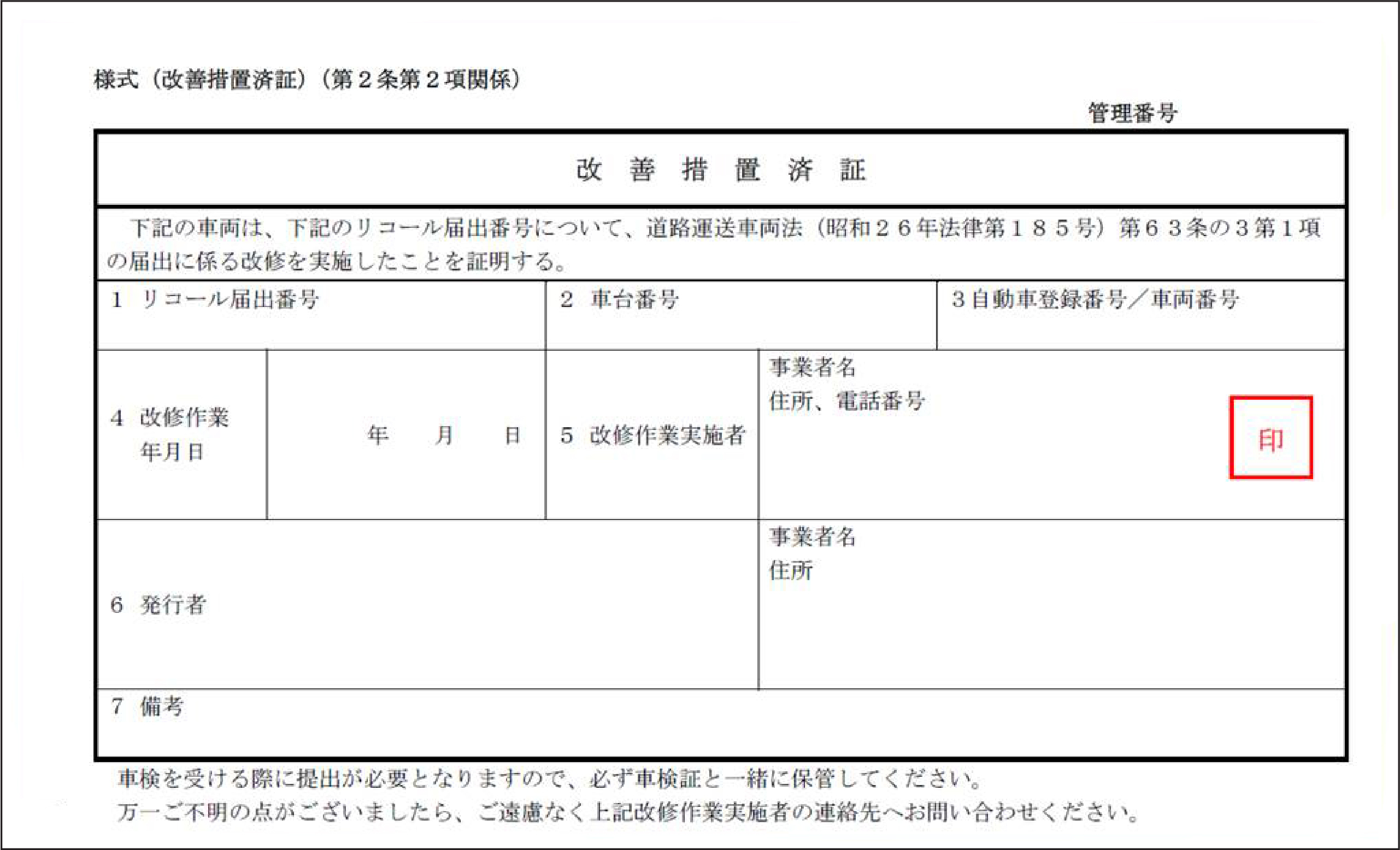
Example of recall completion certificate (without dealer stamp).
Other safety recalls
As the Transport Agency (or other delegated entity) makes information on additional recalls available, this process can be expanded to include those recalls for which information is available.
Page added 16 May 2018 (see amendment details)
Page updates: 31 May 2018, 8 June 2018; 26 September 2018
2 Takata non-alpha airbag recall
Following the compulsory Takata alpha airbag inflator recall order 2018 which came into effect on 31 May 2018, the Transport Agency is taking action to prohibit vehicles with any outstanding Takata airbag recalls from entering the New Zealand fleet.
The purpose of this technical bulletin is to outline, for Border Inspectors, the process for flagging vehicles subject to a Takata non-alpha airbag recalls and how to deal with them.
The process outlined below are the steps BIOs can take to assure they act with due diligence, best endeavors, and based upon the best information available.
Border Inspection Organisations
The Border Inspection Organisations, specifically Automotive Technologies Limited, ATJ, JEVIC, Independent Verification Systems (IVS), and NZ Biosecurity Services, as per the requirements of the Boarder Inspection VIRM, will provide data to the Transport Agency regarding open safety recalls on vehicles they inspect subject to the prerequisites below.
All reasonable efforts outlined in this process will be made to assure they provide the most accurate information. All responsibility for importing any vehicle remains with the importer.
The process
From 1 November 2018, Border Inspection Organisations are required to identify and report on vehicles they inspect (fitted with airbags) that are on the Takata airbag recall lists from the various source countries.
On finding a vehicle subject to recall for Takata airbag the vehicle is to be damage flagged with note added stating ‘Open Airbag Recall’.
Recalled Takata airbag vehicles from Japan
In Japan, vehicles subject to recalls are listed on the Japanese Ministry of Land, Infrastructure, Transport and Tourism (MLIT) web site at the following address, Border Inspection Organisations are to check whether the recalls have been closed in Japan, if it has been closed no action needs to be taken: https://www.jaspa.or.jp/portals/recallsearch/index
Recalled Takata airbag vehicles from other countries
Vehicles from countries other than Japan will have to be checked against official sites in those countries. These include, but are not limited to:
- USA
https://www.nhtsa.gov/recalls - Australia
https://www.productsafety.gov.au/recalls/compulsory-takata-airbag-recall/takata-airbag-recalls-list - UK
https://www.dft.gov.uk/vosa/apps/recalls/default.asp - There may be appropriate lists in other jurisdictions.
It is important to understand that this is not a new requirement it is just enforcing the existing requirement that recalls are to be closed prior to a vehicle being imported into New Zealand.
If the vehicle is on one of the lists and conclusive evidence from the manufacturer or jurisdictional authority that the airbag recall has been completed is not available, the vehicles will be damage flagged with notes recorded stating ‘Open Airbag Recall’.
Entry certification
At entry certification if a vehicle is presented with a damage flag and notes stating ‘Open Airbag Recall’ it is not to be passed until evidence is provided from the NZ manufacturer's agent that the effected airbags have been replaced.
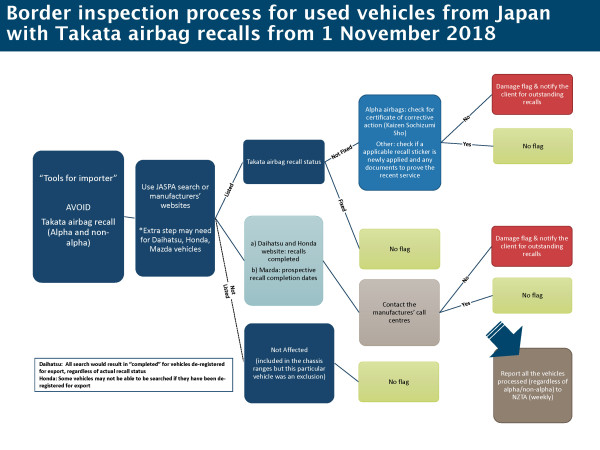
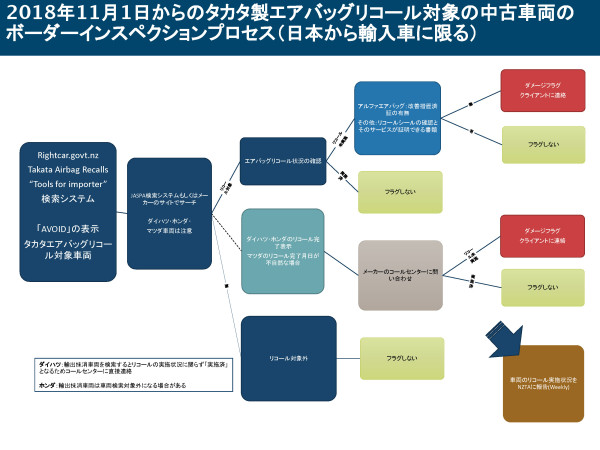
Page added 26 September 2018 (see amendment details)
3 Vehicles fitted with ITS Connect
If any vehicle that is effected by this technical bulletin (by make/model/model code) has damage that requires photos are uploaded to BIS, please prioritise the damage photos and note the ITS-Connect status in the Damage notes. For example:
|
The ITS Connect system fitted to some vehicles originating in Japan operates by broadcasting a signal on the 760MHz frequency. This frequency is not compatible with the licensing framework in New Zealand. Under the Radio Communications Act 1989 it is illegal to import or operate a device that operates on this frequency
The purpose of this technical bulletin is to define a process for identifying vehicles fitted with ITS Connect systems and how these vehicles need to be processed if an ITS Connect system is fitted.
The process outlined below shows the steps border inspection organisations (BIOs) can take to assure they act with due diligence, best endeavours, and based upon the best information available.
BIOs to provide data to NZTA
The BIOs, specifically Automotive Technologies Limited, ATJ, JEVIC, Independent Verification Systems (IVS), and NZ Biosecurity Services, as per the requirements of this manual, will provide data to NZTA regarding the presence of ITS Connect on vehicles they inspect, subject to the prerequisites below.
All reasonable efforts outlined in this process will be made to assure the BIOs provide the most accurate information. All responsibility for importing any vehicle remains with the importer.
The process for BIOs to follow
From 1 April 2021 BIOs must check if vehicles they inspect (that are on the defined make and model list) are fitted with an ITS Connect system.
Vehicles coming to New Zealand from Japan
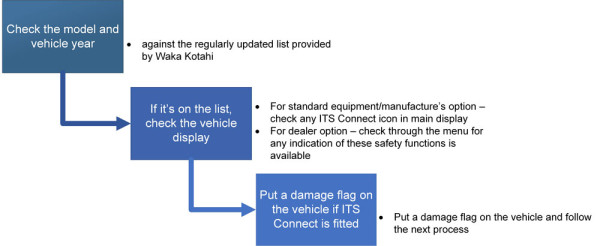
Process for ITS Connect fitted vehicle
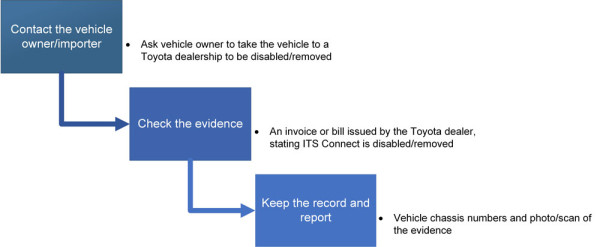
Vehicles that must be inspected for ITS Connect
| Make | Model | Year | Model code |
|---|---|---|---|
| Lexus | ES300h | 10/2018+ | 6AA-AXZH10 |
| 08/2020+ | 6AA-AXZH11 | ||
| Lexus | LBX | 11/2023+ | 6AA-MAYH10 6AA-MAYH15 |
| 08/2024+ | 4BA-GAYA16 | ||
| Lexus | LC500 | 06/2023+ | 5BA-URZ100 |
| LC500 convertible | 06/2023+ | 5BA-URZ100 | |
| LC500h | 06/2023+ | 6AA-GWZ100 | |
| Lexus | LM500h | 12/2023+ | 5AA-TAWH15W |
| Lexus | LS500 | 10/2017+ |
DBA-VXFA50 DBA-VXFA55 |
| 11/2020+ |
3BA-VXFA50 3BA-VXFA55 | ||
| LS500h | 10/2017+ |
DAA-GVF50 DAA-GVF55 | |
| 10/2019+ |
6AA-GVF50 6AA-GVF55 | ||
| Lexus | LX600 | 01/2022+ | 3BA-VJA301W |
| Lexus | NX300 | 08/2018+ |
DBA-AGZ10 DBA-AGZ15 |
| 07/2020+ |
3BA-AGZ10 3BA-AGZ15 | ||
| NX250 | 10/2021+ |
5BA-AAZA20 5BA-AAZA25 | |
| NX350 | 10/2021+ | 5BA-TAZA25 | |
| NX300h | 08/2018+ |
DAA-AYZ10 DAA-AYZ15 6AA-AYZ10 6AA-AYZ15 | |
| NX350h | 10/2021+ |
6AA-AAZH20 6AA-AAZH25 | |
| NX450h+ | 10/2021+ | 6LA-AAZH26 | |
| Lexus | RX200t/RX300 | 10/2015+ |
DBA-AGL20W DBA-AGL25W |
| RX300 | 07/2020+ |
3BA-AGL20W 3BA-AGL25W | |
| RX350 | 11/2022+ |
5BA-TALA10 5BA-TALA15 | |
| RX450h | 10/2015+ |
DAA-GYL20W DAA-GYL25W | |
| 07/2020+ |
6AA-GYL20W 6AA-GYL25W | ||
| RX450hL | 12/2017+ | DAA-GYL26W | |
| 07/2020+ | 6AA-GYL26W | ||
| RX500h | 11/2022+ | 5AA-TALH17 | |
| RX350h | 07/2023+ |
6AA-AALH10 6AA-AALH15 | |
| RX450h+ | 11/2022+ | 6LA-AALH16 | |
| Lexus | RZ300e | 11/2023+ | ZAA-XEBM10 |
| RZ450e | 03/2023+ | ZAA-XEBM15 | |
| Lexus | UX200 | 11/2018+ | 6BA-MZAA10 |
| UX250h | 11/2018+ |
6AA-MZAH10 6AA-MZAH15 | |
| UX300e | 10/2020+ | ZAA-KMA10 | |
| UX300h | 01/2024+ | 6AA-MZAH11 6AA-MZAH16 | |
| Toyota | Alphard | 01/2018+ |
DBA-AGH30W DBA-AGH35W DBA-GGH30W DBA-GGH35W |
| 01/2020+ |
3BA-AGH30W 3BA-AGH35W 3BA-GGH30W 3BA-GGH35W | ||
| 06/2023+ |
3BA-AGH40W 3BA-AGH45W | ||
| Alphard Hybrid | 01/2018+ | DAA-AYH30W | |
| 01/2020+ | 6AA-AYH30W | ||
| 06/2023+ |
6AA-AAHH40W 6AA-AAHH45W | ||
| Toyota | Camry | 08/2018+ | DAA-AXVH70* |
| 08/2020+ | 6AA-AXVH70* | ||
| 10/2019+ | 6AA-AXVH75* | ||
| Toyota | Century | 09/2023+ | 6LA-GRG75 |
| Toyota | C-HR | 05/2018+ |
DBA-NGX10* DBA-NGX50* 3BA-NGX10* 3BA-NGX50* DAA-ZYX10* 6AA-ZYX11 N/A |
| Toyota | Corolla Sport | 06/2018+ |
3BA-NRE210H* 3BA-NRE214H* |
| 06/2020+ |
6AA-ZWE211H* 6AA-ZWE213H* | ||
| 10/2022+ |
6AA-ZWE219H N/A 6BA-MZEA12H N/A | ||
| Toyota | Crown | 08/2016+ |
DBA-ARS210 DBA-GRS210 DBA-GRS211 DBA-GRS214 |
| 06/2018+ | 3BA-ARS220 | ||
| Crown FCEV | 11/2023+ | ZBA-KZSM30 | |
| Crown Hybrid | 10/2015+ |
DAA-AWS210 DAA-AWS211 | |
| 06/2018+ |
6AA-AZSH20 6AA-AZSH21 6AA-GWS224 | ||
| 11/2023+ | 6AA-AZSH32 | ||
| Crown Majesta | 09/2015+ |
DAA-AWS215 DAA-GWS214 | |
| Crown Crossover | 07/2022+ |
5AA-TZSH35 6AA-AZSH35 | |
| Crown Sport | 10/2023+ | 6AA-AZSH36W | |
| Crown Sport HEV | 12/2023+ | 6LA-AZSH37W | |
| Toyota | Esquire | 07/2017+ |
DBA-ZRR80G* DBA-ZRR85G* |
| 04/2020+ |
3BA-ZRR80G* 3BA-ZRR85G* | ||
| Esquire Hybrid | 07/2017+ | DAA-ZWR80G* | |
| 04/2020+ | 6AA-ZWR80G* | ||
| Toyota | Harrier | 06/2017+ |
DBA-ZSU60W* DBA-ZSU65W* DBA-ASU60W* DBA-ASU65W* |
| 06/2020+ |
6BA-MXUA80 6BA-MXUA85 | ||
| Harrier Hybrid | 06/2017+ | DAA-AVU65W* | |
| 06/2020+ |
6AA-AXUH80 6AA-AXUH85 | ||
| Harrier PHEV | 09/2022+ | 6LA-AXUP85 N/A | |
| Toyota | Land Cruiser | 08/2021+ |
3BA-VJA300W 3DA-FJA300W |
| 04/2024+ | 3DA-GDJ250W | ||
| Toyota | Mirai | 12/2020+ | ZBA-JPD20 |
| Toyota | Noah | 07/2017+ |
DBA-ZRR80G* DBA-ZRR80W* DBA-ZRR85G* DBA-ZRR85W* |
| 04/2020+ |
3BA-ZRR80G* 3BA-ZRR80W* 3BA-ZRR85G* 3BA-ZRR85W* | ||
| 01/2022+ |
6BA-MZRA90W 6BA-MZRA95W | ||
| Noah Hybrid | 07/2017+ |
DAA-ZWR80G* DAA-ZWR80W* | |
| 04/2020+ |
6AA-ZWR80G* 6AA-ZWR80W* | ||
| 01/2022+ |
6AA-ZWR90W 6AA-ZWR95W | ||
| Toyota | Prius | 12/2015+ |
DAA-ZVW50 DAA-ZVW51 DAA-ZVW55 |
| 07/2020+ |
6AA-ZVW51 6AA-ZVW55 | ||
| 01/2023+ |
6AA-MXWH60 6AA-MXWH65 6AA-ZVW60 6AA-ZVW65 | ||
| Prius PHV | 10/2016+ | DLA-ZVW52 | |
| 07/2020+ | 6LA-ZVW52 | ||
| 03/2023+ | 6LA-MXWH61 | ||
| Toyota | Vellfire | 01/2018+ |
DBA-AGH30W DBA-AGH35W DBA-GGH30W DBA-GGH35W |
| 01/2020+ |
3BA-AGH30W 3BA-AGH35W 3BA-GGH30W 3BA-GGH35W | ||
| 06/2023+ |
5BA-TAHA40W 5BA-TAHA45W | ||
| Vellfire Hybrid | 01/2018+ | DAA-AYH30W | |
| 01/2020+ | 6AA-AYH30W | ||
| 06/2023+ |
6AA-AAHH40W 6AA-AAHH45W | ||
| Toyota | Voxy | 07/2017+ |
DBA-ZRR80G* DBA-ZRR80W* DBA-ZRR85G* DBA-ZRR85W* |
| 04/2020+ |
3BA-ZRR80G* 3BA-ZRR80W* 3BA-ZRR85G* 3BA-ZRR85W* | ||
| 01/2022+ |
6BA-MZRA90W 6BA-MZRA95W | ||
| Voxy Hybrid | 04/2020+ |
DAA-ZWR80W* 6AA-ZWR80W* | |
| 01/2022+ |
6AA-ZWR90W 6AA-ZWR95W |
* indicates ITS is a dealer's option for this model.
Inspecting the vehicle for an active ITS Connect system
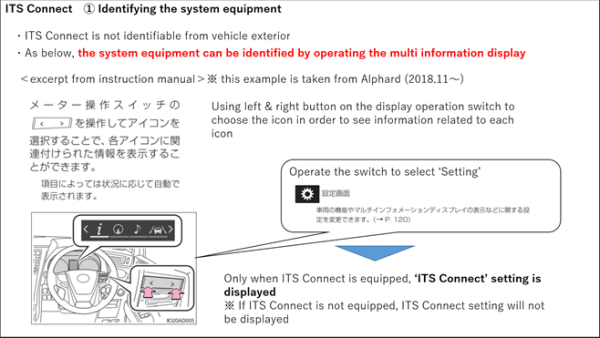
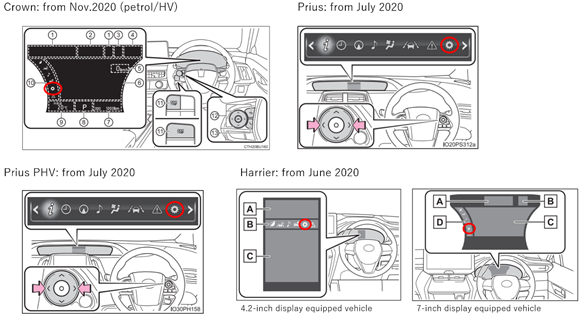
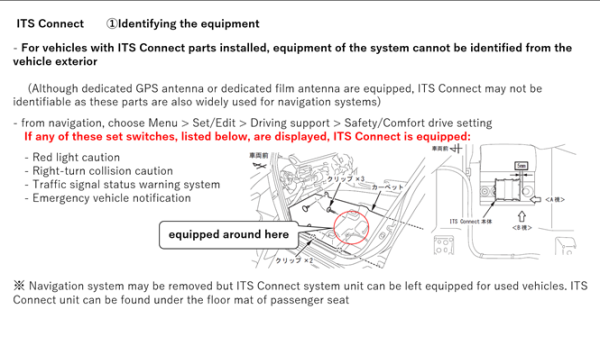
To determine if ITS Connect is fitted and operational, two checks must be made to the vehicle. The first check is on the driver information display (MID, or MFD). The second check is on the navigation system.
In both cases the inspector will be looking for any indication of settings that are associated with an active ITS Connect system.
| Note: the images below do not cover all vehicles. This page will be updated as manufacturers supply further content and advice. |
ITS Connect manufacturer option inspection
ITS Connect dealer option check
Identifying ITS Connect in a Toyota Prius
Video example
Visual guide to identifying ITS Connect in a Toyota Prius
Figure 1. Settings selector button
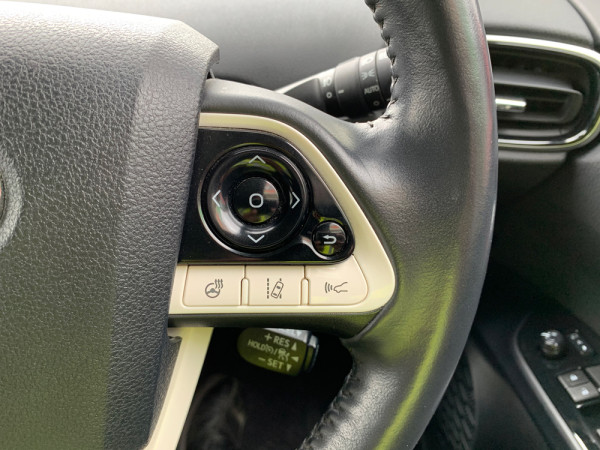
Figure 2. Setting screens
Use arrows on steering wheel control pad to move the selector
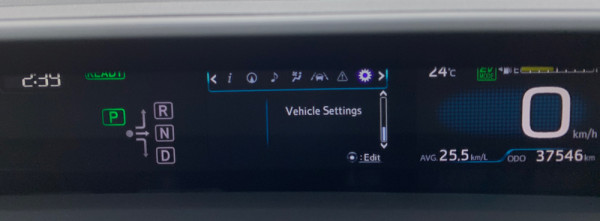
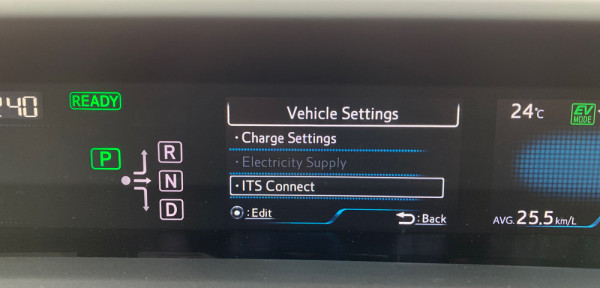
Figure 3. ITS Connect fitted as shown under vehicle settings
This vehicle would need to be damaged flagged and have the system removed.
Identifying ITS Connect in a Toyota Vellfire
Video example
Visual guide to identifying ITS Connect in a Toyota Vellfire
Figure 4. Vellfire MFD control buttons
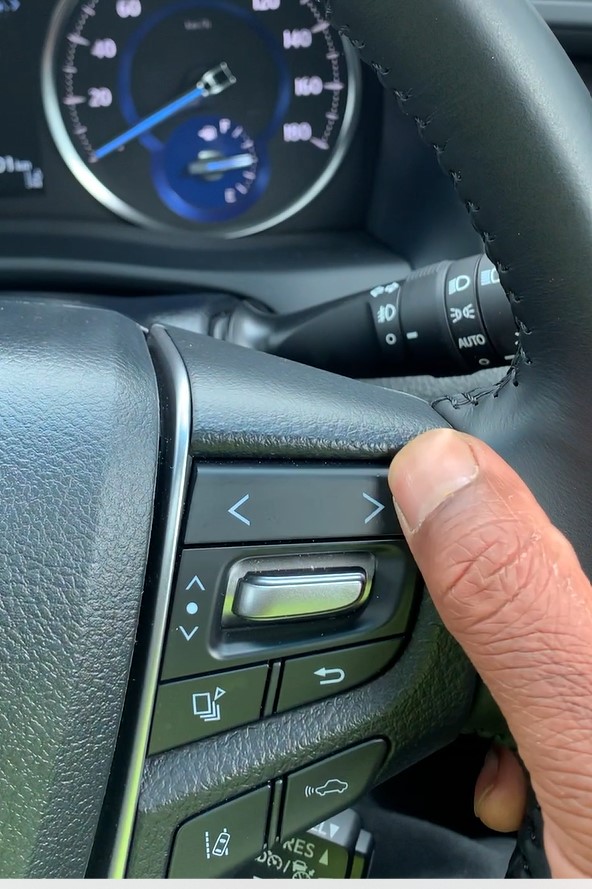
Figure 6. Scroll Right to find settings
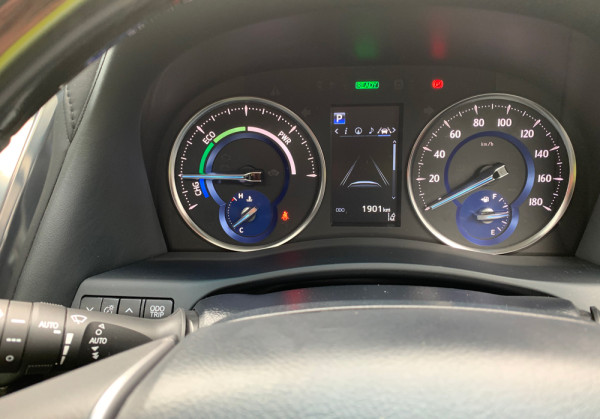
Figure 7. Select the gear icon for settings
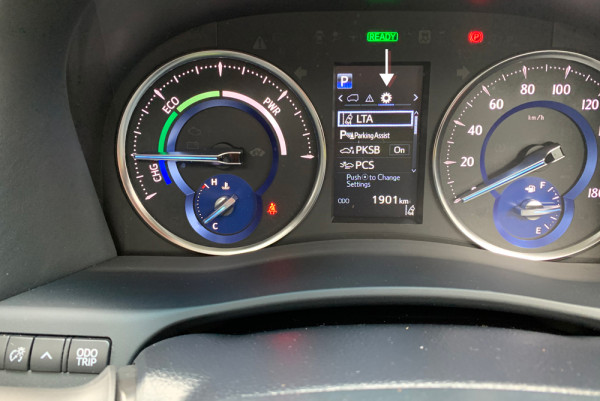
Figure 8. Scroll down and select 'Vehicle Settings'
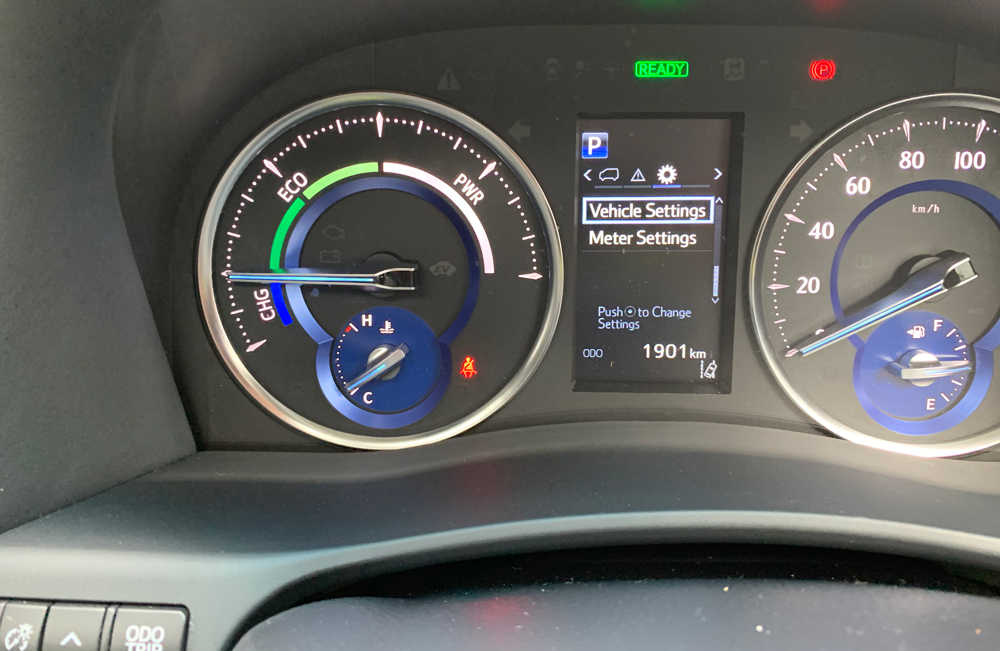
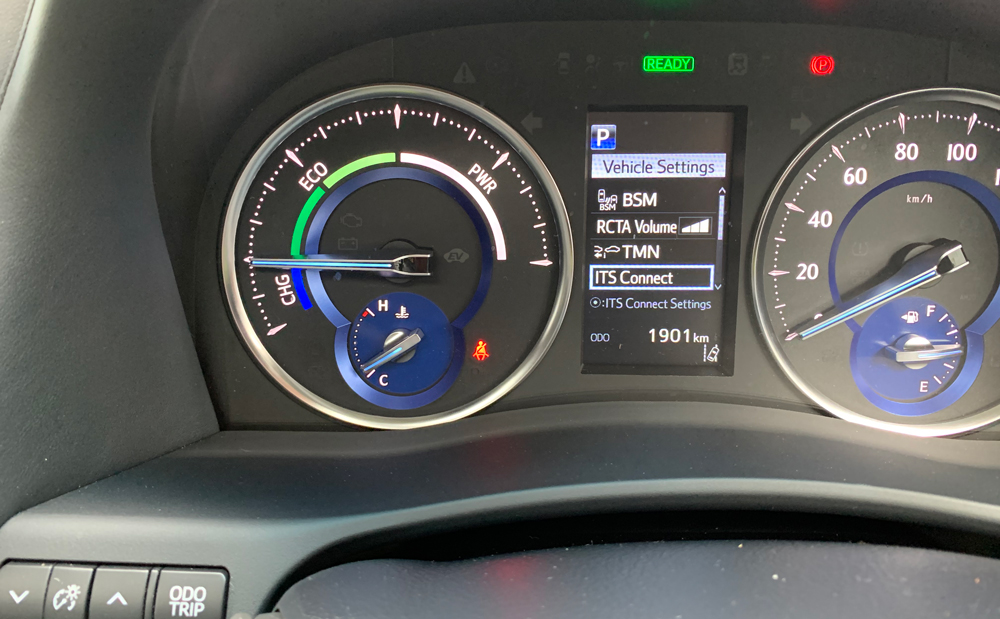
Figure 9. Scroll down
If ITS connect is fitted you will see the settings as below.
Conclusive evidence of inspection and ITS Connect system removal
To meet the burden of proof of conclusive evidence, it must be shown that the vehicle is not fitted with an ITS Connect system.
For a vehicle that is not fitted with ITS-Connect two photos must be saved to the BIO's vehicle file that show the settings screens for both the Navigation unit and the MID. The vehicle's damage notes (in the vehicle's file) must be updated to show that the vehicle has been inspected for ITS-Connect and ITS-Connect is not fitted, eg 'ITS-Connect not identified'. Note: damage notes cannot be added to BIS as the vehicle does not need a damage flag applied.
A vehicle that has been found to be fitted with an ITS Connect system must have a damage flag placed on the vehicle with a note stating ‘ITS Connect Fitted’. Any other damage or Takata airbag recall notes must also be added if applicable. The damage flag is to remain on the vehicle even if ITS-Connect is disabled in Japan. Note: The vehicle record should not be created on BIS until the vehicle has completed its final border inspection, once a damage flag has been placed the record cannot be edited.
The vehicle owner must take the vehicle to a Toyota or Lexus franchise in Japan to have the ITS Connect system removed. An invoice or receipt from the dealer that shows the vehicles chassis number and indicates that the system has been removed is acceptable evidence that ITS Connect is no longer fitted.
After the ITS-connect is disabled a secondary check must be made on both the Navigation unit settings and the MID settings to ensure the ITS Connect associated settings are no longer visible. A copy of the invoice and photos of the displays on the second inspection must be saved in the vehicle file. A copy of the invoice should be loaded to BIS as evidence of the ITS Connect system removal. The invoice should be uploaded as a photo. PDFs cannot be uploaded unless the vehicle is water damaged. The vehicle should not be recorded as water damaged for the purpose of ITS Connect.
Page amended 22 January 2025 (see amendment details)
4 Acid wash process on used imports
Vehicle inspection requirements manuals reference:
Background
Acid washing is a treatment being used to repair corrosion in vehicles, in particular the underbody structure and components.
The process involves the use of a chemical mix containing an acid base liquid, phosphoric acid is commonly used, to remove corrosion and treat the metal area. The following photos show examples of visible signs of acid wash repair.
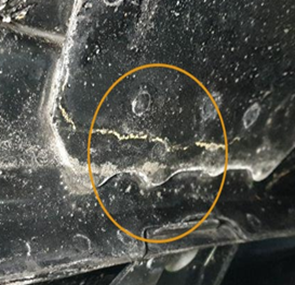
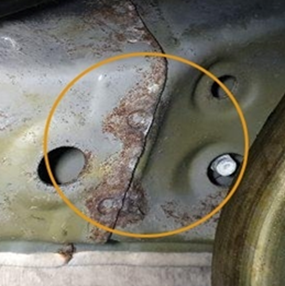
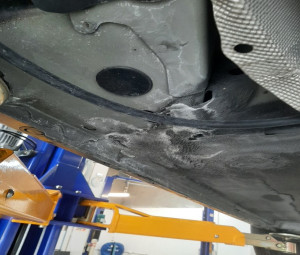
Visible signs of an acid wash repair include:
- The area has been cleaned and a clear topcoat, or no topcoat applied.
- A white residue is noticeable in joints, seams, or coming through underseal/topcoats.
- Corrosion is still visibly active in an area that has been treated.
An area of metal that has not been acid washed correctly will continue to degrade within a short time and can be detrimental to the vehicle structure.
Application
When visible signs of acid wash repair as described above are observed by an inspector at an entry compliance inspection the vehicle must be failed and referred to a Repair Certifier for assessment.
The threshold for requiring repair certification instructs 'A vehicle must be referred to a specialist repair certifier if signs of repair, rust prevention, acid wash or under-sealing to any part of the vehicle structure are evident'. The repair certifier will assess the repair and decide if it requires remedial work and a Light vehicle repair record of certification (LT308) issued, or if the repair is acceptable a No repair certification required declaration – light vehicle (LT307) issued.