
PRS & QMS
QMS Border inspection of used imported vehicles
Quality management system (QMS)
For NZ Transport Agency Waka Kotahi-appointed border inspecting organisations
Model QMS for NZ Transport Agency-Waka Kotahi-appointed border inspecting organisations
|
Vehicle inspector performance assessment checksheet (Excel spreadsheet) Vehicle inspector performance assessment checksheet (PDF for manual completion)Inspecting organisation performance assessment checksheet (Excel spreadsheet) Inspecting organisation performance assessment checksheet (PDF for manual completion)
|
| Complaints record (PDF) |
| Conflict of interest record (PDF) |
| Controlled documents record (PDF) |
| Delegation record (PDF) |
| Equipment record (PDF) |
| Improvement record (PDF) |
| Induction record (PDF) |
| Notification of lost or stolen controlled documents (PDF) |
| Notification of vehicle inspector transfer (PDF) |
| Staff record (PDF) |
| Technical information record (PDF) |
| Training record (PDF) |
QMS: Entry certification
Quality management system (QMS)
For NZTA-appointed entry certification (used light and new/used heavy vehicles) inspecting organisations
Model QMS: used light and new/used heavy vehicles entry certification inspecting organisations
|
Vehicle inspector performance assessment checksheet (Excel spreadsheet) Vehicle inspector performance assessment checksheet (PDF for manual completion)Inspecting organisation performance assessment checksheet (Excel spreadsheet) Inspecting organisation performance assessment checksheet (PDF for manual completion)
|
| Complaints record (PDF) |
| Conflict of interest record (PDF) |
| Controlled documents record (PDF) |
| Delegation record (PDF) |
| Equipment record (PDF) |
| Improvement record (PDF) |
| Induction record (PDF) |
| Notification of lost or stolen controlled documents (PDF) |
| Notification of vehicle inspector transfer (PDF) |
| Staff record (PDF) |
| Technical information record (PDF) |
| Training record (PDF) |
| VIN plate register (PDF) |
QMS: Heavy vehicle specialist certification
Quality management system (QMS)
For NZ Transport Agency Waka Kotahi-appointed heavy vehicle specialist certification inspecting organisations
Model QMS: heavy vehicle specialist certification inspecting organisations
From 1 February 2024, the above model QMS replaced the PRS: Heavy vehicle specialist certification.
Vehicle inspector performance assessment checksheet (Excel spreadsheet)
Vehicle inspector performance assessment checksheet (PDF for manual completion)
Inspecting organisation performance assessment checksheet (Excel spreadsheet)
Inspecting organisation performance assessment checksheet (PDF for manual completion)
Example QMS master records (Excel spreadsheet)
Complaints record (PDF)
Controlled documents record (PDF)
Delegation record (PDF)
Equipment record (PDF)
Escalation process for non-compliance (PDF)
HVSC conflicts of interest register (PDF)
Improvement record (PDF)
Induction record (PDF)
Notification of lost or stolen controlled documents (PDF)
Notification of vehicle inspector transfer (PDF)
Staff record (PDF)
Technical information record (PDF)
Training record (PDF)
QMS: In-service certification
|
Vehicle inspector performance assessment checksheet (Excel spreadsheet) Vehicle inspector performance assessment checksheet (PDF for manual completion) Inspecting organisation performance assessment checksheet (Excel spreadsheet) Inspecting organisation performance assessment checksheet (PDF for manual completion)
|
| Complaints record (PDF) |
| Conflict of interest record (PDF) |
| Controlled documents record (PDF) |
| Delegation record (PDF) |
| Equipment record (PDF) |
| Improvement record (PDF) |
| Induction record (PDF) |
| Notification of lost or stolen controlled documents (PDF) |
| Notification of vehicle inspector transfer (PDF) |
| Staff record (PDF) |
| Technical information record (PDF) |
| Training record (PDF) |
| Duplicate label register (PDF) |
QMS: Entry certification (new light vehicles)
For NZ Transport Agency Waka Kotahi-appointed new light vehicle entry inspecting organisations/vehicle compliance inspectors
Note: the Model QMS: used entry certification inspecting organisation replaced the PRS: Entry certification (new light vehicles on 2 February 2026.
Model QMS: new light vehicle entry inspecting organisations/vehicle compliance inspectors
Master records
Notification of lost or stolen controlled documents
PRS: Light vehicle repair certification
Introduction
Objectives of vehicle certification
Vehicle certification is about ensuring that vehicles used on New Zealand’s roads meet the roadworthiness requirements defined in New Zealand law – when they enter the fleet and throughout their on-road lives.
Objectives of the Performance Review System (PRS)
The NZ Transport Agency’s goal is to improve transport for all New Zealanders by improving the integration, safety, responsiveness and sustainability of the transport system. To do this, everyone involved in vehicle certification must apply the requirements set out in law accurately and consistently. For certifiers, this means following the requirements specified in their Vehicle inspection requirements manual (VIRM) and other required documentation.
The PRS is a tool used by the Transport Agency for all certifiers and is intended to:
- focus on issues important to road safety
- be open and transparent in reviewing the performance of certifiers
- provide a level playing field, as it applies equally to all certifiers
- be easy to understand and use
- allow certifiers to measure their own performance in exactly the same way as the Transport Agency reviewer during a review
- allow and encourage certifiers to identify problems and opportunities to improve so they can take early action on their own initiative
- identify certifiers who perform well so they can be given incentives to maintain their performance and look for ways of continuously improving it
- identify certifiers who perform poorly so they can be encouraged through more frequent reviews to improve their performance.
How the PRS works
The PRS clearly sets out:
- what is expected of certifiers
- the way the Transport Agency will assess certifiers’ performance against these expectations
- a scoring system that enables certifiers’ performance to be measured.
The PRS is made up of two main parts:
1. General part | This identifies five general categories that are important for all types of certification work. |
2. Technical part | The Technical part differs for each type of certification work. For example, for WoF and CoF certification, the categories of the Technical part follow the items set out in the Vehicle inspection requirements manual: In-service certification. |
The General part measures how well certifiers perform in complying with all legal requirements (including Transport Agency requirements) relating to vehicle certification. It does this by measuring performance in five categories:
1. Technical performance | Do certifiers identify vehicles and components correctly, make correct technical decisions and certify those vehicles and components correctly? Are they competent in all technical aspects of their certification work? |
2. Administrative performance | Are certifiers competent in all administrative aspects of their certification work, including the proper use of documents and correct entry of information? |
3. Resources | Do certifiers have the right resources for their certification work, eg the right facilities and equipment? |
4. Management | Do certifiers properly manage the parts of their operations that support their certification work, eg do they make sure their equipment is properly maintained? |
5. Performance improvement | Do certifiers actively identify problems and opportunities to improve and take advantage of them? Do they regularly review their own performance? Are they open to complaints? |
Each category is made up of a number of elements that are relevant to the category. For example, the resources category is made up of the following elements:
- facilities
- technical equipment
- administration equipment
- technical information
- controlled certification documents
- certification staff.
In this manual each category has a scoring page associated with it which provides performance descriptions and corresponding scores for each element. Scores range from 0 to 3 and are allocated by matching a certifier’s performance to the corresponding descriptions set out in the scoring pages.
The Technical part also has scoring pages. The scores from these feed into the General part to produce a total score.
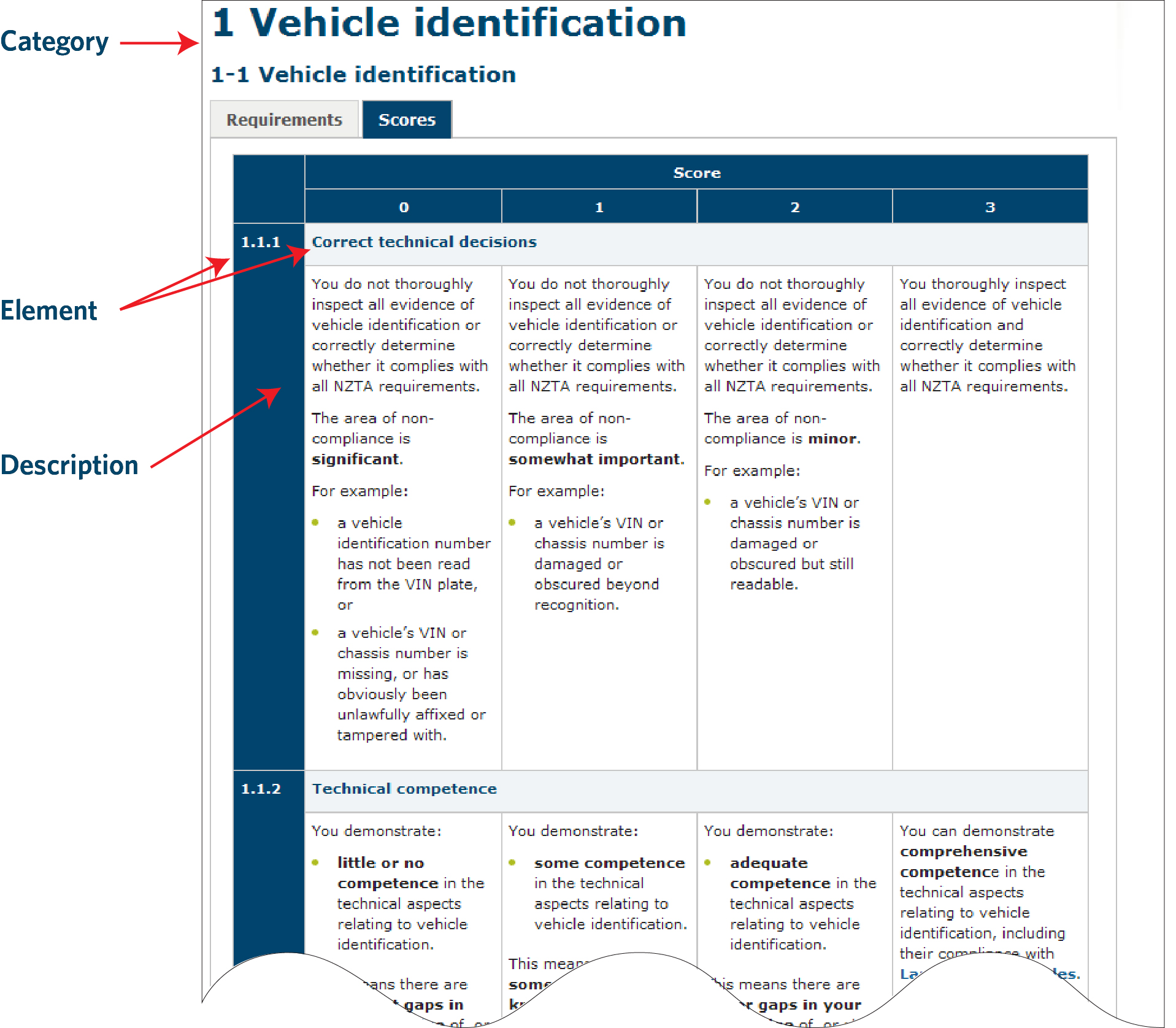
Figure 1-1-1. Sample scoring page (detail)
How the parts of the PRS fit together
How Transport Agency reviewers will use the PRS
During performance reviews, our reviewers will observe you at work. Reviewers will compare your performance with the descriptions on the PRS scoring sheets, and will score you accordingly. These scores will be combined into an overall PRS score.
We will tell you the result for each area reviewed, and you will be able to use your PRS manual to see how the score was calculated.
There are no hidden measurement or scoring systems. Reviewers are encouraged to help you understand how the system works and how it can be used to help continuous improvement. Success for the Transport Agency will be measured in higher performance scores – not in greater numbers of faults detected.
Use the PRS to improve your performance
We encourage certifiers to use the PRS regularly to review their own performance, and to identify problems and opportunities to improve. This section is called Measuring your performance, and the scoring guidelines section explains how this is done.
Benefits of good performance
The Transport Agency will reward good performance scores by reducing the frequency of planned review visits. This will save you money by reducing the cost of planned review fees. It will also reduce the disruption to your business caused by reviews.
Penalties for poor performance
Poor performance scores will reduce the Transport Agency’s confidence in you as a certifier. Such scores will mean more planned review visits so that your performance can be more closely monitored (see PRS Scores and actions table in the Measuring your performance section). Poor performance scores will increase the cost to you in planned review fees and the disruption to your business caused by reviews. We hope this will encourage you to use the results of the PRS to improve your performance.
Enforcement action
The PRS is a powerful tool to enable the Transport Agency to identify persistently poor performers. We are confident that most certifiers will respond positively to the PRS approach and use it to help improve their performance. When certifiers fail to respond positively and continue to perform poorly, this will be identified by PRS reviews. In these cases, the Transport Agency will focus its enforcement and investigation resources on obtaining evidence of poor performance.
The final sanction
Clear evidence of persistently unacceptable performance will lead to disciplinary action. If certifiers fail to respond to warnings and suspension action, evidence gained during reviews will be used to support the case for withdrawal of their authorisation.
Road safety and the maintenance of a fair vehicle certification system demand firm and decisive action by the Transport Agency. When certifiers fail to carry out their responsibilities the Transport Agency will act to remove their authorisation. This will be done in a fair and reasonable manner and decisions will be open to appeal.
Working together in partnership
The Transport Agency’s aim is to work together with certifiers openly and transparently to achieve our joint goals of high standards of certification, leading to an improvement in road safety.
Definitions and abbreviations
Adjusted score | Means the total score that has been adjusted to take into account element scores of 1+ or less, ie where there is poor performance in some areas. |
Category | These are the different areas that make up inspection and certification work. There are five categories which are weighted depending on their importance: Technical performance, Administrative performance, Resources, Management and Performance improvement. The five categories make up the General part of the PRS from which a score is derived. |
Certifier | Means a vehicle inspector and/or inspecting organisation, depending on the context, and includes a specialist certifier. |
Computer system | Means the system where the certifier enters certification . |
Controlled document | Means a document you must use and complete as part of your inspection and certification work, such as WoF labels, checksheets, certification plates or certificates. |
Description | Means the performance description for each element score against which the certifier’s performance is assessed. There are four descriptions for each element, one each for the scores 0, 1, 2 and 3. |
Element | Means a detailed area relating to inspection and certification work, and related elements are grouped together to make up a category. |
Element score | Means the score that is assigned to an element. |
External document | Means any document supplied by outside parties (eg from vehicle owner or manufacturer) that you rely on in your inspection and certification work, such as exemption notices. |
General part | Means the main part of the PRS which consists of the five categories and from which the total score is calculated. |
Inspection and certification document | Means a document you use as part of your certification work, such as a checksheet or certification label. It includes controlled, uncontrolled and external documents. |
Mystery shopper exercise | Means the Transport Agency arranging for a vehicle with known faults to be presented for inspection to check that the certifier carries out the inspection correctly. The certifier does not know that the vehicle is part of a mystery shopper exercise. This give the Transport Agency information about how inspections are carried out between scheduled reviews. |
PRS | Means the Performance Review System. |
Random re-inspection | Means a reviewer visiting unannounced between reviews and re-inspecting a vehicle that the certifier has just certified. This gives the Transport Agency information about how the certifier is performing between reviews. |
Requirements | Means Transport Agency requirements which are contained in the PRS manual, your VIRM, your agreement/contract with Transport Agency and other information issued by Transport Agency. |
Review | Means an assessment of your performance as a certifier, and is usually scheduled in advance depending on the score you achieved at the previous review. Reviews are carried out by Transport Agency reviewers. |
Score | This is the result of your review and gives an indication of how well you performed. The higher the score, the better your performance as a certifier. |
Self-assessment | Means you assess your own performance using the same criteria as the Transport Agency reviewer does when he carries out a review. The PRS requires you to carry out regular self-assessments. |
Technical part | Means the part of the PRS that relates directly to the technical aspects of the inspection and certification work, ie technical decisions, technical competence and inspection equipment. The Technical part scores are transferred to the General part before the total score is calculated. |
Total score | This is the score that is calculated when all the element scores have been assigned and the category scores have been weighted, but before it has been adjusted for areas of poor performance. |
Transport Agency | Means the NZ Transport Agency. |
Uncontrolled document | Any document you develop yourself as part of your inspection and certification work, such as design calculations or technical drawings. |
VIRM | Means the Vehicle inspection requirements manual. There are different VIRMs, depending on the type of certification work, and each one has a corresponding PRS manual. |
Weighted category score | Means a category score that has been weighted to reflect its importance in the overall inspection and certification work relative to the other categories. |
General part
1 Technical performance
Requirements
| What the Transport Agency expects of you | How the Transport Agency will assess your performance | |
|---|---|---|
| 1.1 |
Correct certification outcomes |
|
|
You will:
|
The Transport Agency will:
The Transport Agency may:
|
|
| 1.2 |
Correct technical decisions |
|
|
You are consistently correct in determining if the vehicles or components you are asked to certify comply with all Transport Agency requirements, taking into account technical information provided by the Transport Agency, such as the VIRM: Light vehicle repair certification. |
The Transport Agency will:
The Transport Agency may:
|
|
| 1.3 |
Technical competence |
|
|
You staff are competent in all technical aspects of the inspection and certification work carried out by your business. For example, you must be competent in:
|
The Transport Agency will:
The Transport Agency may administer short tests. |
|
Scores
| Score | ||||
|---|---|---|---|---|
0 | 1 | 2 | 3 | |
| 1.1 | Correct certification outcomes | |||
You regularly do not achieve the correct certification outcomes. This means you regularly:
The incorrect certification outcomes are likely to compromise the safety of vehicle occupants or other road users. | You sometimes do not achieve the correct certification outcomes. This means you sometimes:
The incorrect certification outcomes may compromise the safety of vehicle occupants or other road users. | You usually achieve the correct certification outcomes. This means you usually:
Any incorrect certification outcomes do not compromise the safety of vehicle occupants or other road users. | You consistently achieve the correct certification outcomes. This means you:
| |
| 1.2 | Correct technical decisions | |||
| Your score here is the average score of your performance in meeting the Transport Agency’s expectations for ‘Correct technical decisions’ in the Technical part of the PRS. | ||||
| 1.3 | Technical competence | |||
| Your score here is the average score of your performance in meeting the Transport Agency’s expectations for ‘Technical competence’ in the Technical part of the PRS. | ||||
Page updated 28 January 2017
2 Administrative performance
Requirements
| What the Transport Agency expects of you | How the Transport Agency will assess your performance | |
|---|---|---|
| 2.1 | Correct use of inspection and certification documents | |
Inspection and certification documents are:
You consistently comply with all Transport Agency requirements (including VIRM requirements) relating to inspection and certification documents. This means you consistently:
| The Transport Agency will:
The Transport Agency may:
| |
| 2.2 | Administrative competence | |
You are competent in all administrative aspects of the inspection and certification work carried out by your business. For example, you must be competent in:
| The Transport Agency will:
| |
Scores
| Score | ||||
|---|---|---|---|---|
|
0
|
1
|
2
|
3
|
|
| 2.1 |
Correct use of inspection and certification documents |
|||
|
You regularly do not comply with the Transport Agency’s requirements (including VIRM requirements) relating to inspection and certification documents. This means you regularly do not:
|
You sometimes do not comply with the Transport Agency’s requirements (including VIRM requirements) relating to inspection and certification documents. This means you sometimes do not:
OR You regularly do not:
|
You usually comply with the Transport Agency’s requirements (including VIRM requirements) relating to inspection and certification documents. This means you consistently:
However, you occasionally do not:
|
You consistently comply with the Transport Agency’s requirements (including VIRM requirements) relating to inspection and certification documents. This means you consistently:
|
|
| 2.2 |
Administrative competence |
|||
|
You can demonstrate little or no competence in the administrative aspects of the inspection and certification work carried out by your business. This means you have significant gaps in knowledge of, or skills in:
|
You can demonstrate some competence in the administrative aspects of the inspection and certification work carried out by your business. This means you have some gaps in knowledge of, or skills in:
|
You can demonstrate adequate competence in the administrative aspects of the inspection and certification work carried out by your business. This means you can demonstrate adequate knowledge of, and skills in:
|
Youcan demonstrate comprehensive competence in all administrative aspects of the inspection and certification work carried out by your business. This means you can demonstrate comprehensive knowledge of, and skills in:
|
|
Page updated 28 January 2017
3 Resources
Requirements
| What the Transport Agency expects of you | How the Transport Agency will assess your performance | |
|---|---|---|
| 3.1 |
Facilities |
|
|
Facilities used for certification and inspection:
|
The Transport Agency will inspect facilities used for certification and inspection. |
|
| 3.2 |
Technical equipment |
|
|
You have ready access to, all technical equipment (including any manuals) required for your certification work, or required by the Transport Agency, such as tools and inspection equipment. The equipment is in good condition and working order. Note The score for this is the average of the technical equipment scores from the Self-assessment record — Technical part |
The Transport Agency will inspect your technical equipment. |
|
| 3.3 |
Administration equipment |
|
|
Ensure current access and accurate use to Landata (ie current login, access to the internet, accuracy and use to completing notes) |
||
| 3.4 |
Technical information |
|
|
You have, or have ready access to, all technical information required by the Transport Agency, such as VIRMs. The information is complete, up to date and in good condition. |
The Transport Agency will inspect your technical information. |
|
| 3.5 |
Controlled inspection and certification documents |
|
|
You have available blank copies of all controlled documents and must use and complete these as part of your inspection and certification work. Any controlled documents you have developed yourself, if permitted by the Transport Agency, comply with Transport Agency requirements. |
The Transport Agency will inspect your controlled inspection and certification documents. |
|
| 3.6 |
Inspection and certification |
|
|
You are the doing inspection and certification work and hold current and appropriate Transport Agency appointments for the certification work you carry out, unless you are specifically permitted by the Transport Agency to delegate specified parts of your inspection and certification work to persons who are not required to hold Transport Agency appointments (Note 1) All persons to whom you have delegated inspection and certification work are competent and qualified to do the specified work. If you are required to drive vehicles as part of your work you hold a current driver licences for the types of vehicle. |
The Transport Agency will:
|
|
Scores
| Score | ||||
|---|---|---|---|---|
|
0
|
1
|
2
|
3
|
|
| 3.1 |
Facilities |
|||
|
Facilities:
This means facilities are deficient to an extent that they adversely affect your certification decisions or certification outcomes. |
Facilities:
This means there are serious deficiencies in facilities that require improvement. Serious deficiencies are those that, if not improved promptly, may adversely affect your certification decisions or certification outcomes. |
Facilities:
However, there are minor aspects in facilities that could be improved. Minor aspects are those that do not adversely affect your certification decisions or certification outcomes but that, if improved, would make your inspection and certification work easier or more efficient. For example, there may be areas where lighting could be improved, or where your facilities could be better organised. |
Facilities:
|
|
| 3.2 |
Technical equipment |
|||
|
Your score here is the average score of your performance in meeting the Transport Agency’s expectations for ‘Technical equipment’ in the Technical part of the PRS. |
||||
| 3.3 |
Administration equipment |
|||
|
Not applicable. |
Not applicable. |
Not applicable. |
Not applicable. |
|
| 3.4 |
Technical information |
|||
|
You do not have, or do not have ready access to, the technical information required by the Transport Agency. |
You have, or have ready access to, all technical information required by the Transport Agency. The information is complete but not up to date. For example, when you receive amendments to an inspection manual, you do not update the manual as promptly as you could. |
You have, or have ready access to, all technical information required by the Transport Agency. The information is complete and up to date but not in good condition. For example, pages from an inspection manual may have been taken out at some stage and then put back in the wrong place (ie the pages are no longer in the right order, making it difficult to find items). |
You have, or have ready access to, all technical information required by the Transport Agency, such as VIRMs. The information is complete, up to date and in good condition. |
|
| 3.5 |
Controlled inspection and certification documents |
|||
|
You do not have available blank copies of most or any of the documents you must use and complete as part of your inspection and certification work OR You use documents you have developed yourself but:
|
You do not have available blank copies of some documents you must use and complete as part of your inspection and certification work OR Some documents you have developed yourself do not fully comply with Transport Agency requirements. |
You have available blanks of most documents you must use and complete as part of your inspection and certification work. Any documents you have developed yourself, if permitted by the Transport Agency, comply with Transport Agency requirements. |
You have available blanks of all documents you must use and complete as part of your inspection and certification work. Any documents you have developed yourself, if permitted by the Transport Agency, comply with Transport Agency requirements. |
|
| 3.6 |
Certification staff |
|||
|
You do not hold current and appropriate Transport Agency appointments for the certification work you carry out. You have delegated or contracted out work without Transport Agency permission. |
You hold current and appropriate Transport Agency appointments for the certification work you carry out. However:
|
You hold a current and appropriate Transport Agency appointments for the certification work you carry out. All persons to whom you have delegated certification work are competent and qualified to do the specified work. If you are required to drive a vehicle as part of your work you hold a current driver licence for the type of vehicle required to be driven. |
||
Page updated 28 January 2017
4 Management
Requirements
| What the Transport Agency expects of you | How the Transport Agency will assess your performance | |
|---|---|---|
| 4.1 |
Management of competence |
|
|
You have a coordinated approach to managing your competence in all aspects of your inspection and certification work. This means you:
You keep an up-to-date Training record, listing any internal and external training received as per the minimum requirements in your Deed of Appointment. |
The Transport Agency will:
|
|
| 4.2 |
Management of facilities |
|
|
Inspection premise/s and equipment as per VIRM requirements. |
||
| 4.3 |
Management of equipment |
|
|
You have a coordinated approach to managing your equipment. Your approach ensures that equipment is:
You keep an up-to-date Equipment record for each piece of equipment that requires regular maintenance or calibration. |
The Transport Agency will:
|
|
| 4.4 |
Management of technical information |
|
|
You have a coordinated approach to managing your technical information (such as VIRMs). Your approach ensures that technical information is:
You keep an up-to-date Technical information record. |
The Transport Agency will:
|
|
| 4.5 |
Management of inspection and certification documents |
|
|
You have a coordinated approach to managing your inspection and certification documents. Your approach ensures that:
You keep an up-to-date Controlled document record. |
The Transport Agency will:
|
|
| 4.6 |
Management of electronic inspection and certification information |
|
|
You have a coordinated approach to managing your electronic inspection and certification information. Your approach ensures that:
|
The Transport Agency will:
|
|
| 4.7 |
Management of inspection and certification staff |
|
|
You have a co-ordinated approach to managing yourself. Your approach ensures that:
You keep an up-to-date Delegation record if you delegate any responsibilities such as:
You display or make available upon request all Transport Agency appointments. |
The Transport Agency will:
|
|
| 4.8 |
Management of time |
|
|
You allocate enough time for you to carry out your inspection and certification work, allowing for the complexity of the work, your facilities, the available equipment, and your level of skill. This means you:
|
The Transport Agency will:
|
|
Note 1
Does not apply to a one-person business if no inspection and certification work is carried out when the inspector is away.
Scores
| Score | ||||
|---|---|---|---|---|
|
0
|
1
|
2
|
3
|
|
| 4.1 |
Management of competence |
|||
|
Your approach to managing your competence in all aspects of your inspection and certification work is inadequate. This means you:
|
Your approach to managing your competence in all aspects of your inspection and certification work is barely adequate. This means you:
OR You do not keep a Training record. |
Your approach to managing your competence in all aspects of your inspection and certification work is adequate. This means you usually:
However, you do not always:
|
Your approach to managing your competence in all aspects of your inspection and certification work is well coordinated. This means you consistently:
You keep an up-to-date Training record, listing any training you have received. |
|
| 4.2 |
Management of facilities |
|||
|
Not applicable. |
Not applicable. |
Not applicable. |
Not applicable. |
|
| 4.3 |
Management of equipment |
|||
|
Your approach to managing your equipment is inadequate. This means little or no equipment is:
|
Your approach to managing your equipment is barely adequate. This means you make sure equipment is available in sufficient numbers for the volume of inspection and certification work carried out by your business. However, you often do not make sure equipment is:
OR You do not keep an Equipment record for some or any equipment that requires regular maintenance or calibration. |
Your approach to managing your equipment is adequate. This means you usually make sure equipment is:
You keep an Equipment record for each piece of equipment that requires regular maintenance or calibration, but you do not always keep your Equipment record up to date. |
Your approach to managing your equipment is well coordinated. This means you consistently make sure equipment is:
You keep an up-to-date Equipment record for each piece of equipment that requires regular maintenance or calibration. |
|
| 4.4 |
Management of technical information |
|||
|
Your approach to managing your technical information is inadequate. This means you make little or no effort to manage your technical information. For example, some technical information may not have been updated for a considerable time. |
Your approach to managing your technical information is barely adequate. This means although you make some efforts to manage your technical information, you often do not:
OR You do not keep a Technical information record. |
Your approach to managing your technical information is adequate. This means you usually make sure your technical information is:
However, you do not always:
|
Your approach to managing your technical information is well coordinated. This means you consistently make sure your technical information is:
You keep an up-to-date Technical information record. |
|
| 4.5 |
Management of inspection and certification documents |
|||
|
Your approach to managing your certification documents is inadequate. This means you do not:
OR You lost controlled documents, or had controlled documents stolen, but did not report the loss or theft to the Police or the Transport Agency. |
Your approach to managing your inspection and certification documents is barely adequate. This means although you make some efforts to manage your certification documents, you often do not:
OR You do not keep a Controlled document record. |
Your approach to managing your certification documents is adequate. This means you usually make sure that:
However, you do not always keep your Controlled document record up to date. |
Your approach to managing your certification documents is well coordinated. This means you consistently make sure that:
You keep an up-to-date Controlled document record. |
|
| 4.6 |
Management of electronic inspection and certification information |
|||
|
Your approach to managing your electronic inspection and certification information is inadequate. This means you make little or no effort to ensure that electronic inspection and certification information is kept safe. |
Your approach to managing your electronic inspection and certification information is barely adequate. This means although you make some efforts to ensure that electronic inspection and certification information is kept safe, you often do not:
|
Your approach to managing your electronic inspection and certification information is adequate. This means you usually make sure that:
However, you do not always keep backup copies or hard copies of electronic information relevant to your inspection and certification work, such as digital photos. |
Your approach to managing your electronic inspection and certification information is well coordinated. This means you consistently make sure that:
|
|
| 4.7 |
Management of inspection and certification staff |
|||
|
Your approach to managing your staff is inadequate. This means you make little or no effort to make sure that:
|
Your approach to managing your staff is barely adequate. This means you consistently make sure that:
This means although you make some efforts to manage your staff, you regularly fail to make sure that:
OR You do not keep a Delegation record. |
Your approach to managing your staff is adequate. This means you consistently make sure that:
This means you usually make sure that:
However, you do not:
|
Your approach to managing your staff is well coordinated. This means you consistently make sure that: certification decisions are made only by you and you hold a current and applicable Transport Agency appointment there is effective communication and teamwork in your business at and across all levels and in all directions, and responsibilities are clearly defined and all staff know who is responsible for what. You keep an up-to-date Delegation record. You display or make available on request all Transport Agency appointments |
|
| 4.8 |
Management of time |
|||
|
You do not allocate enough time for you to carry out your inspection and certification work. |
You do not always allocate enough time for you to carry out your inspection and certification work. |
You generally allocate enough time for you to carry out your inspection and certification work, allowing for the complexity of the work, your facilities, the available equipment, and your level of skill. |
You allocate enough time for you to carry out your inspection and certification work, allowing for the complexity of the work, your facilities, the available equipment, and your level of skill. |
|
Page updated 28 January 2017
5 Performance improvement
Requirements
| What the Transport Agency expects of you | How the Transport Agency will assess your performance | |
|---|---|---|
| 5.1 |
Commitment to continuous improvement |
|
|
You are committed to improving your inspection and certification work. This means that you actively:
You keep an Improvement record and record problems and opportunities to improve. All follow-up activities have been recorded in the Improvement record. |
The Transport Agency will:
|
|
| 5.2 |
Regular self-assessments |
|
|
You regularly assess how well you meet the Transport Agency’s expectations as set out in the PRS. The frequency of self-assessments is appropriate to the size of your business and the inspection and certification work carried out by your business. This means you carry out a self-assessment at least once a year and within two months before a scheduled review. You record each self-assessment by completing a Self-assessment record which is filed in this folder. You record any problems or opportunities to improve that you identify during self-assessments in your Improvement record for follow-up. |
The Transport Agency will:
|
|
| 5.3 |
Correct handling of complaints |
|
|
You are open to complaints and regard them as opportunities to improve. This means you:
You keep a Complaints record, in which all verbal and written complaints are recorded. You record any problems or opportunities to improve that you identify in the investigation of complaints in your Improvement record for follow-up. |
The Transport Agency will:
|
|
| 5.4 |
Commitment to the PRS |
|
|
You are committed to making the PRS work in and for your business. This means you:
|
The Transport Agency will:
|
|
Scores
| Score | ||||
|---|---|---|---|---|
|
0
|
1
|
2
|
3
|
|
| 5.1 |
Commitment to continuous improvement |
|||
|
You and/or most of your staff show little or no commitment to improving your inspection and certification work. This means you and most of your staff do not make efforts to identify problems and opportunities to improve. You are often not even aware of the problems you have. |
You and most of your staff show some commitment to improving your inspection and certification work. This means you are aware of:
However, although you work around the problems, you regularly do not:
|
You show an adequate level of commitment to improving your inspection and certification work. This means you:
However, you do not always:
|
You are fully committed to improving your inspection certification work. This means you:
|
|
| 5.2 |
Regular self-assessments |
|||
|
You do not assess how well you meet the Transport Agency’s expectations as set out in the PRS. This means there is no evidence of your carrying out self-assessments. |
You sometimes assess how well you meet the Transport Agency’s expectations as set out in the PRS. This means you carry out some self-assessments but you do not:
|
You regularly assess how well you meet the Transport Agency’s expectations as set out in the PRS. This means you carry out self-assessments at least once a year (or more often as appropriate to the size of your business and the inspection and certification work carried out by your business). However, you do not always:
|
You regularly assess how well you meet the Transport Agency’s expectations as set out in the PRS. This means you:
|
|
| 5.3 |
Correct handling of complaints |
|||
|
You are not open to complaints and your handling of complaints is inadequate. This means you:
|
You are not open to complaints and your handling of complaints is barely adequate. This means you:
|
You are open to complaints and your handling of complaints is adequate. This means you:
However, you do not always record in your Improvement record, and follow up on, the problems or opportunities to improve that you identify in the investigation of complaints. |
You are open to complaints, handle them correctly, and regard them as opportunities to improve. This means you:
|
|
| 5.4 |
Commitment to the PRS |
|||
|
You show little or no commitment to making the PRS work in and for your business. This means you do not:
|
You show some commitment to making the PRS work in your business but there is little evidence that you actively use it to improve your inspection and certification work. This means:
|
You show an adequate level of commitment to making the PRS work in and for your business. This means you:
|
You are fully committed to making the PRS work in and for your business. This means you:
|
|
Page updated 28 January 2017
Technical part
1 Vehicle identification
1-1 Vehicle identification
Requirements
| What the Transport Agency expects of you | How the Transport Agency will assess your performance | |
|---|---|---|
| 1.1.1 |
Correct technical decisions |
|
|
You thoroughly inspect all evidence of vehicle identification and correctly determine whether it complies with all Transport Agency requirements, taking into account technical information provided by the Transport Agency such as the VIRM: Light vehicle repair certification. |
The Transport Agency will:
The Transport Agency may:
|
|
| 1.1.2 |
Technical competence |
|
|
You are competent in all technical aspects relating to vehicle identification. This means you are competent in:
|
The Transport Agency will:
The Transport Agency may administer a short test on vehicle identification and the assessment of vehicle identification. |
|
| 1.1.3 |
Technical equipment |
|
|
You have:
The equipment is in good condition and working order. |
The Transport Agency will inspect your technical equipment. |
|
Scores
| Score | ||||
|---|---|---|---|---|
|
0
|
1
|
2
|
3
|
|
| 1.1.1 |
Correct technical decisions |
|||
|
You do not thoroughly inspect all evidence of vehicle identification or correctly determine whether it complies with all Transport Agency requirements. The area of non-compliance is significant. For example:
|
You do not thoroughly inspect all evidence of vehicle identification or correctly determine whether it complies with all Transport Agency requirements. The area of non-compliance is somewhat important. For example:
|
You do not thoroughly inspect all evidence of vehicle identification or correctly determine whether it complies with all Transport Agency requirements. The area of non-compliance is minor. For example:
|
You thoroughly inspect all evidence of vehicle identification and correctly determine whether it complies with all Transport Agency requirements. |
|
| 1.1.2 |
Technical competence |
|||
|
You demonstrate:
This means there are significant gaps in your knowledge of, or skills in:
|
You demonstrate:
This means there are some gaps in your knowledge of, or skills in:
|
You demonstrate:
This means there are minor gaps in your knowledge of, or skills in:
|
You can demonstrate comprehensive competence in the technical aspects relating to vehicle identification, including their compliance with Land Transport Rules. This means you can demonstrate comprehensive knowledge of, and skills in:
|
|
| 1.1.3 |
Technical equipment |
|||
|
Not all of the specified equipment is available. Where equipment is available, some or all of it is not in working order. |
All specified equipment is available and in working order, but some or all of it is in poor condition. |
All specified equipment is available, in working order and in at least adequate condition. |
All specified equipment is available and in good condition and working order. |
|
2 Vehicle structure
2-1 and 2-2 Unibody and body over-frame chassis rails
Requirements
| What the NZTA expects of you | How the NZTA will assess your performance | |
|---|---|---|
|
2.1.1 2.2.1 |
Correct technical decisions |
|
|
You thoroughly inspect all components and and correctly determine whether the chassis rails complies with all NZTA requirements, taking into account technical information provided by the NZTA such as the VIRM: Light vehicle repair certification. |
The NZTA will:
The NZTA may:
|
|
|
2.1.2 2.2.2 |
Technical competence |
|
|
You are competent in all technical aspects relating to chassis rails. This means you are competent in:
|
The NZTA will:
The NZTA may administer a short test on chassis rails and the assessment of chassis rails. |
|
|
2.1.3 2.2.3 |
Technical equipment |
|
|
You have:
The equipment is in good condition and working order. |
The NZTA will inspect your technical equipment. |
|
Scores
| Score | ||||
|---|---|---|---|---|
|
0
|
1
|
2
|
3
|
|
|
2.1.1 2.2.1 |
Correct technical decisions |
|||
|
You do not thoroughly inspect all components or correctly determine whether the chassis rails comply with all NZTA requirements. The area of non-compliance is likely to compromise the outcome of the certification process. For example:
|
You do not thoroughly inspect all components or correctly determine whether the chassis rails comply with all NZTA requirements. The area of non-compliance may compromise the safety of vehicle occupants or other road users. For example:
|
You do not thoroughly inspect all components or correctly determine whether the chassis rails comply with all NZTA requirements. The area of non-compliance is unlikely to compromise the safety of vehicle occupants or other road users. For example:
|
You thoroughly inspect all components and correctly determine whether the chassis rails comply with all NZTA requirements. |
|
|
2.1.2 2.2.2 |
Technical competence |
|||
|
You demonstrate:
This means there are significant gaps in your knowledge of, or skills in:
|
You demonstrate:
This means there are some gaps in your knowledge of, or skills in:
|
You demonstrate:
This means there are minor gaps in your knowledge of, or skills in:
|
You can demonstrate comprehensive competence in the technical aspects relating to chassis rails, including their compliance with Land Transport Rules. This means you can demonstrate comprehensive knowledge of, and skills in:
|
|
|
2.1.3 2.2.3 |
Technical equipment |
|||
|
Not all of the specified equipment is available. Where equipment is available, some or all of it is not in working order. |
All specified equipment is available and in working order, but some or all of it is in poor condition. |
All specified equipment is available, in working order and in at least adequate condition. |
All specified equipment is available and in good condition and working order. |
|
2-3 Sills
Requirements
| What the Transport Agency expects of you | How the Transport Agency will assess your performance | |
|---|---|---|
| 2.3.1 |
Correct technical decisions |
|
|
You thoroughly inspect all components and and correctly determine whether the sill repair complies with all Transport Agency requirements, taking into account technical information provided by the Transport Agency such as the VIRM: Light vehicle repair certification. |
The Transport Agency will:
The Transport Agency may:
|
|
| 2.3.2 |
Technical competence |
|
|
You are competent in all technical aspects relating to sill repairs. This means you are competent in:
|
The Transport Agency will:
The Transport Agency may administer a short test on sill repairs and the assessment of sill repairs. |
|
| 2.3.3 |
Technical equipment |
|
|
You have:
The equipment is in good condition and working order. |
The Transport Agency will inspect your technical equipment. |
|
Scores
| Score | ||||
|---|---|---|---|---|
|
0
|
1
|
2
|
3
|
|
| 2.3.1 |
Correct technical decisions |
|||
|
You do not thoroughly inspect all components or correctly determine whether the sill repairs comply with all Transport Agency requirements. The area of non-compliance is likely to compromise the outcome of the certification process. For example:
|
You do not thoroughly inspect all components or correctly determine whether the sill repairs comply with all Transport Agency requirements. The area of non-compliance may compromise the safety of vehicle occupants or other road users. For example:
|
You do not thoroughly inspect all components or correctly determine whether the sill repairs comply with all Transport Agency requirements. The area of non-compliance is unlikely to compromise the safety of vehicle occupants or other road users. For example:
|
You thoroughly inspect all components and correctly determine whether the sill repairs comply with all Transport Agency requirements. |
|
| 2.3.2 |
Technical competence |
|||
|
You demonstrate:
This means there are significant gaps in your knowledge of, or skills in:
|
You demonstrate:
This means there are some gaps in your knowledge of, or skills in:
|
You demonstrate:
This means there are minor gaps in your knowledge of, or skills in:
|
You can demonstrate comprehensive competence in the technical aspects relating to sill repairs, including their compliance with Land Transport Rules. This means you can demonstrate comprehensive knowledge of, and skills in:
|
|
| 2.3.3 |
Technical equipment |
|||
|
Not all of the specified equipment is available. Where equipment is available, some or all of it is not in working order. |
All specified equipment is available and in working order, but some or all of it is in poor condition. |
All specified equipment is available, in working order and in at least adequate condition. |
All specified equipment is available and in good condition and working order. |
|
2-4 and 2-5 A-pillars and other pillars
Requirements
| What the Transport Agency expects of you | How the Transport Agency will assess your performance | |
|---|---|---|
|
2.4.1 2.5.1 |
Correct technical decisions |
|
|
You thoroughly inspect all components and and correctly determine whether the pillar repair complies with all Transport Agency requirements, taking into account technical information provided by the Transport Agency such as the VIRM: Light vehicle repair certification. |
The Transport Agency will:
The Transport Agency may:
|
|
|
2.4.2 2.5.2 |
Technical competence |
|
|
You are competent in all technical aspects relating to pillar repairs. This means you are competent in:
|
The Transport Agency will:
The Transport Agency may administer a short test on pillar repairs and the assessment of pillar repairs. |
|
|
2.4.3 2.5.3 |
Technical equipment |
|
|
You have:
The equipment is in good condition and working order. |
The Transport Agency will inspect your technical equipment. |
|
Scores
| Score | ||||
|---|---|---|---|---|
|
0
|
1
|
2
|
3
|
|
|
2.4.1 2.4.1 |
Correct technical decisions |
|||
|
You do not thoroughly inspect all components or correctly determine whether the pillar repairs comply with all Transport Agency requirements. The area of non-compliance is likely to compromise the outcome of the certification process. For example:
|
You do not thoroughly inspect all components or correctly determine whether the pillar repairs comply with all Transport Agency requirements. The area of non-compliance may compromise the safety of vehicle occupants or other road users. For example:
|
You do not thoroughly inspect all components or correctly determine whether the pillar repairs comply with all Transport Agency requirements. The area of non-compliance is unlikely to compromise the safety of vehicle occupants or other road users. For example:
|
You thoroughly inspect all components and correctly determine whether the sill repairs comply with all Transport Agency requirements. |
|
|
2.4.2 2.5.2 |
Technical competence |
|||
|
You demonstrate:
This means there are significant gaps in your knowledge of, or skills in:
|
You demonstrate:
This means there are some gaps in your knowledge of, or skills in:
|
You demonstrate:
This means there are minor gaps in your knowledge of, or skills in:
|
You can demonstrate comprehensive competence in the technical aspects relating to pillar repairs, including their compliance with Land Transport Rules. This means you can demonstrate comprehensive knowledge of, and skills in:
|
|
|
2.4.3 2.5.3 |
Technical equipment |
|||
|
Not all of the specified equipment is available. Where equipment is available, some or all of it is not in working order. |
All specified equipment is available and in working order, but some or all of it is in poor condition. |
All specified equipment is available, in working order and in at least adequate condition. |
All specified equipment is available and in good condition and working order. |
|
2-6 and 2-7 Bumpers, energy absobers and plastic repairs
Requirements
| What the Transport Agency expects of you | How the Transport Agency will assess your performance | |
|---|---|---|
|
2.6.1 2.7.1 |
Correct technical decisions |
|
|
You thoroughly inspect all components and and correctly determine whether the bumper and plastic repairs comply with all Transport Agency requirements, taking into account technical information provided by the Transport Agency such as the VIRM: Light vehicle repair certification. |
The Transport Agency will:
The Transport Agency may:
|
|
|
2.6.2 2.7.2 |
Technical competence |
|
|
You are competent in all technical aspects relating to bumper and plastic repairs. This means you are competent in:
|
The Transport Agency will:
The Transport Agency may administer a short test on bumper and plastic repairs and the assessment of bumper and plastic repairs. |
|
|
2.6.3 2.7.3 |
Technical equipment |
|
|
You have:
The equipment is in good condition and working order. |
The Transport Agency will inspect your technical equipment. |
|
Scores
| Score | ||||
|---|---|---|---|---|
|
0
|
1
|
2
|
3
|
|
|
2.6.1 2.7.1 |
Correct technical decisions |
|||
|
You do not thoroughly inspect all components or correctly determine whether the bumper and plastic repairs comply with all Transport Agency requirements. The area of non-compliance is likely to compromise the outcome of the certification process. For example:
|
You do not thoroughly inspect all components or correctly determine whether the bumper and plastic repairs comply with all Transport Agency requirements. The area of non-compliance may compromise the safety of vehicle occupants or other road users. For example:
|
You do not thoroughly inspect all components or correctly determine whether the bumper and plastic repairs comply with all Transport Agency requirements. The area of non-compliance is unlikely to compromise the safety of vehicle occupants or other road users. For example:
|
You thoroughly inspect all components and correctly determine whether the bumper and plastic repairs comply with all Transport Agency requirements. |
|
|
2.6.2 2.7.2 |
Technical competence |
|||
|
You demonstrate:
This means there are significant gaps in your knowledge of, or skills in:
|
You demonstrate:
This means there are some gaps in your knowledge of, or skills in:
|
You demonstrate:
This means there are minor gaps in your knowledge of, or skills in:
|
You can demonstrate comprehensive competence in the technical aspects relating to bumper and plastic repairs, including their compliance with Land Transport Rules. This means you can demonstrate comprehensive knowledge of, and skills in:
|
|
|
2.6.3 2.7.3 |
Technical equipment |
|||
|
Not all of the specified equipment is available. Where equipment is available, some or all of it is not in working order. |
All specified equipment is available and in working order, but some or all of it is in poor condition. |
All specified equipment is available, in working order and in at least adequate condition. |
All specified equipment is available and in good condition and working order. |
|
2-8 Points of attachment
Requirements
| What the Transport Agency expects of you | How the Transport Agency will assess your performance | |
|---|---|---|
| 2.8.1 |
Correct technical decisions |
|
|
You thoroughly inspect all points of attachment and and correctly determine whether the repair complies with all Transport Agency requirements, taking into account technical information provided by the Transport Agency such as the VIRM: Light vehicle repair certification. |
The Transport Agency will:
The Transport Agency may:
|
|
| 2.8.2 |
Technical competence |
|
|
You are competent in all technical aspects relating to repairs to points of attachment. This means you are competent in:
|
The Transport Agency will:
The Transport Agency may administer a short test on points of attachment repairs and the assessment of repairs to points of attachment. |
|
| 2.8.3 |
Technical equipment |
|
|
You have:
The equipment is in good condition and working order. |
The Transport Agency will inspect your technical equipment. |
|
Scores
| Score | ||||
|---|---|---|---|---|
|
0
|
1
|
2
|
3
|
|
| 2.8.1 |
Correct technical decisions |
|||
|
You do not thoroughly inspect all points of attachment or correctly determine whether the repairs to the points of attachment comply with all Transport Agency requirements. The area of non-compliance is likely to compromise the outcome of the certification process. For example:
|
You do not thoroughly inspect all components or correctly determine whether the repairs to the points of attachment comply with all Transport Agency requirements. The area of non-compliance may compromise the safety of vehicle occupants or other road users. For example:
|
You do not thoroughly inspect all components or correctly determine whether the repairs to points of attachment comply with all Transport Agency requirements. The area of non-compliance is unlikely to compromise the safety of vehicle occupants or other road users. For example:
|
You thoroughly inspect all components and correctly determine whether the vehicle structure complies with all Transport Agency requirements. |
|
| 2.8.2 |
Technical competence |
|||
|
You demonstrate:
This means there are significant gaps in your knowledge of, or skills in:
|
You demonstrate:
This means there are some gaps in your knowledge of, or skills in:
|
You demonstrate:
This means there are minor gaps in your knowledge of, or skills in:
|
You can demonstrate comprehensive competence in the technical aspects relating to repairs to points of attachment, including their compliance with Land Transport Rules. This means you can demonstrate comprehensive knowledge of, and skills in:
|
|
| 2.8.3 |
Technical equipment |
|||
|
Not all of the specified equipment is available. Where equipment is available, some or all of it is not in working order. |
All specified equipment is available and in working order, but some or all of it is in poor condition. |
All specified equipment is available, in working order and in at least adequate condition. |
All specified equipment is available and in good condition and working order. |
|
3 Vision
3-1 Windscreen
Requirements
| What the Transport Agency expects of you | How the Transport Agency will assess your performance | |
|---|---|---|
| 3.1.1 |
Correct technical decisions |
|
|
You thoroughly inspect all repairs to windscreens and correctly determine whether the repairs comply with all Transport Agency requirements, taking into account technical information provided by the Transport Agency such as the VIRM: Light vehicle repair certification. |
The Transport Agency will:
The Transport Agency may:
|
|
| 3.1.2 |
Technical competence |
|
|
You are competent in all technical aspects relating to windscreen repairs, including their compliance wth Land Transport Rules. This means you are competent in:
|
The Transport Agency will:
The Transport Agency may administer a short test on windscreen repairs and the assessment of windscreen repairs. |
|
| 3.1.3 |
Technical equipment |
|
|
You have:
The equipment is in good condition and working order. |
The Transport Agency will inspect your technical equipment. |
|
Scores
| Score | ||||
|---|---|---|---|---|
|
0
|
1
|
2
|
3
|
|
| 3.1.1 |
Correct technical decisions |
|||
|
You do not thoroughly inspect all windscreen repairs or correctly determine whether the repairs comply with all Transport Agency requirements. The area of non-compliance is likely to compromise the safety of vehicle occupants or other road users. For example:
|
You do not thoroughly inspect all components or correctly determine whether the windscreen repairs comply with all Transport Agency requirements. The area of non-compliance may compromise the safety of vehicle occupants or other road users. For example:
|
You do not thoroughly inspect all components or correctly determine whether the windscreen repairs comply with all Transport Agency requirements. The area of non-compliance is unlikely to compromise the safety of vehicle occupants or other road users. For example:
|
You thoroughly inspect all components and correctly determine whether the windscreen repairs comply with all Transport Agency requirements. |
|
| 3.1.2 |
Technical competence |
|||
|
You demonstrate:
This means there are significant gaps in your knowledge of, or skills in:
|
You demonstrate:
This means there are some gaps in your knowledge of, or skills in:
|
You demonstrate:
This means there are minor gaps in your knowledge of, or skills in:
|
You can demonstrate comprehensive competence in the technical aspects relating to windscreen repairs, including their compliance with Land Transport Rules. This means you can demonstrate comprehensive knowledge of, and skills in:
|
|
| 3.1.3 |
Technical equipment |
|||
|
Not all of the specified equipment is available. Where equipment is available, some or all of it is not in working order. |
All specified equipment is available and in working order, but some or all of it is in poor condition. |
All specified equipment is available, in working order and in at least adequate condition. |
All specified equipment is available and in good condition and working order. |
|
4 Entrance and exit
4-1 Door and hinged panel retention systems
Requirements
| What the Transport Agency expects of you | How the Transport Agency will assess your performance | |
|---|---|---|
| 4.1.1 |
Correct technical decisions |
|
|
You thoroughly inspect all repairs to door and hinged panel retention systems and correctly determine whether the repairs comply with all Transport Agency requirements, taking into account all technical information including that provided by the Transport Agency such as the VIRM: Light vehicle repair certification. |
The Transport Agency will:
The Transport Agency may:
|
|
| 4.1.2 |
Technical competence |
|
|
You are competent in all technical aspects relating to repairs to door and hinged panel retention systems, including their compliance with Land Transport Rules. This means you are competent in:
|
The Transport Agency will:
The Transport Agency may administer a short test on door and hinged panel retention systems repairs and the assessment of repairs to door and hinged panel retention systems. |
|
| 4.1.3 |
Technical equipment |
|
|
You have:
The equipment is in good condition and working order. |
The Transport Agency will inspect your technical equipment. |
|
Scores
| Score | ||||
|---|---|---|---|---|
|
0
|
1
|
2
|
3
|
|
| 4.1.1 |
Correct technical decisions |
|||
|
You do not thoroughly inspect all repairs to door and hinged panel retention systems or correctly determine whether the repairs comply with all Transport Agency requirements. The area of non-compliance is likely to compromise the safety of vehicle occupants or other road users. For example:
|
You do not thoroughly inspect all repairs to door and hinged panel retention systems or correctly determine whether the repairs comply with all Transport Agency requirements. The area of non-compliance may compromise the safety of vehicle occupants or other road users. For example:
|
You do not thoroughly inspect all repairs to door and hinged panel retention systems or correctly determine whether the repairs comply with all Transport Agency requirements. The area of non-compliance is unlikely to compromise the safety of vehicle occupants or other road users. For example:
|
You thoroughly inspect all repairs to door and hinged panel retention systems and correctly determine whether the repairs comply with all Transport Agency requirements. |
|
| 4.1.2 |
Technical competence |
|||
|
You demonstrate:
This means there are significant gaps in your knowledge of, or skills in:
|
You demonstrate:
This means there are some gaps in your knowledge of, or skills in:
|
You demonstrate:
This means there are minor gaps in your knowledge of, or skills in:
|
You can demonstrate comprehensive competence in the technical aspects relating to repairs to door and hinged panel retention systems, including their compliance with Land Transport Rules. This means you can demonstrate comprehensive knowledge of, and skills in:
|
|
| 4.1.3 |
Technical equipment |
|||
|
Not all of the specified equipment is available. Where equipment is available, some or all of it is not in working order. |
All specified equipment is available and in working order, but some or all of it is in poor condition. |
All specified equipment is available, in working order and at least adequate condition. |
All specified equipment is available and in good condition and in working order. |
|
5 Vehicle interior
5-1 Seats and seat anchorages
Requirements
| What the Transport Agency expects of you | How the Transport Agency will assess your performance | |
|---|---|---|
| 5.1.1 |
Correct technical decisions |
|
|
You thoroughly inspect all repairs to seats and seat anchorages and correctly determine whether the repairs comply with all Transport Agency requirements, taking into account all technical information including that provided by the Transport Agency such as the VIRM: Light vehicle repair certification. |
The Transport Agency will:
The Transport Agency may:
|
|
| 5.1.2 |
Technical competence |
|
|
You are competent in all technical aspects relating to seats and seat anchorages. This means you are competent in:
|
The Transport Agency will:
The Transport Agency may administer a short test on repairs to seats and seat anchorages and the assessment of repairs to seats and seat anchorages. |
|
| 5.1.3 |
Technical equipment |
|
|
You have:
The equipment is in good condition and working order. |
The Transport Agency will inspect your technical equipment. |
|
Scores
| Score | ||||
|---|---|---|---|---|
|
0
|
1
|
2
|
3
|
|
| 5.1.1 |
Correct technical decisions |
|||
|
You do not thoroughly inspect all repairs to seats and seat anchorages and correctly determine whether the repairs comply with all Transport Agency requirements. The area of non-compliance is likely to compromise the safety of vehicle occupants or other road users. For example:
|
You do not thoroughly inspect all repairs to seats and seat anchorages or correctly determine whether they comply with all Transport Agency requirements. The area of non-compliance may compromise the safety of vehicle occupants or other road users. For example:
|
You do not thoroughly inspect all repairs to seats and seat anchorages or correctly determine whether the repairs comply with all Transport Agency requirements. The area of non-compliance is unlikely to compromise the safety of vehicle occupants or other road users. For example:
|
You thoroughly inspect all repairs to seats and seat anchorages and correctly determine whether the repairs comply with all Transport Agency requirements. |
|
| 5.1.2 |
Technical competence |
|||
|
You demonstrate:
This means there are significant gaps in your knowledge of, or skills in:
|
You demonstrate:
This means there are some gaps in your knowledge of, or skills in:
|
You demonstrate:
This means there are minor gaps in your knowledge of, or skills in:
|
You can demonstrate comprehensive competence in the technical aspects relating to repairs to seats and seat anchorages. This means you can demonstrate comprehensive knowledge of, and skills in:
|
|
| 5.1.3 |
Technical equipment |
|||
|
Not all of the specified equipment is available. Where equipment is available, some or all of it is not in working order. |
All specified equipment is available and in working order, but some or all of it is in poor condition. |
All specified equipment is available, in working order and in at least adequate condition. |
All specified equipment is available and in good condition and working order. |
|
5-2 Seatbelts and seatbelt anchorages
Requirements
| What the Transport Agency expects of you | How the Transport Agency will assess your performance | |
|---|---|---|
| 5.2.1 |
Correct technical decisions |
|
|
You thoroughly inspect all repairs to seatbelts and seatbelt anchorages and correctly determine whether that the repairs comply with all Transport Agency requirements, taking into account all technical information including that provided by the Transport Agency such as the VIRM: Light vehicle repair certification. |
The Transport Agency will:
The Transport Agency may:
|
|
| 5.2.2 |
Technical competence |
|
|
You are competent in all technical aspects relating to repairs to seatbelts and seatbelt anchorages. This means you are competent in:
|
The Transport Agency will:
The Transport Agency may administer a short test on repairs to seatbelts and seatbelt anchorages and the assessment of repairs to seatbelts and seatbelt anchorages. |
|
| 5.2.3 |
Technical equipment |
|
|
You have:
The equipment is in good condition and working order. |
The Transport Agency may inspect your technical equipment. |
|
Scores
| Score | ||||
|---|---|---|---|---|
|
0
|
1
|
2
|
3
|
|
| 5.2.1 |
Correct technical decisions |
|||
|
You do not thoroughly inspect all repairs to seatbelts and seatbelt anchorages and correctly determine whether the repairs comply with all Transport Agency requirements. The area of non-compliance is likely to compromise the safety of vehicle occupants or other road users. For example:
|
You do not thoroughly inspect all repairs to seatbelts and seatbelt anchorages and correctly determine whether the repairs comply with all Transport Agency requirements. The area of non-compliance may compromise the safety of vehicle occupants or other road users. For example:
|
You do not thoroughly inspect all repairs to seatbelts and seatbelt anchorages and correctly determine whether the repairs comply with all Transport Agency requirements. The area of non-compliance is unlikely to compromise the safety of vehicle occupants or other road users. For example:
|
You thoroughly inspect all repairs to seatbelts and seatbelt anchorages and correctly determine whether the repairs comply with all Transport Agency requirements. |
|
| 5.2.2 |
Technical competence |
|||
|
You demonstrate:
This means there are significant gaps in your knowledge of, or skills in:
|
You demonstrate:
This means there are some gaps in your knowledge of, or skills in:
|
You demonstrate:
This means there are minor gaps in your knowledge of, or skills in:
|
You can demonstrate comprehensive competence in the technical aspects relating to repairs to seatbelts and seatbelt anchorages. This means you can demonstrate comprehensive knowledge of, and skills in:
|
|
| 5.2.3 |
Technical equipment |
|||
|
Not all of the specified equipment is available. Where equipment is available, some or all of it is not in working order. |
All specified equipment is available and in working order, but some or all of it is in poor condition. |
All specified equipment is available, in working order and in at least adequate condition. |
All specified equipment is available and in good condition and working order. |
|
5-3 Airbags
Requirements
| What the Transport Agency expects of you | How the Transport Agency will assess your performance | |
|---|---|---|
| 5.3.1 |
Correct technical decisions |
|
|
You thoroughly inspect all repairs that involve airbags and correctly determine whether the repairs comply with all Transport Agency requirements, taking into account all technical information including that provided by the Transport Agency such as the VIRM: Light vehicle repair certification. |
The Transport Agency will:
The Transport Agency may:
|
|
| 5.3.2 |
Technical competence |
|
|
You are competent in all technical aspects relating to repairs that involve airbags. This means you are competent in:
|
The Transport Agency will:
The Transport Agency may administer a short test on repairs to airbags and the assessment of repairs that involve airbags. |
|
| 5.3.3 |
Technical equipment |
|
|
You have:
The equipment is in good condition and working order. |
The Transport Agency may inspect your technical equipment. |
|
Scores
| Score | ||||
|---|---|---|---|---|
|
0
|
1
|
2
|
3
|
|
| 5.3.1 |
Correct technical decisions |
|||
|
You do not thoroughly inspect all repairs that involve airbags and correctly determine whether the repairs that involve airbags comply with all Transport Agency requirements. The area of non-compliance is likely to compromise the safety of vehicle occupants or other road users. For example:
|
You do not thoroughly inspect all repairs that involve airbags and correctly determine whether the repairs that involve airbags comply with all Transport Agency requirements. The area of non-compliance may compromise the safety of vehicle occupants or other road users. For example:
|
You do not thoroughly inspect all repairs that involve airbags and correctly determine whether the repairs that involve airbags comply with all Transport Agency requirements. The area of non-compliance is unlikely to compromise the safety of vehicle occupants or other road users. For example:
|
You thoroughly inspect all repairs that involve airbags and correctly determine whether the repairs that involve airbags comply with all Transport Agency requirements. |
|
| 5.3.2 |
Technical competence |
|||
|
You demonstrate:
This means there are significant gaps in your knowledge of, or skills in:
|
You demonstrate:
This means there are some gaps in your knowledge of, or skills in:
|
You demonstrate:
This means there are minor gaps in your knowledge of, or skills in:
|
You can demonstrate comprehensive competence in the technical aspects relating to repairs that involve airbags. This means you can demonstrate comprehensive knowledge of, and skills in:
|
|
| 5.3.3 |
Technical equipment |
|||
|
Not all of the specified equipment is available. Where equipment is available, some or all of it is not in working order. |
All specified equipment is available and in working order, but some or all of it is in poor condition. |
All specified equipment is available, in working order and in at least adequate condition. |
All specified equipment is available and in good condition and working order. |
|
5-4 Interior impact
Requirements
| What the Transport Agency expects of you | How the Transport Agency will assess your performance | |
|---|---|---|
| 5.4.1 |
Correct technical decisions |
|
|
You thoroughly inspect all repairs that involve interior fittings, surfaces and controls and correctly determine whether the repairs comply with all Transport Agency requirements, taking into account all technical information including that provided by the Transport Agency such as the VIRM: Light vehicle repair certification. |
The Transport Agency will:
The Transport Agency may:
|
|
| 5.4.2 |
Technical competence |
|
|
You are competent in all technical aspects relating to repairs that involve interior fittings, surfaces and controls. This means you are competent in:
|
The Transport Agency will:
The Transport Agency may administer a short test on repairs to interior fittings, surfaces and controls and the assessment of repairs to interior fittings, surfaces and controls. |
|
| 5.4.3 |
Technical equipment |
|
|
You have:
The equipment is in good condition and working order. |
The Transport Agency may inspect your technical equipment. |
|
Scores
| Score | ||||
|---|---|---|---|---|
|
0
|
1
|
2
|
3
|
|
| 5.4.1 |
Correct technical decisions |
|||
|
You do not thoroughly inspect all repairs that involve interior fittings, surfaces and controls and correctly determine whether the repairs comply with all Transport Agency requirements. The area of non-compliance is likely to compromise the safety of vehicle occupants or other road users. For example:
|
You do not thoroughly inspect all repairs that involve interior fittings, surfaces and controls and correctly determine whether the repairs comply with all Transport Agency requirements. The area of non-compliance may compromise the safety of vehicle occupants or other road users. For example:
|
You do not thoroughly inspect all repairs that involve interior fittings, surfaces and controls and correctly determine whether the repairs comply with all Transport Agency requirements. The area of non-compliance is unlikely to compromise the safety of vehicle occupants or other road users. For example:
|
You thoroughly inspect all repairs that involve interior fittings, surfaces and controls and correctly determine whether the repairs comply with all Transport Agency requirements. |
|
| 5.4.2 |
Technical competence |
|||
|
You demonstrate:
This means there are significant gaps in your knowledge of, or skills in:
|
You demonstrate:
This means there are some gaps in your knowledge of, or skills in:
|
You demonstrate:
This means there are minor gaps in your knowledge of, or skills in:
|
You can demonstrate comprehensive competence in the technical aspects relating to repairs that involve interior fittings, surfaces and controls. This means you can demonstrate comprehensive knowledge of, and skills in:
|
|
| 5.4.3 |
Technical equipment |
|||
|
Not all of the specified equipment is available. Where equipment is available, some or all of it is not in working order. |
All specified equipment is available and in working order, but some or all of it is in poor condition. |
All specified equipment is available, in working order and in at least adequate condition. |
All specified equipment is available and in good condition and working order. |
|
6 Brakes
6-1 Service brakes and park brakes
Requirements
| What the Transport Agency expects of you | How the Transport Agency will assess your performance | |
|---|---|---|
| 6.1.1 |
Correct technical decisions |
|
|
You thoroughly inspect all repairs to service and park brakes and correctly determine whether the repairs comply with all Transport Agency requirements, taking into account all technical information including that provided by the Transport Agency such as the VIRM: Light vehicle repair certification. |
The Transport Agency will:
The Transport Agency may:
|
|
| 6.1.2 |
Technical competence |
|
|
You are competent in all technical aspects relating repairs to service and park brakes. This means you are competent in:
|
The Transport Agency will:
The Transport Agency may administer a short test on the assessment of repairs to service and park brakes. |
|
| 6.1.3 |
Technical equipment |
|
|
You have:
The equipment is in good condition and working order. |
The Transport Agency will inspect your technical equipment. |
|
Scores
| Score | ||||
|---|---|---|---|---|
|
0
|
1
|
2
|
3
|
|
| 6.1.1 |
Correct technical decisions |
|||
|
You do not thoroughly inspect all repairs to service and park brakes and correctly determine whether the repairs comply with all Transport Agency requirements. The area of non-compliance is likely to compromise the safety of vehicle occupants or other road users. For example:
|
You do not thoroughly inspect all repairs to service and park brakes and correctly determine whether the repairs comply with all Transport Agency requirements. The area of non-compliance may compromise the safety of vehicle occupants or other road users. For example:
|
You do not thoroughly inspect all repairs to service and park brakes and correctly determine whether the repairs comply with all Transport Agency requirements. The area of non-compliance is unlikely to compromise the safety of vehicle occupants or other road users. For example:
|
You thoroughly inspect all repairs to service and park brakes and correctly determine whether the repairs comply with all Transport Agency requirements. |
|
| 6.1.2 |
Technical competence |
|||
|
You demonstrate:
This means there are significant gaps in your knowledge of, or skills in:
|
You demonstrate:
This means there are some gaps in your knowledge of, or skills in:
|
You demonstrate:
This means there are minor gaps in your knowledge of, or skills in:
|
You can demonstrate comprehensive competence in the technical aspects relating to repairs to service and park brakes. This means you can demonstrate comprehensive knowledge of, and skills in:
|
|
| 6.1.3 |
Technical equipment |
|||
|
Not all of the specified equipment is available. Where equipment is available, some or all of it is not in working order. |
All specified equipment is available and in working order, but some or all of it is in poor condition. |
All specified equipment is available, in working order and in at least adequate condition. |
All specified equipment is available and in good condition and working order. |
|
7 Steering
7-1 Steering and suspension systems
Requirements
| What the Transport Agency expects of you | How the Transport Agency will assess your performance | |
|---|---|---|
| 7.1.1 |
Correct technical decisions |
|
|
You thoroughly inspect all repairs to steering and suspension systems and correctly determine whether the repairs comply with all Transport Agency requirements, taking into account technical information provided by the Transport Agency such as the VIRM: Light vehicle repair certification. |
The Transport Agency will:
The Transport Agency may:
|
|
| 7.1.2 |
Technical competence |
|
|
You are competent in all technical aspects relating to repairs to steering and suspension systems. This means you are competent in:
|
The Transport Agency will:
The Transport Agency may administer a short test on repairs to steering and suspension systems and the assessment of repairs to steering and suspension systems. |
|
| 7.1.3 |
Technical equipment |
|
|
You have:
The equipment is in good condition and working order. |
The Transport Agency will inspect your technical equipment. |
|
Scores
| Score | ||||
|---|---|---|---|---|
|
0
|
1
|
2
|
3
|
|
| 7.1.1 |
Correct technical decisions |
|||
|
You do not thoroughly inspect all repairs to steering and suspension systems and correctly determine whether the repairs comply with all Transport Agency requirements. The area of non-compliance is likely to compromise the safety of vehicle occupants or other road users. For example:
|
You do not thoroughly inspect all repairs to steering and suspension systems and correctly determine whether the repairs comply with all Transport Agency requirements. The area of non-compliance may compromise the safety of vehicle occupants or other road users. For example:
|
You do not thoroughly inspect all repairs to steering and suspension systems and correctly determine whether the repairs comply with all Transport Agency requirements. The area of non-compliance is unlikely to compromise the safety of vehicle occupants or other road users. For example:
|
You thoroughly inspect all repairs to steering and suspension systems and correctly determine whether the repairs comply with all Transport Agency requirements. |
|
| 7.1.2 |
Technical competence |
|||
|
You demonstrate:
This means there are significant gaps in your knowledge of, or skills in:
|
You demonstrate:
This means there are some gaps in your knowledge of, or skills in:
|
You demonstrate:
This means there are minor gaps in your knowledge of, or skills in:
|
You can demonstrate comprehensive competence in the technical aspects relating to repairs to steering and suspension systems. This means you can demonstrate comprehensive knowledge of, and skills in:
|
|
| 7.1.3 |
Technical equipment |
|||
|
Not all of the specified equipment is available. Where equipment is available, some or all of it is not in working order. |
All specified equipment is available and in working order, but some or all of it is in poor condition. |
All specified equipment is available, in working order and in at least adequate condition. |
All specified equipment is available and in good condition and working order. |
|
8 Measurements
8-1 Three-dimensional chassis measurements
Requirements
| What the Transport Agency expects of you | How the Transport Agency will assess your performance | |
|---|---|---|
| 8.1.1 |
Correct technical decisions |
|
|
You thoroughly inspect three-dimensional chassis measurements and correctly determine whether the measurements comply with all Transport Agency requirements, taking into account technical information provided by the Transport Agency such as the VIRM: Light vehicle repair certification. |
The Transport Agency will:
The Transport Agency may:
|
|
| 8.1.2 |
Technical competence |
|
|
You are competent in all technical aspects relating to three-dimensional chassis measurements. This means you are competent in:
|
The Transport Agency will:
The Transport Agency may administer a short test on the assessment of the three-dimensional chassis measurements. |
|
| 8.1.3 |
Technical equipment |
|
|
You have:
You have or have access to:
The equipment is in good condition and working order. |
The Transport Agency will inspect your technical equipment. |
|
Scores
| Score | ||||
|---|---|---|---|---|
|
0
|
1
|
2
|
3
|
|
| 8.1.1 |
Correct technical decisions |
|||
|
You do not thoroughly inspect three-dimensional chassis measurements and correctly determine whether they comply with all Transport Agency requirements. The area of non-compliance is likely to compromise the safety of vehicle occupants or other road users. For example:
|
You do not thoroughly inspect all three-dimensional chassis measurements and correctly determine whether they comply with all Transport Agency requirements. The area of non-compliance may compromise the safety of vehicle occupants or other road users. For example:
|
You do not thoroughly inspect all three-dimensional chassis measurements and correctly determine whether they comply with all Transport Agency requirements. The area of non-compliance is unlikely to compromise the safety of vehicle occupants or other road users. For example:
|
You thoroughly inspect all three-dimensional chassis measurements and correctly determine whether they comply with all Transport Agency requirements. |
|
| 8.1.2 |
Technical competence |
|||
|
You demonstrate:
This means there are significant gaps in your knowledge of, or skills in:
|
You demonstrate:
This means there are some gaps in your knowledge of, or skills in:
|
You demonstrate:
This means there are minor gaps in your knowledge of, or skills in:
|
You can demonstrate comprehensive competence in the technical aspects relating to three-dimensional chassis measurements. This means you can demonstrate comprehensive knowledge of, and skills in:
|
|
| 8.1.3 |
Technical equipment |
|||
|
Not all of the specified equipment is available. Where equipment is available, some or all of it is not in working order. |
All specified equipment is available and in working order, but some or all of it is in poor condition. |
All specified equipment is available, in working order and in at least adequate condition. |
All specified equipment is available and in good condition and working order. |
|
8-2 Four-wheel alignment measurements
Requirements
| What the Transport Agency expects of you | How the Transport Agency will assess your performance | |
|---|---|---|
| 8.2.1 |
Correct technical decisions |
|
|
You thoroughly evaluate four-wheel alignment measurements and correctly determine whether the measurents comply with all Transport Agency requirements, taking into account technical information provided by the Transport Agency such as the VIRM: Light vehicle repair certification. |
The Transport Agency will:
The Transport Agency may:
|
|
| 8.2.2 |
Technical competence |
|
|
You are competent in all technical aspects relating to four-wheel alignment measurements. This means you are competent in:
|
The Transport Agency will:
The Transport Agency may administer a short test on the assessment of four-wheel alignment measurements. |
|
| 8.2.3 |
Technical equipment |
|
|
You have:
You have or have access to:
The equipment is in good condition and working order. |
The Transport Agency will inspect your technical equipment. |
|
Scores
| Score | ||||
|---|---|---|---|---|
|
0
|
1
|
2
|
3
|
|
| 8.2.1 |
Correct technical decisions |
|||
|
You do not thoroughly inspect four-wheel alignment measurements and correctly determine whether the measurements comply with all Transport Agency requirements. The area of non-compliance is likely to compromise the safety of vehicle occupants or other road users. For example:
|
You do not thoroughly inspect four-wheel alignment measurements and correctly determine whether the measurements comply with all Transport Agency requirements. The area of non-compliance may compromise the safety of vehicle occupants or other road users. For example:
|
You do not thoroughly inspect four-wheel alignment measurements and correctly determine whether the measurements comply with all Transport Agency requirements. The area of non-compliance is unlikely to compromise the safety of vehicle occupants or other road users. For example:
|
You thoroughly inspect four-wheel alignment measurements and correctly determine whether the measurements comply with all Transport Agency requirements. |
|
| 8.2.2 |
Technical competence |
|||
|
You demonstrate:
This means there are significant gaps in your knowledge of, or skills in:
|
You demonstrate:
This means there are some gaps in your knowledge of, or skills in:
|
You demonstrate:
This means there are minor gaps in your knowledge of, or skills in:
|
You can demonstrate comprehensive competence in the technical aspects relating to four-wheel alignment measurements. This means you can demonstrate comprehensive knowledge of, and skills in:
|
|
| 8.2.3 |
Technical equipment |
|||
|
Not all of the specified equipment is available. Where equipment is available, some or all of it is not in working order. |
All specified equipment is available and in working order, but some or all of it is in poor condition. |
All specified equipment is available, in working order and in at least adequate condition. |
All specified equipment is available and in good condition and working order. |
|
9 General repairs
9-1 Water damage
Requirements
| What the Transport Agency expects of you | How the Transport Agency will assess your performance | |
|---|---|---|
| 9.1.1 |
Correct technical decisions |
|
|
You thoroughly inspect all repairs to water damaged vehicles and correctly determine whether they comply with all Transport Agency requirements, taking into account technical information provided by the Transport Agency such as the VIRM: Light vehicle repair certification. |
The Transport Agency will:
The Transport Agency may:
|
|
| 9.1.2 |
Technical competence |
|
|
You are competent in all technical aspects relating to water damaged vehicles. This means you are competent in:
|
The Transport Agency will:
The Transport Agency may administer a short test on repairs to water damaged vehicles and the assessment of repairs to water damaged vehicles. |
|
| 9.1.3 |
Technical equipment |
|
|
You have:
The equipment is in good condition and working order. |
The Transport Agency will inspect your technical equipment. |
|
Scores
| Score | ||||
|---|---|---|---|---|
|
0
|
1
|
2
|
3
|
|
| 9.1.1 |
Correct technical decisions |
|||
|
You do not thoroughly inspect all repairs to water damaged vehicles and correctly determine whether they comply with all Transport Agency requirements. The area of non-compliance is likely to compromise the safety of vehicle occupants or other road users. For example:
|
You do not thoroughly inspect all repairs to water damaged vehicles and correctly determine whether they comply with all Transport Agency requirements. The area of non-compliance may compromise the safety of vehicle occupants or other road users. For example:
|
You do not thoroughly inspect all repairs to water damaged vehicles and correctly determine whether they comply with all Transport Agency requirements. The area of non-compliance is unlikely to compromise the safety of vehicle occupants or other road users. For example:
|
You thoroughly inspect all repairs to water damaged vehicles and correctly determine whether the repairs comply with all Transport Agency requirements. |
|
| 9.1.2 |
Technical competence |
|||
|
You demonstrate:
This means there are significant gaps in your knowledge of, or skills in:
|
You demonstrate:
This means there are some gaps in your knowledge of, or skills in:
|
You demonstrate:
This means there are minor gaps in your knowledge of, or skills in:
|
You can demonstrate comprehensive competence in the technical aspects relating to repairs to water damaged vehicles. This means you can demonstrate comprehensive knowledge of, and skills in:
|
|
| 9.1.3 |
Technical equipment |
|||
|
Not all of the specified equipment is available. Where equipment is available, some or all of it is not in working order. |
All specified equipment is available and in working order, but some or all of it is in poor condition. |
All specified equipment is available, in working order and in at least adequate condition. |
All specified equipment is available and in good condition and working order. |
|
9-2 Welding
Requirements
| What the Transport Agency expects of you | How the Transport Agency will assess your performance | |
|---|---|---|
| 9.2.1 |
Correct technical decisions |
|
|
You thoroughly inspect all welding completed as part of the repair and correctly determine whether the welding complies with all Transport Agency requirements, taking into account technical information provided by the Transport Agency such as the VIRM: Light vehicle repair certification. |
The Transport Agency will:
The Transport Agency may:
|
|
| 9.2.2 |
Technical competence |
|
|
You are competent in all technical aspects relating to welding. This means you are competent in:
|
The Transport Agency will:
The Transport Agency may administer a short test on welded repairs and the assessment of welded repairs. |
|
| 9.2.3 |
Technical equipment |
|
|
You have:
The equipment is in good condition and working order. |
The Transport Agency will inspect your technical equipment. |
|
Scores
| Score | ||||
|---|---|---|---|---|
|
0
|
1
|
2
|
3
|
|
| 9.2.1 |
Correct technical decisions |
|||
|
You do not thoroughly inspect all welded repairs and correctly determine whether the repairs comply with all Transport Agency requirements. The area of non-compliance is likely to compromise the safety of vehicle occupants or other road users. For example:
|
You do not thoroughly inspect all welded repairs and correctly determine whether the repairs comply with all Transport Agency requirements. The area of non-compliance may compromise the safety of vehicle occupants or other road users. For example:
|
You do not thoroughly inspect all welded repairs and correctly determine whether they comply with all Transport Agency requirements. The area of non-compliance is unlikely to compromise the safety of vehicle occupants or other road users. For example:
|
You thoroughly inspect all welded repairs and correctly determine whether the repairs comply with all Transport Agency requirements. |
|
| 9.2.2 |
Technical competence |
|||
|
You demonstrate:
This means there are significant gaps in your knowledge of, or skills in:
|
You demonstrate:
This means there are some gaps in your knowledge of, or skills in:
|
You demonstrate:
This means there are minor gaps in your knowledge of, or skills in:
|
You can demonstrate comprehensive competence in the technical aspects relating to welded repairs. This means you can demonstrate comprehensive knowledge of, and skills in:
|
|
| 9.2.3 |
Technical equipment |
|||
|
Not all of the specified equipment is available. Where equipment is available, some or all of it is not in working order. |
All specified equipment is available and in working order, but some or all of it is in poor condition. |
All specified equipment is available, in working order and in at least adequate condition. |
All specified equipment is available and in good condition and working order. |
|
9-3 Replacement components
Requirements
| What the Transport Agency expects of you | How the Transport Agency will assess your performance | |
|---|---|---|
| 9.3.1 |
Correct technical decisions |
|
|
You thoroughly inspect all replacement components used as part of the repair and correctly determine that the replacement components comply with all Transport Agency requirements, taking into account technical information provided by the Transport Agency such as the VIRM: Light vehicle repair certification. |
The Transport Agency will:
The Transport Agency may:
|
|
| 9.3.2 |
Technical competence |
|
|
You are competent in all technical aspects relating to replacement components. This means you are competent in:
|
The Transport Agency will:
The Transport Agency may administer a short test on replacement components and the assessment of replacement components. |
|
| 9.3.3 |
Technical equipment |
|
|
You have:
The equipment is in good condition and working order. |
The Transport Agency will inspect your technical equipment. |
|
Scores
| Score | ||||
|---|---|---|---|---|
|
0
|
1
|
2
|
3
|
|
| 9.3.1 |
Correct technical decisions |
|||
|
You do not thoroughly inspect all replacement components and correctly determine whether they comply with all Transport Agency requirements. The area of non-compliance is likely to compromise the safety of vehicle occupants or other road users. For example:
|
You do not thoroughly inspect all replacement components and correctly determine whether they comply with all Transport Agency requirements. The area of non-compliance may compromise the safety of vehicle occupants or other road users. For example:
|
You do not thoroughly inspect all replacement components and correctly determine whether they comply with all Transport Agency requirements. The area of non-compliance is unlikely to compromise the safety of vehicle occupants or other road users. For example:
|
You thoroughly inspect all replacement components and correctly determine whether they comply with all Transport Agency requirements. |
|
| 9.3.2 |
Technical competence |
|||
|
You demonstrate:
This means there are significant gaps in your knowledge of, or skills in:
|
You demonstrate:
This means there are some gaps in your knowledge of, or skills in:
|
You demonstrate:
This means there are minor gaps in your knowledge of, or skills in:
|
You can demonstrate comprehensive competence in the technical aspects relating to replacement components. This means you can demonstrate comprehensive knowledge of, and skills in:
|
|
| 9.3.3 |
Technical equipment |
|||
|
Not all of the specified equipment is available. Where equipment is available, some or all of it is not in working order. |
All specified equipment is available and in working order, but some or all of it is in poor condition. |
All specified equipment is available, in working order and in at least adequate condition. |
All specified equipment is available and in good condition and working order. |
|
9-4 Corrosion protection
Requirements
| What the Transport Agency expects of you | How the Transport Agency will assess your performance | |
|---|---|---|
| 9.4.1 |
Correct technical decisions |
|
|
You thoroughly inspect all corrosion protection systems used as part of the repair and correctly determine that the corrosion protection systems comply with all Transport Agency requirements, taking into account technical information provided by the Transport Agency such as the VIRM: Light vehicle repair certification. |
The Transport Agency will:
The Transport Agency may:
|
|
| 9.4.2 |
Technical competence |
|
|
You are competent in all technical aspects relating to corrosion protection systems. This means you are competent in:
|
The Transport Agency will:
The Transport Agency may administer a short test on corrosion protection and the assessment of corrosion protection. |
|
| 9.4.3 |
Technical equipment |
|
|
You have:
The equipment is in good condition and working order. |
The Transport Agency will inspect your technical equipment. |
|
Scores
| Score | ||||
|---|---|---|---|---|
|
0
|
1
|
2
|
3
|
|
| 9.4.1 |
Correct technical decisions |
|||
|
You do not thoroughly inspect all corrosion protected areas and correctly determine whether the corrosion protection systems used comply with all Transport Agency requirements. The area of non-compliance is likely to compromise the safety of vehicle occupants or other road users. |
You do not thoroughly inspect all corrosion protected areas and correctly determine whether the corrosion protection systems used comply with all Transport Agency requirements. The area of non-compliance may compromise the safety of vehicle occupants or other road users. For example:
|
You do not thoroughly inspect all corrosion protected areas and correctly determine whether the corrosion protection systems used comply with all Transport Agency requirements. The area of non-compliance is unlikely to compromise the safety of vehicle occupants or other road users. For example:
|
You thoroughly inspect all corrosion protected areas and correctly determine whether the corrosion protection systems used comply with all Transport Agency requirements. |
|
| 9.4.2 |
Technical competence |
|||
|
You demonstrate:
This means there are significant gaps in your knowledge of, or skills in:
|
You demonstrate:
This means there are some gaps in your knowledge of, or skills in:
|
You demonstrate:
This means there are minor gaps in your knowledge of, or skills in:
|
You can demonstrate comprehensive competence in the technical aspects relating to corrosion protection. This means you can demonstrate comprehensive knowledge of, and skills in:
|
|
| 9.4.3 |
Technical equipment |
|||
|
Not all of the specified equipment is available. Where equipment is available, some or all of it is not in working order. |
All specified equipment is available and in working order, but some or all of it is in poor condition. |
All specified equipment is available, in working order and in at least adequate condition. |
All specified equipment is available and in good condition and working order. |
|
10 Motorcycles
10-1 Motorcycle frames and forks
Requirements
| What the Transport Agency expects of you | How the Transport Agency will assess your performance | |
|---|---|---|
| 10.1.1 |
Correct technical decisions |
|
|
You thoroughly inspect all components and correctly determine whether the motorcycle frame and fork repairs comply with all Transport Agency requirements, taking into account technical information provided by the Transport Agency such as the VIRM: Light vehicle repair certification. |
The Transport Agency will:
The Transport Agency may:
|
|
| 10.1.2 |
Technical competence |
|
|
You are competent in all technical aspects relating to motorcycle frame and fork repairs. This means you are competent in:
|
The Transport Agency will:
The Transport Agency may administer a short test on motorcycle frame and fork repairs and the assessment of motorcycle frame and fork repairs. |
|
| 10.1.3 |
Technical equipment |
|
|
You have:
You have or have ready access to:
The equipment is in good condition and working order. |
The Transport Agency will inspect your technical equipment. |
|
Scores
| Score | ||||
|---|---|---|---|---|
|
0
|
1
|
2
|
3
|
|
| 10.1.1 |
Correct technical decisions |
|||
|
You do not thoroughly inspect all components and correctly determine whether the motorcycle frame and fork repairs comply with all Transport Agency requirements. The area of non-compliance is likely to compromise the safety of vehicle occupants or other road users. For example:
|
You do not thoroughly inspect all components and correctly determine whether the motorcycle frame and fork repairs comply with all Transport Agency requirements. The area of non-compliance may compromise the safety of vehicle occupants or other road users. For example:
|
You do not thoroughly inspect all components and correctly determine whether the motorcycle frame and fork repairs comply with all Transport Agency requirements. The area of non-compliance is unlikely to compromise the safety of vehicle occupants or other road users. For example:
|
You thoroughly inspect all components and correctly determine whether the motorcycle frame and fork repairs comply with all Transport Agency requirements. |
|
| 10.1.2 |
Technical competence |
|||
|
You demonstrate:
This means there are significant gaps in your knowledge of, or skills in:
|
You demonstrate:
This means there are some gaps in your knowledge of, or skills in:
|
You demonstrate:
This means there are minor gaps in your knowledge of, or skills in:
|
You can demonstrate comprehensive competence in the technical aspects relating to motorcycle frame and fork repairs. This means you can demonstrate comprehensive knowledge of, and skills in:
|
|
| 10.1.3 |
Technical equipment |
|||
|
Not all of the specified equipment is available. Where equipment is available, some or all of it is not in working order. |
All specified equipment is available and in working order, but some or all of it is in poor condition. |
All specified equipment is available, in working order and in at least adequate condition. |
All specified equipment is available and in good condition and working order. |
|
10-2 Motorcycles frames and forks measurements
Requirements
| What the Transport Agency expects of you | How the Transport Agency will assess your performance | |
|---|---|---|
| 10.2.1 |
Correct technical decisions |
|
|
You thoroughly evaluate motorcycle frame and fork measurements and correctly determine whether they comply with all Transport Agency requirements, taking into account technical information provided by the Transport Agency such as the VIRM: Light vehicle repair certification. |
The Transport Agency will:
The Transport Agency may:
|
|
| 10.2.2 |
Technical competence |
|
|
You are competent in all technical aspects relating to motorcycle frame and fork measurements. This means you are competent in:
|
The Transport Agency will:
The Transport Agency may administer a short test on motorcycle frame and fork measurements and the assessment of motorcycle frame and fork measurements. |
|
| 10.2.3 |
Technical equipment |
|
|
You have:
You have or have ready access to
The equipment is in good condition and working order. |
The Transport Agency will inspect your technical equipment. |
|
Scores
| Score | ||||
|---|---|---|---|---|
|
0
|
1
|
2
|
3
|
|
| 10.2.1 |
Correct technical decisions |
|||
|
You do not thoroughly inspect motorcycle frame and fork measurements and correctly determine whether they comply with all Transport Agency requirements. The area of non-compliance is likely to compromise the safety of vehicle occupants or other road users. For example:
|
You do not thoroughly inspect motorcycle frame and fork measurements and correctly determine whether they comply with all Transport Agency requirements. The area of non-compliance may compromise the safety of vehicle occupants or other road users. For example:
|
You do not thoroughly inspect all motorcycle frame and fork measurements and correctly determine whether they comply with all Transport Agency requirements. The area of non-compliance is unlikely to compromise the safety of vehicle occupants or other road users. For example:
|
You thoroughly inspect all motorcycle frame and fork measurements and correctly determine whether they comply with all Transport Agency requirements. |
|
| 10.2.2 |
Technical competence |
|||
|
You demonstrate:
This means there are significant gaps in your knowledge of, or skills in:
|
You demonstrate:
This means there are some gaps in your knowledge of, or skills in:
|
You demonstrate:
This means there are minor gaps in your knowledge of, or skills in:
|
You can demonstrate comprehensive competence in the technical aspects relating to motorcycle frame and fork measurements. This means you can demonstrate comprehensive knowledge of, and skills in:
|
|
| 10.2.3 |
Technical equipment |
|||
|
Not all of the specified equipment is available. Where equipment is available, some or all of it is not in working order. |
All specified equipment is available and in working order, but some or all of it is in poor condition. |
All specified equipment is available, in working order, and in at least adequate condition. |
All specified equipment is available and in good condition and working order. |
|
Measuring your performance
This section explains how to carry out a self-assessment and how you can measure your performance and calculate your total PRS score. Transport Agency Transport Officers will use the same measures when they review you to see how well you meet the Transport Agency’s expectations, as set out in this manual.
Purpose of self-assessments
When you carry out a self-assessment, your main purpose is to assess your performance against the descriptions in the General part and the Technical part of the PRS. This will enable you to identify and address any issues and improve the performance of your inspection work. It will also help you to achieve the highest score possible at your next review – and the higher your score, the less frequent the reviews.
When carrying out a self assessment, if you identify any areas where you need improvement (ie you score yourself less than 3), write it down on an Improvement record form along with what you will do to improve.
Overview of the self-assessment process
Before you do your first self-assessment, you should read these guidelines so you know how to score your performance. To help you understand the self-assessment process, the brief outline below shows you what is involved.
1. Print the scoring sheet PDF. It contains both the General Part and Technical Part scoring sheets. Alternatively, download you may use the electronic scoring sheets.
2. Read the descriptions for each element in the Technical and General parts of the PRS and identify the ones that best match your performance. We recommend you work from right (score 3) to left (score 0).
3. Enter the corresponding element scores into the Technical and General part scoring sheets as you go, and write any comments and items for improvement into the comments fields.
4. Calculate the average element scores for the Technical part (one each for Correct technical decisions, Technical competence and Technical equipment) and transfer these to the General part scoring sheet.
5. If you wish, you can calculate the category scores and the total and adjusted total scores. These will give you some idea of how well you perform overall.
6. Transfer any issues identified during your self-assessment onto an Improvement record form. Make sure you address these issues as soon as possible and record your actions on this form.
7. If you wish, you may like to recalculate the total and adjusted scores, taking into account the improvements you have made, so you can see how much you have improved your performance.
What are the scores and what do they mean?
The PRS calculates four types of scores:
- element scores
- category scores
- total score
- adjusted score.
The performance review system is based on four major score values:
0 – performance is unacceptable
1 – performance is marginal and requires substantial improvement
2 – performance is adequate but there is room for improvement
3 – performance is consistently good and meets the required standard.
In the PRS, you will find four descriptions (one for each score) for each element covered in the PRS. Assess your performance against these descriptions, and score yourself according to the one that most closely represents your performance.
If a description does not fully describe your performance, you can vary the score with:
- a plus (+) to indicate that your performance is slightly better than the description, or
- a minus (–) to show that your performance is close, but does not quite match the description.
This table sets out all the possible element scores and their numerical values. The numerical values are used to calculate your total score.
Using the scoring process described in the following pages, you will arrive at a total score for your performance.
| Element score | Numerical value | ||
|---|---|---|---|
|
0 0+ 1- 1 1+ 2- 2 2+ 3- 3 |
0.0 0.3 0.7 1.0 1.3 1.7 2.0 2.3 2.7 3.0 |
Scoring process
|
Total score
|
How do I score myself?
The following guidelines explain how the total adjusted score is calculated and will allow you to understand the process. When you carry out your self-assessment, you may perform the calculations as shown or you may use the electronic scoresheets which are available on the Transport Agency website. These are easy to use and will automatically perform the calculations for you.
The performance review system (PRS) is divided into two parts. Your total score is determined by the General part. Scores from the Technical part feed into the General part.
For each part, you have a corresponding PRS Self-assessment record.
You can start with either the General part or the Technical part when carrying out your self-assessments.
If you start with the Technical part, proceed as follows:
Self-assessment – Technical part
- Decide how you want to carry out the technical assessment. For example, you may choose to observe a certifier carrying out an inspection, or carry out an inspection yourself, or arrange for another inspector to observe your inspection (peer review) or re-inspect a vehicle or component after a certifier has completed an inspection.
- Choose what vehicle components you want to assess. Your PRS technical Self-assessment record has space for seven items because this is the number of items for which the Transport Agency reviewer will check your performance in the course of a regular review. The Transport Agency recommends that you do self-assessments on all items over a period of time.
- Based on the descriptions in the Technical part of the PRS manual, score your or your staff’s performance for each element. Use the description that best fits your performance. Enter your scores in your PRS technical Self-assessment record.
- When you have completed the PRS technical Self-assessment record, calculate the average scores for each of these three elements:
– Correct technical decisions
– Technical competence
– Technical equipment.
Do this by:
- finding the equivalent numerical value for each score (use the element score/numerical values table as outlined on the following page)
- adding together all the numerical values for each element, then
- dividing the total by the number of scores you have assessed.
Alternatively, fill out the electronic scoresheets which are available on the Transport Agency website.
For example, for ‘Correct technical decision’ you may have scored the following vehicle components and assigned the corresponding numerical values:
| Item | Your scores for correct technical decisions | Your numerical values for correct technical decisions |
|---|---|---|
|
1. Brakes |
2 |
2.0 |
|
2. Steering |
2+ |
2.3 |
|
3. Tyres, wheels and hubs |
3- |
2.7 |
|
4. Vehicle structure |
2 |
2.0 |
|
5. Headlamps |
2 |
2.0 |
|
6. Windscreen wash and wipe |
2- |
1.7 |
|
7. Mirrors |
2 |
2 |
| Total | 14.7 | |
Divide the total by the number of scores (7 in this case) to get your average Correct technical decision score:
14.7 ÷ 7 = 2.1
Follow the same process for Technical competence and Technical equipment.
Note that for some items no technical equipment is used, so no Technical equipment score can be allocated. In such cases, you would divide the total by the number of items you have assessed which can have a score.
When you come to fill in the PRS administration Self-assessment record, transfer these average scores into the appropriate sections:
Correct technical decisions: into section 1.2 of PRS administration Self-assessment record
Technical competence: into section 2.1 of PRS administration Self-assessment record
Technical equipment: into section 3.2 of PRS administration Self-assessment record
Self-assessment – General part
Based on the descriptions provided in the General part of the PRS, score your or your staff’s performance for each element using the description that best fits your performance. Enter your scores in your PRS general Self-assessment record.
- When you have completed the PRS general Self-assessment record, calculate the average score for each of the five categories of the administration part: certification outcomes, competence, resources, management and performance improvements.
Do this by:
- finding the equivalent numerical value for each score (use the element score/numerical values table as outlined on page 2)
- adding together all the numerical values for each element, then
- dividing the total by the number of scores in that category.
For example, in the certification outcomes category, add together the numerical values of your scores for the four elements in that category:
- Correct certification outcomes
- Correct technical decisions (from Technical part)
- Correct use of certification documents
- Correct entry of certification information
Then add up the four numerical values for this category and divide this figure by four to get the average.
How do I calculate my total score?
Work out your total score using the average scores of the five categories of the administration part. When you calculate the total score, each of the averages is ‘weighted’ to reflect its relative importance.
Use the table below to work out your total score. In the left column, fill in the average numerical values from your scores in the five categories of the administration part.
Then calculate the weighted scores by multiplying the averages by the corresponding weights. The total of the weighted scores is your total score.
Note that the total weighted value is not necessarily your total adjusted score as a further adjustment may be applied to take account of any serious areas of weakness.
|
Category |
Average numerical value of category |
Weight |
Weighted value |
|---|---|---|---|
|
Technical performance |
x 0.50 = |
||
|
Administrative performance |
x 0.20 = |
||
|
Resources |
x 0.10 = |
||
|
Management |
x 0.10 = |
||
|
Performance improvement |
x 0.10 = |
||
| Total weighted value (add all weighted numerical values) | |||
For example:
|
Category |
Average numerical value of category |
Weight |
Weighted value |
|---|---|---|---|
|
Technical performance |
2.4 |
x 0.50 = |
1.2 |
|
Administrative performance |
2.0 |
x 0.20 = |
0.4 |
|
Resources |
2.5 |
x 0.10 = |
0.25 |
|
Management |
2.0 |
x 0.10 = |
0.2 |
|
Performance improvement |
1.7 |
x 0.10 = |
0.17 |
| Total weighted value (add all weighted numerical values) |
2.22 |
||
Your total score is the total weighted value rounded to the nearest decimal place. In the example, your total score, based on a total weighted value of 2.22, is 2.2 – a good score.
The electronic scoresheet
All scores may be entered in an electronic scoresheet which is available in the Master records. This will calculate your total score automatically. It will also calculate an adjusted score which may be different from the total score.
How do I calculate my adjusted score?
Your total score can be adjusted downwards to reflect any major gaps in your knowledge or skills.
This is because the total score will be capped if there are any significant weaknesses in important areas. These are shown by scores of 1+ or less in any of the technical scores. The count of such scores can progressively limit the level of the total score you can achieve. Your total score adjusted by these limiters is your adjusted score.
The lowest score in the unweighted category scores may also affect the adjusted score.
These two factors, which may limit the total score to give an adjusted score, work as follows:
a) scores of 1+ or less scored for Technical decisions and Technical competence in the Technical part, and scores of 1+ or less in any of the administration part category scores (with the exception of Management). The higher the count of these scores, the lower the adjusted score will be. The following table illustrates their effect.
|
Count of scores equal to or below 1+ |
Maximum possible adjusted score |
|---|---|
|
1 |
2.4 |
| 2 | 2.3 |
| 3 | 2.1 |
| 4 | 2.0 |
| 5 | 1.9 |
| 6 | 1.7 |
| 7 | 1.4 |
| 8 | 1.3 |
| 9 | 1.2 |
| 10 | 1.1 |
| 11 | 1.0 |
b) the lowest score in any category may downgrade the adjusted total further according to the following table.
|
Count of scores equal to or below 1+ |
Maximum possible adjusted score |
|---|---|
|
1.0 |
1.5 |
| 1.1 | 1.6 |
| 1.2 | 1.7 |
| 1.3 | 1.8 |
| 1.4 | 1.9 |
| 1.5 | 2.0 |
| 1.6 | 2.1 |
| 1.7 | 2.2 |
| 1.8 | 2.3 |
| 1.9 | 2.4 |
| 2–2.69 | 2.9 |
| 2.7–3 | No further adjustment made at this stage |
The final consideration
The total adjusted scores will be used to determine how often you need to be reviewed. Consistently good total adjusted scores will mean fewer reviews (and lower costs) while consistently poor total adjusted scores will lead to more frequent reviews (and higher costs). Persistent low total adjusted scores will lead to some form of sanction.
Refer to the Scores and actions table for further details.
Scores and actions table
|
Total adjusted score |
All category scores must be equal or higher than |
Action/Result |
Interval until next regular review |
Comments |
|
0.1 0.2 0.3 0.4 0.5 0.6 0.7 0.8 0.9 |
– – – – – – – – – |
Suspension for up to six months Full review required after the suspension period. |
– |
The total score from the full review after the suspension period must improve to at least 1.5, with no category scoring less than 1.00. First regular review following reinstatement will be after 6 months |
|
1.0 1.1 1.2 1.3 1.4 |
– – – – – |
Follow-up review (full review) |
– |
The total score from the follow-up review (full review) must improve to at least 1.5 with no category scoring less than 1.00. Otherwise, a suspension up to 6 months may apply. |
|
1.5 1.6 1.7 1.8 1.9 2.0 |
1.00 1.10 1.20 1.30 1.40 1.50 |
Follow-up |
6 months 7 months 8 months 9 months 10 months 12 months |
If elements scoring 1+ or less do not improve to 2– or higher after the follow-up, the total score will be reduced by 0.2 points for each element not improved. If, after the total score reduction, the total score is still 1.5 or lower, any element still scoring 1+ or less may require a second follow-up within 2 months. If there are still elements scoring 1+ or less after the second follow-up, a full review may be required within 2 months. A score of 2.0 or less indicates that performance may not be adequate. A letter will be sent expressing the Transport Agency’s expectation that performance improve to at least 2.6 by the next review. |
|
2.1 2.2 2.3 2.4 |
1.60 1.70 1.80 1.90 |
13 months 15 months 16 months 17 months |
||
|
2.5 2.6 2.7 2.8 2.9 |
2.00 |
– |
18 months 19 months 20 months 22 months 23 months |
In order to achieve a total score of 2.5 or higher, each element score, except for management category elements, must be 2– or higher. If any element score (except for management category elements) is below 2–, the actual total score cannot exceed 2.4. |
|
3.0 |
2.70 |
– |
24 months |
In order to achieve a total score of 3.0, consistency must be demonstrated by a total score of 2.5 or higher in the last regular review. Otherwise the total score becomes 2.9. |
Note 2
If there are category scores that are lower than the minima specified for a particular total score, the actual total score becomes the score that matches the lowest category score.
Note 3
‘Follow-up’ here means a progress check on remedial action taken by a certifier in respect of one or more elements where serious problems have been identified, either by way of:
- a reviewer visit focussing on the elements
- if possible, a certifier providing documentary evidence to a reviewer, eg by mailing or faxing a Training record.
Master records
This page contain the master record documents for the performance review system (PRS), not the quality management system (QMS). Do not use these documents if you operate under the QMS.
The documents above are editable PDFs which use features available in Adobe Reader 8 or later,
or equivalent (Adobe Reader).
PRS: Low volume vehicle certification
Introduction
Objectives of vehicle certification
Vehicle certification is about ensuring that vehicles used on New Zealand’s roads meet the roadworthiness requirements defined in New Zealand law – when they enter the fleet and throughout their on-road lives.
Objectives of the Performance Review System (PRS)
The goal of NZ Transport Agency Waka Kotahi (NZTA) is to improve transport for all New Zealanders by improving the integration, safety, responsiveness and sustainability of the transport system. To do this, everyone involved in vehicle certification must apply the requirements set out in law accurately and consistently. For certifiers, this means following the requirements specified in their Vehicle inspection requirements manual (VIRM) and other required documentation.
The PRS is a tool used by NZTA for all certifiers and is intended to:
- focus on issues important to road safety
- be open and transparent in reviewing the performance of certifiers
- provide a level playing field, as it applies equally to all certifiers
- be easy to understand and use
- allow certifiers to measure their own performance in exactly the same way as an NZTA Certification Officer during a review
- allow and encourage certifiers to identify problems and opportunities to improve so they can take early action on their own initiative
- identify certifiers who perform well so they can be given incentives to maintain their performance and look for ways of continuously improving it
- identify certifiers who perform poorly so they can be encouraged through more frequent reviews to improve their performance.
How the PRS works
The PRS clearly sets out:
- what is expected of certifiers
- the way NZTA will assess certifiers’ performance against these expectations
- a scoring system that enables certifiers’ performance to be measured.
The PRS is made up of two main parts:
1. General part | This identifies five general categories that are important for all types of certification work. |
2. Technical part | The Technical part differs for each type of certification work. For example, modified production or disability adaptation. |
The General part measures how well certifiers perform in complying with all legal requirements (including Transport Agency requirements) relating to vehicle certification. It does this by measuring performance in five categories:
1. Technical performance | Do certifiers identify vehicles and components correctly, make correct technical decisions and certify those vehicles and components correctly? Are they competent in all technical aspects of their certification work? |
2. Administrative performance | Are certifiers competent in all administrative aspects of their certification work, including the proper use of documents and correct entry of information? |
3. Resources | Do certifiers have the right resources for their certification work, eg the right facilities and equipment? |
4. Management | Do certifiers properly manage the parts of their operations that support their certification work, eg do they make sure their equipment is properly maintained? |
5. Performance improvement | Do certifiers actively identify problems and opportunities to improve and take advantage of them? Do they regularly review their own performance? Are they open to complaints? |
Each category is made up of a number of elements that are relevant to the category. For example, the resources category is made up of the following elements:
- facilities
- technical equipment
- administration equipment
- technical information
- controlled certification documents
- certification staff.
In this manual each category has a scoring page associated with it which provides performance descriptions and corresponding scores for each element. Scores range from 0 to 3 and are allocated by matching a certifier’s performance to the corresponding descriptions set out in the scoring pages.
The Technical part also has scoring pages. The scores from these feed into the General part to produce a total score.
Figure 1-1-1. Sample scoring page (detail)
How the parts of the PRS fit together
How NZTA Certification Officers will use the PRS
During performance reviews, our Certification Officers will observe you at work. Reviewers will compare your performance with the descriptions on the PRS scoring sheets, and will score you accordingly. These scores will be combined into an overall PRS score.
We will tell you the result for each area reviewed, and you will be able to use your PRS manual to see how the score was calculated.
There are no hidden measurement or scoring systems. Reviewers are encouraged to help you understand how the system works and how it can be used to help continuous improvement. Success for NZTA will be measured in higher performance scores – not in greater numbers of faults detected.
Use the PRS to improve your performance
We encourage certifiers to use the PRS regularly to assess their own performance and to identify problems and opportunities to improve. Internal Performance Assessment, Improvement and Training records are contained in the Master Records list.
LVV certifiers will be reviewed at least once every three years to give all parties confidence that they are meeting the performance requirements.
We encourage certifiers to use the PRS regularly to review their own performance, and to identify problems and opportunities to improve. This section is called Measuring your performance, and the scoring guidelines section explains how this is done.
Benefits of good performance
NZTA will reward good performance scores by reducing the frequency of planned review visits. It will also reduce the disruption to your business caused by reviews (ie the better your scores, the fewer reviews you have).
Penalties for poor performance
Poor performance scores will reduce the confidence NZTA has in you as a certifier. Such scores will mean more planned review visits so that your performance can be more closely monitored (see PRS Scores and actions table in the Measuring your performance section). Poor performance scores will increase the cost to you in planned review fees and the disruption to your business caused by reviews. We hope this will encourage you to use the results of the PRS to improve your performance.
Enforcement action
The PRS is a powerful tool to enable NZTA to identify persistently poor performers. We are confident that most certifiers will respond positively to the PRS approach and use it to help improve their performance. When certifiers fail to respond positively and continue to perform poorly, this will be identified by PRS reviews. In these cases, NZTA will focus its enforcement and investigation resources on obtaining evidence of poor performance.
The final sanction
Clear evidence of persistently unacceptable performance will lead to disciplinary action. If certifiers fail to respond to warnings and suspension action, evidence gained during reviews will be used to support the case for withdrawal of their authorisation.
Road safety and the maintenance of a fair vehicle certification system demand firm and decisive action by NZTA. When certifiers fail to carry out their responsibilities NZTA will act to remove their authorisation. This will be done in a fair and reasonable manner and decisions will be open to appeal.
Working together in partnership
NZTA aims to work together with certifiers openly and transparently to achieve our joint goals of high standards of certification, leading to an improvement in road safety.
Definitions and abbreviations
Adjusted score | Means the total score that has been adjusted to take into account element scores of 1+ or less, ie where there is poor performance in some areas. |
Category | These are the different areas that make up inspection and certification work. There are five categories which are weighted depending on their importance: Technical performance, Administrative performance, Resources, Management and Performance improvement. The five categories make up the General part of the PRS from which a score is derived. |
Certifier | Means a vehicle inspector and/or inspecting organisation, depending on the context, and includes a specialist certifier. |
Computer system | Means the system where the certifier enters certification . |
Controlled document | Means a document you must use and complete as part of your inspection and certification work, such as WoF labels, checksheets, certification plate documentation or certificates. |
Description | Means the performance description for each element score against which the certifier’s performance is assessed. There are four descriptions for each element, one each for the scores 0, 1, 2 and 3. |
Element | Means a detailed area relating to inspection and certification work, and related elements are grouped together to make up a category. |
Element score | Means the score that is assigned to an element. |
External document | Means any document supplied by outside parties (eg from vehicle owner or manufacturer) that you rely on in your inspection and certification work, such as exemption notices. |
General part | Means the main part of the PRS which consists of the five categories and from which the total score is calculated. |
Inspection and certification document | Means a document you use as part of your certification work, such as a checksheet or certification label. It includes controlled, uncontrolled and external documents. |
Mystery shopper exercise | Means the Transport Agency arranging for a vehicle with known faults to be presented for inspection to check that the certifier carries out the inspection correctly. The certifier does not know that the vehicle is part of a mystery shopper exercise. This give the Transport Agency information about how inspections are carried out between scheduled reviews. |
PRS | Means the Performance Review System. |
Random re-inspection | Means a reviewer visiting unannounced between reviews and re-inspecting a vehicle that the certifier has just certified. This gives the Transport Agency information about how the certifier is performing between reviews. |
Requirements | Means Transport Agency requirements which are contained in the PRS manual, your VIRM, your agreement/contract with Transport Agency and other information issued by Transport Agency. |
Review | Means an assessment of your performance as a certifier, and is usually scheduled in advance depending on the score you achieved at the previous review. Reviews are carried out by Transport Agency reviewers. |
Score | This is the result of your review and gives an indication of how well you performed. The higher the score, the better your performance as a certifier. |
Self-assessment | Means you assess your own performance using the same criteria as the Transport Agency reviewer does when he carries out a review. The PRS requires you to carry out regular self-assessments. |
Technical part | Means the part of the PRS that relates directly to the technical aspects of the inspection and certification work, ie technical decisions, technical competence and inspection equipment. The Technical part scores are transferred to the General part before the total score is calculated. |
Total score | This is the score that is calculated when all the element scores have been assigned and the category scores have been weighted, but before it has been adjusted for areas of poor performance. |
Uncontrolled document | Any document you develop yourself as part of your inspection and certification work, such as design calculations or technical drawings. |
VIRM | Means the Vehicle inspection requirements manual. There are different VIRMs, depending on the type of certification work, and each one has a corresponding PRS manual. |
| NZTA | Means NZ Transport Agency Waka Kotahi |
Weighted category score | Means a category score that has been weighted to reflect its importance in the overall inspection and certification work relative to the other categories. |
1 Certification outcomes
Requirements
| What NZTA expects of you | How NZTA will assess your performance | |
|---|---|---|
| 1.1 |
Correct certification outcomes |
|
|
You:
|
NZTA will:
NZTA may carry out 'mystery shopper' or re-inspection exercises. |
|
| 1.2 |
Correct technical decisions |
|
|
You are consistently correct in determining if the vehicles or components you are asked to certify comply with all legal requirements, taking into account technical information supplied by NZTA and LVVTA. |
NZTA will:
NZTA may carry out 'mystery shopper' or re-inspection exercises. |
|
| 1.3 |
Technical competence |
|
|
You are competent in all technical aspects of your inspection and certification work. For example, you must be competent in:
|
NZTA will:
|
|
Scores
| Score | ||||
|---|---|---|---|---|
0 | 1 | 2 | 3 | |
| 1.1 | Correct certification outcomes | |||
You regularly do not achieve the correct certification outcomes.
| You sometimes do not achieve the correct certification outcomes.
| You usually achieve the correct certification outcomes.
| You consistently achieve the correct certification outcomes.
| |
| 1.2 | Correct technical decisions | |||
| Your score is the average score of your performance in meeting Waka Kotahi expectations for ‘Correct technical decisions’ in the Technical part of the performance review system. | ||||
| 1.3 | Technical competence | |||
| Your score is the average score of your performance in meeting Waka Kotahi expectations for ‘Technical competence’ in the Technical part of the performance review system. | ||||
2 Competence
Requirements
| What NZTA expects of you | How NZTA will assess your performance | |
|---|---|---|
| 2.1 | Correct certification outcomes | |
You are consistently correct and accurate in relation to ordering and affixing LVV certification plates (including electronic data plates). | NZTA will:
| |
| 2.2 | Correct entry of certification information | |
Not applicable to LVV certification. | ||
| 2.3 | Administrative competence | |
You consistently comply with all legal requirements relating to LVV certification documents. This means you consistently:
| NZTA will:
| |
Scores
| Score | ||||
|---|---|---|---|---|
0 | 1 | 2 | 3 | |
| 2.1 | Correct certification outcomes | |||
You regularly do not use LVV certification plates correctly. This means you regularly:
| You sometimes do not use LVV certification plates correctly. This means you sometimes:
OR You occasionally make a more serious mistake such as incorrectly affixing an LVV certification plate. | You usually use LVV certification plates correctly. This means you consistently affix LVV certification plates correctly, but you make the occasional mistake when ordering LVV certification plates. | You consistently use LVV certification plates correctly. This means you consistently provide accurate information when ordering LVV certification plates, affix LVV certification plates correctly, and return unused LVV certification plates to the LVV System Administrator promptly. | |
| 2.2 | Correct entry of certification information | |||
| Not applicable. | ||||
| 2.3 | Administrative competence | |||
You can demonstrate little or no competence in the administrative aspects of the inspection and certification work carried out by your business. This means you have significant gaps in your knowledge of, or skills in:
| You can demonstrate some competence in the administrative aspects of the inspection and certification work carried out by your business. This means you have some gaps in your knowledge of, or skills in:
| You can demonstrate adequate competence in the administrative aspects of the inspection and certification work carried out by your business. This means you can demonstrate adequate knowledge of, and skills in:
| You can demonstrate comprehensive competence in all administrative aspects of the certification work carried out by your business. This means you can demonstrate comprehensive knowledge of, and skills in:
| |
3 Resources
Requirements
| What NZTA expects of you | How NZTA will assess your performance | |
|---|---|---|
| 3.1 | Facilities | |
The facilities that you use:
| NZTA will inspect one or more of the facilities that you use. | |
| 3.2 | Technical equipment | |
You have, or have ready access to all technical equipment as required by section 1.2 of the LVVTA Operating Requirements Schedule The equipment is complete, up-to-date and in good condition. | NZTA will inspect the technical equipment you use. | |
| 3.3 | Administrative equipment | |
Currently no special administration equipment is required by the LVV certifier. Do not score this section, it is not required. | ||
| 3.4 | Technical information | |
You have, or have ready access to, all technical information required by NZTA and LVVTA, required by section 2 of the LVVTA Operating Requirements Schedule The information is complete, up-to-date and in good condition. | NZTA will inspect your technical information. | |
| 3.5 | Controlled certification documents | |
| You have available blanks of all current LVVTA forms and form-sets you must use and complete as part of your inspection and certification work. | NZTA will inspect your forms and form-sets. | |
| 3.6 | Certification staff | |
You are doing inspections and certification work and hold current and appropriate NZTA appointments for the certification work you carry out. You hold current driver licences for the types of vehicle you are required to drive/operate. You have current public liability and professional indemnity insurance. | NZTA will:
| |
Scores
| Score | ||||
|---|---|---|---|---|
0 | 1 | 2 | 3 | |
| 3.1 | Facilities | |||
The facilities you use do not meet the requirements specified in section 1.1 of the LVVTA Operating Requirements Schedule This means the facilities are deficient to an extent that they adversely affect your certification decisions or certification outcomes. | Some of the facilities you use meet the requirements specified in section 1.1 of the LVVTA Operating Requirements Schedule, but you do not always use those facilities. This means there are times when the facilities you use are deficient to an extent that they adversely affect your certification decisions or certification outcomes. | The facilities you use meet the requirements specified in section 1.1 of the LVVTA Operating Requirements Schedule However, there are some minor aspects of the facilities that could be improved. Minor aspects are those that do not adversely affect your certification decisions or certification outcomes but that, if improved, would make your inspection and certification work easier or more efficient. For example, there may be areas where lighting could be improved, or where the facilities could be better organised. | The facilities you use meet all requirements specified in section 1.1 of the LVVTA Operating Requirements Schedule | |
| 3.2 | Technical equipment | |||
| Your score here is the average score of your performance in meeting NZTA’s expectations for ‘Technical equipment' in the Technical part of the Performance Review System. | ||||
| 3.3 | Administrative equipment | |||
Not applicable | ||||
| 3.4 | Technical information | |||
| You do not have, or do not have ready access to the technical information required by section 2 of the LVVTA Operating Requirements Schedule | You have, or have ready access to all the technical information required by. The information is complete but not up-to-date. For example, when you receive an amendment to a manual, you do not update it as promptly as you could. | You have, or have ready access to all the technical information required by section 2 of the LVVTA Operating Requirements Schedule For example, pages from a manual have been taken out at some stage and then put back in the wrong place (ie, the pages are no longer in the right order, making it difficult to find items). | You have, or have ready access to all the technical information required by section 2 of the LVVTA Operating Requirements Schedule The information is in complete, up-to-date and in good condition. | |
| 3.5 | Controlled certification documents | |||
| You do not have available blanks of most or any of the LVV forms and form-setsyou must use and complete as part of your inspection and certification work. | You do not have available blanks of some of the LVV forms and form-sets you must use and complete as part of your inspection and certification work. | You have available blanks of most LVV forms and form-setsyou must use and complete as part of your inspection and certification work. | You have available blanks of all current LVV forms and form-sets you must use and complete as part of your inspection and certification work. | |
| 3.6 | Certification staff | |||
You do not have:
or
| You hold:
| |||
4 Management
Requirements
| What NZTA expects of you | How NZTA will assess your performance | |
|---|---|---|
| 4.1 |
Management of competence |
|
|
You have a coordinated approach to managing your competence in all aspects of your LVV certification work. This means you:
|
NZTA will:
|
|
| 4.2 |
Management of facilities |
|
|
You have a coordinated approach to managing facilities that you use. Your approach ensures the facilities that you use are kept tidy, clean, organised, and in good condition. |
NZTA will:
|
|
| 4.3 |
Management of equipment |
|
|
You have a coordinated approach to managing your equipment. Your approach ensures that equipment is:
If required you keep an up-to-date Equipment record for each piece of equipment that requires regular maintenance or calibration. |
NZTA will:
|
|
| 4.4 |
Management of technical information |
|
|
You have a coordinated approach to managing your technical information. Your approach ensures that technical information is:
Your NZTA Technical information record for this manual or VIRM: In-service certification are up-to-date. Your LVVTA amendment records are up-to-date. |
NZTA will:
|
|
| 4.5 |
Management of inspection and certification documents |
|
|
You have a coordinated approach to managing your LVV certification documents. Your approach ensures that:
|
NZTA will:
|
|
| 4.6 |
Management of electronic certification information |
|
|
You have a coordinated approach to managing your electronic inspection and certification information. Your approach ensures that: You have backup copies or hardcopies of any electronic information relevant to your inspection and certification work, such as digital photographs or LVV certification plate register. |
NZTA will:
|
|
| 4.7 |
Management of certification staff |
|
|
You have a coordinated approach to managing yourself. Your approach ensures that:
|
NZTA will:
|
|
| 4.8 |
Management of time |
|
|
You allocate enough time for you to carry out your inspection and certification work, allowing for the complexity of the work, the facilities, the available equipment, and your level of skill. This means you:
|
NZTA will:
|
|
Scores
| Score | ||||
|---|---|---|---|---|
0 | 1 | 2 | 3 | |
| 4.1 | Management of competence | |||
Your approach to managing your competence in all aspects of your LVV certification work is inadequate. This means you:
| Your approach to managing your competence in all aspects of your LVV certification work is barely adequate. This means you:
OR You do not keep a Training record . | Your approach to managing your competence in all aspects of your LVV certification work is adequate. This means you usually:
However, you do not always:
| Your approach to managing your competence in all aspects of your LVV certification work is well coordinated. This means you consistently:
| |
| 4.2 | Management of facilities | |||
Your approach to managing the facilities that you use is inadequate. This means you make little or no effort to keep the facilities tidy, clean, organised, and maintained in good condition. | Your approach to managing the facilities you use is barely adequate. This means you:
| Your approach to managing facilities you use is adequate. This means you usually:
| Your approach to managing the facilities you use is well coordinated. This means you consistently:
| |
| 4.3 | Management of equipment | |||
Your approach to managing your equipment is inadequate. This means little or no equipment is:
| Your approach to managing your equipment is barely adequate. This means you make sure equipment is available in sufficient numbers for the volume of certification work carried out by your business.
OR You do not keep an Equipment record for some or any equipment that requires regular maintenance or calibration. | Your approach to managing your equipment is adequate. This means you usually make sure your equipment is:
| Your approach to managing your equipment is well coordinated. This means you consistently make sure your equipment is:
| |
| 4.4 | Management of technical information | |||
Your approach to managing your technical information is inadequate. This means you make little or no effort to manage your technical information. For example, some technical information may not have been updated for a considerable time. | Your approach to managing your technical information is barely adequate. This means although you make some efforts to manage your technical information, you often do not:
OR
| Your approach to managing your technical information is adequate. This means you usually make some efforts to make sure your technical information is:
However, you do not always:
| Your approach to managing your technical information is well coordinated. This means you consistently make sure your technical information is:
You keep an up-to-date LVVTA amendment record and Technical information record for this manual and VIRM: In-service certification | |
| 4.5 | Management of inspection and certification documents | |||
Your approach to managing your LVV certification documents is inadequate.
OR You do not file F001 and F005 forms in a safe place where they can be easily retrieved. | Your approach to managing your LVV certification documents is barely adequate. This means although you make some efforts to manage your LVV certification documents, you often do not:
OR You do not keep a Certification plate register. | Your approach to managing your LVV certification documents is adequate. This means you usually make sure that:
However, you do not always keep your Certification plate register up-to-date. | Your approach to managing your LVV certification documents is well coordinated. This means you consistently make sure that:
You keep an up-to-date Certification plate register. | |
| 4.6 | Management of electronic certification information | |||
Not applicable | ||||
| 4.7 | Management of certification staff | |||
Your approach to managing your staff is inadequate. This means you make little or no effort to make sure that:
| Your approach to managing your staff is well coordinated. This means you consistently make sure that:
| |||
| 4.8 | Management of time | |||
You do not allocate enough time for you to carry out your certification work. You:
| You do not always allocate enough time to carry out your certification work. You feel timeframes are too tight to carry out the certification work properly. | You generally allocate enough time to carry out your certification work, allowing for the complexity of the work, your facilities, the available equipment, and your level skill. You sometimes feel timeframes are too tight to carry out the certification work properly. | You allocate enough time to carry out your certification work, allowing for the complexity of your work, your facilities, the available equipment, and your level of skill. This means you:
| |
5 Performance improvement
Requirements
| What NZTA expects of you | How NZTA will assess your performance | |
|---|---|---|
| 5.1 |
Commitment to continuous improvement |
|
This means that you actively:
|
NZTA will:
|
|
| 5.2 |
Regular self-reviews |
|
|
You regularly carry out self-reviews to assess how well you meet the NZTA and LVVTA expectations as set out in the performance review system. This means you carry out a self-assessment at least once a year and within two months before a scheduled NZTA review. You record each self-review by completing a PRS or an LVVTA Self-revision form, (a master copy is filed in your PRS records folder). You record any problems or opportunities to improve that you identify during your self-review in your LVVTA Self-review form for follow-up. |
NZTA will:
|
|
| 5.3 |
Correct handling of complaints |
|
|
You are open to complaints and regard them as opportunities to improve. This means you:
|
NZTA will:
|
|
| 5.4 |
Commitment to the Performance Review System |
|
|
You are committed to making the performance review system work for you. This means you:
|
NZTA will:
|
|
Scores
| Score | ||||
|---|---|---|---|---|
|
0
|
1
|
2
|
3
|
|
| 5.1 |
Commitment to continuous improvement |
|||
|
You show little or no commitment to improving your LVV certification work. This means you do not make efforts to assess the cause of problems and actively work towards resolving them. You are often not even aware of the problems you have. |
You show some commitment to improving your LVV certification work.
However, although you work around the problems, you regularly do not:
|
You show an adequate level of commitment to improving your LVV certification work.
However, you do not always:
|
|
|
| 5.2 |
Regular self-reviews |
|||
|
You do not regularly assess how well you meet NZTA’s expectations as set out in the performance review system. This means there is no evidence of you carrying out self-reviews. |
You sometimes assess how well you meet NZTA’s expectations as set out in the performance review system.
|
You regularly assess how well you meet NZTA’s expectations as set out in the performance review system.
|
You regularly assess how well you meet NZTA’s expectations as set out in the performance review system.
|
|
| 5.3 |
Correct handling of complaints |
|||
|
You are not open to complaints and your handling of complaints is inadequate. This means you:
|
You are not open to complaints and your handling of complaints is barely adequate.
|
You are open to complaints and your handling of complaints is adequate. This means you:
|
You are open to complaints, handle them correctly and regard them as opportunities to improve. This means you:
|
|
| 5.4 |
Commitment to the Performance Review System |
|||
|
You show little or no commitment to making the performance review system work in and for your business.
|
You show some commitment to making the performance review system work in and for your business. There is little evidence that you make the performance review system work for your business by actively using it to improve your LVV certification work.
|
You show an adequate level of commitment to making the performance review system work in and for your business.
However, you are often reluctant to share problems with NZTA. |
You are fully committed to making the performance review system work in and for your business.
|
|
Technical part
-
1 1A Modified production – limited
-
2 1B Modified production – extended
-
3 1C Modified production – structures
-
4 1D Modified production – advanced and scratch built
-
5 2A Motorcycles – modified production
-
6 2B Motorcycles – scratch-built
-
7 3A Disability adaptation
-
8 3B Disability adaptation - structures
-
9 4 Electric vehicles
1 1A Modified production – limited
Requirements
|
|
What NZTA expects of you |
How NZTA will assess your performance |
|---|---|---|
|
1.1 |
Correct technical decisions |
|
|
You thoroughly inspect all modifications and correctly determine if the modifications comply with all legal requirements, taking into account technical information provided by NZTA and the LVVTA such as Low Volume Vehicle Code, Standards, Survey Sheets, Information Sheets, and LVVTA Member Association Technical Manuals. |
NZTA will:
|
|
|
1.2
|
Technical competence |
|
|
You are competent in all technical aspects relating to Category 1A Modified production – limited modifications. This means you are competent in:
|
NZTA will:
NZTA may administer a short test on Category 1A Modified production – limited modifications, and the assessment of Category 1A Modified production – limited modifications. |
|
|
1.3
|
Technical equipment |
|
|
You have, or have access to:
The equipment is in good condition and working order. |
NZTA will inspect your technical equipment. |
|
Scores
| Score | ||||
|---|---|---|---|---|
| 0 | 1 | 2 | 3 |
1.1
| Correct technical decisions | |||
You do not thoroughly inspect all modifications or correctly determine if the modifications comply with all legal requirements. The area of non-compliance is likely to compromise the safety of the vehicle occupants or other road users. For example:
| You do not thoroughly inspect all modifications or correctly determine if the modifications comply with all legal requirements. The area of non-compliance may compromise the safety of the vehicle occupants or other road users. For example:
| You do not thoroughly inspect all modifications or correctly determine if the modifications comply with all legal requirements. The area of non-compliance is unlikely to compromise the safety of the vehicle occupants or other road users. For example:
| You thoroughly inspect all modifications and correctly determine if the modifications comply with all legal requirements. | |
1.2
| Technical competence | |||
You demonstrate:
This means there are significant gaps in your knowledge of, and skills in:
| You demonstrate:
This means there are some gaps in your knowledge of, and skills in:
| You demonstrate:
This means there are minor gaps in your knowledge of, and skills in:
| You demonstrate comprehensive competence in all technical aspects relating to Category 1A Modified production – limited modifications. This means you demonstrate comprehensive knowledge of, and skills in:
| |
1.3
| Technical equipment | |||
Not all of the specified equipment is available. Where equipment is available, some or all of it is not in working order. | All of the specified equipment is available and in working order, but some or all of it is in poor condition. | All specified equipment is available, in working order, and in at least adequate condition. | All specified equipment is available and in good condition and working order. | |
2 1B Modified production – extended
Requirements
|
|
What NZTA expects of you |
How NZTA will assess your performance |
|---|---|---|
|
2.1 |
Correct technical decisions |
|
|
You thoroughly inspect all modifications and correctly determine if the modifications comply with all legal requirements, taking into account technical information provided by NZTA and the LVVTA such as Low Volume Vehicle Code, Standards, Survey Sheets, Information Sheets, and LVVTA Member Association Technical Manuals. |
NZTA will:
|
|
|
2.2
|
Technical competence |
|
|
You are competent in all technical aspects relating to Category 1B Modified production – extended modifications. This means you are competent in:
|
NZTA will:
NZTA may administer a short test on Category 1B Modified production – extended modifications, and the assessment of Category 1B Modified production – extended modifications. |
|
|
2.3
|
Technical equipment |
|
|
You have, or have access to:
The equipment is in good condition and working order. |
NZTA will inspect your technical equipment. |
|
Scores
| Score | ||||
|---|---|---|---|---|
| 0 | 1 | 2 | 3 |
2.1 | Correct technical decisions | |||
| You do not thoroughly inspect all modifications or correctly determine if the modifications comply with all legal requirements. The area of non-compliance is likely to compromise the safety of the vehicle occupants or other road users. For example:
| You do not thoroughly inspect all modifications or correctly determine if the modifications comply with all legal requirements. The area of non-compliance may compromise the safety of the vehicle occupants or other road users. For example:
| You do not thoroughly inspect all modifications or correctly determine if the modifications comply with all legal requirements. The area of non-compliance is unlikely to compromise the safety of the vehicle occupants or other road users. For example:
| You thoroughly inspect all modifications and correctly determine if the modifications comply with all legal requirements. |
2.2 | Technical competence | |||
| You demonstrate:
This means there are significant gaps in your knowledge of, and skills in:
| You demonstrate:
This means there are some gaps in your knowledge of, and skills in:
| You demonstrate:
This means there are minor gaps in your knowledge of, and skills in:
| You demonstrate comprehensive competence in all technical aspects relating to Category 1B Modified production – extended modifications. This means you demonstrate comprehensive knowledge of, and skills in:
|
2.3 | Technical equipment | |||
| Not all of the specified equipment is available. Where equipment is available, some or all of it is not in working order. | All of the specified equipment is available and in working order, but some or all of it is in poor condition. | All specified equipment is available, in working order, and in at least adequate condition. | All specified equipment is available and in good condition and working order. |
3 1C Modified production – structures
Requirements
|
|
What NZTA expects of you |
How NZTA will assess your performance |
|---|---|---|
|
3.1 |
Correct technical decisions |
|
|
You thoroughly inspect all modifications and correctly determine if the modifications comply with all legal requirements, taking into account technical information provided by NZTA and the LVVTA such as Low Volume Vehicle Code, Standards, Survey Sheets, Information Sheets, and LVVTA Member Association Technical Manuals. |
NZTA will:
|
|
|
3.2
|
Technical competence |
|
|
You are competent in all technical aspects relating to Category 1C Modified production – structures modifications. This means you are competent in:
|
NZTA will:
NZTA may administer a short test on Category 1C Modified production – structures modifications, and the assessment of Category 1C Modified production – structures modifications. |
|
|
3.3
|
Technical equipment |
|
|
You have, or have access to:
The equipment is in good condition and working order. |
NZTA will inspect your technical equipment. |
Scores
| Score | ||||
|---|---|---|---|---|
| 0 | 1 | 2 | 3 |
3.1
| Correct technical decisions | |||
You do not thoroughly inspect all modifications or correctly determine if the modifications comply with all legal requirements. The area of non-compliance is likely to compromise the safety of the vehicle occupants or other road users. For example:
| You do not thoroughly inspect all modifications or correctly determine if the modifications comply with all legal requirements. The area of non-compliance may compromise the safety of the vehicle occupants or other road users. For example:
| You do not thoroughly inspect all modifications or correctly determine if the modifications comply with all legal requirements. The area of non-compliance is unlikely to compromise the safety of the vehicle occupants or other road users. For example:
| You thoroughly inspect all modifications and correctly determine if the modifications comply with all legal requirements. | |
3.2
| Technical competence | |||
You demonstrate:
This means there are significant gaps in your knowledge of, and skills in:
| You demonstrate:
This means there are some gaps in your knowledge of, and skills in:
| You demonstrate:
This means there are minor gaps in your knowledge of, and skills in:
| You demonstrate comprehensive competence in all technical aspects relating to Category 1C Modified production – structures modifications. This means you demonstrate comprehensive knowledge of, and skills in:
| |
3.3
| Technical equipment | |||
Not all of the specified equipment is available. Where equipment is available, some or all of it is not in working order. | All of the specified equipment is available and in working order, but some or all of it is in poor condition. | All specified equipment is available, in working order, and in at least adequate condition. | All specified equipment is available and in good condition and working order. | |
4 1D Modified production – advanced and scratch built
Requirements
|
|
What NZTA expects of you |
How NZTA will assess your performance |
|---|---|---|
|
4.1 |
Correct technical decisions |
|
|
You thoroughly inspect all modifications and correctly determine if the modifications comply with all legal requirements, taking into account technical information provided by NZTA and the LVVTA such as Low Volume Vehicle Code, Standards, Survey Sheets, Information Sheets, and LVVTA Member Association Technical Manuals. |
NZTA will:
|
|
|
4.2
|
Technical competence |
|
|
You are competent in all technical aspects relating to Category 1D Modified production – advanced and scratch-built modifications. This means you are competent in the assessment of Category 1C Modified production – advanced and scratch-built modifications, including:
|
NZTA will:
NZTA may administer a short test on Category 1D Modified production – advanced and scratch-built modifications, and the assessment of Category 1D Modified production – advanced and scratch-built modifications. |
|
|
4.3 |
Technical equipment |
|
|
|
You have, or have access to:
The equipment is in good condition and working order. |
NZTA will inspect your technical equipment. |
Scores
| Score | ||||
|---|---|---|---|---|
| 0 | 1 | 2 | 3 |
4.1 | Correct technical decisions | |||
| You do not thoroughly inspect all modifications or correctly determine if the modifications comply with all legal requirements. The area of non-compliance is likely to compromise the safety of the vehicle occupants or other road users. For example:
| You do not thoroughly inspect all modifications or correctly determine if the modifications comply with all legal requirements. The area of non-compliance may compromise the safety of the vehicle occupants or other road users. For example:
| You do not thoroughly inspect all modifications or correctly determine if the modifications comply with all legal requirements. The area of non-compliance is unlikely to compromise the safety of the vehicle occupants or other road users. For example:
| You thoroughly inspect all modifications and correctly determine if the modifications comply with all legal requirements. |
4.2
| Technical competence | |||
You demonstrate:
This means there are significant gaps in your knowledge of, and skills in:
| You demonstrate:
This means there are some gaps in your knowledge of, and skills in:
| You demonstrate:
This means there are minor gaps in your knowledge of, and skills in:
| You demonstrate comprehensive competence in all technical aspects relating Category 1D Modified production – advanced and scratch-built modifications. This means you demonstrate comprehensive knowledge of, and skills in:
| |
4.3
| Technical equipment | |||
Not all of the specified equipment is available. Where equipment is available, some or all of it is not in working order. | All of the specified equipment is available and in working order, but some or all of it is in poor condition. | All specified equipment is available, in working order, and in at least adequate condition. | All specified equipment is available and in good condition and working order. | |
5 2A Motorcycles – modified production
Requirements
|
|
What NZTA expects of you |
How NZTA will assess your performance |
|---|---|---|
|
5.1 |
Correct technical decisions |
|
|
You thoroughly inspect all modifications and correctly determine if the modifications comply with all legal requirements, taking into account technical information provided by NZTA and the LVVTA such as Low Volume Vehicle Code, Standards, Survey Sheets, Information Sheets, and LVVTA Member Association Technical Manuals. |
NZTA will:
|
|
|
5.2
|
Technical competence |
|
|
You are competent in all technical aspects relating to Category 2A Motorcycles – Modified production modifications. This means you are competent in:
|
NZTA will:
NZTA may administer a short test on Category 2A Motorcycles – Modified production modifications, and the assessment of Category 2A Motorcycles – Modified production modifications. |
|
|
5.3
|
Technical equipment |
|
|
You have, or have access to:
The equipment is in good condition and working order. |
NZTA will inspect your technical equipment. |
Scores
| Score | ||||
|---|---|---|---|---|
| 0 | 1 | 2 | 3 |
5.1
| Correct technical decisions | |||
You do not thoroughly inspect all modifications or correctly determine if the modifications comply with all legal requirements. The area of non-compliance is likely to compromise the safety of the motorcycle occupants or other road users. For example:
| You do not thoroughly inspect all modifications or correctly determine if the modifications comply with all legal requirements. The area of non-compliance may compromise the safety of the motorcycle occupants or other road users. For example:
| You do not thoroughly inspect all modifications or correctly determine if the modifications comply with all legal requirements. The area of non-compliance is unlikely to compromise the safety of the motorcycle occupants or other road users. For example:
| You thoroughly inspect all modifications and correctly determine if the modifications comply with all legal requirements. | |
5.2
| Technical competence | |||
You demonstrate:
This means there are significant gaps in your knowledge of, and skills in:
| You demonstrate:
This means there are some gaps in your knowledge of, and skills in:
| You demonstrate:
This means there are minor gaps in your knowledge of, and skills in:
| You demonstrate comprehensive competence in all technical aspects relating to Category 2A Motorcycles - Modified production modifications. This means you demonstrate comprehensive knowledge of, and skills in:
the operation of the equipment you use for assessing Category 2A Motorcycles – modified production modifications. | |
5.3
| Technical equipment | |||
Not all of the specified equipment is available. Where equipment is available, some or all of it is not in working order. | All of the specified equipment is available and in working order, but some or all of it is in poor condition. | All specified equipment is available, in working order, and in at least adequate condition. | All specified equipment is available and in good condition and working order. | |
6 2B Motorcycles – scratch-built
Requirements
|
|
What NZTA expects of you |
How NZTA will assess your performance |
|---|---|---|
|
6.1 |
Correct technical decisions |
|
|
You thoroughly inspect all modifications and correctly determine if the modifications comply with all legal requirements, taking into account technical information provided by NZTA and the LVVTA such as Low Volume Vehicle Code, Standards, Survey Sheets, Information Sheets, and LVVTA Member Association Technical Manuals. |
NZTA will:
|
|
|
6.2
|
Technical competence |
|
|
You are competent in all technical aspects relating to Category 2B Motorcycles – scratch-built modifications. This means you are competent in the assessment of Category 2B Motorcycles – scratch-built modifications, including:
|
NZTA will:
NZTA may administer a short test on Category 2B Motorcycles – scratch-built modifications, and the assessment of Category 2B Motorcycles – scratch-built modifications. |
|
|
6.3
|
Technical equipment |
|
|
You have, or have access to:
The equipment is in good condition and working order. |
NZTA will inspect your technical equipment. |
|
Scores
| Score | ||||
|---|---|---|---|---|
| 0 | 1 | 2 | 3 |
6.1
| Correct technical decisions | |||
You do not thoroughly inspect all modifications or correctly determine if the modifications comply with all legal requirements. The area of non-compliance is likely to compromise the safety of the motorcycle occupants or other road users. For example:
| You do not thoroughly inspect all modifications or correctly determine if the modifications comply with all legal requirements. The area of non-compliance may compromise the safety of the motorcycle occupants or other road users. For example:
| You do not thoroughly inspect all modifications or correctly determine if the modifications comply with all legal requirements. The area of non-compliance is unlikely to compromise the safety of the motorcycle occupants or other road users. For example:
| You thoroughly inspect all modifications and correctly determine if the modifications comply with all legal requirements. | |
6.2
| Technical competence | |||
You demonstrate:
This means there are significant gaps in your knowledge of, and skills in:
| You demonstrate:
This means there are some gaps in your knowledge of, and skills in:
| You demonstrate:
This means there are minor gaps in your knowledge of, and skills in:
| You demonstrate comprehensive competence in all technical aspects relating to Category 2B Motorcycles - scratch-built modifications. This means you demonstrate comprehensive knowledge of, and skills in:
| |
6.3
| Technical equipment | |||
Not all of the specified equipment is available. Where equipment is available, some or all of it is not in working order. | All of the specified equipment is available and in working order, but some or all of it is in poor condition. | All specified equipment is available, in working order, and in at least adequate condition. | All specified equipment is available and in good condition and working order. | |
7 3A Disability adaptation
Requirements
|
|
What NZTA expects of you |
How NZTA will assess your performance |
|---|---|---|
|
7.1 |
Correct technical decisions |
|
|
You thoroughly inspect all modifications and correctly determine if the modifications comply with all legal requirements, taking into account technical information provided by NZTA and the LVVTA such as Low Volume Vehicle Code, Standards, Survey Sheets, Information Sheets, and LVVTA Member Association Technical Manuals. |
NZTA will:
|
|
|
7.2
|
Technical competence |
|
|
You are competent in all technical aspects relating to Category 3A Disability adaptation modifications. This means you are competent in:
|
NZTA will:
NZTA may administer a short test on Category 3A Disability adaptation modifications, and the assessment of Category 3A Disability adaptation modifications. |
|
|
7.3
|
Technical equipment |
|
The equipment is in good condition and working order. |
NZTA will inspect your technical equipment. |
|
Scores
| Score | ||||
|---|---|---|---|---|
| 0 | 1 | 2 | 3 |
7.1
| Correct technical decisions | |||
You do not thoroughly inspect all modifications or correctly determine if the modifications comply with all legal requirements. The area of non-compliance is likely to compromise the safety of the vehicle occupants or other road users. | You do not thoroughly inspect all modifications or correctly determine if the modifications comply with all legal requirements. The area of non-compliance may compromise the safety of the vehicle occupants or other road users. | You do not thoroughly inspect all modifications or correctly determine if the modifications comply with all legal requirements. The area of non-compliance is unlikely to compromise the safety of the vehicle occupants or other road users. | You thoroughly inspect all modifications and correctly determine if the modifications comply with all legal requirements. | |
7.2
| Technical competence | |||
You demonstrate:
This means there are significant gaps in your knowledge of, and skills in:
| You demonstrate:
This means there are some gaps in your knowledge of, and skills in:
| You demonstrate:
This means there are minor gaps in your knowledge of, and skills in:
| You demonstrate comprehensive competence in all technical aspects relating to Category 3A Disability adaptation modifications. This means you demonstrate comprehensive knowledge of, and skills in:
| |
7.3
| Technical equipment | |||
Not all of the specified equipment is available. Where equipment is available, some or all of it is not in working order. | All of the specified equipment is available and in working order, but some or all of it is in poor condition. | All specified equipment is available, in working order, and in at least adequate condition. | All specified equipment is available and in good condition and working order. | |
8 3B Disability adaptation - structures
Requirements
|
|
What NZTA expects of you |
How NZTA will assess your performance |
|---|---|---|
|
8.1 |
Correct technical decisions |
|
|
You thoroughly inspect all modifications and correctly determine if the modifications comply with all legal requirements, taking into account technical information provided by NZTA and the LVVTA such as Low Volume Vehicle Code, Standards, Survey Sheets, Information Sheets, and LVVTA Member Association Technical Manuals. |
NZTA will:
|
|
|
8.2
|
Technical competence |
|
|
You are competent in all technical aspects relating to Category 3B Disability adaptation - structures modifications. This means you are competent in:
|
NZTA will:
NZTA may administer a short test on Category 3B Disability adaptation - structures modifications, and the assessment of Category 3B Disability adaptation - structures modifications. |
|
|
8.3
|
Technical equipment |
|
|
You have, or have access to:
The equipment is in good condition and working order. |
NZTA will inspect your technical equipment. |
|
Scores
| Score | ||||
|---|---|---|---|---|
| 0 | 1 | 2 | 3 |
8.1 | Correct technical decisions | |||
| You do not thoroughly inspect all modifications or correctly determine if the modifications comply with all legal requirements. The area of non-compliance is likely to compromise the safety of the vehicle occupants or other road users. | You do not thoroughly inspect all modifications or correctly determine if the modifications comply with all legal requirements. The area of non-compliance may compromise the safety of the vehicle occupants or other road users. | You do not thoroughly inspect all modifications or correctly determine if the modifications comply with all legal requirements. The area of non-compliance is unlikely to compromise the safety of the vehicle occupants or other road users. | You thoroughly inspect all modifications and correctly determine if the modifications comply with all legal requirements. |
8.2
| Technical competence | |||
You demonstrate:
This means there are significant gaps in your knowledge of, and skills in:
| You demonstrate:
This means there are some gaps in your knowledge of, and skills in:
| You demonstrate:
This means there are minor gaps in your knowledge of, and skills in:
| You demonstrate comprehensive competence in all technical aspects relating to Category 3B Disability adaptation - structures modifications. This means you demonstrate comprehensive knowledge of, and skills in:
| |
8.3
| Technical equipment | |||
Not all of the specified equipment is available. Where equipment is available, some or all of it is not in working order. | All of the specified equipment is available and in working order, but some or all of it is in poor condition. | All specified equipment is available, in working order, and in at least adequate condition. | All specified equipment is available and in good condition and working order. | |
9 4 Electric vehicles
Requirements
|
|
What NZTA expects of you |
How NZTA will assess your performance |
|---|---|---|
|
9.1 |
Correct technical decisions |
|
|
You thoroughly inspect all modifications and correctly determine if the modifications comply with all legal requirements, taking into account technical information provided by NZTA and the LVVTA such as Low Volume Vehicle Code, Standards, Survey Sheets, Information Sheets, and LVVTA Member Association Technical Manuals. |
NZTA will:
|
|
|
9.2
|
Technical competence |
|
|
You are competent in all technical aspects relating to Category 4 Electric vehicles modifications. This means you are competent in:
|
NZTA will:
NZTA may administer a short test on Category 4 Electric vehicles modifications, and the assessment of Category 4 Electric vehicles modifications. |
|
|
9.3
|
Technical equipment |
|
|
You have, or have access to:
The equipment is in good condition and working order. |
NZTA will inspect your technical equipment. |
|
Scores
| Score | ||||
|---|---|---|---|---|
| 0 | 1 | 2 | 3 |
9.1
| Correct technical decisions | |||
You do not thoroughly inspect all modifications or correctly determine if the modifications comply with all legal requirements. The area of non-compliance is likely to compromise the safety of the vehicle occupants or other road users. | You do not thoroughly inspect all modifications or correctly determine if the modifications comply with all legal requirements. The area of non-compliance may compromise the safety of the vehicle occupants or other road users. | You do not thoroughly inspect all modifications or correctly determine if the modifications comply with all legal requirements. The area of non-compliance is unlikely to compromise the safety of the vehicle occupants or other road users. | You thoroughly inspect all modifications and correctly determine if the modifications comply with all legal requirements. | |
9.2
| Technical competence | |||
You demonstrate:
This means there are significant gaps in your knowledge of, and skills in:
| You demonstrate:
This means there are some gaps in your knowledge of, and skills in:
| You demonstrate:
This means there are minor gaps in your knowledge of, and skills in:
| You demonstrate comprehensive competence in all technical aspects relating to Category 4 Electric vehicles modifications. This means you demonstrate comprehensive knowledge of, and skills in:
· | |
9.3
| Technical equipment | |||
Not all of the specified equipment is available. Where equipment is available, some or all of it is not in working order. | All of the specified equipment is available and in working order, but some or all of it is in poor condition. | All specified equipment is available, in working order, and in at least adequate condition. | All specified equipment is available and in good condition and working order. | |
Measuring your performance
As part of the Performance Review System (PRS), you are expected to regularly assess your own performance (also known as self-assessment). You can do this using the electronic scoresheet available in the Master records section.
This section explains how to carry out a self-assessment and how you can measure your performance and calculate your total PRS score. NZTA Certification Officers will use the same measures when they review you to see how well you meet NZTA expectations, as set out in this manual.
Purpose of self-assessments
When you carry out a self-assessment, your main purpose is to assess your performance against the descriptions in the General part and the Technical part of the PRS. This will enable you to identify and address any issues and improve the performance of your inspection work. It will also help you to achieve the highest score possible at your next review – and the higher your score, the less frequent the reviews.
When carrying out a self assessment, if you identify any areas where you need improvement (ie you score yourself less than 3), write it down on an Improvement record form along with what you will do to improve.
Overview of the self-assessment process
Before you do your first self-assessment, you should read these guidelines so you know how to score your performance. To help you understand the self-assessment process, the brief outline below shows you what is involved.
1. Print the scoring sheet PDF. It contains both the General Part and Technical Part scoring sheets. Alternatively, download you may use the electronic scoring sheets.
2. Read the descriptions for each element in the Technical and General parts of the PRS and identify the ones that best match your performance. We recommend you work from right (score 3) to left (score 0).
3. Enter the corresponding element scores into the Technical and General part scoring sheets as you go, and write any comments and items for improvement into the comments fields.
4. Calculate the average element scores for the Technical part (one each for Correct technical decisions, Technical competence and Technical equipment) and transfer these to the General part scoring sheet.
5. If you wish, you can calculate the category scores and the total and adjusted total scores. These will give you some idea of how well you perform overall.
6. Transfer any issues identified during your self-assessment onto an Improvement record form. Make sure you address these issues as soon as possible and record your actions on this form.
7. If you wish, you may like to recalculate the total and adjusted scores, taking into account the improvements you have made, so you can see how much you have improved your performance.
What are the scores and what do they mean?
The PRS calculates four types of scores:
- element scores
- category scores
- total score
- adjusted score.
The performance review system is based on four major score values:
0 – performance is unacceptable
1 – performance is marginal and requires substantial improvement
2 – performance is adequate but there is room for improvement
3 – performance is consistently good and meets the required standard.
In the PRS, you will find four descriptions (one for each score) for each element covered in the PRS. Assess your performance against these descriptions, and score yourself according to the one that most closely represents your performance.
If a description does not fully describe your performance, you can vary the score with:
- a plus (+) to indicate that your performance is slightly better than the description, or
- a minus (–) to show that your performance is close, but does not quite match the description.
This table sets out all the possible element scores and their numerical values. The numerical values are used to calculate your total score.
Using the scoring process described in the following pages, you will arrive at a total score for your performance.
| Element score | Numerical value | ||
|---|---|---|---|
|
0 0+ 1- 1 1+ 2- 2 2+ 3- 3 |
0.0 0.3 0.7 1.0 1.3 1.7 2.0 2.3 2.7 3.0 |
Scoring process |
Total score |
How do I score myself?
The following guidelines explain how the total adjusted score is calculated and will allow you to understand the process. When you carry out your self-assessment, you may perform the calculations as shown or you may use the electronic scoresheets which are available on the Transport Agency website. These are easy to use and will automatically perform the calculations for you.
The performance review system (PRS) is divided into two parts. Your total score is determined by the General part. Scores from the Technical part feed into the General part.
For each part, you have a corresponding PRS Self-assessment record.
You can start with either the General part or the Technical part when carrying out your self-assessments.
If you start with the Technical part, proceed as follows:
Self-assessment – Technical part
- Decide how you want to carry out the technical assessment. For example, you may choose to observe a certifier carrying out an inspection, or carry out an inspection yourself, or arrange for another inspector to observe your inspection (peer review) or re-inspect a vehicle or component after a certifier has completed an inspection.
- Choose what vehicle components you want to assess. Your PRS technical Self-assessment record has space for seven items because this is the number of items for which the Transport Agency reviewer will check your performance in the course of a regular review. The Transport Agency recommends that you do self-assessments on all items over a period of time.
- Based on the descriptions in the Technical part of the PRS manual, score your or your staff’s performance for each element. Use the description that best fits your performance. Enter your scores in your PRS technical Self-assessment record.
- When you have completed the PRS technical Self-assessment record, calculate the average scores for each of these three elements:
– Correct technical decisions
– Technical competence
– Technical equipment.
Do this by:
- finding the equivalent numerical value for each score (use the element score/numerical values table as outlined on the following page)
- adding together all the numerical values for each element, then
- dividing the total by the number of scores you have assessed.
Alternatively, fill out the electronic scoresheets which are available on the Transport Agency website.
For example, for ‘Correct technical decision’ you may have scored the following vehicle components and assigned the corresponding numerical values:
| Item | Your scores for correct technical decisions | Your numerical values for correct technical decisions |
|---|---|---|
|
1. Brakes |
2 |
2.0 |
|
2. Steering |
2+ |
2.3 |
|
3. Tyres, wheels and hubs |
3- |
2.7 |
|
4. Vehicle structure |
2 |
2.0 |
|
5. Headlamps |
2 |
2.0 |
|
6. Windscreen wash and wipe |
2- |
1.7 |
|
7. Mirrors |
2 |
2 |
| Total | 14.7 | |
Divide the total by the number of scores (7 in this case) to get your average Correct technical decision score:
14.7 ÷ 7 = 2.1
Follow the same process for Technical competence and Technical equipment.
Note that for some items no technical equipment is used, so no Technical equipment score can be allocated. In such cases, you would divide the total by the number of items you have assessed which can have a score.
When you come to fill in the PRS administration Self-assessment record, transfer these average scores into the appropriate sections:
Correct technical decisions: into section 1.2 of PRS administration Self-assessment record
Technical competence: into section 2.1 of PRS administration Self-assessment record
Technical equipment: into section 3.2 of PRS administration Self-assessment record
Self-assessment – General part
Based on the descriptions provided in the General part of the PRS, score your or your staff’s performance for each element using the description that best fits your performance. Enter your scores in your PRS general Self-assessment record.
- When you have completed the PRS general Self-assessment record, calculate the average score for each of the five categories of the administration part: certification outcomes, competence, resources, management and performance improvements.
Do this by:
- finding the equivalent numerical value for each score (use the element score/numerical values table as outlined on page 2)
- adding together all the numerical values for each element, then
- dividing the total by the number of scores in that category.
For example, in the certification outcomes category, add together the numerical values of your scores for the four elements in that category:
- Correct certification outcomes
- Correct technical decisions (from Technical part)
- Correct use of certification documents
- Correct entry of certification information
Then add up the four numerical values for this category and divide this figure by four to get the average.
How do I calculate my total score?
Work out your total score using the average scores of the five categories of the administration part. When you calculate the total score, each of the averages is ‘weighted’ to reflect its relative importance.
Use the table below to work out your total score. In the left column, fill in the average numerical values from your scores in the five categories of the administration part.
Then calculate the weighted scores by multiplying the averages by the corresponding weights. The total of the weighted scores is your total score.
Note that the total weighted value is not necessarily your total adjusted score as a further adjustment may be applied to take account of any serious areas of weakness.
|
Category |
Average numerical value of category |
Weight |
Weighted value |
|---|---|---|---|
|
Technical performance |
x 0.50 = |
||
|
Administrative performance |
x 0.20 = |
||
|
Resources |
x 0.10 = |
||
|
Management |
x 0.10 = |
||
|
Performance improvement |
x 0.10 = |
||
| Total weighted value (add all weighted numerical values) | |||
For example:
|
Category |
Average numerical value of category |
Weight |
Weighted value |
|---|---|---|---|
|
Technical performance |
2.4 |
x 0.50 = |
1.2 |
|
Administrative performance |
2.0 |
x 0.20 = |
0.4 |
|
Resources |
2.5 |
x 0.10 = |
0.25 |
|
Management |
2.0 |
x 0.10 = |
0.2 |
|
Performance improvement |
1.7 |
x 0.10 = |
0.17 |
| Total weighted value (add all weighted numerical values) |
2.22 |
||
Your total score is the total weighted value rounded to the nearest decimal place. In the example, your total score, based on a total weighted value of 2.22, is 2.2 – a good score.
The electronic scoresheet
All scores may be entered in an electronic scoresheet which is available in the Master records. This will calculate your total score automatically. It will also calculate an adjusted score which may be different from the total score.
How do I calculate my adjusted score?
Your total score can be adjusted downwards to reflect any major gaps in your knowledge or skills.
This is because the total score will be capped if there are any significant weaknesses in important areas. These are shown by scores of 1+ or less in any of the technical scores. The count of such scores can progressively limit the level of the total score you can achieve. Your total score adjusted by these limiters is your adjusted score.
The lowest score in the unweighted category scores may also affect the adjusted score.
These two factors, which may limit the total score to give an adjusted score, work as follows:
a) scores of 1+ or less scored for Technical decisions and Technical competence in the Technical part, and scores of 1+ or less in any of the administration part category scores (with the exception of Management). The higher the count of these scores, the lower the adjusted score will be. The following table illustrates their effect.
|
Count of scores equal to or below 1+ |
Maximum possible adjusted score |
|---|---|
|
1 |
2.4 |
| 2 | 2.3 |
| 3 | 2.1 |
| 4 | 2.0 |
| 5 | 1.9 |
| 6 | 1.7 |
| 7 | 1.4 |
| 8 | 1.3 |
| 9 | 1.2 |
| 10 | 1.1 |
| 11 | 1.0 |
b) the lowest score in any category may downgrade the adjusted total further according to the following table.
|
Count of scores equal to or below 1+ |
Maximum possible adjusted score |
|---|---|
|
1.0 |
1.5 |
| 1.1 | 1.6 |
| 1.2 | 1.7 |
| 1.3 | 1.8 |
| 1.4 | 1.9 |
| 1.5 | 2.0 |
| 1.6 | 2.1 |
| 1.7 | 2.2 |
| 1.8 | 2.3 |
| 1.9 | 2.4 |
| 2–2.69 | 2.9 |
| 2.7–3 | No further adjustment made at this stage |
The final consideration
The total adjusted scores will be used to determine how often you need to be reviewed. Consistently good total adjusted scores will mean fewer reviews (and lower costs) while consistently poor total adjusted scores will lead to more frequent reviews (and higher costs). Persistent low total adjusted scores will lead to some form of sanction.
Refer to the Scores and actions table on the next page for further details.
|
Total adjusted score |
All category scores must be equal or higher than |
Action/Result |
Interval until next regular review |
Comments |
|---|---|---|---|---|
|
0.1 0.2 0.3 0.4 0.5 0.6 0.7 0.8 0.9 |
– – – – – – – – – |
Suspension for up to six months Full review required after the suspension period. |
– |
The total score from the full review after the suspension period must improve to at least 1.5, with no category scoring less than 1.00. First regular review following reinstatement will be after 6 months |
|
1.0 1.1 1.2 1.3 1.4 |
– – – – – |
Follow-up review (full review) |
– |
The total score from the follow-up review (full review) must improve to at least 1.5 with no category scoring less than 1.00. Otherwise, a suspension up to 6 months may apply. |
|
1.5 1.6 1.7 1.8 1.9 2.0 |
1.00 1.10 1.20 1.30 1.40 1.50 |
Follow-up |
6 months 7 months 8 months 9 months 10 months 12 months |
If elements scoring 1+ or less do not improve to 2– or higher after the follow-up, the total score will be reduced by 0.2 points for each element not improved. If, after the total score reduction, the total score is still 1.5 or lower, any element still scoring 1+ or less may require a second follow-up within 2 months. If there are still elements scoring 1+ or less after the second follow-up, a full review may be required within 2 months. A score of 2.0 or less indicates that performance may not be adequate. A letter will be sent expressing the Transport Agency’s expectation that performance improve to at least 2.6 by the next review. |
|
2.1 2.2 2.3 2.4 |
1.60 1.70 1.80 1.90 |
13 months 15 months 16 months 17 months |
||
|
2.5 2.6 2.7 2.8 2.9 |
2.00 |
– |
18 months 19 months 20 months 22 months 23 months |
In order to achieve a total score of 2.5 or higher, each element score, except for management category elements, must be 2– or higher. If any element score (except for management category elements) is below 2–, the actual total score cannot exceed 2.4. |
|
3.0 |
2.70 |
– |
24 months |
In order to achieve a total score of 3.0, consistency must be demonstrated by a total score of 2.5 or higher in the last regular review. Otherwise the total score becomes 2.9. |
Note 2
If there are category scores that are lower than the minima specified for a particular total score, the actual total score becomes the score that matches the lowest category score.
Note 3
‘Follow-up’ here means a progress check on remedial action taken by a certifier in respect of one or more elements where serious problems have been identified, either by way of:
- a reviewer visit focussing on the elements
- if possible, a certifier providing documentary evidence to a reviewer, eg by mailing or faxing a Training record.
Master records
This page contain the master record documents for the performance review system (PRS), not the quality management system (QMS). Do not use these documents if you operate under the QMS.
The documents above are editable PDFs which use features available in Adobe Reader 8 or later,
or equivalent (Adobe Reader).