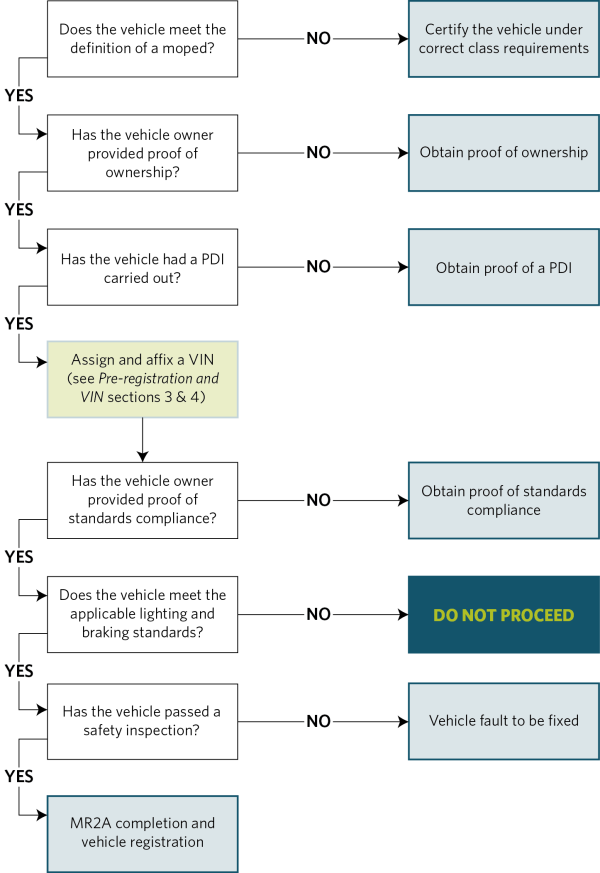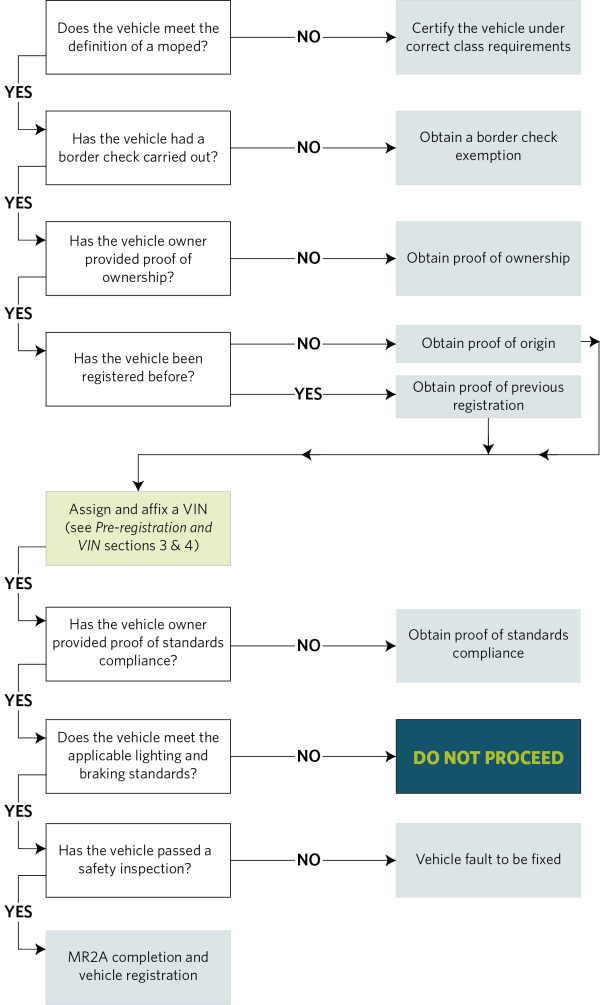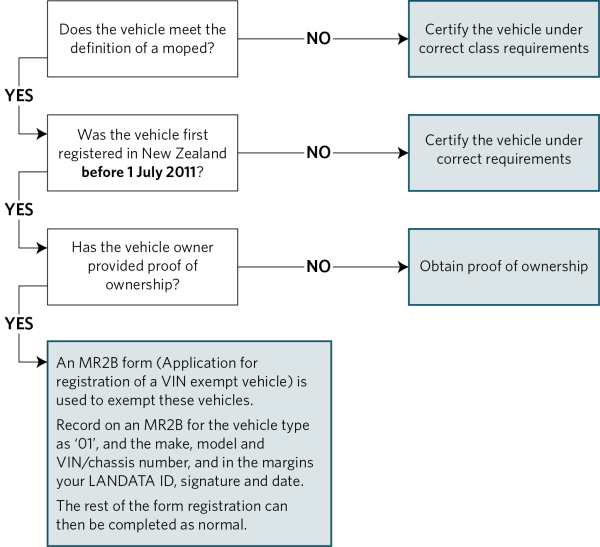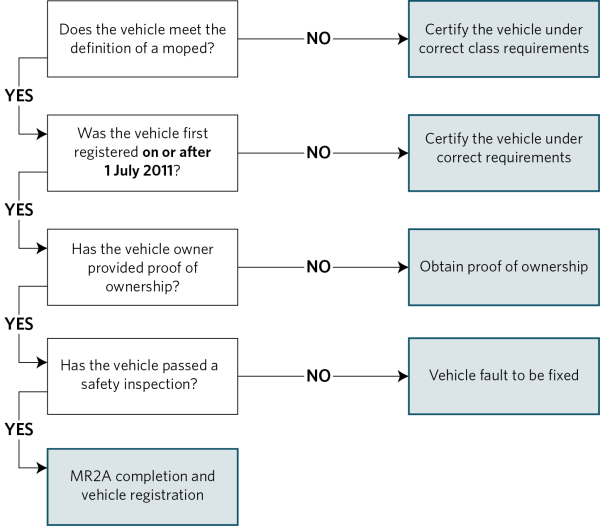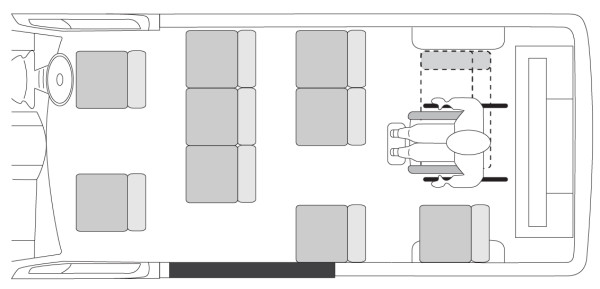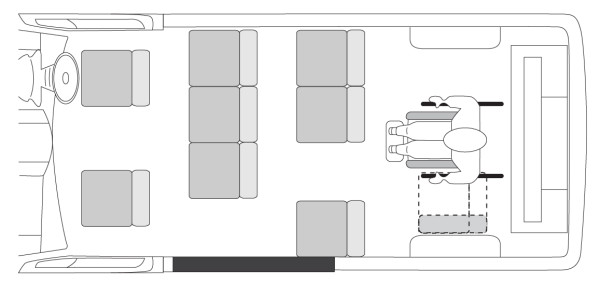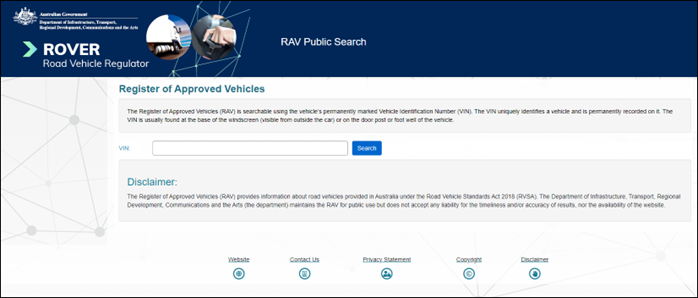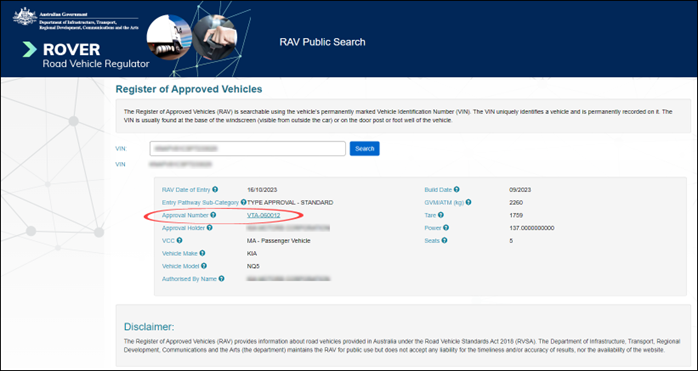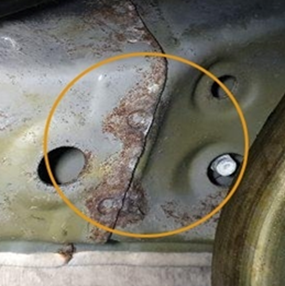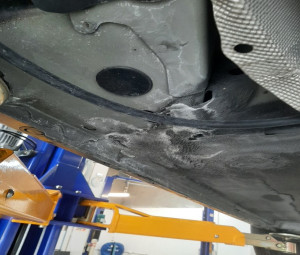
4 Technical bulletins
-
1 Replacement parts
-
2 Water- or fire-damaged vehicles
-
3 Vehicles modified to change vehicle class
-
4 Identifying a Honda Gyro
-
5 Inspection requirements for temporary vehicle imports
-
6 Auxiliary bars
-
7 Frontal impact standard exemptions
-
8 Frontal impact compliance for Mitsubishi models
-
9 Frontal impact compliance for Toyota Cavaliers
-
10 Inspection for corrosion in Nissan Terrano & Mistral rear floorpan assemblies
-
11 Inspection of motorhomes
-
12 Inspection of daytime running lamps
-
13 Glazing on house-trucks
-
14 Seatbelt requirements for rotating seats
-
15 Toyota Hiace seat and seatbelt requirements
-
16 Replacement seatbelts
-
17 Seatbelt and seatbelt anchorage standards for heavy motor vehicles
-
18 Seatbelt markings
-
19 Seatbelt exemptions
-
20 OE rear upper seatbelt anchorages (with retrofitted seatbelts)
-
21 Rear seatbelts as aisle obstructions in passenger service vehicles
-
23 Used imported motorsport vehicles
-
24 Recording the number of seats for self-propelled motorhomes
-
25 Immigrants' vehicles
-
26 Special interest vehicles
-
27 Alternative proof of compliance – Singapore/Japan
-
28 Exhaust emissions standard compliance
-
29 Declaration for SRS, ABS, ESC, and ADAS inspections
-
30 Dual brake systems in overseas driving school vehicles
-
31 Brakes standards compliance
-
32 Static tilt stability and roll-over strength compliance
-
33 Category A left-hand drive vehicles
-
34 Bridgestone tyres manufactured in Thailand, Taiwan or Indonesia
-
35 Moped entry certification (class LA, LB)
-
36 Removing a border damage flag
-
37 Electronic stability control identification
-
38 Class MC vehicle definition
-
39 Identifying class MB, MD1 or MD2 based on seats on Japanese deregistration certificates
-
40 Passenger airbag inspection – used imported vehicles from Japan
-
41 Entry certification procedures for certain modified vehicles
-
42 Conversion vans (AKA day vans)
-
43 Takata airbag recall
-
44 Rust prevention or under-sealing on late model cars from the UK
-
45 Recording the number of seats in a vehicle with wheelchair positions
-
46 Parallel imports
-
47 Vehicles fitted with ITS Connect
-
48 Verification of compliance with Australian Design Rules (ADRs)
-
49 Acid wash process on used imports
1 Replacement parts
Replaces Infosheet 1.81 Replacement parts
Vehicle inspection requirements manual references
This bulletin gives guidance to vehicle inspectors in determining compliance of a vehicle.
Application
This document applies to any vehicle undergoing entry-level certification that has had parts, components or systems replaced during a repair or modification.
Safety concern
Vehicles entering New Zealand must have been manufactured to comply with required safety standards. Compliance with these standards ensures that a safety critical component will perform as intended. Vehicles and their systems, parts and components must remain within safe tolerance of their state when manufactured. This helps to ensure the safety of vehicles used on New Zealand roads.
Use of correct replacement parts is vital to achieving safe tolerance. A vehicle must continue to comply with safety standards and equipment requirements when it is repaired, or components are added or replaced.
Inspection
Vehicle inspectors must check whether or not the component being replaced has to meet an approved standard. Standards will vary according to the vehicle’s year of manufacture (and any modifications). The replacement part must meet the same standard as the original part, or a later version. Examples include lights, tyres, seatbelts and glazing.
If there is no specific standard for the individual component, but there is a standard for the system the component is a part of, the vehicle inspector must ensure that any replacement parts used enable the system to continue to meet the standard, and return the vehicle to safe tolerance of its state when manufactured. Examples include brake systems, frontal impact protection systems and seatbelt anchorage attachment points.
Braking systems: Brake pads and shoes are critical components in relation to returning the braking system to within safe tolerance of its state when manufactured.
Frontal impact protection systems: It is important that structural panel replacement is carried out using complying parts and in accordance with the manufacturer’s instructions (or, where these are not available, alternative repair industry standards such as I-Car). Replacement panels and welding must duplicate the original structure.
Seatbelt anchorages: Any repairs of the body or components affecting the supporting structure for seatbelt anchorages must restore these items to their original strength.
If there is no specific standard for the component or the system of which the component is a part, components must be fit for purpose. This generally applies to older vehicles, although there are components that are important to the safety of a vehicle but are not covered by a prescribed standard in new vehicles. Examples include steering and suspension components.
Recommendation
The NZ Transport Agency recommends that parts suppliers and repairers must be able to provide proof that replacement parts meet legal requirements. This could consist of de-registration papers of the donor vehicle for used body parts, standards markings, or proof that the vehicle used for parts was legally registered in New Zealand.
2 Water- or fire-damaged vehicles
Applicable legislation
- Land Transport Rule: Vehicle Standards Compliance 2002, section 11.1
- Land Transport Rule: Vehicle Repair 1998
Application
- This document applies to any vehicle undergoing entry-level (including re-entry) certification that may have suffered water or fire damage.
Note 1
Water- or fire-damaged vehicles imported from Japan may not have been de-registered in Japan. This means that vehicles imported from Japan presented with registration documents only are more ‘at risk’ vehicles.
Note 2
Do not rule out the possibility that privately imported vehicles have suffered water or fire damage.
Vehicles flagged at the border
If water or fire damage is detected on a vehicle during a border inspection, the vehicle will be flagged as damaged and the details forwarded to Waka Kotahi at frr@nzta.govt.nz
An NZTA Case Officer will then record a water or fire damage message in the vehicle notes on LANDATA. This message reads as follows:
‘Water-damaged vehicle. Must be certified by a specialist repair certifier.’
or
'Fire damaged vehicle. Must be certified by a specialist repair certifier. Not to be certified by an IO without approval from NZTA NO.'
Any vehicle that has a water or fire damage message attached must be referred to a specialist repair certifier before processing for registration, as the vehicle may not be able to be economically repaired.
Note 3
Specialist repair certifier in this case means a light vehicle repair certifier or heavy vehicle specialist certifier as applicable to the vehicle class.
Water or fire damage detected by IOs
If an IO carrying out entry-level certification detects water or fire damage on a vehicle that has not been flagged for damage at the border, the vehicle must be referred to a specialist repair certifier. The IO must notify NZTA at frr@nzta.govt.nz, so that the vehicle can be added to the list of water and fire damaged vehicles recorded on the website. They must also record the water or fire damage message (as above) in the vehicle notes on LANDATA.
Documentation to be provided with water or fire damaged vehicles
Light vehicles
a) The following documents must be presented with a water-damaged vehicle before it can be processed for registration:
- An original Light vehicle repair record of determination (LT308) covering the repair has been carried out in accordance with the VIRM: Light vehicle repair certification
b) The following documents must be presented with a fire-damaged vehicle before it can be processed for registration:
- An original Light vehicle repair record of determination (LT308) covering the repair has been carried out in accordance with the VIRM: Light vehicle repair certification
Heavy vehicles
Documentation to be provided with water or fire damaged vehicles: a) The following documents must be presented with a water-damaged vehicle before it can be processed for registration:
- An LT400.
b) The following documents must be presented with a fire-damaged vehicle before it can be processed for registration:
- An LT400.
Page updated 10 December 2020 (see details).
3 Vehicles modified to change vehicle class
Vehicle inspection requirements manual references
This bulletin gives guidance to vehicle inspectors in determining vehicle class as defined in the VIRM: Entry certification:
Application
This bulletin applies to vehicles undergoing entry certification in New Zealand that have been modified in such a way that the class of vehicle may have changed from when it was manufactured.
Inspection
Step one
The vehicle inspector must determine the original class of the vehicle, as it was manufactured.
Step two
The vehicle inspector must determine whether or not the vehicle complied with legal requirements for entering service in New Zealand, in its original condition (as manufactured).
If the vehicle did not comply with New Zealand legal requirements when it was manufactured, it cannot be certified for entry into New Zealand as another vehicle class.
- For example, an MA class vehicle that did not comply with a frontal impact standard could not be certified as an NA class vehicle.
Step three
If the vehicle complied with New Zealand legal requirements in its original condition, the vehicle inspector must determine whether or not the modified vehicle complies with legal requirements for vehicles operating in-service in New Zealand.
If a vehicle has modifications that exceed the low volume vehicle (LVV) or heavy vehicle thresholds, it must undergo LVV or HVS certification according to its new class, or be re-configured back to manufacturer’s specifications.
Step four
The vehicle should be recorded in LANDATA as its new class. A note must be added to the vehicle record, stating that vehicle modifications have resulted in a change of class (and identify the previous class).
Page amended 1 June 2019 (see amendment details).
4 Identifying a Honda Gyro
Application
This bulletin gives guidance to vehicle inspectors in identifying a Honda Gyro to determine applicable inspection requirements.
A Honda Gyro is a three-wheeled vehicle which requires design compliance and must be declared as a motorcycle by the NZTA in order to be registered for in-service operation in New Zealand.
Identification
The New Zealand representative of Blue Wing Honda has advised the NZTA that Honda agents identify the Honda Gyro by its frame number.
It can also be recognised by the distinctive articulating joint that allows the whole front passenger portion of the vehicle to pivot and tilt when cornering.
A Honda Gyro:
- has one wheel at the front and two wheels at the rear, and
- has a mass not exceeding one tonne, and
- has an engine output exceeding 2kW (or 50ml), and
- has a maximum speed capability exceeding 50km/h.
Therefore, a Honda Gyro can be classed as an LE1 vehicle under Table A of Land Transport Rule: Vehicle Standards Compliance 2002
For registration purposes, the Honda Gyro is a vehicle type 11 (motorcycle).
Inspection
If a vehicle presented for entry certification is identified as a Honda Gyro, it must be declared a motorcycle by the NZTA. Applications must be made to:
Vehicle Standards
NZ Transport Agency
Private Bag 6995
Wellington 6141
Attention: Senior Engineer, Vehicles Standards team
An LT4085 Vehicle compliance certificate must be completed for the vehicle. It must meet entry-level certification requirements for class LE1 vehicles and undergo periodic in-service inspections (warrant of fitness or certificate of fitness).
To operate and inspect the vehicle, the vehicle inspector must hold a motorcycle licence.
5 Inspection requirements for temporary vehicle imports
Application
This bulletin gives guidance to vehicle inspectors carrying out entry-level inspections on vehicles imported for temporary use on New Zealand roads.
Requirements for temporarily importing a vehicle
A temporary vehicle import is a vehicle brought into New Zealand by a resident of another country, usually for a maximum of 12 months, while remaining registered in its country of origin.
The vehicle must be exported from New Zealand within the allowed temporary entry period.
Before a vehicle is released to its owner, it must be inspected by the Quarantine Service of the Ministry of Agriculture and Forestry (MAF).
The vehicle must be licensed in New Zealand as an overseas visitor’s vehicle. In addition, the vehicle’s registration in its country of origin must remain current for the duration of its stay in New Zealand, and must remain in the name of the person who imported the vehicle into New Zealand. The overseas registration plates must remain on the vehicle; it does not need New Zealand plates.
When presenting a temporary import, the vehicle importer must:
- fill out an Application for registration of an overseas visitor’s vehicle (form MR2C)
- provide proof that the vehicle is currently registered in his/her name in its country of origin (eg by providing original vehicle registration documents)
- show a carnet de passage or temporary import entry
- provide identification that shows his/her name, date of birth and signature
- pay an Accident Compensation Corporation (ACC) levy (but none of the other registration and licensing fees).
A temporarily imported vehicle does not need to meet New Zealand’s requirements for entry certification. However, an entry certifier must carry out a basic safety inspection before issuing a warrant of fitness (WoF) or certificate of fitness (CoF) label for the vehicle.
Background
In 1958, New Zealand became a contracting state of the Geneva Convention. The Convention on road traffic was signed in September 1949. This convention developed several provisions to promote the safety of international traffic, outlined below.
Generally speaking, the vehicle does not need to comply with New Zealand approved standards, or requirements for specialist certification (eg low volume vehicle certification for modifications). It must at least comply with the provisions of the Geneva Convention. It should meet the basic safety requirements for condition and performance listed in the VIRM: In-service certification.
Applicable legislation
Geneva Convention Chapter IV – Provisions applicable to motor vehicles and trailers in international traffic.
Article 22: Every motor vehicle and trailer must be in good working order and safe mechanical condition so as not to endanger the driver or vehicle occupants or other road users, or cause damage to public or private property. Inspection - Brake requirements for temporarily imported group M and N vehicles.
Mandatory equipment
1. A vehicle must be fitted with a service brake capable of slowing the vehicle and bringing it to a controlled stop under any conditions of loading, on any gradient that the vehicle may be operated on, in an efficient, safe and rapid way.
2. A vehicle must be fitted with a parking brake capable of bringing the vehicle to a controlled stop if the service brake fails.
Condition and performance
3. The brakes fitted to a vehicle must be capable of acting on at least half of the wheels, and brake performance must be balanced on each side of the longitudinal axis of the vehicle.
4. At least half of the braking devices must act on braking surfaces directly attached to the wheels (or through parts not liable to fail).
5. Braking surfaces must be in good condition, and must always be connected with the wheels of the vehicle in such a way that it is not possible to disconnect them, other than momentarily by means of clutch, gearbox or free wheel.
6. The parking brake must be readily applicable and capable of remaining applied for an indefinite period even in the absence of the driver.
Braking requirements for temporarily imported group L vehicles
Mandatory equipment
1. A group L vehicle must be fitted with two braking devices operated by hand or foot, capable of slowing the vehicle and bringing it to a controlled stop in an efficient, safe and rapid way.
Brake requirements for temporarily imported trailers
Mandatory equipment
1. A combination of a motor vehicle and one or more trailers must be fitted with a braking device capable of slowing the vehicle and bringing it to a controlled stop under any conditions of loading, on any gradient that the vehicle may be operated on, in an efficient, safe and rapid way. A trailer must have a braking device that acts on at least half of the wheels, balanced on each side of the longitudinal axis of the vehicle, as follows:
a) The braking device for a class TA or TB trailer may operate as an overrun braking device (ie the trailer is stopped by moving upon the stopped towing vehicle).
b) The braking device for a class TC or TD trailer must be capable of being operated when the service brake of the towing vehicle is applied.
2. The braking device must be capable of preventing the rotation of the wheels when the trailer is uncoupled.
3. A trailer fitted with a braking device must be equipped with a breakaway brake (Note 1).
Note 1
Two-wheeled camping trailers or light luggage trailers do not require a breakaway brake if they are fitted with a secondary attachment, such as a safety chain.
Lighting requirements for temporarily imported group M and N vehicles
Mandatory equipment
1. A vehicle must be fitted with main-beam headlamps bright enough to illuminate the road ahead for 100m in normal darkness (Note 2).
2. A vehicle must be fitted with two white or yellow dipped-beam headlamps bright enough to illuminate the road ahead for 30m in normal darkness without causing significant dazzle to other road users (Note 2).
3. A vehicle must be fitted with two white forward-facing position lamps visible from 150m in normal darkness without causing significant dazzle to other road users. These lamps must be mounted as far towards each side of the vehicle as practicable, no further than 400mm from the extreme outer edges of the vehicle.
4. A vehicle must be fitted with at least one red rearward-facing position lamp, visible from 150m from the rear of the vehicle in normal darkness.
5. A vehicle must be fitted with a rear registration plate illumination lamp that illuminates the figures and letters of the plate so that they are visible from 20m from the rear of the vehicle in normal darkness.
6. A vehicle must be fitted with two red rear reflectors symmetrically mounted as far towards each side of the vehicle as practicable, no further than 400mm from the extreme outer edges of the vehicle. Rear reflectors must be visible from 100m in normal darkness when illuminated by means of two main-beam headlamps.
7. A vehicle must be fitted with a least one red or amber stop light mounted at the rear of the vehicle. A stop light must operate when the service brake is applied. If the stop light is red, the light intensity must be greater than that of the rearward-facing position lamps.
Permitted equipment
8. A vehicle may be fitted with direction indicators as follows:
a) a moveable arm protruding beyond each side of the vehicle and illuminated by a steady amber light when the arm is in the horizontal position, or
b) a constantly blinking or flashing amber light mounted on each side of the vehicle, or
c) a constantly blinking or flashing light at each side of the front and rear of the vehicle. These lights must be white or orange towards the front of the vehicle, and red or orange towards the rear of the vehicle.
Note 2
On vehicles from left-hand drive countries the headlamps dip to the right. To avoid blinding oncoming traffic, the headlamps must be adjusted so they do not dip to the right. Generally, asymmetric beam headlamps will also need to be modified to remove the right-hand flick-up, for example by applying some form of masking, such as plastic overlay, or fitting different bulbs.
Lighting requirements for temporarily imported motorcycles
Mandatory equipment
1. A motorcycle of class LC, LD, LE1 or LE2 must be fitted with at least one main-beam headlamp bright enough to illuminate the road ahead for 100m in normal darkness.
2. A motorcycle of class LC, LD, LE1 or LE2 must be fitted with a least one dipped-beam headlamp bright enough to illuminate the road ahead for 30m in normal darkness without causing significant dazzle to other road users.
3. A motorcycle of class LD must be fitted with two white forward-facing position lamps visible from 150m in normal darkness without causing significant dazzle to other road users. These lamps must be mounted as far towards each side of the vehicle as practicable, no further than 400mm from the extreme outer edges of the vehicle.
4. A motorcycle must be fitted with at least one red rearward-facing position lamp, visible from 150m from the rear of the vehicle in normal darkness.
5. A motorcycle must be fitted with a rear registration plate illumination lamp that illuminates the figures and letters of the plate so that they are visible from 20m to the rear of the vehicle in normal darkness.
6. Rear reflectors must be fitted to the following vehicles:
a) Class LD vehicles must be fitted with two red rear reflectors symmetrically mounted as far towards each side of the vehicle as practicable, no further than 400mm from the extreme outer edges of the vehicle.
b) Class LC, LE1 and LE2 vehicles must be fitted with one red rear reflector symmetrically mounted as far towards each side of the vehicle as practicable, no further than 400mm from the extreme outer edges of the vehicle.
- Rear reflectors must be visible from 100m in normal darkness when illuminated by means of two main-beam headlamps.
Permitted equipment
7. A motorcycle may be fitted with direction indicators as follows:
a) a moveable arm protruding beyond each side of the vehicle and illuminated by a steady amber light when the arm is in the horizontal position, or
b) a constantly blinking or flashing amber light mounted on each side of the vehicle, or
c) a constantly blinking or flashing light at each side of the front and rear of the vehicle. These lights must be white or orange towards the front of the vehicle, and red or orange towards the rear of the vehicle.
Lighting requirements for trailers
Mandatory equipment
1. A trailer at the end of a combination of vehicles must be fitted with at least one red rearward-facing position lamp, visible from 150m from the rear of the vehicle in normal darkness.
2. A trailer must be fitted with a rear registration plate illumination lamp that illuminates the figures and letters of the plate so that they are visible from 20m to the rear of the vehicle in normal darkness.
3. A trailer must be fitted with two red rear reflectors visible from 100m in normal darkness when illuminated by means of two main-beam headlamps.
4. A trailer at the end of a combination of vehicles must be fitted with a least one red or amber stop light mounted at the rear of the vehicle, unless the stop light of the towing vehicle is visible from the rear. A stop light must operate when the service brake is applied. If the stop light is red, the intensity of the light output must be greater than that of the rearward-facing position lamps.
Permitted equipment
5. A trailer may be fitted with direction indicators as follows:
a) a moveable arm protruding beyond each side of the vehicle and illuminated by a steady amber light when the arm is in the horizontal position, or
b) a constantly blinking or flashing amber light mounted on each side of the vehicle, or
c) a constantly blinking or flashing light at each side of the front and rear of the vehicle. These lights must be white or amber towards the front of the vehicle, and red or amber towards the rear of the vehicle.
Other technical requirements for temporarily imported group M and N vehicles
Mandatory equipment
1. A vehicle must be equipped with a strong steering system that allows the vehicle to be turned easily, quickly and with certainty.
2. A vehicle must be equipped with at least one driving mirror of adequate size and location to provide the driver with a clear view to the rear of the vehicle.
3. A vehicle must be fitted with at least one audible warning device (horn) that is not:
a) a bell, or
b) a gong, or
c) a siren, or
d) any other loud-toned device.
4. Windscreens, where fitted, must be made of a stable, transparent material that is not likely to produce sharp splinters if broken. Objects must not appear distorted when viewed through this material.
5. Where a vehicle is fitted with a windscreen, it must have at least one efficient windscreen wiper that operates without constant control of the driver.
6. A vehicle must be fitted with an exhaust silencer system that operates constantly and cannot be interrupted by the driver while on the road.
7. A vehicle must be fitted with pneumatic tyres.
General safety provisions
1. The construction of a vehicle must not obstruct the driver’s vision to the front, right or left of the vehicle.
2. As far as possible, the machinery or equipment of a vehicle must not:
a) be at risk of fire or explosion, or
b) cause the emission of noxious gases or offensive fumes, or
c) produce excessive or disturbing noise, or
d) increase the risk of a collision and/or damage caused in a collision.
Note 3
Temporarily imported vehicles do not have to meet requirements for modification, therefore, low volume vehicle (LVV) or heavy vehicle specialist certification is not required. However, if a vehicle inspector feels that a vehicle is unsafe to operate, he/she may seek advice from a low volume vehicle or heavy vehicle specialist certifier.
6 Auxiliary bars
Vehicle inspection requirements manual references
This bulletin gives guidance to vehicle inspectors in applying the following requirements in the VIRM: Entry certification:
Application
This bulletin applies to class MA, MB or MC vehicles fitted with auxiliary bars (eg bullbars) undergoing entry certification in New Zealand. Auxiliary bars fitted to any class of vehicle may affect compliance with requirements for external projections and/or frontal impact systems.
Safety concern
Fitting auxiliary bars to vehicles with frontal impact protection systems may have a negative effect on the performance of frontal impact protection features, such as airbags or crush-zones.
Inspection
If auxiliary bars are fitted to any vehicle, the risk of injury to others must be minimised. This means that the vehicle must comply with the requirements for condition, performance and modification set out in the VIRM: In-service certification, section 2-1
A vehicle inspector may refuse to certify a vehicle that is fitted with an auxiliary bar if he/she believes that it is likely to cause injury or affect the driver’s control of the vehicle.
Auxiliary bars fitted to Mitsubishi RVRs
NZ Transport Agency has been advised by Mitsubishi Motors New Zealand that the following Mitsubishi RVR models were factory-fitted with auxiliary bullbars:
|
|
|
|
|
|
If a vehicle inspector is presented with a vehicle from one of these model ranges fitted with an original equipment (OE) bullbar, the vehicle may be passed.
The following Mitsubishi RVR models were not factory-fitted with bullbars:
|
|
|
|
|
If a vehicle inspector is presented with a vehicle from one of these model ranges fitted with a bullbar, confirmation that the bullbar will not affect the vehicle’s frontal impact compliance is required. If it cannot be supplied, the vehicle cannot pass the inspection until the bullbar has been removed.
Page updated 12 October 2018 (see details)
7 Frontal impact standard exemptions
Vehicle inspection requirements manual references
This bulletin gives guidance to vehicle inspectors in applying the following requirements in the VIRM: Entry certification:
- Vehicle structure – 3-1 Structure, Reason for rejection 1
- Vehicle structure – 3-2 Determining frontal impact compliance.
Application
This bulletin applies to specific model ranges of class MA, MB or MC vehicles manufactured by Toyota Japan, Nissan Japan and Mazda/Ford Japan that are exempt from the requirement to meet a specified frontal impact vehicle standard under the New Zealand Gazette notice au3660.
Inspection
Vehicles manufactured by:
- Toyota Japan, in the Estima, Lucida or Emina families, and
- Nissan Japan, in the Serena or Largo families, and
- Mazda/Ford Japan, in the Bongo, Friendee or Freda families
are exempt from the requirement to meet an approved frontal impact standard (as specified in Table 3-2-1 of the VIRM: Entry certification) if the vehicle’s chassis number is included in the ranges identified below.
|
Vehicle make/model |
Industry model code |
Chassis number |
|
|---|---|---|---|
|
Range from |
Range to |
||
|
Toyota Japan
|
CXR10G |
CXR10-0001177 |
CXR10-0146676 |
|
Nissan Japan
|
KBC23 |
KBC23-007242 |
KBC23-517067 |
|
Nissan Japan
|
W30 |
W30-000106 |
W30-774375 |
|
Mazda/Ford Japan
|
SG5W |
SG5W-100012 |
SG5W-302529 |
|
IMPORTANT: Individual exemptions from frontal impact standards requirements do not need to be made for vehicles that fall within these ranges. |
8 Frontal impact compliance for Mitsubishi models
Vehicle inspection requirements manual references
This bulletin gives guidance to vehicle inspectors in applying the following requirements in the VIRM: Entry certification:
- Vehicle structure – 3-1 Structure, Reason for rejection 1
- Vehicle structure – 3-2 Determining frontal impact compliance
Application
This bulletin applies to the frontal impact compliance requirements of Mitsubishi model vehicles undergoing entry certification in New Zealand.
Inspection
It has been determined that the following Mitsubishi models are class MC vehicles, therefore, if a vehicle inspector is presented with a vehicle in the following model ranges, the vehicle is only required to comply with an approved frontal impact standard if it was manufactured on or after 1 October 2003.
|
Mistubishi RVR Sportsgear vehicles (Note 1) |
||
|---|---|---|
|
E-N23WG SRXF |
E-N23WG SRHM |
Y-N28WG SNXF |
|
E-N23WG SNXF |
E-N23WG SNHM |
Y-N28WG SRXT |
|
E-N23WG SRXM |
E-N23WG SRHF |
Y-N28WG SNXT |
|
E-N23WG SNXM |
Y-N23WG SNHF |
KD-N28WG SRXF |
|
E-N23WG SNUM |
Y-N28WG SRXF |
KD-N28WG SNXF |
|
Mitsubishi Delica Spacegear (four-wheel drive) vehicles |
||
|---|---|---|
|
E-PD4W HSEHE2 |
KD-PE8W HSEXF2 |
KD-PE8W NSNGF1 |
|
E-PD4W HSEHE |
KD-PE8W HSEHF2 |
KD-PE8W NSEGF |
|
E-PD4W NSEGE1 |
KD-PE8W HSNHF2 |
KD-PE8W NSEUF |
|
E-PD4W HSEGE |
KD-PE8W HSEHF |
KD-PE8W NSNUF |
|
E-PD4W NSEGE |
KD-PE8W HSNHF |
KD-PD8W NSNJF |
|
E-PD4W NSEUE |
KD-PE8W HSEGF |
KD-PF8W HSEPF2 |
|
E-PD6W HSEXE2 |
KD-PE8W HSNGF |
KD-PF8W HSEXF2 |
|
E-PD6W HSEHE2 |
KD-PE8W HSEUF |
KD-PF8W HSEHF |
|
E-PD6W NSEHE1 |
KD-PE8W HSNUF |
KD-PF8W HSNHF |
|
E-PF6W HSEXE2 |
KD-PE8W NSEHF1 |
KD-PF8W HSEGF |
|
E-PF6W HSEHE |
KD-PD8W NSEGF1 |
|
Note 1
Not all four-wheel drive Mitsubishi RVR models are class MC vehicles. If a Mitsubishi RVR model is presented that has a full model code not listed above, it is a class MA vehicle; therefore it must comply with an approved frontal impact standard.
9 Frontal impact compliance for Toyota Cavaliers
Vehicle inspection requirements manual references
This bulletin gives guidance to vehicle inspectors in applying the following requirements in the VIRM: Entry certification:
- Vehicle structure – 3-1 Structure, Reason for rejection 1
- Vehicle structure – 3-2 Determining frontal impact compliance
Application
This bulletin applies to the frontal impact compliance requirements for Toyota Cavalier vehicles undergoing entry certification in New Zealand.
Inspection
Any vehicle that is a Toyota Cavalier of model code TJG00 with a model year of 1996, 1997 or 1998 is exempt from the requirement to prove compliance with one of the approved frontal impact standards specified in section 2.3(4) of Land Transport Rule: Frontal Impact 2001
The model year of Toyota Cavaliers can be determined by decoding the tenth character of the vehicle identification number (VIN).
The frontal impact compliance status of Toyota Cavalier vehicles, as understood by the NZTA, is described below.
|
Model year |
10th character of VIN |
Frontal impact status |
|---|---|---|
|
1995 or earlier |
NA |
There is no evidence that these vehicles comply with an approved frontal impact standard. Toyota Cavaliers with a model year of 1995 or earlier will not be eligible for an exemption from frontal impact standard requirements. |
|
1996 |
T |
Toyota Cavaliers with a model year of 1996 can be assumed to comply with an approved frontal impact standard |
|
1997 |
V |
Toyota Cavaliers with a model year of 1997 or 1998 are exempt from the requirement to comply with an approved frontal impact standard |
|
1998 |
W |
|
|
1999 or later |
X, Y, 1, 2… |
Toyota Cavaliers with a model year of 1999 or later comply with an approved frontal impact standard. |
10 Inspection for corrosion in Nissan Terrano & Mistral rear floorpan assemblies
| References below are to the VIRM: In-service certification |
Reference
General vehicles:
Safety concern
There is concern about corrosion that can occur in Nissan Terrano or Nissan Mistral vehicles of the type whose rear floorpan assembly consists of a two-layer (double-skin) panel. If moisture gets trapped between the two layers of the floorpan, corrosion can occur around the seat or seatbelt anchorages, affecting their integrity. Corrosion can also occur where the under-floor reinforcing panel overlaps the top floor skin.
Clarification
The rear floorpan assembly consists of a two-layer (double-skin) panel. The lower layer is a reinforcing panel spot-welded to the upper layer floor section.
The Terrano has a rear seat with three seating positions. Situated in the rear floor, beneath the seat, are four seatbelt anchorages and two seat anchorages.
The Mistral has a stressed bench seat in the rear (the seatbelts are attached to the seat) with two seat anchorages in the floor and two seatbelt anchorages in the wheel well at the sides of the seat.
Inspection
The inspector must lift the rear seat to examine this area effectively. Any carpet and sound insulating material covering the panel that the seats are mounted on must be pulled back far enough to expose the rear seam of the panel (the area most commonly affected by corrosion). It is important to note that damage may be more extensive than can be detected during this inspection.
The vehicle must fail if any signs of corrosion are detected during the inspection, such as:
- bubbling of the paint or surface irregularities in the top floor skin or paint
- a patch repair that has rust around it
- separation of the reinforcement panel and the top skin
- discolouration or rust stains at the edges of the reinforcement panel
- rust holes, or
- the floorpan on a Nissan Terrano has been ‘patch’ repaired after 8 January 1997, or
- the floorpan on a Nissan Mistral has been ‘patch’ repaired after 10 November 2003.
A vehicle that has been ‘patch’ repaired before 8 January 1997 (Nissan Terrano) or 10 November 2003 (Nissan Mistral) may pass the inspection provided that:
- no signs of corrosion are apparent, and
- there is evidence that the repairs were carried out before the above dates, and
- the vehicle inspector considers, or there is evidence provided by a qualified panel beater, that the repair is effective and in sound condition.
Repair options
If any corrosion is detected and the vehicle failed, the floorpan must be replaced.
However, for the following models the Low Volume Vehicle Technical Association (LVVTA) has provided an alternative option to floorpan replacement.
Nissan Terrano Model D21
- installation of the LVVTA rear floor load-bar seatbelt anchorage reinforcement system together with a Low Volume Vehicle certification plate containing the following words in the Body/chassis field: LVVTA ‘Rear floor load-bar seatbelt anchorage reinforcement system’.
Nissan Mistral Model R20 5-door
- installation of the LVVTA rear floor load-bar seatbelt anchorage reinforcement system together with a Low Volume Vehicle certification plate containing the following words in the Body/chassis field: ‘LVVTA Rear floor load-bar seatbelt anchorage reinforcement system’.
For information about these seatbelt anchorage modifications, and for a list of the LVV certifiers who can certify them, see www.lvvta.org.nz
11 Inspection of motorhomes
Vehicle inspection requirements manual references
This bulletin gives guidance to vehicle inspectors in applying the following requirements in the VIRM: Entry certification:
Application
This bulletin applies to the structural inspection of motorhomes undergoing entry certification in New Zealand. It covers the specialist certification requirements for motorhomes undergoing entry certification.
For motorhomes with overseas compliance covering the motorhome conversion, refer to Technical bulletin 41:Entry certification procedures for certain modified vehicles. Exhaust emission standard compliance can be verified by one of the methods specified in Technical Bulletin 28
Inspection location
A light new or used motor home can be inspected at an approved heavy (used) entry site, provided that:
- It is inspected by an approved ULE Vehicle Inspector
- There is a VIN embosser on site
- There is an exhaust emission tester on site (Used Vehicle).
Structural inspection
Parallel-imported new (campervan/motorhome)
New parallel-imported (campervan/motorhome) as defined in the entry VIRM (see 2-2 Vehicle attributes definitions).
- Trim does not need to be removed as part of the structural inspection if a vehicle is a new parallel-imported (campervan/motorhome). However, a full general inspection must be carried out. The vehicle inspector may require an invasive structural inspection if any areas of concern are identified during the general inspection.
- Any vehicle identified as damaged during a border inspection will require a full invasive structural inspection.
Used light vehicles (campervan/motorhome) Category 1
A previously registered vehicle under 12 months old and having travelled less than 2000 kms.
- Interior trim does not need to be removed as part of the structural inspection if the vehicle:
- is a previously registered vehicle under 12 months old, and
- has travelled less than 2000 kms, and
- has not been identified as damaged during a border inspection.
However, an under body invasive inspection (front inner guard covers fitted to monocoque construction vehicles and front sub-frame splash guards) and full general inspection must be carried out. The vehicle inspector may require an invasive interior structural inspection if any areas of concern are identified during the general inspection.
-
If a motorhome is of a cab/chassis body type with the body mounted on the chassis, the vehicle inspector is only required to visually inspect the vehicle (without disassembly) to ensure general safety requirements are met. However, the vehicle inspector may require an invasive interior structural inspection if any areas of concern are identified during the general inspection.
- A Used light vehicles (campervan/motorhome) Category 1 vehicle identified as damaged during a border inspection will require a full invasive structural inspection.
Used (previously registered)
If a motorhome is of a van body type (monocoque construction), it will need the trim removed to enable a full structural inspection. If this is impracticable, the entry certifier/vehicle owner may apply to the Transport Agency for an exemption from trim removal requirements (see Reference material 18).
If a motorhome is of a cab/chassis body type with the body mounted on the chassis, the vehicle inspector is only required to visually inspect the vehicle (without disassembly) to ensure general safety requirements are met. However, if the motorhome body contains designated seating positions with certified seatbelt mountings (as is required for most motorhomes built after October 2003), it will need to have the trim removed to enable a full structural inspection. If this is impracticable, the entry certifier/vehicle owner may apply to the NZTA for an exemption from trim removal requirements (see Reference material 18).
Brakes
For new vehicles and scratch-built low volume vehicles, it is not necessary to disassemble any brake components.
For vehicles with rear drum brakes that are less than two years old and that have travelled less than 40,000km, only the front brakes must be disassembled initially. If the front brakes are up to standard, and there are no signs of problems with the rear brakes, disassembly of the rear brakes is not required.
Running gear
Due to the design and size of some campervans/motorhomes, the vehicle's steering and suspension can be inspected on:
- two-post vehicle hoist (with sufficient capacity)
- four-post vehicle hoist with built-in jacking mechanism (with sufficient capacity)
- inspection pit with built-in jacking mechanism (with sufficient capacity).
Specialist certification
Generally, any modifications or repairs to a motorhome that may affect the structural integrity of the vehicle will require specialist certification.
Where vehicles are converted to motorhomes, specialist certification is required unless the vehicle owner can provide documented evidence proving that the modification was a ‘manufacturer’s conversion’.
Examples of modifications or repairs to a motorhome that will normally require specialist certification are:
|
|
|
|
Page amended 10 December 2023 (see amendment details)
Page updated 14 August 2023 (see details)
12 Inspection of daytime running lamps
Vehicle inspection requirements manual references
This bulletin gives guidance to vehicle inspectors in applying the following requirements in the VIRM: Entry certification:
Application
This bulletin applies to the lighting equipment (daytime running lamps in particular) fitted to vehicles undergoing entry certification in New Zealand.
Identifying daytime running lamps
When trying to identify daytime running lamps, it may help to check out the beam pattern, the light intensity, the wiring and any markings on the lens.
Beam pattern
For comparison, a fog lamp has a spread beam with a sharp horizontal cutoff and must be fitted in a dipped position.
Light intensity
Under UN/ECE and Australian Design Rules (ADR), a daytime running lamp is generally of low intensity (up to 800 cd max, compared with a headlamp high beam around 80,000–100,000 cd max). There is no hotspot but a blur of light that passes as a beam. The lamps are not required to be dipped, but must turn off when the headlamps are switched on.
Under FMVSS, existing forward-facing lamps (except side lamps and fog lamps) may operate as daytime running lamps. This means that daytime running lamps automatically turn on when the vehicle is started, but turn off when the headlamps are activated. Daytime running lamps fitted as separate lamps must have a light intensity between 500 and 3000 cd.
Wiring
Fog lamps are usually wired so they can operate independently of the headlamps, while daytime running lamps are usually wired so they turn off when the headlamps are switched on.
Markings
Some daytime running lamps may be marked in accordance with a standard (eg an ‘RL’ mark on UN/ECE- and some ADR-compliant lamps, and ‘DRL’ on FMVSS-compliant lamps).
13 Glazing on house-trucks
Vehicle inspection requirements manual references
This bulletin gives guidance to vehicle inspectors in applying the following requirements in the VIRM: Entry certification:
Application
This document applies to house-trucks for the purpose of determining compliance with Land Transport Rule: Glazing, Windscreen Wipe and Wash, and Mirrors 1999 (the Glazing Rule).
Requirements
For this purpose, house-trucks should be considered goods vehicles of class NB or NC, depending on their gross vehicle mass (GVM).
Policy
Compliance with approved standards
House-trucks are usually modified vehicles. For example, they may consist of a cab and chassis that was manufactured in 1967, with a housing structure added to the rear in 1980. It is often difficult to determine when the modification took place. This makes it difficult to decide which date should be used to determine the applicable requirements – the year of manufacture of the original vehicle, or the year the modification was carried out.
The Glazing Rule defines year of manufacture as ‘the calendar year in which the construction of the vehicle was completed’.
The NZTA has determined that if any glazing is added or changed as part of the modification, this glazing must comply with requirements for vehicles manufactured at the time of the modification.
The vehicle owner must demonstrate when the modification was carried out.
Condition and performance
Leadlight windows fitted to a house truck are unlikely to comply with general safety requirements, which require glazing to be mechanically sound and strong.
In order to comply with general safety requirements, leadlight windows may be sandwiched between two panes of standard compliant glazing.
14 Seatbelt requirements for rotating seats
Vehicle inspection requirements manual references
This bulletin gives guidance to vehicle inspectors in applying the following requirements in the VIRM: Entry certification:
- Vehicle interior – 7-1 Seats and seat anchorages: Reasons for rejection 1
- Vehicle interior – 7-5 Seatbelts and seatbelt anchorages: Reasons for rejection 1
Applicable legislation
Application
This document applies to vehicles fitted with seats that can be rotated or placed to face other directions. Usually, this is to allow front occupants to face rear occupants while the vehicle is stationary.
Safety concern
Although it may be possible to have rotating seats (other than the driver’s seat) face rearward or sideways while traveling on a road, it is only permitted for such seats to be occupied if appropriate seatbelts are fitted.
Seatbelt requirements
Seatbelt requirements depend on the vehicle type, age, number of seats and the location of the seat in the vehicle.
Seats capable of being rotated or placed in other orientations are required to have seatbelts fitted appropriate to the orientation for normal use when the vehicle is travelling on the road (usually forward facing). If the seatbelt cannot be used due to the seat orientation, the seat must not be occupied while the vehicle is moving.
Advisory decals, easily visible to vehicle occupants, must be fitted inside the vehicle to indicate which seating orientations may (or may not) be used while the vehicle is moving.
- See Figure 1-1-1. Flowchart for determining seatbelt compliance for rotating seats
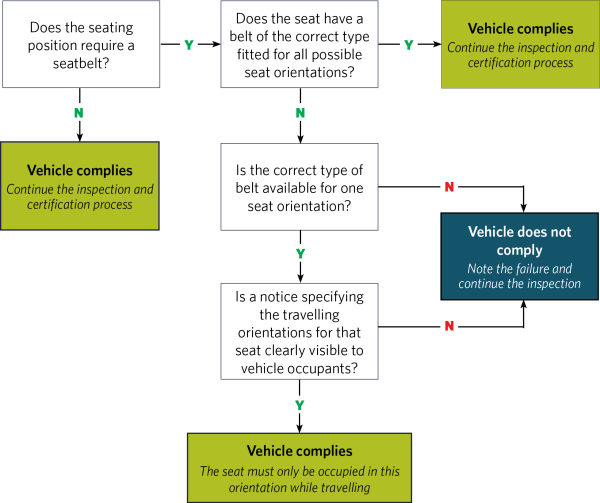
Figure 1-1-1. Flowchart for determining seatbelt compliance for rotating seats
15 Toyota Hiace seat and seatbelt requirements
Vehicle inspection requirements manual references
This bulletin gives guidance to vehicle inspectors in applying the following requirements in the VIRM: Entry certification:
- Vehicle interior – 7-1 Seats and seat anchorages: Reasons for rejection 1 and 2
- Vehicle interior – 7-5 Seatbelts and seatbelt anchorages: Reasons for rejection 1, 2 and 3
Application
This bulletin applies to Toyota Hiace minivan models assembled in New Zealand with type-approved seating for eight passengers installed in the rear seating compartment, to bring the total seating capacity to 11 (10 if the vehicle is approved for passenger service vehicle use).
Toyota Hiace models with factory-installed seating
Table 15-1-1 shows a list provided by Toyota New Zealand of Hiace minibus model codes with factory-installed seating. The ‘local code’ denotes factory-installed seat and seatbelt assemblies.
The seats and seatbelts fitted in vehicles listed in Table 15-1-1 have all been tested and approved to comply with international standards. The seat and seatbelt assemblies for both CKD and CBU models were installed before the vehicles were delivered to dealers.
Table 15-1-1. Toyota Hiace models with factory-installed seating
|
HIACE TMC model code |
Local code |
Assembly |
New Zealand grade |
Production date |
Engine code |
Transmission |
|---|---|---|---|---|---|---|
|
RZH113R-RRMRS |
RHMLB |
CKD |
2.4 ZL |
08/89–07/98 |
2RZ |
5M/T |
|
RZH113R-RRPRS |
RHMLB |
CKD |
2.4 ZL |
08/89–07/93 |
2RZ |
4H A/T |
|
RZH102R-SRMRS |
RHMSW |
CKD |
SR5 WAGON |
08/89–07/91 |
1RZ |
5M/T |
|
RZH103R-SRMRS |
RHMKW |
CKD |
SR5 WAGON |
08/91–04/95 |
2RZ |
5M/T |
|
RZH113R-RRMRS |
RHMLB |
CKD |
2.4 MINIBUS |
08/89–07/98 |
2RZ |
5M/T |
|
RZH113R-RRMRS |
RHPLB |
CKD |
2.4 MINIBUS |
08/89–07/98 |
2RZ |
4A/T |
|
RZH113R-RRPRS |
REPLB |
CKD |
2.4 MINIBUS |
08/89–07/93 |
2RZ |
4A/T |
|
LH113R-RRMRS |
LHMLB |
CKD |
2.8 DSL BUS |
08/94–0/798 |
3L |
5M/T |
|
LH113R-RRMRS |
LHLMV |
CBU |
2.8 ZL Diesel |
05/00–07/00 |
3L |
5M/T |
|
RZH113R-RRMRE |
RHLMV |
CBU |
2.4 ZL Petrol |
05/00– |
2RZ-E |
5M/T |
|
LH113R-RRMRS |
LHLMV |
CBU |
2.8 ZL Diesel |
05/00–07/00 |
3L |
5M/T |
|
LH172R-RRMRS |
LHMSV |
CBU |
3.0 ZL Diesel |
08/00– |
5L |
5M/T |
Standards
The Toyota Hiace minivan models listed in Table 15-1-1 are fitted with seats and seatbelts complying with the following standards:
- Seats comply with the requirements of Australian Design Rule (ADR) 3/02.
- Seatbelts, depending on the date of manufacture, comply with either:
i. New Zealand Standard (NZS) 5401; or
ii. Australian Standard/New Zealand Standard (AS/NZS) 2596.
- Seatbelt anchorages comply with ADR 5/02.
Certification requirements
The seat and seatbelt installations were not considered to be low volume vehicle (LVV) modifications due to the number of units involved and the fact that the system had been ‘type tested’.
These vehicles were all produced before the NZTA requirement for vans fitted with additional seating to be certified under the LVV code was introduced. Therefore, the vehicles are not fitted with LVV certification plates.
However, Toyota Hiace models fitted with seats and seatbelts on or after January 2002 have been LVV certified, and will have been fitted with LVV certification plates.
16 Replacement seatbelts
Vehicle inspection requirements manual references
This bulletin only applies to vehicles that are required to comply with a frontal impact standard. It gives guidance to vehicle inspectors in applying the following requirements:
Application
This document applies to all frontal impact compliant vehicles that are required to have replacement seatbelts fitted as part of entry-level certification in New Zealand.
Inspection
General safety requirements state that seatbelts fitted to a vehicle must comply with requirements relating to condition, performance or modification as set out in the VIRM: In-service certification, section 7-5
If a seatbelt does not meet these conditions, it must be replaced. The replacement part must contain at least all of the features present in the original seatbelt, unless confirmation that fitment of a seatbelt without a certain feature would not affect the safety performance of the vehicle is available from the vehicle manufacturer.
If a vehicle is presented for entry certification, it can have an original equipment (OE) (or equivalent) seatbelt fitted as a replacement. This means that the only time a webbing clamp seatbelt would need to be fitted is if the failed OE seatbelt was a webbing clamp seatbelt.
Replacement seatbelts do not necessarily have to come from the vehicle manufacturer. If a seatbelt manufacturer can confirm that a particular seatbelt is suitable as replacement for a particular vehicle model (and the seatbelt complies with an approved standard), this seatbelt would also be acceptable.
Page amended 28 April 2014 (see amendment details).
17 Seatbelt and seatbelt anchorage standards for heavy motor vehicles
Vehicle inspection requirements manual references
This bulletin gives guidance to vehicle inspectors in applying the following requirements in the VIRM: Entry certification:
Application
This bulletin applies to heavy motor vehicles undergoing entry certification in New Zealand.
Inspection
Land Transport Rule: Seatbelts and Seatbelt Anchorages requires class NB and NC vehicles manufactured on or after 1 October 2003 to be fitted with seatbelts and seatbelt anchorages as follows:
Seating position | Type of seatbelt required | Type of anchorage required |
|---|---|---|
Driver | A-ELR (Note 2) | 3 or 4 point anchorage |
Front outer | A-ELR (Note 2) | 3 or 4 point anchorage |
Front middle | Lap seatbelt | 2 point anchorage |
Rear outer | Not applicable | Not applicable |
Rear middle | Not applicable | Not applicable |
Seatbelts must meet one of the standards contained in Table 7-5-1 of the VIRM: Entry certification. Seatbelt anchorages must comply with one of the standards contained in Table 7-5-3 of the VIRM: Entry certification.
Note 1
For the purposes of 2.1(5)(d) of the Rule, manufactured means original manufacture by the source plant. It has nothing to do with any subsequent remanufacture/rebuild/modification/retrofit/vehicle class change. A vehicle originally manufactured before 1 October 2003 will never be required to comply with the requirements in Table 2.4 of the Rule.
Note 2
If a vehicle is fitted with an OE single-sensitive emergency locking retractor lap and diagonal seatbelt, it may remain fitted if it has a plate affixed to the vehicle (see Figure 17-1-1).
Figure 17-1-1. Example of a plate fitted to a vehicle that may retain a single-sensitive seatbelt

Standards compliance
The Motor Industry Association (MIA) has obtained the relevant information from its members so that entry certifiers will not need to request a statement of compliance for individual vehicles. Information regarding compliance with approved seatbelt and seatbelt anchorage standards for heavy motor vehicles distributed by the MIA and sold through its franchise dealer network has been supplied for the makes and models listed on the following page.
Make | Model | Seatbelt | Seatbelt Anchorage |
|---|---|---|---|
Caterpillar | CT610, CT630 | ADR 4 | ADR 5 |
DAF | ECE R16 | ECE R14 | |
Ford | EEC77/541 | ECE R14 | |
Foton | ADR 4 | ADR 5 | |
Freightliner | Argosy, Columbia, Century Class, Coronado | FMVSS 209 or ADR 4 | FMVSS 210 or ADR 5 |
Fuso | Canter/Fighter , Shogun Euro 6 Rosa/ HD Enduro, MP | ADR 4 Japan Technical Standards ECE R16 | ADR 5 Japan Technical Standards ECE R14 |
Hino | ECE R16 | ADR 5 | |
Hyundai | HD Series | ECE R16 | ECE R14 |
International | FMVSS 209 | FMVSS 210 | |
Isuzu | N series F series FX series C & E Series | ADR 4 ECE R16 ECE R16 Japan Technical Standards Or ECE R16 | ADR 5 ECE R14 ECE R14 Japan Technical Standards Or ECE R14 |
Iveco | Stralis,Powerstar & ACCO Daily & Eurocargo Trakker | ADR 4 ECE R16 ECE R16 | ADR 5 ECE R14 ECE R14 |
Kenworth | ADR 4 | ADR 5 | |
Mack | Information contained on compliance plate fitted to the vehicle | ||
MAN | ECE R16 | ECE R14 | |
Mercedes-Benz | ECE R16 | ECE R14 | |
Mitsubishi Fuso | Canter/Fighter Rosa/Shogun | ADR 4 Japan Technical Standards | ADR 5 Japan Technical Standards |
Nissan Diesel | ADR 4 | ADR 5 | |
Renault | Information contained on compliance plate fitted to the vehicle | ||
RAM | 2500 Laramie, 3500 Laramie | ADR 04/05 | ADR 05/05 |
Scania | EEC e4*77/541 | EEC e4*76/115 | |
Sterling | LT9500, LT7500 | FMVSS 209 | FMVSS 210 |
UD Trucks | ADR 4/04 | ADR 5/05 | |
Volkswagen | ECE R16 | ECE R14 | |
Volvo | Information contained on compliance plate fitted to the vehicle | ||
Western Star | FMVSS 209 | ADR 5 | |
- If an entry certifier is presented with a vehicle not covered above, and proof of compliance cannot be established by approved methods, they should contact the vehicle manufacturer directly.
- A heavy vehicle previously registered in the European Union or United Kingdom complies with the seatbelt anchorage standards for heavy vehicles if the vehicle is registered on or after 1 January 2009.
Page amended 28 April 2014 (see amendment details).
Page updated 2 November 2021 (see details)
18 Seatbelt markings
Vehicle inspection requirements manual references
This bulletin gives guidance to vehicle inspectors in applying the following requirements in the VIRM: Entry certification:
Application
This bulletin applies to standards markings on seatbelts fitted to vehicles undergoing entry certification in New Zealand.
Clarification
Seatbelts must be labelled with an appropriate standards marking. This helps to determine compliance with an approved standard. Seatbelts may be marked with a code that indicates the type of retractor operation, such as ELR. Table 18-1-1 lists possible seatbelt markings and describes the type of retractor operation indicated by each marking.
Table 18-1-1. Seatbelt retractor operations markings
|
Seatbelt marking |
Seatbelt retractor operation |
|---|---|
|
ELR |
Emergency locking retractor |
|
ALR |
Automatic locking retractor |
|
ELR/ALR |
A combination of emergency and automatic locking retractors, usually used in cars with child restraint seats, but can be used for other purposes. |
|
ELR-V |
Single-sensitive (for vehicle sensitivity only) emergency locking retractor |
|
ELR-VW |
Dual-sensitive (for both vehicle and web sensitivity) emergency locking retractor |
|
ELR-VW-4N or ELR-VN |
Dual-sensitive emergency locking retractor, but with less sensitivity in the webbing sensitivity function. This makes it ideal for use where an air seat or hydraulic cushion seat is fitted, as the retractor will not constantly lock-up as the operator moves up and down. |
Compliant seatbelts that are not required to have standard markings
- Seatbelts that comply with the Japanese Technical Standard for Seatbelt Assemblies are not required to have standards markings, provided the seatbelts are OE and the vehicle has Japanese type approval.
- Seatbelts in a fully Australian Design Rule (ADR)-compliant vehicle are not required to have standards markings.
Mislabelling
If the retractor operation of a seatbelt fitted to a vehicle does not match the operation indicated by the seatbelt marking (eg the seatbelt is marked ELR-V but appears to be web sensitive), the vehicle inspector must ignore the possibility of mislabelling, and inspect the performance of the seatbelts in accordance with the manufacturer’s marking.
19 Seatbelt exemptions
Vehicle inspection requirements manual references
This bulletin gives guidance to vehicle inspectors in applying the following requirements:
- VIRM: Entry certification, Vehicle interior – 7-5 Seatbelts and seatbelt anchorages: Reason for rejection 1 and 2
- VIRM: In-service certification, Tables 7-5-1 to 7-5-3
Application
This document applies to all vehicles undergoing entry-level certification in New Zealand that are required to have seatbelts fitted.
Seatbelt exemptions
Under Land Transport Rule: Seatbelts and Seatbelt Anchorages 2002 and the New Zealand Gazette notice au2141 (dated 29 March 2001, page 781), vehicles fitted with certain occupant safety protection systems may be exempt from the requirement to have approved seatbelts of a specified type fitted, as defined in Land Transport Rule: Seatbelts and Seatbelt Anchorages 2002.
This exemption may apply to a vehicle that:
- complies with an approved frontal impact standard, or
- is fitted with airbags that are the manufacturer’s OE specifications, or
- has seatbelt features such as pretensioners or load limiters specifically designed to operate in conjunction with other parts of an integrated occupant protection system.
The exemption only applies to seatbelts fitted as part of the vehicle manufacturer’s OE specifications.
A list of specific seatbelt exemptions is available in the VIRM: In-service certification in Table 7-5-5. The VIRM: In-service certification also lists vehicles that may be exempt from specified seatbelt requirements, provided the vehicle was first registered in New Zealand before 1 January 1991.
Documentation
The inspecting organisation must retain a paper record of the exemption. This may be a note on the vehicle checksheet, or a paper exemption declaration.
A note must be recorded against the vehicle record in LANDATA stating that a single-sensitive seatbelt exemption has been issued.
Evidence of exemption
An entry certifier is required to provide the vehicle owner with evidence that the identified vehicle has been inspected and meets the criteria for a single-sensitive seatbelt exemption. This evidence may be a paper exemption (declaration) or a single-sensitive seatbelt exemption plate.
Paper exemptions
The declaration must be printed on the reverse of a copy of the New Zealand Gazette exemption notice au986. It must also contain the following information:
a) vehicle make, model, year of manufacture and VIN or chassis number, and
b) part numbers or identification numbers of the seatbelts in each sitting position, and
c) a statement declaring that the vehicle qualifies for and meets the conditions of the exemption, and
d) the date of issue, and
e) the vehicle inspector’s name, signature and contact details.
Sample seatbelt exemption declarations are shown in Reference materials 39 and 40.
Single-sensitive seatbelt exemption plate
A vehicle identification number (VIN) plate embossed with the text ‘SSBELTSOK’ followed by the last five digits of the VIN (see Figure 19-1-1) may be affixed to the front face of the right-hand B-pillar.
Figure 19-1-1 . Example of a single-sensitive seatbelt exemption plate
Both a plate and a paper exemption may be supplied if requested by the vehicle owner.
Note 1
1997 and 1998 Toyota Cavalier vehicles exempt from frontal impact system requirements are also eligible for a seatbelt exemption, provided an SSBELTSOK plate is fitted on the right-hand B-pillar.
20 OE rear upper seatbelt anchorages (with retrofitted seatbelts)
Vehicle inspection requirements manual references
This bulletin gives guidance to vehicle inspectors in applying the following requirements in the VIRM: Entry certification:
Application
This bulletin applies to the standards compliance of rear upper original equipment (OE) seatbelt anchorages not fitted with seatbelts at the time of manufacture.
Safety concern
It is important that the strength of OE seatbelt anchorages meets the required anchorage strength of retrofitted seatbelts. To ensure that the OE seatbelt anchorages can securely anchor the type of seatbelts fitted, the vehicle inspector must determine that the OE seatbelt anchorage complies with an approved standard.
Inspection
When inspecting a vehicle fitted with an OE-installed rear upper seatbelt anchorage not fitted with a seatbelt at the time of manufacture, one of the following methods must be used to determine compliance with an approved standard:
a) a statement of compliance supplied by the vehicle manufacturer, which lists an approved seatbelt anchorage standard, or
b) if the vehicle is class MA, if it is listed in Table 4 of MoT St. 31391 (see Reference material 41), or
c) type-testing.
If evidence of compliance with an approved standard cannot be provided, the vehicle inspector must fail the vehicle.
In such cases, the vehicle owner may choose to:
- undergo low volume vehicle (LVV) certification of the seatbelt anchorages, or
- remove the seatbelts and seating.
21 Rear seatbelts as aisle obstructions in passenger service vehicles
23 Used imported motorsport vehicles
Situation
Under Land Transport Rule: Frontal Impact Amendment 2008 and Land Transport Rule: Exhaust Emissions 2007, a vehicle that is of class MA or MC is not required to comply with an approved frontal impact standard or exhaust emissions standard if it is recognised as a dedicated motorsport vehicle.
NZTA and MotorSport New Zealand (MSNZ) have agreed on a process to allow a limited number of genuine dedicated motorsport vehicles to be imported and certified for use on New Zealand roads. These vehicles may participate in MSNZ-sanctioned events that have road stages requiring the vehicle to have a current WoF and registration. Such vehicles may be driven on the road to get to and from MSNZ events, and for servicing and certification. They are not for ‘daily driver’ use.
Application
This document applies to any used or parallel-imported vehicle dedicated to motorsport use that is undergoing entry certification in New Zealand, which:
- is a class MA or MC vehicle that does not meet an approved frontal impact and/or exhaust emissions standard, or
- is a left-hand drive vehicle that does not meet the requirements for importing a Category A left-hand drive vehicle, or
- was used for motorsport purposes in the country of origin, but was never registered there for use on the road, or
- is a new, purpose-built vehicle that has not been registered in the country of origin
- is an FIA Homologated Rally Car imported and used in the NZRC or international rally events providing the following requirements are met:
The car maintains complete compliance with its homologation papers and technical regulations at all times
The car must be used primarily for New Zealand Rally Championship events or International permitted events
The car must be inspected each year prior to Authority Card renewal
If the car fails to meet the above requirements, certification through LVVTA will be required.
Waka Kotahi acknowledges that the types of vehicle specified above will not meet some of the current vehicle standards and entry requirements.
People importing vehicles that fall into the above categories must be referred in the first instance to:
Technical Manager – MotorSport NZ
Phone 04 815 8015
Fax 04 472 9011
PO Box 3793
Wellington 6140
Email technical@motorsport.org.nz
Inspection
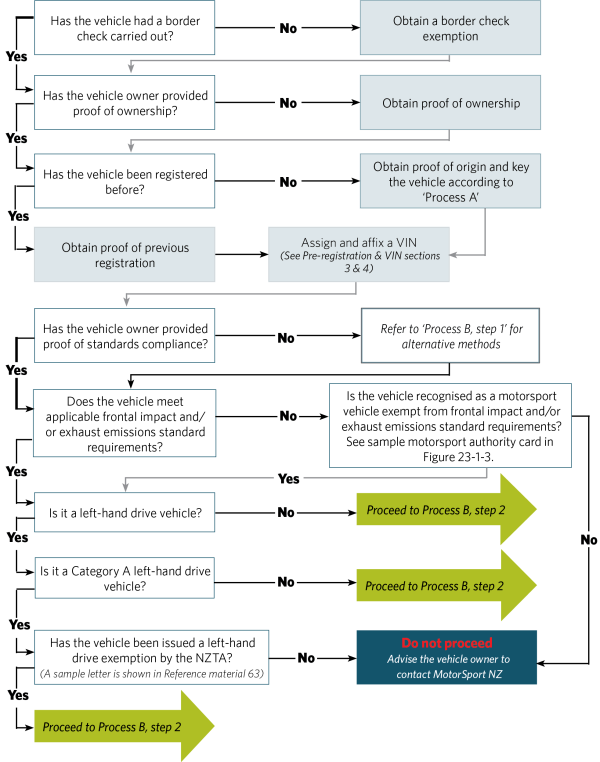
Flow diagram Figure 23-1-1 explains the procedure for processing an imported motorsport vehicle for entry certification.
Process A
Some imported motorsport vehicles may have been used but not previously registered. These vehicles will not meet the definition of a used import, but must be entered in LANDATA as used (>U<). The vehicle attributes for such vehicles should be recorded in LANDATA as follows:
|
In the field … |
Type … |
|---|---|
|
Vehicle type |
07 |
|
1st Reg date |
The year the vehicle will be first registered in New Zealand |
|
Prev cntry |
XXX |
|
Orig cntry |
The code for the country where the vehicle was built |
Figure 23-1-2. Sample VIN screen
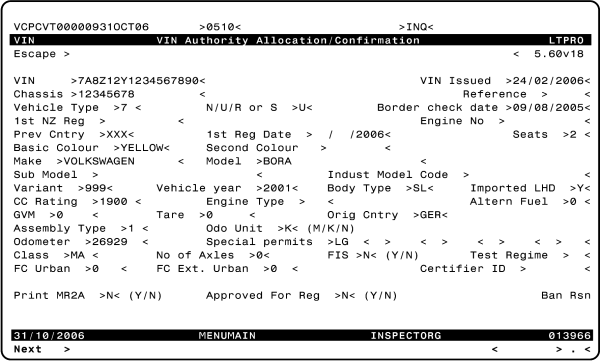
Notes must be entered against the vehicle record in LANDATA explaining the motorsport vehicle exemption category. For example, ‘MotorSport vehicle manufactured in 1999 used but never registered’.
Process B
Step 1 – Documentation
Dedicated motorsport vehicles must still meet all the relevant standards applicable to the vehicle (according to age, etc).
The VIRM: Entry certification manual details the standards a vehicle and its components are required to meet. See Inspection and certification Table 1-1-2 for methods to demonstrate compliance with required standards.
Where compliance with an approved standard can not be proven by these methods, the following methods are acceptable alternatives:
a) visual confirmation and recording of standards for items such as lighting, glazing, tyres and so on
b) low volume vehicle (LVV) certification for modified components, such as brakes, steering and suspension, not covered on the MotorSport NZ authority card
c) a MotorSport NZ authority card that includes at least frontal impact assessment
Left-hand drive vehicles
Left-hand drive motorsport vehicles must meet all the requirements described in Pre-registration and VIN 6, Left-hand drive vehicles. If an exemption has been issued, the code ‘C5 (Left hand drive motorsport)’ must be entered in the ‘Special permit’ field on the VIN screen.
MotorSport authority card
If a MotorSport NZ authority card is issued for a vehicle, the code LVAC (low volume authority card) must be entered in the IVCERT screen. The Certifier ID to be recorded for a motorsport authority card is >TMWM1<.
Record the modifications listed on the authority card in the comments field.
Step 2 – Compliance inspection
Motorsport vehicles must be inspected according to the requirements outlined in the VIRM: Entry certification.
If a vehicle has been modified, it must have LVV certification and/or a motorsport authority card (Figure 23-1-3).
If there is evidence of previous structural repairs or structural damage to a motorsport vehicle, it must be referred to a repair certifier for inspection and certification.
Step 3 – MR2A completion and vehicle registration
1. Any original exemption letters must be sighted, copied and returned to the vehicle owner.
2. Notes must be recorded against the vehicle record in LANDATA.
a) If the vehicle is recognised as a dedicated motorpsort vehicle that does not meet a frontal impact and/or exhaust emissions standard, the following note must be recorded in the LANDATA notes screen:
‘Vehicle must remain registered in the name of >vehicle owner< or motorsport vehicle recognition is void’.
The importer’s name must match the name shown on the exemption letter.
If the vehicle does not meet a frontal impact standard, the FIS (frontal impact standard) field must be set to >N<.
b) Update LANDATA with Special Permit Code MS.
c) If the vehicle has been issued a left-hand drive exemption letter, the following note must be recorded in the LANDATA notes screen:
‘Vehicle must remain registered in the name of the>vehicle owner< or left-hand drive exemption is void’.
3. The MR2A must be completed and printed in the name of the vehicle importer. This must be the same as the name shown on any exemption letter.
Note 1
If a vehicle is recognised as a motorsport vehicle exempt from frontal impact or exhaust emissions standard requirements, the MR2A must not leave the control of the entry certifier until after the vehicle is registered to ensure it is registered in the importer’s name.
Note 2
All exemptions will be issued to individuals. If a company or organisation has applied for a motorsport exemption, it will be issued to a nominated individual.
If an entry certifier wishes to deviate from these instructions, written approval from the Transport Agency must be obtained.
Assistance
Contact your technical manager if you have any questions.
Figure 23-1-3. Sample motorsport authority card (front and rear)
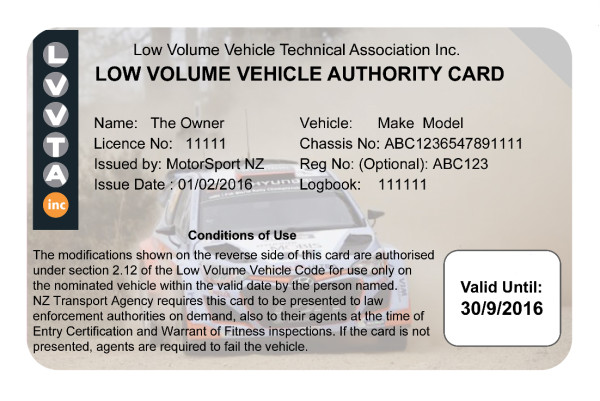
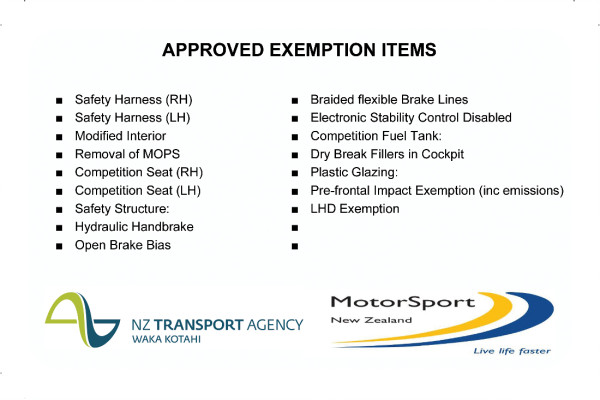
Figure 23-1-1. Procedure for processing an imported motorsport vehicle for entry certification
Page updated 17 May 2023 (see details)
24 Recording the number of seats for self-propelled motorhomes
Vehicle inspection requirements manual references
This bulletin gives guidance to vehicle inspectors in applying the following requirements in the VIRM: Entry certification:
Application
This bulletin applies to self-propelled motorhome vehicles undergoing entry certification in New Zealand.
Requirements
When recording the number of seats in a self-propelled motorhome, the vehicle inspector must take the following factors into account:
- the number of seats recorded on the importation documents (eg the de-registration or export certificate), and
- the number of seats fitted by the vehicle manufacturer, and
- the date of manufacture or conversion to a motorhome.
Vehicles manufactured or converted to a motorhome before 1 October 2003
The inspector should only count the fixed seats originally fitted by the vehicle manufacturer, not additional seats constructed by folding up or repositioning squabs, tables or beds.
The number of seats recorded in LANDATA should not exceed the number of seats recorded on the importation documents.
The vehicle must be fitted with seatbelts appropriate for the class of vehicle it was recorded as when first registered as a motorhome.
Examples
1. A motorhome manufactured in 2001 is imported. Two seats are indicated on the de-registration certificate. There are six seating positions in the vehicle but four of these seating positions fold down into beds. The vehicle should be recorded in LANDATA as a two-seater.
2. A vehicle is imported with eight seats indicated on the de-registration certificate. There are three factory seats in the front, with two seats in the rear that fold down into beds. The vehicle should be recorded in LANDATA as a three-seater.
Vehicles manufactured or converted to a motorhome after 1 October 2003
The number of seating positions recorded in LANDATA should match the number of sleeping berths.
The vehicle must be fitted with:
a) seatbelts in front seating positions as specified for class MB vehicles in the VIRM: In-service certification Table 7-5-3 (column three).
b) seatbelts in rear seating positions as specified for class MB vehicles in the VIRM: In-service certification Table 7-5-3 (column three) for at least as many rear seating positions as the number of sleeping berths minus the number of front seating positions.
c) a notice displayed in a prominent location, which recommends on safety grounds that passengers use the seats that are fitted with seatbelts when the vehicle is travelling, and stating that it is compulsory to wear fitted seatbelts.
Example
1. A motorhome manufactured in 2004 is imported. The vehicle has five sleeping berths. There are two front seating positions. There must be at least three rear seating positions fitted with lap or lap-and-diagonal seatbelts. The vehicle should be recorded in LANDATA as a five-seater.
2. A motorhome manufactured in 2004 is imported. The vehicle has two sleeping berths. There are two front seating positions and there is a two-seat sofa in the rear. There is no requirement to have any of the rear seating positions fitted with belts. The vehicle should be recorded in LANDATA as a two-seater.
Page amended 1 March and 11 March 2016 (see amendment details).
25 Immigrants' vehicles
Situation
The following do not apply to immigrants' vehicles:
| Requirement | Land Transport Rule |
|---|---|
| Frontal impact standards | Land Transport Rule: Frontal Impact 2001, clauses 2.1(5) and 2.1(6) |
| Exhaust emissions standards | Land Transport Rule: Vehicle Exhaust Emissions 2007, clause 2.2 |
| Electronic stability control | Land Transport Rule: Light Vehicle Brakes 2002, clause 3.1(4) |
| Advanced brake system (for class LC, LD and LE vehicles only) | Land Transport Rule: Light Vehicle Brakes 2002, clauses 2.7(7) |
Application
This document applies to any used vehicle that is undergoing entry certification in New Zealand, which:
- has been identified in writing by a Transport Agency entry certification agent as an immigrant’s vehicle appropriate for certification to enter service in New Zealand, and
- is imported to New Zealand by an immigrant entitled to take up permanent residence in New Zealand, or
- is imported by a New Zealand citizen or resident returning to New Zealand after at least 21 months overseas.
Obtaining recognition of an immigrant’s vehicle
To be eligible to register an immigrant’s vehicle, an applicant must:
1. apply to an organisation appointed by the Transport Agency (such as a Transport Agency entry certification agent), before the vehicle is certified for entry into service in New Zealand (an application form is available in Reference material 50), and
2. pay the appropriate fees (if any) specified in accordance with regulations made under the Act.
Recognition of an immigrant’s vehicle may be granted if:
- the applicant is a New Zealand citizen, or a New Zealand resident, or entitled to take up permanent residence in New Zealand under the Immigration Act 1987 (Note 1), and
- the applicant has lived outside New Zealand for at least 21 months continuously before arriving in or returning to New Zealand (Note 3), and
- the application is made:
a) within 18 months of the applicant’s arrival in or return to New Zealand, or
b) for a vehicle border checked between 1 April 2002 and 8 May 2008, and
c) the applicant has signed a declaration in accordance with the immigrant’s vehicle criteria.
Note 1
Document authorising residence in New Zealand means any of the following:
- a current New Zealand passport
- a current Australian passport
- a current New Zealand residence visa or permit, or a current New Zealand returning resident’s visa or permit
- a current permanent residence visa (including a resident return visa) issued by the Government of the Commonwealth of Australia.
Immigrant’s vehicle declaration criteria
An applicant for recognition of an immigrant’s vehicle must sign a declaration, declaring that:
a) the applicant has resided outside New Zealand for a period of not less than 21 months before the applicant’s arrival in or return to New Zealand and
b) the applicant has personally owned the vehicle, and has registered for personal use in a country outside New Zealand for a period of at least one year before their arrival in or return to New Zealand, and
c) the applicant has not had any other vehicle recognised as an immigrant’s vehicle, and
d) the applicant has not imported the vehicle on behalf of, or for, a third party, and
e) the applicant will not sell or lease the vehicle to a third party for at least one year after the date that the vehicle is first registered in New Zealand, and
f) the vehicle will not be operated in a transport service for at least one year after the date that the vehicle is first registered in New Zealand.
Conditions of use
A vehicle that is recognised as an immigrant’s vehicle must:
a) be registered in New Zealand in the applicant’s name for at least one year after the date on which the vehicle is first registered in New Zealand, although additional names may also appear on the registration documents, and
b) not operate as part of a transport service.
Note 2
Those persons ‘entitled to take up permanent residence in New Zealand under the Immigration Act 1987’ includes those in New Zealand under the ‘Talent Visa’ scheme.
Note 3
Customs document (Deed of Undertaking) can be accepted as proof of a person residing outside of New Zealand for a period of not less than 21 months, before their arrival in or return to New Zealand, and as proof that they hold a document authorising residence in New Zealand (see Reference material 66)
Inspection
The following flowchart explains the procedure for processing an immigrant’s vehicle for entry certification.
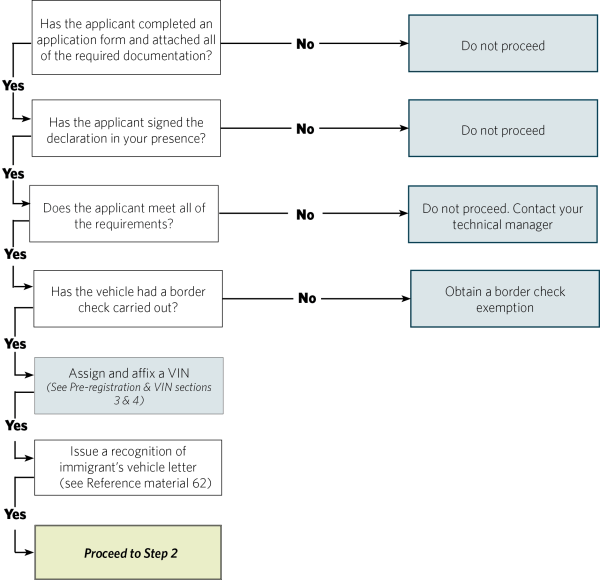
Step 1 – Documentation
Immigrants’ vehicles must still meet those standards applicable to the vehicle (according to age, etc).
The VIRM: Entry certification details the standards a vehicle and its components are required to meet. See Inspection & certification Table 1-1-1 for methods to demonstrate compliance with required standards.
Where compliance with an approved standard can not be proven by these methods, the following methods are acceptable alternatives:
- visual confirmation and recording of standards for items such as lighting, glazing, tyres and so on
- low volume vehicle (LVV) certification for modified components, such as brakes, steering and suspension
- a letter of exemption from the Transport Agency for specific items not covered above. Application forms for exemptions can be obtained from the the Transport Agency website.
Step 2 – Compliance inspection
Immigrants’ vehicles must be inspected according to the requirements outlined in the VIRM: Entry certification.
If a vehicle has been modified, it must have LVV certification.
If there is evidence of previous structural repairs or structural damage to a vehicle, it must be referred to a repair certifier for inspection and certification.
Ensure the vehicle meets all other required standards.
Step 3 – MR2A completion and vehicle registration
1. Any original letters must be sighted, copied and returned to the vehicle owner.
2. The following note must be recorded in the LANDATA notes screen:
‘Vehicle must remain registered in the name of >vehicle owner< for at least one year from the date
of registration in New Zealand’.
The applicant’s name must match the name shown on the letter of recognition as an immigrant’s vehicle.
If the vehicle does not meet an approved frontal impact standard, the FIS (frontal impact standard) field must be set to >N<.
3. Update LANDATA with special permit code IM.
4. The MR2A must be completed and printed in the name of the person registering the vehicle. This must be the same as the name shown on any exemption letter.
5. The entry certifier must retain a copy of the immigrant's approval letter on the vehicle file.
If an entry certifier wishes to deviate from these instructions, written approval from the Transport Agency must be obtained.
Page amended 10 April 2025 (see amendment details)
Page updated 4 July 2025 (see details)
26 Special interest vehicles
Situation
- Under Land Transport Rule: Frontal Impact Amendment 2008 and Land Transport Rule: Vehicle Exhaust Emissions 2007, a class MA vehicle is not required to comply with an approved frontal impact standard or exhaust emissions standard if it is granted a special interest vehicle permit.
- Under Land Transport Rule: Light Vehicle Brakes 2002, special interest vehicles are not required to meet electronic stability control requirements if it is granted a special interest vehicle permit.
- Under Land Transport Rule: Light Vehicle Brakes 2002, class LC, LD and LE vehicles are not required to meet advanced brake systems requirements if it is granted a special interest motorcycle permit.
Application
This document applies to any used or parallel-imported vehicle that is undergoing entry certification in New Zealand, which has been granted a special interest vehicle (SIV) or special interest motorcycle (SIMC) permit and is appropriate for certification to enter service in New Zealand.
Obtaining special interest vehicle and special interest motorcycle permits
To obtain an SIV or SIMC permit, an applicant must:
1. apply to NZTA before the vehicle is certified for entry into service in New Zealand; and
2. pay the appropriate fees (if any) specified in accordance with regulations made under the Act.
Note 1
All applications must have the applicant’s declarations witnessed by an entry certifier. The complete application with all the supporting evidence is then sent to NZTA by the entry certifier.
Special interest vehicle permits
A special interest vehicle permit may be issued if:
- NZTA considers that the vehicle will be owned as a collector’s item, and it:
a) is of historic value; or
b) meets three of the four qualifying criteria set out below
- the applicant:
a) is a New Zealand citizen or resident, and
b) has another vehicle for primary use that is a class MA, MB, MC or NA vehicle registered in the applicant’s name, leased by the applicant or is a company car, and
c) has not been issued with a special interest vehicle permit in the last two years, and does not have any other special interest vehicle registered in his/her name, and
d) has submitted a complete and correct application, including a signed declaration, and
e) has paid the appropriate fees (if any) specified in accordance with regulations made under the Act.
Qualifying criteria for special interest vehicle permits
To meet qualifying criteria for a special interest vehicle permit, the applicant must provide evidence that the vehicle meets at least three of the following requirements:
1. The vehicle (or its make, model and sub-model) is identified as being a collector’s item in one of the following magazines, or its respective website (Note 2):
a) Australian Classic Car
b) Car and Driver (US)
c) Automobile (US)
d) MOTOR (Australia)
e) Motor Trend (US)
f) New Zealand Autocar
g) New Zealand Classic Car
h) Road and Track (US)
i) Top Gear (UK)
j) Top Gear NZ
k) Unique Cars (Australia)
l) Wheels (Australia).
2. The vehicle’s make and model has been (or was) manufactured in annual volumes of 20,000 units or less
3. The vehicle is, and was manufactured as:
a) a two-door coupe, or
b) a convertible
4. The vehicle is, or was, manufactured as a high-performance vehicle.
Note 2
This is not intended to be an exhaustive list of magazines in which special interest vehicles feature, but a list of magazines in which any special vehicle is expected to feature.
Conditions for special interest vehicle permits
1. NZTA may not issue more than 200 special interest vehicle permits in any calendar year.
2. A special interest vehicle permit ceases to be valid if the vehicle is not inspected at the border or certified for entry within six months of the date of issue.
Note 3
A special interest vehicle permit that ceases to be valid in the calendar year it was issued will not be counted as part of the quota of 200 per annum.
Special interest motorcycle permits
A special interest motorcycle permit may be issued if the applicant:
a) is a New Zealand citizen or resident, and
b) has another vehicle for primary use that is a class LC, LD, LE, MA, MB, MC or NA vehicle registered in the applicant’s name, leased by the applicant or is a company car, and
c) has not been issued with a special interest motorcycle permit in the last two years, and
d) does not have any other special interest motorcycle registered in his/her name, and
e) has submitted a complete and correct application, including a signed declaration, and
f) has paid the appropriate fees (if any) specified in accordance with regulations made under the Act.
Qualifying criteria for special interest motorcycle permits
- NZTA considers that the motorcycle will be owned as a collector’s item, and:
- it is of historic value, or
- The vehicle’s make and model has been (or was) manufactured in annual volumes of 20,000 units or less and was not manufactured with either an antilock braking system or combined braking system
Conditions for special interest motorcycle permits
1. NZTA may not issue more than 100 special interest motorcycle permits in any calendar year.
2. A special interest motorcycle ceases to be valid if the vehicle is not inspected at the border or certified for entry within six months of the date of issue.
Note 4
A special interest motorcycle permit that ceases to be valid in the calendar year it was issued will not be counted as part of the quota of 100 per annum.
Inspection
The following flowchart explains the procedure for processing a special interest vehicle for entry certification.
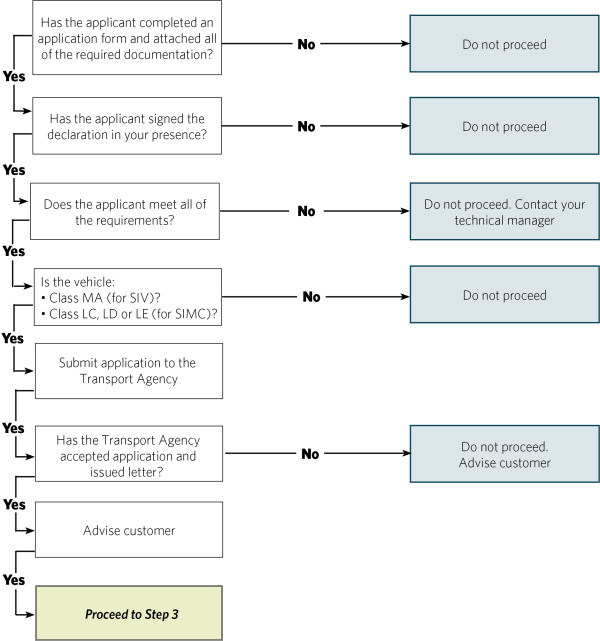
Step 1 – Documentation
SIVs and SIMCs must still meet those standards applicable to the vehicle (according to age, etc).
The VIRM: Entry certification details the standards a vehicle and its components are required to meet. See Inspection & certification Table 1-1-3 (Inspection & certification section 1-1) for methods to demonstrate compliance with required standards.
Where compliance with an approved standard cannot be proven by these methods, the following methods are acceptable alternatives:
- visual confirmation and recording of standards for items such as lighting, glazing, tyres and so on.
- low volume vehicle (LVV) certification for modified components, such as brakes, steering and suspension.
- a letter of exemption from NZTA for specific items not covered above. Application forms for exemptions can be obtained from the NZTA website.
Step 2 – Submit to NZTA for processing
The application and documentation for a special interest vehicle permit must be submitted to:
Exemptions and Registers Integrity
NZ Transport Agency
Private Bag 11777
Palmerston North 4442
A letter advising of the result (approve or decline) will be sent to the entry certifier for forwarding to the applicant.
Step 3 – Compliance inspection
SIVs and SIMCs must be inspected according to the requirements outlined in the VIRM: Entry certification.
If a vehicle has been modified, it must have LVV certification.
If there is evidence of previous structural repairs or structural damage to a vehicle, it must be referred to a repair certifier for inspection and certification.
Step 4 – MR2A completion and vehicle registration
1. Any original letters must be sighted, copied and returned to the vehicle owner.
2. If the vehicle has been issued a special interest vehicle permit and does not meet an approved frontal impact standard, and/or exhaust emissions standard, and/or is not fitted with electronic stability control (ESC) the following note must be recorded in the LANDATA notes screen:
‘Vehicle must remain registered in the name of >vehicle owner< for at least four years from the date of first registration in New Zealand’.
The owner’s name must match the name shown on the permit.
If the vehicle does not meet an approved frontal impact standard, the FIS (frontal impact standard) field must be set to >N<.
3. Record the SIV permit number in the NOTES screen (if not already recorded).
4. Update LANDATA with special permit code SP.
5. The MR2A must be completed and printed in the name of the person registering the vehicle. This must be the same as the name shown on any exemption letter.
If an entry certifier wishes to deviate from these instructions, written approval from NZTA must be obtained.
Page amended 30 July 2025 (see amendment details).
27 Alternative proof of compliance – Singapore/Japan
Vehicles previously registered in Singapore
Introduction
This procedure may be used as an alternative to obtaining a statement of compliance for some used vehicles from Singapore.
It is divided into two processes, one for used Japanese domestic vehicles with a type designation number (TDN) and the other for non-Japanese domestic vehicles. Both types of vehicle must have been previously registered in Singapore.
Approved certifier procedures
1. Send the Singapore Land Transport Authority (LTA) technical information of motor vehicle letter to your Technical Manager – and advise the vehicle owner that he/she will be notified of the outcome in due course.
2. Your Technical Manager will issue a letter advising either:
a) that a statement of compliance will be required, or
b) approval of the Singapore LTA letter as acceptable evidence of compliance at the time of manufacture (conditions may apply).
3. If the application is successful, attach the approval letter to the vehicle file.
Vehicles from Japan without a TDN
Introduction
This procedure provides an alternative to obtaining a statement of compliance for a vehicle from Japan that does not have a TDN on its export certificate. This is only applicable to vehicles manufactured outside Japan as vehicles manufactured in Japan for the Japanese market are not required by the NZTA to have a TDN on the export certificate.
These vehicles must have been previously registered in Japan.
Approved certifier procedures
1. Send the export certificate to your Technical Manager – and advise the vehicle owner that he/she will be notified of the outcome in due course.
2. Your Technical Manager will issue a letter advising either:
a) that a statement of compliance will be required, or
b) the vehicle may be accepted as compliant at the time of manufacture.
3. If the application is successful, attach the approval letter to the vehicle file.
28 Exhaust emissions standard compliance
Vehicle inspection requirements manual references and application
This bulletin gives guidance to vehicle inspectors in applying the following requirements in the VIRM: Entry certification:
Under Land Transport Rule: Vehicle Exhaust Emissions 2007, when a vehicle undergoes entry-level certification in New Zealand, proof that the vehicle was manufactured to meet an approved emissions standard or a more recent version or a higher standard is required.
This technical bulletin applies to all vehicles being certified for entry into New Zealand that are required to meet an approved exhaust emissions standard. It provides approved standards, more recent versions, and higher standards. Section 11-2 only provides approved standards (meaning those specified in schedule 1 of the Rule).
Acceptable proof of exhaust emissions rule compliance for vehicles from any country
For a vehicle imported from any country, an acceptable statement of compliance including an approved, or a more recent version or a higher emissions standard is acceptable evidence of compliance (see section 3-1-1 for other SoC requirements). The emissions standard provided in the statement of compliance must be recorded on the vehicle checksheet.
- A Statement of Compliance containing one of the the following statements is also acceptable as proof for Euro 4 only:
- “This vehicle has been certified to UN/ECE Regulation 83.05 and complies with the limit values specified in Row B of the table to clause 5.3.1.4”, or
- “This vehicle has been certified to 70/220/EC as amended by 98/69/EC [or later amendment if applicable] and complies with the limit values specified in Row B of the table to clause 5.3.1.4 of Annex 1”
- An emission certificate produced by TÜV SÜD or DEKRA which confirms the vehicle is compliant with an approved, more recent version or higher Euro emissions standard is also acceptable. Each individual vehicle is required to have an approved Exhaust Emissions Compliant Certificate. TÜV SÜD certificates can be issued by SOC NZ (until February 2017 Autohub issued the certificates) and DEKRA certificates can be issued by VTNZ. For a TÜV SÜD sample certificate see Reference Material 73c; for a DEKRA sample Certificate, see Reference Material 73b
SOC NZ Limited may be able to supply TÜV SÜD full statements of compliance and emission certificates via socnz.co.nz, or emailing: karen@socnz.co.nz or joe@socnz.co.nz
VTNZ certificates (DEKRA) can be ordered by contacting Paul Deans or David Thomson at technical@vtnz.co.nz
The certifier must keep the original certificate in their vehicle certification file.
An emailed copy of a TÜV SÜD or DEKRA certificate can be accepted providing they are emailed directly to a KSDP email address.
Rainon Contracting may be able to supply full statements of compliance for the following used GM products: Buick, Cadillac, Chevrolet, Holden, Oldsmobile, Pontiac, Vauxhall, Opel (before 2022) by emailing contracting@rainon.co.nz
Statements of compliance from Motor Industry Association manufacturers’ representatives
Statements of compliance from the Motor Industry Association of New Zealand (MIA) manufacturers’ representatives can use an abbreviated format to refer to emissions standards. In particular, this involves using the terms Euro 4, Euro 5 and Euro 6d and so on, instead of quoting the relevant UN/ECE regulation or EC directive in full, subject to the following conditions:
a) This terminology is only acceptable on statements of compliance issued by the MIA representatives of the vehicle manufacturer.
b) By using the abbreviated term, the person signing the statement of compliance is certifying that the vehicle has been formally homologated to the UN/ECE regulation or EC Directive for exhaust emissions that is appropriate to the vehicle.
c) The issuer of the statement of compliance must be able to provide, on request, the relevant certification documentation as set out in declaration 2 of the standard statement of compliance.
NZ new heavy vehicles imported by Motor Industry Association manufacturers’ representatives
Some manufacturers are directly notifying NZTA of the emission standards for the models of heavy vehicles that they're importing into New Zealand.
Therefore, if a new heavy vehicle is presented for certification and the emissions code (test regime) fields in LANDATA are already populated, additional documentation proving compliance with an approved emissions standard is not needed.
- The manufacturer and distributor must be listed on the New heavy motor vehicles – statements of compliance contact details list.
- The vehicles can be identified in LANDATA by the manufacturer/distributor's name displaying on the bottom right of the VIN screen. It won't be visible once the Certifier ID field is entered.
Acceptable proof of exhaust emissions rule compliance for vehicles from Japan
An original Japanese de-registration, export or completion inspection certificate with a 3 digit emissions code as listed in the appropriate table below, relevant to its import status, class, fuel type and date. The emissions code is the prefix (ie before the hypen) at the beginning of the Industry Model code, see the circled area on Figure 28-1-1
If the industry model code recorded on the de-registration, export or completion inspection certificate does not include an emissions prefix or the code is not listed in the appropriate table below, other evidence of compliance with an approved exhaust emissions standard, such as a statement of compliance or appropriate compliance plates, must be provided.
- Table 28-1-1 Used vehicles – Class MA, MB, MC, MD1, MD2, and NA (except used-import disability vehicles)
- Table 28-1-2 New vehicles – Class MA, MB, MC, MD1, MD2, and NA
- Table 28-1-3 Used vehicles – Class MD3, MD4, ME, NB, and NC
- Table 28-1-4 New vehicles – Class MD3, MD4, ME, NB, and NC
- Table 28-1-5 Used-import disability vehicles – Class MA, MB, MC, MD1, MD2, and NA
- Table 28-1-6 New and used vehicles – Class LA, LB, LC, LD, and LE
Recording the information
This emissions code information must be recorded on the vehicle checksheet and the industry model code and test regime must be recorded in LANDATA.
Enter the full industry model code from the de-registration, export or completion inspection certificate, including the emissions code characters, into the ‘industry model code’ field.
For vehicles requiring a Fuel Consumption Statement the emissions test regime is entered by the Fuelsaver system.
For vehicles not requiring a Fuel Consumption Statement (such as heavy vehicles and motorcycles, from 30 April 2025) enter the emissions test regime code into LANDATA in the VCAAS screen. The test regime code to be recorded in LANDATA is determined by adding a ‘J’ to the beginning of the emissions code prefix (eg the emissions code prefix DBA is recorded as test regime code JDBA).
If the test regime code is not recognised by LANDATA (error 60803 Emission Standard (Test Regime) is not valid) email vehicleemissions@nzta.govt.nz including a copy of the export, completion or de-registration certificate.
Acceptable proof of exhaust emissions rule compliance for used vehicles imported from Singapore
Standards compliance for vehicles imported from Singapore can be demonstrated using the following documents:
a) a Singapore de-registration certificate, and
b) an outcome notification letter from an entry certifier head office advising that the Singapore LTA technical letter is acceptable documentation, and
either
c) if the vehicle is a used Japanese domestic vehicle , a Singapore Land Transport Authority (LTA) technical letter listing an acceptable Japanese emissions code as shown in the Japanese tables, or
d) a Singapore Land Transport Authority (LTA) technical letter listing an approved, more recent or higher emissions standard.
Vehicles that can be accepted based on date of registration
Some vehicles may be accepted as complying with emissions standards, and might meet a higher standard, based on their registration date.
| Fuel type | Date first registered in Singapore | Can be accepted as complying with |
|---|---|---|
| Diesel | On or after 1 October 2006 | Euro 4 – may meet a higher standard |
| On or after 1 April 2014 | Euro 5 – may meet a higher standard | |
| On or after 1 January 2018 | Euro 6 – may meet a higher standard | |
| Petrol | On or after 1 April 2014 | Euro 4 – may meet a higher standard |
| On or after 1 September 2017 | Euro 6 – may meet a higher standard |
Vehicles registered before these dates require further evidence of emissions compliance.
Note: As of 1 January 2017, the Singapore emissions exemptions document, a Waka Kotahi list of exemption-eligible vehicles, ceased to be valid. The above advice replaces the previous exemptions procedure.
Acceptable proof of exhaust emissions rule compliance for vehicles imported from Australia
Classes LA, LB, LC, LD, LE
Australian Design Rules (ADR) compliance does not include a vehicle emissions standard for class LA, LB, LC, LD and LE vehicles. If an L class vehicle is required to meet a vehicle emissions standard, a Statement of Compliance or alternative evidence of compliance will be required.
Classes MA, MB, MC, MD1, MD2, MD3, MD4, ME, NA, NB, NC, TC and TD recorded on the Register of Approved Vehicles
See Technical bulletin 48 Verification of compliance with Australian Design Rules (ADRs)
Classes MA, MB, MC, MD1, MD2 and NA with an ADR plate/label
Which version of ADR 79 that a vehicle complies with can be determined using the date on the ADR compliance plate as follows:
|
Date on ADR plate |
Petrol |
Diesel |
|---|---|---|
|
01/2007 – 06/2010 |
Not proven to be compliant |
ADR 79/01 (Euro 4) |
|
07/2010 –10/2016 |
ADR 79/02 (Euro 4) |
ADR 79/01 (Euro 4) |
| 11/2016 – 01/07/2028 | ADR 79/04 (Euro 5) | ADR 79/04 (Euro 5) |
- If there is no emissions standard on the plate, the compliance plate approval number must be recorded on the vehicle check sheet.
- Some vehicles may comply in advance of these dates. In these cases, it may be possible to confirm compliance via the vehicle manufacturer's official representative for vehicle compliance. The certifier must keep such correspondence in the vehicle certification file.
- Diesel vehicles complying with ADR 79/01 or ADR 79/02 must also comply with ADR 30/01. If a diesel vehicle has an ADR compliance plate and can be established as complying with the appropriate ADR 79/01 or ADR 79/02, it also complies with ADR 30/01.
Classes MD3, MD4, ME, NB and NC with an ADR plate/label
Which version of ADR 80 that a vehicle complies with can be determined using the date on the ADR compliance plate as follows:
|
Date on ADR plate |
Petrol |
Diesel |
|---|---|---|
|
03/2008 – 12/2010 |
ADR 80/02 |
ADR 80/02 |
|
01/2011 – 11/2025 |
ADR 80/03 |
ADR 80/03 |
- If there is no emissions standard on the plate, the compliance plate approval number must be recorded on the vehicle check sheet.
- Some new model vehicles may comply in advance of these dates. In these cases, it may be possible to confirm compliance via the vehicle manufacturer's official representative for vehicle compliance. The certifier must keep such correspondence in the vehicle certification file.
- Diesel vehicles complying with ADR80/02 must also comply with ADR 30/01. If a diesel vehicle has an ADR compliance plate and can be established as complying with ADR 80/02, it also complies with ADR 30/01.
Which standards are the most recent?
More recent versions of an approved ADR79/xx or ADR80/xx standard will have a higher suffix. For example, ADR79/05 is a more recent version of ADR79/04.
Acceptable proof of exhaust emissions rule compliance for vehicles from the United Kingdom
Any light vehicle (except a motorcycle or moped) ex-UK that is presented for entry certification, that has a valid Certificate of permanent export, V5C, V308 or VX302 registration certificate (see Reference material 59, 67 and 68) showing that it was first registered as new in the UK:
- on or after 1 October 2007 may be accepted as complying with the Euro 4 emissions standard and might meet a higher standard
- on or after 1 January 2011 will be certified to the Euro 5 emission requirements and might meet a higher standard
- on or after 1 January 2015 will be certified to the Euro 6d TEMP or lower emission requirements and might meet a higher standard. Registration date cannot be used as evidence of compliance with Euro 6d or higher.
If an acceptable emission code (such as Euro 5) for the vehicle is listed on a valid Certificate of permanent export, V5C, V308 or VX302 registration document of a vehicle first registered as new in the UK, it may be accepted as proof of emissions compliance. If listed on the document use Table 28-1-7 to determine the Step or Level (for example, “EURO 6 AP” is Euro 6d).
If an acceptable emission code (such as Euro 5) for the vehicle is listed on https://carfueldata.vehicle-certification-agency.gov.uk/ for a vehicle first registered as new in the UK, it may be accepted as proof of emissions compliance.
Acceptable proof of exhaust emissions rule compliance for vehicles from Europe
a) A statement of compliance listing an approved emissions standard, or an appropriate EC directive or UN/ECE regulation as shown in Table 28-1-7, or
b) A UN/ECE compliance plate listing an approved emissions standard or one of the UN/ECE regulations shown in Table 28-1-8, or
c) An EC Certificate of Conformity (CoC) issued by the vehicle manufacturer for individual vehicles that have undergone European Commission Whole Vehicle Type Approval (EC WVTA). The CoC is linked to the EC Whole Vehicle Approval Plate – if a vehicle has a CoC, it will also have a Whole Vehicle Approval Plate. A sample CoC is shown in Reference material 49. The emissions standard information is recorded in item 46.1 or 48 of the CoC, or
d) An EC whole vehicle approval plate showing an appropriate regulation/directive. Refer to Reference material 29
e) An EC Certificate of Conformity showing an EC Whole Vehicle Approval number of 2001/116 or later, and with all emissions values (quoted in section 48) falling below the limit values set out in Table 28-1-9, may be accepted as complying with the Euro 4 emissions standard, or
f) An Irish Certificate of registration (see Reference material 83) showing it was first registered as new on or after 1 February 2008 may be accepted as complying with the Euro 4 emissions standard and might meet a higher standard.
Decoding EC Directive and UN/ECE Regulation emissions system approval numbers
Refer to Table 28-1-10
Acceptable proof of exhaust emissions compliance for used vehicles imported from the United States
|
If a vehicle has: |
Then either of the following is acceptable proof of exhaust emissions compliance: |
|---|---|
|
|
Check sheet recording
If the vehicle has an emissions standard identified on the EPA plate/label then the standard must be recorded on the vehicle checksheet; otherwise record 'EPA VECI' and the model year on the plate/label.
Table 1
Notes
- US 2007 cannot be confirmed by the model year on the EPA label.
- EPA vehicle classes do not match FMVSS or NZ vehicle classes.
|
Class |
Conditions |
Conditions |
Conditions |
Model year on EPA VECI label |
Standard |
|---|---|---|---|---|---|
|
LA and LC |
280cc or more |
2010 or later |
US 2010m |
||
|
279cc or less |
2006 or later |
US 2010m |
|||
|
LB, LD and LE |
280cc or more |
Curb mass 682kg or less |
2010 or later |
US 2010m |
|
|
279cc or less |
2006 or later |
US 2010m |
|||
|
MA, MB, MC MD1, MD2 and NA |
2017 or later |
US TIER3 |
|||
|
2004 or later |
US TIER2 |
||||
|
2004 or later |
US 2004 |
||||
|
MD3 |
12 or less seats |
GVM 3856kg or less |
2017 or later |
US TIER3 |
|
|
2004 or later |
US TIER2 |
||||
|
2004 or later |
US 2004 |
||||
|
12 or less seats |
GVM 3857kg or more |
2017 or later |
US TIER3 |
||
|
2004 or later |
US TIER2 |
||||
|
2004 or later |
US 2004 |
||||
|
13 or more seats |
GVM 3856kg or less |
2017 or later |
US TIER3 |
||
|
2004 or later |
US TIER2 |
||||
|
2004 or later |
US 2004 |
||||
|
13 or more seats |
GVM 3857kg or more |
2018 or later |
US TIER3 |
||
|
Diesel only |
2007 or later |
US TIER2 |
|||
|
2013 or later |
US 2013 |
||||
|
Diesel only |
2004 or later |
US 2004 |
|||
|
MD4 |
12 or less seats |
GVM 4536kg or less |
2017 or later |
US TIER3 |
|
|
2004 or later |
US TIER2 |
||||
|
2013 or later |
US 2013 |
||||
|
12 or less seats |
GVM 4537kg or more |
2018 or later |
US TIER3 |
||
|
Diesel only |
2007 or later |
US TIER2 |
|||
|
2013 or later |
US 2013 |
||||
|
13 or more seats |
GVM 4537kg or more |
2018 or later |
US TIER3 |
||
|
Diesel only |
2007 or later |
US TIER2 |
|||
|
2013 or later |
US 2013 |
||||
|
ME |
2018 or later |
US TIER3 |
|||
|
Diesel only |
2007 or later |
US TIER2 |
|||
|
2013 or later |
US 2013 |
||||
|
Diesel only |
2004 or later |
US 2004 |
|||
|
NB |
GVM 3856kg or less |
2017 or later |
US TIER3 |
||
|
2004 or later |
US TIER2 |
||||
|
2004 or later |
US 2004 |
||||
|
GVM 3857kg or more |
2018 or later |
US TIER3 |
|||
|
Diesel only |
2007 or later |
US TIER2 |
|||
|
2013 or later |
US2013 |
||||
|
Diesel only |
2004 or later |
US 2004 |
|||
|
NC |
2018 or later |
US TIER3 |
|||
|
Diesel only |
2007 or later |
US TIER2 |
|||
|
2013 or later |
US 2013 |
||||
|
Diesel only |
2004 or later |
US 2004 |
Emissions test regime codes to be keyed to LANDATA
See Pre-registration and VIN: 2-2 Vehicle attributes definitions, 26 Test regime
Table 28-1-1 Used vehicles – Class MA, MB, MC, MD1, MD2, NA (except used-import disability vehicles)
| Border inspection date | Fuel type | Japanese regulation | 3 digit emissions code beginning with |
|---|---|---|---|
| Before 30 April 2024 | Petrol, CNG/LPG | Japan 2005 | Any three digit emissions code |
| Diesel | Japan 2005 | Any three digit emissions code | |
| From 30 April 2024 to 1 July 2028 | Petrol, CNG/LPG | Japan 2005 Low Harm | D and first registered anywhere on or after 1 January 2012 |
| Higher Standard or more recent version to Japan 2005 Low Harm (ie Japan 09 and Japan 2007) | E, G, H, L, M, R or Q | ||
| Japan 2018 | 3, 4, 5, 6, or 7 | ||
| Diesel | Japan 09 | L, F, M, R, or Q | |
| Higher standard or more recent version to Japan 09 (ie Japan 2010 and 2018) | S, T, 3, 4, 5, 6, or 7 | ||
| From 1 July 2028 | Petrol, CNG/LPG | Japan 2018 Low Harm | 3 (CNG/LPG only) 4(CNG/LPG only) 5AA, 5BA, 5LA, 6AA, 6BA or, 6LA |
| Diesel | Japan 2018 | 3, 4, 5,6, or 7 |
Table 28-1-2 New vehicles – Class MA, MB, MC, MD1, MD2, NA
| Date of manufacture | Fuel type | Existing or new model vehicles | Japanese regulation | 3 digit emissions code beginning with | ||||||||||||||||||||||||||||||||||||||||||||||||||||||||||||||||||||||||||||||||||||||||||||||||||||||||||||||||||||||||||||||||||||||||||||||||||||||||||||||||||||||||||||||||||||||||||||||||||||||||||||||||||||||||||||||||||||||||||||||||||||||||||||||||||||||||||||||||||||||
|---|---|---|---|---|---|---|---|---|---|---|---|---|---|---|---|---|---|---|---|---|---|---|---|---|---|---|---|---|---|---|---|---|---|---|---|---|---|---|---|---|---|---|---|---|---|---|---|---|---|---|---|---|---|---|---|---|---|---|---|---|---|---|---|---|---|---|---|---|---|---|---|---|---|---|---|---|---|---|---|---|---|---|---|---|---|---|---|---|---|---|---|---|---|---|---|---|---|---|---|---|---|---|---|---|---|---|---|---|---|---|---|---|---|---|---|---|---|---|---|---|---|---|---|---|---|---|---|---|---|---|---|---|---|---|---|---|---|---|---|---|---|---|---|---|---|---|---|---|---|---|---|---|---|---|---|---|---|---|---|---|---|---|---|---|---|---|---|---|---|---|---|---|---|---|---|---|---|---|---|---|---|---|---|---|---|---|---|---|---|---|---|---|---|---|---|---|---|---|---|---|---|---|---|---|---|---|---|---|---|---|---|---|---|---|---|---|---|---|---|---|---|---|---|---|---|---|---|---|---|---|---|---|---|---|---|---|---|---|---|---|---|---|---|---|---|---|---|---|---|---|---|---|---|---|---|---|---|---|---|---|---|---|---|---|---|---|---|---|---|---|---|---|---|---|---|---|---|---|---|---|---|---|
| Before 30 April 2024 | Petrol, CNG/LPG | Existing or new | Japan 05 | Any three digit emissions code | ||||||||||||||||||||||||||||||||||||||||||||||||||||||||||||||||||||||||||||||||||||||||||||||||||||||||||||||||||||||||||||||||||||||||||||||||||||||||||||||||||||||||||||||||||||||||||||||||||||||||||||||||||||||||||||||||||||||||||||||||||||||||||||||||||||||||||||||||||||||
| Diesel | ||||||||||||||||||||||||||||||||||||||||||||||||||||||||||||||||||||||||||||||||||||||||||||||||||||||||||||||||||||||||||||||||||||||||||||||||||||||||||||||||||||||||||||||||||||||||||||||||||||||||||||||||||||||||||||||||||||||||||||||||||||||||||||||||||||||||||||||||||||||||||
| From 30 April 2024 to 30 June 2027 | Petrol, CNG/LPG | Existing or new | Japan 2005 Low Harm | D and first registered anywhere on or after 1 January 2012. | ||||||||||||||||||||||||||||||||||||||||||||||||||||||||||||||||||||||||||||||||||||||||||||||||||||||||||||||||||||||||||||||||||||||||||||||||||||||||||||||||||||||||||||||||||||||||||||||||||||||||||||||||||||||||||||||||||||||||||||||||||||||||||||||||||||||||||||||||||||||
| Higher Standard or more recent version to Japan 2005 Low Harm (ie Japan 09 and Japan 2007) | E, G, H, L, F, M, R or Q | |||||||||||||||||||||||||||||||||||||||||||||||||||||||||||||||||||||||||||||||||||||||||||||||||||||||||||||||||||||||||||||||||||||||||||||||||||||||||||||||||||||||||||||||||||||||||||||||||||||||||||||||||||||||||||||||||||||||||||||||||||||||||||||||||||||||||||||||||||||||||
| Japan 2018 | 3, 4, 5, 6, or 7 | |||||||||||||||||||||||||||||||||||||||||||||||||||||||||||||||||||||||||||||||||||||||||||||||||||||||||||||||||||||||||||||||||||||||||||||||||||||||||||||||||||||||||||||||||||||||||||||||||||||||||||||||||||||||||||||||||||||||||||||||||||||||||||||||||||||||||||||||||||||||||
| Diesel | Japan 09 | L, F, M, R, or Q | ||||||||||||||||||||||||||||||||||||||||||||||||||||||||||||||||||||||||||||||||||||||||||||||||||||||||||||||||||||||||||||||||||||||||||||||||||||||||||||||||||||||||||||||||||||||||||||||||||||||||||||||||||||||||||||||||||||||||||||||||||||||||||||||||||||||||||||||||||||||||
| Higher standard or more recent version to Japan 09 (ie Japan 2010 and Japan 2018) | S, T, 3, 4, 5, 6, or 7 | |||||||||||||||||||||||||||||||||||||||||||||||||||||||||||||||||||||||||||||||||||||||||||||||||||||||||||||||||||||||||||||||||||||||||||||||||||||||||||||||||||||||||||||||||||||||||||||||||||||||||||||||||||||||||||||||||||||||||||||||||||||||||||||||||||||||||||||||||||||||||
| From 1 July 2027 to 30 June 2028 | Petrol, CNG/LPG | Existing | Japan 2005 Low Harm | D and first registered anywhere on or after 1 January 2012. | ||||||||||||||||||||||||||||||||||||||||||||||||||||||||||||||||||||||||||||||||||||||||||||||||||||||||||||||||||||||||||||||||||||||||||||||||||||||||||||||||||||||||||||||||||||||||||||||||||||||||||||||||||||||||||||||||||||||||||||||||||||||||||||||||||||||||||||||||||||||
| Higher standard or later version to Japan 2005 Low Harm (ie Japan 2009 and Japan 2007) | E, G, H, L, M, R, or Q | |||||||||||||||||||||||||||||||||||||||||||||||||||||||||||||||||||||||||||||||||||||||||||||||||||||||||||||||||||||||||||||||||||||||||||||||||||||||||||||||||||||||||||||||||||||||||||||||||||||||||||||||||||||||||||||||||||||||||||||||||||||||||||||||||||||||||||||||||||||||||
| Japan 2018 | 3, 4, 5, 6, or 7 | |||||||||||||||||||||||||||||||||||||||||||||||||||||||||||||||||||||||||||||||||||||||||||||||||||||||||||||||||||||||||||||||||||||||||||||||||||||||||||||||||||||||||||||||||||||||||||||||||||||||||||||||||||||||||||||||||||||||||||||||||||||||||||||||||||||||||||||||||||||||||
| New | Japan 2018 Low Harm | 6AA, 6BA, 6LA, 5AA, 5BA or 5LA, or is an LPG vehicle or CNG vehicle that complies with Japan 2018) | ||||||||||||||||||||||||||||||||||||||||||||||||||||||||||||||||||||||||||||||||||||||||||||||||||||||||||||||||||||||||||||||||||||||||||||||||||||||||||||||||||||||||||||||||||||||||||||||||||||||||||||||||||||||||||||||||||||||||||||||||||||||||||||||||||||||||||||||||||||||||
| Diesel | Existing | Japan 09 | L, F, M, R, or Q | |||||||||||||||||||||||||||||||||||||||||||||||||||||||||||||||||||||||||||||||||||||||||||||||||||||||||||||||||||||||||||||||||||||||||||||||||||||||||||||||||||||||||||||||||||||||||||||||||||||||||||||||||||||||||||||||||||||||||||||||||||||||||||||||||||||||||||||||||||||||
| Higher standard or more recent version to Japan 09 (ie Japan 2010 and 2018) | S, T, 3, 4, 5, 6, or 7 | |||||||||||||||||||||||||||||||||||||||||||||||||||||||||||||||||||||||||||||||||||||||||||||||||||||||||||||||||||||||||||||||||||||||||||||||||||||||||||||||||||||||||||||||||||||||||||||||||||||||||||||||||||||||||||||||||||||||||||||||||||||||||||||||||||||||||||||||||||||||||
| New | Japan 2018 | 3, 4, 5, 6, or 7 | ||||||||||||||||||||||||||||||||||||||||||||||||||||||||||||||||||||||||||||||||||||||||||||||||||||||||||||||||||||||||||||||||||||||||||||||||||||||||||||||||||||||||||||||||||||||||||||||||||||||||||||||||||||||||||||||||||||||||||||||||||||||||||||||||||||||||||||||||||||||||
| From 1 July 2028 | Petrol, CNG/LPG | Existing or new | Japan 2018 Low Harm | 6AA, 6BA, 6LA, 5AA, 5BA or 5LA, or is an LPG vehi
29 Declaration for SRS, ABS, ESC, and ADAS inspectionsVehicle inspection requirements manual referencesThis bulletin gives guidance to vehicle inspectors in applying the following requirements in the VIRM: Entry certification: ApplicationThis document applies to vehicles that require diagnostic checks on electronic control systems during entry certification, for faults identified in the entry or in-service requirements. Safety concernsThe growing trend towards electronic control of safety-related systems in vehicles means that the repair and reinstatement of electronic control systems is increasingly important. However, specialist equipment and knowledge is required to interrogate the electronic control systems of the various makes and models of vehicles in New Zealand’s fleet. It is important that a vehicle inspector has confidence in any given electronic control system diagnosis. When the declaration is required
Inspection requirementsDiagnostic checks on electronic control systems, such as SRS, ESC, ABS, or ADAS must be carried out by one of the following: a) The manufacturer of the vehicle or the component, or an approved representative proven to be competent in the use of suitable interrogation equipment. b) A person or company recognised as reputable and competent by the vehicle inspector, and trained in the interrogation of automotive electronic control systems. This person/company must be proven to have access to and be competent in the use of suitable interrogation equipment. c) An entry certifier or border entry certifier, trained in the interrogation of automotive electronic control systems. A Declaration form for ABS, SRS and/or ESC inspections or a Declaration form for ADAS inspections must be completed by the person/company carrying out a diagnostic check on an automotive electronic control system. Page amended 21 August 2024 (see amendment details) 30 Dual brake systems in overseas driving school vehiclesVehicle inspection requirements manual referencesThis bulletin gives guidance to vehicle inspectors in applying the following requirements in the VIRM: Entry certification:
ApplicationThis bulletin applies to vehicles that are fitted or equipped with dual brake systems for use in Japanese driving schools, which:
Requirements1. The left-side pedals and their complete operating system must be removed from the vehicle. 2. The vehicle must be low volume vehicle (LVV) certified. Note 1If the second brake pedal acts onto an umodified original-equipment driver's pedal, the additional equipment may be removed to return the vehicle to original specification without LVV certification being required. Assistance for vehicle ownersFor some popular vehicle types, approved conversion procedures have been established. The Low Volume Vehicle Technical Association (LVVTA) or Imported Motor Vehicle Industry Association (VIA) may provide further information for vehicle owners. Page updated 5 December 2014. 31 Brakes standards complianceVehicle inspection requirements manual referencesThis bulletin gives guidance to vehicle inspectors in applying the following requirements in the VIRM: Entry certification: ApplicationUnder Land Transport Rule: Heavy Vehicle Brakes 2006, when a heavy powered vehicle undergoes entry-level certification in New Zealand, proof that the vehicle was manufactured to meet an approved brakes standard may be required. This technical bulletin applies to all class MD3, MD4, ME, NB and NC vehicles being certified for entry into New Zealand that are required to meet approved brakes standards. Any one of the following methods may be used to prove a vehicle was manufactured to meet approved brake standards. Acceptable proof of brakes rule compliance for new or used vehicles manufactured for the Japanese market1. A vehicle manufactured in Japan for the Japanese market on or after 1 July2000, but not previously registered in Japan, an original completion inspection certificate 2. A vehicle manufactured in Japan for the Japanese market and previously registered in Japan on or after 1 July 2000, an original Japanese de-registration, export or detailed registration history certificate Note These vehicles will meet Japanese Technical Standards. Acceptable proof of brakes rule compliance for new or used vehicles manufactured for the Australian marketAn ADR compliance plate on a vehicle manufactured on or after 1 July 1979. Note: If the ADR plate lists individual rules, ADR 35 must be listed for proof of compliance. Acceptable proof of brakes rule compliance for new or used vehicles manufactured for the European market1. An EC whole vehicle approval plate 2. A UN/ECE compliance plate listing an approved brakes standard 3. A statement of compliance that lists UN/ECE13 as the approved brake standard.
Acceptable proof of brakes rule compliance for used vehicles manufactured for the United Kingdom (UK) marketA vehicle manufactured for the UK market and previously registered in the UK on or after 1 May 2002 is compliant. A UK registration certification will show the date of first registration. Example: See Reference material 59 A vehicle manufactured for the UK after 2021 and a vehicle registered in the UK after 2021 may be type approved to the new (post-Brexit) UK type approval system. Any whole of vehicle type approval number on a document or vehicle plate where *gxx* or Gxx* is used will prove compliance with ECE 13 brake standards. Acceptable proof of brakes compliance for new or used vehicles manufactured for the US market1. Original documents confirming the vehicle was manufactured for the US market and would be permitted for use on public roads in the US, and a Federal Motor Vehicle Safety Standard (FMVSS) plate or label affixed to the vehicle 2. An FMVSS plate or label affixed to a vehicle with air brakes manufactured on or after 1 January 1975, or a vehicle with hydraulic brakes manufactured on or after 1 September 1983, or a vehicle with electric brakes manufactured on or after 1 November 1997, and original documents confirming the vehicle was first registered in the US Acceptable proof of brakes rule compliance for new or used vehicles manufactured anywhere1. The vehicle make and model listed here as distributed by the Motor Industry Association of New Zealand (MIA) and sold through its franchise dealer network, or 2. A statement of compliance including an approved brakes standard. Example: See Reference material 19
ActionThe appropriate brakes standard code must be entered into the standards code field in the ILOAD screen on LANDATA (refer to ILOAD screen pages in section 3 of the LATIS agents’ manual). If the vehicle does not have evidence of compliance with an approved brakes standard, the entry inspector must fail the vehicle and refer the vehicle owner to the Transport Agency (phone 0800 699 000; mail PO Box 5084, Wellington 6145) for further advice. Page amended 10 March 2024 (see amendment details) 32 Static tilt stability and roll-over strength complianceVehicle inspection requirements manual referencesThis bulletin gives guidance to vehicle inspectors in applying the following requirements in the VIRM: Entry certification: ApplicationUnder Land Transport Rule: Passenger Service Vehicles 1999, when a heavy vehicle enters service as a PSV in New Zealand on or after 1 July 2000 it must demonstrate static tilt stability. Any of the following vehicles listed in Table 1 below can be accepted as meeting this requirement. Table 1: Vehicles meeting static tilt stability requirements.
Page amended 1 October 2023 (see amendment details) Page updated 18 December 2025 (see details) 33 Category A left-hand drive vehiclesSituationUnder Land Transport Rule: Steering Systems Amendment (2010), a class MA left-hand drive vehicle under 20 years old may be certified for entry into New Zealand if it is granted a Category A left-hand drive vehicle permit by Waka Kotahi. The person issued with the Category A left-hand drive vehicle permit does not have to be the importer of the vehicle. ApplicationThis document applies to any class MA left-hand drive vehicle less than 20 years old that is undergoing entry certification in New Zealand, which has been granted a Category A left-hand drive vehicle permit and is appropriate for certification to enter service in New Zealand. Obtaining Category A left-hand drive vehicle permitsTo obtain a Category A left-hand drive vehicle permit, an applicant must: 1. apply to NZTA before the vehicle is certified for entry into service in New Zealand; and 2. pay the appropriate fees specified in accordance with regulations made under the Act. Note 1All applications must have the applicant’s declarations witnessed by an entry certifier. The complete application with all the supporting evidence is then sent to NZTA by the entry certifier. A Category A left-hand drive vehicle permit may be issued if:
a) is of historic value; or b) is a model that was not manufactured in right-hand drive form, and
a) is a New Zealand citizen or resident, and b) has not been issued with a Category A left-hand drive vehicle permit in the last two years, and c) has submitted a complete and correct application, including a signed declaration, and d) has paid to Waka Kotahi the appropriate fees specified in accordance with regulations made under the Act. Qualifying criteria for Category A left-hand drive vehicle permitsTo meet qualifying criteria for a Category A left-hand drive vehicle permit, the applicant must provide evidence that the vehicle model was not manufactured in right-hand drive form and meets at least three of the following requirements:
a) a two-door coupe, or b) a convertible
Conditions for Category A left-hand drive vehicle permits1. NZTA may not issue more than 500 Category A left-hand drive vehicle permits in any calendar year. 2. A Category A left-hand drive vehicle permit ceases to be valid if the vehicle is not inspected at the border or certified for entry within six months of the date of issue. Note 2A Category A left-hand drive permit that ceases to be valid in the calendar year it was issued will not be counted as part of the quota of 500 per annum. InspectionThe following flowchart explains the procedure for processing a Category A left-hand drivevehicle for entry certification.
Step 1 – DocumentationCategory A left-hand drive vehicles must still meet those standards applicable to the vehicle (according to age, etc). The VIRM: Entry certification details the standards a vehicle and its components are required to meet. See Inspection & certification Table 1-1-1 for methods to demonstrate compliance with required standards. Where compliance with an approved standard cannot be proven by these methods, the following methods are acceptable alternatives:
Step 2 – Submit to NZTA for processingThe completed application form and all required documentation for a Category A left-hand drive vehicle permit must be submitted to NZTA. Reference material 51: Category A left-hand drive vehicle permit application A letter advising of the result (approved or declined) and the permit (if approved) will be sent to the entry certifier for forwarding to the applicant. Step 3 – Compliance inspectionCategory A left-hand drive vehicles must be inspected according to the requirements outlined in the VIRM: Entry certification. If a vehicle has been modified, it must have LVV certification. If there is evidence of previous structural repairs, structural damage or corrosion to a vehicle, it must be referred to a repair certifier for inspection and certification. Step 4 – MR2A completion and vehicle registration1. Entry certifiers must retain copies of all documentation in their original form. If the vehicle owner requests that original documents be returned to them, verified copies must be retained in the vehicle file. The recipient’s name and the reason for return must be recorded in the LANDATA notes. 2. Where code A is entered, a note stating the following must be added to the vehicle notes: 3. Update LANDATA with special permit code A. 4. The MR2A must be completed and printed in the name of the person registering the vehicle. This must be the same as the name shown on the permit. If an entry certifier wishes to deviate from these instructions, they must obtain written approval from Waka Kotahi. Page updated 16 October 2023 (see update details) 34 Bridgestone tyres manufactured in Thailand, Taiwan or IndonesiaDeleted as at 1 August 2012. 35 Moped entry certification (class LA, LB)SituationUnder the Land Transport Rule: Vehicle Standards Compliance Amendment 2011, a vehicle of class LA or LB is required to undergo entry certification when entering service. A moped first registered in New Zealand prior to 1 July 2011 is exempt from certification and VIN under the Rule. However, they must be confirmed for classification, previous registration and ownership as required by the Land Transport (Motor Vehicle Registration and Licencing) Regulations 2011 ApplicationThis bulletin contains instructions for vehicle inspectors on how to handle entry certification of new, used and re-registered mopeds (class LA, LB). Definition of a mopedA moped is defined as follows:
Note 1In order to determine the maximum speed of a moped, the following documentation may be accepted:
Note 2The flowcharts under the 'Procedure' tab guide the inspector through the moped certification process:
Note 3Vehicles complying with the European vehicle category L1e can be accepted as meeting all class LA moped requirements. Note 4There is no requirement to issue a LT4085N or LT4085U at the completion of the inspection process. Inspection requirementsThe physical inspection of a moped is not required to take place at a Transport Agency approved site. The off-site location must meet the requirements of the inspection premises and equipment in Section 8 of the Introduction, VIRM: Entry certification with the exeption of VIN embossing machines. It is the responsibility of the inspecting organisation and the vehicle inspector to ensure that these requirements are meet. The physical address of the off-site must be noted in on the vehicle file. Note 1For all documentation requirements see Required documentation and registration. Note 2Whilst no warrant of fitness (WoF) is required for a moped, it must still be inspected to ensure it is in a roadworthy condition. Note 3A tyre on a moped does not have any tread-depth requirements, but must have a clearly visible tread pattern across at least three-quarters of the width of the tread and around the entire circumference of the tyre. Note 1A strip-down of the brakes is not required. Note 2For all documentation requirements see Required documentation and registration. Note 3Whilst no warrant of fitness (WoF) is required for a moped, it must still be inspected to ensure it is in a roadworthy condition. Flowchart C. Re-registered moped that was first registered in New Zealand before 1 July 2011Inspection requirementsThe following flowchart explains the procedure for processing a re-registered moped that was first registered in New Zealand before 1 July 2011. These vehicles are exempt from standards certification and VINs under the Rule, but they must be confirmed as:
These requirements can be confirmed by a staff member who is appropriately trained and supported and is working at a site authorised for compliance certification of light vehicles for registration and re-registration and is not limited to just an entry certifier.
Note 1A strip-down of the brakes is not required. Note 2For all documentation requirements see Required documentation and registration. Note 3Whilst no warrant of fitness (WoF) is required for a moped, it must still be inspected to ensure it is in a roadworthy condition. Note 4A tyre on a moped does not have any tread-depth requirements, but must have a clearly visible tread pattern across at least three-quarters of the width of the tread and around the entire circumference of the tyre. Page amended 28 April 2014 (see amendment details). 36 Removing a border damage flagBackground‘Request to remove border damage flag’ (Reference material 17) forms are to be processed by the entry certifier. When a border inspection organisation identifies damage on a vehicle during the border check inspection, the vehicle will be flagged as damaged on LANDATA. Light vehiclesRefer to VIRM: Entry certification, Inspection and certification, 3-4 Vehicle structure – Threshold for requiring repair certification. If the entry certifier determines that the damage does not exceed the threshold for requiring repair certification, an application must be made to remove the damage flag. A repair certifier can determine whether or not a light vehicle may have a border damage flag removed once the vehicle has been repaired in accordance with the requirements of the VIRM: Light vehicle repair certification. This is recorded on the LT308 issued. If required, the entry certifier must complete an application to remove the damage flag. Heavy vehiclesOnce the appropriate heavy vehicle specialist certification has been carried out (including an LT400 to cover the repairs to the vehicle) the entry certifier must complete an application to remove the damage flag. FormA ‘Request to remove border damage flag’ form is available in Reference material 17. The entry certifier completes the form and gives it to the supervisor authorised to remove damage flags. ProceduresTo remove the damage flag (in LANDATA):
Page amended 1 November 2014 (see amendment details). 37 Electronic stability control identificationIdentification of Electronic Stability Control (ESC)The following evidence is acceptable proof that the vehicle is fitted with an ESC system:
The above list is not exhaustive, other manufacturer-specific symbols or acronyms may also be acceptable if the certifier is satisfied that the lamp refers to an ESC system. However, a tell-tale indicator with the letters 'TC' or 'Traction Control' is not an indication of ESC fitment and cannot be accepted as such. The Transport Agency is aware of a letter provided by a Land Rover dealer erroneously stating that vehicles with 'TC' tell-tales are fitted with a form of ESC. This letter cannot be accepted as evidence of ESC fitment. Identification of an ESC faultAn ESC fault is normally identified by the tell-tale indicator lamp not extinguishing at the conclusion of the self-check process initiated when the vehicle’s ignition is switched on. Note 1Similar to frontal impact and emissions requirements this provision will not apply to:
Page updated 25 February 2021 (see details) 38 Class MC vehicle definitionPurposeWith the introduction of mandatory electronic stability control (ESC) requirements for class MC vehicles border checked from 1 March 2016, clarification has been sought from the Transport Agency as to how the definition of class MC vehicles, as set out in Table A of the various Land Transport Rules, should be interpreted and applied. This technical bulletin sets out the Transport Agency’s interpretation of the definition to enable it to be applied consistently by Entry Certifiers and vehicle importers. DefinitionA class MC vehicle is defined by Land Transport Rules as: A passenger vehicle, designed with special features for off-road operation, that has not more than nine seating positions (including the driver's seating position), and that: (a) has four-wheel drive; and (b) has at least four of the following characteristics when the vehicle is unladen on a level surface and the front wheels are parallel to the vehicle's longitudinal centre-line and the tyres are inflated to the vehicle manufacturer's recommended pressure: i. an approach angle of not less than 28 degrees; ii. a breakover angle of not less than 14 degrees; iii. a departure angle of not less than 20 degrees; iv. a running clearance of not less than 200mm; v. a front axle clearance, rear axle clearance, or suspension clearance of not less than 175mm. InterpretationThe definition consists of two separate parts, both of which must be satisfied for a vehicle to be considered to be class MC. These are:
A vehicle can be considered to have been “designed with special features for off-road operation” if it has been originally equipped with two or more features including, but not limited to:
If a vehicle has a drivetrain and transmission system that enables all four wheels to be driven at once, regardless of how this is actuated or selected, it has four-wheel drive for the purposes of sub-part (a). With regards to sub-part (b), measurements are to be taken as per the following:
Aftermarket add-ons such as bullbars, towbars and body kits are to be excluded for the purposes of the above measurements. Running clearance is the height from the ground of the lowest point on the vehicle, excluding any unsprung component. When determining the lowest point, aftermarket components, lightweight plastic covers and mudflaps are to be excluded, but original equipment exhaust systems are to be included. Suspension clearance is the height from the ground of the lowest point of any suspension component. The class of a vehicle make, model and submodel is defined by measurements and technical assessment of the vehicle in its original, unmodified form. For example, if a vehicle model is class MC in its original form, all vehicles of that make, model and submodel are to be treated as class MC, even if individual examples have been modified in a way that would mean they do not meet class MC criteria. Determining vehicle classAcceptable means of determining class include (but are not limited to) the following:
Once the class of a vehicle make/model/submodel (or particular model code) has been conclusively determined using one of the above methods, the same classification may be applied to other examples of the same make/model/submodel without additional verification. LANDATA vehicle classifications for vehicles entry certified prior to 1 March 2016 may not be reliable and should not be used to determine the class of models certified after that date. Forward control vehiclesThe definition of class MB vehicle is as follows: A passenger vehicle (other than a class MC vehicle): (a) that has not more than nine seating positions (including the drivers seating position); and (b) in which the centre of the steering wheel is in the forward quarter of the vehicle's total length. When assessing a forward-control vehicle against the class MB and MC definitions, the assessment against class MC should be carried out first. If the vehicle meets the class MC criteria, then it is a class MC vehicle regardless of whether it also meets criteria (b) in the above class MB definition. Page updated 1 February 2017 (see details) 39 Identifying class MB, MD1 or MD2 based on seats on Japanese deregistration certificatesReferenceBackgroundSome vans are entering New Zealand with a number of seats stated on the Japanese deregistration certificate that would place them in vehicle class MD1 or MD2. There is a requirement that vehicles must be compliant in the class they sit in as imported. Therefore a van with a deregistration certificate that states 10-12 seats (and has a GVM not exceeding 3.5t) is an MD1 and one whose deregistration certificate states 13 or more seats (and has a GVM not exceeding 3.5t) is an MD2. Each must be entry certified as the class determined by the number of seats on the deregistration certificate. However, some of these seating positions, as defined by Japan, are either wheelchair positions or occasional seats (often referred to as dickie seats or jump seats). In New Zealand, the occasional seats are not suitable as seating positions nor do they have the appropriate seatbelts. Also, many importers would prefer to remove the occasional seats and discard them. The issue is the vehicle would then become a 9-seater (or 12-seater) and therefore change class to an MB (or MD1). In both these situations these vehicles would be deemed non-compliant MD1s (or MD2s) and would either have to be brought in line to meet MD1 (or MD2) requirements or have an exemption application considered at a cost. ApplicationThe standards requirements for MD2, MD1 and MB class are identical providing the gross vehicle mass (GVM) is over 2500kg. However, technology requirements differ in that MB class vehicles require ESC. The following resolution is for vans with a GVM over 2500kg entering the country with a deregistration certificate stating more than nine seats:
Examples
Page amended 10 December 2023 (see amendment details) 40 Passenger airbag inspection – used imported vehicles from JapanNovember 2016 | Version 2 BackgroundSince 2013, a number of vehicle manufacturers have initiated recalls to replace frontal airbags manufactured by Takata due to a risk of incorrect deployment that can result in the release of metal shrapnel from the airbag inflator unit. Due to the number of affected vehicles, the supply of replacement parts has been delayed in a number of cases, resulting in lengthy delay before recalls can be completed. The NZ Transport Agency has been made aware of a practice in Japan where front passenger airbags have been disconnected by the vehicle manufacturer’s agent as an interim measure pending the availability of parts needed to carry out the recall on the vehicle. The disconnection process involves fitting an electronic component to simulate the presence of the airbag so that the warning light operates as normal. A number of vehicles with disconnected airbags have already been imported into New Zealand in this condition, and the influx of vehicles in this condition is likely to continue in the foreseeable future. Land Transport Rule: Frontal Impact 2001 requires that frontal airbags and airbag warning lights must not be rendered inoperable. As such, vehicles that have had their airbags disconnected cannot be entry certified. Since version 1 of this bulletin, the Transport Agency has received additional information on the vehicles that may have had their passenger airbags disconnected, and how to determine whether a recall has been completed on an affected vehicle. This enables the range of vehicles requiring physical inspection to be limited to those identified in the attached Table 40-1-1. This is a change from the previous version of this bulletin: the list is now a list of included models that must be checked. Action requiredFor used vehicles from Japan identified in Table 40-1-1, entry certifiers are required to visually verify that the front passenger airbags are present and connected to the SRS system. This is to be achieved by accessing the airbag unit and checking that it is properly connected to the SRS wiring loom, ensuring that there is no evidence of tampering and that no devices designed to defeat or ‘fool’ the SRS self-diagnostic function are present. If the airbag is disconnected, it must be reconnected before the vehicle is entry certified. SRS system wiring and plugs are yellow in colour. Below are images of a passenger airbag that has been disconnected with a resistor put in place to defeat the self-diagnostic system (Figure 40-1-2), and another with the airbag properly connected (Figure 40-1-3). Once it has been determined that the front passenger airbag is properly connected to the SRS wiring loom, and that the SRS warning light is operating correctly, the following wording must be entered into the notes field in LANDATA: FR PSNGR Airbag Inspected Note: normal safe working practices must be followed for any work on airbag systems. The vehicle’s battery must be disconnected at least five minutes prior to commencing work on any system involving a pyrotechnic component. ExceptionsNo visual inspection is required if there is evidence that the Takata airbag recall has already been completed on the vehicle. This can be determined by the presence of a sticker located in the driver or passenger door frame area (usually near the striker). This sticker will resemble the one in the below image, and contain the official Japanese recall campaign number. If the number on the vehicle being inspected matches one in Table 40-1-1, the recall has been completed and no visual inspection of the passenger airbag is necessary. The recall campaign numbers listed in Table 40-1-1 do not correspond to particular models, so any of the numbers listed against a make will be acceptable. Figure 40-1-1. Airbag recall completed sticker
Figure 40-1-2. Airbag disconnected
Figure 40-1-3. Airbag properly connected
Table 40-1-1. Passenger airbag inspection – included modelsThe following makes and models require physical inspection of passenger airbags. This list is at a make/model/year level only, but entry certifiers have the option of using an alternative list including chassis number ranges available online at http://rightcar.govt.nz/possibly-disabled-airbags
Page added 4 October 2015, updated November 2016 (see details) 41 Entry certification procedures for certain modified vehiclesCertain modifications to vehicles that have been certified overseas to a process accepted by NZTA do not need specialist inspection and certification, unless the modification is unsafe or illegal in New Zealand. Some examples of this are a three-point seat belt installed for a sideways facing seat, a seating position with dangerous head strike risk, or a motorhome without the minimum number of seating positions for the number of sleeping berths. In these situations, referral to a specialist certifier is required. In the case of some motorhomes there may be options that do not require referral to a specialist certifier, the two cases are:
Important: Exhaust emissions compliance isn’t guaranteed and must be verified by one of the methods specified in Technical Bulletin 28 Applicable legislation: Land Transport Rule Vehicle Standards Compliance 2002 6.5(3). Overseas modification certification that can be accepted without referral to a specialist certifierThe following European, Australian and United States certifications can be accepted if no subsequent modifications have been made. Check for subsequent modifications and check the details on the Certificate of Conformity, ADR SSM label/plate, ADR SSM certification on ROVER or FMVSS label/plate against the vehicle. If there are any differences, eg the number of seats or subsequent modifications, then the overseas certification cannot be accepted – refer to a specialist certifier. For heavy vehicles, the final stage manufacturer is to be considered the de facto manufacturer. While some modifications are allowed, any items generally requiring heavy vehicle specialist certification (eg logging bolster attachments, towing connections, stockcrate anchorage points, load anchorage points, conversion of a vehicle to right-hand drive, conversion of a vehicle to dual steering, etc.) are not excepted from the requirement to be certified by a specialist certifier. Ratings such as GVM given by the final stage manufacturer under the accepted certification are to be used. European vehiclesAny vehicle, including a motorhome, that has been modified and type certified to the European Community Whole Vehicle Type Approval (ECWVTA) system. The vehicle must have an ECWVTA final stage (this may be second, third or fourth stage) Certificate of Conformity (CoC) and a corresponding label/plate on the vehicle. Note 1A motorhome may have final stage approval to 2001/116/EC provided it was approved to 2007/46/EC or 2018/858/EC at an earlier approval stage (ie there is a base or second stage approval label listing 2007/46/EC or 2018/858/EC in addition to the 2001/116/EC final stage label). Note 2If the vehicle doesn’t have a first (or second - only in the case of the final stage being the third stage) approval to 2007/46/EC or 2018/858/EC, it must be referred to a specialist certifier.
Australian vehiclesAny vehicle, including a motorhome, that has been modified and type certified to the Australian Motor Vehicle Certification Board Second Stage of Manufacture (also called ADR second stage of manufacture, ADR SSM). The vehicle must have a corresponding plate/label affixed, or ADR SSM recorded in the RAV and/or ROVER systems. Refer to Technical bulletin 48 for acceptance of ADR SSM in RAV and/or ROVER. The plate/label must be silver in colour. If the word ‘nonstandard’ or the phrase 'low volume’ appears on the plate/label the certification cannot be accepted, refer to a specialist certifier.
ADR approval label - alternative to second stage ADR plate/label
United States vehiclesNote: some United States vehicles covered by this bulletin (eg motorhomes and stretched limousines less than 20 years old) may require RHD conversion, and this will require low volume vehicle or heavy vehicle specialist certification. Purpose-built hearses are able to remain in LHD form. MotorhomesAny used imported motor home (previously registered in the USA) that has an FMVSS approval plate (fitted by the motor home manufacturer). If there is any doubt, refer to vehicleregulationtechnical@nzta.govt.nz to get confirmation of acceptance of the certification, providing photos of the VIN, all FMVSS plates/labels (first and second stage) and photos of the vehicle layout and features (beds, seats, tables, cooking and washing facilities). Any new motor home that has an FMVSS approval plate (fitted by the motor home manufacturer), provided there are original documents confirming the motor home was manufactured for the US market and would be permitted for use on public roads in the US. Note: Conversion vans (aka day vans) are not motorhomes as they are not a dwelling place. If there is any doubt, refer to vehicleregulationtechnical@nzta.govt.nz to get confirmation of the classification, providing photos of the VIN, all FMVSS plates/labels (first and second stage) and photos of the vehicle layout and features (beds, seats, tables, cooking and washing facilities). Hearses or limousinesA vehicle modified or partially manufactured by a coachbuilder recognised and authorised by the original equipment manufacturer (OEM) under either the Cadillac Master Coachbuilder or Ford Qualified Vehicle Modifier programmes. The vehicle must have a corresponding plate/label affixed. Refer to Appendix 2 for details of qualifying vehicles.
IVCERT vehicle certification screenThe modification certification must be entered into the IVCERT screen as below.
IVCERT screen sample
Abbreviations
Appendix 2: Information on American specialist-built vehiclesFMVSS acceptance for GM Cadillac and Ford Lincoln Conversion ChassisFord and GM partner with selected approved modifiers, providing them with specific part-built vehicles with incomplete FMVSS compliance, which are then converted to a hearse or stretched limousine. Specific models that can be accepted without referral to a specialist certifierGeneral MotorsGM Cadillac XTS vehicles are specifically engineered, designed, and built for heavy-duty applications and supplied to GM approved modification partners for conversion. For acceptance at entry into NZ the conversions must have been completed by an approved partner to remain in LHD format. GM Cadillac models covered by this program currently are:
Ford Motor CompanyFord and Lincoln conversion vehicles are specifically designed to meet rigorous industry requirements and are then supplied to a Ford Motor Company Qualified Vehicle Modifier (QVM). The QVM Program ensures a high-quality conversion process that meets FMVSS requirements. For acceptance at entry into NZ the conversions must have been completed by an approved Qualified Vehicle Modifier (QVM) to remain in LHD format. Ford Motor Company models covered by this program currently are:
The models listed above from these manufacturers that are modified or manufactured under their respective recognised programs can be accepted for entry without NZ specialist certification provided that: a) compliance with FMVSS is confirmed by a valid FMVSS plate or label which incorporates the vehicle chassis number and the approved modifier's name, that is permanently attached to the vehicle (refer image above); and b) the approved modifications made to the vehicle under the FMVSS are recorded in Landata, in the manner prescribed above; and c) the vehicle is issued with a Category C4 LHD permit; and d) the vehicle has not been further modified since the issue of FMVSS compliance. In the event that the vehicle has undergone conversion to RHD, this aspect of the vehicle will require specialist certification (Note 2). Note 1Such approval is an alternative to the low volume vehicle certification process, and any vehicle to which FMVSS applies must meet all other normal compliance requirements so as to enable the vehicle to be entry certified. Note 2Further modified, in relation to this technical bulletin, means modified beyond those modifications listed within the LVVTA LVV Modification Threshold Schedule. Page amended 10 April 2025 (see amendment details) 42 Conversion vans (AKA day vans)Due to significant safety concerns, the Transport Agency has determined that all conversion vans (also known as day vans) will require LVV certification before they can enter service in New Zealand. Any second stage certification is not recognised by the Transport Agency. Any class MB or MD van that was built for the American market and has been customized for comfort can be considered a conversion van. Conversion vans can have some of the features of a camper van or motorhome, but are typically more upscale and designed for everyday use. These vans may have a raised roof, custom paint job, custom wheels, leather seats, captain’s chairs, made-to-order stereo systems, custom-installed TVs DVD/Blu ray players, etc. These custom elements can reduce the safety of the vehicle while giving the illusion of original equipment safety. Strengthening material removed and not replaced
Additional fittings
Page added 1 December 2016 (see amendment details) 43 Takata airbag recall
The recently announced compulsory ‘Takata alpha airbag inflator recall order 2018’ becomes effective from 31 May 2018. From the effective date Takata alpha airbag inflators become a prohibited import as well as being prohibited for sale in trade. The purpose of this technical bulletin is to outline the entry inspection process to identify vehicles subject to the mandatory Takata Alpha type airbag recall and how to deal with them. ProcessFrom 31 May 2018 entry certifiers will be required to check if vehicles they are inspecting are damage flagged with notes recorded stating ‘Open Airbag Recall’. Vehicles that are flagged only for ‘Open Airbag Recall’ and have no other damage recorded do not require repair certification. If they do show ‘Open Airbag Recall’, then these vehicles are to be rejected for entry certification until such time as irrefutable evidence is provided from the manufacturer showing that the affected airbags have been replaced. If that evidence is provided, then the entry certifier can begin the rest of the entry certification compliance process as per usual procedures. Note. Some vehicles may turn up for entry certification before 31 May 2018 that have already been damage flagged for ‘Open Airbag Recall’ by a Border Inspection Organisation. These vehicles can have the damage flag removed providing the airbag was the only fault, however the customers must be advised that unless the recall is remedied the vehicle cannot be offered for sale in trade after 31 May 2018. For vehicles border checked prior to 21 May 2018 these notes will not have been added to affected vehicles. A check will have to be made to determine whether or not the vehicle is fitted with an effected airbag. This check can be done using the following websites:
If vehicles are listed on these websites, and no conclusive evidence from the manufacturer is available to show the recall has been conducted, then a damage flag and notes must be recorded stating ‘Open Airbag Recall’. For vehicles imported from countries other than those listed above, it is up to the importer to show that they are not subject to the recall by providing evidence from the governing authority of the country in question, or alternatively from the manufacturer's New Zealand representative. Vehicle makes to checkOther than for left-hand drive vehicles, you only need to check vehicles from the following manufacturers (as listed on the www.vehiclerecallsafety.nzta.govt.nz/takata/takataalpha):
Vehicles from other manufacturers will not have Takata Alpha type airbags fitted, or be Japanese vehicles of concern, so are not subject to the recall. For left-hand drive vehicles it is up to the importer to supply conclusive evidence that there is no recall for the vehicle and/or that the airbag has been replaced. Conclusive evidenceConclusive evidence means documentation stating the Takata Alpha airbag recall has been rectified for the vehicle in question - from any source approved by NZTA, including:
Recall completion certificateA Japanese Ministry of Land, Infrastructure, Transport and Tourism (MLIT) process document like the image below can be used to provide evidence of a Shaken test (Japanese WoF). A vehicle can only pass a Shaken test if it has had its Takata Aplha airbags replaced. If a completed recall certificate for the vehicle in question is presented with a dealers stamp on it, it can be accepted as evidence that the vehicle in question can pass a Shaken test and therefore has had its airbags replaced. It can be accepted as proof that a vehicle has been rectified at a dealership level but might not yet have come off their website.
Example of recall completion certificate (without dealer stamp). ReportingPlease note NZTA requires each KSDP to report weekly, the number and the details of vehicles presented that week with damage flag notes stating ‘Open Airbag Recall’ noting which had been rectified (and went through certification) and which were sent away. These reports can be sent to complianceresponse@nzta.govt.nz Process summaryFor vehicle arriving at entry certification on or after 31 May 2018 the following table applies.
For vehicle arriving at entry certification before 31 May 2018 that have already been damage flagged for ‘Open Airbag Recall’ by a Border Inspection Organisation. These vehicles can have the damage flag removed providing the airbag was the only fault. However, the customers must be advised that unless the recall is remedied the vehicle cannot be offered for sale in trade on or after 31 May 2018. Page amended 21 August 2024 (see amendment details) 44 Rust prevention or under-sealing on late model cars from the UKVehicle inspection requirements manual referenceBackgroundIn the UK, roads are salted during the winter to reduce freezing. This causes vehicles to prematurely rust. Because of this, some new vehicle dealers will apply an extra coat of under-sealing prior to sale of a vehicle to protect the vehicle from corrosion. ApplicationYou do not have to refer to a specialist repair certifier a vehicle that has under-seal applied so long as:
Page added 1 June 2018 (see amendment details) 45 Recording the number of seats in a vehicle with wheelchair positionsBackgroundSome vehicles have dedicated wheelchair positions and multi-use positions where an occupant can sit if a wheelchair isn’t present. This technical bulletin provides clarity over how to record the number of seats. Determining a vehicle’s classBecause wheelchair positions are included in the total seat count, they have an impact when determining a vehicle’s class. Note: vehicles of class MA, MB and MC do not have an upper GVM limit so a 9-seat van with a GVM of 4,000kg could be class MB. Dedicated wheelchair positionsA dedicated wheelchair position is a seating position for transporting a wheelchair and its occupant that is unavailable for other passengers when it is not occupied by a wheelchair. All dedicated wheelchair positions are included in the total seat count. Figure 45-1-1. 10 seat omnibus
Figure 45-1-2. 10 seat omnibus
Multi-use wheelchair positionsA seating position that can be used for either a wheelchair or seat, but not both simultaneously, is only to be counted as one seat. If a wheelchair position takes up more than one multi-use seating position, the number of seating positions is the highest possible count of seated passengers. Figure 45-1-3. 11 seat omnibus
Figure 45-1-4. 9 seat class MB vehicle
Page added 1 June 2019 (see amendment details) 46 Parallel importsGeneral requirements for parallel importsParallel imports are to be treated as a new vehicle for standards requirements but are subjected to the entry certification process of a used vehicle. This means the following requirements are to be the same as for any other new vehicle:
PDI requirementsA new light vehicle is required to have a pre-delivery inspection (PDI) before it can be certified for entry into service. This is carried out by an agent appointed by the manufacturer to ensure all safety systems are armed and operating correctly, and any outstanding warranty or safety recalls have been attended to. An entry certifier processing a parallel-imported new light vehicle must retain a copy of the PDI checksheet, or evidence from the manufacturers representative, to verify that the PDI has been carried out. The PDI check sheet, or other evidence, must identify the name of the company that inspected the vehicle, date it was inspected and be signed by the person who carried out the inspection. All new parallel imports must have evidence of at least one pre-deliver inspection (PDI). If no PDI is available, the applicant may apply for an exemption from the PDI requirements by applying for an exemption from the Vehicle standards compliance rule with the CA11 form. Any exemption given will require a strict and thorough inspection as defined in the conditions of the exemption. Trim removal exemptionsAs most new vehicles are unlikely to have a high risk of structural damage or corrosion an exemption to the trim removal stage of the entry inspection is likely to be given. The application form and instructions on how to apply can be found in Reference material 18 Specific requirements for damaged or written off new parallel importsDamaged or written off parallel imports are to be treated as used vehicles. However, the standards requirements for new vehicles will apply. This means the following requirements are to be the same as for a new vehicle:
PDI requirementsAny vehicle that has not been previously registered requires a pre-deliver inspection (PDI). (See proof of previous registration below) Only a single PDI is needed for any vehicle. The PDI may be carried out before or after the damage has occurred. If the PDI was carried out before the damage occurred the repair certification process is deemed to bring the car back to within safe tolerance of manufacture. If no PDI was carried out before repair certification a full PDI must be completed by a manufacturer’s approved representative before the vehicle may be entry certified. If no PDI is available, the applicant may apply for an exemption from the PDI requirements by applying for an exemption from the Vehicle standards compliance rule with the CA11 form. Any exemption given will require a strict and thorough inspection as defined in the conditions of the exemption. Proof of previous registration for PDI requirementsA PPSR with a state of registration recorded under the NEVDIS section is not sufficient to prove previous registration. The state of registration is often record before the vehicle has been issued with number plates and a PDI has been completed. A PPSR cannot be used to exempt a vehicle from PDI requirements. Any vehicle presented with a V308 form does not require a PDI. LANDATA/MVR entryDamaged parallel imports are to be loaded as a used vehicle The date of first registration is to be entered as the date of border inspection. The vehicle year is to be entered as the year of manufacture. VIRM referencesSee these sections of the VIRM for more on parallel imports: Introduction: 4 The pre-registration process Required documentation and registration: 1-1 Registering a vehicle for the first time in New Zealand Vehicle structure 3-3 Inspection specifications Reference material 18: Request for an exemption to remove trim on an imported used vehicle Page amended 1 October 2020 (see amendment details). 47 Vehicles fitted with ITS ConnectThe ITS Connect system fitted to some vehicles that originated in Japan operates by broadcasting a signal on the 760MHz frequency. This frequency is not compatible with the licensing framework in New Zealand, under the Radio Communications Act 1989 it is illegal to import or operate a device that operates on this frequency. The purpose of this technical bulletin is to define the entry certification process for vehicles that have been identified as being fitted with ITS Connect. ProcessFrom 1 April 2021 entry certifiers will be required to check if vehicles they are inspecting are damage flagged with notes recorded stating ‘ITS Connect Fitted’. Vehicles that are flagged only for ‘ITS Connect Fitted’ and/or ‘Open Airbag Recall’ and have no other damage recorded do not require repair certification. If ‘Open Airbag Recall’ is noted please see Technical bulletin 43: Takata airbag recall If a vehicle’s records show ‘ITS Connect Fitted’ then these vehicles are to be rejected for entry certification until such time as evidence is provided that the ITS Connect system has been disabled. Appropriate evidence of the system being disabled would be in the form of an invoice from a Toyota Japan dealer. This evidence should be provided by the border inspector and available on BIS. If that evidence is provided, then the entry certifier can begin the rest of the entry certification compliance process as per usual procedures. If evidence is not available on BIS the border inspection agent may be able to provide evidence. If evidence of the system being removed is not available, the vehicle owner will need to have the ITS Connect system disabled by Toyota New Zealand. An invoice from a Toyota franchise is suitable evidence the system has been disabled. Page added 1 April 2021 (see amendment details). 48 Verification of compliance with Australian Design Rules (ADRs)There have been changes to the Australian Road Vehicle Standards (RVS) legislation. Included in these changes is the introduction of the Road Vehicle Regulator (ROVER) administration system and the Register of Approved Vehicles (RAV), a publicly searchable database of vehicles that have met the requirements of the RVS legislation and been given Australian Design Rules (ADR) approval. The RAV replaces the need for the physical ADR compliance plates previously fitted to vehicles. After 30 June 2023, all road vehicles - cars, trucks, trailers, caravans etc must be entered on the RAV before they can be provided to the market for the first time in Australia. The RAV is searchable using the vehicle’s permanently marked Vehicle Identification Number (VIN) and ROVER is searchable using the Vehicle Type Approval number (VTA number). How to verify if a vehicle is compliant with with relevant ADRs1. Visit the Register of Approved Vehicles Public Search
2. Enter the VIN into the search field.
3. Click on the blue approval number text and the next screen will list all the ADRs and other vehicle attributes relating to the vehicle search.
4. If presented with documentation (other than an SoC) for a New vehicle showing compliance with Australian Design Rules using a VTA number, visit the List of road vehicle type approvals and enter the VTA number. The next screen will list all the ADRs and other vehicle attributes relating to the vehicle search.
Vehicles with Australian Second Stage of ManufactureIf the VIN confirms Second stage manufacture certification on RAV as below.
Page amended 10 April 2025 (see amendment details) 49 Acid wash process on used importsVehicle inspection requirements manuals reference:BackgroundAcid washing is a treatment being used to repair corrosion in vehicles, in particular the underbody structure and components. The process involves the use of a chemical mix containing an acid base liquid, phosphoric acid is commonly used, to remove corrosion and treat the metal area. The following photos show examples of visible signs of acid wash repair.
Visible signs of an acid wash repair include:
An area of metal that has not been acid washed correctly will continue to degrade within a short time and can be detrimental to the vehicle structure. ApplicationWhen visible signs of acid wash repair as described above are observed by an inspector at an entry compliance inspection the vehicle must be failed and referred to a Repair Certifier for assessment. The threshold for requiring repair certification instructs 'A vehicle must be referred to a specialist repair certifier if signs of repair, rust prevention, acid wash or under-sealing to any part of the vehicle structure are evident'. The repair certifier will assess the repair and decide if it requires remedial work and a Light vehicle repair record of certification (LT308) issued, or if the repair is acceptable a No repair certification required declaration – light vehicle (LT307) issued. Page added 1 October 2022 (see amendment details) | ||||||||||||||||||||||||||||||||||||||||||||||||||||||||||||||||||||||||||||||||||||||||||||||||||||||||||||||||||||||||||||||||||||||||||||||||||||||||||||||||||||||||||||||||||||||||||||||||||||||||||||||||||||||||||||||||||||||||||||||||||||||||||||||||||||||||||||||||||||||