

Vehicle Identification
1-1 VIN and chassis number
|
Important Ensure that the VIN or chassis number is recorded in full on the checksheet. This number must be:
Also refer to Figure 1-1-1. Structure of a VIN issued by the NZ Transport Agency and Figure 1-1-2. Structure of a VIN issued by the vehicle manufacturer. |
Reasons for rejection
Mandatory requirements
1. A vehicle first registered or re-registered in New Zealand before 1 April 1994 does not have a VIN or chassis number (Note 1).
2. A vehicle first registered or re-registered in New Zealand from 1 April 1994 does not have a VIN number (Note 1).
3. A VIN number is not valid (Note 2).
Condition
4. A VIN or chassis number has been (Note 1) (Note 3):
a) removed, or
b) erased, or
c) altered, or
d) defaced, or
e) obscured, or
f) destroyed, or
g) obliterated, or
h) affixed unlawfully or by unauthorised persons (Note 3).
Note 1
A vehicle must be referred to a VIN issuing agent (VTNZ, VINZ, NZAA) to have a VIN attached if:
a) the vehicle does not have a VIN or chassis number, or
b) the VIN or chassis number has become illegible.
Note 2
A valid VIN is a unique number that has been assigned to the vehicle in the vehicle’s country of origin or by a person appointed by the NZTA. It consists of 17 characters that never contain the letters I, O or Q, and that is capable of being decoded to provide identifying information about the vehicle.
Note 3
The vehicle inspector must advise the local police if there is reason to believe that the VIN or chassis number has been tampered with in any way.
Table 1-1-1. Location of New Zealand VIN numbers
Vehicle | Permitted VIN locations |
|---|---|
Vehicles that are not forward controlled (passenger cars and off-road passenger vehicles) |
|
Forward-controlled vehicles |
|
Goods vehicles and light omnibuses | Vehicle with a separate chassis:
Vehicle without a separate chassis:
|
If the vehicle is unfamiliar, and the VIN or chassis number cannot be located, the vehicle inspector should contact the manufacturer’s agent or the local VIN issuing agent.

Figure 1-1-1. Structure of a VIN issued by the NZTA
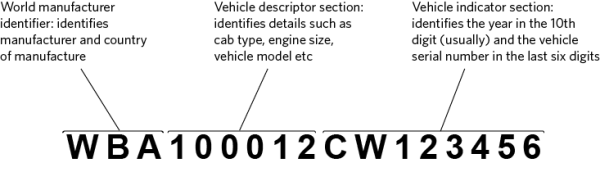
Figure 1-1-2. Structure of a VIN issued by the vehicle manufacturer
Summary of legislation
Applicable legislation
Mandatory requirements
1. A vehicle first registered or re-registered in New Zealand before 1 April 1994 must have a chassis number or VIN.
2. A vehicle first registered or re-registered in New Zealand from 1 April 1994 must have a VIN.
Condition
3. A VIN or chassis number must not have been removed, erased, altered, defaced, obscured, destroyed, obliterated or affixed unlawfully, or be unauthorised.