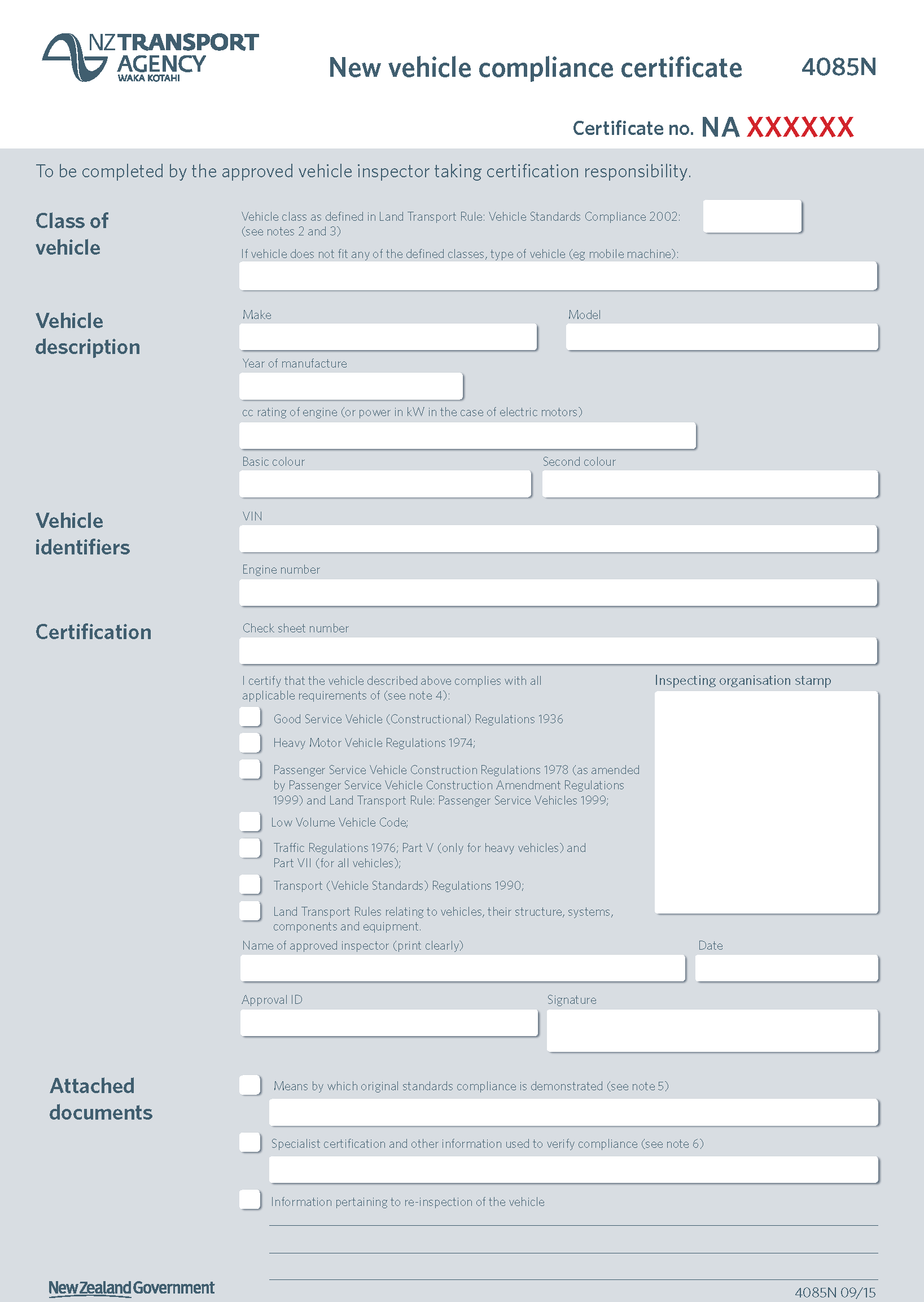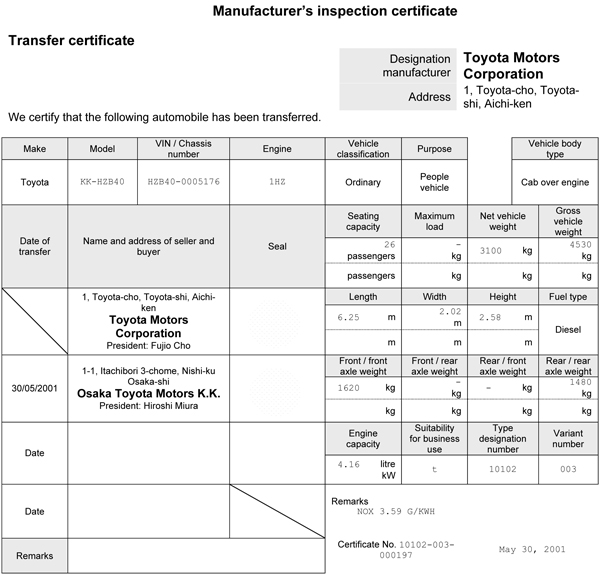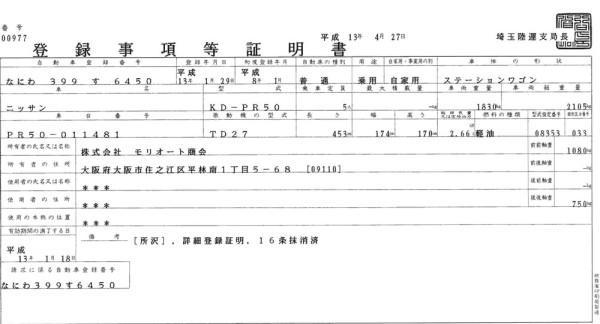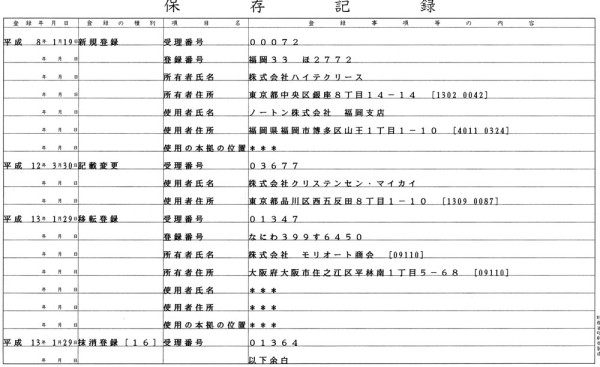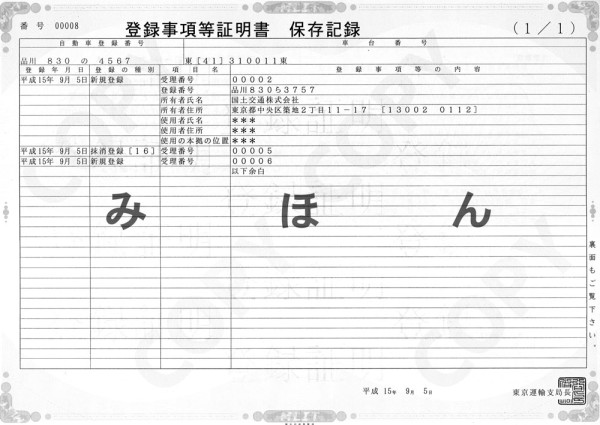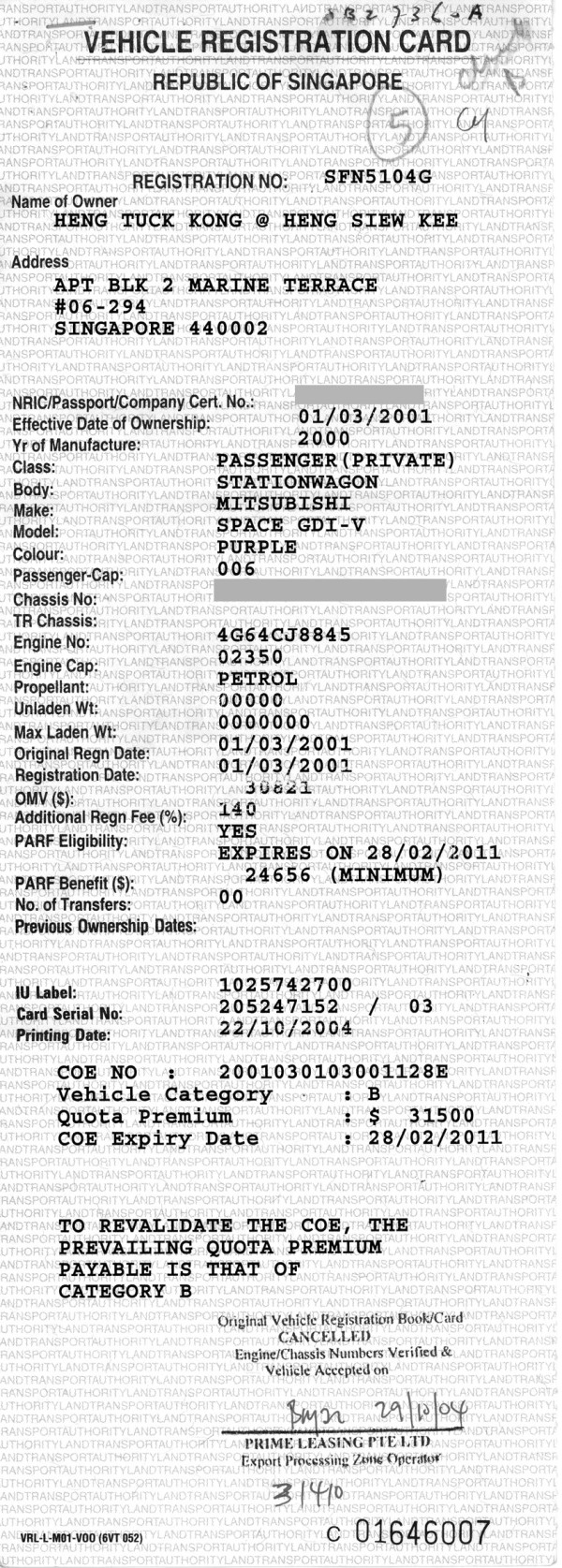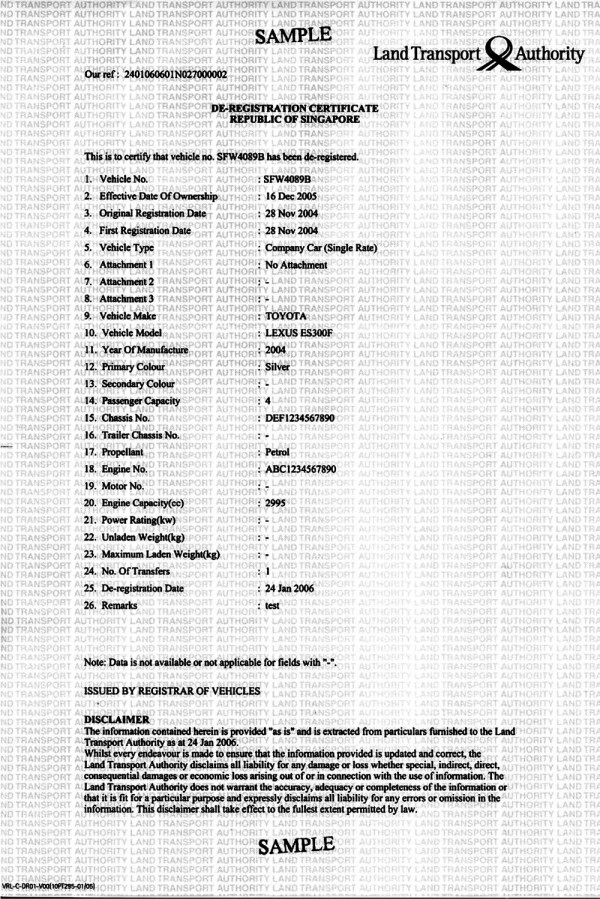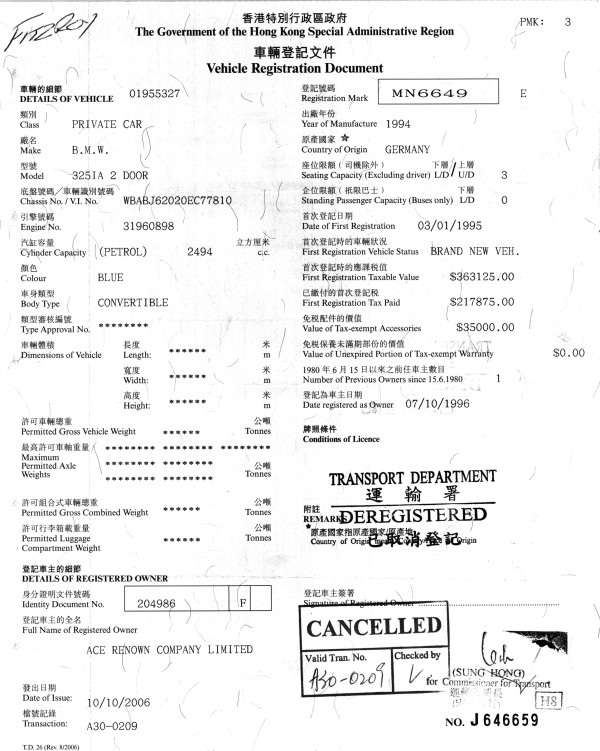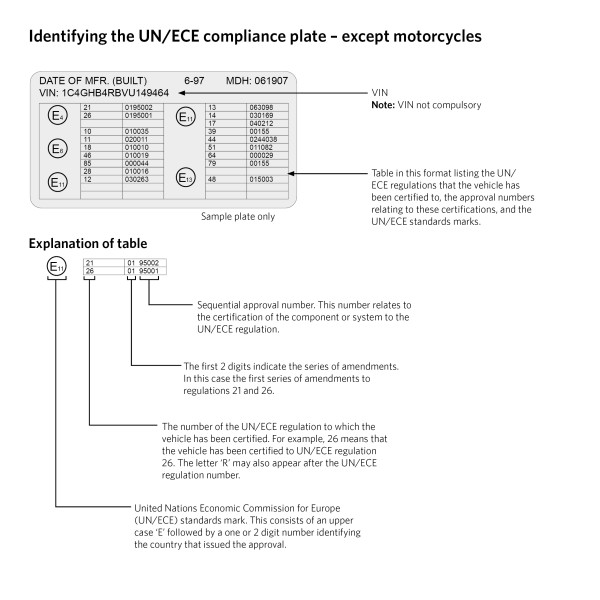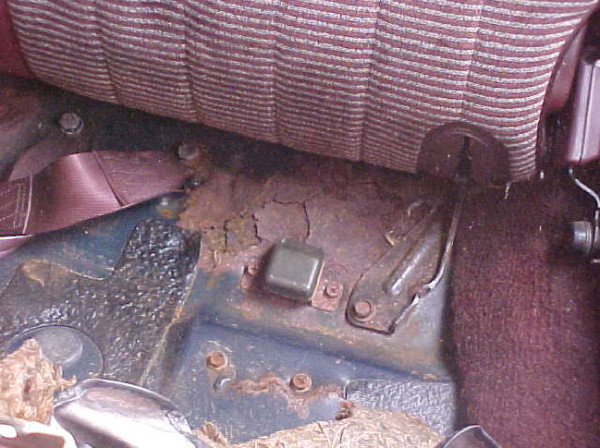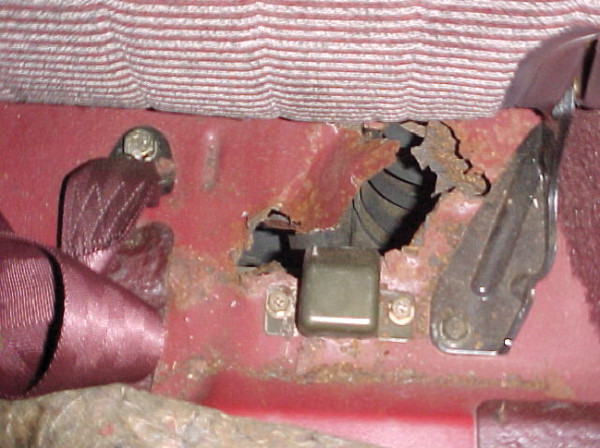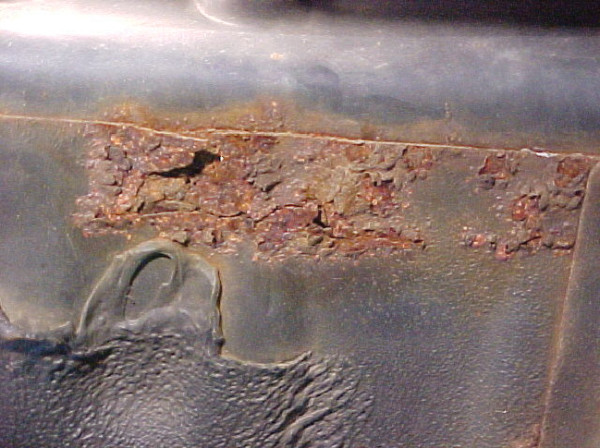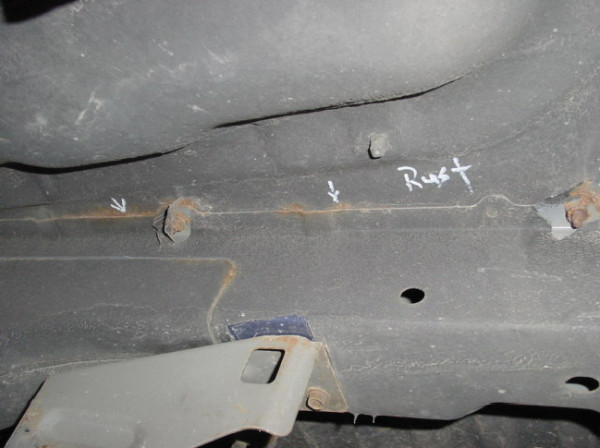
Entry certification
News and updates
-
11 February 2026
Electronic certificate of authority (E-COA)
-
27 January 2026
Reminder: check your saved VPN links to keep access
-
23 December 2025
Safety warning for Suzuki Fronx owners
-
16 December 2025
Inspection news issue 20 out now
1 Introduction
1 Purpose and scope
NZ Transport Agency Waka Kotahi (NZTA) has prepared this manual to assist vehicle inspectors and inspecting organisations in achieving correct and consistent standards for the pre-registration, inspection and certification of vehicles entering service in New Zealand.
The purpose of this manual is to explain the conditions of appointment and the requirements for the inspection and certification of vehicles that are entering service in New Zealand.
This manual is for NZTA-appointed vehicle inspectors and inspecting organisations. Its scope is to describe the pre-registration procedures and set out the statutory requirements for the entry inspection and certification of motor vehicles when they enter service in New Zealand.
IMPORTANT: in order to be certified for entry into service, vehicles must comply with the requirements in the Vehicle inspection requirements manual: In-service certification as well as the requirements in this manual.
Vehicles must therefore be inspected for compliance with the requirements in both manuals before they can be certified for entry into service. This manual highlights where any requirements in the Vehicle inspection requirements manual: In-service certification manual do not apply at entry (eg brake inspection).
Vehicle inspection requirements manual: In-service certification
This manual applies to the entry inspection and certification of all motor vehicles. The only exceptions are new vehicles imported, inspected and certified by the vehicle manufacturers' New Zealand representatives, provided that the representatives have been appointed for the purpose of entry inspection and certification by NZTA.
This manual sets out what vehicle inspectors and inspecting organisations are required to do.
Amendments to this manual will be issued from time to time as inspection and certification requirements change and improvements are made. Suggestions for improvement can be made using the feedback button found on every page.
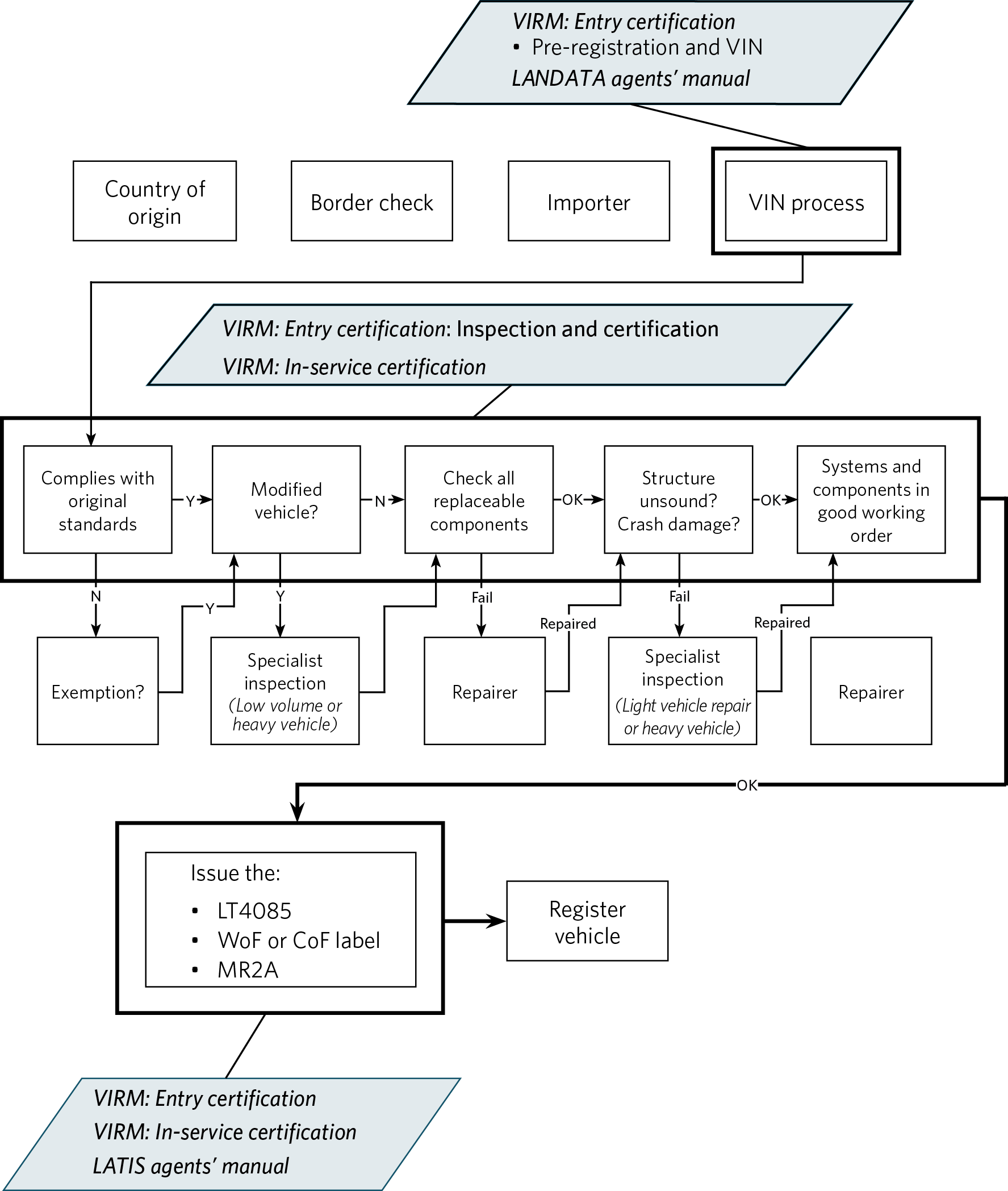
The following diagram shows the role of this manual in relation to the certification process and to other relevant manuals.
2 Overview of the manual
Structure of the manual
The manual is structured into five main parts:
1. Introduction explains the duties and responsibilities of the inspecting organisation and vehicle inspector, the pre-registration process, the inspection and certification process, complaints procedures, inspection premises and equipment requirements, and the appointment of vehicle inspectors and inspecting organisations. It also includes definitions and abbreviations, an improvement suggestion form and a form for recording amendments to the manual. The introduction is relevant to all vehicles requiring entry inspection and certification.
2. Pre-registration and VIN explains pre-registration requirements and describes the procedures for using the LANDATA system to check, assign and affix vehicle identification numbers (VINs), and to record vehicle and inspection details.
3. Inspection and certification covers documentation, standards, and inspection requirements for vehicles of groups L, M, N and T.
4. Technical bulletins provide extended explanatory material relating to specific items, referenced throughout this manual.
5. Reference materials provide form templates and examples of required documentation, referenced throughout this manual.
The inspection requirements for the different groups of vehicle components are separated by tab dividers. For each vehicle component or component group, the inspection requirements will include:
- a list of ‘Reasons for rejection’, which specify the vehicle defects that must result in the vehicle being rejected for entry certification. The condition and performance reasons for rejection apply to mandatory, permitted and modified equipment, unless otherwise stated. NZTA has imposed these requirements in accordance with section 2.3(1) of the
Land Transport Rule: Vehicle Standards Compliance 2002, - a summary of the legislation that is relevant to the entry inspection and certification of that component or component group. These are broken up, as required, into mandatory and permitted equipment, condition, performance and modification
- additionally, tables, notes and illustrations are included for further guidance.
For some vehicle components or component groups, the inspection requirements will include additional information, such as inspection specifications or guidance on determining compliance.
Offline use
The manual pages can be printed or downloaded in PDF format and saved to your computer for offline and offsite use.
By clicking on the printer or PDF icon near the top right of screen, the manual from the page you are at and any sub-sections will be included.
IMPORTANT: the offline versions of the manual are NOT considered by the NZTA to be accurate other than on the day it was printed (for example, and amendment may come into effect the following day). Printed and PDF copies of this manual or any of its sections should be used for short-term reference only.
3 Contacts
To contact NZ Transport Agency Waka Kotahi, email the Border and Entry team at borderandentry@nzta.govt.nz
The following are contact details for the Border Inspection Organisations:
JEVIC Company Limited | +81 0 45 521 8527 | |||
Automotive Technologies Limited | Nigel Grindall | 09 215 7907 | ||
New Zealand Biosecurity Services Ltd | Adam Field | 021 806 679 | ||
Bordercheck Limited | Lance Dear | 09 411 7425 | ||
Independent Verification Services | Jim McLaggan | 021 500 646 | ||
| KMA (Autoterminal Japan) | Paul O'Brien | 021 554 570 | inspections@kma.nz | http://inspections.jp |
Table updated 4 September 2023.
4 The pre-registration process
Until a vehicle has undergone the pre-registration process successfully, it cannot be registered. The sequence of events that makes up the pre-registration cycle may vary depending on the vehicle and how it is manufactured or imported. The basic cycles are approved new light vehicles, imported used vehicles and parallel-imported new vehicles.
1 Approved new light vehicles
A new vehicle is required to meet the certification requirements applicable to the date of manufacture. The manufacturer or manufacturer’s representative completes the certification and may also print the MR2A registration form.
2 Imported used vehicles
A used imported vehicle is also required to meet applicable certification requirements. However, compliance is checked and determined by an entry certifier.
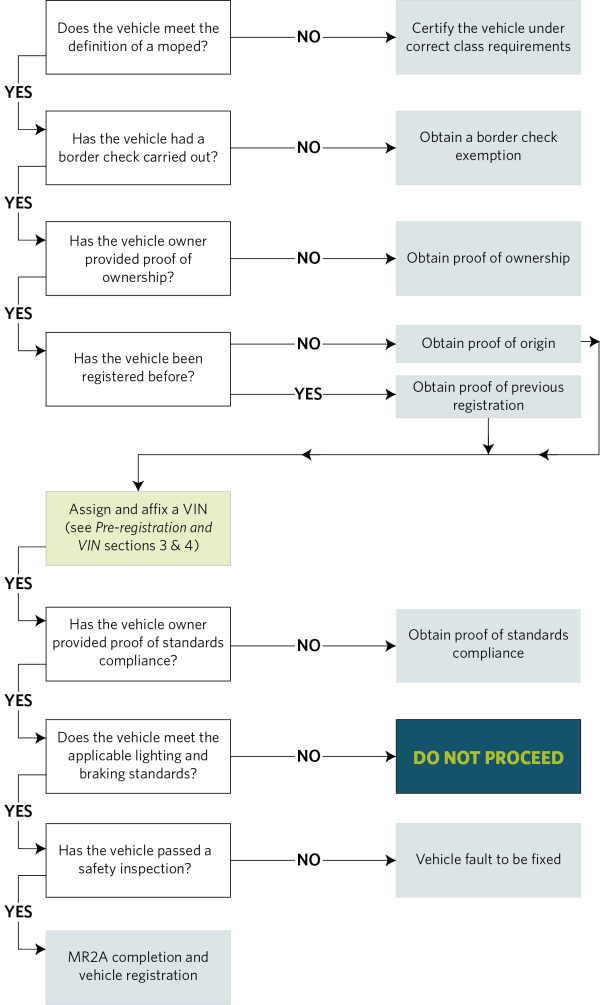
The pre-registration process for used imported vehicles may include:
- a border check
- the pre-registration and VIN process
- vehicle inspection and certification.
2.1 Border check
Imported used vehicles must undergo a preliminary border inspection. This:
- records the name of the vehicle importer
- records some basic vehicle information
- identifies any obvious damage to the vehicle.
This information is downloaded to LANDATA and is available to inspecting organisations during the pre-registration process.
2.1.1 Application for exemption from border check requirements
A vehicle owner or entry certifier may apply for an exemption from the requirement to undergo a border check.
A Request for exemption from border check requirements form is available in Reference materials 16.
Complete a copy of this and forward it to:
Exemptions and Systems Integrity
NZ Transport Agency
Private Bag 11777
Palmerston North 4442
Fax: 06 953 6267
Email: assessments@nzta.govt.nz
If the exemption is approved, NZTA will send a letter confirming the exemption.
2.2 VIN process
A vehicle identification number (VIN) is a 17-character series of digits and letters that provides a unique identifying number for every vehicle. The VIN structure is defined by an international standard (ISO 3779). The VIN always contains exactly 17 characters and never contains the letters O, Q and I.
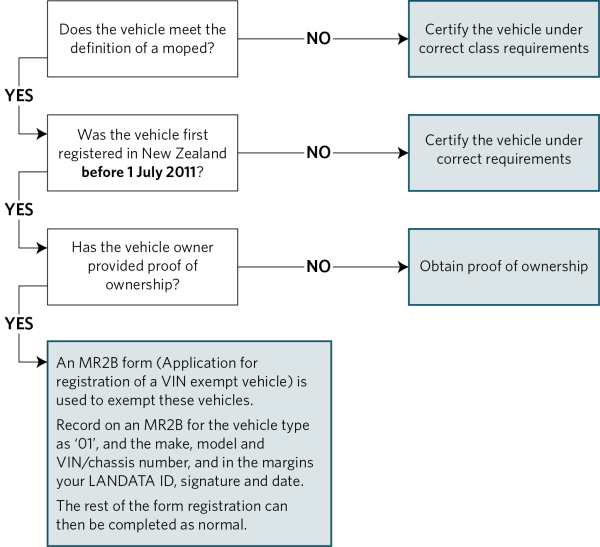
Under the Land Transport Rule: Vehicle Standards Compliance Amendment 2005 (Rule 35001/2), all vehicles registered or re-registered in New Zealand on or after 1 April 1994 are required to have a VIN assigned and affixed to them, with the following exceptions:
|
Vehicle type |
Description |
|---|---|
|
2 |
Light trailers (trailers with a gross weight of less than 3501 kg) |
|
3 |
Tractors (including traction engines)* |
|
4 |
Self-propelled agricultural machines* |
|
5 |
Trailers not designed for normal highway use |
|
6 |
Mobile machines not designed for normal highway use* |
|
12 |
All-terrain vehicles (ATVs) |
* This does not include all-terrain vehicles (ATVs). These vehicles are covered by vehicle type 12.
A vehicle without an identifier must have a VIN assigned in order to meet in-service (WoF/CoF) inspection requirements.
Vehicles currently registered are not required to have a VIN unless the original VIN or chassis number is found to be missing on inspection. However, a vehicle owner may choose to have a VIN assigned to a registered vehicle with an existing identifier for security reasons.
In order to complete the pre-registration process, all required vehicle details must be recorded in LANDATA for the vehicle. When an entry certifier is presented with a vehicle, a query is completed on the VIN or chassis number. If details are available for that vehicle, the LANDATA system will display the details. If the details are not available, they must be entered. When the vehicle file is updated with the new details, the VIN or chassis number will be decoded (if it is a 17-character identifier), or a ‘7AT’ (New Zealand) VIN will be assigned.
2.3 Entry-level inspection and certification
Vehicles must then be inspected to certify that they comply with legal requirements. Upon successful completion of the inspection and certification process, an MR2A registration form will be issued.
3 Parallel-imported new vehicles
A new light vehicle (including a motorcycle) that has been parallel-imported by a private individual or independent dealer is required to meet applicable certification requirements. Compliance must be checked and determined by an entry certifier.
The pre-registration process for parallel-imported new vehicles may include:
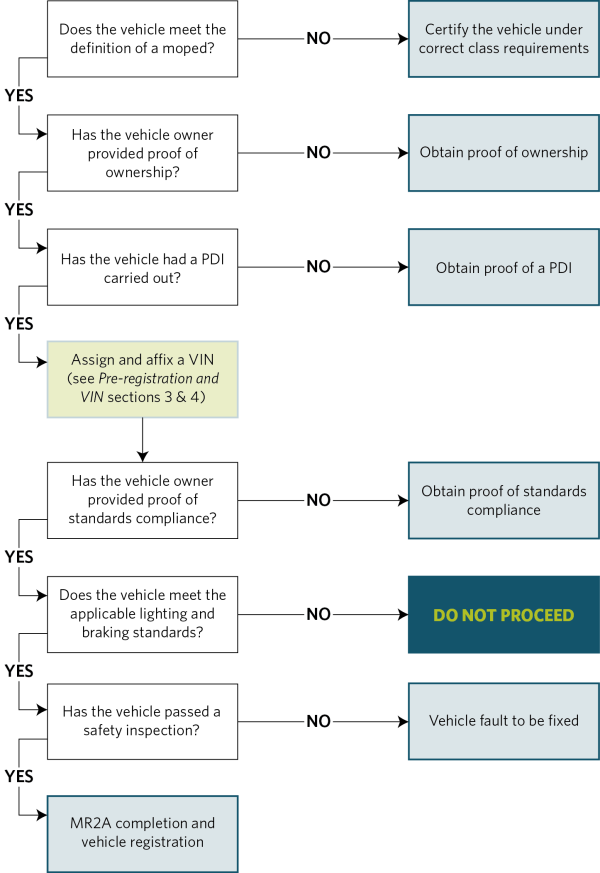
- a pre-delivery inspection (PDI)
- repair certification (for damaged/written-off parallel imports)
- the VIN process
- vehicle inspection and certification.
3.1 Pre-delivery inspection (PDI) (Note 1) (Note 2) (Note 3)
Parallel-imported new vehicles must undergo a pre-delivery inspection (PDI) carried out by an agent appointed by the vehicle manufacturer. This verifies that any outstanding warranty or safety recalls have been attended to, and that various safety systems are armed and checked for operation before the vehicle goes into service.
An entry certifier must retain a copy of the PDI checksheet as evidence that a PDI was carried out.
Note 1
Any imported vehicle that has not been previously registered (regardless of mileage covered) will need to have evidence that a PDI has been carried out.
Note 2
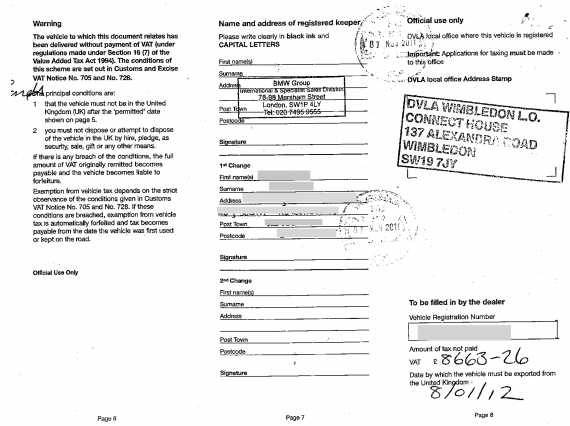
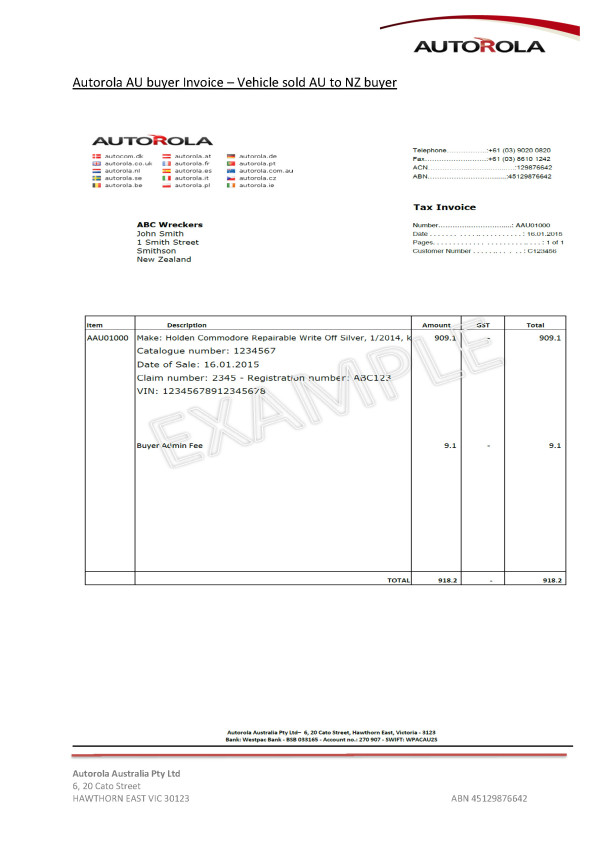
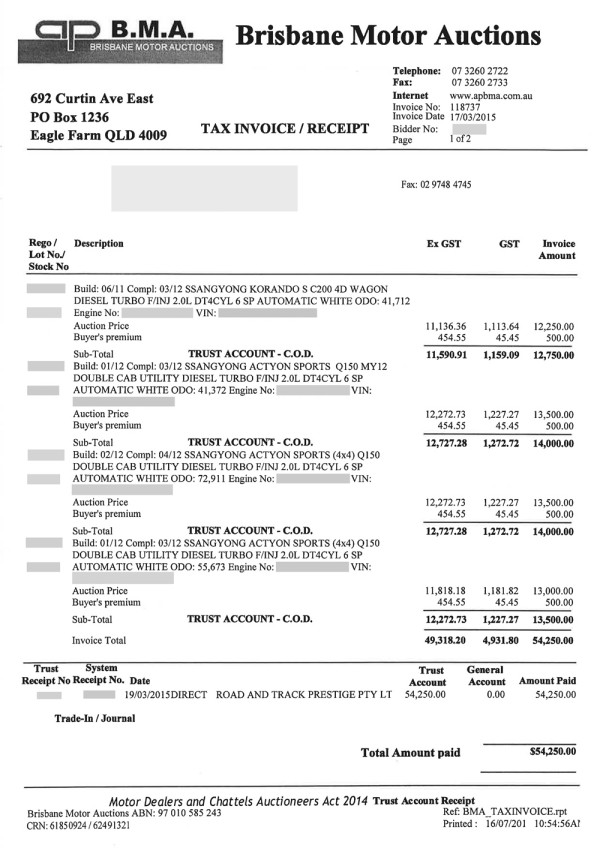
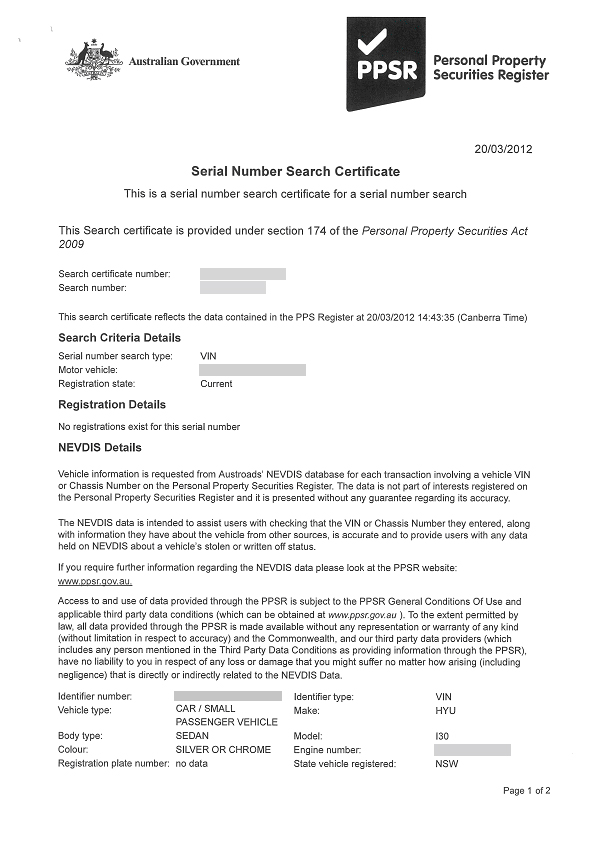
A PPSR alone is not considered to be valid proof of registration for an import from Australia. Any vehicle that appears to be new or is sold as a new write-off will be treated as a parallel imported new vehicle.
Note 3
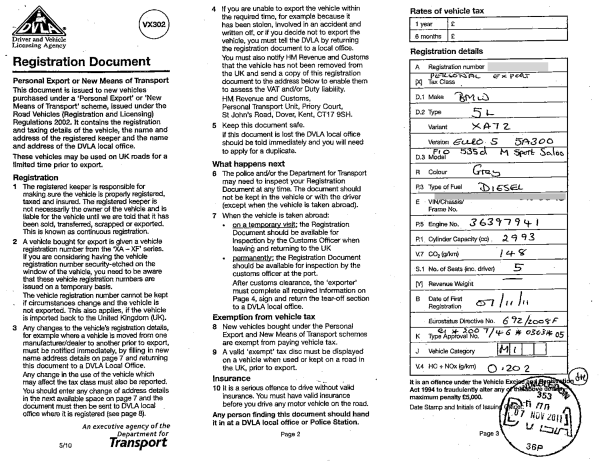
When a parallel import is presented from the UK with a V308, a PDI is not required.
3.2 VIN process
A record must be created for a parallel-imported new vehicle on LANDATA. This means that the vehicle identifier and attributes must be entered.
3.3 The inspection and certification process
Vehicles must then be inspected and certified as complying with applicable legal requirements. Vehicles must undergo a full structural inspection; however, applications for an exemption from trim removal requirements are likely to be successful.
Upon successful completion of the inspection and certification process, an MR2A registration form will be issued.
- If a parallel-imported vehicle does not meet the requirements to be registered as a new vehicle, it must undergo a border check (or the apply for an exemption from the border check process). The definition of ‘new’ is described in
Pre-registration and VIN Table 2-2-2. Valid registration indicators.
Page amended 29 April 2020 (see amendment details).
5 The inspection and certification process
-
Overview
-
5-1 General duties and responsibilities
-
5-2 Inspection and certification
-
5-3 Performance review
-
5-4 Investigations
-
5-5 Identifying the vehicle class
-
5-6 Establishing whether a vehicle requires inspection and certification for entry into service
-
5-7 Establishing whether a vehicle may be inspected and certified for entry into service
-
5-8 Establishing whether a vehicle complies
-
5-9 Checksheets and the LT4085
-
5-10 Recording the inspection outcome (‘record of determination’)
-
5-11 Issuing the WoF or CoF label (‘evidence of vehicle inspection’)
-
5-12 Collecting fees
Overview
IMPORTANT: The VIRM: In-service certification is an integral part of the entry inspection and certification process. A vehicle must be inspected to verify it complies with the requirements set out in the VIRM: In-service certification and in this manual in order to be certified for entry into service. This manual highlights where any requirements in the VIRM: In-service certification manual do not apply at entry (eg brake inspection).
VIRM: In-service certification
Note: a partially completed (eg cab chassis) heavy vehicle can be passed for entry certification where not all in-service requirements are met. An Annex C permit can be issued instead of a CoF at the end of inspection.
See 1-5 Annex C: conditional operation of a vehicle for such vehicles.
In order to inspect and certify a vehicle for entry into service the vehicle inspector and inspecting organisation must take the following steps:
1. Know the vehicle inspector’s and inspecting organisation’s responsibilities. Part 1 lists the legal responsibilities. The vehicle inspector and inspecting organisation must read and understand them.
2. Identify the vehicle class. Part 5 of this section provides a table of vehicle classes.
3. Establish whether the vehicle requires inspection and certification for entry into service. Part 6 of this section provides information on vehicles that must be inspected and certified for entry into service.
4. Establish whether the vehicle may be inspected and certified for entry into service. Part 7 of this section lists a number of criteria vehicles must meet before inspection.
5. Establish whether the vehicle complies. Part 8 of this section explains how to use this manual in order to determine a vehicle’s compliance with the requirements.
6. Complete the required inspection documentation (checksheet and LT4085). Part 9 of this section explains the requirements for handling and completing checksheets and LT4085 forms.
7. Record the inspection outcome (record of determination). Part 10 of this section explains how to record inspection results in the NZTA computer system.
8. Issue the WoF or CoF label (evidence of vehicle inspection).
Introduction section 3.8 of the VIRM: In-service certification explains the requirements for issuing WoF and CoF labels.
9. Collect fees. Part 12 of this section lists the requirements for the inspecting organisation when charging and collecting fees.
Page amended 1 June 2019 (see amendment details).
5-1 General duties and responsibilities
Applicable legislation: Land Transport Rule: Vehicle Standards Compliance 2002 (Rule 35001/1) (‘the Rule’)
1.1 Vehicle inspectors and inspecting organisations (definitions in the Rule)
Vehicle inspector means an individual appointed by NZTA under section 2.2(1) of the Rule to carry out inspection and certification activities in accordance with requirements and conditions imposed by NZTA
Inspecting organisation means a person or organisation appointed by NZTA under section 2.2(1) of the Rule who is responsible for inspection and certification outcomes.
In this manual, a vehicle inspector or inspecting organisation is one appointed for the purpose of entry inspection and certification or re-registration of used or parallel-imported new vehicles, unless stated otherwise.
To avoid doubt, any reference to a certifier in any legislation, deed of appointment, or any other relevant document is a reference to a vehicle inspector or inspecting organisation (as applicable) appointed by NZTAunder the Rule.
1.2 Inspection and certification activities (section 2.1(1) of the Rule)
Only vehicle inspectors and inspecting organisations appointed by NZTA may carry out inspection and certification activities as specified in the Rule and in this manual.
Land Transport Rule: Vehicle Standards Compliance 2002
1.3 Primary duty (section 2.1(2) of the Rule)
Vehicle inspectors and inspecting organisations must carry out inspection and certification activities competently and diligently and in accordance with the Rule and with the requirements in this manual.
Land Transport Rule: Vehicle Standards Compliance 2002
1.4 Inspection and certification activities that can be carried out (section 2.2(2) of the Rule)
Vehicle inspectors and inspecting organisations may carry out only those inspection and certification activities for which NZTA has appointed them.
1.5 Responsibilities to the general public
Vehicle inspectors and inspecting organisations must maintain control of the certification process, charging a reasonable fee and providing courteous service and accurate information to members of the public.
1.6 Requirements, conditions and period of appointment (section 2.3(1) of the Rule)
NZTA may specify the period of appointment for a vehicle inspector and inspecting organisation and may impose requirements and conditions as to the performance of the inspection and certification activities, including the performance of those activities at individual sites.
1.7 Driver licence
Vehicle inspectors must hold a current driver licence for the vehicles that they are inspecting.
1.8 Fit and proper person (section 2.3(3) of the Rule)
A vehicle inspector or inspecting organisation must be, and continue to be, a fit and proper person.
1.9 Presentation and acceptance of e-mailed inspection and certification documents
The section refers to these inspection and certification documents:
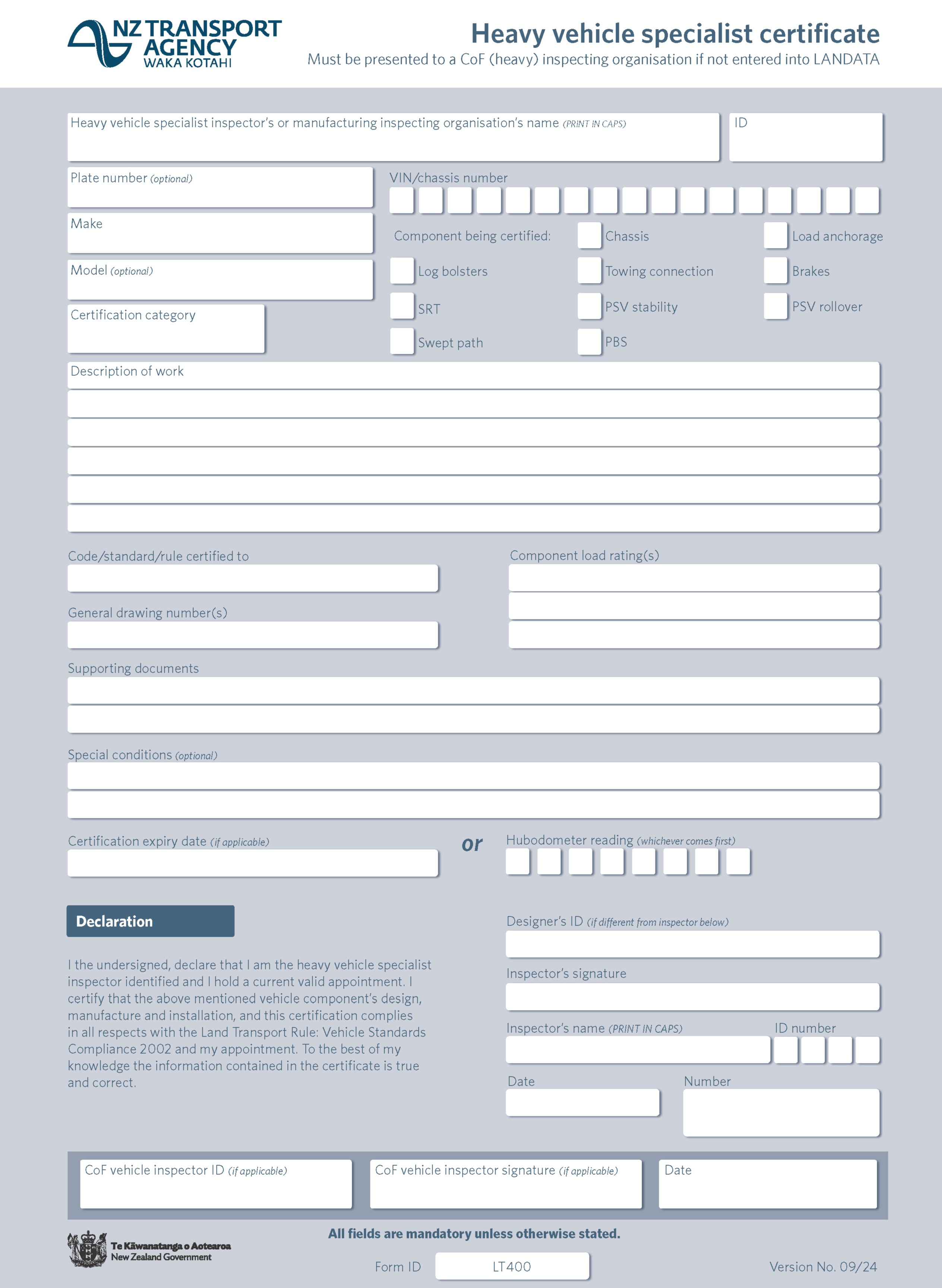
- LT400s, chassis ratings and professional opinions from heavy vehicle specialist certifiers and
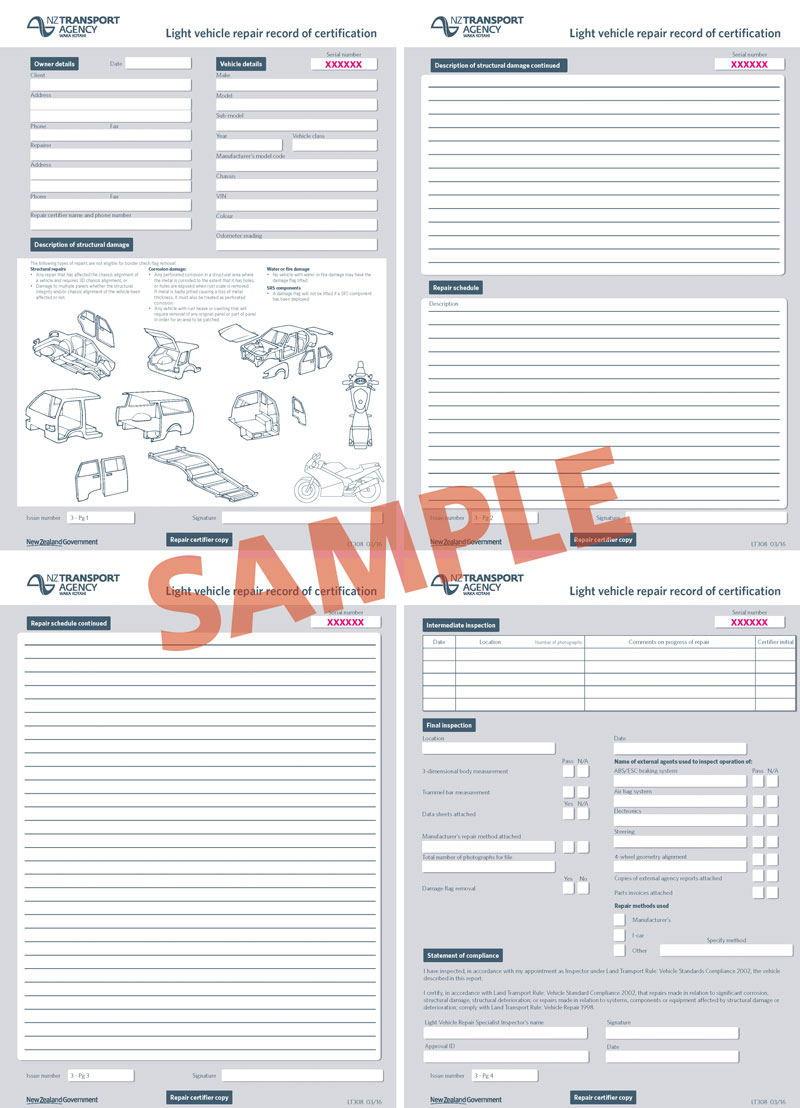
- LT307s and LT308s from repair certifiers, and
- chassis ratings from NZTA.
They can be presented and accepted using email provided that:
(i) emails are sent directly to the vehicle inspector or inspecting organisation from the heavy vehicle specialist certifier, the repair certifier or the NZTA, and
(ii) the electronic copy contains all of the information from the original copy and is clear and legible.
These may be:
- printed and stored or
- stored electronically, provided:
- the electronic copy of the document is not changed and is stored in a way that protects the information from being changed (eg save as a read only file) and
- the information is readily searchable and accessible if you or NZTA need it.
1.10 Document retention (section 2.3(4) of the Rule)
A vehicle inspector or inspecting organisation must:
a) keep, for at least five years, the original or verified copy of any documents that have been collected in the certification process
b) keep the following documents in a retrievable form for at least five years:
- vehicle compliance certificates (LT4085)
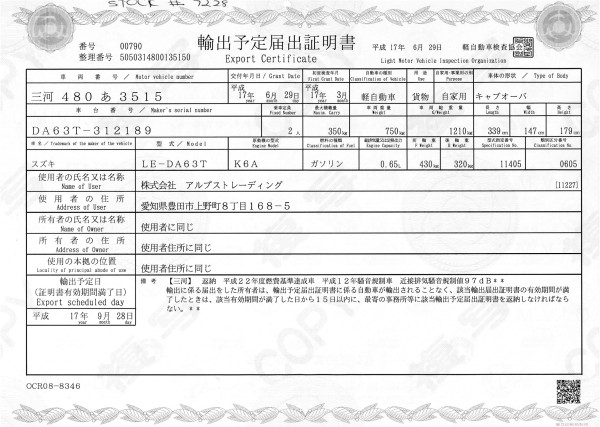
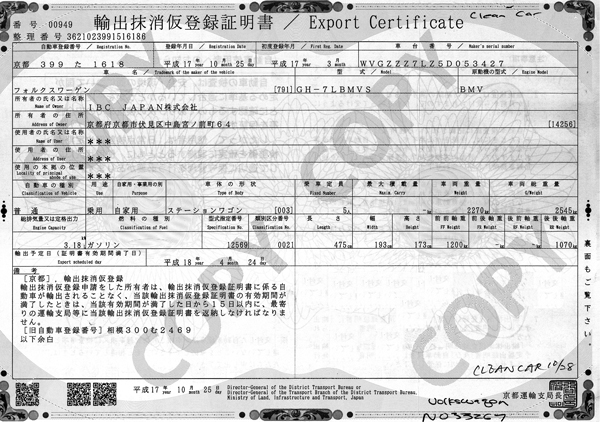
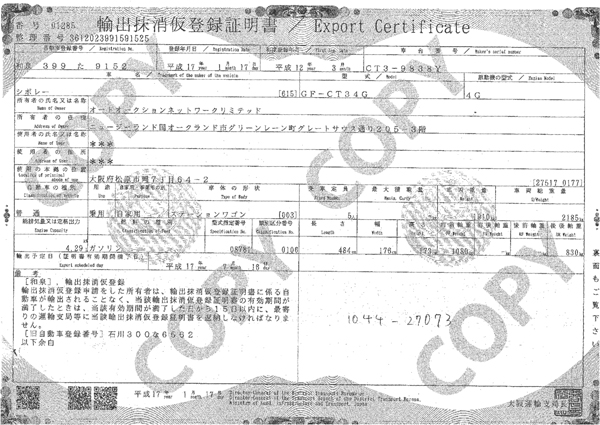
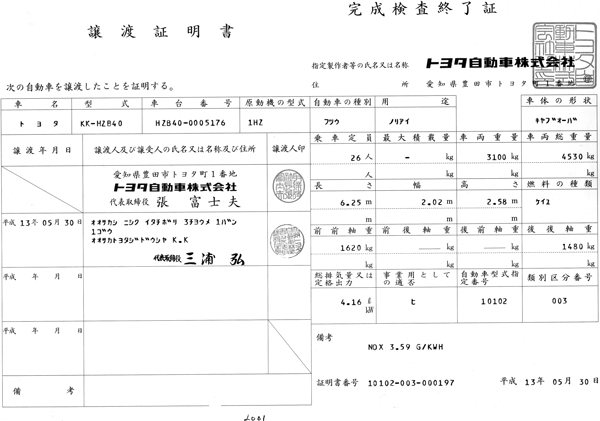
- de-registration and registration documents, export certificates, or verified copies of these
- vehicle inspection checksheets
- specialist inspection (eg light vehicle repair and low volume vehicle) certificates
c) keep heavy vehicle specialist certificates (LT400) for the life of the vehicle.
1.11 Advise incorrect certification and/or vehicle defects (section 2.3(4) of the Rule)
A vehicle inspector or inspecting organisation must:
a) advise NZTA as soon as practicable if there is a reason to believe that the inspection and certification of a vehicle has been carried out incorrectly
b) advise NZTA as soon as practicable after becoming aware of a defect in a manufacturer’s production run or quality control process that may affect the safety performance of a vehicle that has been inspected and certified.
1.12 Delegation (section 2.4(1) of the Rule)
A vehicle inspector or inspecting organisation may not delegate any function or power to carry out inspection and certification activities for which they were appointed, except under conditions specified by NZTA in writing.
The only tasks that may be delegated to non-approved staff are administrative processes such as recording vehicle attributes and standards markings or removing and replacing components to enable the inspection process to be carried out.
Page amended 1 April 2021 (see amendment details)
Page updated 16 May 2023 (see details)
5-2 Inspection and certification
2.1 Inspecting and certifying a vehicle for entry into service (section 6.3(2) of the Rule)
The inspection and certification of a vehicle for entry into service must be carried out in accordance with requirements and conditions imposed by the NZTA.
The vehicle inspection must be completed before a vehicle can be released from the IO to correct any faults identified during the inspection. If an IO wishes to use an alternative procedure, they must contact the NZTA - Vehicles Standards team for approval.
2.2 Determining compliance of a vehicle (section 6.4(1) of the Rule)
A vehicle may be certified for entry into service only if a vehicle inspector or inspecting organisation has identified the vehicle and has determined, on reasonable grounds, that the vehicle:
a) is safe to be operated, and
b) has been designed and constructed using components and materials that are fit for their purpose, and is within safe tolerance of its state when manufactured or modified, and
c) complies with the applicable requirements (all of which are contained or referred to within this manual and the VIRM: In-service certification), and
d) has not suffered water or fire damage as specified by the NZTA (see paragraph 2.5 below), and
e) has undergone specialist inspection and certification as required by paragraphs 2.6 to 2.10 below and that the specific aspects of the vehicle have been certified.
VIRM: In-service certification
2.3 Information to take into account when determining compliance of a vehicle (section 6.4(3) of the Rule)
In making a determination, a vehicle inspector or inspecting organisation must take into account:
a) information, if any, recorded when the vehicle was inspected at the border of which the inspector or organisation is aware, and
b) information obtained from inspecting the vehicle and associated documents, and
c) additional relevant information, if any, about the vehicle issued by a manufacturer, modifier, repairer or other relevant person of which the inspector or organisation is aware.
2.4 Information received from other sources
To ensure consistency of procedures and standards, local IOs must refer any queries or variations to their technical manager for clarification. Technical managers will liaise with the NZTA to further clarify any query or variation as required.
2.5 Water- or fire-damaged vehicles (section 11.1 of the Rule)
The NZTA may, by way of notice in the New Zealand Gazette, specify the extent of water damage that makes it impractical to determine by way of an inspection whether a water- or fire-damaged vehicle is safe to be operated. A vehicle having sustained water or fire damage to the extent specified by the NZTA – whether that damage has been repaired or not – cannot be certified for entry into service in New Zealand (see Technical Bulletin 2).
2.6 Vehicle repair specialist inspection and certification (section 6.5(1)(a) of the Rule)
Vehicle repair specialist inspection and certification is required if a vehicle has been repaired because of, or following, significant damage or deterioration to its structure, chassis, body-to-chassis attachment, suspension or occupant protection system.
Vehicle structure – Threshold for requiring specialist repair certification (in the Inspection and certification section of this manual, section 3-4), sets out the degree of damage or repair permitted to a vehicle undergoing entry certification before repair certification is required.
Specialist repair certifiers may choose to accept variations from the vehicle manufacturer’s specification for a vehicle’s critical dimensions, provided it can be shown that any variation will not adversely affect the safety of the vehicle or its operation. Any variation must be noted and explained on the LT308 or LT400. An IO does not have to accept any variation if there is concern that safety has been compromised.
2.7 Alternative fuel system inspection and certification (section 6.5(1)(b) of the Rule)
Alternative fuel system inspection and certification is required if a vehicle is fitted with an alternative fuel system that is in working order.
2.8 Low volume vehicle specialist inspection and certification (section 6.5(1)(c) of the Rule)
Low volume vehicle (LVV) specialist inspection and certification may be required if a light vehicle has been modified so as to affect its compliance with an applicable requirement since it was manufactured, last certified for entry or last certified as a low volume vehicle.
2.9 Heavy vehicle specialist inspection and certification (section 6.5(1)(d) of the Rule)
Heavy vehicle specialist inspection and certification may be required if a heavy vehicle has been modified so as to affect its compliance with an applicable requirement since it was manufactured or last certified for entry or for modification. This includes modifications to its chassis, brakes, log bolster attachments, towing connections or load anchorages.
2.10 Other specialist certification (section 6.5(1)(e) of the Rule)
Other specialist inspection and certification may be required in accordance with an applicable requirement, or as required by the NZTA.
2.11 Modified vehicles not requiring specialist certification (section 6.5(3) of the Rule)
Specialist inspection and certification of a modified vehicle is not required, if:
a) the vehicle has been inspected by a vehicle inspector or inspecting organisation appointed for the purposes of entry inspection and certification in accordance with this manual and the VIRM: In-service certification, and the inspector or organisation is satisfied, on reasonable grounds, that the risk of injury to any person has been minimised, or
b) the vehicle was modified for the purposes of law enforcement or the provision of emergency services, that is, equipped for the attendance of fires, for ambulance duty or as a police vehicle.
Page amended 1 November 2014 (see amendment details).
5-3 Performance review
3.1 NZ Transport Agency may monitor and review performance (section 3.1(1) of the Rule)
The NZTA may monitor and review the performance of a vehicle inspector or inspecting organisation in complying with the requirements and conditions imposed by the NZTA, including the performance of inspection and certification activities at individual sites.
3.2 Providing information to the NZ Transport Agency (section 3.1(2) and (3) of the Rule)
In monitoring and reviewing performance, the NZTA may require a vehicle inspector or inspecting organisation to undergo such monitoring and review, and provide such information as the NZTA reasonably considers relevant. A vehicle inspector or inspecting organisation must comply with a requirement from the NZTA.
3.3 Costs of monitoring and review (section 3.1(4) of the Rule)
A vehicle inspector or inspecting organisation must bear the costs of the monitoring and reviewing of their performance in accordance with any prescribed fee.
5-4 Investigations
4.1 Investigations (section 3.2(1) of the Rule)
If the NZTA has reason to believe that a vehicle inspector or inspecting organisation has failed to comply with any of the conditions of their appointment, or has failed to comply with the Land Transport Rule: Vehicle Standards Compliance 2002, the NZTA may require the inspector or organisation to undergo investigation and to provide such information as the NZTA reasonably considers appropriate.
Land Transport Rule: Vehicle Standards Compliance 2002
4.2 Notification of action (other than immediate suspension/imposition of conditions) (section 3.2(3) of the Rule)
Following an investigation and before carrying out action, the NZTA must notify the vehicle inspector or inspecting organisation in writing of:
a) the action that is being considered, and
b) the reasons for the action that is being considered, and
c) the date by which submissions may be made to the NZTA in respect of the action that is being considered, which must be at least 21 days after the notice was given, and
d) where appropriate, the date on which the action that is being considered will take effect. This must be at least 28 days after the notice was given, unless the NZTA determines otherwise.
4.3 Responding to a notification of action (section 3.2(5) of the Rule)
If a vehicle inspector or inspecting organisation is notified as above, they must ensure that all information that they wish the NZTA to consider in relation to the action being considered is received by the NZTA within the period specified in the notice or within any further period that the NZTA may allow.
4.4 NZ Transport Agency must consider submissions (section 3.2(6) of the Rule)
The NZTA must consider the submissions made and information supplied, and must:
a) decide whether or not to take the action that is being considered, and
b) provide written notification, as soon as is practicable, to the vehicle inspector or inspecting organisation of:
i. the NZTA’s decision, and
ii. if appropriate, the date on which the action is to take effect, and
iii. if appropriate, the right of appeal under section 106 of the
Land Transport Act 1998.
4.5 Immediate suspension or imposition of conditions (section 3.3(1) of the Rule)
If the NZTA has reason to believe that a vehicle inspector or inspecting organisation has failed to comply with a condition of their appointment or with the Land Transport Rule: Vehicle Standards Compliance 2002, and presents a significant risk to land transport safety, the NZTA may suspend, with immediate effect, the whole or any part of the appointment, or impose any conditions on the appointment.
Land Transport Rule: Vehicle Standards Compliance 2002
4.6 Notification of immediate suspension or imposition of conditions (section 3.3(2) of the Rule)
Where the NZTA suspends the whole or any part of an appointment, or imposes conditions on the appointment, the NZTA must notify the vehicle inspector or inspecting organisation in writing of:
a) the grounds for the suspension or imposition of conditions
b) the fact that the inspector or organisation may make submissions to the NZTA
c) the right of appeal under section 106 of the
Land Transport Act 1998.
4.7 The NZ Transport Agency must consider submissions following immediate suspension or imposition of conditions (section 3.3(3) of the Rule)
The NZTA must, as soon as practicable, consider any submission made and notify the inspector or inspecting organisation in writing of the result of any such consideration.
4.8 Duration of immediate suspension or imposition of conditions (section 3.3(5) of the Rule)
A suspension or imposed condition remains in force until the NZTA has determined the action to be taken and that action has been taken.
4.9 Withdrawal of immediate suspension or imposition of conditions (section 3.3(4) of the Rule)
The NZTA may at any time withdraw a suspension or imposed condition.
4.10 Right of appeal (section 3.3(6) of the Rule)
A vehicle inspector or inspecting organisation may appeal under section 106 of the Land Transport Act 1998 against a decision by the NZTA to immediately suspend or impose conditions.
4.11 Costs of investigations (section 3.2(7) of the Rule)
The NZTA may require a vehicle inspector or inspecting organisation to bear the costs associated with an investigation or remedial action in accordance with any prescribed fee.
4.12 Remedial action, suspension, revocation (section 3.2(2) of the Rule)
If, following an investigation, the NZTA is satisfied that the vehicle inspector or inspecting organisation has failed to comply with any of the conditions of their appointment, or failed to comply with the Land Transport Rule: Vehicle Standards Compliance 2002, the NZTA may do one or more of the following:
a) require that remedial action, such as training, be undertaken by the inspector or organisation
b) suspend the whole or any part of the appointment of the inspector or organisation for a specified period or until specified conditions are met
c) revoke the whole or any part of the appointment of the inspector or organisation.
4.13 Obligation to comply (section 3.2(8) of the Rule)
A vehicle inspector or inspecting organisation must comply with a requirement of the NZTA in relation to paragraphs 4.1, 4.11 and 4.12.
5-5 Identifying the vehicle class
A vehicle inspector or inspecting organisation can only inspect and certify vehicles for entry into service which belong to the classes for which they have been appointed by the NZTA, and for which they have a current driver licence.
- Refer to Technical bulletin 3 for guidance when determining the vehicle class for a modified vehicle.
Note 1
Because vehicles are defined by class in vehicle related rules, but not in other legislation, an LE class motor tricycle must be entry certified as an LE vehicle in relation to vehicle standards and VIRM requirements, but may be registered and licenced as either:
- a motorcar (no helmet required, drive on car licence), or
- a motorcycle, provided it is declared a motorcycle by the NZTA (helmet required, motorcycle driver licence required).
Vehicle equipment standards classifications
Note 2
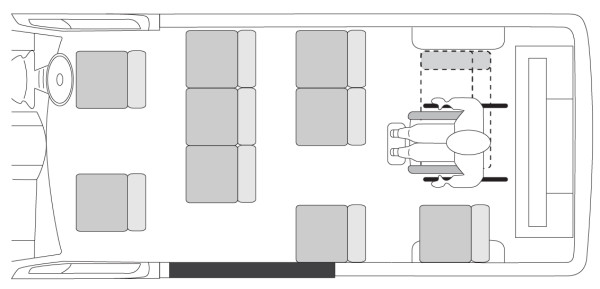
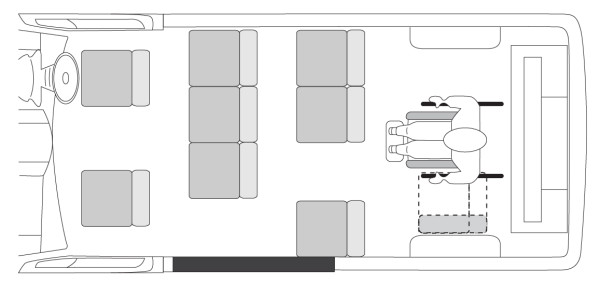
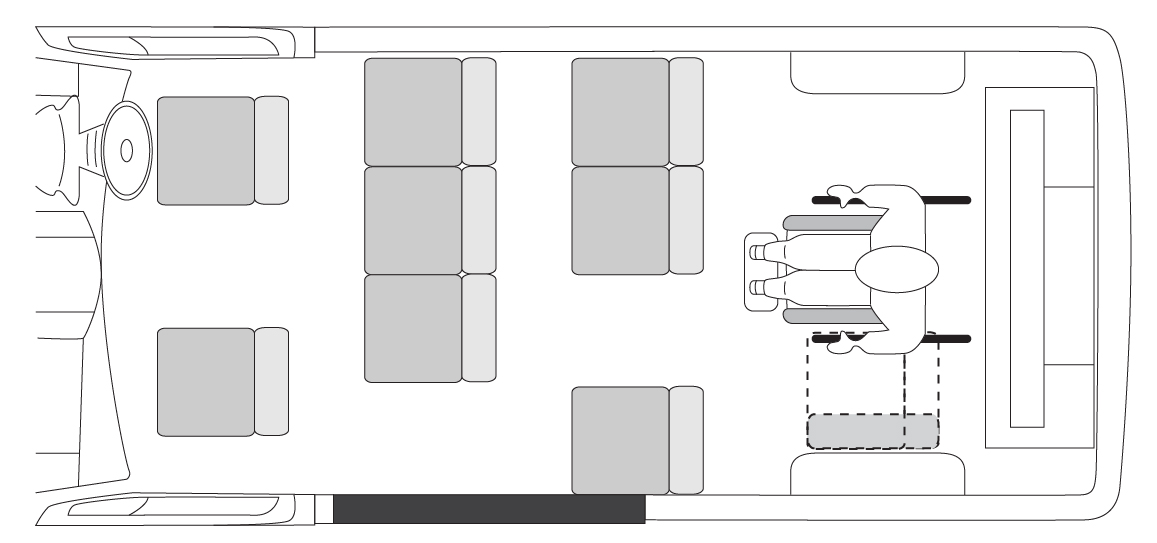
For the purpose of determining vehicle class, a dedicated wheelchair position (a seating position for transporting a wheelchair and its occupant that is unavailable for other passengers when it is not occupied by a wheelchair) is included in the total seat count. A seating position that can be used for either a wheelchair or occasional/removable seats, but not both simultaneously, is only to be counted as one seat. If a wheelchair position takes up more than one seating position, the number of seating positions is the highest possible count of seated passengers. In the examples below, Figure 1 has 11 seating positions, Figures 2 and 3 have 10 seating positions and Figure 4 has 9 seating positions.
Figure 1: 11 seating positions (including two occasional/removable seats)
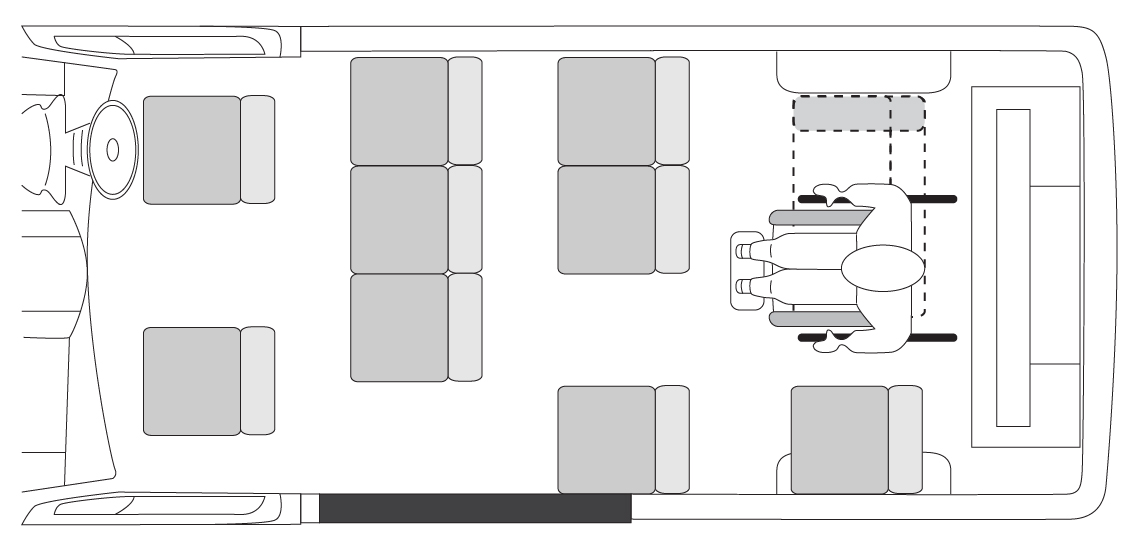
Figure 2: 10 seating positions
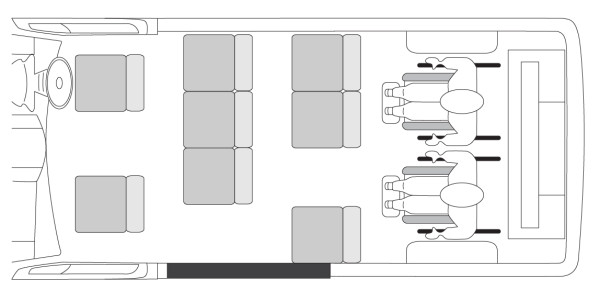
Figure 3: 10 seating positions
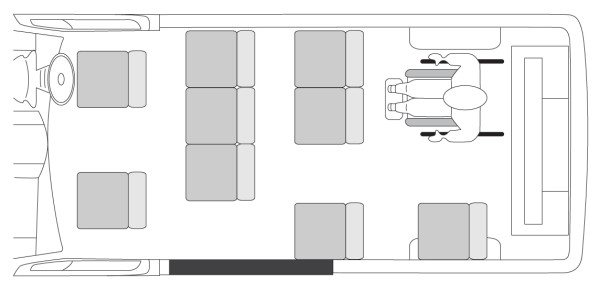
Figure 4: 9 seating positions (including one occasional/removable seat)
Note 3
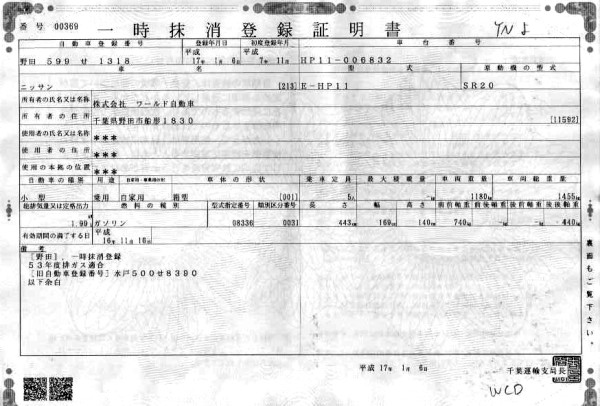
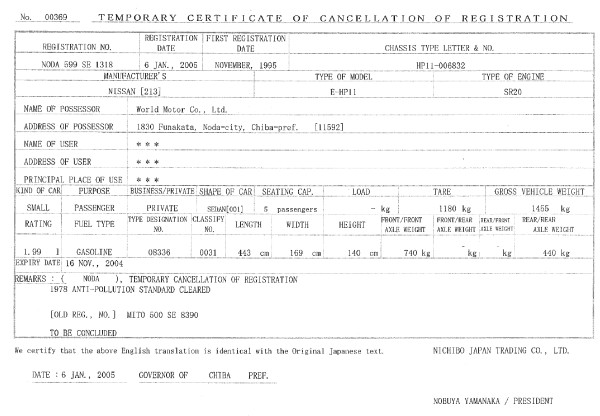
Some seating positions, as defined on a Japanese deregistration certificate, may be wheelchair positions or occasional seats (also known as dickie seats or jump seats). This may make the seat count more than nine in some cases. Rather than be class MD1, they can be considered class MB providing that they have nine or fewer seats that meet New Zealand requirements and the seating is original equipment. Wheelchair positions or occasional seats that have been removed are to be excluded from the seat count. See Technical bulletin: Identifying class MB or MD1 based on seats on Japanese deregistration certificates.
Page amended 1 June 2019 (see amendment details).
5-6 Establishing whether a vehicle requires inspection and certification for entry into service
All motor vehicles require inspection and certification for entry into service, except for the following:
- vehicles of class AB, TA or TB
- armoured vehicles used exclusively as equipment of the New Zealand Defence Force
- traction engines
- mechanically propelled rollers
- tractors (other than agricultural tractors) and machines, including trailers, for use solely in agricultural, land management or roading operations, whether for traction or otherwise
- agricultural motor vehicles
- vehicles registered for use on a road in a country other than New Zealand that are not going to be in New Zealand for a continuous period of more than 18 months
(see Technical bulletin 5 – Inspection requirements for temporary vehicle imports) - vehicles listed below:
a) pedestrian-controlled goods service vehicles
b) vehicles propelled and supported solely by self-laying tracks
c) vehicles used on roads only in road construction zones in accordance with notices declaring those zones
d) vehicles that are used on a road only when crossing or proceeding along a section of the road where the vehicles have been authorised to operate by an authorisation of a road-controlling authority that requires:
i. a written agreement by the vehicle’s operator or the person for whom the vehicle is being operated, to construct, reconstruct, maintain, or restore to the satisfaction of the road-controlling authority all or part of the road used by the vehicle, and
ii. the erection and maintenance of warning devices, signs or control devices as required by the road-controlling authority and the director, and
iii. where the use of the road does not consist solely of the direct crossing of the road, the prior approval of the NZ Transport Agency
e) all-terrain vehicles that are used on a public highway
f) motor vehicles exclusively designed and used on a road for driving, carrying or propelling any of the following, which must be permanently attached to the vehicle:
i. aerodrome runway sweepers
ii. electrical substations
iii. filters for transformer oil
iv. log haulers that are stationary when hauling logs
v. aero engine test benches
g) tractors owned by a local authority and used exclusively for the construction, maintenance or mowing of stopbanks and the banks of rivers, streams, drains, canals or other watercourses
h) mobile or movable huts, galleys or similar motor vehicles that are used on a road solely in connection with the construction or maintenance of roads
i) tractors used exclusively for shunting railway rolling stock
j) traction engines
k) forklifts
l) aerodrome crash fire tenders that are used on a road only in emergencies
m) trailers while being drawn by a motor vehicle specified in (n) to (s) of this schedule
n) motor vehicles, used exclusively in connection with the embarking and disembarking of ships’ passengers or for loading and unloading ships’ mail, cargo, and passengers’ baggage, and used on a public highway only when proceeding unladen from one wharf to another wharf or from its usual place of storage to a wharf and returning to that place of storage
o) motor vehicles designed exclusively or principally as part of the armament of the New Zealand Defence Force
p) cable jinkers
q) front-end loaders
r) log skidders
s) tractor cranes
t) rough-terrain cranes
u) mobile crushing and screening plane machines, which are mounted on trailers
v) motor graders
w) motor scrapers
x) trailer scrapers
y) plant for servicing oil-filled cables
z) post debarkers
aa) saw bench apparatus
bb) forestry chippers
cc) tree feller bunchers
dd) trench diggers and excavators
ee) vehicles that are always used unladen on the road and that are designed exclusively for carrying earth or other bulk materials
ff) mobile concrete mixers that are mounted on tractors
gg) a vehicle that is similar in design, construction or purpose to a vehicle listed above that cannot be categorised by vehicle class.
Page amended 1 July 2013 (see amendment details).
5-7 Establishing whether a vehicle may be inspected and certified for entry into service
A vehicle that requires inspection and certification for entry into service (see part 6) can be inspected and certified for entry into service only if:
a) the vehicle’s identity (by VIN or chassis number) is established without doubt, and
b) the vehicle has been inspected at the border in accordance with section 4 of Land Transport Rule: Vehicle Standards Compliance 2002 (applies only to used vehicles that are to be registered in New Zealand for the first time) (Note 1), and
c) the VIN process has been completed (see Pre-registration and VIN), and
d) the vehicle owner has presented proof that he/she is lawfully entitled to the vehicle.
- For an absentee owner who is not able to present identification in person, a copy of their identification is acceptable. This should be filed with the entry certification paperwork.
Note 1
For requirements regarding the Takata Alpha airbag recall see:
Technical bulletin 43: Takata airbag recall.
Page amended 1 April 2021 (see amendment details)
5-8 Establishing whether a vehicle complies
To establish whether a vehicle complies:
1. Select the relevant sections in both the VIRM: In-service certification and this manual that set out the requirements for the vehicle class and/or type.
VIRM: In-service certification
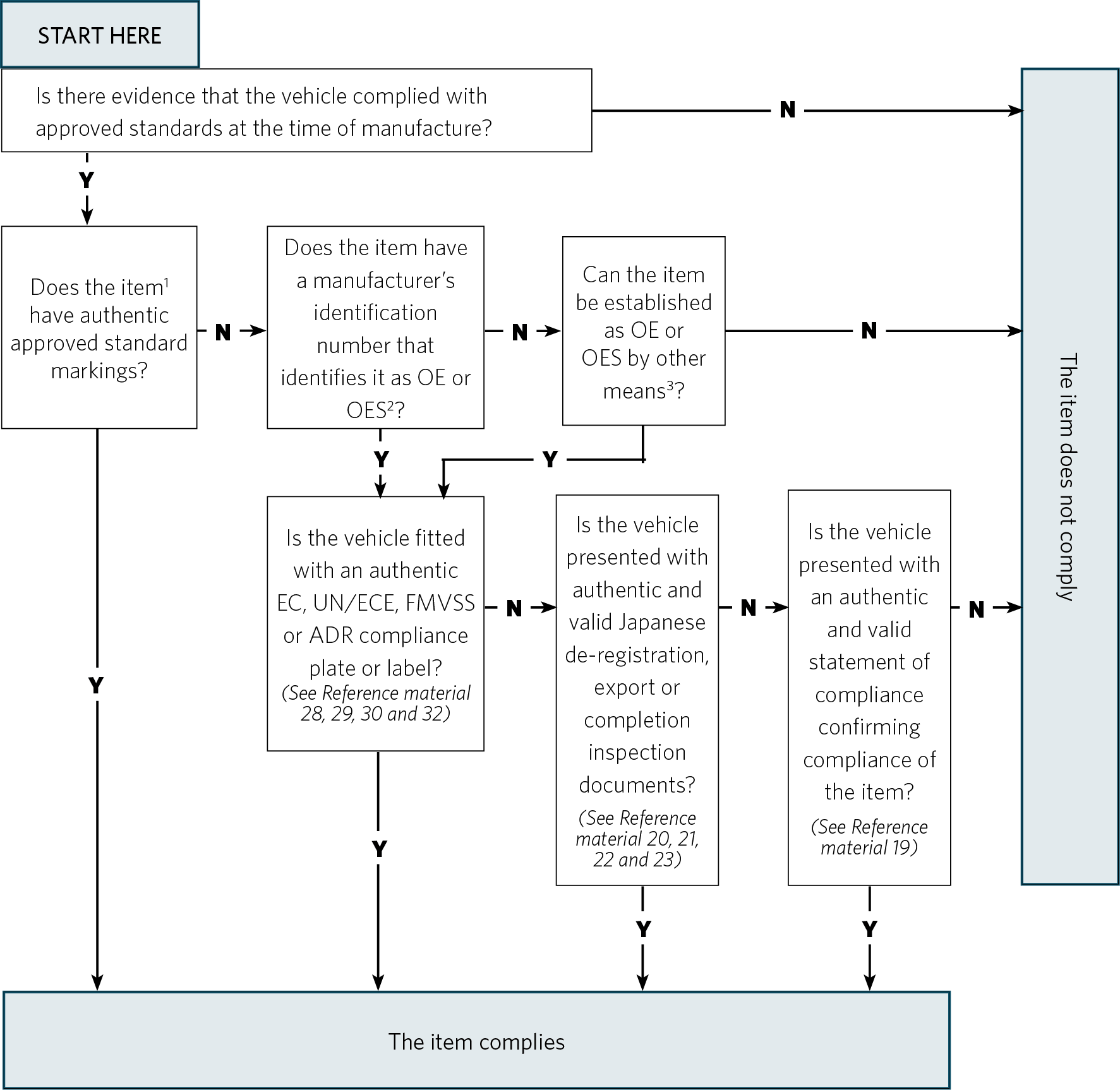
2. Inspect the vehicle and accompanying documentation in order to determine whether the vehicle complies with the requirements set out in both manuals (unless stated otherwise, equipment labelled ‘permitted’ must comply with legal requirements). The process for determining compliance with approved standards is outlined in Flowchart 1. Determining compliance with approved standards.
IMPORTANT: when inspecting a vehicle for entry into service, inspectors must inspect in full each item covered in both the VIRM: In-service certification and this manual (unless stated otherwise). This manual highlights where any requirements in the VIRM: In-service certification manual do not apply at entry (eg brake inspection). If the full inspection of a particular item requires the removal or disassembly of parts, these parts must be removed or disassembled.
VIRM: In-service certification
3. The vehicle inspector or inspecting organisation may refuse to inspect a vehicle because:
a) the vehicle is presented in such a condition that inspection is unreasonably difficult or cannot be completed (eg components covered in dirt, components missing etc), or
b) the vehicle has an insecure load.
4. Where a vehicle inspector determines that a reason for rejection in either the VIRM: In-service certification or this manual applies to a vehicle, the vehicle inspector must reject the vehicle for entry into service.
5. Where the vehicle inspector requires further information in order to determine compliance with a requirement, the inspector must reject the vehicle until the information has been obtained.
Determining compliance of a vehicle component or system with approved standards usually involves:
a) inspecting the actual component or system, and
b) inspecting relevant documentation.
Flowchart 1. Determining compliance with approved standards
This flowchart illustrates the process of determining whether a component or system complied with approved standards at the time of manufacture of a vehicle.
Note 1
An item can be a component or system.
Note 2
OES means Original Equipment Specification (ie a replacement part that is identical to original equipment or is approved by the vehicle manufacturer as a replacement part).
Note 3
For example, the item is a system, such as a door retention system, that is an integral part of the vehicle.
5-9 Checksheets and the LT4085
Applicable legislation: Land Transport Rule: Vehicle Standards Compliance 2002, section 2.3
9.1 Check sheets
The vehicle inspector must use an NZTA-approved check sheet. Check sheet specification and approval application forms are available from the Vehicle Regulation Technical team.
vehicleregulationtechnical@nzta.govt.nz
The checksheet must be completed legibly and in full.
A vehicle inspector can determine one of two outcomes:
a) Passed inspection: Record the determination and issue a WoF or CoF label as set out below
b) Failed inspection: Record the determination as set out below. The reasons for the failed inspection must be clearly stated.
If requested, a copy of the checksheet must be supplied to the vehicle owner.
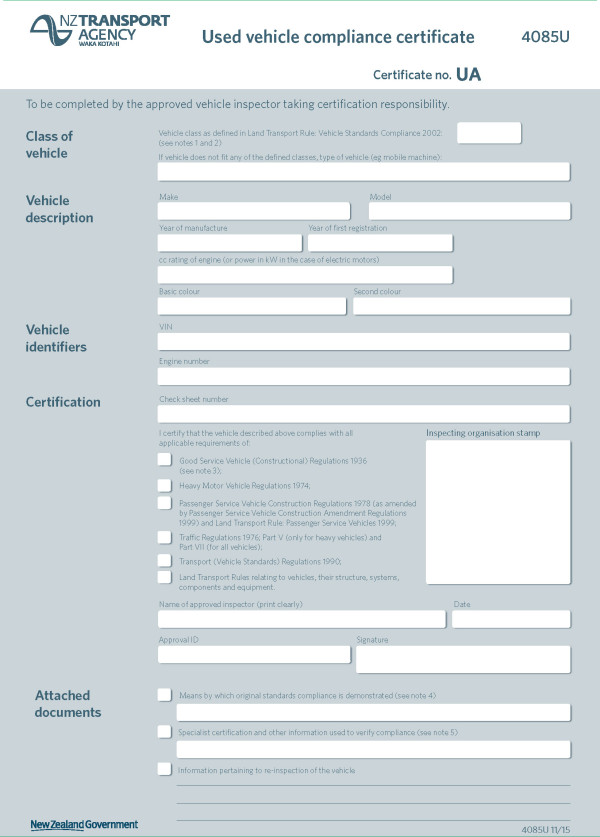
9.2 The vehicle compliance certificate (LT4085)
If, following the inspection of a vehicle and accompanying documentation, a vehicle inspector determines that the vehicle complies with all applicable requirements in the VIRM: In-service certification and in this manual, the inspector must issue an LT4085 vehicle compliance certificate.
VIRM: In-service certification
The inspector must complete the LT4085 form in every detail and sign it. Sample vehicle compliance certificates (LT4085s) are shown in Reference material 5.
Page amended 21 August 2024 (see amendment details)
5-10 Recording the inspection outcome (‘record of determination’)
Applicable legislation: Land Transport Rule: Vehicle Standards Compliance 2002, section 6.6.
The vehicle inspector must:
- record the inspection outcome (pass, fail) in the LATIS system (the record of the inspection outcome in LATIS is the ‘record of determination’), and
- enter the inspection outcome into the system before the vehicle leaves the premises of the inspecting organisation or within 24 hours of the initial inspection, whichever comes first.
Page amended 21 August 2024 (see amendment details)
5-11 Issuing the WoF or CoF label (‘evidence of vehicle inspection’)
Refer to the VIRM: In-service certification, section 3.8.
Important: if a vehicle is unregistered, the WoF or CoF label must be completed with the VIN or chassis number, rather than the vehicle registration number, recorded on the reverse side of the label.
A CoF can be issued to unregistered vehicles only when all entry, specialist certification (such as towing connections) and in-service certification (including CoL, when applicable) requirements have been met.
Page amended 28 October 2023 (see amendment details).
5-12 Collecting fees
Applicable legislation: Land Transport (Regulatory Fees) Regulations 2023
The fee to be paid by an applicant for inspection and certification of a vehicle for entry into service is the amount fixed by the inspecting organisation that is reasonable, having regard to:
a) the time spent in inspecting the vehicle to ascertain whether it complies with the relevant requirements, and
b) any fees payable to the NZTA, and
c) any standard or usual rate at which the inspecting organisation imposes charges for other work carried out in respect of motor vehicles.
12.1 Duplicate evidence of vehicle inspection
The fee to be paid by the operator of a motor vehicle to an inspecting organisation for a duplicate of an evidence of vehicle inspection is $7.70.
6 Complaints
Encourage customers to direct any complaints to the inspecting organisation in the first instance.
To ensure that all written complaints are investigated, the inspecting organisation must maintain an effective complaints management process in accordance with the quality management system (QMS) manual and provide the following:
a) a clear and concise statement that recognises the positive value of complaints
b) clear and concise instructions to all customers on how to register a complaint. This can be accomplished in several ways, for example:
- a clear notice visibly displayed on the workplace wall
- a clear statement on any receipt or invoice issued
- a clear statement on the inspecting organisation’s checksheet
c) a straightforward explanation of the expected standards for resolution and the customer’s right to appeal to the NZTA if they are dissatisfied with the proposed resolution
- d) documentation of complaint investigations, prepared in accordance with the QMS manual so that details of the investigation can be readily checked
e) acknowledgment in writing of all written complaints within three working days, with the investigation completed and a resolution proposed to the complainant within 20 working days, of the complaint being made
f) a record of all complaints, both verbal and written, recorded in accordance with the QMS manual
g) directions, for any customer who wishes to make a complaint or appeal a decision made by an inspecting organisation, to contact NZTA.
- Phone: 0800 699 000
- Website: nzta.govt.nz/complaints
Page amended 21 August 2024 (see amendment details)
7 Inspection premises and equipment
Inspecting organisations must:
- have premises and equipment that comply with all applicable requirements set out in this section
- continue to comply with all applicable requirements set out in this section
- maintain their premises and equipment in a good state of repair at all times
- have brake performance testing equipment calibrated at least every 12 months, or more frequently if required by the brake performance testing equipment manufacturer.
Minimum access, exit and turning circle specifications
|
Specification |
Vehicle class |
||
|---|---|---|---|
|
LA, LB, LC, LD |
LE, MA, MB, MC, MD1, MD2, NA |
MD3, MD4, ME, NB, NC, TC, TD |
|
|
Minimum access and exit width |
2.0m (2.8m for LD) |
2.8m |
3.0m |
|
Minimum access and exit height |
2.0m |
3.0m |
4.5m |
|
Minimum level approach to roller brake machine (measured from the centre of the rollers) |
2.0m |
5.0m |
19m |
|
Minimum level exit from roller brake machine (measured from the centre of the rollers) |
2.0m |
5.0m (Note 1) |
19m |
|
Minimum turning radius |
5.0m |
8.0m |
12.5m (Note 2) |
|
Marked turning circle diameter |
N/A |
N/A |
25m (Note 3) |
1.1 Inspection area specifications
Minimum dimensions
|
Specification |
Vehicle class |
||
|---|---|---|---|
|
LA, LB, LC, LD |
LE, MA, MB, MC, MD1, MD2, NA |
MD3, MD4, ME, NB, NC, TC, TD |
|
|
Inspection area width |
2.4m |
4.0m |
5.0m – see (c) below |
|
Inspection area height |
2.5m |
3.0m |
5.0m |
|
Inspection area length |
3.0m |
6.0m |
23.0m – see (g) overleaf |
Other requirements and considerations:
a) The inspection area must be situated within a building that has a roof, sides and doors made of permanent building materials.
b) The inspection area must be clear of all structural and equipment intrusions apart from the vehicle hoist and roller brake machine.
c) The inspection area width for vehicle classes MD3, MD4, ME, NB, NC, TC and TD may overlap any adjoining inspection area for the same vehicle class up to 1m along its length.
d) The inspection area floor must be smooth concrete or tar seal.
e) The ground must be even and level. That is, all vehicle combinations must remain stationary with all brakes released.
f) There must be sufficient suitable lighting in the inspection area.
g) The minimum inspection area length for vehicle classes MD3, MD4, ME, NB, NC, TC, TD may be reduced to 16m for drive-through premises.
1.2 Minimum underbody inspection area specifications
|
Available options
|
Vehicle class |
|||
|---|---|---|---|---|
|
LA, LB, LC, LD |
LE, MA, MB, MC, MD1, MD2, NA |
MD3, MD4, ME, NB, NC, TC, TD |
||
|
Trolley jack and axle stands |
Suitable lifting equipment |
WoF only |
n/a |
|
|
Vehicle hoist |
n/a |
 |
n/a |
|
|
Inspection pit |
Width |
n/a |
0.8 – 1.0m |
0.8 - 1.0m |
|
Depth |
n/a |
1.3m |
1.3m |
|
|
Length |
n/a |
4m |
Side entry: 10m |
|
Other requirements and considerations:
a) The underbody inspection facility must be located and centrally aligned within the inspection area.
b) The pit length is measured at the base of the pit and does not include any steps that may be located at the ends.
c) There must be sufficient and suitable lighting provided for the underbody inspection. Refer to sections 7.2.2 and 7.2.5 for more details.
1.3 Equipment
| Equipment | Vehicle class | |||
|---|---|---|---|---|
| LA, LB | LC, LD | LE, MA, MB, MC, MD1, MD2, NA | MD3, MD4, ME, NB, NC, TC, TD | |
| Lamps | ||||
|
|
|
|
|
| Vision | ||||
| Calibrated electronic light transmission measuring device (This must be a lightmeter; an NZTA tint sample is not acceptable for entry-level inspection) | |
|
||
| Brakes | ||||
| An approved motorcycle helmet if road testing is carried out. |
|
|
||
| Access to level test strip (motorcycles only) | |
|
|
|
|
Approved brake machine |
|
|
||
|
Calibrated equipment to measure disc runout |
|
|
||
|
Calibrated brake drum measuring device |
|
|
||
|
Calibrated brake disc measuring device |
|
|
||
|
Suitable container or equipment for sampling and checking brake fluid |
|
|
||
|
Air gauge (minimum 1000kPa) |
|
|||
|
Fittings that enable the air gauge to be attached to a duomatic coupling |
|
|||
|
Stop watch |
|
|||
|
Seats and seatbelt anchorages |
||||
|
1m straight edge |
n/a | n/a | PSV entry only | |
|
Spirit level |
n/a | n/a | ||
|
Plumb bob |
n/a | n/a | ||
|
Calibrated torque wrench |
n/a | n/a | |
|
| Running gear | ||||
|
a) Two-post vehicle hoist (with sufficient capacity) |
Suitable lifting equipment | Suitable lifting equipment | any one of a, or b |
c |
| b) Four-post vehicle hoist with built-in jacking mechanism (with sufficient capacity) | ||||
|
c) Inspection pit and industrial quality trolley jack |
||||
|
Industrial quality hand-held inspection lamp (minimum 750 lux) |
|
|
|
|
|
Leverage bar (steel or similar strength material) for steering and suspension |
|
|
||
|
Leverage bar (steel or similar strength material) for ball-race turntables |
|
|||
|
Graduated tyre tread depth gauge |
|
|
|
|
|
Vehicle dimensions |
||||
|
3m measuring tape |
|
|
|
|
|
25m measuring tape |
|
|||
|
Tow connections |
||||
|
40mm tow pin wear indicator gauge |
|
|||
|
50mm tow pin wear indicator gauge |
|
|||
|
40mm tow eye wear indicator gauge |
|
|||
|
50mm tow eye wear indicator gauge |
|
|||
|
Taxi meters |
||||
|
Test strip, or calibrated rolling road |
|
|||
|
Meter seal kit |
|
|||
|
Stop watch |
|
|||
| VIN | ||||
|
VIN embossing machine |
|
|
|
|
|
Glass etching equipment |
n/a | n/a | |
|
|
Rivet gun |
|
|
|
|
|
An instrument for analysing exhaust emissions as prescribed in Introduction 8 (1.6) below |
n/a | n/a | |
|
|
Lighting |
||||
|
Right side (centre of vehicle) |
500 lux |
500 lux |
500 lux |
|
|
Left side (centre of vehicle) |
500 lux |
500 lux |
500 lux |
|
|
Front (centre of vehicle) |
500 lux |
500 lux |
500 lux |
|
|
Rear (centre of vehicle) |
500 lux |
500 lux |
500 lux |
|
| Underbody |
400 lux |
400 lux |
400 lux |
|
|
Lighting during inspection, underbody, interior, engine and boot |
750 lux |
750 lux |
750 lux |
|
All measuring equipment used as part of the entry inspection and certification process must be calibrated at least once every 12 months. This must be recorded in the PRS Equipment record.
1.4 Compliance with statutory requirements
It is the inspecting organisation’s responsibility to ensure that the inspection premises and equipment comply with:
- occupational safety and health requirements, and
- any other relevant acts, regulations and local bylaws.
1.5 Approved brake testing equipment
Only the brake testing equipment in the VIRM: In-service certification sections 5.5 to 5.7 (as applicable) is approved for entry inspection of brake performance.
VIRM: In-service certification sections 5.5 to 5.7
1.6 Approved vehicle exhaust emissions testing equipment
The equipment used to measure the exhaust emissions of petrol, LPG or CNG vehicles must:
1. be capable of testing carbon monoxide and hydrocarbon emissions; and
2. comply with:
a) BAR-97 Emissions Inspection System Specifications, or
b) OIML R99/ISO 3930 Instruments for measuring vehicle exhaust emissions, Class 1 Standards, or
c) Japan Safety Regulations for Road Vehicles, Technical Standard – Machinery Equipment for Vehicle Inspection as specified by the Minister for Transport in Announcement No. 375 of 14 June 1995.
For diesel vehicles tested using filter paper equipment, the equipment prescribed in Japanese Industrial Standard JIS D 8004, Reflection Type Smokemeters for Automobile Diesel Engines, must be used for analysing exhaust emissions.
For diesel vehicles tested using an opacimeter, the equipment prescribed in International Standard ISO 11614:1999, Reciprocating internal combustion compression ignition engines – Apparatus for measurement of the opacity and determination of the light absorption coefficient of exhaust gas, must be used for analysing exhaust emissions.
The equipment used in testing must be used in accordance with the manufacturer’s directions.
The emission testing equipment must be thoroughly checked, maintained and calibrated in accordance with the respective manufacturer’s directions.
1.7 Other requirements and considerations
Computer systems must be available on site when the site is open for certification. The computer equipment, VIN equipment and document storage must be located and operated from a location where the public does not have access when staff are not present. All data entry must be carried out by staff. When not in use by staff, the NZTA computer system must not be accessible to any other person.
Where premises or equipment are not owned by the inspecting organisation, the times when the premises and equipment are leased for entry certification use must be specified in the contract with the leaseholder.
Inspection area lighting should conform to New Zealand standard code of practice for interior lighting design (NZS 6703:1984), or subsequent amendments. The code of practice establishes performance requirements for specific workplace lighting.
Ambient lighting (ie not hand-held spotlights) of 500 lux (initial) is required at the middle of the vehicle at all four sides and 400 lux (initial) at the centre of the underbody. Lighting must be a minimum of 750 lux during the underbody, interior, engine and boot inspections of the vehicle. Hand-held lighting can be used to provide the required lighting level. Any requirements for hand-held lighting must be noted on the site plan. In these cases, vehicle inspectors must use hand-held lighting during inspections.
The site plan submitted with an application must identify areas where structural inspections will be carried out.
Vehicle inspectors
Applications for appointment must be sponsored by an employing inspecting organisation.
Page updated 1 February 2023 (see details)
8 Appointments
Information on applying to be a used light entry certification vehicle inspector (VI) or inspecting organisation (IO) can be found in the Vehicle Inspection Portal Applications section.
9 Definitions and abbreviations
|
All-terrain vehicle |
means a vehicle, with or without motorcycle controls and equipment, that: a) is principally designed for off-road use, and b) has three or more wheels, and c) has an engine capacity exceeding 50 cc, and d) has a gross laden weight of less than 1000kg. |
| Agricultural motor vehicle | a) means a motor vehicle that is designed, constructed or adapted for agricultural purposes, and includes:
i) an agricultural trailer, and ii) an agricultural tractor, but b) does not include any vehicle that is: i) of a class specified in section 5-5 of the Introduction, and ii) designed or constructed for general road use. |
| Agricultural purpose | includes:
a) land cultivation b) growing and harvesting crops (including horticulture and viticulture) c) rearing livestock d) any land management operation undertaken in connection with the operation or management of a farm.
|
| Agricultural tractor | means a vehicle that is designed and constructed principally for the purposes of:
a) towing an agricultural trailer, or b) drawing, or powering, an implement ordinarily used for an agricultural purpose. |
|
means: a) a trailer that is used exclusively for agricultural purposes, and b) includes a wheeled agricultural implement, the wheels of which are in contact with the road when the implement is being towed; but c) does not include a trailer that is i. designed for the carriage of goods operated at a speed exceeding 40km/h, or ii. a logging trailer. |
|
|
Annex B conditional permit |
means an inspection and certification document that confirms that the vehicle operator has inspected the vehicle and determined that it is safe to be operated under specified conditions. |
|
Annex C conditional permit |
means an inspection and certification document that confirms that a vehicle inspector or inspecting organisation has inspected the vehicle and determined that it is safe to be operated under specified conditions. |
| Anti-lock brake system (ABS) | means a system that senses wheel slip and automatically modulates the pressure producing the braking forces at the wheel or wheels to limit the degree of wheel slip. |
|
Applicable requirement |
means any requirement specified or incorporated in an act, regulation, code or rule that applies to the design, construction, condition, equipment, modification, repair or maintenance of a specific vehicle. All applicable requirements for entry inspection and certification are contained in this manual and the Vehicle inspection requirements manual: In-service certification. |
|
Bus |
means omnibus |
|
Certificate of loading (CoL) |
means a certificate issued to a vehicle that requires verification of its loading and weight limits. |
|
Certify |
means: a) in relation to a vehicle or specific aspect of a vehicle, to make a record of determination that confirms that the vehicle inspector or inspecting organisation has determined that the vehicle or specific aspect of the vehicle complies with applicable requirements, or b) in relation to a vehicle’s loading and weight limits, to make a record of a vehicle’s loading and weight limits. |
|
Child safety lock |
means a safety device installed during the manufacture of the vehicle to prevent a door from being opened from the inside of the vehicle. |
|
Class |
in relation to vehicles means a category of vehicle of one of the groups A, L, M, N and T, as specified under section 6 of the Introduction of this manual. |
| Combined brake system (CBS) |
means: a) for vehicle classes LA and LC, a service brake system where at least two brakes on different wheels are operated by the actuation of a single control b) for vehicle classes LB and LE, a service brake system where the brakes on all wheels are operated by the actuation of a single control c) for vehicle class LD, a service brake system where the brakes on at least the front and rear wheels are operated by the actuation of a single control. If the rear wheel and sidecar wheel are braked by the same brake system, this is regarded as the rear brake. |
|
Compliance label |
means an attachment to a vehicle in the form of a label that confirms compliance of the vehicle or a specific aspect of the vehicle with requirements in: |
|
Compliance plate |
means an attachment to a vehicle in the form of a plate that confirms compliance of the vehicle or a specific aspect of the vehicle with requirements in: |
|
Conditional permit |
means an inspection and certification document that confirms that a determination has been made that the vehicle is safe to be operated under specified conditions. |
|
Corrosion damage |
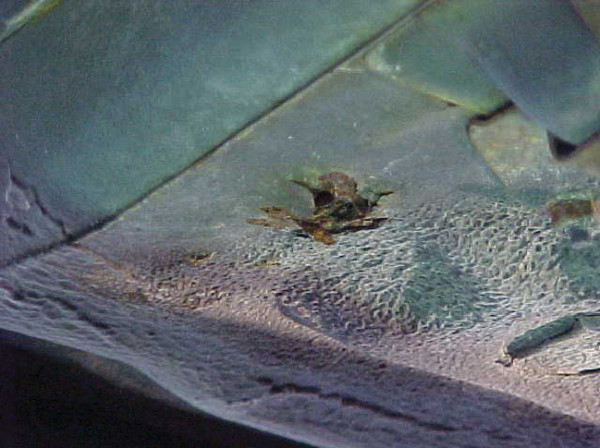
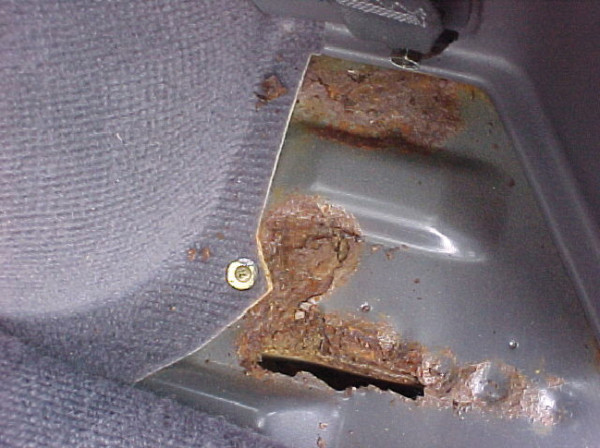
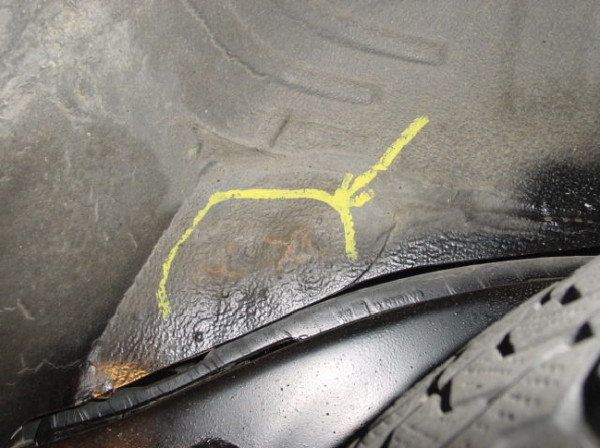
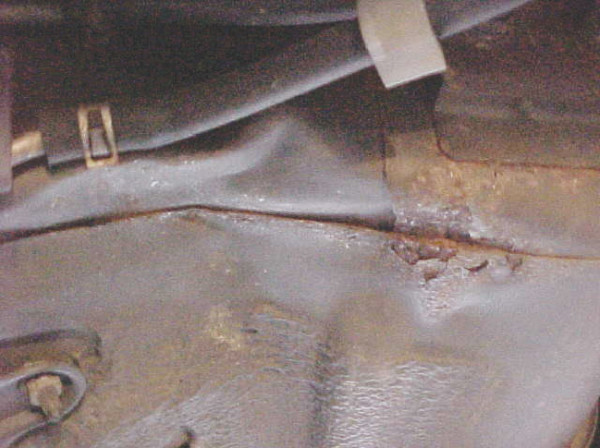
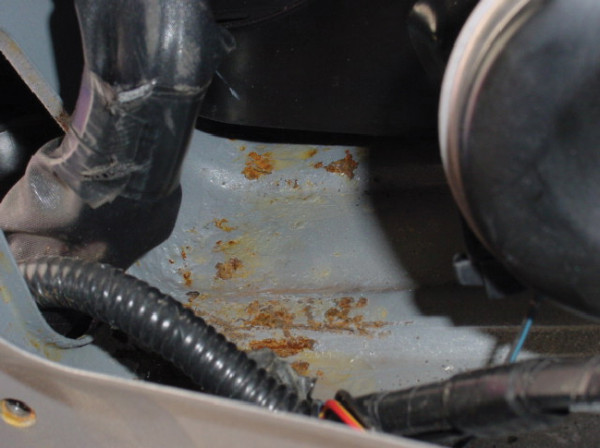
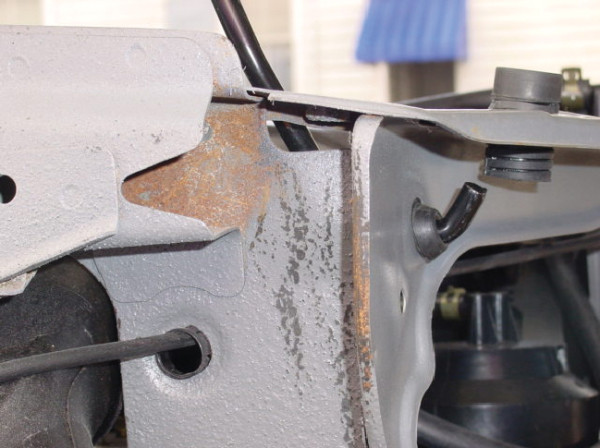
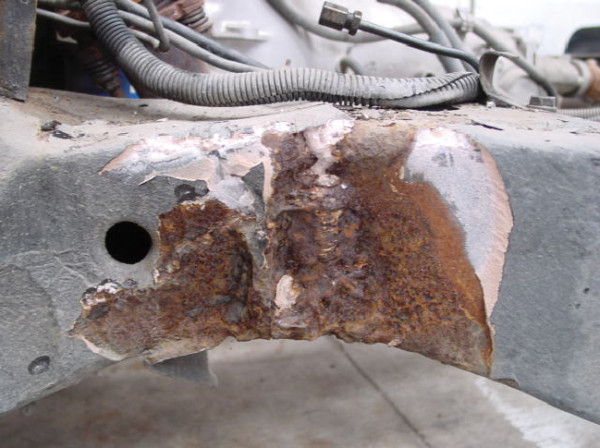
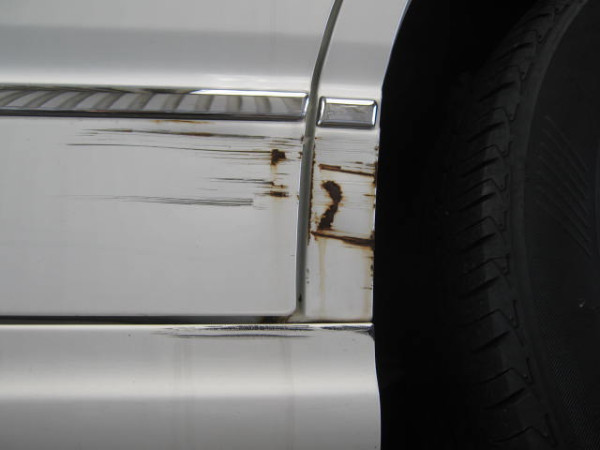
is where the metal has been eaten away, which is evident by pitting. The outward signs of such corrosion damage are typically displayed by the swelling of a panel between spot welds, or lifting or bubbling of paint. In extreme cases, the area affected by the corrosion damage will fall out and leave a hole. For the purposes of entry-level inspection, this includes any signs of rust bleed. |
|
Cosmetic lamp |
means a lamp that is not a headlamp, stop lamp, direction-indicator lamp, position lamp, rear registration plate illumination lamp, reflector, fog lamp, daytime running lamp, cornering lamp, reversing lamp, reflective material, interior lamp, work lamp, flashing or revolving beacon or illuminated vehicle-mounted sign. |
| Dedicated wheelchair position |
means a seating position for transporting a wheelchair and its occupant that is unavailable for other passengers when it is not occupied by a wheelchair. |
|
De-registered |
means that a vehicle’s New Zealand registration has been cancelled in accordance with Part 17 of the: |
|
Determination |
means a record, in paper or electronic form, that a vehicle or specific aspect of a vehicle complies or does not comply with applicable requirements. |
| Disability vehicle |
There are two definitions of disability vehicle used for entry certification: one for determining vehicle exhaust emissions compliance and one for providing an exclusion from the Clean Vehicle Standard. Vehicle exhaust emissionsThis definition is used to determine the approved emissions standards for a vehicle in: Disability vehicle means a light vehicle that is used for the transportation of a person with a disability and is modified to do either or both of the following:
Clean Vehicle StandardThis definition is used to determine if a vehicle is excluded from the Clean Vehicle Standard (including providing a CO2 Account ID) and is the definition used for the 'Special Permits' field in the VIN screen. Disability vehicle means a light vehicle that is used for the transportation of a person with a disability and:
The determination the vehicle is a disability vehicle must take place before or at the time it is entry certified in order to exclude the vehicle from the clean vehicle standard. The exclusion from the Clean Vehicle Standard does not exclude a vehicle from meeting an approved emissions std or from requiring a Fuel Consumption Statement. |
| EBS | means electronically controlled braking system. Refer to the Land Transport Rule: Heavy Vehicle Brakes 2006 for further information. Land Transport Rule: Heavy Vehicle Brakes 2006 |
| Electronic stability control (ESC) |
means a system that electronically regulates the stability of a motor vehicle and, as a minimum, has the following attributes: a) improves vehicle directional stability by at least having the ability to automatically control individually the braking torques of the left and right wheels on each axle, or an axle of each axle group, to induce a correcting yaw moment based on the evaluation of actual vehicle behaviour in comparison with a determination of vehicle behaviour demanded by the driver, and b) is computer-controlled, with the computer using a closed-loop algorithm to limit vehicle oversteer and to limit vehicle understeer based on the evaluation of actual vehicle behaviour in comparison with a determination of vehicle behaviour demanded by the driver, and c) has a means to determine directly the value of the vehicle’s yaw rate and to estimate its side slip or side slip derivative with respect to time, and d) has a means to monitor driver steering inputs. |
| Enduro motorcycle |
means a motor vehicle of class LC that has the following properties— a) seat height greater than or equal to 900mm b) ground clearance equal to or greater than 310mm c) overall gear ratio in highest gear (primary gear ratio x secondary gear ratio in the highest speed x final drive ratio) equal to or greater than 6.0 d) unladen weight less than or equal to 150kg e) no seating position for a passenger. |
|
Enter service |
in relation to a vehicle means to begin to be operated in-service on the road in New Zealand for the first time, in compliance with registration requirements set out in the |
|
Enter service as a passenger service vehicle |
means the most recent occasion of the vehicle entering service as a passenger service vehicle. |
|
Evidence of vehicle inspection |
in relation to a vehicle means any certificate, label or document issued as evidence of the completion of the periodic vehicle inspection requirements in respect of that vehicle. |
| Farm motorcycle |
means a motor vehicle of class LC that is designed and constructed, and not merely adapted, for agricultural purposes and which has the following properties a) either: (i) an engine capacity less than or equal to 250 cubic centimetres, or (ii) motive power wholly derived from an external source of electricity b) ground clearance equal to or greater than 220mm c) overall gear ratio in highest gear (primary gear ratio x secondary gear ratio in the highest speed x final drive ratio) equal to or greater than 6.0 d) unladen weight less than or equal to 150kg e) front wheel outer rim diameter equal to or greater than 482mm (nominally 19 inches) and larger than rear wheel outer rim diameter. |
|
Gross vehicle mass |
means either: a) the maximum permitted mass of the vehicle, which includes the mass of the accessories, the crew, the passengers and load, and is, unless (b) applies, the gross vehicle mass specified (subsequent to the latest modification, if any) by the manufacturer of the vehicle, or b) if a person, approved by NZTA for this purpose, determines that the gross vehicle mass should differ from that specified by the manufacturer, taking into account evidence on the capability of the systems and components of the vehicle or the effects of any modification, the mass as determined by that person. |
|
Heavy vehicle |
means a vehicle that is either: a) of class MD3, MD4, ME, NB, NC, TC or TD, or b) a vehicle not listed under section 5-5 of the Introduction with a gross vehicle mass that exceeds 3500kg. |
|
Heavy vehicle specialist inspection and certification |
means specialist inspection and certification of specific aspects of a heavy vehicle. |
|
Inspecting organisation |
means a person or organisation appointed by NZTA who is responsible for inspection and certification outcomes. |
|
Inspection and certification |
means the performance of two or more of the following, for the purposes of determining compliance with applicable requirements: a) examining vehicles b) determining whether or not a vehicle or specific aspect of a vehicle complies with applicable requirements c) issuing evidence of vehicle inspection, a conditional permit or a certificate of loading d) recording and making available information about vehicles (including their systems, components, devices, fittings and equipment). |
|
Inspection and certification document |
means a document required, produced or issued in the inspection and certification process, including a plate, a label, an electronic record, or a checksheet. |
|
Inspection and certification outcome |
in relation to a vehicle means: a) production of a record of determination as appropriate to the inspection and certification activity, or b) provision of other records and information about the vehicle to the director or other persons, or c) production of evidence of vehicle inspection, conditional permits or certificates of loading. |
| KSDP | means key service delivery partner. They are defined as organisations that are contracted or appointed by the Transport Agency to delivery regulatory products or services and who have sufficient market share and/or are of sufficient size and standing within an industry segment to be able to represent and influence the customer expectation of that industry segment. |
|
LANDATA |
means the NZTA computer system. |
|
Light vehicle |
means a motor vehicle that is: a) of group A or L, or of class MA, MB, MC, MD1, MD2, NA, TA or TB, or b) a vehicle not listed in section 5-5 of the Introduction with a gross vehicle mass of 3500kg or less. |
|
Light vehicle repair specialist certification |
means specialist inspection and certification of repairs to significant damage or deterioration to the structure, chassis, body-to-chassis attachment, suspension, or occupant protection system of a light vehicle. |
|
Low volume vehicle |
means a vehicle of a class other than class MD3, MD4, ME, NB, NC, TC or TD, that is: a) manufactured, assembled or scratch-built in quantities of 500 or less in any one year, and where the construction of the vehicle may directly or indirectly affect the compliance of the vehicle with any of the vehicle standards prescribed by New Zealand law, or b) modified uniquely, or in quantities of 500 in any one year, in such a way that the compliance of the vehicle, its structure, systems, components or equipment with a legal requirement relating to safety performance applicable at the time of the modification may be affected. |
|
Low volume vehicle plate or authority card |
means a plate or authority card issued in accordance with the Low Volume Vehicle Code. |
|
Low volume vehicle specialist inspection and certification |
means specialist inspection and certification of a light vehicle as specified in the Low Volume Vehicle Code. |
|
Manufacturer’s operating limits |
means: a) in relation to a vehicle, the allowance provided by the vehicle manufacturer in terms of performance capability and dimensions, relative to deterioration, malfunction or damage beyond which the safe performance of the vehicle, as defined by the vehicle manufacturer, is compromised, and b) in relation to a system, component or item of equipment, incorporated in or attached to a vehicle, the allowance provided by the system, component or equipment manufacturer on terms of performance capability and dimensions, relative to the deterioration, malfunction or damage, beyond which the safe performance of a system, component or equipment, is compromised but does not include repair. |
|
Modify |
in relation to a vehicle means to change the vehicle from its original state by altering, substituting, adding or removing any structure , system, component or equipment, but does not include repair. |
| Motorhome | means a motor vehicle, other than a trailer, that is permanently equipped with features intended to make the vehicle suitable as a dwelling place, and must include at least one sleeping berth and one table, both of which may be of a design that allows them to be retracted or folded away. |
|
Motor vehicle |
means a vehicle drawn or propelled by mechanical power, and includes a trailer but does not include: a) a vehicle running on rails b) an invalid carriage c) a trailer (other than a trailer designed solely for the carriage of goods) that is designed and used exclusively as part of the armament of the New Zealand Defence Force d) a trailer running on one wheel and designed exclusively as a speed measuring device or for testing the wear of vehicle tyres e) a vehicle designed for amusement purposes and used exclusively within a place of recreation, amusement, or entertainment to which the public does not have access with motor vehicles f) a pedestrian-controlled machine. |
|
NZTA |
means NZ Transport Agency Waka Kotahi. |
|
Original equipment (OE) |
(unless stated otherwise elsewhere in this manual) means equipment that is fitted by the vehicle manufacturer when the vehicle is manufactured, or equipment that is approved by the vehicle manufacturer for use in a specific vehicle type for a specific purpose or as a replacement for the original equipment |
|
Omnibus |
A passenger vehicle that has more than nine seating positions (including the driver’s seating position). An omnibus comprising two or more non-separable but articulated units shall be considered to be a single vehicle. |
|
Operate |
in relation to a vehicle means to drive or use the vehicle on a road, or to cause or permit the vehicle to be on a road or to be driven on a road, whether or not the person is present with the vehicle. |
|
Operation in service |
in relation to a vehicle means to be operated on the road in New Zealand after having been registered in compliance with the requirements in Part 17 of the Land Transport Act 1998. |
|
Passenger service vehicle (PSV) |
means: (a) a motor vehicle used or available for use in a passenger service for the carriage of passengers, or (b) a motor vehicle with more than 12 seating positions, or (c) a heavy motor vehicle with more than nine seating positions. Note 1The following vehicles are not required to comply with the Passenger Service Vehicles Rule requirements contained in the light PSV and heavy PSV VIRM pages: (a) vehicles exempted from the transport service licensing requirements (b) ambulances designed to carry recumbent patients (c) vehicles designed or modified for lawfully-detained persons (d) NZ Defence Force dual purpose trucks with removable seating (eg some NZ Army Pinzgauers) (e) NZ Defence Force armoured vehicles (f) Vehicles registered under the Amusement Devices Regulations 1978 that are either used in venture tourism or that are trailers designed, constructed and permitted to be drawn at a maximum speed of 50km/h or less (g) Motorcycles and motorcycles with side cars. Note 2See also Omnibus above. |
|
PRS manual |
means the NZTA Performance review system manual. |
|
Re-enter service |
in relation to a vehicle previously certified for entry into service on the road in New Zealand that has been de-registered, means to begin to be operated in service again. |
|
Repair |
means to restore a damaged or worn vehicle, its structure, systems, components or equipment, and includes the replacement of damaged or worn structures, systems, components or equipment. |
|
means the tolerance within which the safe performance of the vehicle, its structure, systems, components or equipment is not compromised, having regard to any manufacturer’s operating limits. |
|
| Sleeping berth |
means a position suitable for one person to sleep in a vehicle and need not be a dedicated space (eg a dining table may lower to form the berth’s base). The number of berths in the vehicle is generally readily-available from the vehicle manufacturer’s website. As an indication (only in the absence of information from the manufacturer), the size of a single berth generally varies from at least 0.6 metres wide by approximately 1.8 metres long while a double berth generally varies from at least 1.2 metres wide by approximately 1.8 metres long. Note: the berth’s shape need not be completely rectangular (to accommodate vehicle shape) and luxury motorhomes will likely have wider berths than compact motorhomes. |
|
Scratch-built vehicle |
means a vehicle that is either: a) assembled from previously unrelated components and construction materials that have not been predominantly sourced from donors of a single make or model and that, in its completed form, never previously existed as a mass-produced vehicle, although the external appearance may resemble or replicate an existing vehicle, or b) a modified production vehicle that contains less than the following componentry from a mass-produced vehicle of a single make and model: i. 40% of the chassis rails and 50% of the cross-members, or alternatively 40% of a spaceframe, or 40% of the floorpan of a unitary constructed body, whichever is appropriate, and ii. for light vehicles, 40% of the bodywork (based on surface area of body panels but not including the floorpan, internal bracing, sub-panels, bulkheads or firewall). |
|
Small passenger service vehicle |
means a vehicle, used or available for use in a passenger service for the carriage of passengers, that is designed or adapted to carry 12 or fewer persons (including the driver). |
|
Specialist inspection and certification |
means inspection and certification of a specific aspect of a vehicle. |
| Special interest motorcycle |
means a vehicle of class LC, LD, or LE: a) for which a valid special interest motorcycle permit has been issued in accordance, and b) that has been certified for entry on the basis of a special interest motorcycle permit. |
|
means a motor vehicle (not being a traction engine) designed exclusively for traction at speeds not exceeding 50km/h (See also definition for agricultural tractor). |
|
| Trial motorcycle |
means a motor vehicle of class LC that has the following properties— a) seat height less than or equal to 700mm: b) ground clearance equal to or greater than 280mm: c) fuel tank capacity less than or equal to 4 litres: d) overall gear ratio in highest gear (primary gear ratio x secondary gear ratio in the highest speed x final drive ratio) equal to or greater than 7.5: e) unladen weight less than or equal to 100kg: f) no seating position for a passenger. |
|
Used light vehicle |
means a light vehicle, including a light vehicle that has been used for the purpose of demonstration in connection with the sale of a similar vehicle that has, at any time, before being offered or displayed for sale been: a) registered under: i. the Transport Act 1962, or ii. Part 17 of the Land Transport Act 1998, or iii. any corresponding legislation in any other country, or b) used for a purpose not connected with its manufacture or sale. Notes
|
|
Vehicle identification number (VIN) |
means a group of letters and numbers consisting of 17 characters that: a) is affixed to a vehicle in accordance with the relevant standard prescribed under the Land Transport Rule: Vehicle Standards Compliance 2002, and b) is capable of being decoded to provide identifying information about that vehicle. |
|
Vehicle inspector |
means a person appointed by NZTA to carry out inspection and certification activities in accordance with requirements and conditions imposed by NZTA. |
|
Water damage |
in relation to a vehicle, means damage to a vehicle’s critical safety system as a result of exposure to water. |
Page amended 3 November 2025 (see amendment details).
Page amended 4 November 2025 (see amendment details).
2 Pre-registration and VIN
1 Vehicle records
1-1 Finding vehicle records
When a vehicle is presented for pre-registration, the vehicle must be inspected and the chassis or frame number, or vehicle identification number (VIN), must be located on the vehicle.
(Table 4-1-1 describes permitted VIN locations).
The entry certifier must then check to see if a record of the vehicle already exists in the LANDATA computer system. If a vehicle record does exist, the entry certifier must ensure that the record is correct. If no record exists, and the vehicle is a used import, the owner must apply to NZTA for a border check exemption before the entry certifier can create a record in LANDATA for that vehicle.
If assistance is required in determining which is the correct record to use, or if a record cannot be found when there should be one, contact NZTA on 0800 804 580.
- Vehicles registered in New Zealand prior to 1996 or vehicles that have undergone a border inspection only will often be recorded with a vehicle identifier that does not match the vehicle. In such cases, care must be taken to use the search procedures to find these vehicle records.
- Always ensure that the correct VIN, chassis or frame number has been keyed.
1 VIN, chassis and frame numbers
To have a vehicle record, a vehicle must have a vehicle identifier. This will be a vehicle identification number (VIN), or a chassis or frame number.
A VIN is a series of digits and letters structured so that every vehicle has a unique identifying number, according to an international standard (ISO 3779). The VIN always contains exactly 17 characters and never contains the letters O, Q or I.
1.1 Recording vehicle identifiers
Spaces should never be keyed for VIN, chassis or frame numbers. Some may exist in historical records; these should be corrected wherever possible.
A VIN may physically have punctuation characters but these must never be recorded or keyed.
A dash may be recorded in a frame or chassis number.
1.2 Vehicles with two identifiers
Occasionally, a vehicle may be presented with two vehicle identifiers (ie two VINs, or a VIN and a chassis number).
For example:
A European vehicle sourced from the United States of America (US) may have two VINs assigned if the original European VIN does not meet US standards.
A vehicle previously registered in Japan may have a Japanese chassis number assigned in addition to the original manufacturer’s identifier.
In such cases, an entry certifier must note what the identifiers are and must explain why there are two identifiers in the Notes screen.
1.2.1 Recording a vehicle with a VIN and a chassis number
Enter:
- the VIN in the VIN field, and
- the chassis number in the chassis number field.
Important: The chassis number can only be keyed after all the attributes have been recorded using the VIN number as the identifier.
1.2.2 Recording a vehicle with two legally affixed VINs
Record:
- the VIN from the previous registration record in the VIN field, and
- the other VIN in the chassis number field.
In cases where this may cause confusion (eg the previous registration record VIN is not as visible as the other VIN, or would not be used in a manufacturer’s recall), the opposite may be recorded if approval is given by the Vehicle Certifiers Registers team.
1.3 VIN, chassis or frame number removed or damaged during repair
For all vehicles, if the VIN, chassis or frame number has been damaged or removed during repair >or the vehicle has two identifiers as a result of the repair, an entry certifier must:
1. complete a VIN approval request form (CA01) and attach specific information relating to the repairs. Send it to:
Exemptions and Registers Integrity
NZ Transport Agency
Private Bag 11777
Palmerston North 4442
Email: assessments@nzta.govt.nz
2. verify the VIN or chassis number from other sources (eg the original parts, registration papers, purchase receipts, insurance documentation), and key all details in LANDATA using this number
3. verify that any vehicle identifiers on discarded parts have been erased/destroyed
4. always record an explanation in the notes screen.
1.4 VIN, chassis or frame number not found, or modified/tampered with
For all vehicles, if the VIN, chassis or frame number cannot be located or the identifier that has been located appears to have been modified, removed, tampered with, or appears to be a reproduction, an entry certifier must:
1. complete a VIN approval request form (CA01) and send it to:
Exemptions and Registers Integrity
NZ Transport Agency
Private Bag 11777
Palmerston North 4442
Email: assessments@nzta.govt.nz
2. attempt to find a VIN or chassis number from other sources (eg registration papers, purchase receipts, insurance documentation), and key all details in LANDATA using this number
3. if an identifier still cannot be found, access the VIN screen without entering an identifier. A blank screen will display. All details are to be keyed and a record created for the vehicle
4. always record an explanation in the notes screen
5. do not approve the vehicle for registration until approval is given by Waka Kotahi.
- Used vehicles imported from Japan with a vehicle identifier that has been partially or totally removed cannot be processed for entry into New Zealand unless the vehicle has been re-identified by the Japanese Ministry of Land, Infrastructure and Transport (MLIT) and issued with an authentic export certificate that lists the new identifiers. See Reference material 76 for an example of the method used by the MLIT to re-identify vehicles that have been stolen and recovered.
Reference material 76
1.5 Vehicle matched on the vehicle of interest database
When a vehicle identifier is specified in the LANDATA system, the system also searches against the ‘vehicle of interest’ (VOI) system on the enforcement database to determine whether a vehicle with the same identifier has been reported stolen.
If a match is found on the VIN screen, the following warning message will display, along with the details of the vehicle(s) found: ‘Vehicle identifier matched on external system’.
This message may be displayed even if the vehicle details are not available on the LANDATA database. The warning message is deliberately vague, so it does not raise any suspicion if the vehicle owner or dealer happens to see the message.
1.5.1 What to do if a match is found
If the warning message is displayed, or if there are any doubts regarding a vehicle’s identity, proceed with the VIN allocation without arousing suspicion.
If a ‘Vehicle report’ form (Reference material 54) has not already been submitted for the vehicle, one should be completed and emailed to the NZ Police immediately. If you are unable to email the report immediately, do it as soon as possible. If, for any reason, you are unable to complete a ‘Vehicle report’ form or forward it to the NZ Police, contact NZTA as soon as possible to report the event. Try to note all details that may help identify the vehicle and any person(s) associated with it. Do not place yourself or your colleagues at risk. You should continue with all phases of the certification process, except approving the vehicle for registration and printing the MR2A registration form. In such cases, approval for registration can only be carried out if the vehicle match is removed, or approval is granted by NZTA.
1-2 Selecting a vehicle record
When accessing the VIN screen, LANDATA checks for all records recorded against a VIN, chassis or frame number. This captures multiple vehicles with the same chassis or frame number, and vehicles with multiple records.
If there are multiple records available for a vehicle identifier, the ‘VIN authority allocation/confirmation’ screen will display with a list of records found for the specified identifier.
See Figure 1-2-1
Spaces in chassis or frame numbers
When transmitting from the escape field, the system will only read as far as the next space (eg if ‘VIN GC5 123456’ is keyed, LANDATA will only read ‘VIN GC5’. The correct record will not display).
Some older records have a space in the chassis or frame number. For these vehicles:
1. type >VIN< in the escape field and transmit
2. a blank VSPCV screen will display
3. enter the chassis or frame number with the space in the VIN/chassis field and transmit
4. LANDATA will recognise the complete number as it will read the whole number between the delimiters (> <).
1 Used vehicles
See Table 1-2-1.
2 Vehicles undergoing re-registration
In 1986 the motor vehicle register (MVR) was computerised. This means only paper records will exist for most vehicles registered in New Zealand prior to 1986. A record will exist in LANDATA for most vehicles on the road in New Zealand from 1986 onwards, although the chassis number is recorded incorrectly in a number of cases.
In March 1994 LANDATA was introduced. However, its use was limited to assigning VINs to vehicles and recording entry certification. Vehicles were still registered separately on the MVR system. Duplicate records still exist in LANDATA (the VIN and the MVR record), although in most cases the records have been merged. In October 1995, the MVR was copied onto LANDATA and it was fully phased out by the beginning of 1996. Therefore, whether or not a vehicle record exists on LANDATA will depend on when it was last registered. If you suspect a vehicle record should be on LANDATA but you cannot find one, fax the details to Vehicle Certifiers Registers on 06 953 6282 and request a LANDATA search.
See Table 1-2-2.
2.1 If a vehicle record is found but the chassis field is blank
The record will not be accessible from the VIN screen.
Contact the Transport Agency on 0800 804 580 or fax the Commercial Licencing Team, Vehicle Certifier Administration on 06 953 6282 for assistance.
3 New and scratch-built vehicles
New and scratch-built vehicles may have been entered into LANDATA by another entry certifier. In this case, the existing record must be used.
If the warning message ‘Warning VIN does not decode – Contact TRC 0800 804 580’ displays, do not continue until the VIN has been decoded.
The Transport Agency will attempt to decode the VIN from their sources. If this is not possible, the vehicle owner/importer must provide decode data.
If no record exists, a record must be created using a blank VIN screen.
A scratch-built vehicle must not be recorded using the existing record of a donor vehicle.
4 Permanent registration of a temporary import
A temporarily imported vehicle presented to an entry certifier for permanent registration is required to go through the full certification process.
- Use a border check record for certification. If there is no border check record, the applicant must apply for a border check exemption.
- Temporary imports can be identified on the TRANLOG and VSPLOG screens by the transaction 'Type' of MR2C.
5 Vehicles registered using an MR2B Application for registration of a VIN exempt motor vehicle
These records cannot be used and do not provide proof of previous NZ registration. These records can be identified using the TRANLOG or VSPLOG screen, 'Type' will be MR2B.
6 Vehicles registered in New Zealand, exported, then re-imported
Use the previous NZ registration record not the border check record. Certification requirements are for a re-registration. Requirements such as Clean Car will not apply.
Table 1-2-1
|
Step |
Action |
|||
|---|---|---|---|---|
1 |
Type >VIN< in the escape field and transmit The ‘VIN authority allocation/confirmation’ screen displays |
|||
2 |
Does the vehicle have an identifier? |
NO |
Transmit A blank ‘VIN allocation’ screen displays Continue from Pre-registration and VIN 2 – Vehicle attributes) |
|
|
YES |
Type the vehicle identifier in the VIN/chassis field and transmit LANDATA will search for a vehicle record for the identifier entered Note : If the identifier has 17 characters (excluding punctuation characters) and does not contain the letters I, O or Q, it is likely to be an ISO VIN. In this case, type the identifier without punctuation characters. If the identifier does not appear to be an ISO VIN, type the punctuation characters but not spaces |
|||
3 |
Is a vehicle found to match the identifier? |
NO |
A blank ‘VIN allocation’ screen displays If the identifier is a valid VIN, this will display in the VIN field. If not, it will display in the chassis number field Used vehicles imported before 1 March 1999 were not required to undergo a border check, so there will not be a vehicle record available on LANDATA. The vehicle owner must supply a biosecurity document and New Zealand Customs entry documents to prove the date of entry into New Zealand Continue from step 4 Note: If the vehicle had a previous plate, a query can be completed on the PHIS screen to show whether the recorded identifier is different. Refer to Pre-registration and VIN 5-3 for procedures |
|
|
YES |
Only one vehicle is found |
The ‘VIN allocation’ screen displays with the vehicle details Continue from step 6 |
||
|
More than one vehicle is found |
The ‘specify vehicle’ screen displays a list of vehicle records with the specified identifier The screen displays four records at a time Enter navigation commands in the scroll field to move between records as required Refer to Table 1-2-2. Navigation commands in the Introduction of this manual Continue from step 5 |
|||
4 |
Have you entered the correct identifier? |
YES |
Continue from step 7 |
|
|
NO |
Type >R< in the escape field and transmit The previous screen will display Type the correct vehicle identifier and transmit Continue from step 3 |
|||
5 |
Is the correct vehicle record displayed? |
YES |
Type >X< in the select field next to the correct record and transmit The ‘VIN authority allocation/confirmation’ screen displays the details of the selected vehicle Continue from step 6 |
|
|
NO |
Enter the correct VIN/chassis number and continue from step 3 |
|||
6 |
Are the displayed details correct? |
YES |
Continue from step 10 |
|
|
NO |
Enter the correct VIN/chassis number and continue from step 3 |
|||
7 |
Is a border check date displayed? |
YES |
Continue from step 10 |
|
|
NO |
Continue from step 8 |
|||
8 |
Was the vehicle imported into New Zealand before |
YES |
Continue from step 9 |
|
|
NO |
Type >VSEARCH< in the escape field and transmit to search for the border check record Refer to Pre-registration and VIN 5-4 for procedures |
|||
9 |
Is documentation proving the vehicle was imported before 1 March 1999 provided? |
YES |
Type the importation date in the border check field and continue from step 10 |
|
|
NO |
Do not continue Advise the vehicle owner to obtain the necessary documentation Type >C< in the escape field and transmit to cancel the transaction |
|||
10 |
Are there any notes to view? |
YES |
Type >notes< in the escape field and transmit Refer to the LATIS manual for procedures on viewing notes |
|
|
NO |
Enter the vehicle attributes Refer to Pre-registration and VIN 2 - Vehicle attributes |
|||
11 |
Type >VIN< in the escape field and transmit The ‘VIN authority allocation/confirmation’ screen displays |
|||
12 |
Do not enter any details in the VIN/chassis field. Transmit A blank ‘VIN authority allocation/confirmation’ screen displays Enter the vehicle attributes Refer to Pre-registration and VIN 2 – Vehicle attributes |
|||
13 |
If this message displays |
Then … |
||
|
Valid VIN entered |
The 17-character VIN is decodable Proceed with VIN assignment Refer to Pre-registration and VIN 3-1 |
|||
|
Chassis number entered |
A chassis number has been entered Proceed with VIN assignment Refer to Pre-registration and VIN 3-1 |
|||
|
Chassis number entered Warning: VIN does not decode – Contact TRC on 0800 804 580 |
The 17 character identifier cannot be decoded Do not proceed with the VIN allocation until the identifier is decoded. Contact the Transport Agency who will attempt to decode the VIN from their sources. If this fails, inform the vehicle owner that they are legally required to provide sufficient decode data under Land Transport Rule: Vehicle Standards Compliance 2002 |
|||
|
Vehicle identifier matched on external system |
A match has been found on the vehicle of interest (VOI) database Proceed with the VIN assignment without causing suspicion Refer to Pre-registration and VIN 3-1 |
|||
Table 1-2-2
|
Step |
Action |
||
|---|---|---|---|
1 |
Type >VIN (vehicle identifier)< in the escape field and transmit The ‘VIN authority allocation/confirmation’ screen displays |
||
2 |
Is the correct vehicle record displayed? |
YES |
Update the vehicle details Refer to Pre-registration and VIN 2 - Vehicle attributes |
|
NO |
Continue from step 3 |
||
3 |
Are you satisfied that no record exists? |
YES |
Use a blank ‘VIN authority allocation/confirmation’ screen to enter the vehicle attributes Refer to Pre-registration and VIN 2 - Vehicle attributes |
|
NO |
Contact the Vehicle Certifiers Registers team for assistance |
||
Figure 1-2-1. Example ‘VIN authority allocation/confirmation’ screen
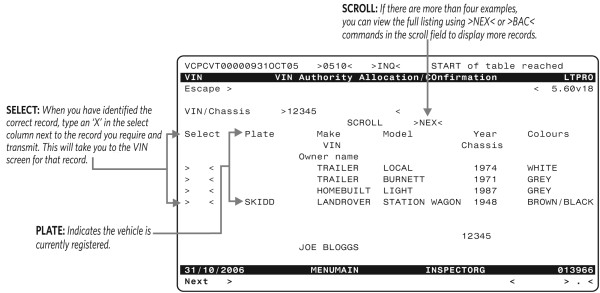
Page amended 10 April 2025 (see amendment details).
2 Vehicle attributes
2-1 Recording vehicle attributes
1 Requirement to capture vehicle attributes
A number of vehicle attributes are required to be maintained by the LANDATA system.
For new vehicles imported by the manufacturer’s representative, this information is supplied by the manufacturer.
For vehicles processed by entry certifiers, the required attributes must be captured as part of the VIN allocation process. Before a VIN can be assigned to a vehicle, details about the vehicle must be recorded and captured in LANDATA. A standard worksheet is used to record the required attributes. The entry certifier must examine the vehicle and record the details on this worksheet before entering the vehicle details into LANDATA. Details must not be recorded or entered prior to the inspection. This worksheet is an important document, as it also serves as an audit trail of the vehicles processed.
2 Mandatory and optional attributes
Vehicle attributes can be classified as mandatory, optional or not applicable depending on the type of vehicle.
Table 2-2-1 details which vehicle attributes are mandatory, optional or not applicable for each vehicle type.
All mandatory vehicle attributes must be recorded on the vehicle attribute worksheet before proceeding, with the exception of: test cycle, fuel consumption values, CO2 values and battery information where it is provided on the fuel consumption statement.
Table 2-2-1. Vehicle attribute requirements by vehicle type
|
Key |
|
|---|---|
|
M |
Mandatory |
|
O |
Optional |
|
N |
Not applicable |
|
1 |
Mandatory for used imports |
|
2 |
Mandatory for re-registrations |
|
3 |
Mandatory for used imports when previous country of registration is Japan |
|
4 |
Mandatory before an MR2A can be issued, but not required for VIN assignment |
|
5 |
Mandatory for used imports when vehicle year is after 1989 and engine type is 1 or 2 |
|
6 |
Mandatory for used imports when vehicle year is after 1999, and engine type is 1 or 2 |
| 7 | Mandatory if air conditioner fitted is Y |
| 8 | Mandatory for classes MA, MB, MC, MD1, MD2, and NA. Optional for other powered vehicles |
| 9 | Optional if test cycle is provided, cannot be entered in any other case |
| 10 | Mandatory for vehicles with powered by petrol, diesel, LPG or CNG. (Fuel types: 1, 2, 3, 4, 7, 8, 9, 10, 11, 12, 13 and 14. See 11-2 Exhaust emissions Summary of legislation for more detail). |
| 11 | Optional for Fuel Types 05, 11, 12, 13, 14, 17 and 18. Cannot be entered for any other fuel types |
| 12 | Mandatory for vehicles with a GVM of 3500kg or less, before the Compliance Ind can be set to Yes |
|
Attributes |
Vehicle type |
||||||||||||
|---|---|---|---|---|---|---|---|---|---|---|---|---|---|
|
01 |
02 |
03 |
04 |
05 |
06 |
07 |
08 |
09 |
10 |
11 |
12 |
13 |
|
|
Vehicle type |
M |
M |
M |
M |
M |
M |
M |
M |
M |
M |
M |
M |
M |
|
Registration indicator |
M |
M |
M |
M |
M |
M |
M |
M |
M |
M |
M |
M |
M |
|
Border check date |
1 |
1 |
1 |
1 |
1 |
1 |
1 |
1 |
1 |
1 |
1 |
1 |
1 |
|
Date of 1st NZ reg |
2 |
2 |
2 |
2 |
2 |
2 |
2 |
2 |
2 |
2 |
2 |
2 |
2 |
|
Engine number |
M |
N |
O |
O |
N |
M |
M |
M |
M |
M |
M |
O |
M |
|
Country of previous reg |
1 |
1 |
1 |
1 |
1 |
1 |
1 |
1 |
1 |
1 |
1 |
1 |
1 |
|
Date of 1st reg |
1 |
1 |
1 |
1 |
1 |
1 |
1 |
1 |
1 |
1 |
1 |
1 |
1 |
|
2 |
2 |
2 |
2 |
2 |
2 |
2 |
2 |
2 |
2 |
2 |
2 |
2 |
|
|
No. of seats |
N |
N |
N |
N |
N |
N |
M |
M |
M |
M |
N |
N |
M |
|
Colour – basic |
M |
M |
M |
M |
M |
M |
M |
M |
M |
M |
M |
M |
M |
|
Colour – secondary |
O |
O |
O |
O |
O |
O |
O |
O |
O |
O |
O |
O |
O |
|
Make |
M |
M |
M |
M |
M |
M |
M |
M |
M |
M |
M |
M |
M |
|
Model |
M |
M |
M |
M |
M |
M |
M |
M |
M |
M |
M |
M |
M |
|
Submodel |
O |
O |
O |
O |
O |
O |
O |
O |
O |
O |
O |
O |
O |
|
Industry model code |
3 |
3 |
3 |
3 |
3 |
3 |
3 |
3 |
3 |
3 |
3 |
3 |
3 |
|
Variant |
3 |
3 |
3 |
3 |
3 |
3 |
3 |
3 |
3 |
3 |
3 |
3 |
3 |
|
Vehicle year |
M |
M |
M |
M |
M |
M |
M |
M |
M |
M |
M |
M |
M |
|
Body type |
N |
M |
N |
N |
N |
N |
M |
M |
M |
N |
N |
N |
N |
|
Imported LHD |
M |
M |
M |
M |
M |
M |
M |
M |
M |
M |
M |
M |
M |
|
GVM |
O |
4 |
O |
O |
O |
O |
4 |
4 |
4 |
4 |
O |
O |
4 |
|
CC rating |
M |
N |
M |
M |
N |
M |
M |
M |
M |
M |
M |
M |
M |
|
Engine type |
M |
N |
M |
M |
N |
M |
M |
M |
M |
M |
M |
M |
M |
|
Alternative fuel |
O |
N |
O |
O |
N |
O |
O |
O |
O |
O |
O |
O |
O |
|
Assembly type |
M |
M |
M |
M |
M |
M |
M |
M |
M |
M |
M |
M |
M |
|
Odometer reading |
M |
N |
N |
N |
N |
N |
M |
M |
M |
M |
M |
M |
M |
|
Odometer unit |
M |
N |
N |
N |
N |
N |
M |
M |
M |
M |
M |
M |
M |
|
Class |
N |
N |
O |
O |
N |
O |
O |
O |
O |
O |
N |
N |
O |
|
Number of axles |
N |
M |
N |
N |
N |
N |
N |
M |
M |
M |
N |
N |
M |
|
Country of origin |
M |
M |
M |
M |
M |
M |
M |
M |
M |
M |
M |
M |
M |
|
Test regime |
|||||||||||||
|
FC urban |
|||||||||||||
|
FC extra urban |
|||||||||||||
|
FC combined |
|||||||||||||
|
Test regime |
N |
N |
N |
N |
N |
N |
10 |
10 |
10 |
10 |
N |
N |
10 |
|
Test cycle |
O |
N |
O |
O |
N |
O |
8 |
8 |
8 |
8 |
O |
O |
8 |
|
FC urban |
9 |
N |
9 |
9 |
N |
9 |
9 |
9 |
9 |
9 |
9 |
9 |
9 |
|
FC ext. urban |
9 |
N |
9 |
9 |
N |
9 |
9 |
9 |
9 |
9 |
9 |
9 |
9 |
|
FC low |
9 |
N |
9 |
9 |
N |
9 |
9 |
9 |
9 |
9 |
9 |
9 |
9 |
|
FC medium |
9 |
N |
9 |
9 |
N |
9 |
9 |
9 |
9 |
9 |
9 |
9 |
9 |
|
FC high |
9 |
N |
9 |
9 |
N |
9 |
9 |
9 |
9 |
9 |
9 |
9 |
9 |
|
FC extra-high |
9 |
N |
9 |
9 |
N |
9 |
9 |
9 |
9 |
9 |
9 |
9 |
9 |
|
FC combined |
9 |
N |
9 |
9 |
N |
9 |
9 |
9 |
9 |
9 |
9 |
9 |
9 |
|
CO2 combined CO2 3PWLTP |
9 |
N |
9 |
9 |
N |
9 |
9 |
9 |
9 |
9 |
9 |
9 |
9 |
|
CO2 low |
9 |
N |
9 |
9 |
N |
9 |
9 |
9 |
9 |
9 |
9 |
9 |
9 |
|
CO2 medium |
9 |
N |
9 |
9 |
N |
9 |
9 |
9 |
9 |
9 |
9 |
9 |
9 |
|
CO2 high |
9 |
N |
9 |
9 |
N |
9 |
9 |
9 |
9 |
9 |
9 |
9 |
9 |
|
CO2 extra-high |
9 |
N |
9 |
9 |
N |
9 |
9 |
9 |
9 |
9 |
9 |
9 |
9 |
|
CO2 combined CO2 3PWLTP |
9 |
N |
9 |
9 |
N |
9 |
9 |
9 |
9 |
9 |
9 |
9 |
9 |
|
Battery range |
11 |
N |
11 |
11 |
N |
11 |
11 |
11 |
11 |
11 |
11 |
11 |
11 |
|
Battery efficiency |
11 |
N |
11 |
11 |
N |
11 |
11 |
11 |
11 |
11 |
11 |
11 |
11 |
|
A/C fitted |
M |
M |
M |
M |
M |
M |
M |
M |
M |
M |
M |
M |
M |
|
Gas type |
7 |
7 |
7 |
7 |
7 |
7 |
7 |
7 |
7 |
7 |
7 |
7 |
7 |
|
FIS |
M |
M |
M |
M |
M |
M |
M |
M |
M |
M |
M |
M |
M |
|
Special permits |
N |
N |
N |
O |
N |
O |
O |
O |
O |
O |
N |
N |
O |
|
Tare weight |
O |
O |
O |
O |
O |
O |
M |
M |
M |
M |
O |
O |
M |
| Reference | M | M | M | >M | M | M | M | M | M | M | M | M | M |
| Compliance Ind | 4 | 4 | 4 | 4 | 4 | 4 | 4 | 4 | 4 | 4 | 4 | 4 | 4 |
| CO2 Acct ID | N | N | N | N | N | N | 12 | 12 | 12 | N | N | 12 | 12 |
Page amended 30 April 2024 (see amendment details).
2-2 Vehicle attributes definitions
1 Vehicle type
Each vehicle type defined for the LANDATA system is represented by a two-digit code that is assigned to the vehicle. Table 2-2-1 describes these vehicle types.
2 Registration indicator
Each registration indicator is represented by code. Table 2-2-2 describes valid registration indicators.
3 Border check date
All used vehicles imported into New Zealand on or after 1 March 1999 must undergo a preliminary border check. This information is then electronically downloaded to LANDATA.
Once the information is downloaded, the date the border check was undertaken by MAF displays in the ‘border check date’ field.
If an exemption from border check requirements is granted, the Lead Specialist, Border Checks, Data Integrity will enter a border check record against the vehicle with a note stating that an exemption has been granted.
4 Date of first New Zealand registration
This is required for vehicles being re-registered only.
It is the date the vehicle was registered for the first time in New Zealand. The ‘VIN allocation’ screen will display this date if it is available.
This information may be changed if there is supporting documentation for an earlier registration in New Zealand. If the date is not displayed, it must be entered based on documentation provided by the vehicle owner.
5 Engine number
If a vehicle has an engine, a complete and correct engine number must be recorded in this field. Where a manufacturer’s engine prefix and serial number is used, this must also be recorded.
If >0<, >OO<, >UNK< or >UNKNOWN< are entered in this field, an error message will appear. The codes to be used when an engine number is not available are set out in Table 2-2-3.
6 Country of previous registration
This is required for used imported vehicles only, and including vehicles that are used unregistered. This field indicates the country that the vehicle was previously registered in. Countries are represented by a three-digit code. Table 2-2-4 lists the available codes representing each country.
7 First registration date (1st reg date)
This is the first date the vehicle was registered in any country. The information may be entered using any of the formats described in Table 2-2-5.
- If registration history is not available for vehicles from Australia the month and year of compliance on the ADR plate or the build date on the RAV public seach must be used as the first registration date.
8 Number of seats
This is the number of seats in the vehicle, including the driver’s seating position.
- If a vehicle owner presents a vehicle converted to a motorhome, completed before 1 October 2003, the entry certifier must request proof, and record details of this evidence in the vehicle notes to assist with future enquiries. See Technical bulletin 24 for information about recording the number of seats in self-propelled motorhomes.
9 Colour
The vehicle colour recorded on LANDATA must be on the defined list of colours (detailed in Table 2-2-6).
There are two types of vehicle colour that may be recorded: basic and secondary.
9.1 Colour – Basic
This is the main colour of the vehicle (refer to Table 2-2-6 for acceptable colours).
9.2 Colour – Secondary
If the vehicle has two colours, the secondary colour is entered in this field (refer to Table 2-2-6 for acceptable colours).
10 Make, model and sub-model
The LANDATA database has a list of vehicle makes and models. When vehicle make and model are entered on the ‘VIN allocation’ screen, they are validated against this list. Sub-model is free text and is not validated. Valid makes and models can be viewed in the MODEL screen. Use >NEX<, >BAC< and >INQ< in the scroll fields to navigate through the list of makes and models. For more information using the screen refer to the Introduction Table 2 for LANDATA navigation commands and the LANDATA Agents’ manual Chapter 8, page 8-B-18 for using the model screen.
To keep the number of models at a manageable level, a high level of definition is used for the model. For example:
- Make: Mitsubishi
- Model: V3000
- Sub-model: Super Saloon.
Adding a make to LANDATA
Email requests to add makes to frr@nzta.govt.nz. Please include the make, the number of vehicles they expect manufacturer or import year, the contact details of the manufacturer or importer and the model(s). Adding makes does take some time due to their impact on other systems, please allow some time for these to be added.
Make on LANDATA for one-off vehicles
In some cases, generally individual vehicles adding a make to LANDATA may not be appropriate. In such cases, the relevant default make (see table below) should be used. The actual make and model should be keyed into the model and sub-model fields.
Adding models to LANDATA
Notify the contact centre via phone, fax or email. Well-known or self-evident examples of models can be entered quite quickly, but occasionally the contact centre will make some checks – so if the vehicle is obscure and there is available documentation, please include this to speed up the process.
Default makes for low volume vehicles
|
Code |
Restricted to |
|---|---|
|
AG.MACH. |
Exclusively designed and used on a road for agricultural operations |
|
CUSTOMBUILT |
N/A |
|
FACTORY(space)Built |
N/A |
|
HOMEBUILT |
N/A |
| LVV | Scratch-built vehicles certified by LVVTA. Model must be either CUSTOM or REPLICA Note: The default make of LVVTA still exists in LANDATA but should no longer be used. |
|
MOBILE MACHINE |
N/A |
|
MOPED |
N/A |
|
MOTORCYCLE |
N/A |
|
NON-HIGHWAY |
Maximum speed not exceeding 30km/h |
|
OVL |
Vehicles entitled to an Overseas Visitors Licence and registered on an MR2C form |
|
TRACTOR |
Designed principally for traction at speeds not exceeding 50km/h |
|
TRAILER |
Without motive power and capable of being drawn or propelled by a motor vehicle from which it is readily detachable |
|
TRIKE |
Class LE1 or LE2 |
|
VETERAN |
Pre-1919 date of manufacture or first registration |
|
VINTAGE |
1 January 1919 to 13 December 1931 date of manufacture or first registration |
Determining a vehicle’s make, model and sub-model
Maker, in relation to a vehicle, means the name given for market identification purposes to a group or groups of vehicles by a company or organisation that owns that name.
The make, model and sub-model must be that originally given by the manufacturer to the vehicle and must not be changed.
Examples:
1. A Honda Crossroad re-badged as a Land Rover Discovery cannot be changed from Honda Crossroad.
2. A Holden Commodore Berlina that is modified to HSV specifications cannot be changed from Holden Commodore Berlina, nor can HSV be added.
Used imports and re-registrations
The make, model and sub-model from the de-registration or previous registration documents must be recorded. Reference material 13 provides translation information for some common Japanese makes.
New vehicles
The make, model and sub-model from the manufacturers’ documentation must be recorded. Most New Zealand new light vehicles certified since 1996 will have a model code recorded and the description in these model codes must be used. The contact centre can provide model code data if required for these vehicles.
Scratch-built light vehicles
The make of a vehicle that donated parts cannot be used, except for replicas. For replicas, the make of the vehicle being copied must not be recorded in the make field – it may be used in the model or sub-model field for replicas if preceded by the word ‘REPLICA’.
Some low volume vehicle manufacturers have their make recognised in LANDATA (eg T-CAR, FRASER, ALMAC). If in LANDATA use the manufacturers make not LVV.
Examples:
1. Make: >LVV< Model: >REPLICA< Sub-model >MG<
2. Make: >LVV< Model: >CUSTOM< Sub-model >TRIKE<
Do not enter a year in the model or sub-model field.
Some used import scratch-built vehicles will have registration documents that use the year, make and model of the vehicle they are replicating, for example, recently constructed hotrods built in the US are often registered as 1930s Fords. When this occurs, use the New Zealand scratch-built requirements, not the year make and model shown on the overseas paperwork.
Scratch-built heavy vehicles
The name of the chassis manufacturer must be recorded.
11 Industry model code
This field contains a 20-character alphanumeric code that must be recorded in the VIN screen for all used vehicles where the previous country of registration is Japan.
If no industry model code is available, record ‘NONE’ in this field.
For all other vehicles, the industry model code must be recorded if it is available.
12 Variant
This field contains a four-character numeric code that describes the characteristics of the vehicle. It must be recorded for all used vehicles where the previous country of registration is Japan.
If the variant is not available on the de-registration or export certificate, enter the code ‘9999’ in the variant field.
13 Vehicle year
This is a mandatory field that must record the year of first registration anywhere.
- If registration history is not available for vehicles from Australia the month and year of compliance on the ADR plate must be used as the vehicle year.
13.1 Used vehicles being registered or re-registered in New Zealand
Enter the year of first registration.
Where the year of first registration is genuinely unavailable, the year of manufacture or the model year is to be entered. Examples of this are:
- vehicles previously registered in the US
- vintage vehicles where registration documents are not available
- vehicles previously registered in more than one country.
In such cases, the VIN decode is an acceptable method of determining the year of manufacture or model year.
13.2 Used unregistered vehicles
For vehicles that have been used unregistered , demonstrators), ask the owner when they plan to register the vehicle and enter this year in the vehicle year field; the previous country field should be entered as UUR.
13.3 New and scratch-built vehicles
Enter the model year or year of manufacture. When the vehicle is registered, it will be over-written with the registration year. The overwritten data will be stored but can only be accessed by NZTA.
- If a vehicle meets the definition of scratchbuilt, but the registration documents describe the vehicle as production or modified production, complete the fields using the rules that apply for a scratchbuilt vehicle – not what is shown on the registration documents.
14 Vehicle and body types
Table 2-2-8 outlines all valid vehicle and body type combinations.
14.1 Vehicle type
This field contains a two-character numeric code that describes the vehicle type.
14.2 Body type
This field contains a two-character alpha code that describes the body type.
15 Imported left-hand drive
This field must be set to >Y< (Yes) or >N< (No) to indicate whether or not the vehicle is a left-hand drive vehicle (at the time of inspection).
16 Gross vehicle mass (GVM)
In kilograms. Also called gross laden weight (GLW).
GVM is mandatory for:
- All MA, MB, MC, MD1, MD2, and NA class vehicles with petrol, diesel, LPG, or CNG engines and manufactured on or after 1 January 2000, except for special interest vehicles, motorsport vehicles or immigrants' vehicles.
- All heavy vehicles.
For heavy vehicles as rated by the vehicle manufacturer, modifier, NZTA or an NZTA-appointed certifier.
For used light vehicles, a figure from the previous registration or de-registration documents, or from the vehicle manufacturer’s data, may be used. For light vehicles from Australia GVM figures from RVCS may be used and for class MA vehicles the GVM figures found in Redbook may be used (Redbook figures may only be used for class MA vehicles as the GVM may not be available in RVCS).
Note: If no GVM is recorded for a vehicle imported from Australia, but previously registered in Japan, please use the following formula:
- 55kg (weight of passenger) x number passengers + unladen weight (tare) = GVM
For new light vehicles the manufacturer's data may be used.
For vehicles that have undergone a multi-stage manufacturing process, the GVM to be recorded is the GVM assigned by the final stage manufacturer.
For used light vehicles where previous registration documents indicate the GVM may exceed 3,500kg, an official New Zealand chassis rating must be obtained (refer to Reference material 37 for chassis rating request forms).
17 CC rating
This field indicates the vehicle’s engine capacity in cubic centimeters (cc). If the vehicle is an electric hybrid record the CC rating of the non-electric on-board motor.
This field is not enterable for engine types Electric (code 05), Electric hydrogen fuel cell (code 15) and Electric other fuel cell (code 16) and will display as blank or zero.
Where documents do not fully record the cc rating, such as Japanese Export Certificates that show the engine capacity in litres to 2 decimal places, where available use the more accurate information from the likes of the manufacturers plate, or the manufacturers label or the vehicles fuel consumption statement.
18 Engine type
This field contains a two-character numeric code that describes the vehicle’s engine type. Table 2-2-9 outlines all valid engine type codes.
19 Alternative fuel
This field contains a two-character code that describes what powers the vehicle’s alternative fuel system, if it has one fitted. Do not enter an alternative fuel where electricity or hydrogen in used.
- The code >03< must be entered if the alternative fuel system is powered by CNG.
- The code >04< must be entered if the alternative fuel system is powered by LPG.
20 Assembly type
This field, along with the country of origin, defines where the vehicle was manufactured and assembled.
Table 2-2-10 outlines valid codes used to describe assembly type.
21 Odometer reading
This field contains the odometer reading at the time of the inspection, to the nearest whole number. It does not include a decimal point or fraction of a mile or kilometre.
This field may be blank only if >N< is recorded in the odometer units field.
If the entry certifier finds an odometer reading already recorded in LANDATA that is believed to be incorrect, the entry certifier must fax a copy of the vehicle attributes checksheet and any other official inspection documents (shipping and auction/sales documents are not appropriate) showing the odometer reading in the previous country of registration to: NZ Transport Agency, Permitting Assessments, Border Checks, email BorderChecks@nzta.govt.nz, or fax (06) 953 6267 .
NZTA will compare the reading with records. If this shows that the reading has been incorrectly keyed, NZTA will amend the reading. If the border inspection records do not show a keying error, but the paperwork provided proves an error has occurred, NZTA will arrange for the border check odometer reading to be inactivated.
If the entry certifier suspects the odometer has been tampered with (eg the odometer reading at the time of entry inspection is less than that recorded during the border check), the entry certifier must:
-
note that the odometer reading is suspect on the attributes checksheet and on the vehicle record in LANDATA
-
provide the vehicle owner with written notice of the discrepancy
-
forward the vehicle details to the New Zealand Police. A form is provided in Reference material 34
-
record the details of the Police contact (station and officer) the file was sent to.
22 Odometer units
This field contains an alpha code that describes the unit of measurement that the vehicle’s odometer uses. Valid odometer unit codes are outlined in Table 2-2-11.
23 Vehicle class
This field contains a code which describes the vehicle class, as defined in the VIRM: Entry certification, Introduction Vehicle equipment standards classifications.
- refer to Technical bulletin 3 for guidance when determining the vehicle class for a modified vehicle.
24 Number of axles
This field describes the number of axles the vehicle has.
25 Country of origin
This field describes the country where the vehicle (or kit) was principally manufactured. For example, the country of origin recorded for a vehicle assembled in New Zealand from a Japanese CKD kit should be Japan. Refer to Table 2-2-4 for LANDATA codes representing countries.
26 Test regime
The vehicle exhaust emissions standard to which the vehicle has been tested. See Technical bulletin 28: Exhaust emissions standard compliance and 11-2 Exhaust emissions for further information on determining exhaust emissions compliance.
Codes to be used
- For vehicles imported from Japan where the industry model code has a 1 to 3 character pre-fix the test regime will be the letter ‘J’, followed by the 1–3 character prefix of the industry model code recorded on the de-registration or export certificate.
- For vehicles imported from countries other than Japan or from Japan but without the prefix on the industry model code the appropriate test regime code must be used for the exhaust emissions standard recorded on the proof of standards compliance documentation. See Table 2-2-13 for codes to be used.
Where a class MA, MB, MC, MD1, MD2 and NA vehicle must meet an emissions standard, the test regime from Fuelsaver must be always used. Fuelsaver will auto populate the test regime in the VCASS screen. Make sure that the test regime from the completed Fuel consumption statement is entered in the VCASS screen.
If the test regime code is not recognised by LANDATA (error 60803 Emission Standard (Test Regime) is not valid), email vehicleemissions@nzta.govt.nz and include a copy of the documentation for emissions.
27 Fuel consumption information and vehicle efficiency and emission data
Fuel consumption and CO2 is mandatory for all MA, MB, MC, MD1, MD2, and NA class vehicles with an engine type of 1, 2, 3, 4, 7, 8, 9, 10, 11, 12, 13, or 14 and a GVM of not more than 3,500kg, except for re-registrations, special interest vehicles, motorsport vehicles, scratchbuilt vehicles or any vehicle manufactured 40 years or more before the date of first New Zealand entry certification.
Battery range and efficiency is mandatory for all MA, MB, MC, MD1, MD2, and NA class vehicles with an engine type of 5, 11, 12, 13, or 14, except for re-registrations, special interest vehicles, motorsport vehicles, scratchbuilt vehicles or any vehicle manufactured 40 years or more before the date of first New Zealand entry certification.
All fuel consumption, CO2 and battery values come from the Fuelsaver website onto the VCAAS screen. This screen is accessed using the View emissions and FC button on the VIN screen.
Check fuel consumption statements
Valid fuel consumption statements will be marked 'PUBLISHED'. Only published statements can be accepted. These must be checked against the vehicle and its paperwork.
The following must be checked: VIN, chassis, previous country, make, model and submodel, industrial model code (Note 1) and variant, CC rating, engine type, test regime, tare (Note 2), class, registration indicator (N/U/R/S) and any documents attached to the statement, such as Statements of Compliance or Certificate of Conformity (Note 3).
If there is mismatch between certification paperwork/data and the data on the published statement (except for Engine type if engine is a 'mild hybrid' - see Table 2-2-9), the vehicle cannot be certified, the correct information must be entered into the Fuelsaver system and a new Statement obtained (and VCAAS updated). Refer to the Fuelsaver website on creating, updating or obtaining statements. The VIN screen must be updated for any errors.
If errors are found after the Compliance Indicator flag is set to Yes in any of the fields listed above to be checked, you will not be able to update the Fuelsaver system. Updates to LANDATA fields alone will not always correct the Clean Car Standard credits/charges for the CO2 Account ID holder. Please email these corrections to fuelconsumption@nzta.govt.nz and include documentation for the change (such as a Japanese Export Certificate).
- If a fuel consumption statement was issued on or before 30 January 2022 the VCAAS screen will be blank. Go to Fuelsaver and use the reprint/publish function. This will send the data to VCAAS.
Fuel consumption attributes definitions/descriptions
- Test cycle – is the test cycle the vehicle was tested on for Fuel Consumption and CO2 Emissions. The correct value should be driven from the Fuelsaver system. Otherwise selectable value descriptions are in the table below.
|
Test cycle (LANDATA codes) |
Description |
|---|---|
|
NEDC |
The test cycle historically used in Europe and for most ADR certified vehicles. Available data should include FC Urban, FC Extra-Urban, FC Combined and CO2 Combined. |
|
4PWLTP |
The World Harmonized Light Vehicle Test Procedure with all 4 phases tested. Modern (from 2018) vehicles sourced from Europe and complied to European standards should be tested on this cycle. Available data should include: FC Low, FC Medium, FC High, FC Extra-high, CO2 Combined, Available data may include (and must be provided if available): CO2 Low, CO2 medium, CO2 High, CO2 Extra-high. |
|
3PWLTP |
The World Harmonized Light Vehicle Test Procedure with only 3 phases tested. Modern (from 2018) vehicles sourced from Japan and complied to Japanese standards should be tested on this cycle. Available data should include FC Combined and CO2 Combined. Other data may be available from some sources but is unlikely to be provided in most cases. |
|
J1015 |
A historic Japanese test cycle. Will cover vehicles from early 2000s through to early 2010s with a few models extending past this period. Available data should include FC Combined and CO2 Combined. |
|
JC08 |
A historic Japanese test cycle. This test cycle should cover vehicles from the late 2000s through to the takeover of 3pWLTP in Japan. Available data should include FC Combined and CO2 Combined. |
|
CAFE |
The combination of test cycles used in America under the EPA test cycles for Corporate Average Fuel Economy (CAFE). Available data should include, FC Urban, FC Highway, FC Combined and CO2 Combined. |
|
UNKNWN or COMPTD |
Test not known for a CO2 emitting vehicle. It is most likely only an estimated 3PWLTP CO2 figure will be driven from Fuelsaver. |
|
ZEROCO |
Test Cycle not Known for an electric vehicle or other non-CO2-emitting vehicle. CO2 and FC values for these vehicles are 0. |
- FC Urban is the fuel consumption (in L/100km) for the Urban phase of the NEDC test cycle or the City Phase of the CAFE test cycle. This will be auto populated in LANDATA by the Fuelsaver system.
- FC Ext. urban is the fuel consumption (in L/100km) for the Extra-Urban phase of the NEDC test cycle or the Highway phase of the CAFe test cycle. This will be auto populated in LANDATA by the Fuelsaver system.
- FC Low is the fuel consumption information (in L/100km) for the Low phase of WLTP. This will be auto populated in Landata by the Fuelsaver system.
- FC Medium is the fuel consumption information (in L/100km) for the Medium phase of WLTP. This will be auto populated in Landata by the Fuelsaver system.
- FC High is the fuel consumption information (in L/100km) for the high phase of WLTP. This will be auto populated in Landata by the Fuelsaver system.
- FC Extra-high is the fuel consumption information (in L/100km) for the extra-high phase of WLTP (Note this is only available for 4pWLTP tested vehicles). This will be auto populated in LANDATA by the Fuelsaver system.
- FC Combined is the combined fuel consumption calculated from the individual phases of the WLTP test cycle.
- CO2 Low is the CO2 emissions (in g/km) for the low phase of WLTP. This will be auto populated in LANDATA by the Fuelsaver system if data is available.
- CO2 Medium is the CO2 emissions (in g/km) for the medium phase of WLTP. This will be auto populated in LANDATA by the Fuelsaver system if data is available
- CO2 High is the CO2 emissions (in g/km) for the high phase of WLTP. This will be auto populated in LANDATA by the Fuelsaver system if data is available
- CO2 Extra-high is the CO2 emissions (in g/km) for the extra-high phase of WLTP. This will be auto populated in Landata by the Fuelsaver system if data is available
- CO2 Combined is the combined CO2 from the emissions test cycle. CO2 combined is required for all test cycles and will be auto populated from Fuelsaver.
- CO2 3PWLTP is the calculated CO2 value that will be used for the clean car system. It is based on the CO2 information below and will be auto populated by the Fuelsaver system.
- Battery range is the manufacturer's stated electric only range based on one of the test cycles above. Battery range should be provided if available and may be auto populated from Fuelsaver or manually entered in LANDATA. Battery range may only be entered for vehicles external electric charging.
- Battery efficiency the manufacturer's stated vehicle efficiency in Watt hours per km (Wh/km) based on one of the test cycles above. Battery efficiency should be provided if available and may be auto populated from Fuelsaver or manually entered in LANDATA. Battery efficiency may only be entered for vehicles external electric charging.
28 A/C fitted
This field indicates if an air conditioning unit is fitted to a vehicle. If a vehicle has an air conditioning unit fitted >Y< must be entered. If a vehicle has no air conditioning unit fitted enter >N<.
29 Gas type
This field contains a three character code which describes the gas type used in the air conditioning unit. Refer to Table 2-2-12 for LANDATA codes for gas types.
- LANDATA will use this information to determine if, on first registration in New Zealand, a Synthetic Greenhouse Gas (SGG) levy will be collected. It will also be used to track changes in the use of SGGs in the NZ vehicle fleet.
- If the vehicle has an air conditioning unit fitted the type of gas used must be recorded, inspect the vehicle to obtain the type of gas used.
- “unknown" can only be used where the unit is not labelled with the gas type, or for re-registration (see Note 4).
30 Frontal impact standards
This field indicates whether or not the vehicle has been manufactured to a recognised frontal impact standard. If a vehicle has been manufactured to an approved frontal impact standard, >Y< must be recorded in this field. If the vehicle was not manufactured to an approved frontal impact standard, or is exempt from frontal impact standard requirements, >N< must be recorded in this field.
See Vehicle structure 3-2 Determining frontal impact compliance for information on determining whether a vehicle complies with an approved frontal impact standard.
31 Special permit codes
There are several special permit codes that may be recorded against a vehicle. If the vehicle is a left-hand drive vehicle, the appropriate code must be recorded in the first ‘special permit code’ field (see Table 5-3-1 for valid special permit codes for left-hand drive vehicles). Other special permit codes include:
- IM – Immigrants Vehicle
- MS – Motorsport vehicle
- SP – Special interest vehicle
- DV - Disability vehicle as defined in the Land Transport (Clean Vehicle Standard) Regulations 2022.
Disability vehicle means a light vehicle that is used for the transportation of a person with a disability and:
- is modified to enable a person seated in a wheelchair to safely enter and exit the vehicle, and
- is modified to enable the person and the wheelchair to be safely restrained while the vehicle is moving, and
- has been inspected and approved as a disability vehicle by a person appointed under clause 2.2(1)(d) and (e) of the Land Transport Rule: Vehicle Standards Compliance 2002
Note: a different definition of disability vehicle is used for determining vehicle exhaust emissions standards compliance. See to Definitions and abbreviations for this definition.
A disability vehicle permit may be entered into the system by either the Low Volume Vehicle Technical Association at the time of modification certification, or by the entry certifier.
The DV code must be keyed before or at the time the vehicle is entry certified - that is, the compliance indicator is set to Yes.
If a disability vehicle does not require LVV certification or has overseas certification (as acceptable in Technical bulletin 41) please record in Notes: 'disability vehicle, factory fitted'.
If a vehicle does not meet the disability vehicle requirements and the customer wishes to query this, they should email fuelconsumption@nzta.govt.nz and include photos of the disability modification and evidence of the disability (such as ACC funding documents).
32 Tare weight
In kilograms. Also known as unladen weight.
This is mandatory for all MA, MB, MC, NA, NB, NC, MD1, MD2, MD3, MD4, and ME Class vehicles except those entered into LANDATA prior to 9/1/2005.
For all vehicles requiring fuel consumption, efficiency and emissions data
These are all new and used class MA, MB, MC, MD1, MD2, and NA class vehicles with a GVM of not more than 3,500kg, except for re-registrations, special interest vehicles, motorsport vehicles, scratchbuilt vehicles or any vehicle manufactured 40 years or more before the date of first New Zealand entry certification.
| Country of origin | Source of tare weight |
|---|---|
| UK or EU | Claimed Mass in Running Order (MIRO) on the documentation |
| Australia | Claimed tare on the documentation |
| USA | Claimed tare on the documentation, converted to kg if needed |
| Japan | Claimed tare on the documentation (on an MLIT export certificate this is the ‘weight’ field) |
| All other countries, or the countries above where documentation doesn't contain the tare weight |
The tare must be obtained from an appropriately calibrated weighbridge. The vehicle must be weighed with:
|
Note: The fuel consumption statement contains 2 tare weights. The VEED tare is a calculation value determined by schedule 3 of the Vehicle Efficiency and Emissions Data Rule and is recorded on the VCAAS screen. It can only be updated using Fuelsaver.
For all other vehicles
Tare refers to the weight of the vehicle together with the fuel in the fuel system (if any) and the equipment and accessories on it that are necessary for its operation for the purpose for which it was designed.
If tare weight is not recorded on the vehicle documentation, this must be obtained from a weighbridge, or alternative documents such as: the vehicle handbook/manual, the manufacturer's label on the vehicle, from the manufacturer's website, from the vehicle manufacturer or manufacturer's representative or from Government regulatory websites.
33 Certifier ID
This field contains the identification code of the approved vehicle inspector certifying that the vehicle complies with relevant NZTA acts, regulations and rules for entry certification. The certifier ID must only be entered when the vehicle passes entry-level certification and the Compliance Ind flag is set to Yes.
34 Synthetic Greenhouse Gas (SGG) levy on motor vehicles
A Synthetic Greenhouse Gas (SGG) levy is collected when a new or used motor vehicle is first registered in New Zealand. The SGG levy does not apply to vehicles being re-registered (Note 4). SGGs are refrigerants used in air-conditioning systems of motor vehicles. They have very high global warming potentials and impact on climate change.
By placing an added cost on SGGs, the government aims to encourage industry to use alternative low global-warming refrigerants, which don’t impact on climate change.
The process requires vehicle information to be captured and recorded in the NZTA LANDATA system during entry certification. The data recorded confirms whether a vehicle has an air-conditioning unit and if so, what refrigerant the unit is gassed with.
LANDATA will use this information to automatically charge the levy with the registration fee when the vehicle is registered. This is similar to how an ACC levy is collected with a motor vehicle licence.
Step One:
Inspect the vehicle to see if it has an air conditioning system fitted to it.
Step two:
If the vehicle has an air conditioning system fitted to it, record on the check sheet the type of refrigerant that is used in the air conditioning system.
Step three:
Record in LANDATA if the vehicle has air conditioning YES/NO and if yes, select from the drop down list the type of refrigerant that is used in the air conditioning system
35 Reference field
Site Authorisation Number where the inspection is being conducted.
36 Compliance Ind
This field indicates that entry certification requirements have been met. It does not include in-service certification requirements.
37 Co2 Acct ID
This field contains the Clean Vehicles Standard Carbon Dioxide Account ID of the importer (as defined in Part 13 of the Land Transport Act 1998).
This is mandatory from 1 December 2022 for class MA, MB, MC, MD1, MD2, and NA vehicles that have a GVM of 3500kg or less (except those excluded below) when the Compliance Ind flag is set to yes. It is preferred that this field is populated using the fuel consumption statement function. The field cannot be changed once the importer has accepted the vehicle in the Clean Car Standard System. The importer will need to change the CO2 account ID in the Clean Car Standard System, this will update the field in LANDATA.
Note: the following vehicles are excluded from the Clean Car Standard and do not need a CO2 account:
- vehicles with a Special Permit code of ‘SP’ (Special interest vehicle), or
- vehicles with a manufactured date of 40 years or more before the date of entry certification, or
- vehicles with a registration type ‘S’ (Low Volume Vehicle - Scratch-built), or
- vehicles with a registration type ‘R’ (re-registrations of vehicles previously registered in NZ. This does not include vehicles recorded on LANDATA as ‘Overseas Visitors Vehicles’, these can be identified by the transaction type of MR2C in TRANLOG and no entry certification recorded), or
- vehicles with a special permit code ‘MS’ (motorsport vehicle), or
- vehicles first certified for entry prior to 1 December 2022, where the vehicle was not registered within 2 years of entry certification and entry certification has lapsed, or
- vehicles with special permit codes of ‘DV’ (disability vehicle). Refer to 31 Special permit codes above.
Note 1
Industry model codes sometimes apply to more than one model name, if this occurs on the statement use the appropriate model.
Note 2
The fuel consumption statement will contain data for tare and VEED tare, check the tare only. VEED tare is a calculated weight required by Schedule 3 of the Vehicle Efficiency and Emissions Rule.
Note 3
An EC Certificate of Conformity (CoC) issued by the vehicle manufacturer for individual passenger cars that have undergone European Commission Whole Vehicle Type Approval (EC WVTA). The CoC is linked to the EC Whole Vehicle Approval Plate – if a vehicle has a CoC, it will also have a Whole Vehicle Approval Plate. A sample CoC is shown in Reference Material 49. The fuel consumption information is recorded in item 46.2 of the CoC.
If both NEDC and WLTP values are listed on the CoC, you must use the WLTP values.
Note 4
When a vehicle (with air conditioning fitted) is presented for re-registration enter into LANDATA:
- Air conditioning – Yes
- Type of gas - Unknown.
Table 2-2-1. LANDATA-defined vehicle types
|
Code |
Type |
Description |
|---|---|---|
|
01 |
Mopeds1 |
A motor vehicle that is a class LA or LB vehicle as detailed in Identifying the vehicle class. |
|
02 |
Trailers and trailer caravans |
A motor vehicle that is: a) without motive power, designed to be drawn behind a motor vehicle b) a class TA, TB (Note 1), TC or TD vehicle as detailed in Identifying the vehicle class. Trailer caravans are also included. |
|
03 |
Tractors1,2 |
A motor vehicle that has a maximum speed of 50km/h and is designed for traction. Tractors are not defined as a vehicle class, but need to be classified separately for registration purposes. |
|
04 |
Agricultural machines1,2 |
A motor vehicle that is a self-propelled machine designed and used exclusively for agricultural purposes (eg cropping machines, hay balers). |
|
05 |
Trailers not designed for normal highway use1 |
A motor vehicle that is: a) a certificate of fitness (CoF) exempt trailer by design, not usage, and b) not capable of being towed at normal highway speeds. |
|
06 |
Mobile machines not designed for normal highway use1 |
A motor vehicle that is a special-purpose vehicle not capable of normal highway speeds (eg grass mowers, weed sprayers). |
|
07 |
Passenger cars and vans |
A motor vehicle that is: a) a class MA, MB, MC or LE vehicle as detailed in Identifying the vehicle class. b) a car or van (including off-road passenger vehicles) with a capacity of up to nine seats4. |
|
08 |
Goods vehicles (vans, utilities, trucks) |
A motor vehicle that is a class NA, NB or NC vehicle, including all goods vehicles, as detailed in Identifying the vehicle class. |
|
09 |
Passenger vehicles (buses) |
A motor vehicle that is: a) a passenger vehicle with a capacity of 10 or more seating positions b) a class MD, MD1, MD2, MD3, MD4 or ME vehicle as detailed in Identifying the vehicle class. |
|
10 |
Self-propelled caravan |
A motor vehicle that is a class NA, NB or NC vehicle as detailed in Identifying the vehicle class. All self-propelled caravans, irrespective of weight, are included. Must be permanently equipped with features intended to make the vehicle suitable as a dwelling place and must include at least one sleeping berth and one table, both of which maybe of design that allows them to be retracted or folded away. |
|
11 |
Motorcycles |
A motor vehicle of class LC, LD or LE as detailed in Identifying the vehicle class, that has two (or three) wheels, including: a) any vehicle with motorcycle controls declared by NZTA to be a motorcycle, and b) a motorcycle with a side car4. |
|
12 |
All-terrain vehicles (ATVs)3 |
A vehicle, with or without motorcycle controls and equipment, that: a) is principally designed for off-road use; and b) has three or more wheels; and c) has an engine capacity exceeding 50 ml; and (d) has a gross vehicle mass of less than 1000 kg. |
|
13 |
Special purpose vehicles2 |
A motor vehicle that is: a) a self-propelled special purpose vehicle capable of normal highway speeds (eg cranes on a truck chassis, mobile dental clinics, x-ray units, truck-mounted top-dressing loaders incapable of carrying other goods, ie it does not have a hopper and a tank for aviation gasoline or other goods – those vehicles are Type 08 Goods vehicles) b) a class NA, NB or NC vehicle as detailed on Identifying the vehicle class. |
| 23 | Agricultural tractors capable of more than 50km/h | A motor vehicle that: a) meets the definition of agricultural tractor in the Land Transport Rule: Vehicle Standards Compliance 2002, and b) is capable of more than 50 km/h. |
1 Not subject to VIN requirements.
2 Does not include ATVs.
3 If used without restriction, an ATV must be classified as a passenger car or goods vehicle and must comply with all the requirements for those classes.
4 Because vehicles are defined by class in vehicle standard regulations and rules but not in other legislation, some class LE1 motor tricycles may be registered as a type 07 ‘motorcar’, and some may be registered as type 11 ‘motorcycle’.
Table 2-2-2. Valid registration indicators
|
Code |
Indicator |
Description |
|||||||||||||||||||||||||||||||||||||||||||||||||||||||||||||||||||||||||||||||||||||||||||||||||||||||||||||||||||||||||||||||||||||||||||||||||||||||||||||||||||||||||||||||||||||||||||||||||||||||||||||||||||||||||||||||||||||||||||||||||||||||||||||||||||||||||||||||||||||||||||||||||||||||||||||||||||||||||||||||||||||||||||||||||||||||||||||||||||||||||||||||||||||||||||||||||||||||||||||||||||||||||||||||||||||||||||||||||||||||||||||||||||||||||||||||||||||||||||||||||||||||||||||||||||||||||||||||||||||||||||||||||||||||||||||||||||||||||||||||||||||||||||||||||||||||||||||||||||||||||||||||||||||||||||||||||||||||||||||||||||||||||||||||||||||||||||||||||||||||||||||||||||||||||||||||||||||||||||||||||||||||||||||||||||||||||||||||||||||||||||||||||||||||||||||||||||||||||||||||||||||||||||||||||||||||||||||||||||||||||||||||||||||||||||||||||||||||||||||||||||||||||||||||||||||||||||||||||||||||||||||||||||||||||||||||||||||||||||||||||||||||||||||||||||||||||||||||||||||
|---|---|---|---|---|---|---|---|---|---|---|---|---|---|---|---|---|---|---|---|---|---|---|---|---|---|---|---|---|---|---|---|---|---|---|---|---|---|---|---|---|---|---|---|---|---|---|---|---|---|---|---|---|---|---|---|---|---|---|---|---|---|---|---|---|---|---|---|---|---|---|---|---|---|---|---|---|---|---|---|---|---|---|---|---|---|---|---|---|---|---|---|---|---|---|---|---|---|---|---|---|---|---|---|---|---|---|---|---|---|---|---|---|---|---|---|---|---|---|---|---|---|---|---|---|---|---|---|---|---|---|---|---|---|---|---|---|---|---|---|---|---|---|---|---|---|---|---|---|---|---|---|---|---|---|---|---|---|---|---|---|---|---|---|---|---|---|---|---|---|---|---|---|---|---|---|---|---|---|---|---|---|---|---|---|---|---|---|---|---|---|---|---|---|---|---|---|---|---|---|---|---|---|---|---|---|---|---|---|---|---|---|---|---|---|---|---|---|---|---|---|---|---|---|---|---|---|---|---|---|---|---|---|---|---|---|---|---|---|---|---|---|---|---|---|---|---|---|---|---|---|---|---|---|---|---|---|---|---|---|---|---|---|---|---|---|---|---|---|---|---|---|---|---|---|---|---|---|---|---|---|---|---|---|---|---|---|---|---|---|---|---|---|---|---|---|---|---|---|---|---|---|---|---|---|---|---|---|---|---|---|---|---|---|---|---|---|---|---|---|---|---|---|---|---|---|---|---|---|---|---|---|---|---|---|---|---|---|---|---|---|---|---|---|---|---|---|---|---|---|---|---|---|---|---|---|---|---|---|---|---|---|---|---|---|---|---|---|---|---|---|---|---|---|---|---|---|---|---|---|---|---|---|---|---|---|---|---|---|---|---|---|---|---|---|---|---|---|---|---|---|---|---|---|---|---|---|---|---|---|---|---|---|---|---|---|---|---|---|---|---|---|---|---|---|---|---|---|---|---|---|---|---|---|---|---|---|---|---|---|---|---|---|---|---|---|---|---|---|---|---|---|---|---|---|---|---|---|---|---|---|---|---|---|---|---|---|---|---|---|---|---|---|---|---|---|---|---|---|---|---|---|---|---|---|---|---|---|---|---|---|---|---|---|---|---|---|---|---|---|---|---|---|---|---|---|---|---|---|---|---|---|---|---|---|---|---|---|---|---|---|---|---|---|---|---|---|---|---|---|---|---|---|---|---|---|---|---|---|---|---|---|---|---|---|---|---|---|---|---|---|---|---|---|---|---|---|---|---|---|---|---|---|---|---|---|---|---|---|---|---|---|---|---|---|---|---|---|---|---|---|---|---|---|---|---|---|---|---|---|---|---|---|---|---|---|---|---|---|---|---|---|---|---|---|---|---|---|---|---|---|---|---|---|---|---|---|---|---|---|---|---|---|---|---|---|---|---|---|---|---|---|---|---|---|---|---|---|---|---|---|---|---|---|---|---|---|---|---|---|---|---|---|---|---|---|---|---|---|---|---|---|---|---|---|---|---|---|---|---|---|---|---|---|---|---|---|---|---|---|---|---|---|---|---|---|---|---|---|---|---|---|---|---|---|---|---|---|---|---|---|---|---|---|---|---|---|---|---|---|---|---|---|---|---|---|---|---|---|---|---|---|---|---|---|---|---|---|---|---|---|---|---|---|---|---|---|---|---|---|---|---|---|---|---|---|---|---|---|---|---|---|---|---|---|---|---|---|---|---|---|---|---|---|---|---|---|---|---|---|---|---|---|---|---|---|---|---|---|---|---|---|---|---|---|---|---|---|---|---|---|---|---|---|---|---|---|---|---|---|---|---|---|---|---|---|---|---|---|---|---|---|---|---|---|---|---|---|---|---|---|---|---|---|---|---|---|---|---|---|---|---|---|---|---|---|---|---|---|---|---|---|---|---|---|---|---|---|---|---|---|---|---|---|---|---|---|---|---|---|---|---|---|---|---|---|---|---|---|---|---|---|---|---|---|---|---|---|---|---|---|---|---|---|---|---|---|---|---|---|---|---|---|---|---|---|---|---|---|---|---|---|---|---|---|---|---|---|---|---|---|---|---|---|---|---|---|---|---|---|---|---|---|---|---|---|---|---|---|---|---|---|---|---|---|---|---|---|---|---|---|---|---|---|---|---|---|---|---|---|---|---|---|---|---|---|---|---|---|---|---|---|---|---|---|---|---|---|---|---|---|---|---|---|---|---|---|---|---|---|---|---|---|---|---|---|---|---|---|---|---|---|---|---|---|---|---|---|---|---|
|
N |
2-3 Amending vehicle attributes or status
The status of a vehicle or the attributes recorded against it may be changed at any time after the vehicle record is created. There are two reasons to amend vehicle details: 1. to correct a data entry error 2. to reflect a modification to the vehicle. When correcting data entry errors, the file must be checked before changes are made and a record of the correct data must be held in the vehicle file. When amending vehicle attributes or status due to vehicle modifications, the vehicle and documentation must be checked to ensure certification requirements are met (Note 1). 1 VIN screenThe system will allow changes to be made at any time before the MR2A is printed. Some managers and staff have a higher level of access and can make changes after the MR2A has been printed. Where those staff members are unavailable, requests to make changes should be emailed to the Permitting Assessments team at frr@nzta.govt.nz or faxed to 06 953 6267. The request must be supported with documentation (eg if a registration date was keyed incorrectly, a copy of the de-registration certificate should be supplied with the request). 1.1 ICORE and ILOAD screen – CoF vehiclesIf the vehicle requires a CoF, changes may also be made on CoF screens, provided the entry certifier has the appropriate CoF authority for the vehicle. Changes to the vehicle type field can only be made by entry-level inspectors. 1.2 IVATT screen – WoF vehiclesIf the vehicle requires a WoF, changes may also be made on WoF screens, provided the entry certifier has the appropriate WoF authority for the vehicle. Changes to the vehicle type field can only be made by entry-level inspectors. 1.3 Documenting changes1. Corrections to data entry errors will be covered by data held in the entry certification file. 2. Changes due to modifications for CoF vehicles should be carried out in accordance with CoF procedures. 3. Changes due to modification for WoF vehicles should be recorded: a) in the IVCERT screen if low volume vehicle (LVV) certification has been issued, or b) in NOTES if the vehicle does not require LVV certification. 2 Removing the border check damage flagA damaged flag may be recorded against a vehicle by a border inspection organisation performing the border check. See Technical bulletin 36 Removing a border damage flag. 2.1 Light vehiclesIf a vehicle is flagged on LANDATA by a border inspection organisation as damaged and the vehicle inspector determines that the damage does not exceed the threshold for requiring repair certification, an application must be made to remove the damage flag. Forms to request the removal of a border damage flag are available in Reference material 17. The vehicle inspector must complete this form and give it to the supervisor authorised to remove damage flags. 2.2 Heavy vehiclesOnce appropriate heavy vehicle specialist certification has been carried out as required, the border damage flag must be removed from a heavy motor vehicle. An entry certifier must complete a ‘Request to remove border damage flag’ form (see Reference material 17) and give it to the supervisor authorised to remove damage flags. Note 1Inspection and certification 1-6-1(2) lists the certification requirements for modified vehicles. 3 VIN assignment3-1 Assigning a VINAll vehicles first registered or re-registered in New Zealand on or after 1 April 1994 must have a vehicle identification number (VIN) assigned and affixed. Under Land Transport Rule: Vehicle Standards Compliance 2002, the VIN must be assigned and affixed as soon as practicable. A VIN must be:
An entry certifier may assign and affix a VIN while documentation is pending, but must make a note of this on the notes screen to ensure that it is subsequently obtained and verified. In cases where a particular entry-level inspector is only carrying out the VIN assignment process, the VIN must be affixed immediately. A vehicle may have an original VIN assigned by the manufacturer, or it may need to have an NZTA ‘7AT’ VIN assigned to it. When a vehicle record is retrieved from the database and the details are displayed on the screen, the entry certifier must check these details to ensure they match the vehicle presented. Scratchbuilt vehicles with used donor parts from high volume production vehicles (eg Ford, Holden, Range Rover) should not be assigned any high volume VIN from the donor parts. 1 Determining VIN requirementsTo determine whether or not the identifier located on the vehicle is a valid VIN, type the identifier into the escape field of the ‘VIN authority allocation/confirmation’ screen and transmit. 1.1 Valid VINIf the identifier entered in the escape field of the ‘VIN authority allocation/confirmation’ screen is a valid VIN, the ‘VIN allocation’ screen will display with message ‘Valid VIN entered’. The identifier will display in the VIN field. The entry certifier must check, correct and complete all vehicle details required for the vehicle type. If there is a substantial difference (Note 1) in any of the vehicle attributes listed below between the vehicle attributes displayed and the actual vehicle presented, complete a VIN approval request form (CA01).
Do not alter the displayed vehicle details without approval from Waka Kotahi. Contact NZTA on 0800 804 580 and select option 4 - inspections. 1.2 17-character identifier not recognised by LANDATAIf the identifier entered in the escape field of the ‘VIN authority allocation/confirmation’ screen is a 17-character identifier that LANDATA cannot decode, the ‘VIN allocation’ screen will display the message ‘WARNING VIN does not decode – Contact TRC’. Some invalid VINs may be difficult to identify, as they look like a VIN and have the correct vehicle year recorded as the tenth character and a valid check digit as the ninth character. However, the world manufacturer identifier (WMI) belongs to someone other than the vehicle manufacturer. This problem is not identified until the VIN decode is investigated in detail. In such cases, the Permitting Assessments team may ask the importer to provide VIN decode information, and may advise that a ‘7AT’ VIN be issued following investigation. Do not continue. Please refer all 17-digit numbers that do not decode to Waka Kotahi (contact 0800 804 580). If you have the manufacturer's VIN decode information available email it directly to vindecode@nzta.govt.nz 1.3 OtherIf an identifier was not entered, or if the identifier entered in the escape field of the ‘VIN authority allocation/confirmation’ screen is not a valid VIN, the ‘VIN allocation’ screen will display the message ‘Chassis number entered’. LANDATA will assign a ‘7AT’ VIN to the vehicle. Most Japanese imports require a new VIN to be assigned. 2 Checking vehicle detailsOnce a VIN has been recognised or assigned to the vehicle and the vehicle details are displayed on the ‘VIN allocation’ screen, the entry certifier must ensure that the vehicle details that are mandatory for the vehicle type are correct and complete. If no vehicle details are displayed, the vehicle attributes recorded on the vehicle attributes checksheet must be entered. When all mandatory vehicle attributes are correct and complete, the entry certifier must ensure the following fields are set as explained below.
3 System validationTransmit once all fields have been completed as above. LANDATA will validate the data entered and redisplay the ‘VIN allocation’ screen with the vehicle’s VIN displayed in the VIN field. The system will display an error message at the bottom of the screen if any data entry errors were made (eg an invalid country or vehicle model). Correct errors and transmit. Note 1Substantial difference means a variation that cannot be satisfactorily explained. Page updated 13 July 2025 (see details). 3-2 Assigning a VIN to a registered vehicleMost vehicle types are required to have a VIN if they are registered or re-registered in New Zealand on or after 1 April 1994. Vehicles that were registered in New Zealand before this date and have their original chassis identification attached are not required to have a VIN affixed. However, a VIN may be affixed at the vehicle owner’s request. If a vehicle does not have any identifiers (ie a VIN or chassis number), it is required to have a VIN assigned and affixed before its next warrant of fitness inspection. Most motor vehicles have had some form of chassis number assigned to them. Where chassis numbers or VINs are missing or where the LANDATA chassis number does not match the actual chassis number, the vehicle may have been stolen or involved in a major accident at some point in its life. Because of this, you are required to:
Before assigning the VIN, the entry certifier must inspect the vehicle and record its attributes on a vehicle attributes worksheet. This worksheet must be retained for a minimum of two years. The VIN must be assigned to a registered vehicle using the ‘vehicle details by plate’ screen. The following process outlines how to assign a VIN to a registered vehicle.
Page amended 1 October 2022 (see amendment details). 3-3 Assigning a VIN to a low volume vehicleMany manufacturers who make vehicles in small quantities (ie fewer than 500 per year) do not have the authority to issue VINs. These manufacturers must obtain a VIN for each vehicle they make from an entry certifier. The entry certifier then stamps the VIN directly on to a nominated structural part of the vehicle. However, some low volume vehicle manufacturers do have the necessary authority to assign and affix a VIN, so will not have to go through this process. These VINs will all start with ‘7A9’, '6Y9', or '6Z9'. 1 Application for VIN assignmentA low volume vehicle manufacturer must complete a vehicle attributes worksheet, similar to the sheet used by entry certifiers. This describes the vehicle that is being (or will be) manufactured. This worksheet comprises two parts that describe the attributes required based on the vehicle type. The vehicle attributes worksheet is submitted with an application for a VIN. If the vehicle is covered by the Low Volume Vehicle Code, the application must be endorsed by one of the organisations belonging to the Low Volume Vehicle Technical Association (LVVTA), which is responsible for checking that the vehicle is built in accordance with the requirements of the Low Volume Vehicle Code. Particular care is required for the recording of make, model and year of manufacture attributes. The completed and endorsed application must be presented to an entry certifier for the assignment of a VIN. If the vehicle attributes worksheet is not complete in any way, the application must be rejected. Vehicle attributes must be entered into LANDATA as described in This field must be set to >Y< to print a VIN checksheet that is used to notify the vehicle manufacturer of the assigned VIN. It is not to be used as a registration document. The system will print an MR2A checksheet displaying:
Attach the MR2A to one copy of the vehicle attributes worksheet and send it to the vehicle manufacturer. Retain the other copy of the vehicle attributes worksheet for future reference. The documents should be filed so that they can be easily retrieved. Page updated 20 July 2020 (see details) 4 VIN affixing4-1 Methods for affixing a VINIf the vehicle being processed requires a new VIN to be affixed, the MR2A checksheet is printed with the required information. This must be used as a checksheet to ensure that the VIN is affixed to the correct vehicle. The VIN must be assigned and affixed at the same location as the computer and VIN embossing equipment are sited. Application of VINs at offsitesAuthority will be given to all approved Entry Certification sites to assign and affix VINs at a location different from the approved site based on the following conditions:
The VIN must be located on a non-removable structural part of the vehicle, in a position that it can be easily read. The VIN must not obscure an existing chassis number when it is affixed. Table 4-1-1 describes permitted locations for a VIN to be affixed to a vehicle. There are two methods for affixing a VIN to a vehicle:
Quality assurance (QA) controlsThe VIN that is affixed to the vehicle is the key to identifying that vehicle on LANDATA. Therefore, in order to minimise the risk of errors when affixing the VIN, the procedures for affixing a VIN require two people to be involved:
Where a site has only a single NZTA appointed entry certifier, a KSDP can nominate a person to act as the QA controller in checking the VIN. The nominated person must be an employee of site. That person must be identified on the KSDP’s delegation record. 1 VIN plateWhen affixing a VIN plate to a vehicle, print an MR2A with the vehicle details to use as a VIN checksheet. 1. Emboss the plate with the VIN specified on the VIN checksheet. 2. Check that the embossed VIN matches the VIN detailed on the VIN checksheet. 3. Clean the area of the vehicle where the VIN plate is to be affixed with a suitable solvent or degreaser to remove any grease, silicon-based film or oil-based contaminant. Wipe off with a clean rag. 4. Peel off the adhesive backing strip from the VIN plate and stick the strip to either the VIN checksheet or the vehicle attributes worksheet. 5. Apply the VIN plate to the prepared area using pressure to ensure there are no air bubbles under the plate. 6. Drill two holes into the vehicle to match the rivet holes on the VIN plate, and rivet the plate to the vehicle. 7. Have the QA controller check the embossed VIN against the VIN specified on the VIN checksheet. The QA controller must sign the VIN checksheet to confirm this verification. 2 Stamping a VINWhen stamping a VIN directly on to a vehicle, print an MR2A with the vehicle details to use as a VIN checksheet. 1. Stamp the VIN in the appropriate location. 2. Have the QA controller check the stamped VIN against the VIN specified on the VIN checksheet. The QA controller must sign the VIN checksheet to confirm this verification. 3. Spray the VIN with a sealing spray. Table 4-1-1. Permitted locations for a VIN to be affixed to a vehicle(Note: in addition to any of these locations, if the vehicle has a rear windscreen, the VIN must be etched on it as close as practicable to the bottom left corner)
Page amended 10 December 2023 (see amendment details). 4-2 Repairing incorrectly affixed VINsDespite the procedural requirement for a second person (the QA controller) to verify the affixed VIN, it is still possible for errors to occur. Procedures for correcting errors are outlined below. 1 Correcting a VIN plateIf an incorrect VIN is affixed to a vehicle, it must be removed and the correct VIN (as printed on the VIN checksheet for that vehicle) must be affixed.
2 Correcting a VIN etched on a rear windscreenIf a VIN is etched onto a rear windscreen incorrectly and the owner wants the glass replaced, the windscreen must be replaced at the sole expense of the entry certifier. The correct VIN must then be etched on the new windscreen. However, if the owner of the vehicle is willing to have the VIN corrected on the same windscreen, the incorrect VIN must be masked out and completely over-etched. The correct VIN must then be etched just above or below the original incorrect VIN. 3 Correcting a stamped VINA maximum of three stamping errors can be corrected by crossing out the individual letters or digits, and by stamping the correct letter or digit just above or below the crossed errors. A hash character (#) must be used to cross out incorrect letters or digits. If a hash character is not available, an ‘X’ or a dollar sign ($) may be used. Example: As an alternative, all letters and digits may be machined out and the entire VIN stamped again. If there are more than three stamping errors, all letters and digits must be crossed out and the entire VIN must be stamped again, just above or below the original incorrect VIN. Example: 4 Recording a VIN correctionWhen a stamped or etched VIN has been corrected, details of the correction must be recorded in the vehicle notes. This is to prevent suspicion arising when the VIN is inspected at a later date. If a VIN plate has been removed and a new one attached in such a way that there is no sign of the correction, this step is not required. The minimum details to be recorded are the number of characters in the VIN that were corrected and the positions of these characters. Example: VIN corrected in 3 positions: 4, 7, 12 4-3 Damaged or missing VINsSometimes a vehicle is damaged in such a way that the vehicle identifier is no longer readable. If a vehicle has been damaged so that the VIN is no longer readable, it must have its original VIN affixed by an entry certifier. A new VIN is not assigned. The VIN may be a LANDATA assigned ‘7AT’ VIN, or it may be one assigned by the manufacturer. See Pre-registration and VIN page 1-1(1.3) for more information. If a vehicle that does not have a VIN has been damaged so that the chassis or frame number is no longer readable, it must have a ‘7AT’ VIN assigned and affixed. Procedures for assigning a VIN to a currently registered vehicle are described in section 3-2. 1 Inspection requiredWhen a vehicle owner applies to an entry certifier to have a VIN reaffixed or assigned, the vehicle must be inspected by a vehicle inspector authorised to carry out entry certification. The vehicle inspector must complete a ‘VIN approval request’ form: All identifiers (VIN, chassis, engine, body and frame numbers) must be recorded and their location and condition noted. What is right with the vehicle and its identifiers is just as important as what is wrong. A VIN must not be affixed or re-affixed to a vehicle until approval from the Transport Agency has been sighted. Once approval is received, the details on the approval document, on the LANDATA system and on the actual vehicle presented must be matched. Table 4-3-1 describes what action must be taken depending on how details match. A tick represents a match between details; a cross represents a difference between details. Table 4-3-1. Matching details when affixing/re-affixing a VIN
If there is no VIN recorded for the vehicle in LANDATA, refer to section 3-2 for information on assigning a VIN to a currently registered vehicle. Page amended 1 October 2022 (see amendment details). 5 Left-hand drive vehicles5-1 Left-hand drive categoriesThe new left hand drive categories described below apply to vehicles presented for certification after 1 April 2010. A vehicle that is presented for certification after 1 April 2010 that was border checked before 1 April 2010 can be processed using the rules that applied prior to 1 April 2010. A vehicle presented for certification after 1 April 2010 that was border checked after 1 April 2010 maybe eligible to be processed under the old rules. In these cases the owner will need to apply to the vehicles section of the Transport Agency for consideration of their case. Table 5-1-1 describes the only categories under which a left-hand drive vehicle may be registered. Table 5-1-1. Left-hand drive vehicle categories
5-2 Document requirementsTable 5-2-1 details the documentation requirements for each left-hand drive category. The documentation must be sighted by the entry certifier processing the left-hand drive vehicle. Table 5-2-1. Documentation requirements for left-hand drive vehicles
Note 1All documents supplied in support of an application to register a left-hand drive vehicle must be original. Note 2If the owner is unable to supply the required documents, the vehicle must not be certified. Note 3Entry certifiers must retain copies of all documentation in their original form for a minimum of two years. If the vehicle owner requests that original documents be returned to them, verified copies must be retained in the vehicle file. The recipient’s name and the reason for return must be recorded in the LANDATA notes. Note 4Left-hand drive vehicles that were entry certified into New Zealand before 1 April 2010 are also able to be continued to be registered, and so are vehicles temporarily imported into New Zealand. Note 5LHD vehicles imported temporarily must be cleared through the New Zealand Customs Service with the appropriate documents – Carnet de Passage en Douanes, Triptyque or the relevant New Zealand Customs Service import declaration form. The vehicle will then need to be registered as an overseas vehicle and pass a warrant of fitness inspection. This will allow you to operate the vehicle on overseas plates for up to 12 months. 5-3 Completing the left-hand drive processA left-hand drive vehicle must be recorded as the appropriate type in the ‘special permit types’ field in the ‘VIN authority allocation/confirmation’ screen. Table 5-3-1 lists valid permit type codes. Table 5-3-1. Special permit type codes
Note 1Where code A is entered, a note stating the following must be added to the vehicle notes: Once all the required documentation has been checked and the certification completed, the entry certifier prints an MR2A form and fills in the owner’s name (Category A only) before handing it to the owner. A copy of the completed MR2A showing the name of the person who the permit was issued to must be archived with the vehicle file. Category A vehicles must have NOTES entered in LANDATA showing the restrictions on change of ownership to complete the process. The LHD permit number may have already been entered in LANDATA notes by the Transport Agency. If it hasn’t, it ismost likely that the vehicle did not exist in LANDATA at the time when the permit was issued. In this case. Please advise the Transport Agency accordingly so that the Permit details can be added to NOTES.
Any queries about individual cases involving left-hand drive vehicles not covered by these procedures should be referred to the Transport Agency call centre, on 0800 699 000. Reprinting MR2A formsSee Inspection and certification 1-9, section 2.2 Reprinting an MR2A for a left-hand drive vehicle. Page updated 17 May 2023 (see details). 3 Inspection and certification
1 Required documentation and registration
1-1 Registering a vehicle for the first time in New ZealandUnder the Land Transport Act 1998, part 17, a vehicle owner/importer must provide documentation that proves that they are legally entitled to lawful possession of the vehicle, and that the vehicle was designed and built to meet New Zealand’s vehicle standards. All used vehicles must have original documentation showing the details of their previous registration. The vehicle inspector must be satisfied with all documents provided and may request confirmation or additional information.
All vehicles presented for registration must have a VIN assigned so they can be recorded in LANDATA for tracking and enforcement purposes, even if appropriate documentation is not provided. Entry certifiers must carefully check the VINs for any signs of tampering, by visually inspecting the vehicle identifier and surrounding area from behind. If this is not possible, the entry certifier may chemically remove the paint from the vehicle identifier and surrounding area for inspection purposes with the vehicle owner’s permission. If the vehicle owner refuses, the entry certifier must contact NZTA to consider alternative options. A vehicle must not be certified if the vehicle identifier has not been inspected for signs of tampering. If signs of tampering are detected, the vehicle must not be certified. The entry certifier must advise NZTA immediately (by telephone – please refer to the details in Introduction section 3), and attach suitable notes to the vehicle record using the notes screen. Introduction section 3 – Contacts Documentation queriesAny documentation queries for imported used vehicles (including motorcycles) should be sent to: vehicleregulationstechnical@nzta.govt.nz
Parallel-imported light new vehicles and new light vehicles presented by the New Zealand distributor without an LT4085NA new light vehicle is required to have a pre-delivery inspection (PDI) before it can be certified for entry into service. This is carried out by an agent appointed by the manufacturer to ensure all safety systems are armed and operating correctly, and any outstanding warranty or safety recalls have been attended to. An entry certifier processing a parallel-imported new light vehicle must retain a copy of the PDI checksheet to verify that the PDI has been carried out. The PDI check sheet must identify the name of the company that inspected the vehicle, date it was inspected and be signed by the person who carried out the inspection.
1 Proof of legal possession(a) Vehicles previously registered Table 1-1-1 and Table 1-1-2 describe the required documentation to prove legal entitlement to a vehicle (including motorcycles and mopeds). Table 1-1-1. Proof of legal entitlement (vehicles previously registered)
Table 1-1-2. Proof of legal entitlement (vehicles not previously registered)
2 Proof of compliance with vehicle standardsA vehicle owner/importer must provide documentation that proves that the vehicle complies with New Zealand’s legal requirements. Specific requirements depend on the vehicle’s class, date of manufacture and/or date of first registration. Documents not described in Table 1-1-3, or not displaying the correct Japanese characters, must be referred to NZTA for assessment. Table 1-1-3. Proof of standards complianceSee also:
2.1 Statement of complianceA statement of compliance is acceptable evidence of standards compliance provided that it is in an approved format and contains all the information and declarations shown in the example (Reference material 19). The vehicle inspector must check that the standards listed are currently recognised in New Zealand. If a statement of compliance shows a valid European Whole of Vehicle Approval number (eg 2001/116 or later) the vehicle may be accepted for all standards except exhaust emissions. A manufacturer is not obligated to issue a statement of compliance, and may charge a reasonable fee for issuing one. A statement of compliance must be:
A statement of compliance may mention if a vehicle is subject to any open safety-related recalls. Vehicles are not to undergo certification if they still have open safety-related recalls logged by the manufacturer. Vehicle inspectors must ensure that all outstanding safety-related recalls (recorded on the statement of compliance) are carried out prior to certification. The vehicle owner will need to provide a letter from either the manufacturer’s representative (or a franchise dealer) stating that the recall has been carried out. A copy of the letter must be held on the vehicle file. If a statement of compliance is issued by a New Zealand manufacturer’s representative, it must be accompanied by an original letter signed by the same representative on the manufacturer’s letterhead, unless the statement of compliance is copied directly onto the manufacturer’s original letterhead. If a statement of compliance is issued by a manufacturer’s representative from outside New Zealand for a vehicle make shown on the MIA list, the vehicle inspector must confirm that documentation requirements are met, check that the standards listed are correct and provide a copy (eg fax) to the New Zealand-based representative for the vehicle make as shown on the MIA list. If a statement of compliance is issued by a manufacturer’s representative for a vehicle make not recognised on the MIA list, the vehicle inspector must provide a copy of the statement of compliance to the Safer Vehicles Technical team at safervehiclestechnical@nzta.govt.nz for validation. Once validation is confirmed, the vehicle inspector must confirm that documentation requirements have been met and that the standards listed are correct. Note 1The New Zealand Motor Industry Association (MIA) has provided a list of manufacturers’ representatives who are authorised to issue a statement of compliance. This list is available on the NZTA website by contacting the NZTA Helpdesk (0800 699 000) or by emailing info@nzta.govt.nz. Note 2In cases where a manufacturer has listed ‘Jisha 899’ or ‘Jisha 896’ instead of a Japanese technical standard, it can be taken to mean that the particular component or system complies with a Japanese technical standard required by New Zealand’s vehicle standards rules. Note 3If a vehicle is presented for certification and there appears to be an error in the VIN on the vehicle documentation (eg de-registration certificate), the vehicle owner must get confirmation from the vehicle manufacturer or manufacturer’s representative that the VIN/chassis number on the vehicle is correct. This information must be forwarded to Vehicles Standards team for consideration. Note 5An electronic copy of a statement of compliance can be accepted, provided that it was sent from the manufacturer’s homologation department and has been sent directly to the entry certifier from the homologation department. 2.2 Chassis ratingsA heavy vehicle must have a chassis rating approved by NZTA before it can be registered for use on the road. A chassis rating is a set of data used to indicate the chassis’s maximum weight, as follows:
Reference material 37 shows the chassis rating request procedure and form templates. 2.3 Type designation numbersA type designation number (TDN) must be shown on the documentation (ie de-registration certificates and completion inspection certificates) for vehicles manufactured outside Japan for the Japanese market (Note: motorcycles and mopeds do not need a TDN). This indicates that the vehicle has been through the Japanese type approval system and complies with all applicable vehicle standards except frontal impact and emissions. If a TDN is not shown on the Japanese documentation, other proof of compliance must be provided. Alternatively, the vehicle owner may apply for an exemption from the requirement to provide TDN information (see Technical bulletin 27). Some common class MA vehicle models manufactured outside Japan for the Japanese domestic market are shown in Table 1-1-4. Note 6Chrysler Jeep Cherokee vehicles are commonly imported as used vehicles from Japan. In many cases, the TDN has been removed from the vehicle documentation due to minor modifications. Jeep Cherokees imported from Japan with an industry model code of ‘E-7MX’ can be processed for entry certification with or without a TDN displayed on the vehicle documentation, provided they were border checked before 1 February 2008. Table 1-1-4. Common class MA Japanese makes manufactured outside Japan
2.4 Exemption from vehicle standards requirementsIn cases where a vehicle cannot be shown to comply with one or more of the approved vehicle standards it is required to meet in order to be registered in New Zealand, a vehicle may be exempt from a requirement by NZTA under section 168D of the Land Transport Act 1998. NZTA must be satisfied that the exemption is no wider than needed to deal with the non-compliance. NZTA must also consider:
NZTA may also impose conditions on an exemption. Breach of a condition will generally mean that you will be in breach of the requirement exempted from. Exemptions may be for a fixed period (determined by a date or event). NZTA can also give exemptions to:
The vehicle owner may apply for an exemption from vehicle standards requirements by submitting a completed Application for an exemption from Land Transport Rules (CA11) form. Page amended 30 July 2025 (see amendment details) 1-2 Re-registering a vehicleIf a vehicle has previously been registered in New Zealand, evidence of this (eg a certificate of registration or a LANDATA record) must be provided. The person presenting the vehicle for re-registration must be the same as the person shown on the evidence of previous registration, or must be able to provide a clear ownership trail linking themselves to the vehicle. All vehicles presented for re-registration must have a VIN assigned to allow the vehicles to be recorded in LANDATA for tracking and enforcement purposes, even if appropriate documentation is not provided. Entry certifiers must carefully check the VINs for any signs of tampering, by visually inspecting the vehicle identifier and surrounding area from behind. If this is not possible, the entry certifier may chemically remove the paint from the vehicle identifier and surrounding area for inspection purposes with the vehicle owner’s permission. If the vehicle owner refuses, the entry certifier must contact NZTA to consider alternative options. A vehicle must not be certified if the vehicle identifier has not been inspected for signs of tampering. If signs of tampering are detected, the vehicle must not be certified. The entry certifier must advise the NZ Police and NZTA immediately, and attach suitable notes to the vehicle record using the ‘notes’ screen. To carry out re-registration, the entry certifier must certify the vehicle in accordance with applicable requirements and complete an LT4085U, provided that proof the vehicle was previously registered in New Zealand is presented and no modifications or repairs that affect compliance with applicable requirements have been carried out. 1.1 Proof of previous New Zealand registration unavailableIn cases where the vehicle owner is not able to provide a certificate of registration or LANDATA record to verify that the vehicle was previously registered in New Zealand: The vehicle owner must provide satisfactory evidence of previous registration in New Zealand, such as:
If there is a possibility that the vehicle is a replica, a used import or a vehicle assembled from parts, particularly if it is a higher value, classic or collectable vehicle, do not continue (Note 1). If you have any doubt, do not continue (Note 1). Refer the vehicle owner to NZTA, Exemptions and Registers Integrity Team for a decision. Note 1A VIN must still be affixed to the vehicle if appropriate. A vehicle record must be created or updated in LANDATA, including notes explaining why the inspection and certification has not continued. 1.2 Entitlement to registerThe following documents may be used as proof of a clear ownership trail for a vehicle undergoing the re-registration process:
1. ‘Solemnly and sincerely declare/affirm that’, and 2. ‘I make this solemn declaration conscientiously declaring the same to be true and by virtue of the Oaths and Declarations Act 1957’. In all cases the person presenting the vehicle for re-registration must be the person listed on the supplied documentation and the following information must also be listed:
Note 2If the vehicle was written off for body or structural damage, the vehicle must be inspected using the same structural inspection process as for a post-1991 vehicle. Note 3If there is proof from the insurance company that the vehicle was written off for reasons other than body or structural damage, no referral to a repair certifier is required unless the structural condition of the vehicle exceeds the threshold for requiring repair certification. 2 Re-registration of pre-1991 vehiclesIf a light vehicle was manufactured before 1991 and first registered in New Zealand before 1 January 1991, the vehicle does not need to undergo the same inspection and certification process as a vehicle being registered for the first time in New Zealand. Provided the vehicle meets applicable requirements for structural condition as detailed in 3-4 Vehicle structure – Threshold for requiring repair certification, and has not been de-registered as a result of a write-off for insurance purposes, the vehicle may be inspected according to current in-service procedures. 3-4 Vehicle structure – Threshold for requiring repair certification 3 Re-registration of post-1991 vehiclesIf a vehicle was manufactured after 1 January 1991 and previously registered in New Zealand, or manufactured before 1 January 1991 but not registered in New Zealand until after this date, the vehicle must undergo a full structural inspection with trim removal and an invasive brake inspection as part of the inspection and certification process. Note 4If there is proof from the insurance company that the vehicle was written off for reasons other than body or structural damage, no referral to a repair certifier is required unless the structural condition of the vehicle exceeds the threshold for requiring repair certification. 4 Re-registration of class LA, LB vehicles (mopeds)4.1 Re-registration of pre-1 July 2011 mopedsIf there is evidence that a moped has been previously registered in New Zealand before 1 July 2011 then the vehicle does not need to undergo the same inspection and certification process as a vehicle being registered for the first time in New Zealand. All that is required is proof of previous registration and proof of ownership. There is no requirement to inspect the vehicle. 4.2 Re-registration of post-1 July 2011 mopedsIf a moped that was first registered in New Zealand on or after 1 July 2011 is presented for re-registration, it must under go the inspection and certification process to ensure that it is safe to be operated. Note 5Refer to Technical bulletin 35 for certification requirements for new, used and re-registered mopeds. 5 Inspection requirements for a vehicle changing classIf a vehicle is being registered as a different class, the vehicle may be inspected according to current in-service procedures, provided it meets applicable in-service requirements for structural condition and has not been de-registered as a result of a write-off for insurance purposes. Re-certification of specialist certification may be required as a result of this inspection. 6 De-modified vehiclesIf an entry certifier is presented with a vehicle that has been modified back to original specifications, it should be checked by a low volume vehicle certifier to confirm that it has been correctly restored to original specifications. The LVV certification plate must be removed and returned to the Low Volume Vehicle System Administrator. The de-modification must be noted in LANDATA. Page amended 1 July 2013 (see amendment details). 1-3 Customs-seized vehicles1 Entitlement to registerA Customs-seized vehicle presented for entry-level certification must be presented with a letter from New Zealand Customs identifying the vehicle, and stating that it is a Customs-seized vehicle and that Customs have title to lawful possession. 2 Proof of standards certificationIf the vehicle was manufactured and registered overseas prior to 1 January 1991, documentation to prove standards compliance will not be required. If the vehicle was manufactured and registered overseas after 1 January 1991, documentation proving standards compliance must be provided. 1-4 Temporarily imported vehiclesA temporary vehicle import is a vehicle that is brought into New Zealand by a resident of another country, usually for a maximum of 12 months, while remaining registered in its country of origin. The vehicle must be exported from New Zealand within the allowed temporary entry period. Before a vehicle is released to its owner, it must be inspected by the quarantine service of the Ministry of Agriculture and Forestry (MAF). The vehicle must be licensed in New Zealand as an overseas visitor’s vehicle. In addition, the vehicle’s registration in its country of origin must remain current for the duration of its stay in New Zealand, and must remain in the name of the person who imported the vehicle into New Zealand. The overseas registration plates must remain on the vehicle; it does not need New Zealand plates. The owner of a temporarily imported vehicle must provide:
See the LANDATA agent’s manual chapter 4-B for further information. The vehicle does not need to meet New Zealand’s requirements for entry certification. However, an entry certifier must carry out a basic safety inspection before issuing a warrant of fitness (WoF) or certificate of fitness (CoF) label for the vehicle. The vehicle does not need to comply with New Zealand-approved standards, or requirements for specialist certification (eg low volume vehicle modifications). A vehicle imported for temporary use must at least meet the provisions set by the Geneva Convention on Road Traffic 1949, which are outlined in: Technical bulletin 5 – Inspection requirements for temporary vehicle imports. If an owner decides to keep a vehicle permanently in New Zealand that was originally a temporary import, they will need to go through the same certification process that is used for a permanent import. 1-5 Annex C: conditional operation of a vehicleFor this page inspection for entry or re-entry into service means all entry requirements and those CoF requirements applicable to the state of the vehicle. An Annex C can be issued only in the following situations:
Purposes for conditional operation
Reference material 47 shows a sample Annex C permit. 1. For a vehicle that has not been certified for entry or re-entry into service and is to be operated on a trade plate(see Diagram 1) If such a vehicle is presented, an inspector must:
At a later date, when the vehicle is to be registered or when the vehicle is certifiable, it must be presented to an entry certifier for entry certification. If the vehicle passes the entry inspection and is registered, a certificate of fitness (CoF) and certificate of loading (CoL) will be issued. The entry inspector must identify and update all vehicle attributes as required. If it is still partially complete, process 2 can be followed. 2. For a partially completed (eg cab chassis) heavy vehicle that has passed inspection for entry or re-entry and will be (or has already been) registered at that time(see Diagram 2) If such a vehicle is presented, an certifier must:
When the vehicle has been completed, it must be presented to the certifier for an in-service inspection and to update the vehicle’s attributes. When the vehicle passes the inspection, a certificate of fitness (CoF) and certificate of loading (CoL), as needed, will be issued. The vehicle inspector must update all vehicle attributes as required. Note 1If the vehicle is complete (but uncertifiable) and requires modification and/or specialist certification (such as a LHD truck), it cannot be registered on an Annex C. Note 2A vehicle that is in-service and is a partially completed heavy vehicle, may be issued an Annex C. This does not apply to completed vehicles that are waiting for HVS certification or issue of the LT400.
A vehicle (such as a completed vehicle that is waiting for HVS certification or the issue of an LT400) that is in- service and is not a partially completed heavy vehicle may be issued with an in-service conditional permit (28 day permit) only. Note 3It is not expected that an Annex C permit be issued more than once, further permits can only be re-issued if the inspector is satisfied that the conditions of the Annex C permit are being and have been upheld.
2. For a partially completed (eg cab chassis) heavy vehicle that has passed inspection for entry or re-entry and will be (or has already been) registered at that time.Note: while an MR2A is issued after passing entry inspection, registration can be delayed until the vehicle is delivered to the new owner. A trade plate must be used until registered. Diagram 2. Partially complete heavy vehicle
Page amended 4 March 2024 (see amendment details). Page updated 4 March 2024 (see details) 1-6 Specialist certificationIn some cases, an entry certifier may be presented with a vehicle that requires specialist certification. Where specialist certification is received, the entry certifier must ensure the details of the certification are entered into the IVCERT screen before the vehicle is released from their control. 1 Repair certificationIf a vehicle has undergone repair certification, it must be presented with the carbon copy of the Light vehicle repair record of determination (LT308). A sample is shown in Reference material 6. A repair certifier is only required to give the vehicle owner a copy of the LT308. Copies of supporting documentation, such as chassis or wheel alignment reports, may be attached. An entry certifier must not accept an LT308 if it has not been completed and signed off on all pages by an authorised repair certifier. Sections that are not applicable must have a line drawn through them, with the repair certifier’s signature at the bottom of the page. 2 Low volume vehicle certificationIf a vehicle is LVV certified, a Statement of compliance under the LVV code form (F001) endorsed by an original LVVTA stamp and signed by the LVV system auditor must be provided and an LVV certification plate must be affixed to the vehicle. Reference material 9 shows a sample F001 form. If a low volume vehicle has been de-registered, it does not require another F001 form in order to be re-registered unless it has had additional modifications since it was last LVV certified. If a vehicle is fitted with an electronic LVVTA data plate/disc then the F001 form is not required. Figure 1-7-1 Sample LVVTA electronic data plate
If the LVV system auditor has verified that the vehicle has been certified correctly, detailed LVV compliance checksheets do not need to be presented. However, if the entry certifier is not satisfied with the documentation and/or vehicle presented, further documentation may be requested. NZTA recognises a limited number of overseas low volume vehicle certifications. Imported low volume vehicles presented for entry certification must be referred to a New Zealand LVV certifier unless:
Note 1If a modified vehicle is imported from Japan, it must be LVV certified unless it can be proven that the manufacturer carried out the modification. Markings on the de-registration or export certificate (eg ‘KAI’ marks) are not an acceptable means of determining the modifier. A ‘KAI’ mark, like this 2.1 Locally manufactured new or scratch-built vehiclesIf an entry certifier is presented with a locally manufactured new or scratch-built vehicle, the entry certifier must check that an approved LVV certifier has certified the vehicle if required. If the vehicle description on the overseas registration documents does not match New Zealand legislation or definitions, the New Zealand legislation and definition will take precedence. This is usually regarding, but not limited to, make, model, year of manufacture and first registration date for replicas, hot-rods and re-built vehicles. If the vehicle meets the definition of scratch-built, the date of manufacture will be the date the vehicle was completed in scratch-built form, not the date on the overseas registration documents. The make and model should be described as outlined for scratch-built vehicles in Pre-registration and VIN section 2-2(10). This may vary from the description on the overseas paperwork. Pre-registration and VIN section 2-2(10) In such cases, the vehicle owner will need to bring the vehicle up to the standards and requirements applicable to the scratch-built manufacture date. If you have queries or doubts on specific vehicles, refer to the Vehicle Certifiers Registers team, providing copies of all paperwork, an accurate description of the vehicle and the source of its various components, donor vehicles and/or parts. 2.2 Modified production vehiclesIf an entry certifier is presented with a modified production vehicle, the vehicle owner must provide evidence of LVV certification regardless of the date when the modifications were completed. Note 3From 1 November 2016 any light vehicle that has been modified and type certified to the “European Community Whole Vehicle Type Approval” (ECWVTA) system can be entry certified without requiring referral to an LVV certifier for specialist certification. See Technical bulletin 41: Entry certification procedures for certain modified light vehicles. Note 4A ‘modification declaration’ is not evidence of LVV certification. If a modified production vehicle is presented for re-entry certification with a modification declaration form, that vehicle must be referred to a LVV certifier. A modification declaration form ceases to be valid once a vehicle’s registration has lapsed or the vehicle has had its reigstration cancelled (de-registered). Note 5There are some minor modifications that are excluded from LVV certification, provided they fall below the VIRM: In-service certification for modification thresholds. VIRM: In-service certification However, when the in-service modification threshold includes a grandfather clause (such as ‘The modification was carried out before 1/3/1999’), that exclusion from LVV certification only applies to vehicles continuously registered in New Zealand from before that date. A grandfather clause is not a valid exclusion from LVV certification for the purposes of entry or re-entry. Heavy vehicle specialist certificationIf a vehicle has undergone heavy vehicle specialist certification, it must be presented with a Heavy vehicle specialist certificate (LT400). Reference material 7 shows a sample LT400. An certifier must not accept an LT400 if it has not been completed and signed by an authorised heavy vehicle specialist certifier with the appropriate certification category. Table 1-6-1 sets out the minimum documentation requirements to be presented and retained by an entry certifier following heavy vehicle specialist certification. A vehicle requires a separate LT400 for each component that is certified to a specific code or standard. Additional supporting documents may be supplied in order to record all applicable information. Table 1-6-1. Documentation requirements for heavy vehicle specialist certification
Recording specialist certifiers and certification
Table 1-6-2. Light vehicle certification type codes
Table 1-6-3. Heavy vehicle certification type codes
Page amended 21 August 2024 (see amendment details) 1-7 Document availabilityOriginal documentation means the actual authentic document that was provided by the issuing person or organisation. A fax or photocopy is not an original document. Certified English translations (other than for Japanese deregistration certificates, export certificates and certificates of completion) must be provided for all documents not provided in English (eg registration history certificate, bills of sale, and purchase receipts). This must include a covering letter from the translation service that refers to the vehicle's chassis number. Inspecting vehicles without original documentationOriginal documents previously sightedIf an entry certifier is presented with a photocopy of the original de-registration papers but originals have been previously sighted, they must contact NZTA's Compliance Response Team (Light Vehicle Exemptions). The certifier will be required to sign a statement declaring that original documents have been sighted. This statement must be held in the vehicle file. Original documents not presentedWhen a vehicle is presented for entry certification but the vehicle owner has not yet received the original documentation, the inspection process may be started with a photocopy or faxed copy of the original document. In such cases, the vehicle inspector must:
When the original documentation is presented there must be dual sign off (on the check sheet) by two independent persons (eg certifier and VIN quality controller/checker) to verify that the documentation has been presented. Important: An MR2A must not be issued until the original documents have been presented. No documentation available (vehicles previously registered in Japan)If the vehicle owner/importer has lost the original documentation, Japan's Ministry of Land, Infrastructure and Transport will not issue additional copies. The vehicle owner/importer can apply (using form Lost de-reg/export certificate (CA02)) to NZTA to consider use of alternative documentation. This may take some time to process, and will involve some costs to the importer. Lost de-reg/export certificate (CA02) The following procedure explains the requirements for requesting use of alternative documentation. 1. The vehicle owner/importer must provide an original Japanese detailed registration history certificate (Sho-Sai-Toroku–Sho-Mei). 2. The vehicle owner/importer must provide original documents showing an ownership history that links the current owner to the last registered owner in Japan, and displays full details of all previous owners in Japan. 3. Certified English translations must be provided for all documents not provided in English (eg the Japanese detailed registration history certificate, bills of sale, and purchase receipts). This must include a covering letter from the translation service that refers to the vehicle's chassis number. 4. The vehicle owner/importer must provide evidence that a de-registration certificate has been issued to them for the vehicle. 5. The vehicle must be independently checked to verify that the VIN is the original vehicle identifier as attached by the manufacturer. This must be verified in writing by a entry-level vehicle inspector appointed by NZTA. Documentation does not match vehicleIf a vehicle is presented with documentation that does not match the vehicle (eg the VIN, chassis number, body style etc on the vehicle is not the same as that recorded on the document), a satisfactory reason for the discrepancy needs to be provided before the vehicle can be certified. The importer should first see if the manufacturer or registration authority in the country of registration can provide an explanation. If this information cannot be obtained, or it does not confirm a mismatch between the documentation and the vehicle, and provide the correct identity, the entry certifier can apply to NZTA for approval to continue with the certification process. In such cases, the entry certifier must: 1. assign and attach a VIN number to the vehicle using the identifier located on the vehicle. Notes must be recorded in LANDATA indicating that the documentation does not match the vehicle 2. submit the following material to NZTA for consideration: a) a completed 'VIN approval request form' b) copies of all required paperwork c) a covering letter outlining the problem. Page amended 1 November 2018 (see amendment details) Page updated 16 October 2023 (see update details) 1-8 InspectionEvery vehicle presented for an MR2A registration form, other than an approved new vehicle, must be inspected to verify that it complies with applicable requirements. The inspection of the vehicle must be carried out according to the requirements set out for vehicle components or component groups in this manual. An approved checksheet must be used to record the details of the inspection carried out on each vehicle. This checksheet is used to record the necessary information against each item as it is inspected. The result of the inspection must be recorded on the checksheet. It must be signed by the certifier and filed in such a way that it can be retrieved by specifying the VIN. The certifier must complete a vehicle compliance certificate (LT4085) for the vehicle. If the vehicle passes the inspection, an MR2A registration form may be issued. 1-9 The MR2APrinting an MR2A registration form for issue is acknowledgement by the issuer that the vehicle defined on the MR2A complies with applicable requirements. An MR2A is only valid for two years from the date of certification. If the vehicle is not registered within two years, it must be recertified. For vehicles imported from countries other than Japan, and for which the MR2A has expired, the following applies. The site that is recertifying the vehicle will be required to sight and retain the original compliance documents (export certificate, statement of compliance, etc). If the site recertifying the vehicle did not carry out the original certification the vehicle owner will be required to obtain the original documents and provide these to the new certifier. The original certifier can retain a copy of the compliance documents on their file for the vehicle. The documents should only be released to the original customer or, if it’s not the original customer, apply the same rules as for reprinting an MR2A – a release in writing from the original customer.
Issuing an MR2A for approved new vehiclesThere are a number of vehicle manufacturers and importers whose vehicles can be issued with an MR2A registration form without having to be certified by an entry-level vehicle inspector. It must be a complete, standard production vehicle (except bare chassis or cab/chassis units that require additional construction and have the appropriate temporary certification). In cases where authorised manufacturers or importers are unable to access LANDATA (eg they do not have an electronic connection to LANDATA, or there is a problem with their connection), the process described below must be used to issue an MR2A to the vehicle. The manufacturer or importer must provide an LT4085N and a Fuel Consumption Statement and CO2 Account ID. No other documentation is required. The vehicle must be presented by a known representative of the manufacturer/importer. The certifier may check the manufacturer ID using the ISRCH or IVSRC screen (see Pre-registration and VIN 5-2). If in doubt, contact the Palmerston North Office 0800 804 580 for approval. If the vehicle manufacturer has not assigned a valid VIN, one will need to be assigned to the vehicle before an MR2A can be issued. (For further information, refer to Pre-registration and VIN 3-1). The procedure for issuing an MR2A registration form for an approved new vehicle is outlined below.
Reprinting the MR2A registration formIf an issued MR2A registration form is lost, damaged or urgently required but in the mail, the vehicle owner or dealer will require a duplicate copy. Important: The motor vehicle register (MVR) is never used to record legal title to a vehicle; possession of an MR2A form does not provide legal title. If a replacement MR2A is required to replace a spoilt original (eg from a CREG), reprint the MR2A and exchange it for the original. When subsequent requests for an MR2A reprint are made, a link must be established between the individual requesting the MR2A and the recipient of the original MR2A. This is done by retrieval of the original documentation to verify that the customer requesting the reprint is the same as the customer who received the original MR2A. If this is not the case, the customer requesting the reprint must provide sufficient documentation proving their legal entitlement to the vehicle. This could be a letter or fax from the recipient of the original MR2A explaining the link to the customer requesting the reprint (eg a letter on company letterhead from the New Zealand franchise holder requesting a copy to go to a local agent). In cases where an unregistered vehicle has been on-sold in its unregistered state, documentation must be provided establishing each change of ownership so that there can be no doubt of the link between the customer requesting the reprint and the original recipient of the MR2A. All paperwork must be filed with the original documents. At any time, if a certifier is not satisfied that sufficient documentation has been provided, or that the connection between the original recipient and the customer requesting the reprint has not been proven, the entry certifier must refuse the request. Reprinting an MR2A over two years old for an unregistered new vehicleIf a request is made to reprint an MR2A because the unregistered new vehicle is more than two years old, a new vehicle compliance certificate (LT4085N) must be completed, or a current statement of compliance must be obtained for the vehicle, to ensure that the vehicle has not deteriorated, or been modified or tampered with. Reprinting an MR2A for a left-hand drive vehicleA replacement MR2A for a left-hand drive vehicle may only be reprinted by the Transport Agency agent holding the original left-hand drive compliance documents. The following procedure outlines the reprinting of an MR2A registration form. Procedure for reprinting an MR2A registration form
Page amended 21 February 2024 (see amendment details) 1-10 Vehicle rechecksIf a vehicle fails entry-level inspection, it may be presented for re-inspection after the faults have been fixed. In such cases, the entry certifier must be satisfied that the original compliance documentation is still valid (ie not more than 2 years old). Table 1-10-1 describes the re-inspection procedure for vehicles being registered for entry or re-entry into service in New Zealand. A vehicle that has failed the certification process must not be passed by any entry certifier unless the vehicle faults have been rectified. Table 1-10-1. Re-inspection procedures
Note 1The only exceptions to this requirement is if the vehicle has been held within the entry certifier’s or a repair certifier's quarantine system. Note 2A brake performance test is required following any brake system repair or component replacement. Quarantine system for entry-level certification vehiclesAn entry certifier can operate a quarantine system for vehicles presented for re-inspection within 90 days of the original inspection. The quarantine system may be applied to vehicles that are immobile awaiting parts or repairs required to rectify defects found during entry-level inspection or is awaiting original documentation. If a vehicle within the quarantine system is presented within 90 days of the original inspection, it will not be required to undergo invasive structural or brake inspections. A quarantine system operated by an entry certifier must meet the following requirements:
Once the vehicle has been removed from quarantine for the purpose of repair the 21 working days recheck period will start. If these requirements are not followed – the vehicle is deemed to have not entered quarantine. Repair certifier quarantine system for entry-level certification vehiclesA vehicle that has undergone repair certification may be held in quarantine by an NZTA-appointed repair certifier for up to 180 days or 100km, whichever is the lesser, from the date and mileage recorded on the check sheet. When the vehicle is re-presented the repair certifier must supply the LT308.
If these requirements are not followed – the vehicle is deemed to have not entered quarantine. The entry certifier must inspect the vehicle to ensure that any other necessary items have been rectified before completing the remainder of the entry certification process. The inspection needs to be equivalent to an in-service fitness inspection, it will not be required to undergo invasive structural or brake inspections. Page amended 21 August 2024 (see amendment details) 1-11 Completing the inspection and certification processTo complete the inspection and certification process, the entry certifier must ensure that the person who completed inspection of the vehicle has signed the:
If a vehicle failed the initial inspection, the person who signs the checksheet and the LT4085 must be the person who carried out the recheck. This person is taking responsibility for the whole vehicle. Note 1For electronic check sheets, an electronic signature can be:
FilingDocumentation must be retained as described in the Introduction, section 5-1. If a vehicle owner requests their original documents, the entry certifier must make copies for the vehicle file and note on them that they are copies of the original documents sighted. A note must be added to the vehicle record on LANDATA stating whom the documents were released to, why they were requested and on what date they were released. Page amended 10 March 2024 (see amendment details) 2 Vehicle exterior2-1 External projectionsReasons for rejectionCompliance with approved standards1. A vehicle of class MA, MB, MC, MD1 or NA manufactured on or after 1 March 1998 must comply with one or more of the approved external projection standards in Table 2-1-1. Condition, performance and modification2. External projections must comply with the requirements relating to condition, performance and modification set out in:
Note 1If a vehicle is fitted with an auxiliary bar (eg a bullbar), see: Note 2Motor vehicles produced for (non-export models) and registered within the USA must comply with the U.S. Federal Motor Vehicle Safety Standards (FMVSS). Therefore, they are not required to comply with an exterior projection standard, if unmodified and a rear-view mirror standard is listed. Table 2-1-1. List of approved external projection standards*
* A vehicle of class MA, MB, MC, MD1 or NA manufactured on or after 1 March 1998 must comply with the standard(s) listed in at least one of the four columns. Summary of legislationApplicable legislationCompliance with approved standards1. A vehicle of class MA, MB, MC, MD1 or NA manufactured on or after 1 March 1998 must comply with one or more of the approved external projection standards in Table 2-1-1. Condition, performance and modification2. External projections must comply with the requirements relating to condition, performance and modification set out in:
Page amended 10 March 2025 (see amendment details) 2-2 DimensionsVehicles must comply with the requirements relating to mandatory equipment set out according to their vehicle type in:
There are no additional requirements in respect of dimensions for the inspection and certification of vehicles for entry into service. 3 Vehicle structure3-1 StructureIMPORTANT: Any parts that require removal or disassembly in order to carry out the inspection of structural components and frontal impact occupant protection systems must be removed or disassembled. Refer to Vehicle structure – 3-3 Inspection specifications. A vehicle whose structure has been damaged beyond the threshold specified in Vehicle structure – 3-4 Threshold for requiring repair certification must be certified by a specialist repair certifier before entry certification. Reasons for rejectionCompliance with approved standards1. A vehicle that is required to comply with an approved frontal impact standard did not comply, or cannot be demonstrated to have complied, with at least one of the standards listed in Table 3-2-1 at the time the vehicle was manufactured. Condition and modification2. A structural component (Note 4) or frontal impact occupant protection system does not comply with a requirement relating to condition or modification set out in the VIRM: In-service certification, section 3–1. Note 1If a vehicle is fitted with an auxiliary bar (eg a bullbar), refer to: Note 2Technical bulletin 10 contains information regarding inspection for corrosion in the rear floorpan assembly of some Nissan Terrano and Mistral models. Note 3Structural components that can be unbolted, such as doors with intrusion beams and sub frames, which are damaged or corroded are a reason for rejection. However, these parts can be replaced by the owner and re-inspected without the need for repair certification. Note 4Structural components include, as a minimum, the following:
Summary of legislationApplicable legislation
a) Land Transport Rule: Glazing, Windscreen Wipe and Wash, and Mirrors Amendment 2005 b) Land Transport Rule: Door Retention Systems 2001 c) Land Transport Rule: Seats and Seat Anchorages 2002 d) Land Transport Rule: Seatbelts and Seatbelt Anchorages Amendment 2005 e) Land Transport Rule: Light-vehicle Brakes 2002 f) Land Transport Rule: Steering Systems 2001 g) Land Transport Rule: Tyres and Wheels Amendment 2005. Compliance with approved standards1. Certain vehicles must comply with one or more of the approved frontal impact standards in Table 3-2-1. Follow the flowcharts in Figure 3-2-1, Figure 3-2-2 and Figure 3-2-3 to determine whether a particular vehicle is required to comply with an approved frontal impact standard. Condition and modification2. Structural components (Note 4) and frontal impact occupant protection systems must comply with the requirements relating to condition and modification set out in the VIRM: In-service certification, section 3–1. Page amended 1 December 2016 (see amendment details). 3-2 Determining frontal impact complianceIMPORTANT: vehicles may be exempt from the requirement to meet a frontal impact standard. The following information may help a vehicle inspector to apply the requirements for compliance with approved frontal impact standards. Determine whether or not the vehicle must meet a frontal impact standard (FIS)Refer to Figure 3-2-1 (Step 1), Figure 3-2-2 (Step 2) and Figure 3-2-3 (Step 3) to determine whether or not the vehicle needs to meet an approved frontal impact standard. If the vehicle is not required to comply with an approved standard, continue with the inspection.
Figure 3-2-1. Step 1
Figure 3-2-2. Step 2
Figure 3-2-3. Step 3
If the vehicle is required to comply with an approved standard (listed in Table 3-2-1), there are several methods of determining whether or not the vehicle complies, which vary depending on the class of vehicle, the country of import and the date of manufacture. Table 3-2-1. List of approved frontal impact standards*
* A vehicle that is required to comply with an approved frontal impact standard must comply with at least one of the standards listed in the table. Check recognised manufacturer’s listsThe Transport Agency has been advised by several common vehicle manufacturers regarding compliance with approved frontal impact standards for particular class MA vehicles. These vehicles are listed by make and model and published on the NZTA website If a vehicle is shown on one of these lists as complying with an approved frontal impact standard, no further evidence is required to prove that the vehicle meets frontal impact standard requirements. However, a full statement of compliance is still required to prove compliance with other applicable standards, unless an alternative method of confirming standards compliance is provided. If a vehicle is shown on one of these lists as not complying with an approved frontal impact standard, the vehicle cannot be certified unless a statement of compliance showing that the specific vehicle meets an approved frontal impact standard is provided. Alternative methods for determining frontal impact complianceIf a vehicle is not shown on any of the recognised manufacturer’s lists, one of the following methods may be used to determine compliance with an approved frontal impact standard. 1 Vehicles imported from any countryIf a class MA, MB or MC vehicle imported from any country (including Japan) is not shown on one of the recognised manufacturer’s lists, one of the following methods may be used to determine compliance with an approved frontal impact standard:
2 Vehicles imported from JapanIf a class MA, MB or MC vehicle that was manufactured in Japan is not shown on one of the recognised manufacturer’s lists published on the Transport Agency website, one of the following methods may be used to determine frontal impact compliance.
Note 1Japan Automobile Manufacturers Association’s (JAMA) books may be used to establish the date of manufacture of Japanese domestic vehicles manufactured after 1 January 1996. When using this method, a vehicle inspector must be able to verify this information and demonstrate the verification process. Note 2If a class MA vehicle manufactured in Japan for the Japanese domestic market is not listed in any of the JAMA charts or chassis numbers covering production from 1993 onwards, and was first registered in Japan after the end of the last year shown on the latest JAMA list, it can be assumed that the vehicle was manufactured after 1 January 1996. Note 3Any MA, MB or MC class vehicle imported from Japan that satisifes documentation requirements for general compliance and meets Euro 4, Japan 05 etc level emissions standards or better may be accepted as frontal impact compliant. If a class MA, MB or MC vehicle that was manufactured outside Japan is not shown on one of the recognised manufacturer’s lists published on the NZTA website, one of the following methods may be used to determine frontal impact compliance.
Note 4Care must be taken when decoding the VIN. Not all manufacturers use the ISO standard exactly, so it cannot be taken for granted that manufacturers will always use the tenth character as year of manufacture, or that all manufacturers will use the same characters to denote the year. Table 3-2-3 shows decode data for some non-Japanese makes. Refer to the recognised manufacturers’ lists on the the NZTA website for further information. Note 5For further information regarding frontal impact compliance requirements for specific Mitsubishi models, refer to Technical bulletin 8 – Frontal impact compliance for Mitsubishi models. Note 6For further information regarding frontal impact compliance requirements for Toyota Cavalier vehicles, refer to Technical bulletin 9 – Frontal impact compliance for Toyota Cavaliers. Note 7For further information regarding exemptions from frontal impact compliance requirements for people-mover vehicles, refer to Technical bulletin 7 - Frontal impact standard exemptions. Note 8A list of the class MA Japanese makes and models that are known to be manufactured outside Japan for the Japanese domestic market are shown in Table 3-2-2 Table 3-2-2. Japanese vehicles manufactured outside Japan
Table 3-2-3. VIN decode data for some European makes
* All of the above vehicle manufacturers use the tenth character as model year, except Ford Europe, which uses the eleventh character as year of manufacture. Figure 3-2-4. Flowchart for determining frontal impact compliance for class MA vehicles
Figure 3-2-5. Flowchart for determining frontal impact compliance for class MB and MC vehicles
Page amended 1 November 2017 (see amendment details). 3-3 Inspection specificationsThe vehicle inspector must personally carry out a full structural inspection of the vehicle. Every vehicle must be inspected for existing accident damage, structural repairs, corrosion or evidence of water or fire damage (see Technical bulletin 2). Any damage, deterioration or repairs to structural areas of the vehicle outside the limits set by the threshold must be recorded on LANDATA and the vehicle referred to a specialist repair certifier (Note 11). The threshold for requiring specialist repair certification must be strictly met. See Vehicle structure – 3-4 Threshold for requiring specialist repair certification If a vehicle was flagged for damage by the border inspection organisation (BIO) and then presented in a repaired state, it must be referred to a specialist repair certifier. Damage or deterioration does not require either repair or specialist certification provided it is within the limits established in Vehicle structure – 3-4 Threshold for requiring specialist repair certification If a vehicle is failed as a result of structural damage, it cannot be certified until the vehicle has been inspected and certified by a specialist repair certifier. A three-dimensional (3D) chassis measurement must be carried out on all light vehicles undergoing repair certification, unless the vehicle has been referred to a specialist repair certifier as a result of corrosion damage. However, if the corrosion damage is extensive enough to cause distortion or partial collapse of the existing vehicle structure, 3D measurement must be carried out. A vehicle referred to a specialist repair certifier may be returned with an LT307 No repair certification required declaration if the damage or previous repairs are assessed as minor/non-structural. See Reference material 79 for a sample LT307. If the vehicle has a damage flag this can be lifted using the LT307 as a basis for the flag removal. Pre-1991 vehiclesTrim does not need to be removed as part of the structural inspection if the vehicle was:
However, a structural inspection must be carried out. If the vehicle fails the structural inspection, it must be referred to a specialist repair certifier and undergo the same repair certification process as any other vehicle that has failed the entry level structural inspection process. Scratch-built low volume vehiclesTrim does not need to be removed as part of the structural inspection if a vehicle is a scratch-built low volume vehicle certified by category LV1D, LV2B or LV2C authorised LVV certifiers. However, a full general inspection must be carried out. The vehicle inspector may require an invasive structural inspection if any areas of concern are identified during the general inspection. Parallel-imported new vehiclesA full structural inspection is required for parallel-imported new vehicles. However, an application for an exemption from the requirement to remove trim is likely to be accepted. See Reference material 18 for a template of the ‘Request for trim removal exemption’. 1 Structural inspectionDuring entry-level certification, vehicles of class MA, MB, MC, MD1, MD2 and NA must undergo an invasive structural inspection, according to the following specifications. 1. Before inspecting a vehicle, the following trim items must be completely removed from the vehicle (other than pillar trims referred to in the notes): a) door aperture windlaces and sealing strips b) door sill plates c) all upper and lower pillar trims necessary to expose: i. previous repair and corrosion damage ii. seatbelt anchorages d) rear seat squab (unless fully hinged) e) boot aperture rubbers or sealing strips f) boot sidewall trim, floor coverings and spare wheel g) front inner guard covers fitted to monocoque construction vehicles. (Note 1) h) front sub-frame splash guards. (Note 2) Note 1Front inner guard covers do not need to be completely removed from the vehicle; they can hang from one mounting point provided it is possible to view the structure of the vehicle with the guard cover in that position. Note 2Front sub-frame splash guards only need to be loosened so that they can be pulled down and the front underbody structure fully viewed. Note 3Pillar trims only need to be completely removed from the mounting surface (they can hang from the seat belt webbing). They do not need to be removed from the vehicle. Note 4It is not necessary on all vehicles to remove the ‘A’ pillar trim as part of the structural inspection. The vehicle inspector can ask for the ‘A’ pillar trim to be removed if there is reason to believe that the trim is covering evidence of damage, previous repair or corrosion. Note 5Boot sidewall trim only needs to be removed if it is not possible to view the vehicle structure with the trim in place. Note 6This is the minimum amount of trim removal necessary to enable a vehicle inspector to identify any damage, deterioration or poor repairs to structural areas of the vehicle. In many instances it will be necessary to remove additional trim (splashguards etc) to enable a vehicle inspector to identify the full extent of the structural damage, deterioration or previous repairs. 2. Before commencing the inspection, the vehicle inspector must check the exterior of the vehicle for any signs of previous crash repairs under appropriate lighting conditions (as specified in section 8(1.3) and (1.6) of the Introduction to this manual). Evidence of previous repairs may be indicated in any of the following ways: a) mismatch of paint colour or finish b) uneven ride height c) wrinkles in side panels, doors and roof d) misaligned wheels e) uneven gaps between body panels (fenders, bonnet, doors and boot). 3. The following items must be inspected on each vehicle: a) Engine compartment
b) Exterior
Note 7Where a vehicle is fitted with full sill exterior plastic body kits, which completely cover the exterior sill so that it is not possible to remove without damaging beyond repair, the body kit only needs to be removed if the vehicle inspector believes there are underlying problems with the sill. c) Luggage/cargo compartment
d) Underbody and/or chassis frame
e) Passenger compartment (inside vehicle)
Note 8The vehicle inspector must fully extend every seatbelt to ensure that the entire length of the seatbelt is inspected. The underbody inspection must be carried out under specified lighting conditions, using any of the following equipment:
Note 9If seatbelt anchorage bolts are removed as part of the structural inspection process they must be reassembled using a calibrated torque wrench. 2 Evidence of inspectionThe vehicle inspector must place some form of unique mark to identify the person carrying out the structural inspection (eg inspector initials as identified in the QMS/PRS Staff Record) at each concealed location inspected. This provides evidence of the inspection and a form of quality control. For all concealed upper and lower outboard seatbelt anchorages, the unique identification marks must be placed within 50mm of these. 3 ReassemblyWhere components are removed as part of the inspection process, an IO must have procedures in place to ensure that those components are reassembled correctly. 4 Trim removal exemptionUnder some circumstances it is not practicable to remove the trim in a motor vehicle. Examples of such cases are:
In such instances, IOs may apply to NZ Transport agency Waka Kotahi (NZTA) for an exemption from the requirement to remove the interior trim. Before NZTA can process an exemption for a specific vehicle, the IO must structurally inspect the vehicle and complete an application for an exemption from trim removal requirements (see Reference material 18). Once NZTA has received the application, an NZTA Certification Officer or nominated person will contact the entry certifier to arrange a date and time for the vehicle to be inspected. 1. The vehicle should be available on a hoist. The NZTA staff member or nominated person will advise which items such as door rubbers, inner guards and under body panels need to be removed for the purposes of the inspection. 2. The IO must provide the Certification Officer with a copy of the structural inspection sheet. 3. The Certification Officer will physically inspect the vehicle. NZTA will consider the following factors when processing an application for exemption from trim removal:
4. If any evidence of structural damage, repairs or corrosion damage is found, the application will be declined. Note 10An application may be reconsidered if a specialist repair certifier inspects the vehicle and issues an LT307 certificate (for a light vehicle - see Reference material 79 for a sample certificate) or a statement on letterhead from a heavy vehicle specialist certifier (for heavy vehicles) that confirms there is no damage, repairs or corrosion. 5 The Certification Officer will consider the application and notify the applicant of the outcome.a) If the Certification Officer considers that stripping the vehicle would not pose difficulties or damage the vehicle, the application for a trim removal exemption will be declined. A letter of notification will be sent to the applicant. b) If the Certification Officer believes there is sufficient reason to grant an exemption from trim removal requirements, the Certification Officer will approve a full or partial trim removal exemption. An ‘exemption to remove trim on an imported used vehicle’ letter describing any special conditions will be sent to the entry certifier, and a copy will be sent to the applicant. IMPORTANT: Technical bulletin 11 describes the requirements for carrying out the inspection of motorhomes. Note 11Specialist repair certifier in this case means a light vehicle repair certifier or heavy vehicle specialist certifier as applicable to the vehicle class. Page amended 1 November 2014 (see amendment details). Page updated 19 November 2021 (see details). 3-4 Threshold for requiring specialist repair certifier inspectionThe following information gives guidance to vehicle inspectors in determining when a light vehicle (including motorcycles and mopeds) or a heavy vehicle undergoing entry certification in New Zealand requires specialist inspection by a repair certifier. (Note 1) Important: If the vehicle documentation (eg a registration document or invoice) contains the words ‘statutory’, 'written off', (Note 5) ‘write-off’, ‘salvage’, ‘junked’ or ‘non-repairable’ or similar the vehicle must be referred to a specialist repair certifier. Applicable legislationA repair to a vehicle (including its structure, systems, components or equipment) must restore the damage or wear to within safe tolerance of its state when manufactured or modified. Criteria for reporting structural damage or corrosionThe criteria detailed below must be used when deciding if any damage or corrosion should be referred to a specialist repair certifier. All damage meeting this criteria and found in the energy management path areas must be referred to a specialist repair certifier. Structural components that can be unbolted, such as doors with intrusion beams and sub frames, which are damaged or corroded are a reason for rejection. However, these parts can be replaced by the owner and re-inspected without the need for repair certification. The important distinction when applying these criteria is:
Photographs illustrating examples of structural damage and corrosion are shown in Reference material 71 Damage/deterioration that must be referred to a specialist repair certifierUnder-body impact damageA vehicle must be referred to a specialist repair certifier if it has underbody damage caused by a collision with a substantial object, sufficient to cause the splitting of seam welds, distortion of suspension members or mounting points, or tearing of metal structures. Denting or distortion
Crush zones and kick-up areasA vehicle must be referred to a specialist repair certifier if there is distortion of the longitudinal rails affecting the front and rear crush zones and kick-up areas. CrossmembersA vehicle must be referred to a specialist repair certifier if there is denting or distortion of the crossmember as a result of collision with an object. CrackingA vehicle must be referred to a specialist repair certifier if there is cracking in:
Repaired damageA vehicle must be referred to a specialist repair certifier if signs of repair, rust prevention, acid wash (see Technical bulletin 49: Acid wash process on used imports) or under-sealing to any part of the vehicle structure are evident (for exceptions to this requirement see Technical bulletin 44: Rust prevention or under-sealing on late model cars from the UK) (for rust heave on heavy vehicle chassis refer to Figure 3-4-4). Heavy Motor Vehicle repairs that do not require a specialist repair certification (LT400)This guide contains the list of repairs to heavy vehicles that do not require heavy vehicle specialist inspection and certification, ie an LT400. 1. Replacement of bolted components. Except for components that specifically require specialist inspection and certification. (eg log bolster attachments, drawbars and drawbeams, etc) 2. Repairs to the first failures of chassis cross-members that are NOT one of the following: a) the first or last cross-member of the chassis b) cross-members that are fitted within 500mm from engine or transmission mounts c) cross-members that are fitted within 500mm from a suspension support (eg spring hanger) d) cross-members to which a driveshaft centre bearing is fitted e) cross-members that are fitted to support a:
3. Repairs to coaming rails that do not support certified load anchorage points, including stock crate j-hooks. 4. Tow-eyes fitted to the front of a vehicle for recovery purposes. 5. Repairs to a component of a freight or bus monocoque body (ie not a truck’s driver/passenger cab) if the component is not part of the body framework. (eg body panels) Note: the vehicle inspector may reject the component during the Certification of Fitness inspection if the welding that has been carried out as part of the repair is of poor quality, established by means of visual inspection. Supplementary Restraint System (SRS): Airbags and seatbelt pretensionersA vehicle must be referred to a specialist repair certifier if it has a deployed airbag (Note 2) or seatbelt pretensioner, or there is evidence of repairs to or tampering with airbag module covers. (including colour variations in plastic covers to steering wheels, dash panels, interior trim, or non-original stitching to seat mounted airbags). Water or fire damage
Corrosion or wood laminate damage
Permitted cosmetic damage/deteriorationCosmetic damage to the motor vehicle’s outer body panels is permitted, providing it does not affect the structural integrity of chassis, the energy management paths, or any of the bonded or welded seams and joints used in the manufacturing process. Cosmetic parts on a unibody chassis are generally bolt on items such as the bonnet, front guards, boot-lid, and in most cases the doors. Photographs illustrating examples of cosmetic damage are shown in Reference material 72 InspectionA list of specific types of damage follows. It explains the extent to which damage is allowed before a vehicle must be reported. Underbody impact damageA vehicle doesn't require specialist repair certification if it has minor underbody impact damage caused by ‘grounding’ the vehicle or where some scraping of the sill seams or floor pan stiffening members has occurred. Denting or distortionA vehicle is not required to be referred to a specialist repair certifier if rocker panels (outer sills) are dented or creased lengthways along the sill to a depth of less than 25mm. Cross-membersA vehicle is not required to be referred to a specialist repair certifier if it has minor jacking damage to a cross-member, provided there is no indication of loss of steering or suspension alignment. Repaired damageA vehicle with repaired damage is not required to be referred to a specialist repair certifier if repairs are only to correct cosmetic damage to the outer body panels, provided the vehicle inspector is able to discern the extent of the damage and confirm that none of the vehicle manufacturer’s seams or joints have been disturbed during the repair. Vehicles flagged for damage at the borderWhen a Border Inspection Organisation identifies damage on a vehicle during the border check, the vehicle will be flagged as damaged on LANDATA. If the vehicle inspector determines that the damage does not exceed the threshold for requiring specialist repair certification, an application must be made to remove the damage flag. A ‘Request to remove border damage flag’ form is available in Reference material 17. The vehicle inspector must complete this form and give it to the IO supervisor authorised to remove damage flags. Repair certification and damage flagsA light vehicle may have a damage flag removed if it has been repaired in accordance with the requirements of the VIRM: Light vehicle repair certification and it has been requested by a repair certifier, as mentioned in the LT308. A heavy vehicle may have a damage flag removed if it has been repaired and certified (LT400) by a heavy vehicle specialist certifier with the appropriate category. Note 1Specialist repair certifier in this case means a light vehicle repair certifier or heavy vehicle specialist certifier as applicable to the vehicle class. Note 2Unless there is evidence that the airbag has been deployed, it is not expected that the vehicle go to a specialist repair certifier if it has a sports steering wheel fitted with no airbag at entry and is failed and it is requested that the OE steering wheel be reinstated. If the airbag has not been deployed it is only expected that the original steering wheel be reinstated and an SRS declaration issued in line with Technical bulletin 29 Note 3For the purposes of the threshold for requiring specialist repair certification, evidence of water damage may be physical evidence, or it may be that the vehicle has been written-off for insurance purposes as a result of water damage. Note 4Corrosion damage includes any signs of ‘rust bleed’. Rust bleed is a rust coloured stain or mark that appears around an area of corrosion that may not be visible. Rust bleed is most commonly found where panels join or overlap when corrosion has started between the two surfaces and moisture has caused a rust stain or mark to run onto the external surface. Note 5 ( NZ vehicles re-entering service only)If there is proof from the insurance company that the vehicle was written off for reasons other than body or structural damage, no referral to a repair certifier is required unless the structural condition of the vehicle exceeds the threshold for requiring repair certification. Figure 3-4-1. Outer sills cross section and rocker panels
Figure 3-4-2. Structural corrosion damage limits
Figure 3-4-3. Hinge and latch anchorage corrosion damage limits
Figure 3-4-4. Rust heave limits
Rust heave beyond the limits described above is acceptable only if an HVS certifier has confirmed this in writing. The vehicle may continue without repair until an expiry date specified by the HVS certifier. Where no expiry date is specified the vehicle must be referred to an HVS certifier for another assessment at the next CoF inspection. Regardless of any expiry date, an inspector may refer the vehicle to an HVS certifier if he/she suspects that the safety of the vehicle is compromised, eg due to excessive corrosion or chassis cracking. If the chassis is repaired, an LT400 is required. Page amended 30 July 2025 (see amendment details). 3-5 Stability (Light PSV)Vehicles must comply with the requirements relating to modification set out in the VIRM: In-service certification, section 3-2 There are no additional requirements in respect of light PSV stability for the inspection and certification of unmodified vehicles for entry into service. Note: the following is a guide as to the requirements for compliance of light PSVs with stability requirements of the Land Transport Rule: Passenger Service Vehicles 1999 (the PSV Rule). A mass produced standards compliant stock model light vehicle is deemed to comply with the stability requirements in the PSV Rule, and there is usually no need for certification in respect of mass produced MA, MB, MC, MD1 and MD2 category vehicles. This approach could be used even in the case of class NA vehicles converted into MD1 or MD2. If there is a serious doubt that the vehicle would comply, and if the vehicle inspector has reasons to believe that a conversion will prevent the vehicle from meeting requirements, he/she may require specialist certification. For example, if a class NA Ford Transit van is converted to an MD2 light bus, but the floor level is much higher than would be usual for unmodified MD2 category Ford Transits of similar passenger capacity, then the vehicle inspector may assume that the stability requirements might not be complied with. A similar situation might arise with off-roader vehicles with very narrow track and very high ground clearance. 3-5 Stability (Heavy PSV)Reasons for rejectionMandatory requirements1. A heavy PSV does not demonstrate static tilt stability as required in Table 3-5-1 Modification and repair2. A vehicle does not comply with a requirement relating to modification and repair set out in the VIRM: In-service certification, section 3-2. Note 1See Technical Bulletin 32 for vehicle makes and models that can be accepted as meeting this requirement. All other documentation must be referred to the NZTA for approval. To be considered for approval by the NZTA, documentation must be model / sub-model specific and be able to support the validity of the statement in accordance with any of the following, as appropriate:
If documentation isn’t available or is insufficient, an HVEC must be engaged by the manufacturer to demonstrate compliance. Table 3-5-1. Static tilt stability requirements for a heavy PSV
Summary of legislationApplicable legislation
Mandatory requirements1. A motor vehicle which entered service as a PSV on or after 1 July 2000 must be stable under the following conditions of static tilt: a) a vehicle with a floor not more than 2m above the ground, and loaded with weights representing the occupants’ mass in all seating positions must be stable on a surface which is subject to a sideways tilt of 35 degrees, as demonstrated by one of the following methods: i. written documentation from the vehicle manufacturer, or ii. type approval, or iii. calculations, if the centre of gravity can be proven within 50mm, or iv. practical testing certified by a HVS certifier. b) a vehicle with a floor 2m or more above the ground, and loaded with weights representing the occupants’ mass in all seating positions for a single-decked vehicle and in the upper deck only of a double-decked vehicle must be stable on a surface which is subject to a sideways tilt of 28 degrees, as demonstrated by one of the following methods: i. written documentation from the vehicle manufacturer, or ii. type approval, or iii. calculations, if the centre of gravity can be proven within 50mm, or iv. practical testing certified by a HVS certifier. 2) A statement of compliance may be issued for a vehicle or for a specific aspect of a vehicle only if the manufacturer or manufacturer's representative, or a relevant component manufacturer or component manufacturer's representative, is able to support the validity of the statement in accordance with any of the following, as appropriate: a) a summary of evidence or a certificate from tests carried out in accordance with the requirements of the approved vehicle standards, b) a type approval issued by a relevant authorised certification organisation in accordance with the approved vehicle standards, c) documents in relation to arrangements for ensuring conformity of production in accordance with the requirements of the approved vehicle standards, d) documents confirming that a deviation of the vehicle or specific aspect of the vehicle from the original source design, resulting from changes to components or manufacturing methods, does not have an adverse effect on compliance with the approved vehicle standards, e) any other requirements specified by the Agency. 3) A vehicle manufacturer or manufacturer's representative, or a relevant component manufacturer or component manufacturer's representative, must comply, within a reasonable time, with any request from the Transport Agency to provide the information or document listed in 2)(a) to (e). Modification and repair2. A vehicle must comply with the requirements relating to modification and repair set out in the VIRM: In-service certification, section 3-2. Page amended 1 November 2017 (see amendment details). 3-6 Roll-over strength (Light PSV)Reasons for rejectionMandatory requirements1. A vehicle inspector has reason to believe that the structural strength of a light PSV, when manufactured, would not be sufficient to provide reasonable protection for the occupants in the event of roof or wall deformation resulting from the vehicle rolling over. Note 1A mass-produced, standards-compliant stock-model light vehicle of class MA, MB, MC, MD1, MD2 or previously of class NA is deemed to comply with the roll-over strength requirements. If there is serious doubt that the vehicle would comply, the vehicle inspector may request further information from a relevant person such as the vehicle manufacturer or a specialist certifier. Summary of legislationApplicable legislationMandatory requirements1. The structural strength of a light PSV must be sufficient to provide reasonable protection for the occupants in the event of roof or wall deformation resulting in the vehicle rolling over. 3-6 Roll-over strength (Heavy PSV)Reasons for rejectionMandatory requirements1. A heavy PSV, except for a double-decked vehicle does not demonstrate compliance with at least one of the following:
Note 1See Technical Bulletin 32 for vehicle makes and models that can be accepted as meeting this requirement. All other documentation must be referred to NZTA for approval. To be considered for approval by NZTA, documentation must be model / sub-model specific and be able to support the validity of the statement in accordance with any of the following, as appropriate:
If documentation is unavailable or insufficient, an HVEC must be engaged by the manufacturer to demonstrate compliance. Summary of legislationApplicable legislationMandatory requirements1. A heavy motor vehicle, except for a double-decked vehicle, which entered service as a PSV on or after 1 September 1999 must: a) demonstrate compliance with: i. one of the approved methods of UN/ECE 66, or ii. one of the approved methods of ADR 59/00, or b) be certified to PSV Rule 7.5(3) by an HVS certifier. Page amended 1 October 2023 (see amendment details). 4 Lighting
IntroductionFor all types of lamps covered in section 4, as at 19 December 2003, the following brand names of manufacturers of lights fitted as original equipment (OE) at the time of manufacture to Japanese domestic vehicles are recognised as meeting the relevant Japanese technical standards (TS):
All the lighting components must meet approved standards listed in Table 4-0-1. The lighting installation standards, listed in Table 4-0-2, set out the lighting requirements for the vehicle as a whole. All the lighting components must meet approved standards. All vehicles manufactured on or after 27 February 2005 must meet one of these approved installation standards (or a more recent version). See also Figure 4-0-1. OR All the fitting requirements in the following sections of the Land Transport Rule: Vehicle Lighting 2004:
These sections specify the fitting and visibility requirements for these lamps. This information is in the VIRM: In-service certification If a vehicle is fitted with OE lights that exceed the amount permitted in the Land Transport Rule: Vehicle Lighting 2004, it may be certified if it was manufactured to comply with an approved installation standard. Historic or Vintage vehicles that require a lighting endorsement for Entry requires the vehicle to have a valid Vehicle Identity Card before the vehicle can be accepted. The Historic Motor Vehicle Authority won’t issue a Vehicle Identity Card until the vehicle is registered. However, the Historic Vehicle Authority of New Zealand will issue a Historic Motor Vehicle Date of Manufacture and Authenticity Statement (DOMAS). This document identifies the vehicle and endorsements. The DOMAS document can be used to satisfy the Vehicle Identity Card requirement for entry lighting endorsements provided that: a) It is on the Historic Vehicle Authority of New Zealand letterhead b) It identifies the vehicle c) It identifies the appropriate lighting equipment endorsements that will be displayed on the Vehicle Identity Card when issued, and d) It is signed and dated. Table 4-0-1. List of approved standards for lighting and signalling componentsNew UN/ECE Regulations 148, 149, 150 have been introduced for lighting standards, which amend and replace or incorporate a number of the older Regulations. While the Land Transport Rule: Vehicle Lighting 2004 is yet to be updated, these new Regulations are accepted by NZTA as alternatives (Note 1) to many UN/ECE Regulations below (such as 4, 6, 7) which are currently incorporated in the Rule.
Note: if a scratch-built or replica vehicle is presented for entry certification, ensure that the F001 includes a reference to the relevant lighting standards. Note 1New UN/ECE regulations can be accepted as alternatives to a number of older Regulations. The new regulations are the outcome of the World Forum for Harmonization of Vehicle Regulations (WP.29) decision to simplify the lighting and light-signalling Regulations based on the initial proposal by the European Union and Japan.
Table 4-0-2. Approved standards for installation of lighting and signalling
Figure 4-0-1. Approved lighting and signalling standards markings
Page amended 10 December 2023 (see amendment details). 4-1 HeadlampsReasons for rejectionMandatory equipment1. A vehicle does not comply with a requirement relating to mandatory equipment set out in the VIRM: In-service certification, section 4-1 Compliance with approved standards2. A headlamp that is required to comply with an approved headlamp standard does not comply, or cannot be demonstrated to comply, with at least one of the standards listed in Table 4-1-1 Condition and performance3. A headlamp does not comply with a requirement relating to condition or performance set out in the VIRM: In-service certification, section 4-1 Table 4-1-1
* A headlamp that is required to comply with an approvedheadlamp standard must comply with at least one of the standards listed in the table. See also Figure 4-1-1 Figure 4-1-1. Approved headlamp standard markingsThe following standard markings may assist in determining compliance with approved standards.
Summary of legislationApplicable legislationMandatory equipment1. Vehicles must comply with the requirements relating to mandatory equipment set out in the VIRM: In-service certification, section 4-1 Compliance with approved standards2. The headlamps required to be fitted to the following vehicles must comply with one or more of the approved headlamp standards in Table 4-1-1: a) vehicles of class MA and NA manufactured on or after 1 January 1992 b) vehicles of class MB, MC, MD1, MD2, MD3, MD4, ME, NB and NC manufactured on or after 1 January 1996 c) vehicles of group L manufactured on or after 1 January 2006. Condition and performance3. Headlamps must comply with the requirements relating to condition and performance set out in the VIRM: In-service certification, section 4-1 4-2 Front and rear fog lampsReasons for rejectionPermitted equipment1. A vehicle does not comply with a requirement relating to permitted equipment set out in the VIRM: In-service certification, section 4–2 Compliance with approved standards2. A front fog lamp that is required to comply with an approved fog lamp standard does not comply, or cannot be demonstrated to comply, with at least one of the standards listed in Table 4-2-1 3. A rear fog lamp that is required to comply with an approved fog lamp standard does not comply, or cannot be demonstrated to comply, with at least one of the standards listed in Table 4-2-2 Condition and performance4. A front fog lamp does not comply with a requirement relating to condition or performance set out in the VIRM: In-service certification, section 4–2 5. A rear fog lamp does not comply with a requirement relating to condition or performance set out in the VIRM: In-service certification, section 4–2 Table 4-2-1. Approved front fog lamp standards*
* A fog lamp that is required to comply with an approved fog lamp standard must comply with at least one of the standards listed in the table. See also Figure 4-2-1 Table 4-2-2. Approved rear fog lamp standards*
* A fog lamp that is required to comply with an approved fog lamp standard must comply with at least one of the standards listed in the table. See also Figure 4-2-1 Figure 4-2-1. Approved fog lamp standard markingsThe following standard markings may assist in determining compliance with approved standards.
Summary of legislationApplicable legislationPermitted equipment1. Vehicles must comply with the requirements relating to permitted equipment set out in the VIRM: In-service certification, section 4–2 Compliance with approved standards2. Front fog lamps fitted to the following vehicles must comply with one or more of the approved fog lamp standards in Table 4-2-1: a) vehicles of group M and N manufactured on or after 1 January 1996 b) vehicles of group L manufactured on or after 1 January 2006. 3. Rear fog lamps fitted to vehicles manufactured on or after 1 January 2006 must comply with one or more of the approved standards in Table 4-2-2 Condition and performance4. Front fog lamps must comply with the requirements relating to condition and performance set out in the VIRM: In-service certification, section 4–2 5. Rear fog lamps must comply with the requirements relating to condition and performance set out in the VIRM: In-service certification, section 4–2 4-3 Cornering lampsReasons for rejectionPermitted equipment1. A vehicle does not comply with a requirement relating to permitted equipment set out in the VIRM: In-service certification, section 4-3 Condition and performance2. A cornering lamp does not comply with a requirement relating to condition or performance set out in the VIRM: In-service certification, section 4-3 Summary of legislationApplicable legislationPermitted equipment1. Vehicles must comply with the requirements relating to permitted equipment set out in the VIRM: In-service certification, section 4-3 Condition and performance2. Cornering lamps must comply with the requirements relating to condition and performance set out in the VIRM: In-service certification, section 4-3 4-4 Daytime running lampsReasons for rejectionPermitted equipment1. A vehicle does not comply with a requirement relating to permitted equipment set out in the VIRM: In-service certification, section 4-4 Compliance with approved standards2. A daytime running lamp that is required to comply with an approved daytime running lamp standard does not comply, or cannot be demonstrated to comply, with at least one of the standards listed in Table 4-4-1 Condition and performance3. A daytime running lamp does not comply with a requirement relating to condition or performance set out in the VIRM: In-service certification, section 4-4 Table 4-4-1. Approved daytime running lamp standards*
* A daytime running lamp that is required to comply with an approved daytime running lamp standard must comply with at least one of the standards listed in the table. See also figure 4-4-1 and Figure 4-4-2 The following standard markings may assist in determining compliance with approved standards. Figure 4-4-1. Approved daytime running lamp standard markings
Figure 4-4-2. Marks on daytime running lamps that indicate the lamp is exempt from
| ||||||||||||||||||||||||||||||||||||||||||||||||||||||||||||||||||||||||||||||||||||||||||||||||||||||||||||||||||||||||||||||||||||||||||||||||||||||||||||||||||||||||||||||||||||||||||||||||||||||||||||||||||||||||||||||||||||||||||||||||||||||||||||||||||||||||||||||||||||||||||||||||||||||||||||||||||||||||||||||||||||||||||||||||||||||||||||||||||||||||||||||||||||||||||||||||||||||||||||||||||||||||||||||||||||||||||||||||||||||||||||||||||||||||||||||||||||||||||||||||||||||||||||||||||||||||||||||||||||||||||||||||||||||||||||||||||||||||||||||||||||||||||||||||||||||||||||||||||||||||||||||||||||||||||||||||||||||||||||||||||||||||||||||||||||||||||||||||||||||||||||||||||||||||||||||||||||||||||||||||||||||||||||||||||||||||||||||||||||||||||||||||||||||||||||||||||||||||||||||||||||||||||||||||||||||||||||||||||||||||||||||||||||||||||||||||||||||||||||||||||||||||||||||||||||||||||||||||||||||||||||||||||||||||||||||||||||||||||||||||||||||||||||||||||||||||||||||||||||||




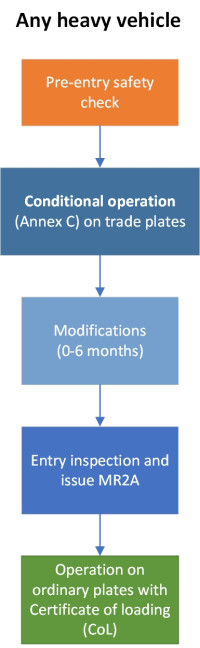
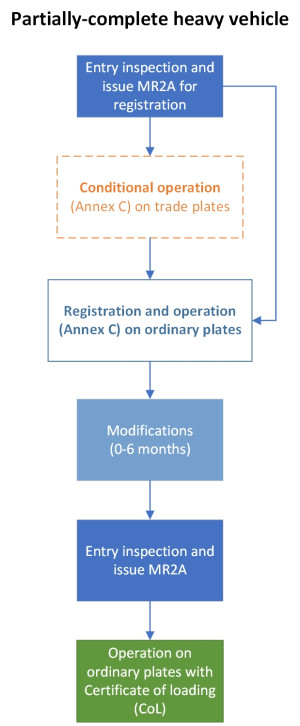
 , after the model code on the deregistration or export certificate indicates that the vehicle has been modified and may no longer meet the required standards. Check carefully that the vehicle complies with required standards and does not have modifications needing certification.
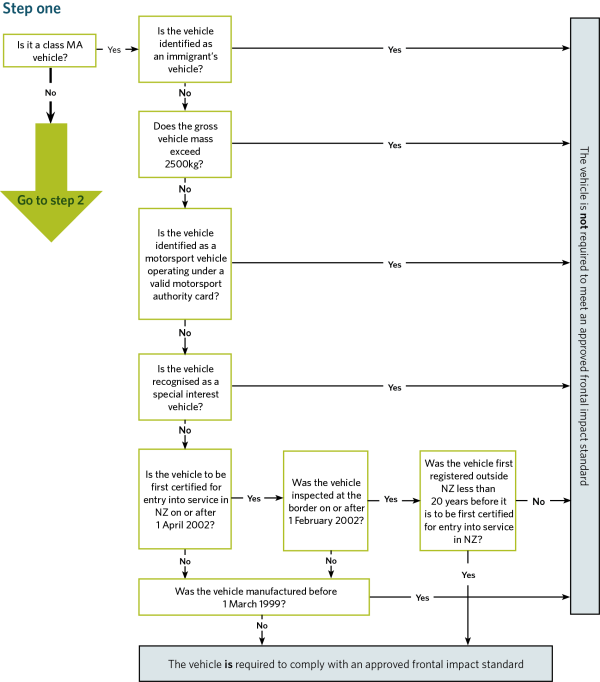
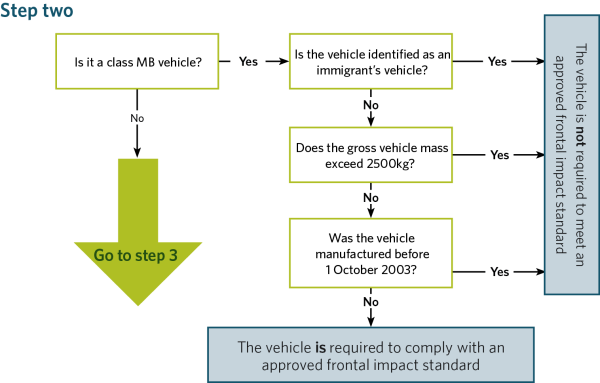
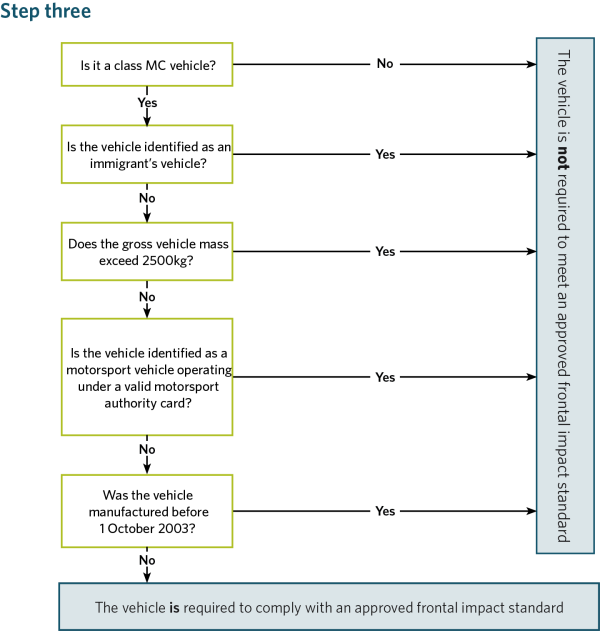
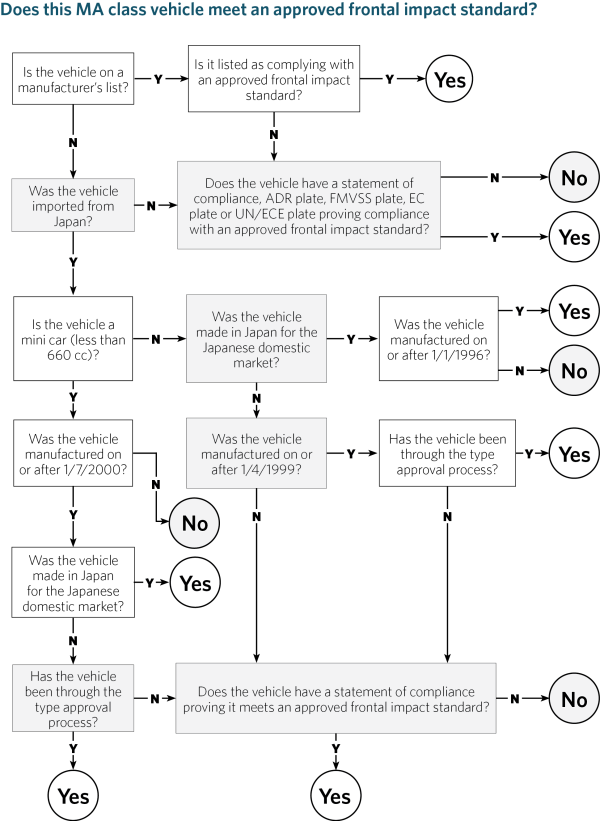
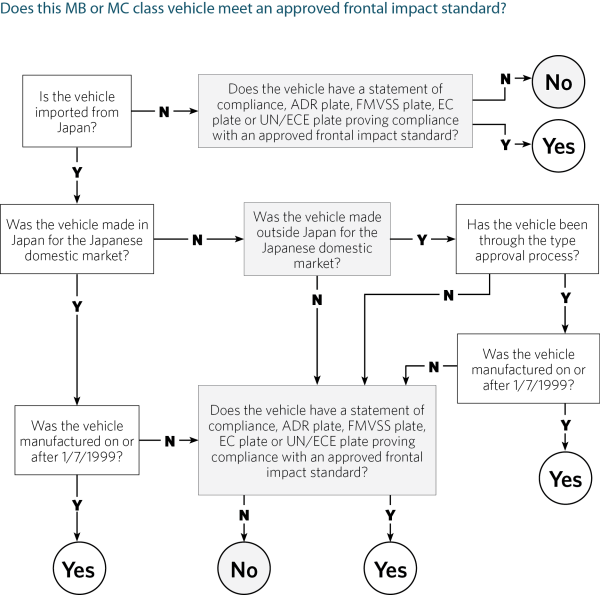
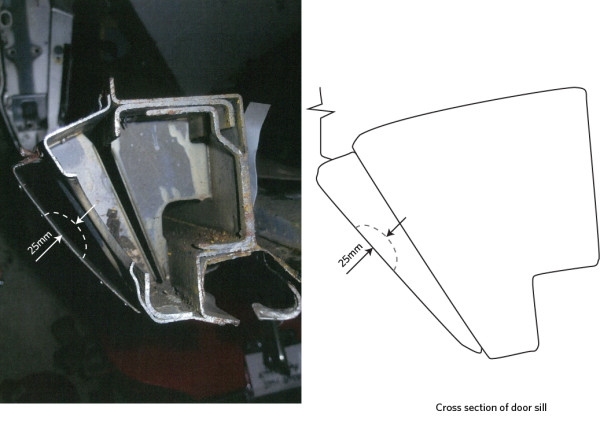
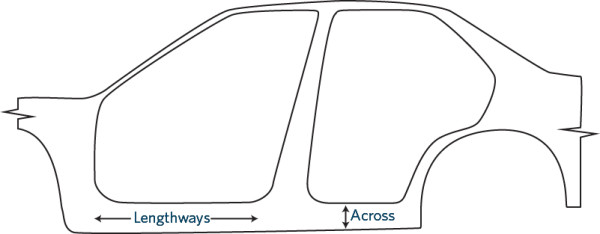
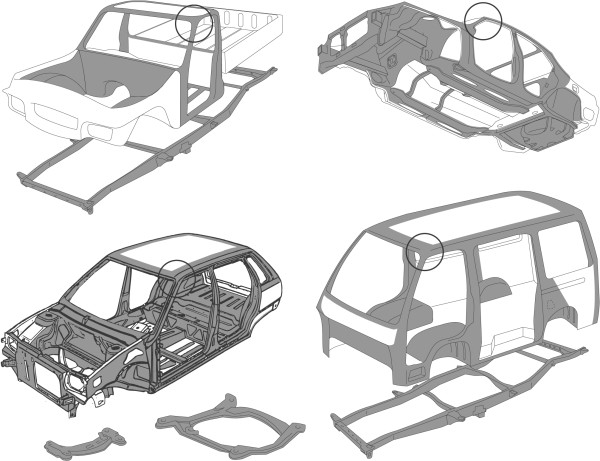
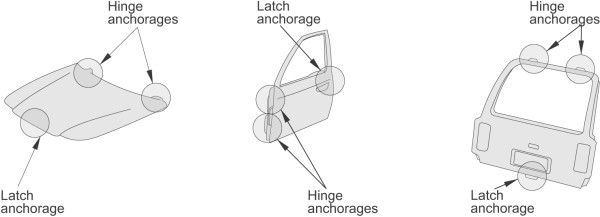


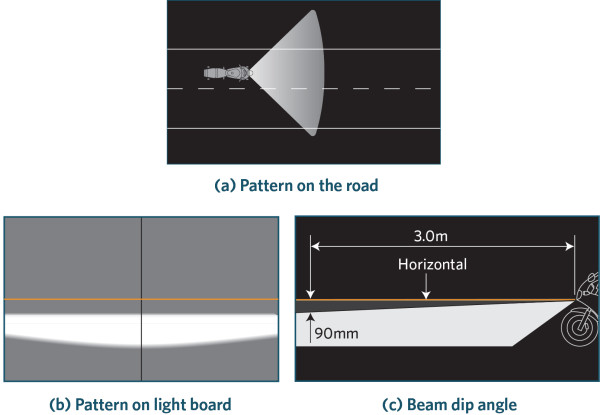

|
UN-ECE Regulation no. |
EEC/EC Directive |
FMVSS |
ADR |
Japan |
|---|---|---|---|---|
|
6 |
76/759 |
108 |
6 |
JIS D5500 |
* A direction indicator lamp that is required to comply with an approved direction indicator lamp standard must comply with at least one of the standards listed in the table.
See also Figure 4-5-1
Figure 4-5-1. Approved direction indicator lamp standard markings
The following standard markings may assist in determining compliance with approved standards.

Summary of legislation
Applicable legislation
Mandatory equipment
1. Vehicles must comply with the requirements relating to mandatory equipment set out in:
Compliance with approved standards
2. The direction indicator lamps fitted to the following vehicles must comply with one or more of the approved direction indicator lamp standards in Table 4-5-1:
a) vehicles of group L, M, and class TC and TD manufactured on or after 1 January 1996
b) vehicles of class TA, TB and group N manufactured on or after 1 January 2006.
Condition and performance
3. Direction indicator lamps must comply with the requirements relating to condition and performance set out in:
4-6 Forward-facing position lamps
Reasons for rejection
Mandatory equipment
1. A vehicle does not comply with a requirement relating to mandatory equipment set out in:
- VIRM: In-service certification, section 4-6, general vehicles
- VIRM: In-service certification, section 4-6, heavy vehicles
Compliance with approved standards
2. A forward-facing position lamp that is required to comply with an approved forward-facing position lamp standard does not comply, or cannot be demonstrated to comply, with at least one of the standards listed in Table 4-6-1
Condition and performance
3. A forward-facing position lamp does not comply with a requirement relating to condition or performance set out in:
Table 4-6-1. Approved forward-facing position lamp standards*
|
UN-ECE Regulation no. |
EEC/EC Directive |
FMVSS |
ADR |
Japan |
|---|---|---|---|---|
|
7 |
76/758 |
108 |
49 |
TS for clearance lamps |
* A forward-facing position lamp that is required to comply with an approved forward-facing position lamp standard must comply with at least one of the standards listed in the table.
See also Figure 4-6-1
Figure 4-6-1. Approved forward-facing position lamp standard markings
The following standard markings may assist in determining compliance with approved standards.
Summary of legislation
Applicable legislation
Mandatory equipment
1. Vehicles must comply with the requirements relating to mandatory equipment set out in:
Compliance with approved standards
2. The forward-facing position lamps fitted to the following vehicles must comply with one or more of the approved forward-facing position lamp standards in Table 4-6-1:
a) vehicles of class MA and NA manufactured on or after 1 January 1992
b) vehicles of class MB, MC, MD1, MD2, MD3, MD4, ME, NB, NC, TC and TD manufactured on or after 1 January 1996
c) vehicles of class TA, TB and group L manufactured on or after 1 January 2006.
Condition and performance
3. Forward-facing position lamps must comply with the requirements relating to condition and performance set out in:
4-7 Rearward-facing position lamps
Reasons for rejection
Mandatory equipment
1. A vehicle does not comply with a requirement relating to mandatory equipment set out in:
Compliance with approved standards
2. A rearward-facing position lamp that is required to comply with an approved rearward-facing position lamp standard does not comply, or cannot be demonstrated to comply, with at least one of the standards listed in Table 4-7-1
Condition and performance
3. A rearward-facing position lamp does not comply with a requirement relating to condition or performance set out in:
Table 4-7-1. Approved rearward-facing position lamp standards*
|
UN-ECE Regulation no. |
EEC/EC Directive |
FMVSS |
ADR |
Japan |
|---|---|---|---|---|
|
7 |
76/758 |
108 |
49 |
TS for front and rear position lamps |
* A rearward-facing position lamp that is required to comply with an approved rearward-facing position lamp standard must comply with at least one of the standards listed in the table.
See also Figure 4-7-1
Figure 4-7-1. Approved rearward-facing position lamp standard markings
The following standard markings may assist in determining compliance with approved standards.
Summary of legislation
Applicable legislation
Mandatory equipment
1. Vehicles must comply with the requirements relating to mandatory equipment set out in:
Compliance with approved standards
2. The rearward-facing position lamps fitted to the following vehicles must comply with one or more of the approved rearward-facing position lamp standards in Table 4-7-1:
a) vehicles of class MA and NA manufactured on or after 1 January 1992
b) vehicles of class MB, MC, MD1, MD2, MD3, MD4, ME, NB, NC, TC and TD manufactured on or after 1 January 1996
c) vehicles of class TA, TB and group L manufactured on or after 1 January 2006.
Condition and performance
3. Rearward-facing position lamps must comply with the requirements relating to condition and performance set out in:
4-8 Side-marker lamps (heavy vehicles)
Reasons for rejection
Mandatory requirements
1. A vehicle does not comply with a requirement relating to permitted equipment set out in the VIRM: In-service certification, section 4-8
Compliance with approved standards
2. A side-marker lamp that is required to comply with an approved side-marker lamp standard does not comply, or cannot be demonstrated to comply, with at least one of the standards listed in Table 4-8-1
Condition and performance
3. A side-marker lamp does not comply with a requirement relating to condition and performance set out in the VIRM: In-service certification, section 4-8
Table 4-8-1. Approved side-marker lamp standards*
|
UN-ECE Regulation no. |
EEC/EC Directive |
FMVSS |
ADR |
Japan |
|---|---|---|---|---|
|
91 |
76/758 |
108 |
45 or, 74 |
JIS D5500 TS for side-marker lamps |
* A side-marker lamp that is required to comply with an approved side-marker standard must comply with at least one of the standards listed in the table.
Summary of legislation
Applicable legislation
Permitted equipment
1. Vehicles must comply with the requirements relating to permitted equipment set out in the VIRM: In-service certification, section 4-8.
Compliance with approved standards
2. Side-marker lamps fitted to the following vehicles must comply with one or more of the approved end-outline marker standards in Table 4-8-1:
- vehicles of Class MD3, MD4, ME, NB, NC, TC and TD manufactured on or after 1 January 2006.
Condition and performance
3. Side-marker lamps must comply with the requirements relating to condition and performance set out in the VIRM: In-service certification, section 4-8.
4-9 End-outline marker lamps (heavy vehicles)
Reasons for rejection
Mandatory requirements
1. A vehicle does not comply with a requirement relating to mandatory equipment set out in the VIRM: In-service certification, section 4-9
Compliance with approved standards
2. An end-outline marker lamp that is required to comply with an approved end-outline marker lamp standard does not comply, or cannot be demonstrated to comply, with at least one of the standards listed in Table 4-9-1
Condition and performance
3. An end-outline marker lamp does not comply with a requirement relating to condition or performance set out in the VIRM: In-service certification, section 4-9
Table 4-9-1. Approved end-outline marker lamp standards*
|
UN-ECE Regulation no. |
EEC/EC Directive |
FMVSS |
ADR |
Japan |
|---|---|---|---|---|
|
7 |
76/758 |
108 |
49 |
JIS D5500 TS for front end outline marker lamps TS for rear end outline marker lamps |
* An end-outline marker lamp that is required to comply with an approved end-outline marker standard must comply with at least one of the standards listed in the table.
Summary of legislation
Applicable legislation
Mandatory, permitted and prohibited equipment
1. Vehicles must comply with the requirements relating to mandatory, permitted and prohibited equipment set out in the VIRM: In-service certification, section 4-9.
Compliance with approved standards
2. End-outline marker lamps fitted to the following vehicles must comply with one or more of the approved end-outline marker standards in Table 4-9-1:
- vehicles of class MD3, MD4, ME, NB NC, TC and TD manufactured on or after 1 January 2006.
Condition and performance
3. End-outline marker lamps must comply with the requirements relating to condition and performance set out in the VIRM: In-service certification, section 4-9
4-10 Stop lamps
Reasons for rejection
Mandatory equipment
1. A vehicle does not comply with a requirement relating to mandatory equipment set out in:
Compliance with approved standards
2. A stop lamp that is required to comply with an approved stop lamp standard does not comply, or cannot be demonstrated to comply, with at least one of the standards listed in Table 4-10-1
Condition and performance
3. A stop lamp does not comply with a requirement relating to condition or performance set out in:
Table 4-10-1. Approved stop lamp standards*
|
UN-ECE Regulation no. |
EEC/EC Directive |
FMVSS |
ADR |
Japan |
|---|---|---|---|---|
|
7 |
76/758 |
108 |
49 |
JIS D5500 |
* A stop lamp that is required to comply with an approved stop lamp standard must comply with at least one of the standards listed in the table.
See also Figure 4-10-1
Figure 4-10-1. Approved stop lamp standard markings
The following standard markings may assist in determining compliance with approved standards.
Summary of legislation
Applicable legislation
Mandatory equipment
1. Vehicles must comply with the requirements relating to mandatory equipment set out in:
Compliance with approved standards
2. The stop lamps fitted to the following vehicles must comply with one or more of the approved stop lamp standards in Table 4-10-1:
a) vehicles of class MA and NA manufactured on or after 1 January 1992
b) vehicles of class MB, MC, MD, ME, NB, NC, TC and TD manufactured on or after 1 January 1996
c) vehicles of class TA, TB or group L manufactured on or after 1 January 2006.
Condition and performance
3. Stop lamps must comply with the requirements relating to condition and performance set out in:
4-11 High-mounted stop lamps
Reasons for rejection
Mandatory equipment
1. A vehicle does not comply with a requirement relating to mandatory equipment set out in the VIRM: In-service certification, section 4-11
Compliance with approved standards
2. A high-mounted stop lamp that is required to comply with an approved high-mounted stop lamp standard does not comply, or cannot be demonstrated to comply, with at least one of the standards listed in Table 4-11-1.
Condition and performance
3. A high-mounted stop lamp does not comply with a requirement relating to condition or performance set out in the VIRM: In-service certification, section 4-11
Table 4-11-1. Approved high-mounted stop lamp standards*
|
UN-ECE Regulation no. |
EEC/EC Directive |
FMVSS |
ADR |
Japan |
|---|---|---|---|---|
|
7 |
76/758 |
108 |
60 |
JIS D5500TS for auxiliary stop lamps |
* A high-mounted stop lamp that is required to comply with an approved high-mounted stop lamp standard must comply with at least one of the standards listed in the table.
See also Figure 4-11-1
Figure 4-11-1. Approved high-mounted stop lamp standard markings
The following standard markings may assist in determining compliance with approved standards.

Summary of legislation
Applicable legislation
Mandatory equipment
1. Vehicles must comply with the requirements relating to mandatory equipment set out in the VIRM: In-service certification, section 4-11
Compliance with approved standards
2. The high-mounted stop lamps fitted to the following vehicles must comply with one or more of the approved high-mounted stop lamp standards in Table 4-11-1:
a) vehicles of class MA manufactured on or after 1 January 1991
b) vehicles of class MB, MC, MD, ME, group N, L and T manufactured on or after 1 January 2006.
Condition and performance
3. High-mounted stop lamps must comply with the requirements relating to condition and performance set out in the VIRM: In-service certification, section 4-11
4-12 Registration plate lamps
Reasons for rejection
Mandatory equipment
1. A vehicle does not comply with a requirement relating to mandatory equipment set out in the VIRM: In-service certification, section 4-12
Compliance with approved standards
2. A registration plate lamp that is required to comply with an approved registration plate lamp standard does not comply, or cannot be demonstrated to comply, with at least one of the standards listed in Table 4-12-1.
Performance
3. A registration plate lamp does not comply with a requirement relating to performance set out in the VIRM: In-service certification, section 4-12
Table 4-12-1. Approved registration plate lamp standards*
|
UN-ECE Regulation no. |
EEC/EC Directive |
FMVSS |
ADR |
Japan |
|---|---|---|---|---|
|
4 |
76/760 |
108 |
48 |
JIS D5500 |
* A registration plate lamp that is required to comply with an approved registration plate lamp standard must comply with at least one of the standards listed in the table.
See also Figure 4-12-1
Figure 4-12-1. Approved registration plate lamp standard markings
The following standard markings may assist in determining compliance with approved standards.
Summary of legislation
Applicable legislation
Mandatory equipment
1. Vehicles must comply with the requirements relating to mandatory equipment set out in the VIRM: In-service certification, section 4-12
Compliance with approved standards
2. The registration plate lamps fitted to the following vehicles must comply with one or more of the approved registration plate lamp standards in Table 4-12-1:
a) vehicles of group M, N, and class TC and TD manufactured on or after 1 January 1996
b) vehicles of class LC, LD, LE, TA and TB manufactured on or after 1 January 2006.
Performance
3. Registration plate lamps must comply with the requirements relating to performance set out in the VIRM: In-service certification, section 4-12
4-13 Rearward-facing retroreflectors
Reasons for rejection
Mandatory equipment
1. A vehicle does not comply with a requirement relating to mandatory equipment set out in:
Compliance with approved standards
2. A rearward-facing retroreflector that is required to comply with an approved rearward-facing retroreflector standard does not comply, or cannot be demonstrated to comply, with at least one of the standards listed in Table 4-13-1
Condition
3. A rearward-facing retroreflector does not comply with a requirement relating to condition set out in:
Table 4-13-1. Approved rearward-facing retroreflector standards*
|
UN-ECE Regulation no. |
EEC/EC Directive |
FMVSS |
ADR |
Japan |
|---|---|---|---|---|
|
3 |
76/757 |
108 |
47 |
TS for rear reflex reflectors |
* A rearward-facing retroreflector that is required to comply with an approved rearward-facing retroreflector standard must comply with at least one of the standards listed in the table.
See also Figure 4-13-1
Figure 4-13-1. Approved rearward-facing retroreflector standard markings
The following standard markings may assist in determining compliance with approved standards.
Summary of legislation
Applicable legislation
Mandatory equipment
1. Vehicles must comply with the requirements relating to mandatory equipment set out in:
Compliance with approved standards
2. The rearward-facing retroreflectors fitted to the following vehicles must comply with one or more of the approved rearward-facing retroreflector standards in Table 4-13-1:
a) vehicles of class MA manufactured on or after 1 January 1991
b) vehicles of group L, class MB, MC, MD, ME, group N, and class TC and TD manufactured on or after 1 January 1992
c) vehicles of class TA and TB manufactured on or after 1 January 2006.
Condition
3. Rearward-facing retroreflectors must comply with the requirements relating to condition set out in:
4-14 Reversing lamps
Reasons for rejection
Permitted equipment
1. A vehicle does not comply with a requirement relating to permitted equipment set out in the VIRM: In-service certification, section 4-14
Compliance with approved standards
2. A reversing lamp that is required to comply with an approved reversing lamp standard does not comply, or cannot be demonstrated to comply, with at least one of the standards listed in Table 4-14-1
Performance
3. A reversing lamp does not comply with a requirement relating to performance set out in the VIRM: In-service certification, section 4-14
Table 4-14-1. Approved reversing lamp standards*
|
UN-ECE Regulation no. |
EEC/EC Directive |
FMVSS |
ADR |
Japan |
|---|---|---|---|---|
|
23 |
77/539 |
108 |
1 |
JIS D5500 |
* A reversing lamp that is required to comply with an approved reversing lamp standard must comply with at least one of the standards listed in the table.
See also Figure 4-14-1
Figure 4-14-1. Approved reversing lamp standard markings
The following standard markings may assist in determining compliance with approved standards.
Summary of legislation
Applicable legislation
Permitted equipment
1. Vehicles must comply with the requirements relating to permitted equipment set out in the VIRM: In-service certification, section 4-14
Compliance with approved standards
2. Reversing lamps fitted to the following vehicles must comply with one or more of the approved reversing lamp standards in Table 4-14-1:
a) vehicles of group M and N manufactured on or after 1 January 1996
b) vehicles of group L manufactured on or after 1 January 2006.
Performance
3. Reversing lamps must comply with the requirements relating to performance set out in the VIRM: In-service certification, section 4-14
4-15 Cosmetic lamps
Vehicles must comply with the requirements relating to permitted equipment, condition and performance set out in:
- VIRM: In-service certification, section 4-15, general vehicles
- VIRM: In-service certification, section 4-15, heavy vehicles
There are no additional requirements in respect of cosmetic lamps for the inspection and certification of vehicles for entry into service.
4-16 PSV audible and visible reversing warning devices
Vehicles must comply with the requirements relating to mandatory equipment, condition and performance set out in the VIRM: In-service certification, section 4 -16
There are no additional requirements in respect of PSV audible and visible reversing warning devices for the inspection and certification of vehicles for entry into service.
4-17 Heavy PSV interior lighting
Reasons for rejection
Mandatory requirements
1. A doorway, aisle or set of steps is not adequately illuminated by interior lighting.
2. An interior light interferes with the driver’s vision when the doors are closed.
Summary of legislation
Applicable legislation
Mandatory requirements
1. Interior lights must be positioned so that they adequately illuminate doorways, aisles and steps, but without interfering with the driver’s vision when the doors are closed.
5 Vision
5-1 Glazing
Reasons for rejection
Mandatory and permitted equipment
1. A windscreen that is required to be made of laminated glass is not made of laminated glass.
2. A piece of glazing fitted to a vehicle of class LA, LB1, LB2, LC, LD, LE1 or LE2 is not made of a transparent material that does not shatter.
3. A vehicle or piece of glazing does not comply with a requirement relating to mandatory or permitted equipment set out in:
Compliance with approved standards
4. A piece of glazing that is required to comply with an approved glazing standard did not comply, or cannot be demonstrated to have complied, with at least one of the standards listed in Table 5-1-1 at the time the vehicle was manufactured or the glazing was fitted.
Condition, performance and modification
5. A piece of glazing does not comply with a requirement relating to condition, performance or modification set out in:
Note 1
For a vehicle manufactured before 1 January 1991, a glazing marking which contains one or more of the approved trade names in Table 5-1-2 is evidence that a piece of glazing complies with an approved glazing standard.
Note 2
Curved scenic skylights above the cant rail, curved windows at the front and rear corners, skylights, louvres and interior partitions in omnibuses (vehicles of class MD1, MD2, MD3, MD4 and ME) are not required to comply with approved glazing standards if they are made of transparent material that does not shatter.
Note 3
The 35% VLT limit on rear and rear-side windows of MA class vehicles only applies to modified glazing. If the glazing is OE, unmodified, and is marked as complying with an approved standard or trade name, the glazing may be passed even with a VLT of less than 35%.
Note 4
See Technical bulletin 13 for an explanation of policy and requirements relating to glazing on house-trucks.
Table 5-1-1. Approved glazing standards*
|
UN-ECE Regulation no. |
EEC/EC Directive |
FMVSS |
ADR |
Japan |
Others |
|---|---|---|---|---|---|
|
43 |
92/22 |
205 |
8 |
TS for window glass |
BS 857 |
Table 5-1-2. Approved trade names for glazing
| Armourfloat Armourplate Blindex Duolite Safety Duplate Safety Flolite Ford Indestructo Ford Safety Glass Ford Silver Arrow Glacetex |
Hankuk Glass Safety Heat Line HMC Glass Safety Hankuk TF5 HMC Glass Safety Hankuk TV5 Indestructo Nippon Safety NM Laminated Safety Glass FHP Peerless |
Plexite Safetyflex Safety MGB (Meloplate) Safety MGB (Melite Safety Plate) Sekurit Sigla Spectrofloat Splintex Sunmat Suntex Safety Glass |
Temperlite Temperlite Santa Marina Thorex Connex Triplex Triplex Plate Tuflite Tyneside Veracetex |
Table 5-1-3. Glossary of codes for safety glass
|
L = |
laminated glass |
|
LF = |
laminated float |
|
LP = |
laminated plate |
|
// or /// = |
laminated when near the |
|
L.76WHP = |
laminated, 0.76mm interlayer, suitable for all locations |
|
AS1 = |
laminated for use anywhere in the vehicle |
|
A |
the glass in the direction of the arrow complies with the 70% light transmission requirement |
 mark
mark S or A
  S =
S =Table 5-1-4. Glossary of codes for including laminated glass
|
L |
laminated glass |
|
F |
float glass |
|
P |
plate glass |
|
LF |
laminated float |
|
LP |
laminated plate |
|
/ |
toughened, when near the |
|
// or /// |
laminated, when near the |
|
TS |
toughened glass |
|
TP |
toughened plate |
|
T |
toughened or tempered |
|
Z |
zone tempered |
|
WHP |
complies with impact test (windscreen high performance laminated safety glass) |
|
DOT |
Department of Transport (USA) |
|
AS AS |
the glass, in the direction of the arrow, complies with the 70% light transmission requirement |
|
ANSI |
American National Standards Institute |
|
FMVSS codes |
|
|
AS1 |
for use anywhere in the vehicle |
|
AS2 |
for use anywhere in the vehicle other than windscreen |
|
AS3 |
for rear and rear side windows only |
|
AS4 and AS5 |
for glazing not used for driver’s vision (eg the rear window of heavy truck cabs or convertible tops, windows/doors in motorhome bodies, ute canopies, rear windows on buses, roof glazing etc) |
|
Glazing cut from mother sheet |
|
|
L.76WHP |
laminated, 0.76 mm interlayer, suitable for all locations |
|
L.38 |
laminated, 0.38 mm interlayer, must not be used for windscreens |
|
PCZ26.1 |
polycarbonate, meets requirements of ANSI Z26, must not be used for windscreens |
Figure 5-1-1 Approved standards markings
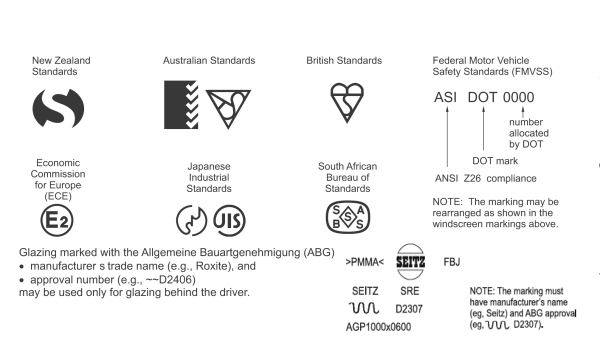
Figure 5-1-2. Typical laminated glazing markings
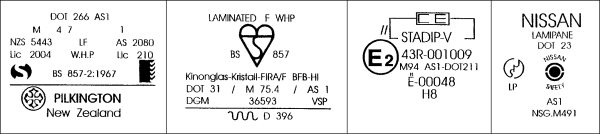
Figure 5-1-3. Typical markings required on glazing cut from mother sheet
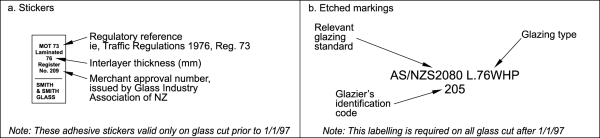
Summary of legislation
Applicable legislation
Mandatory and permitted equipment
1. Windscreens fitted to the following vehicles must be made of laminated glass:
a) vehicles of class MA, MB, MC and NA manufactured on or after 1 July 1986
b) vehicles of class MD1, MD2, MD3, MD4, ME, NB and NC manufactured on or after 1 July 1997
c) vehicles not covered by any of the defined vehicle classes manufactured on or after 1 January 2001.
2. All glazing fitted to vehicles of class LA, LB1, LB2, LC, LD, LE1 and LE2 must be made of a transparent material that does not shatter.
3. Vehicles and glazing must also comply with the requirements relating to mandatory and permitted equipment set out in the VIRM: In-service certification, section 5-1
Compliance with approved standards
4. Windscreens fitted to the following vehicles must comply with one or more of the approved glazing standards in Table 5-1-1:
a) vehicles of group M and N manufactured on or after 1 January 1960 (Note 1)
b) vehicles not covered by any of the defined vehicle classes manufactured on or after 1 January 2001.
5. Glazing in locations other than windscreens fitted to the following vehicles must comply with one or more of the approved glazing standards in Table 5-1-1 (Note 4):
a) vehicles of group M (Note 2) and N manufactured on or after 1 February 1977 (Note 1)
b) vehicles not covered by any of the defined vehicle classes manufactured on or after 1 January 2001.
Condition, performance and modification
6. Glazing must comply with the requirements relating to condition, performance and modification set out in the VIRM: In-service certification, section 5-1 (Note 3)
5-2 Sunvisors
Vehicles must comply with the requirements relating to mandatory equipment, permitted equipment, condition, performance and modification set out in the VIRM: In-service certification, section 5-2
There are no additional requirements in respect of sunvisors for the inspection and certification of vehicles for entry into service.
5-3 Windscreen wipe and wash
Vehicles must comply with the requirements relating to mandatory equipment, permitted equipment, condition, performance and modification set out in the VIRM: In-service certification, section 5-3
There are no additional requirements in respect of windscreen wipe and wash systems for the inspection and certification of vehicles for entry into service.
5-4 Rearview mirrors
Reasons for rejection
Mandatory equipment
1. A vehicle does not comply with a requirement relating to mandatory equipment set out in:
Compliance with approved standards
2. A rear-view mirror that is required to comply with an approved rear-view mirror standard did not comply, or cannot be demonstrated to have complied, with at least one of the standards listed in Table 5-4-1 at the time the vehicle was manufactured or the rear-view mirror was fitted (Note 1)
Condition and performance
3. A rear-view mirror does not comply with a requirement relating to condition or performance set out in:
Note 1
The rear-view mirror standard must be recorded on the vehicle compliance checksheet. If a mirror does not have an approved standards marking but was fitted as original equipment, it must be recorded as ‘OE’, along with any identifying information, such as the make.
Table 5-4-1. Approved rear-view mirror standards*
|
UN-ECE Regulation no. |
EEC/EC Directive |
FMVSS |
ADR |
Japan |
|---|---|---|---|---|
|
46 |
71/127 |
111 |
14 |
TS for installation position of outside rear-view mirrors |
* A rear-view mirror that is required to comply with an approved rear-view mirror standard must comply with at least one of the standards listed in the table.
- Rear-view mirror includes a camera monitor system that uses cameras that are mounted in order to have the same or a similar view as a rear-view mirror and that displays the images viewed by the camera on a monitor inside the vehicle that is visible to the driver.
See also Figure 5-4-1
Figure 5-4-1. Typical standards markings
The following standard markings may assist in determining compliance with approved standards.
Summary of legislation
Applicable legislation
Mandatory equipment
1. Vehicles must comply with the requirements relating to mandatory equipment set out in:
Compliance with approved standards
2. The rear-view mirrors required to be fitted to group M and N vehicles manufactured on or after 1 January 1996 must comply with one or more of the approved rear-view mirror standards in Table 5-4-1 (Note 1)
Condition and performance
3. Rear-view mirrors must comply with the requirements relating to condition and performance set out in:
Page amended 1 May 2021 (see amendment details).
6 Entrance and exit
-
6-1 Door and hinged panel retention systems
-
6-2 PSV doors and doorways (light PSVs)
-
6-2 PSV doors and doorways (heavy PSVs)
-
6-3 PSV entry and exit steps, ramps and hoists (light PSVs)
-
6-3 PSV entry and exit steps, ramps and hoists (heavy PSVs)
-
6-4 PSV emergency exits (light PSVs)
-
6-4 PSV emergency exits (heavy PSVs)
6-1 Door and hinged panel retention systems
Reasons for rejection
Mandatory equipment
1. A vehicle does not comply with a requirement relating to mandatory equipment set out in the VIRM: In-service certification, section 6-1
Compliance with approved standards
2. A door retention system that is required to comply with an approved door retention system standard did not comply, or cannot be demonstrated to have complied, with at least one of the standards listed in Table 6-1-1 at the time the vehicle was manufactured.
Condition, performance and modification
3. A door retention system does not comply with a requirement relating to condition, performance or modification set out in the VIRM: In-service certification, section 6-1
Table 6-1-1. Approved door retention system standards*
|
UN-ECE Regulation no. |
EEC/EC Directive |
FMVSS |
ADR |
Japan |
|---|---|---|---|---|
|
11 |
70/387 |
206 |
2 |
Technical Standard for Door Retention Systems |
* A door retention system that is required to comply with an approved door retention system standard must comply with at least one of the standards listed in the table.
Summary of legislation
Applicable legislation
Mandatory equipment
1. Vehicles must comply with the requirements relating to mandatory equipment set out in the VIRM: In-service certification, section 6-1
Compliance with approved standards
2. Door retention systems on the following vehicles must comply with one or more of the approved door retention system standards in Table 6-1-1:
a) vehicles of class MA manufactured on or after 1 January 1991
b) vehicles of class MB, MC and MD1 manufactured on or after 1 January 1998.
Condition, performance and modification
3. Door retention systems must comply with the requirements relating to condition, performance and modification set out in the VIRM: In-service certification, section 6-1
6-2 PSV doors and doorways (light PSVs)
Reasons for rejection
Mandatory requirements
1. A doorway does not meet the dimension requirements of Table 6-2-1
2. A vehicle does not comply with the requirements relating to mandatory equipment set out in the VIRM: In-service certification, section 6-2
Condition and performance
3. A PSV door or doorway does not comply with the requirements relating to condition and performance set out in the VIRM: In-service certification, section 6-2
Table 6-2-1. Minimum width and height for PSV doorways
|
A doorway that: |
Minimum width (mm) |
Minimum height (mm) |
|---|---|---|
|
Gives access to less than three rows of seats and less than eight occupants (Figure 6-2-1) |
No minimum but must give easy access |
No minimum but must give easy access |
|
Is un-tapered with no central stanchion |
550 |
Same as minimum aisle height (see section 7-4), except: 1. the rear door of an outdoor-access vehicle may have reduced height if this is required for additional frame strength, or 2. the door height may be reduced to 1650mm for a PSV that: a) is one of a series of identical vehicles produced in quantities of 1000 or more, and b) does not have more than 25 passenger seats, and c) has a GVM not exceeding 7000kg. |
|
With central stanchion |
550 each side of stanchion |
|
|
Is tapered at the top to accommodate body shape |
See Table 6-2-2 |
|
|
Is intended for wheelchair access (Figure 6-2-2) |
800 |
1300 top of sill to doorway top |
Table 6-2-2. Minimum width for tapered doorways (Figure 6-2-3)
|
Height above doorway sill (mm) |
Minimum width (mm) |
|---|---|
|
1600 or less |
550 |
|
1601 to 1800 |
450 |
|
1801 to 1830 |
400 |
|
1831 and above |
380 |
Figure 6-2-1. Entrance and exit
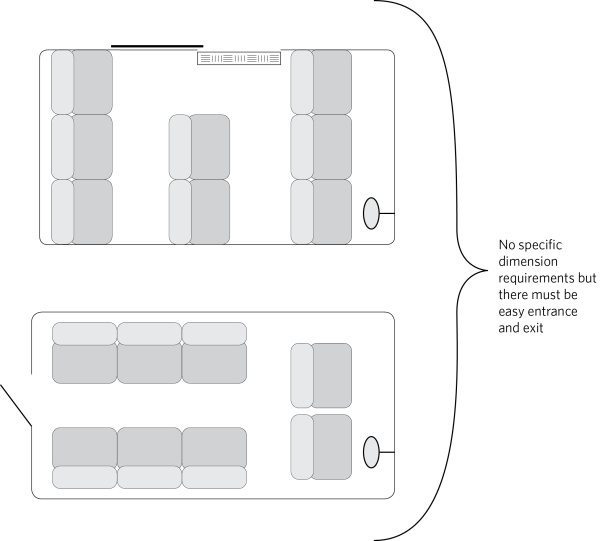
Figure 6-2-2. Doorway intended for wheel chair access
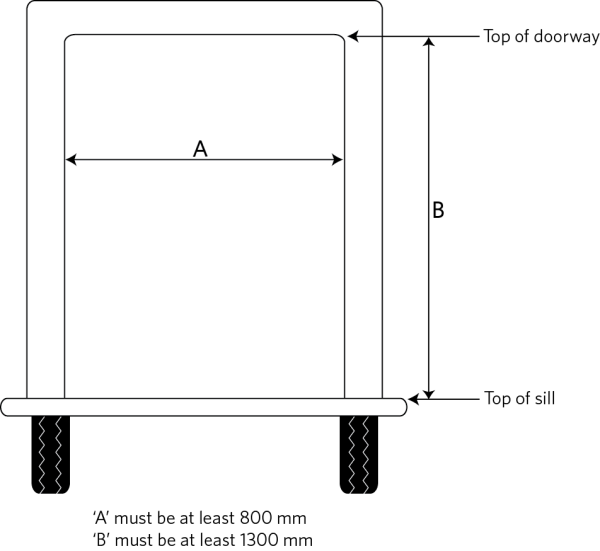
Figure 6-2-3. Tapered doorways
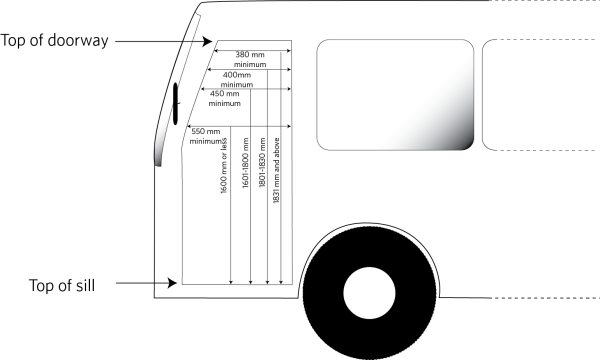
Summary of legislation
Applicable legislation
Mandatory requirements
1. The dimensions of a doorway must be at least those specified in Table 6-2-1
2. Vehicles must comply with the requirements relating to mandatory equipment set out in the VIRM: In-service certification, section 6-2
Performance
3. PSV doors and doorways must comply with the requirements relating to performance set out in the VIRM: In-service certification, section 6-2
Page amended 1 October 2012 (see amendment details).
6-2 PSV doors and doorways (heavy PSVs)
Reasons for rejection
Mandatory requirements
1. A doorway does not meet the dimension requirements of Table 6-2-1
2. A heavy PSV is not fitted with sufficient handrails suitable for assisting people entering and leaving the vehicle.
3. A required handrail or handhold is not:
a) sufficiently strong for its foreseeable use, or
b) not securely fastened.
4. A handhold on a door has a cross section smaller than 15mm x 25mm.
5. A handhold in a doorway (other than a handhold on a door) has a cross section dimension:
a) smaller than 20mm, or
b) greater than 45mm.
6. A vehicle does not comply with the requirements relating to mandatory equipment set out in the VIRM: In-service certification, section 6-2
Condition and performance
7. A PSV door or doorway does not comply with the requirements relating to condition and performance set out in the VIRM: In-service certification, section 6-2
Table 6-2-1. Minimum width and height for PSV doorways
|
A doorway that: |
Minimum width (mm) |
Minimum height (mm) |
|---|---|---|
|
Gives access to less than three rows of seats and less than eight occupants (Figure 6-2-1) |
No minimum but must give easy access |
No minimum but must give easy access |
|
Is un-tapered with no central stanchion |
550 |
Same as minimum aisle height (see section 7-4), except: 1. the rear door of an outdoor-access vehicle may have reduced height if this is required for additional frame strength, or 2. the door height may be reduced to 1650mm for a PSV that: a) is one of a series of identical vehicles produced in quantities of 1000 or more, and b) does not have more than 25 passenger seats, and c) has a GVM not exceeding 7000kg. |
|
With central stanchion |
550 each side of stanchion |
|
|
Is tapered at the top to accommodate body shape |
See Table 6-2-2 |
|
|
Is intended for wheelchair access (Figure 6-2-2) |
800 |
1300 top of sill to doorway top |
Table 6-2-2. Minimum width for tapered doorways (Figure 6-2-3)
|
Height above doorway sill (mm) |
Minimum width (mm) |
|---|---|
|
1600 or less |
550 |
|
1601 to 1800 |
450 |
|
1801 to 1830 |
400 |
|
1831 and above |
380 |
Figure 6-2-1. Entrance and exit
Figure 6-2-2. Doorway intended for wheel chair access
Figure 6-2-3. Tapered doorways
Summary of legislation
Applicable legislation
Mandatory requirements
1. The dimensions of a doorway must be at least those specified in Table 6-2-1
Heavy PSV
2. A heavy PSV must be fitted with handrails or handholds which are suitable to assist people entering and leaving the vehicle.
3. Required handrails and handholds must be of adequate strength for their foreseeable use and be securely fastened.
4. The minimum cross section dimension of handholds on doors may be 15mm if one other dimension is at least 25mm.
5. The cross section dimension of handholds in doorways (other than those on doors) must have no dimension smaller than 20mm or greater than 45mm.
6. Vehicles must comply with the requirements relating to mandatory equipment set out in the VIRM: In-service certification, section 6-2
Performance
7. PSV doors and doorways must comply with the requirements relating to performance set out in the VIRM: In-service certification, section 6-2
Page amended 1 October 2012 (see amendment details).
6-3 PSV entry and exit steps, ramps and hoists (light PSVs)
|
Note: an unmodified vehicle is not required to comply with Summary of legslation 1-5, or Reasons for rejection 1-4, provided that it complies with either:
|
Reasons for rejection
Mandatory requirements
1. A permanent external step or ramp on the side of the passenger service vehicle:
a) extends more than 20mm beyond the adjacent body line of the vehicle, or
b) could injure a person (eg is not pedestrian friendly).
2. A manually operated extending step on the side of the vehicle:
a) does not have an audible or visual alarm to warn the driver when the vehicle is moving that the steps are extended more than 20mm beyond the adjacent bodyline of the vehicle , or
b) could injure a person (eg is not pedestrian friendly).
3. On a vehicle with a power operated retractable step:
a) the movement of the step is not synchronised with the operation of the associated door, or
b) the vehicle is able to move under its own power when the step is extended, or
c) if the associated door is not within the driver’s direct view, the door is able to be closed with a passenger on the step (compliance with this requirement may be demonstrated by placing a weight of 15kg at the centre of the step), or
d) the step protrudes more than 10mm beyond the adjacent line of the body work when the associated door is closed.
4. On a vehicle with a mechanically operated retractable step, the step protrudes more than 10mm beyond the adjacent line of the body work when the associated door is closed.
5. A ramp is not:
a) at least 800mm wide, or
b) at least 760mm wide with a 20mm high safety ridge along the side edges.
6. A fully extended ramp from a vehicle parked on a flat level surface has a gradient that is steeper than 1 in 4.
7. A handhold on steps or a ramp has a cross section dimension:
a) smaller than 20mm, or
b) greater than 45mm.
8. A vehicle does not comply with the requirements relating to mandatory requirements set out in the VIRM: In-service certification, section 6-3
Condition and performance
9. A vehicle does not comply with a requirement relating to condition or performance set out in the VIRM: In-service certification, section 6-3
Summary of legislation
Applicable legislation
Mandatory requirements
1. Permanent external steps and ramps on the side of the passenger service vehicle must not extend more than 20mm beyond the adjacent body line of the vehicle, and must be constructed so that they are not likely to injure any person.
2. Manually operated extending steps on the side of the passenger service vehicle must:
a) be constructed so that they are not likely to injure any person, and
b) protrude no more than 20mm beyond the adjacent body line of the vehicle when they are folded away, and
c) if the steps extend more than 20mm beyond the adjacent body line of the vehicle, have an audible or visual alarm system that alerts the driver if the vehicle is moving and the steps are extended.
3. Retractable steps must comply with the requirements of the version of UN/ECE Regulation No. 52, UN/ECE Regulation No. 107 or Directive 2001/85/EC, which was applicable either:
a) if they were fitted before the vehicle entered service as a PSV in New Zealand, at the time when the vehicle entered service as a PSV in New Zealand, or
b) if they were fitted after the vehicle entered service as a PSV in New Zealand, at the time the steps were fitted.
4. Power operated retractable steps must meet the following requirements:
a) the movement of the step must be synchronised with the operation of the associated door, and
b) the vehicle must not be able to move under its own power when the step is extended, and
c) if the associated door is not within the driver’s direct view, the door must not be able to be closed with a passenger on the step (compliance with this requirement may be demonstrated by placing a weight of 15kg at the centre of the step), and
d) the step must not protrude more than 10mm beyond the adjacent line of the body work when the associated door is closed.
5. Mechanically operated retractable steps must not protrude more than 10mm beyond the adjacent line of the body work when the associated door is closed.
6. Ramps must be at least 800 mm wide, or at least 760mm wide with a 20mm high safety ridge along the side edges.
7. A ramp which is fully extended from a vehicle parked on a flat level surface must not have a gradient that is steeper than 1 in 4 .
8. The cross section dimension of handholds on steps or ramps must have no dimension smaller than 20mm or greater than 45mm.
9. A vehicle must comply with the requirements relating to mandatory requirements set out in the VIRM: In-service certification, section 6-3
Condition and performance
10. A vehicle must comply with the requirements relating to condition and performance set out in the VIRM: In-service certification, section 6-3
Page amended 1 November 2017 (see amendment details).
6-3 PSV entry and exit steps, ramps and hoists (heavy PSVs)
|
Note An unmodified vehicle is not required to comply with Summary of legislation 1-6, or Reasons for rejection 1-7, provided that it complies with either:
|
Reasons for rejection
Mandatory requirements
1. A heavy PSV, other than a stretch limousine, with the floor at the entrance and exit door more than 410mm above the surface of the level roadway does not have a step or ramp (Figure 6-3-1)
2. Unless the entrance is of a stretch limousine or an outdoor access vehicle or is a left-front passenger entrance providing access for less than three passenger seating positions, the distance from the ground to the tread surface of the lowest entrance level is 410mm or more, with the unladen vehicle on a level surface and with any driver-adjustable suspension in its lowest position.
3. A required entry or exit step does not meet the following (Figure 6-3-2):
a) the rise from one step to the next is 300mm or more.
b) the depth of a step from front to inner riser is less than 200mm.
c) the width of a step parallel to the doorway is less than 550mm
d) an intermediate step that is cut away to allow space for the door to open is:
i. less than 180mm deep, or
ii. less than 250mm wide.
4. A permanent external step or ramp on the side of the passenger service vehicle:
a) extends more than 20mm beyond the adjacent body line of the vehicle, or
b) could injure a person (eg is not pedestrian friendly).
5. A manually operated extending step on the side of the vehicle:
a) does not have an audible or visual alarm to warn the driver when the vehicle is moving that the steps are extended more than 20mm beyond the adjacent bodyline of the vehicle, or
b) could injure a person (eg is not pedestrian friendly).
6. On a vehicle with a power operated retractable step:
a) the movement of the step is not synchronised with the operation of the associated door, or
b) the vehicle is able to move under its own power when the step is extended, or
c) if the associated door is not within the driver’s direct view, the door is able to be closed with a passenger on the step (compliance with this requirement may be demonstrated by placing a weight of 15kg at the centre of the step), or
d) the step protrudes more than 10 mm beyond the adjacent line of the body work when the associated door is closed.
7. On a vehicle with a mechanically operated retractable step, the step protrudes more than 10mm beyond the adjacent line of the body work when the associated door is closed.
8. A ramp is not:
a) at least 800mm wide, or
b) at least 760mm wide with a 20mm high safety ridge along the side edges.
9. A fully extended ramp from a vehicle parked on a flat level surface has a gradient that is steeper than 1 in 4.
10. A handhold on steps or a ramp has a cross section dimension:
a) smaller than 20mm, or
b) greater than 45mm.
11. A vehicle does not comply with the requirements relating to mandatory requirements and equipment set out in the VIRM: In-service certification, section 6-3
Condition and performance
12. A vehicle does not comply with a requirement relating to condition or performance set out in the VIRM: In-service certification, section 6-3
Figure 6-3-1. Height of floor from surface of level roadway
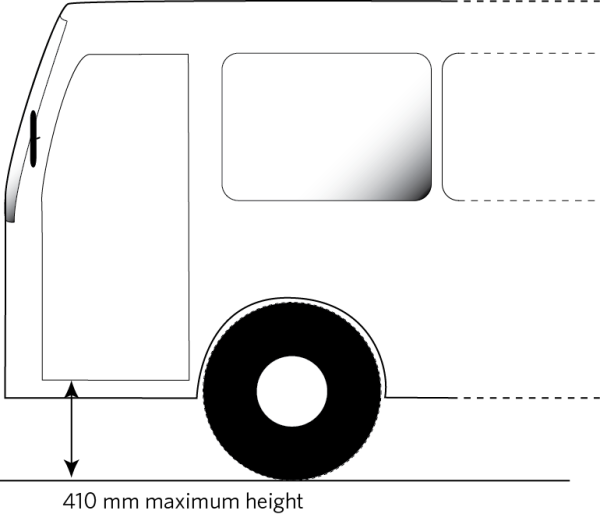
Figure 6-3-2. Entry/exit step requirements
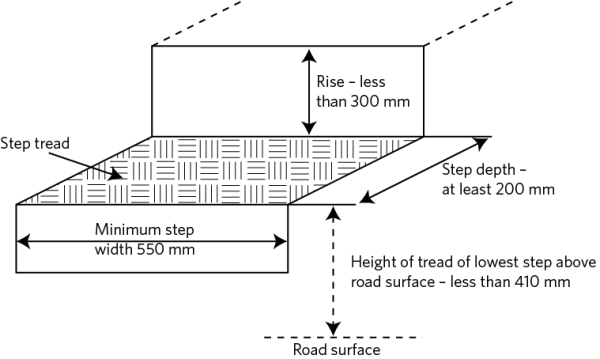
Summary of legislation
Applicable legislation
Mandatory requirements
1. Except for a stretch limousine, if the floor of a heavy PSV at the entrance or exit door is more than 410mm above the surface of the level roadway, there must be a step or ramp which complies with the following requirements:
a) unless the entrance is of an outdoor access vehicle or is a left-front passenger entrance providing access for less than three passenger seating positions, the distance from the ground to the tread surface of the lowest entrance level must be less than 410mm when measured with the unladen vehicle:
i. on a flat horizontal surface, and
ii. if the height of the suspension can be adjusted from the driver’s seat, the vehicle is in its lowest suspension position.
2. Unless the entrance is of a stretch limousine or an outdoor access vehicle or is a left-front passenger entrance providing access for less than three passenger seating positions, entry and exit steps must meet the following dimensional requirements:
a) if more than one step is provided, the rise from one step to the next must be less than 300mm, and
b) the step depth from the front edge to inner riser must be at least 200mm, and
c) the step width parallel to the doorway must be at least 550mm, and
d) If more than one step is provided, any intermediate step which is cut away to allow space for the door to open must be at least 180mm deep and at least 250mm wide.
3. Permanent external steps and ramps on the side of the passenger service vehicle must not extend more than 20mm beyond the adjacent body line of the vehicle, and must be constructed so that they are not likely to injure any person.
4. Manually operated extending steps on the side of the passenger service vehicle must:
a) be constructed so that they are not likely to injure any person, and
b) protrude no more than 20mm beyond the adjacent body line of the vehicle when they are folded away, and
c) if the steps extend more than 20mm beyond the adjacent body line of the vehicle, have an audible or visual alarm system that alerts the driver if the vehicle is moving and the steps are extended.
5. Retractable steps must comply with the requirements of the version of UN/ECE Regulation No 36, UN/ECE Regulation No. 107 or Directive 2001/85/EC, which was applicable either:
a) if they were fitted before the vehicle entered service as a PSV in New Zealand, at the time when the vehicle entered service as a PSV in New Zealand, or
b) if they were fitted after the vehicle entered service as a PSV in New Zealand, at the time the steps were fitted.
6. Power operated retractable steps must meet the following requirements:
a) the movement of the step must be synchronised with the operation of the associated door, and
b) the vehicle must not be able to move under its own power when the step is extended, and
c) if the associated door is not within the driver’s direct view, the door must not be able to be closed with a passenger on the step (compliance with this requirement may be demonstrated by placing a weight of 15kg at the centre of the step), and
d) the step must not protrude more than 10 mm beyond the adjacent line of the body work when the associated door is closed.
7. Mechanically operated retractable steps must not protrude more than 10mm beyond the adjacent line of the body work when the associated door is closed.
8. Ramps must be at least 800mm wide, or at least 760mm wide with a 20mm high safety ridge along the side edges.
9. A ramp which is fully extended from a vehicle parked on a flat level surface must not have a gradient that is steeper than 1 in 4.
10. The cross section dimension of handholds on steps or ramps must have no dimension smaller than 20mm or greater than 45mm.
11. A vehicle must comply with the requirements relating to mandatory requirements and equipment set out in the VIRM: In-service certification, section 6-3
Condition and performance
12. A vehicle must comply with the requirements relating to condition and performance set out in the VIRM: In-service certification, section 6-3
Page amended 1 October 2012 (see amendment details).
6-4 PSV emergency exits (light PSVs)
|
Note: an unmodified vehicle is not required to comply with Summary of legislation 1–6, or Reasons for rejection 1–6, provided that it complies with either:
|
Reasons for rejection
Mandatory requirements
1. A PSV does not have emergency exits:
a) distributed throughout the area used by the occupants of the PSV, or
b) on at least two different surfaces of the compartment.
2. A PSV does not have dedicated emergency exits on as many different surfaces as is practicable.
3. A PSV with less than three dedicated emergency exits has one on the left-hand side of the vehicle.
4. A dedicated emergency exit door opens inwards.
5. A dedicated emergency exit on the side wall is hinged on its rear edge.
6. A push-out or free-falling dedicated emergency exit requires a force of more than 400 newtons to open it (Note 2)
7. A PSV is fitted with a sliding or similar type of dedicated emergency exit, which is likely to jam or malfunction if there is even a slight distortion of the vehicle body or frame.
8. A dedicated emergency exit which is a doorway is not at least:
a) 1200mm high (except for a stretch limousine),or
b) 500mm wide.
9. A dedicated emergency exit which is a window or hatch:
a) has a dimension (eg height or width) less than 500mm, or
b) has a free area of the opening is less than 0.35m2.
10. A person is required to step both upwards and downwards to access a dedicated emergency exit.
11. The lower edge of a dedicated emergency exit on the side of the vehicle is 1m or more above the adjacent floor.
12. A dedicated emergency exit window or door is in the extreme rear of the vehicle and there are seats in front of it, and there is no permanent shelf to cover any gap exceeding 150mm between the emergency exit window/door and the rear of the seats (Figure 6-4-1)
13. A vehicle does not comply with the requirements relating to mandatory equipment set out in the VIRM: In-service certification, section 6-4
Performance
14. A vehicle does not comply with a requirement relating to performance set out in the VIRM: In-service certification, section 6-4
Note 1 Definitions
Compartment, for the purposes of emergency exits, means:
- the separated driver’s compartment
- the upper and lower passenger compartments of a double-decked vehicle
- the front and rear sections of the passenger compartment of an articulated bus
- the passenger compartment of a single-decked non-articulated bus.
Emergency exit means:
- a door used for the entry and exit of the occupants and, for this purpose, a door of double single width is a single emergency exit
- the access between the front and rear sections of an articulated bus
- the stairway from the upper deck to the lower deck
- a dedicated emergency exit.
Dedicated emergency exit means any doorway, window, hatch or other opening that is designed and constructed solely to provide a means of leaving the vehicle in the event of an emergency.
Surfaces (of a PSV) means:
- the side walls
- the front and rear faces
- the roof
- the floor of the upper deck of a double-decked vehicle.
Note 2
If it is suspected that the opening force exceeds 400 newtons, the exit must be checked during an entry inspection. A push-out or free falling dedicated emergency exit is not required to have levers or handles to open it. It must be mounted in a rubber that has a removable rubber strip on both the inside and outside. In the absence of either rubber strip the owner must demonstrate the operation of the exit.
Figure 6-4-1. Dedicated emergency exit window (or door)
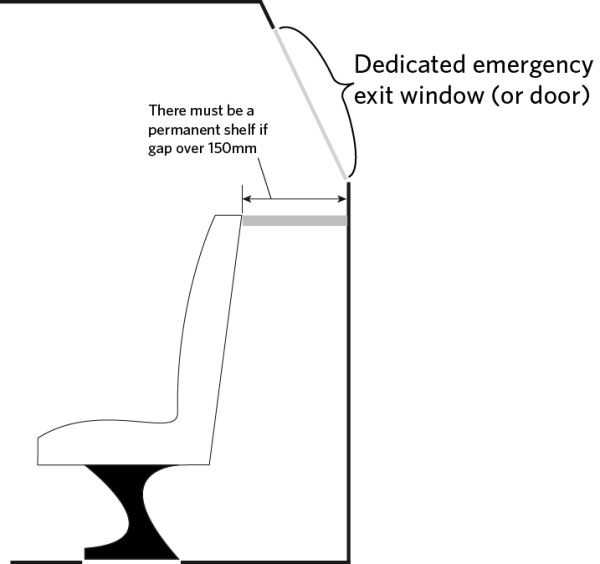
Summary of legislation
Applicable legislation
Mandatory requirements
1. Emergency exits must be:
a) distributed throughout the area used by the occupants of the PSV, and
b) on at least two different surfaces of the compartment.
2. Dedicated emergency exits:
a) must be provided for on as many different surfaces as is practicable, and
b) must not be on the left-hand side of the PSV if the vehicle has less than three dedicated emergency exits.
3. A dedicated emergency exit must open outwards.
4. A dedicated emergency exit of a hinged door or hinged window type in the side wall of a vehicle must not be hinged on its rear edge.
5. A push-out or free-falling dedicated emergency exit must not require a force of more than 400 newtons to open it (Note 2).
6. A sliding or similar type of dedicated emergency exit, which is likely to jam or malfunction if there is even a slight distortion of the vehicle body or frame, must not be fitted on a motor vehicle which entered service as a PSV in New Zealand on or after 1 September 1999.
7. A dedicated emergency exit which is a doorway must be at least:
a) 1200mm high (except for a stretch limousine), and
b) 500mm wide.
8. A dedicated emergency exit which is a window or hatch must have no dimension less than 500mm, and the free area of the opening must be at least 0.35m2
9. A dedicated emergency exit in a motor vehicle which entered service as a PSV in New Zealand on or after 1 September 1999 must comply with the following requirements:
a) a person must not be required to step both upwards and downwards to access the emergency exit, and
b) if an emergency exit window is on the side of the vehicle, the lower edge of the emergency exit window opening must not be more than 1m above the floor adjacent to the emergency exit, and
c) if an emergency exit window is in the extreme rear of the vehicle and there are seats in front of it, there must be a permanent shelf to cover any gap greater than 150mm between the emergency exit window and the rear of the seats.
10. A vehicle must comply with the requirements relating to mandatory equipment set out in the VIRM: In-service certification, section 6-4
Performance
11. A vehicle must comply with the requirements relating to performance set out in the VIRM: In-service certification, section 6-4
Page amended 1 October 2012 (see amendment details).
6-4 PSV emergency exits (heavy PSVs)
|
Note: an unmodified vehicle is not required to comply with Summary of legislation 1–6, or Reasons for rejection 1–6, provided that it complies with either:
|
Reasons for rejection
Mandatory requirements
1. A PSV does not have emergency exits:
a) distributed throughout the area used by the occupants of the PSV, or
b) on at least two different surfaces of the compartment.
2. A PSV does not have dedicated emergency exits on as many different surfaces as is practicable.
3. A PSV with less than three dedicated emergency exits has one on the left-hand side of the vehicle.
4. A dedicated emergency exit door opens inwards.
5. A dedicated emergency exit in the side wall is hinged on its rear edge.
6. A push-out or free-falling dedicated emergency exit requires a force of more than 400 newtons to open it (Note 2).
7. A PSV is fitted with a sliding or similar type of dedicated emergency exit, which is likely to jam or malfunction if there is even a slight distortion of the vehicle body or frame.
8. A dedicated emergency exit which is a doorway is not at least:
a) 1200mm high (except for a stretch limousine),or
b) 500mm wide.
9. A dedicated emergency exit which is a window or hatch:
a) has a dimension (e.g. height or width) less than 500mm, or
b) has a free area of the opening is less than 0.35 m2.
10. A person is required to step both upwards and downwards to access a dedicated emergency exit.
11. The lower edge of a dedicated emergency exit on the side of the vehicle is 1m or more above the adjacent floor.
12. A dedicated emergency exit window or door is in the extreme rear of the vehicle and there are seats in front of it, and there is no permanent shelf to cover any gap exceeding 150mm between the emergency exit window/door and the rear of the seats (Figure 6-4-1).
13. A vehicle does not comply with the requirements relating to mandatory equipment set out in the VIRM: In-service certification, section 6-4
Performance
14. A vehicle does not comply with a requirement relating to performance set out in the VIRM: In-service certification, section 6-4
Note 1 Definitions
Compartment, for the purposes of emergency exits, means:
- the separated driver’s compartment
- the upper and lower passenger compartments of a double-decked vehicle
- the front and rear sections of the passenger compartment of an articulated bus
- the passenger compartment of a single-decked non-articulated bus.
Emergency exit means:
- a door used for the entry and exit of the occupants and, for this purpose, a door of double single width is a single emergency exit
- the access between the front and rear sections of an articulated bus
- the stairway from the upper deck to the lower deck
- a dedicated emergency exit.
Dedicated emergency exit means any doorway, window, hatch or other opening that is designed and constructed solely to provide a means of leaving the vehicle in the event of an emergency.
Surfaces (of a PSV) means:
- the side walls
- the front and rear faces
- the roof
- the floor of the upper deck of a double-decked vehicle.
Note 2
If it is suspected that the opening force exceeds 400 newtons, the exit must be checked during an entry inspection. A push-out or free falling dedicated emergency exit is not required to have levers or handles to open it. It must be mounted in a rubber that has a removable rubber strip on both the inside and outside. In the absence of either rubber strip the owner must demonstrate the operation of the exit.
Figure 6-4-1. Dedicated emergency exit window (or door)
Summary of legislation
Applicable legislation
Mandatory requirements
1. Emergency exits must be:
a) distributed throughout the area used by the occupants of the PSV, and
b) on at least two different surfaces of the compartment.
2. Dedicated emergency exits:
a) must be provided for on as many different surfaces as is practicable, and
b) must not be on the left-hand side of the PSV if the vehicle has less than three dedicated emergency exits.
3. A dedicated emergency exit must open outwards.
4. A dedicated emergency exit of a hinged door or hinged window type in the side wall of a vehicle must not be hinged on its rear edge.
5. A push-out or free-falling dedicated emergency exit must not require a force of more than 400 newtons to open it (Note 2)
6. A sliding or similar type of dedicated emergency exit, which is likely to jam or malfunction if there is even a slight distortion of the vehicle body or frame, must not be fitted on a motor vehicle which entered service as a PSV in New Zealand on or after 1 September 1999.
7. A dedicated emergency exit which is a doorway must be at least:
a) 1200mm high (except for a stretch limousine), and
b) 500mm wide.
8. A dedicated emergency exit which is a window or hatch must have no dimension less than 500mm, and the free area of the opening must be at least 0.35m2
9. A dedicated emergency exit in a motor vehicle which entered service as a PSV in New Zealand on or after 1 September 1999 must comply with the following requirements:
a) a person must not be required to step both upwards and downwards to access the emergency exit, and
b) if an emergency exit window is on the side of the vehicle, the lower edge of the emergency exit window opening must not be more than 1m above the floor adjacent to the emergency exit, and
c) if an emergency exit window is in the extreme rear of the vehicle and there are seats in front of it, there must be a permanent shelf to cover any gap greater than 150mm between the emergency exit window and the rear of the seats.
10. A vehicle must comply with the requirements relating to mandatory equipment set out in the VIRM: In-service certification, section 6-4
Performance
11. A vehicle must comply with the requirements relating to performance set out in the VIRM: In-service certification, section 6-4
Page amended 1 October 2012 (see amendment details).
7 Vehicle interior
-
7-1 Seats and seat anchorages
-
7-2 PSV seating (light and heavy PSVs)
-
7-3 Head restraints
-
7-4 PSV aisles (light PSVs)
-
7-4 PSV aisles (heavy PSVs)
-
7-5 Seatbelts and seatbelt anchorages
-
7-6 Airbags
-
7-7 Interior impact
-
7-8 PSV heating and ventilation (light and heavy PSVs)
-
7-9 PSV fire protection (light and heavy PSVs)
7-1 Seats and seat anchorages
|
IMPORTANT: any parts that require removal or disassembly in order to carry out the inspection of seat anchorages must be removed. See Vehicle structure – 3-3 Inspection specifications A vehicle whose seats or seat anchorages have been damaged beyond the limits specified in Vehicle structure – 3-4 Threshold for requiring repair certification must be certified by a specialist repair certifier before entry certification. |
Reasons for rejection
Mandatory equipment
1. A vehicle does not comply with a requirement relating to mandatory equipment set out in:
See Technical bulletin 14 for an explanation of the requirements relating to rotating seats.
Compliance with approved standards
2. A seat or seat anchorage that is required to comply with an approved seat and seat anchorage standard did not comply, or cannot be demonstrated to have complied, with at least one of the standards listed in Table 7-1-1 at the time the vehicle was manufactured.
Condition, performance and modification
3. A seat or seat anchorage does not comply with a requirement relating to condition, performance or modification set out in:
Note 1
Vehicles that comply with approved frontal impact standards are not required to comply with approved seat and seat anchorage standards. For the avoidance of doubt, this does not apply to vehicles:
- that have been issued with a special interest vehicle permit or immigrant’s vehicle permit for frontal impact
- vehicles with a gross vehicle mass over 2500kg
- vehicles over 20 years old that do not comply with a frontal impact standard.
Table 7-1-1. Approved seat and seat anchorage standards*
UN-ECE Regulation no. | EEC/EC Directive | FMVSS | ADR | Japan |
|---|---|---|---|---|
17 | 74/408 | 207 | 3 | Technical standard for seats and seat anchorages |
* A seat or seat anchorage that is required to comply with an approved seat and seat anchorage standard must comply with at least one of the standards listed in the table.
Summary of legislation
Applicable legislation
Mandatory equipment
1. Vehicles must comply with the requirements relating to mandatory equipment set out in:
Compliance with approved standards
2. Seats and seat anchorages in the following vehicles must comply with one or more of the approved seat and seat anchorage standards in Table 7-1-1:
- vehicles of class MA, MB, MC and NA manufactured on or after 1 October 2002.
Condition, performance and modification
3. Seats and seat anchorages must comply with the requirements relating to condition, performance and modification set out in:
Page updated 7 January 2025 (see details)
7-2 PSV seating (light and heavy PSVs)
|
Note: an unmodified vehicle is not required to comply with Reasons for rejection 1–4 or Summary of legislation 1–3, of section 7-2 provided that it complies with either:
|
Reasons for rejection
Mandatory requirements
1. A seat dimension or spacing does not comply with the requirements of Table 7-2-1
2. A seat is able to be adjusted, by sliding it backwards, so it enchroaches into the required seat space or foot room.
3. On a PSV, the shoulder width of a passenger seat to the left of the driver’s seat:
a) encroaches to within 250mm of a longitudinal vertical plane through the centre of the steering wheel, or
b) encroaches to within 500mm of the internal surface of the right-hand door, if any (Figure 7-2-1).
4. A vehicle part, such as the wheel housing, drive-shaft tunnel, or similar equipment, protrudes into the foot room area in a manner that is likely to hinder emergency evacuation of the PSV.
In addition to UN/ECE compliance:
5. On a PSV intended to carry wheelchairs, the height from floor to ceiling in positions where wheelchairs will be restrained is less than 1480mm.
6. On a PSV intended to carry wheelchairs, the wheelchair or wheelchair-occupant restraint anchor points are positioned within the foot room requirements of Table 7-2-1.
7. Energy-absorbing material is not fitted to:
a) the top of an exposed partition less than 1.2m high in front of a seat, or
b) the top of a seat (except for a dedicated handhold integrated into the seat frame or a seatbelt fastening point).
8. A handhold on a seat has a cross section smaller than 15 × 25mm.
9. A vehicle does not comply with the requirements relating to mandatory requirements or mandatory and permitted equipment set out in:
Condition and performance
10. A vehicle does not comply with a requirement relating to condition or performance set out in:
Table 7-2-1. Minimum seating dimensions and spacings (mm)
Height above seats (Figure 7-2-2) | Shoulder-room width | Seat spacing | Foot room (Figure 7-2-9) | |
|---|---|---|---|---|
All PSVs except dedicated primary-school and intermediate-school buses | ||||
9 seats or less | No requirement | No requirement | For seats facing same direction: 650 (Figure 7-2-4, Figure 7-2-5), or 660 (Figure 7-2-6), or 760 (Figure 7-2-7) For seats facing each other: 1300 (Figure 7-2-8) (1200 for outdoor-access vehicles) (Figure 7-2-8) | 300 wide, and 300 deep (unless compliant with UN/ECE 107) |
More than 9 seats | 850 for driver’s seat and any passenger seat located in-line with the driver’s seat 900 all other seats | 450 shoulder room (Figure 7-2-3) | ||
Dedicated primary-school and intermediate-school buses | ||||
9 seats or less | No requirement | No requirement | For seats facing same direction: 600 (Figure 7-2-4, Figure 7-2-5, Figure 7-2-6, Figure 7-2-7) For seats facing each other: 1200 (Figure 7-2-8) | 250 wide, and 250 deep (unless compliant with UN/ECE 107) |
More than 9 seats | 850 for driver’s seat and any passenger seat located in-line with the driver’s seat 900 all other seats | 300 shoulder room2 | ||
Figure 7-2-1. Driving position protection and encroachment limits
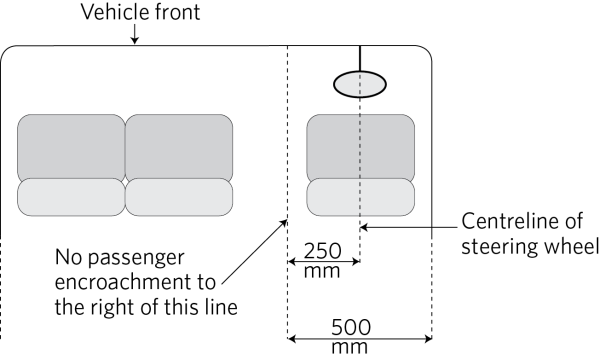
Figure 7-2-2. Vertical clearance
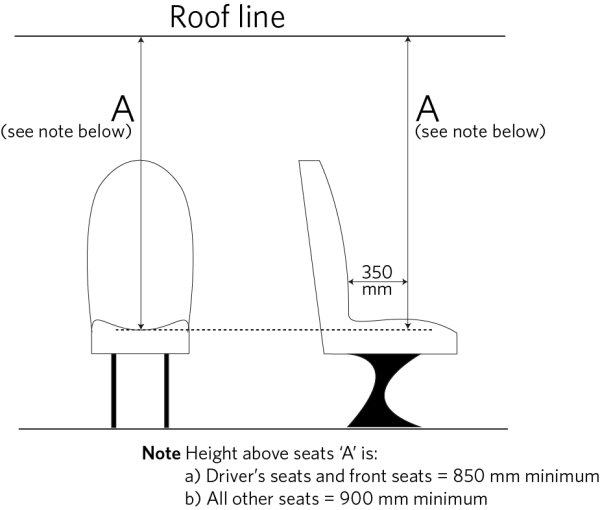
Height above seats is the vertical clearance above the seat cushion when measured 350mm in front of the backrest.
Figure 7-2-3. Shoulder room measurement
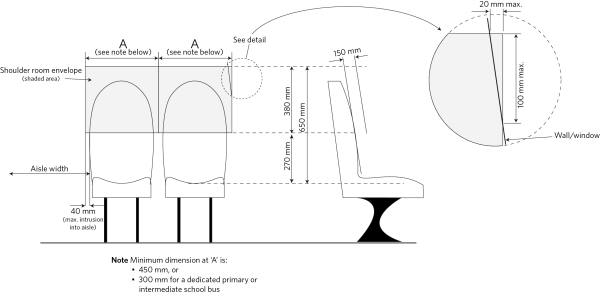
Shoulder room is measured 150mm in front of the backrest, above the seating surface, parallel to the seat width, at a height between 270mm and 650mm above the centre of the seat cushion. Shoulder room may encroach into the aisle provided that the encroachment is less than 40mm on each side of the aisle.
For seats next to the wall of the vehicle, the wall or window may encroach into the upper corner of the shoulder room if the encroachment is not larger than a triangular area which is 20mm wide at the upper edge and 100mm long at the side edge of the shoulder room.
Figure 7-2-4. Seat spacing for non-reclinable or reclinable forward- or rearward-facing seats facing in the same direction (650mm)
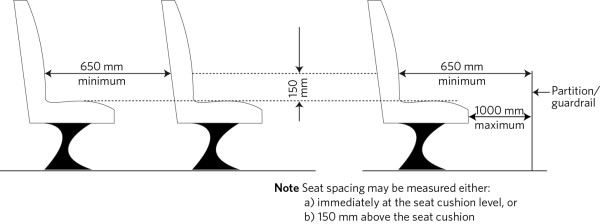
For non-reclinable forward- or rearward-facing seats facing in the same direction, seat spacing of 650mm is measured horizontally, immediately above the seat cushion, or 150mm above the seat cushion, between:
-
the backrest of the seat and the rear of the seat, if any, immediately in front of it, or
-
the backrest of the seat and the rear surface of the partitioning or protecting device, if any, in front of the seat.
Figure 7-2-5. Reclinable seat spacing measurement (650mm)
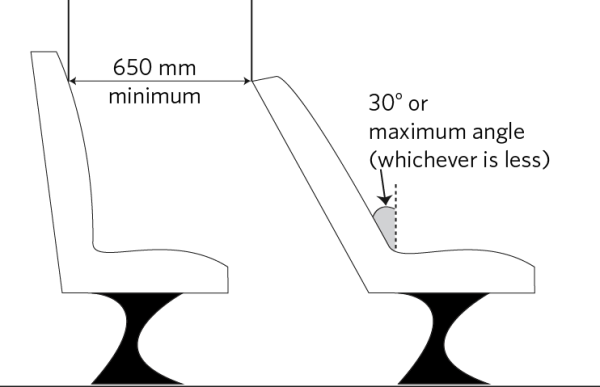
For reclinable forward- or rearward-facing seats which face in the same direction, the seat spacing of 650mm is measured either (Figure 7-2-4):
-
with the seat in the upright position, and
-
horizontally, immediately above the seat cushion, or 150mm above the seat cushion, and
-
between the backrest of the seat and the rear surface of the partitioning or protecting device, if any, in front of the seat ,
OR
-
with the rear seat in the upright position and the front seat reclined to its maximum angle or by 30 degrees from the vertical, whichever is the smaller angle, and
-
horizontally at the height of the rearmost point of the front seat, and
-
between the backrest of the rear seat and the rear of the front seat (Figure 7-2-5).
Figure 7-2-6. Reclinable seat spacing measurement (660mm)
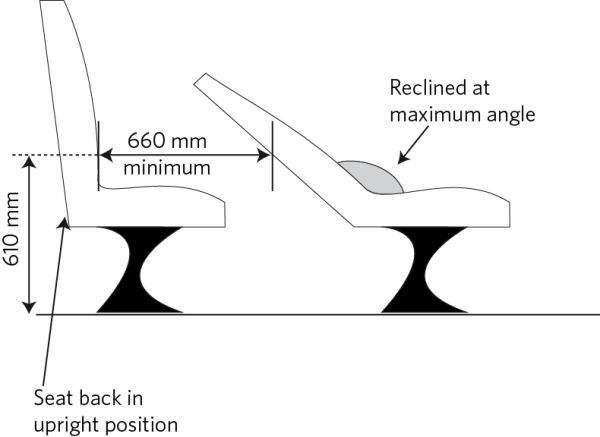
For reclinable forward- or rearward-facing seats which face in the same direction, the seat spacing of 660mm is measured:
- horizontally, 610mm above the floor, and
- with the front seat reclined to the maximum angle and the rear seat in an upright position, and
- between the backrest of the rear seat and the rear of the front seat.
Figure 7-2-7. Reclinable seat spacing measurement (760mm)
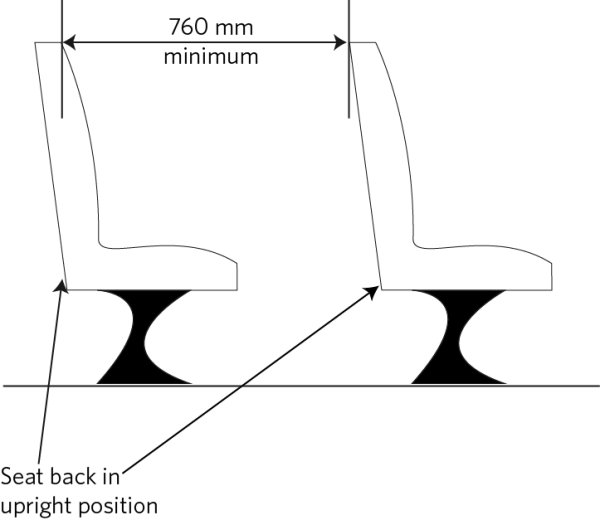
For reclinable forward- or rearward-facing seats which face in the same direction, the seat spacing of 760mm is measured:
- with both the front seat and the rear seat backrests in an upright position, and
- horizontally at the height of the rearmost point of the front seat, and
- between the backrest of the rear seat and the rear of the front seat.
Figure 7-2-8. Seat spacing measurement (facing seats)
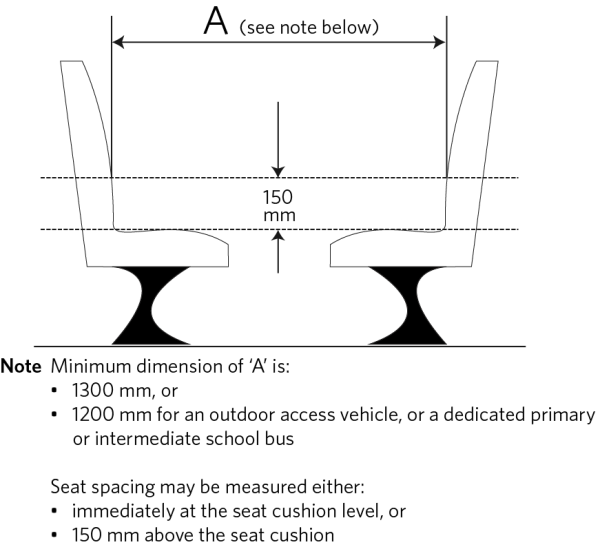
For seats that face each other, the seat spacing is measured horizontally, immediately above the seat cushion, or 150mm above the seat cushion, between the inside surfaces of the backrests.
Figure 7-2-9. Foot room measurement
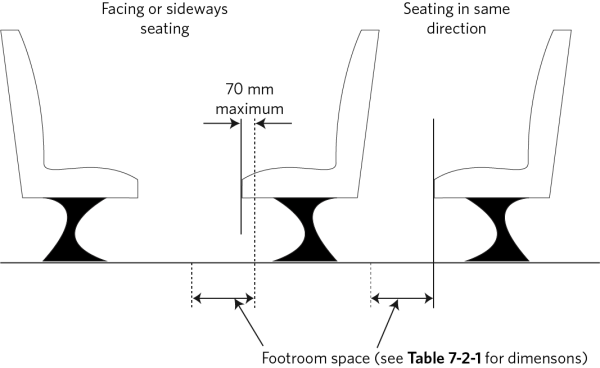
For seats facing in the same direction, foot room is measured from a line on the floor, which is immediately below the front of the seat cushion. For seats facing each other, foot room is measured not more than 70mm behind the line immediately below the front of the seat cushion.
Summary of legislation
Applicable legislation
Mandatory requirements
1. Seat dimensions and spacings, measured with uncompressed seat padding, must comply with Table 7-2-1
2. If there are passenger seating positions to the left of the driver’s seat, the seats and driving controls must be designed and located so that the shoulder width of the passenger seat does not encroach into the space required by the driver when driving. On a motor vehicle that entered service as a PSV on or after 1 September 1999 the space designed to be clear of encroachment must:
a) extend at least 250mm to the left of a longitudinal plane through the centre of the steering wheel, and
b) extend for a width of at least 500mm to the left of the internal surface of the right-hand door, if any, excluding the armrest.
3. If vehicle parts, such as the wheel housing, drive-shaft tunnel, or similar equipment, protrude into the foot room area, they must not encroach into the area in a manner that is likely to hinder emergency evacuation of the PSV.
In addition to UN/ECE compliance:
4. On a PSV intended to carry wheelchairs, the height from floor to ceiling in positions where wheelchairs will be restrained must be at least 1.48m.
5. Energy-absorbent material must be fitted to:
a) the tops of exposed partitions, which are less than 1.2m high, situated in front of seats, and
b) the tops of seats, except in a limited area:
i. at the upper corners of seat backs which are dedicated handholds and which are integrated parts of the seat frames, or
ii. to which the upper point of a lap-and diagonal seatbelt is fitted.
6. The minimum cross section dimension of handholds on seats may be 15mm if one other dimension is at least 25mm.
7. A vehicle must comply with the requirements relating to mandatory requirements, mandatory and permitted equipment set out in:
Condition and performance
8. A vehicle must comply with the requirements relating to condition and performance set out in:
Page amended 1 June 2019 (see amendment details).
7-3 Head restraints
Reasons for rejection
Compliance with approved standards
1. A head restraint that is required to comply with an approved head restraint standard did not comply, or cannot be demonstrated to have complied, with at least one of the standards listed in Table 7-3-1 at the time the vehicle was manufactured or the head restraint was fitted.
Condition, performance and modification
2. A head restraint does not comply with a requirement relating to condition, performance or modification set out in the VIRM: In-service certification, section 7-3
Table 7-3-1. Approved head restraint standards*
UN-ECE Regulation no. | EEC/EC Directive | FMVSS | ADR | Japan |
|---|---|---|---|---|
17 | 78/932 | 202 | 22 | Technical Standard for Head Restraints |
* A head restraint that is required to comply with an approved head restraint standard must comply with at least one of the standards listed in the table.
Summary of legislation
Applicable legislation
Compliance with approved standards
1. Head restraints in the following vehicles must comply with one or more of the approved head restraint standards in Table 7-3-1:
- vehicles of class MA, MB, MC and MD1 manufactured on or after 1 March 1999.
Condition, performance and modification
2. Head restraints must comply with the requirements relating to condition, performance and modification set out in the VIRM: In-service certification, section 7-3
Page updated 7 January 2025 (see details)
7-4 PSV aisles (light PSVs)
|
Note: an unmodified vehicle is not required to comply with section 7-4 provided that it complies with either:
|
Reasons for rejection
Mandatory requirements
1. An aisle step:
a) is not permanently fixed, or
b) encroaches on required foot room or seating space in section 7-2, or
c) are arranged so that passengers leaving the vehicle step upward (unless the steps are over the engine cover and provide access from a central door to seating positions), or
d) from one step to the next is 250mm or more, or
e) from a sunken aisle to the seating area is 250mm or more, or
f) is less than 200mm deep from the front edge to the rise of the next step, or
g) width is less than the minimum aisle width in Table 7-4-2
2. Where steps are fitted over an engine cover to provide access from a central door to seating positions:
a) there are more than two steps, or
b) the combined step height is 400mm or more, or
c) the steps provide access to more than five seating positions.
3. An aisle has a gradient steeper than:
a) 1 in 8 where standing passengers are not permitted, or
b) 1 in 12.5 where standing passengers are permitted.
4. The aisle height is below the minimum specified in Table 7-4-1
5. The aisle width is less than the minimum specified in Table 7-4-2
6. On a PSV intended to carry wheelchairs, any wheelchair or wheelchair-occupant restraint anchor points are positioned within the aisle width requirements of Table 7-4-2
7. A handhold on an aisle step or an internal ramp has a cross section dimension:
a) smaller than 20mm, or
b) greater than 45mm.
8. A vehicle does not comply with the requirements relating to mandatory equipment set out in the VIRM: In-service certification, section 7-4
Condition and performance
9. A vehicle does not comply with a requirement relating to condition or performance set out in the VIRM: In-service certification, section 7-4
Note 1 Definition
An aisle is the area that provides unobstructed access throughout the passenger service vehicle from each doorway used for passenger entry and exit to the footroom of each passenger seating position and includes aisle steps and internal ramps.
Table 7-4-1. Minimum aisle height
Minimum aisle height (mm)* | |||
|---|---|---|---|
Standing passengers | 1830 1800 - if CoL allows only primary- and intermediate-school pupils to stand. | ||
Stretch limousines | Not less than the height of the doorway(s) servicing the aisle. | ||
Single-decked vehicle (excluding stretch limousines), no standing passengers | |||
Aisle length (mm) | Up to 12 seats (including driver’s) | 13 to 17 seats (including driver’s) | 18 or more seats (including driver’s) |
1900 or less | 1200 | 1350 | 1500 |
1901–2000 | 1390 | ||
2001–2100 | 1430 | ||
2101–2200 | 1470 | ||
2201–2300 | 1510 | ||
2301–2400 | 1550 | ||
2401–2500 | 1590 | ||
2501–2600 | 1620 | ||
2601–2700 | 1660 | ||
2701–2800 | 1700 | ||
2801–2900 | 1740 | ||
2901 and greater | 1780 | ||
Double-decked vehicles | Lower deck 1740, upper deck 1720 | ||
* The minimum aisle height dimension in Table 7-4-1 (other than for standing passengers) must be applied to the entire aisle throughout the passenger compartment.
Table 7-4-2. Minimum aisle width
Passenger type | Minimum aisle width (mm) |
|---|---|
No standing passengers | 300 |
Standing passengers (adult or secondary school pupils) | 380 |
Standing primary and intermediate school pupils only | 300 |
Figure 7-4-1. Aisle length measurement – one doorway opening into aisle
The aisle length is the longest aisle in a compartment measured as follows:
a) if only one doorway opens into that aisle, measured from:
i) the front edge of the doorway to the front edge of the front seat serviced by that aisle, or
ii) the rear edge of the doorway to the front edge of the rearmost seat serviced by that aisle,
b) if more than one door opens into the aisle, measured from:
i) the front edge of the front doorway to the front edge of the front seat serviced by that aisle, or
ii) the rear edge of the rearmost doorway to the front edge of the rearmost seat serviced by that aisle, or
iii) the point halfway between the front edge of the rearmost doorway to the rear edge of the front doorway.
Summary of legislation
Applicable legislation
Mandatory requirements
1. Aisle steps must comply with the following requirements:
a) the steps must be permanently fixed and must not encroach on any required foot room or seating space (section 7-2), and
b) except for steps over the engine cover to provide access from a central door to seating positions, the steps must be arranged so that any passenger, upon exiting the PSV, steps only downwards, and
c) the rise from one step to the next or, in the case of a sunken aisle, the rise up to the seating area, must be less than 250mm, and
d) the depth of the step from the front edge to the rise of the next step must be at least 200mm, and
e) the width of the step must not be less than the minimum aisle width for that vehicle.
2. If steps are fitted over an engine cover to provide access from a central door to seating positions:
a) there must be less than three steps, and
b) the combined step height must be less than 400mm, and
c) the steps must not provide access to more than five seating positions.
3. The gradient of an aisle must not be steeper than:
a) 1 in 8 where standing passengers are not permitted, or
b) 1 in 12.5 where standing passengers are permitted.
4. The aisle height must be above or at the minimum specified in Table 7-4-1.
5. The aisle width must be above or at the minimum specified in Table 7-4-2.
6. The cross section dimension of handholds on aisle steps or an internal ramp in a vehicle which entered service as a PSV in New Zealnd on or after 1 August 2000 must have no dimension smaller than 20mm or greater than 45mm.
7. A vehicle must comply with the requirements relating to mandatory equipment set out in the VIRM: In-service certification, section 7-4
Performance
8. A vehicle must comply with the requirements relating to performance set out in the VIRM: In-service certification, section 7-4
Page amended 1 October 2012 (see amendment details).
7-4 PSV aisles (heavy PSVs)
|
Note: an unmodified vehicle is not required to comply with section 7-4 provided that it complies with either:
|
Reasons for rejection
Mandatory requirements
1. An aisle step:
a) is not permanently fixed, or
b) encroaches on required foot room or seating space in section 7-2, or
c) are arranged so that passengers leaving the vehicle step upward (unless the steps are over the engine cover and provide access from a central door to seating positions), or
d) from one step to the next is 250mm or more, or
e) from a sunken aisle to the seating area is 250mm or more, or
f) is less than 200mm deep from the front edge to the rise of the next step, or
g) width is less than the minimum aisle width in Table 7-4-3
2. Where steps are fitted over an engine cover to provide access from a central door to seating positions:
a) there are more than two steps, or
b) the combined step height is 400mm or more, or
c) the steps provide access to more than five seating positions.
3. An aisle has a gradient steeper than:
a) 1 in 8 where standing passengers are not permitted, or
b) 1 in 12.5 where standing passengers are permitted.
4. The aisle height is below the minimum specified in Table 7-4-2
5. The aisle width is less than the minimum specified in Table 7-4-3
6. On a PSV intended to carry wheelchairs, any wheelchair or wheelchair-occupant restraint anchor points are positioned within the aisle width requirements of Table 7-4-3
7. Handrails, handholds, or handgrips in a PSV with a CoL that allows standing passengers are:
a) insufficient for the number of passengers permitted to occupy the aisle, or
b) inappropriately located, or
c) do not allow for passengers of different heights.
8. A handhold on an aisle step or an internal ramp has a cross section dimension:
a) smaller than 20mm, or
b) greater than 45mm.
9. A vehicle does not comply with the requirements relating to mandatory equipment set out in the VIRM: In-service certification, section 7-4
Condition and performance
10. A vehicle does not comply with a requirement relating to condition or performance set out in the VIRM: In-service certification, section 7-4
Note 1
An aisle is the area that provides unobstructed access throughout the passenger service vehicle from each doorway used for passenger entry and exit to the footroom of each passenger seating position and includes aisle steps and internal ramps.
Table 7-4-2. Minimum aisle height
|
Minimum aisle height (mm)* |
|||
|---|---|---|---|
|
Standing passengers |
1830 1800 - if CoL allows only primary- and intermediate-school pupils to stand. |
||
|
Stretch limousines |
Not less than the height of the doorway(s) servicing the aisle. |
||
|
Single-decked vehicle (excluding stretch limousines), no standing passengers |
|||
|
Aisle length (mm) (Figure 7-4-2) |
Up to 12 seats (including driver’s) |
13 to 17 seats (including driver’s) |
18 or more seats (including driver’s) |
|
1900 or less |
1200 |
1350 |
1500 |
|
1901–2000 |
1390 |
||
|
2001–2100 |
1430 |
||
|
2101–2200 |
1470 |
||
|
2201–2300 |
1510 |
||
|
2301–2400 |
1550 |
||
|
2401–2500 |
1590 |
||
|
2501–2600 |
1620 |
||
|
2601–2700 |
1660 |
||
|
2701–2800 |
1700 |
||
|
2801–2900 |
1740 |
||
|
2901 and greater |
1780 |
||
|
Double-decked vehicles |
Lower deck 1740, upper deck 1720 |
||
* The minimum aisle height dimension in Table 7-4-2 (other than for standing passengers) must be applied to the entire aisle throughout the passenger compartment.
In the case where there are aisle step(s) in front of a seat at the rear of the aisle, foot room for that seat may be considered to extend to the edge of the rearmost riser leading to that seat or the front edge of the seat immediately in front of the rear seat, whichever is the lesser distance (see “Distance ‘A’” in Figure 7-4-3)
While the height above the foot room does not have a minimum requirement, it must still allow easy access to the seating positions.
Table 7-4-3. Minimum aisle width
|
Passenger type |
Minimum aisle width (mm) |
|---|---|
|
No standing passengers |
300 |
|
Standing passengers (adult or secondary school pupils) |
380 |
|
Standing primary and intermediate school pupils only |
300 |
Figure 7-4-2. Aisle length measurement
Aisle length measurement – one doorway opening into aisle
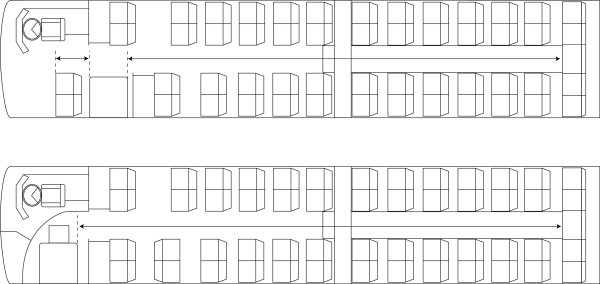
The aisle length is the longest aisle in a compartment measured as follows if only one doorway:
a) the front edge of the doorway to the front edge of the front seat serviced by that aisle, or
b) the rear edge of the doorway to the front edge of the rearmost seat serviced by that aisle (above).
Aisle length measurement – more than one doorway opening into aisle
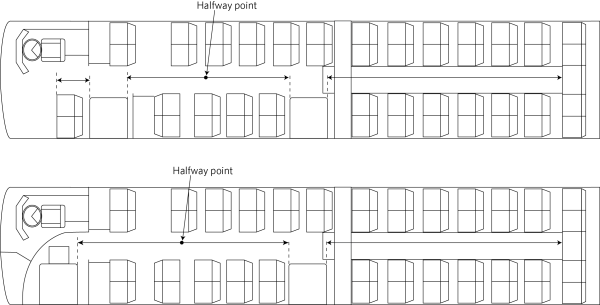
The aisle length is the longest aisle in a compartment measured as follows if more than one door opens into the aisle, measured from:
a) the front edge of the front doorway to the front edge of the front seat serviced by that aisle, or
b) the rear edge of the rearmost doorway to the front edge of the rearmost seat serviced by that aisle, or
c) the point halfway between the front edge of the rearmost doorway to the rear edge of the front doorway (above).
Figure 7-4-3. Foot room length with centre rear seat and aisle steps
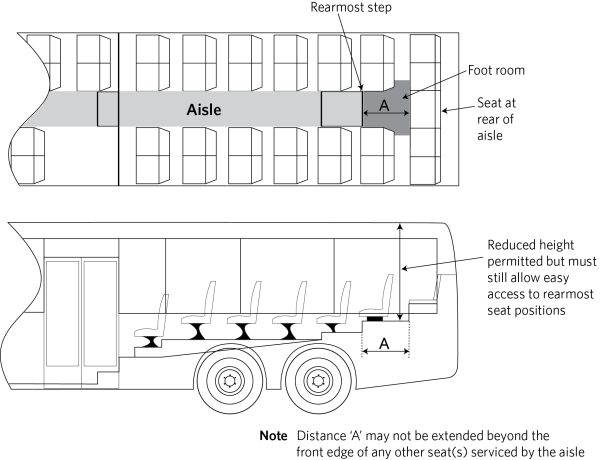
Summary of legislation
Applicable legislation
Mandatory requirements
1. Aisle steps must comply with the following requirements:
a) the steps must be permanently fixed and must not encroach on any required foot room or seating space (section 7-2), and
b) except for steps over the engine cover to provide access from a central door to seating positions, the steps must be arranged so that any passenger, upon exiting the PSV, steps only downwards, and
c) the rise from one step to the next or, in the case of a sunken aisle, the rise up to the seating area, must be less than 250mm, and
d) the depth of the step from the front edge to the rise of the next step must be at least 200mm, and
e) the width of the step must not be less than the minimum aisle width for that vehicle.
2. If steps are fitted over an engine cover to provide access from a central door to seating positions:
a) there must be less than three steps, and
b) the combined step height must be less than 400mm, and
c) the steps must not provide access to more than five seating positions.
3. The gradient of an aisle must not be steeper than:
a) 1 in 8 where standing passengers are not permitted, or
b) 1 in 12.5 where standing passengers are permitted.
4. The aisle height must be above or at the minimum specified in Table 7-4-2
5. The aisle width must be above or at the minimum specified in Table 7-4-3
6. A PSV with a CoL that allows standing passengers must be fitted with handrails, handholds, or handgrips, whose number and location must be appropriate for the number of passengers permitted to occupy the aisle and for passengers of different heights.
7. The cross section dimension of handholds on aisle steps or an internal ramp in a vehicle which entered service as a PSV in New Zealand on or after 1 August 2000 must have no dimension smaller than 20mm or greater than 45mm.
8. A vehicle must comply with the requirements relating to mandatory equipment set out in the VIRM: In-service certification, section 7-4
Performance
9. A vehicle must comply with the requirements relating to performance set out in the VIRM: In-service certification, section 7-4
Page amended 1 October 2012 (see amendment details).
7-5 Seatbelts and seatbelt anchorages
IMPORTANT: Any parts that require removal or disassembly in order to carry out the inspection of seatbelt anchorages must be removed. See Vehicle structure – 3-3 Inspection specifications.
A vehicle whose structure has been damaged beyond the limits specified in Vehicle structure – 3-4 Threshold for requiring repair certification must be certified by a specialist repair certifier before entry certification.
Reasons for rejection
Mandatory and permitted equipment
1. A vehicle does not comply with a requirement relating to mandatory or permitted equipment set out in:
- VIRM: In-service certification, section 7-5, general vehicles
- Refer to Technical bulletin 19, which explains the requirements for an SSBELTSOK exemption
- VIRM: In-service certification, section 7-5, heavy vehicles
- VIRM: In-service certification, section 7-5, heavy PSVs
-
- See Technical bulletin 14 for an explanation of requirements for rotating seats.
- For further information on replacement seatbelts, see Technical bulletin 16, which outlines requirements for replacement seatbelts, and/or Technical bulletin 19, which explains the requirements for an SSBELTSOK exemption
- Where a vehicle is not fitted with the type of seatbelt required in the in-service VIRM and the vehicle does not have anchorages for the required type of seatbelt, refer to Reference material 55
2. A three-point seatbelt imported and distributed by BVL (Business Ventures Limited) and manufactured by Changzhou BWD, China or Jiang Su Jiu Jiu Traffic Facilities Co. Ltd. is installed (See Figure 7-5-2 for samples to help identify the seatbelt).
Compliance with approved standards
3. A seatbelt did not comply, or cannot be demonstrated to have complied, with at least one of the standards listed in Table 7-5-1 or, if applicable, Table 7-5-2 at the time the seatbelt was manufactured.
4. A seatbelt anchorage that is required to comply with an approved seatbelt anchorage standard did not comply, or cannot be demonstrated to have complied, with at least one of the standards listed in Table 7-5-3 at the time the vehicle was manufactured.
5. A retrofitted seatbelt anchorage that is required to comply with a requirement in List A, B or C of Table 7-5-5 did not comply, or cannot be demonstrated to have complied, with at least one of the requirements in the applicable list of Table 7-5-5 at the time the seatbelt anchorage was retrofitted.
Condition, performance and modification
6. A seatbelt or seatbelt anchorage does not comply with a requirement relating to condition, performance or modification set out in:
- Technical bulletin 15 contains further information for Toyota Hiace seatbelt requirements.
Note 1
An original equipment seatbelt anchorage is an anchorage that was installed by the vehicle manufacturer at the time the vehicle was manufactured, and was fitted with a seatbelt by the vehicle manufacturer at the time the vehicle was manufactured.
Note 2
When inspecting Nissan Terrano and Mistral model vehicles, corrosion of the rear floorpan assembly may affect seatbelt anchorages. Refer to Technical bulletin 10 for further information.
Note 3
For class MA vehicles built to FMVSS 209 that are frontal impact compliant, there is no requirement in the standard for original equipment seatbelts or for any genuine replacement seatbelts to be marked. The same also applies to the US equivalent of NA, MB and MC class vehicles built after 1983 to FMVSS 208 and to NB and NC class vehicles built to FMVSS 209.
Note 5
Technical bulletin 20 describes the inspection requirements for vehicles with OE-installed rear upper seatbelt anchorages, with retrofitted seatbelts.
Note 6
When checking the sensitivity of dual-sensitive seatbelts fitted to the rear seating positions, the inspector must check that both sensitivities are functioning correctly.
Note 7
Modifications that would be a reason for rejection include re-webbing seatbelts onto the retractor to replace a faded or damaged seatbelt.
Table 7-5-1. Approved seatbelt standards*
UN-ECE Regulation no. | EEC/EC Directive | FMVSS | ADR | Japan | Others |
|---|---|---|---|---|---|
16 | 77/541 | 209 | 4 | TS for seatbelt assemblies | NZS 5401 |
* Seatbelts must comply with at least one of the standards listed in the table.
Table 7-5-2. Approved seatbelt standards*
UN-ECE Regulation no. | EEC/EC Directive | FMVSS | ADR | Japan | Others |
|---|---|---|---|---|---|
16 | 77/541 | 209 | 4 | TS for seatbelt assemblies | NZS 1662 |
* Seatbelts must comply with at least one of the standards listed in the table.
Table 7-5-3. Approved OE seatbelt anchorage standards*
UN-ECE Regulation no. | EEC/EC Directive | FMVSS | ADR | Japan |
|---|---|---|---|---|
14 | 76/115 | 210 | 5 | TS for seatbelt anchorages |
* A seatbelt anchorage that is required to comply with an approved seatbelt anchorage standard must comply with at least one of the standards listed in the table.
Table 7-5-4. Approved standards for child restraints
UN-ECE Regulation no. | FMVSS | British Standard | Japan | Other |
|---|---|---|---|---|
44 | 2131 | 3254 | TS for child restraints2 Article 22–5 | AS/NZS 1754 |
1 Must have been verified for compliance with that standard by an organisation specified by the NZTA in the New Zealand Gazette.
2 Must be integrated with the rear seat of a motor vehicle.
See Figure 7-5-1 for the standard markings that may assist in determining compliance of seatbelts with approved standards.
Table 7-5-5. List of requirements for retrofitted seatbelt anchorages
List A | List B | List C |
|---|---|---|
|
|
|
* A seatbelt anchorage that is required to comply with a requirement in List A, B or C must comply with at least one of the requirements in the applicable list (subject to any specified conditions).
1 Seatbelts with retractors may be fitted also but only if the LTSA St 120395 anchorages are certified as appropriate for the seatbelts by an approved person or organisation.
Figure 7-5-1. Approved seatbelt standard markings
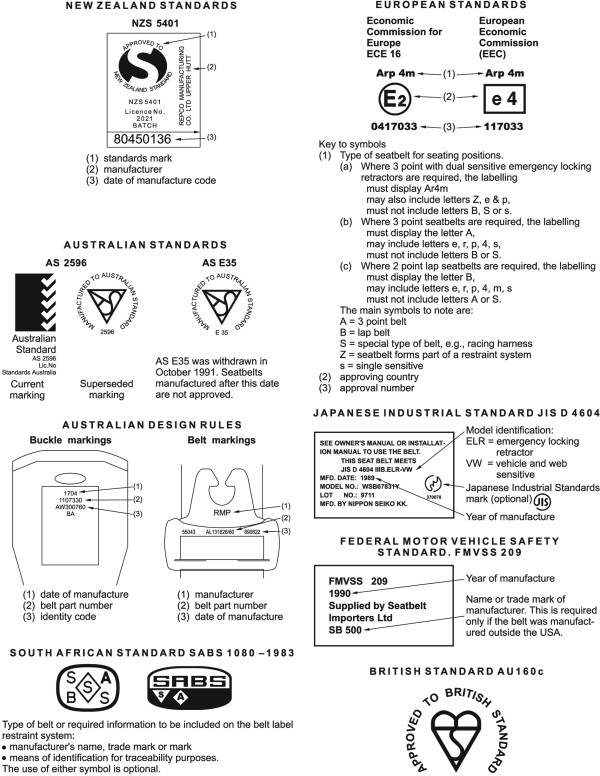
Compliant seatbelts that are not required to have standard markings
- Seatbelts that comply with the Japanese Technical Standard for Seatbelt Assemblies are not
required to have standards markings, provided the seatbelts are OE and the vehicle has Japanese type approval. - Seatbelts in a fully Australian Design Rule (ADR) compliant vehicle are not required to have standards markings.
Figure 7-5-2. Identifying seatbelts by BVL (Business Ventures Limited) and manufactured by Changzhou BWD, China or Jiang Su Jiu Jiu Traffic Facilities Co. Ltd.
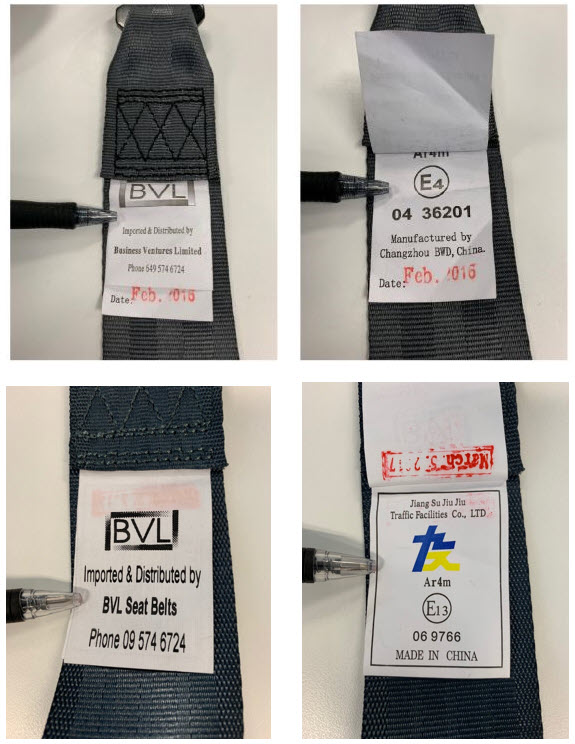
Summary of legislation
Applicable legislation
- Land Transport Rule: Seatbelts and Seatbelt Anchorages 2002
- Land Transport Rule: Vehicle Equipment 2004
Mandatory and permitted equipment
1. Vehicles must comply with the requirements relating to mandatory and permitted equipment set out in:
Compliance with approved standards
2. The following seatbelts must comply with one or more of the standards in Table 7-5-1:
a) seatbelts required to be fitted in vehicles first registered in New Zealand between 1 January 1991 and 31 March 2002 and first registered outside New Zealand between 1 January 1961 and 31 March 2002
b) seatbelts required to be fitted in vehicles first registered in New Zealand from 1 April 2002 that were manufactured between 1 November 1979 and 30 September 2003
c) seatbelts required to be fitted in vehicles manufactured from 1 October 2003
d) seatbelts fitted in vehicles or seating positions that are not required to be fitted with seatbelts.
3. All seatbelts not listed in (2) above must comply with one or more of the standards in Table 7-5-2
4. The following original equipment seatbelt anchorages (Note 1) fitted with seatbelts must comply with one or more of the seatbelt anchorage standards in Table 7-5-3:
a) seatbelt anchorages in vehicles first registered in New Zealand between 1 January 1991 and 31 March 2002, and first registered outside New Zealand between 1 January 1991 and 31 March 2002
b) seatbelt anchorages in vehicles first registered in New Zealand from 1 April 2002 and manufactured between 1 November 1979 and 30 September 2003, and first registered outside New Zealand from 1 January 1991
c) seatbelt anchorages in vehicles manufactured from 1 October 2003.
5. Seatbelt anchorages retrofitted (Note 2) between 1 January 1991 and 31 March 2002 in the following vehicles must comply with one or more of the requirements in List A of Table 7-5-5:
- vehicles first registered in New Zealand before 1 January 1991 and first registered in any country between 1 November 1979 and 1 January 1991.
6. Seatbelt anchorages retrofitted (Note 2) before 1 April 2002 in the following vehicles must comply with one or more of the requirements in List B of Table 7-5-5:
a) vehicles first registered in New Zealand between 1 January 1991 and 31 March 2002 and first registered outside New Zealand between 1 January 1961 and 31 March 2002
b) vehicles first registered in New Zealand from 1 April 2002 and manufactured between 1 November 1979 and 30 September 2003.
7. Seatbelt anchorages retrofitted (Note 2) from 1 April 2002 must comply with one or more of the requirements in List C of Table 7-5-5
8. Child restraints permanently fitted to the rear seat of a vehicle must comply with one or more of the requirements in Table 7-5-4
Condition, performance and modification
9. Seatbelts and seatbelt anchorages must comply with the requirements relating to condition, performance and modification set out in:
Page amended 1 June 2019 (see amendment details).
7-6 Airbags
IMPORTANT A vehicle with an airbag in a condition beyond the threshold specified in Vehicle structure – 3-4 Threshold for requiring repair certification must be certified by a specialist repair certifier before entry certification.
Where required, an entry certifier must obtain a declaration from a recognised technician stating that any supplementary restraint system (SRS) is within safe tolerance of the manufacturer’s specifications. See Technical bulletin 29 for further information on SRS/ABS declaration requirements.
For requirements regarding the Takata Alpha airbag recall see Technical bulletin 43: Takata airbag recall
Vehicles must comply with the requirements relating to mandatory equipment, permitted equipment, condition, performance and modification set out in:
- VIRM: In-service certification, section 7-6, general vehicles
- VIRM: In-service certification, section 7-6, heavy vehicles
Other than the above, there are no additional requirements in respect of airbags for the inspection and certification of vehicles for entry into service.
7-7 Interior impact
| IMPORTANT: a vehicle with an airbag in a condition beyond the threshold specified in Vehicle structure – 3-4 Threshold for requiring repair certification must be certified by a specialist repair certifier before entry certification. |
Reasons for rejection
Compliance with approved standards (Note 1)
1. A vehicle that is required to comply with approved interior impact standard(s) in respect of its interior fittings, controls and surface did not comply, or cannot be demonstrated to have complied, at the time of manufacture, with:
a) all of the interior impact standard(s) listed in at least one of the five columns in Table 7-7-1, or
b) at least one of the frontal impact standard(s) listed in Table 3-2-1
Condition, performance and modification
2. An interior fitting, control or surface does not comply with a requirement relating to condition, performance or modification set out in:
Note 1
Vehicles that comply with approved frontal impact standards are not required to comply with approved interior impact standards. For the avoidance of doubt, this does not apply to vehicles:
- that have been issued with a special interest vehicle permit or immigrant's vehicle permit for frontal impact
- vehicles with a gross vehicle mass over 2500kg
- vehicles over 20 years old that do not comply with a interior impact standard.
Table 7-7-1. Approved interior impact standards*
UN-ECE Regulation no. | EEC/EC Directive | FMVSS | ADR | Japan |
|---|---|---|---|---|
21 | 74/60, 78/632 or 2000/4 | 201 | 11 | TS for instrument panel impact absorption, and |
* The interior fittings, controls and surfaces of a vehicle that is required to comply with approved interior impact standard(s) must comply with all the standard(s) listed in at least one of the five columns.
Summary of legislation
Applicable legislation
Compliance with approved standards
1. The interior fittings, controls and surfaces in the passenger compartment of the following vehicles must comply with one or more of the approved interior impact standards in Table 7-7-1:
a) vehicles of class MA manufactured on or after 1 January 1992 (Note 1)
b) vehicles of class MB and MC manufactured on or after 1 March 1998 (Note 1)
Condition, performance and modification
2. Interior fittings, controls and surfaces must comply with the requirements relating to condition, performance and modification set out in:
Page amended 1 December 2016 (see amendment details).
7-8 PSV heating and ventilation (light and heavy PSVs)
Reasons for rejection
Mandatory requirements
1. Opening windows or roof hatches are the only means of ventilation and the minimum window opening provided is not at least 0.013m2 for each occupant (Note 1)
2. Forced ventilation is the only means of ventilation and the system does not (Note 2):
a) incorporate at two independent power-driven fans of similar size and capacity, which together can deliver within two minutes an air volume of the passenger compartment, or
b) have fans wired in such a way that a power failure in one fan will not affect the other, or
c) by its design and construction minimise the risk of occupants being harmed by the system or its components.
3. A vehicle does not comply with the requirements relating to mandatory equipment set out in:
Condition and performance
4. A vehicle does not comply with a requirement relating to condition or performance set out in:
Note 1
The ventilation requirement must be calculated for the maximum number of occupants that the vehicle can carry.
Note 2
It can be generally accepted that an unmodified mass-produced vehicle will comply with requirements. If there is doubt, the vehicle inspector must obtain evidence that the vehicle does comply.
Summary of legislation
Applicable legislation
Mandatory requirements
1. If opening windows or roof hatches are the only means of ventilation, the minimum window opening provided must be (Note 1):
a) 0.013m2 for each seating position, and 0.01m2 for each seated school child, for a vehicle which entered service as a PSV in New Zealand before 1 July 2000, or
b) 0.013m2 for each occupant for a vehicle which entered service as PSV in New Zealand on or after 1 July 2000.
2. If forced ventilation if the only means of ventilation, the system must:
a) incorporate at two independent power-driven fans of similar size and capacity, which together can deliver within two minutes an air volume of the passenger compartment, and
b) have fans wired in such a way that a power failure in one fan will not affect the other, and
c) be designed and constructed to minimise the risk of occupants being harmed by the system or its components.
3. A vehicle must comply with the requirements relating to mandatory equipment set out in:
Condition and performance
4. A vehicle must comply with the requirements relating to condition and performance set out in:
7-9 PSV fire protection (light and heavy PSVs)
Vehicles must comply with the requirements relating to mandatory equipment, condition and performance set out in:
- VIRM: In-service certification, section 7-9, light PSVs
- VIRM: In-service certification, section 7-9, heavy PSVs
There are no additional requirements in respect of PSV fire protection for the inspection and certification of vehicles for entry into service.
8 Brakes
8-1 Service brake and park brake
|
See also Heavy vehicle brake testing: CoF and entry certification brake test protocol and procedure |
Reasons for rejection
Mandatory equipment
1. A vehicle does not comply with a requirement relating to mandatory equipment set out in the VIRM: In-service certification, section 8-1
- Where required, an entry certifier must obtain a declaration from a recognised technician, stating that the anti-lock braking system is within safe tolerance of the manufacturer’s specifications. See Technical bulletin 29 for further information on SRS/ABS/ESC declarations.
2. A new motor vehicle of class MA, MB, MC or NA that is first certified for entry into service in New Zealand on or after 1 July 2015 does not have electronic stability control fitted (Note 1).
- For evidence of acceptable proof that the vehicle is fitted with an ESC system see Technical bulletin 37
3. A used motor vehicle of class MC that is inspected at the border for entry into service in New Zealand on or after 1 March 2016 does not have electronic stability control fitted (Note 1).
- For evidence of acceptable proof that the vehicle is fitted with an ESC system see Technical bulletin 37
4. A used motor vehicle of class MA with engine capacity greater than 2 litres that is inspected at the border from 1 March 2018 does not have electronic stability control fitted (Note 1).
- For evidence of acceptable proof that the vehicle is fitted with an ESC system see Technical bulletin 37
5. A used motor vehicle of class MA, MB and NA light passenger and goods vehicles that is inspected at the border from 1 March 2020 does not have have electronic stability control fitted (Note 1).
- For evidence of acceptable proof that the vehicle is fitted with an ESC system see Technical bulletin 37
6. A vehicle of class LC, LD or LE does not comply with the requirements of Table 8-1-2.
Compliance with approved standards
7. A brake that is required to comply with an approved brake standard did not comply, or cannot be demonstrated to have complied, with at least one of the standards listed in Table 8-1-1 at the time the vehicle was manufactured.
8. A brake has brake friction material that is:
a) not identifiable by markings of the vehicle manufacturer or a recognised brake friction material manufacturer listed in Figure 8-2-1, or
b) not supplied by a recognised supplier and accompanied by a statement of compliance from that supplier.
Condition, performance and modification
9. Brake fluid in the master cylinder reservoir shows signs of dirt or contamination.
10. Brake friction material is:
a) worn below the limits shown in Table 8-2-1, or
b) separating from the brake pad backing plate or brake shoe, or
c) cracked or otherwise damaged, or
d) contaminated by brake fluid, oil or grease.
11. A brake drum:
a) has an ovality or a diameter that is outside the service limits set by the vehicle or brake manufacturer, or
b) is fractured, scored or otherwise damaged.
12. A brake disc:
a) has runout or a thickness that is outside the service limits set by the vehicle or brake manufacturer, or
b) has a thickness of less than 90% of the original thickness if the service limits for runout or thickness are not known, or
c) is fractured, scored or otherwise damaged.
13. A vehicle or brake does not comply with a requirement relating to condition, performance or modification set out in the VIRM: In-service certification, section 8-1
Note 1
Similar to frontal impact and emissions requirements this provision will not apply to:
- an immigrant’s vehicle, or
- a special interest vehicle, or
- a motorsport vehicle that is operated in accordance with the conditions of a valid low volume vehicle authority card issued for the vehicle in accordance with the Low Volume Vehicle Code, or
- a low volume vehicle that was not originally fitted with an electronic stability control system and is certified in accordance with the Low Volume Vehicle Code, or
- a motor vehicle of class MA, MB, MC or NA manufactured, or first registered outside of New Zealand, twenty years or more before the date of its first certification for entry into service in New Zealand.
Table 8-1-1. Approved brake standards*
UN-ECE Regulation no. | EEC/EC Directive | FMVSS | ADR | Japan |
|---|---|---|---|---|
13 | 71/320 | 105 | 31 | TS for passenger motor vehicle braking systems, or TS for two-wheeled vehicle brake systems Article 61 |
* A brake that is required to comply with an approved brake standard must comply with at least one of the standards listed in the table.
Table 8-1-2. ABS brake requirements for class LC, LD and LE vehicles
| A new class LC, LD and LE vehicle of a model or sub-model that was first manufactured on or after 1 April 2020 | All class LC, LD and LE vehicles (see exceptions below) |
|---|---|---|
A class LC, LD or LE vehicle that is powered by either:
| Antilock braking systems or Combined braking systems required if first certified for entry into service in New Zealand on or after 1 April 2020 | Antilock braking systems or Combined braking systems required if first certified for entry into service in New Zealand on or after 1 November 2021 |
A class LC, LD or LE vehicle that is powered by either:
| Antilock braking systems required if first certified for entry into service in New Zealand on or after 1 April 2020 | Antilock braking systems required if first certified for entry into service in New Zealand on or after 1 November 2021 |
Exceptions to Table 8-1-2
Advanced brake system requirements do not apply to:
- an enduro motorcycle; or
- a trial motorcycle; or
- a motorcycle that was first registered in any country before 1 January 1990; or
- an immigrant’s vehicle; or
- a motorcycle for which a special interest motorcycle permit has been granted; or
- a farm motorcycle, or
- a low volume vehicle that was:
- assembled or scratch-built in quantities of 500 or less in any one year (ie, not a uniquely modified low volume vehicle), and
- not originally fitted with an antilock brake system or a combined brake system, and
- is certified in accordance with the Low Volume Vehicle Code.
Summary of legislation
Applicable legislation
Mandatory equipment
1. Vehicles must comply with the requirements relating to mandatory equipment set out in the VIRM: In-service certification, section 8-1
2. A new motor vehicle of class MA, MB, MC or NA that is first certified for entry into service in New Zealand on or after 1 July 2015 must have electronic stability control fitted (Note 1)
- For evidence of acceptable proof that the vehicle is fitted with an ESC system see Technical bulletin 37
3. A used motor vehicle of class MC that is inspected at the border for entry into service in New Zealand on or after 1 March 2016 must have electronic stability control fitted (Note 1)
- For evidence of acceptable proof that the vehicle is fitted with an ESC system see Technical bulletin 37
4. A used motor vehicle of class MA with engine capacity greater than 2 litres that is inspected at the border from 1 March 2018 must have electronic stability control fitted (Note 1)
- For evidence of acceptable proof that the vehicle is fitted with an ESC system see Technical bulletin 37
5. A used motor vehicle of class MA, MB and NA light passenger and goods vehicles that is inspected at the border from 1 March 2020 must have electronic stability control fitted (Note 1)
- For evidence of acceptable proof that the vehicle is fitted with an ESC system see Technical bulletin 37
6. A vehicle of class LC, LD or LE must comply with the requirements of Table 8-1-2
Compliance with approved standards
7. The brakes on the following vehicles must comply with one or more of the approved brake standards in Table 8-1-1:
a) vehicles of group L, and class MD1 and MD2 manufactured on or after 1 October 2002
b) vehicles of class MA manufactured on or after 1 January 1992
c) vehicles of class MB, MC and NA manufactured on or after 1 January 1996.
Condition, performance and modification
8. Brakes must be easily adjustable to compensate for wear and must be maintained in good condition and efficient working order.
9. Brake friction surfaces must be within safe tolerance of their state when manufactured and must not be scored, damaged or weakened to the extent that the safety performance of the brake is adversely affected.
10. The ovality and diameter of brake drums must be within the service limits set by the vehicle or brake manufacturer.
11. The runout and thickness of brake discs must be within the service limits set by the vehicle or brake manufacturer. If the thickness limit is not known for a particular disc, the thickness must not be less than 90% of the original thickness.
12. Vehicles and brakes must also comply with the requirements relating to condition, performance and modification set out in the VIRM: In-service certification, section 8-1
Page amended 9 August 2021 (see amendment details)
Page updated 6 January 2025 (see details)
8-1 Service brake and park brake (heavy vehicles)
|
See also Heavy vehicle brake testing: CoF and entry certification brake test protocol and procedure |
Reasons for rejection
Mandatory equipment
1. A vehicle does not comply with a requirement relating to mandatory equipment set out in:
2. A vehicle in Table 8-1-2 does not have proof of compliance with requirements in that table.
Condition, performance and modification
3. A vehicle or brake does not comply with a requirement relating to condition, performance or modification set out in:
Note 1
Where required, an entry certifier must obtain a declaration from a recognised technician stating that the anti-lock braking system is within safe tolerance of the manufacturer’s specifications. See Technical bulletin 29 for further information on SRS/ABS declarations.
Table 8-1-2. Heavy-vehicle brakes – compliance requirements for class MD3, MD4, ME, NB and NC vehicles1
Conditions applying | Requirements |
|---|---|
Imported, and
|
|
Manufactured in New Zealand, and
|
|
Imported4 first registered in New Zealand on or after 1/7/2008 |
|
Manufactured in New Zealand, and
|
|
Manufactured in New Zealand and
|
|
1 Not applicable to mobile cranes except those constructed using a commercial truck chassis.
3 GM means gross mass.
4 Imported in this case includes heavy PSVs that are manufactured in New Zealand from imported transport frame/chassis which comply with an approved brake standard in Table 8-1-3.
Table 8-1-3. Approved brake standards for class MD3, MD4, ME, NB and NC vehicles*
UN-ECE Regulation no. | EEC/EC Directive | FMVSS | ADR | Japan |
|---|---|---|---|---|
13 | 71/320 91/422 98/12 2002/78 | 105 (Hydraulic and Electric Brake Systems); or 121 (Air Brake Systems) | 35 | TS for brake systems of trucks and buses (Japan); or TS for anti-lock brake system (Japan) |
* A brake that is required to comply with an approved brake standard must comply with at least one of the standards listed in the table.
- Technical bulletin 31 clarifies brake standards requirements for class MD3, MD4, ME, NB and NC vehicles.
Summary of legislation
Applicable legislation
Mandatory equipment
1. Vehicles must comply with the requirements relating to mandatory equipment set out in:
2. The brakes on class MD3, MD4, ME, NB and NC vehicles must comply with the requirements in Table 8-1-2.
Condition, performance and modification
3. Brakes must be easily adjustable to compensate for wear and must be maintained in good condition and efficient working order.
4. Vehicles and brakes must also comply with the requirements relating to condition, performance and modification out in:
8-1 Service brake and park brake (heavy PSVs)
|
See also Heavy vehicle brake testing: CoF and entry certification brake test protocol and procedure |
Reasons for rejection
Mandatory equipment
1. A vehicle does not comply with a requirement relating to mandatory equipment set out in:
2. A vehicle in Table 8-1-2 does not have proof of compliance with requirements in that table.
Condition, performance and modification
3. A vehicle or brake does not comply with a requirement relating to condition, performance or modification set out in:
Note 1
Where required, an entry certifier must obtain a declaration from a recognised technician stating that the anti-lock braking system is within safe tolerance of the manufacturer’s specifications. See Technical bulletin 29 for further information on SRS/ABS declarations.
Table 8-1-2. Heavy-vehicle brakes – compliance requirements for class MD3, MD4, ME, NB and NC vehicles1
|
Conditions applying |
Requirements |
|---|---|
|
Imported, and
|
|
|
Manufactured in New Zealand, and
|
|
|
Imported4 first registered in New Zealand on or after 1/7/2008 |
|
|
Manufactured in New Zealand, and
|
|
|
Manufactured in New Zealand and
|
|
1 Not applicable to mobile cranes except those constructed using a commercial truck chassis.
3 GM means gross mass.
4 Imported in this case includes heavy PSVs that are manufactured in New Zealand from imported transport frame/chassis which comply with an approved brake standard in Table 8-1-3
Table 8-1-3. Approved brake standards for class MD3, MD4, ME, NB and NC vehicles*
|
UN-ECE Regulation no. |
EEC/EC Directive |
FMVSS |
ADR |
Japan |
|---|---|---|---|---|
|
13 |
98/12 2002/78 |
105 (Hydraulic and Electric Brake Systems); or 121 (Air Brake Systems) |
35 |
TS for brake systems of trucks and buses (Japan); or TS for anti-lock brake system (Japan) |
* A brake that is required to comply with an approved brake standard must comply with at least one of the standards listed in the table.
- Technical bulletin 31 clarifies brake standards requirements for class MD3, MD4, ME, NB and NC vehicles.
Summary of legislation
Applicable legislation
Mandatory equipment
1. Vehicles must comply with the requirements relating to mandatory equipment out in:
2. The brakes on class MD3, MD4, ME, NB and NC vehicles must comply with the requirements in Table 8-1-2
Condition, performance and modification
3. Brakes must be easily adjustable to compensate for wear and must be maintained in good condition and efficient working order.
4. Vehicles and brakes must also comply with the requirements relating to condition, performance and modification out in:
8-1 Service brake and park brake (heavy trailers)
|
See also Heavy vehicle brake testing: CoF and entry certification brake test protocol and procedure |
Reasons for rejection
Mandatory equipment
1. A vehicle does not comply with a requirement relating to mandatory equipment set out in the VIRM: In-service certification, section 5-1
2. A vehicle in Table 8-1-4 has not been certified as set out in that table.
Condition, performance and modification
3. A vehicle or brake does not comply with a requirement relating to condition, performance or modification set out in the VIRM: In-service certification, section 5-1
Table 8-1-4. Heavy-vehicle brakes – compliance requirements for class TC and TD vehicles
|
Conditions applying |
Requirements |
|---|---|
|
|
|
|
1 GM means gross mass.
2 The appropriate brakes standard code must be entered into the standards code field in the ILOAD screen on LANDATA (refer to page 3-1-1 of the LATIS agents’ manual).
Summary of legislation
Applicable legislation
Mandatory equipment
1. Vehicles must comply with the requirements relating to mandatory equipment set out in the VIRM: In-service certification, section 5-1
2. The brakes on class TC and TD vehicles must comply with requirements in Table 8-1-4.
Condition, performance and modification
3. Brakes must be easily adjustable to compensate for wear and must be maintained in good condition and efficient working order.
4. Vehicles and brakes must also comply with the requirements relating to condition, performance and modification set out in the VIRM: In-service certification, section 5-1
8-2 Inspection specifications
Technical information
IMPORTANT: any parts that require removal or disassembly in order to carry out the inspection of brakes and brake components must be removed or disassembled.
Exceptions to this requirement are as follows:
a) No removal or disassembly is required for vehicles presented for re-registration that were manufactured before 1991 and previously registered in New Zealand before 1 January 1991.
b) No removal or disassembly is required for new vehicles and scratch-built low volume vehicles, it is not necessary to disassemble any brake components.
c) For vehicles with rear drum brakes that are less than two years old and that have travelled less than 40,000km, only the front brakes must be disassembled initially. If the front brakes are up to standard, and there are no signs of problems with the rear brakes, disassembly of the rear brakes is not required.
d) No removal or disassembly is required for class LA and LB vehicles, new, used or being re-registered.
Procedure
Entry-level brake inspection process for class LC, LD, LE vehicles, and group M or N light vehicles
The vehicle inspector must personally carry out the brake inspection of all vehicles according to the following specifications.
The alternative method for motorcycles may be used if the vehicle inspector is unfamiliar with the disassembly or reassembly of the braking system.
Master cylinder
1. Check the condition of the brake fluid in the master cylinder reservoir for contaminants. If there are visible signs of dirt, moisture or other contaminants in the fluid, the fluid must be replaced.
2. Check the master cylinder for leaks.
Underbody brake components
1. Brake components underneath the vehicle must be inspected using a hoist, pit or ramp that allows the vehicle inspector to comfortably walk under the vehicle.
2. Check the park brake cable by examining exposed cable for signs of knotting, corrosion or fraying or the use of auxiliary tensioning devices.
3. Examine any brake rods for excessive corrosion or wear.
Wheels, brake drums and disc pads
1. Remove all wheels, brake drums and disc pads.
a) Only the front brakes need to be disassembled initially, if the vehicle:
- is less than two years old, and
- has travelled less than 40,000km, and
- is fitted with drum brakes at the rear.
Provided there are no problems detected with the front brakes and the rear brakes exhibit no external sign of a problem (eg uneven braking, leaks, noises), no further disassembly is required.
b) Brake components do not need to be disassembled during the entry certification inspection if the vehicle is new (Note 1) or a scratch-built low volume vehicle.
Note 1
‘New’ means a vehicle that has not been registered and operated in any country, and has not been operated on a road in any country as a demonstration or courtesy vehicle or used for training or test purposes. It must not be a scratch-built vehicle that contains components which have been fitted to a vehicle operated on a road in any country.
c) Any brake discs or drums and their friction materials, which are used for park brakes only, do not have to be inspected in detail, or have compliance verified. No further disassembly is required provided the brakes do not show any external signs of a problem and meet performance and condition requirements set out in the VIRM: In-service certification section 8-1
2. Check the run out of the disc rotors, the minimum thickness of the discs and any variation in disc thickness using calibrated measuring equipment (Note 2)
3. Check the drums for ovality using calibrated measuring equipment.
Measurements must be checked against the manufacturer’s specifications. If the manufacturer’s specifications are not available, the following maximum runout and ovality are permitted:
- runout on a disc brake rotor with a single acting hydraulic piston 0.1mm
- runout on a disc brake rotor with opposing hydraulic pistons 0.2mm
- ovality on a brake drum for light vehicles 1.0mm.
Note 2
If an entry certifier wishes to use a roller brake machine to detect disc/rotor runout, they must be able to demonstrate this ability to an NZTA officer.
If machining is required, both of the drums or discs on a common axis must be machined. If it is found that a disc brake rotor requires machining or replacing, the brake friction material that was originally fitted to the vehicle may be re-used, provided it is within safe tolerance of the vehicle manufacturer’s specifications. The entry certifier must consider the thickness and condition of the remaining brake friction material, and whether or not the vehicle manufacturer permits the re-fitting of brake friction material to new or re-surfaced brake rotors.
Wheel cylinders and callipers
1. Check wheel cylinders and callipers for fluid leaks.
2. Check that the calliper or cylinder pistons have not seized, and are able to slide or swing on their mountings as appropriate.
Brake pipes
1. Ensure that brake pipes are secure and supported.
Hoses and connections
1. Inspect all hoses and connections (under pressure) for condition. Flexible brake hoses must be rejected if:
- they leak brake fluid, or
- they are insecure, or
- they bulge under pressure, or
- they are twisted, or
- they have been stretched, or
- the outer covering is chafed or cracked, particularly in the area of the crimp.
Brake friction material
1. Visually inspect the brake friction material to verify that the material was supplied by the vehicle manufacturer. The name or logo of the vehicle manufacturer or a brake friction material manufacturer (listed in Figure 8-2-1) will be marked on the backing plate or the edge of the friction material.
If the material cannot be identified as being supplied by the vehicle manufacturer, the vehicle must not be certified until replacement brake friction material has been fitted, which:
- has been supplied by a recognised supplier (Note 3), or
- is accompanied by a statement completed by the supplier (see Reference material 42), or
- is accompanied by a 'Brake repair declaration' form (see Reference material 42) completed by a recognised brake repairer.
A correctly completed 'Brake repair declaration' form is acceptable evidence for replaced brake friction material.
If the brake friction material fitted to a vehicle is not known to be original equipment (OE), it may be accepted if it was made by a manufacturer that is known to produce OEM or OES brake parts.
If brake friction material does not meet these criteria, it must be removed and replaced with parts that return the vehicle’s brakes to within safe tolerance of the manufacturer’s specifications. When disc pads or linings are replaced, the material on both the left and right side of an axle must be replaced using identical material with the same co-efficient of friction.
Table 8-2-1. Limits for wear on brake friction material
Material | Minimum thickness |
|---|---|
Disc pads | 3.0mm |
Shoe linings (bonded) | 2.0mm |
Shoe linings (riveted) | 2.0mm above the head of the rivet minimum thickness |
| Motorcycle disc pads and shoe linings | Manufacturer’s minimum specification, if available, otherwise the general limits above must be used. |
Note 3
A recognised supplier is a supplier recognised by the entry certifier as being reputable and competent to supply material that ensures the braking system will be returned to within safe tolerance of its state when manufactured.
Note 4
These limits for wear do not apply if the manufacturer has specified a greater minimum thickness for specific vehicle makes and models.
Important: Entry certifiers are required to include a regular audit of brake repairers in their procedures to ensure that information contained in declarations is correct.
Markings not found in published data
Where brake friction material is found with markings that cannot be found in published data, but the entry certifier believes the material to be OEM (or acceptable manufacturer’s alternative) and otherwise fit for further service, it can be accepted. The entry certifier will need to provide evidence of how they determined that the friction material is OEM (or acceptable manufacturer’s alternative) (if asked).
Reassembly
Where components are removed as part of the inspection process, an entry certifier must have procedures in place to ensure that those components are re-assembled correctly.
Brake performance
1. Once components have been accepted, carry out a service brake system performance test using an NZTA-approved brake machine.
2. Record the braking effort achieved.
3. Check that the performance meets the requirements specified in the VIRM: In-service certification, section 8-1
Re-checking brakes that fail inspection
A brake performance test is required following any brake system repair or component replacement.
Vehicles returning for recheck following brake repair are not expected to be dismantled again for invasive inspection if a declaration from a recognised brake repairer is supplied. The 'Brake repair declaration' form is shown in Reference material 42
Note 6
Brake parts that meet UN/ECE Regulation 90R are acceptable for vehicles undergoing entry certification. The vehicle inspector must retain documented evidence that the brake parts meet UN/ECE 90R and are suitable for the particular vehicle (in the location where they are fitted) on the vehicle file.
Alternate method for motorcycle brakes
In cases where a vehicle inspector is not familiar with the disassembly or reassembly of the motorcycle’s braking system, a relevant person or company, recognised by the entry certifier as being reputable and competent to carry out this work, may be employed to strip, inspect and reassemble motorcycle brake systems in accordance with the above inspection specifications.
This recognised person or company must supply the entry certifier with documentation confirming that the brake system and components are within safe tolerance of their state when manufactured.
If the motorcycle is required to comply with an approved brake standard, the documentation must also confirm that the brakes still comply with the original equipment brake standard to which the motorcycle was manufactured.
The recognised person or company must issue a declaration confirming that:
- the motorcycle brake system has been dismantled, and
- all brake components have been inspected, and
- measurements have been taken and recorded, and
- the brake system has been reassembled with no repairs required
OR
any component(s) not within safe tolerance of the manufacturer’s specifications is repaired or replaced, and the brake system has been reassembled.
If the motorcycle brake components are dismantled away from the inspection site, the brake component measurements must be recorded by the recognised person or company, or the vehicle inspector must be present during the dismantling process to record details.
The motorcycle owner/importer may take the vehicle to the recognised person or company.
Alternate method for vehicles fitted with high performance brake systems
In cases where a vehicle inspector is not familiar with the disassembly or reassembly of the motorcycle’s braking system, a relevant person or company, recognised by the entry certifier as being reputable and competent to carry out this work, may be employed to strip, inspect and reassemble motorcycle brake systems in accordance with the above inspection specifications.
This recognised person or company must supply the entry certifier with documentation confirming that the brake system and components are within safe tolerance of their state when manufactured.
If the motorcycle is required to comply with an approved brake standard, the documentation must also confirm that the brakes still comply with the original equipment brake standard to which the motorcycle was manufactured.
The recognised person or company must issue a declaration confirming that:
1. the motorcycle brake system has been dismantled, and
2. all brake components have been inspected, and
3. measurements have been taken and recorded, and
4. the brake system has been reassembled with no repairs required
OR
any component(s) not within safe tolerance of the manufacturer’s specifications is repaired or replaced, and the brake system has been reassembled.
If the motorcycle brake components are dismantled away from the inspection site, the brake component measurements must be recorded by the recognised person or company, or the vehicle inspector must be present during the dismantling process to record details.
The motorcycle owner/importer may take the vehicle to the recognised person or company.
Figure 8-2-1. Recognised brake friction material manufacturers
- see Note 7
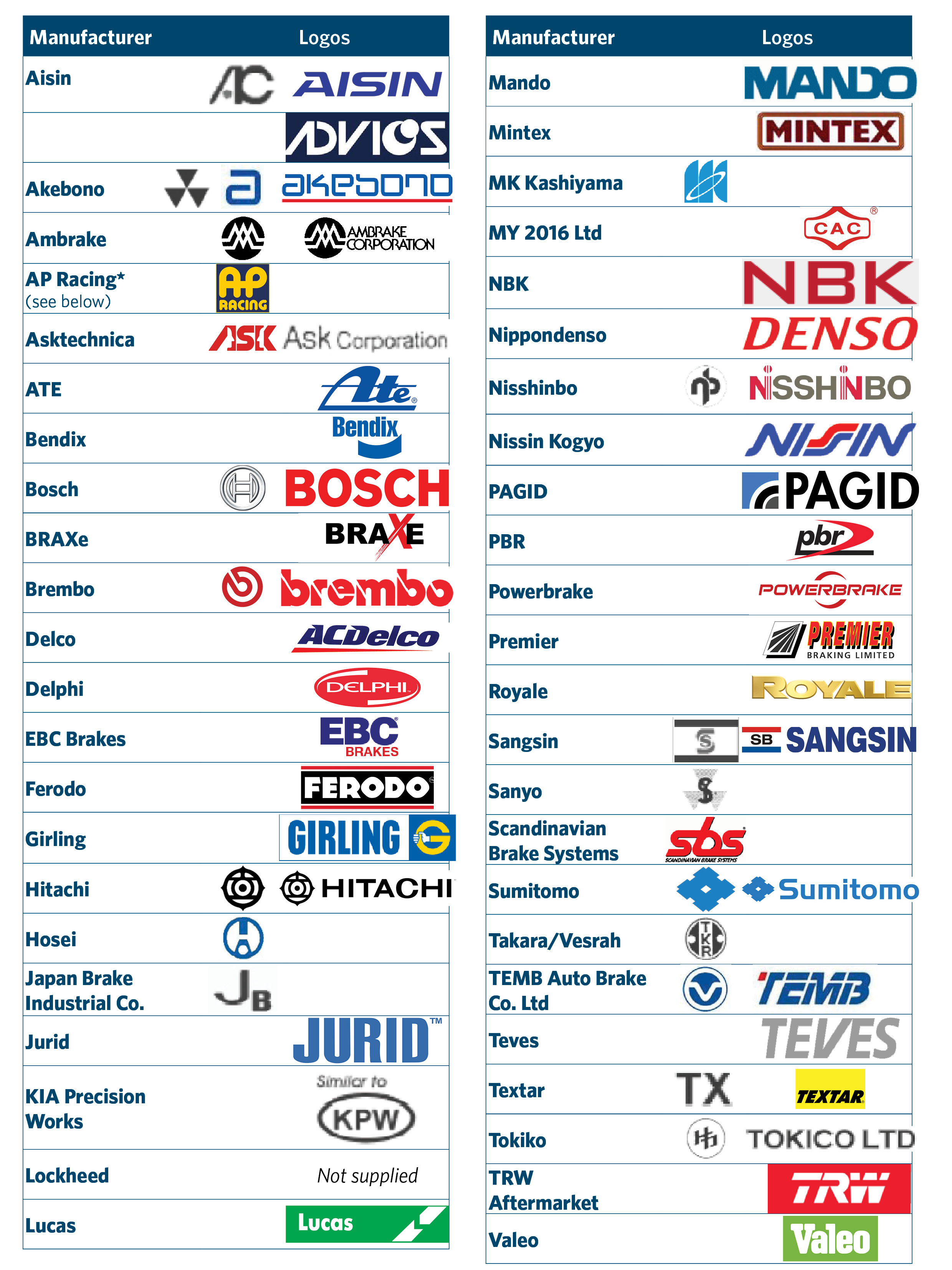
* AP Racing pads may only be accepted if the friction material type can be identified. AP Racing acceptable pad material types are identified by:
- APF403
- APF404
- APF405.
These are not acceptable, as these are identified by the manufacturer as track only materials.
- APF401
- APF402
- APG406.
Table 8-2-2. Approved brake parts suppliers
- see Note 7
|
Legal name of business |
Trading name used on invoice |
|---|---|
|
Allparts International Ltd |
Allparts International Ltd |
|
Apex Brake and Clutch Ltd |
Apex Brake and Clutch Ltd |
|
Auto Brake and Clutch Ltd |
Auto Brake and Clutch Specialists |
|
Auto Brake and Clutch Supplies Ltd |
Auto Brake and Clutch Supplies Ltd |
|
Auto Brakes Ltd |
Auto Brakes Ltd |
|
Auto Replacements 1994 Ltd |
Auto Replacements 1994 Ltd |
|
Auto Trail Ltd |
Auto Trail Ltd |
|
Autolines NP Ltd |
Autolines Auto One |
|
Automotive Brake and Clutch Ltd |
Automotive Brake and Clutch Ltd |
|
Automotive Driveline 1992 Ltd |
Automotive Driveline 1992 Ltd |
| Automotive Parts Giants Ltd. | Automotive Parts Giants Ltd. |
|
Automotive Partzio Ltd |
Partzio (East Tamaki Ltd) |
|
Automotive Partzio Ltd |
Partzio (Otahuhu Ltd) |
|
Bay City Motor Co Ltd |
Bay City Motor Co Ltd |
|
Belfor Automotive Centre Ltd |
Belfor Automotive Centre Ltd |
|
Brake and Clutch Rebuilders Ltd |
Brake and Clutch Rebuilders Ltd |
|
Brake and Transmission Ltd |
Brake and Transmission NZ Ltd |
|
Brakes and Spares Ltd |
Brakes and Spares Ltd |
|
Challenge Auto Parts |
Challenge Auto Parts |
|
Cockram Motors (Chch) Ltd |
Cockram Nissan |
|
Collins Motors Ltd |
Collins Auto Parts and Accessories |
|
Cycle and Carriage (North Shore) Ltd |
Kia Motors New Zealand |
|
Daihatsu New Zealand Limited |
Daihatsu New Zealand Limited |
|
Direct Auto One |
Direct Auto One |
|
EBC Brakes NZ Ltd |
EBC Brakes NZ |
|
Extreme Distributors Ltd |
Extreme Automotive Distributors |
|
Forward Specs (2000) Ltd |
Forward Specs (2000) Ltd |
|
Garland Motors |
Whakatane Auto One |
| GPC Asia Pacific Limited | Repco Auto Parts |
| NAPA Auto Parts | |
|
Holdaways Limited |
Holdaways Ltd |
|
Holden New Zealand Ltd |
Holden New Zealand Ltd |
|
Honda New Zealand Ltd |
Honda New Zealand Ltd |
|
Import Part Specialists Ltd |
Import Part Specialists Ltd |
|
Independent Brake Supplies NZ Ltd |
Independent Brake Supplies NZ Ltd |
|
Interpart Ltd |
Interpart Ltd |
|
Jaycon Engineering Ltd |
MP Auto Parts |
| Jeffrey Gong, T/A Callahan Auto Supply | Callahan Auto Supply |
|
John Patton Ltd |
Thames Auto One |
|
Johnson Piston Rings Ltd |
Johnson Piston Rings |
|
Lambert Brake and Clutch Ltd |
Lambert Brake and Clutch Ltd |
|
Le Freins Ltd |
Autosafe Taupo |
|
MacDonald Halligan Motors Ltd |
MacDonald Halligan Motors Ltd |
|
Master Part Automotive Products (1997) Ltd |
0800 Brakes |
|
Master Part Automotive Products Ltd |
Master Part Brake and Clutch |
|
Mintoft and Heenan Ltd |
Freemans Auto One |
|
Muffler and Brake Ltd |
Muffler and Brake Ltd |
|
Murray McLean Motorcycles Services Ltd |
Murray McLean Motorcycles Services Ltd |
|
Napier Auto Supplies (1980) Ltd |
Napier Auto Supplies |
|
Nelson Brake Services Ltd |
Nelson Brake Services Ltd |
|
New Zealand Brake Company Ltd |
Brake Co |
|
Orton Motor 1990 Ltd |
Ruts Auto Brake, Clutch |
|
Owens Suspension and Brake Specialists Ltd |
Owens Suspension and Brake Specialists Ltd |
|
Partmaster Ltd |
Partmaster |
|
Pembroke Fram Ltd |
Union Yamaha |
|
Precision Brake and Clutch Services Ltd |
Precision Brake and Clutch Services Ltd |
|
R and J E Hull Ltd |
Brake Specialists |
|
Rawson Parts Ltd |
Partnership Auto One |
|
Red Baron (NZ) Ltd |
|
|
Redwood Investments Ltd |
Bikes ’n’ Bits |
|
River City Auto World |
Wanganui Toyota |
|
Robbie’s Speedy Exhaust and Brakes Shop Ltd |
Robbie’s Speedy Exhaust and Brake Shop Ltd |
|
RTJ Industries |
Brake Service Centre |
|
Safe R Brakes Ltd |
Safe R Brakes Ltd |
| SAS Autoparts Limited | SAS Autoparts |
|
Segedins Auto Parts Ltd |
Segedins Auto Parts Ltd |
|
Sims Brake Services Ltd |
Sims Brake Services Ltd |
|
Southern Brakes and Driveline Ltd |
Southern Brakes and Driveline Ltd |
|
Speedy Parts (NZ) Ltd |
Speedy Parts (NZ) Ltd |
|
Sterling Brake and Clutch Specialists |
Sterling Brake and Clutch Specialists |
|
Styles Autoparts Ltd |
Hawera Autospares |
|
Suvic Engineering Ltd |
Suvic Engineering Ltd |
|
T B and J F Bell Partnership |
Redhills Benz |
|
Taupo Auto One Ltd |
Taupo Auto One |
|
Transport Brake and Clutch Ltd |
Transport Brake and Clutch |
|
Triumph Promotions Ltd |
Jim Wright Nissan |
|
Vehicle Testing and Compliance Ltd |
Vehicle Testing and Compliance Ltd |
|
Waikato Bonding Services Ltd |
|
|
Waikato Clutch and Brake Specialists Ltd |
Waikato Clutch and Brake Specialists Ltd |
|
Whakatane Brake and Clutch Centre Ltd |
Whakatane Brake and Clutch Centre Ltd |
|
W. White Wholesale Ltd. |
Whites Powersports |
Table updated 6 May 2024.
Note 9
If you would like information added to this page please email virmupdates@nzta.govt.nz with the following information:
- documentation from the manufacturer proving the parts meet the requirements of the Land Transport Rule: Light Vehicle Brakes 2002, section 3.3(3) (ie that they comply with UN/ECE Regulation 90)
- the manufacturers logo
- the legal name of your business and the trading name used on invoices.
NZTA will review your submission and add to this page if satisfied.
Page amended 21 August 2024 (see amendment details)
9 Steering and suspension
9-1 Steering and suspension systems
|
IMPORTANT: if a vehicle’s suspension system has been damaged beyond the threshold specified in Vehicle structure – 3-4 Threshold for requiring repair certification it must be certified by a specialist repair certifier before entry certification. |
Reasons for rejection
Mandatory and permitted equipment
1. A vehicle that is not covered by an exemption has the steering column to the left of the longitudinal centre line of the body of the vehicle.
2. A vehicle does not comply with a requirement relating to mandatory equipment set out in:
Compliance with approved standards
3. A vehicle that is required to comply with an approved steering system standard in respect of its steering system did not comply, or cannot be demonstrated to have complied, at the time of manufacture, with
a) the steering system standard(s) listed in at least one of the four columns in Table 9-1-1, or
b) at least one of the frontal impact standard(s) listed in Table 3-2-1 of this manual.
4. A vehicle capable of exceeding a speed of 50km/h and equipped with a steering system (Note 1) with no direct mechanical connection between the driver’s means of control and the wheels, or other means of changing the vehicle’s direction, does not have at least one additional means of steering, unless the vehicle was entry certified as meeting either of the following standards:
- Council Directive of 8 June 1970 on the approximation of the laws of the Member States relating to the steering equipment for motor vehicles and their trailers (70/311/EEC), or
- UN/ECE Regulation No. 79, Uniform provisions concerning the approval of vehicles with regard to steering equipment (E/ECE324-E/ECE/TRANS/505/Rev.1/Add.78).
Condition, performance and modification
5. A steering or suspension system does not comply with a requirement relating to condition, performance or modification set out in:
Note 1
Refer to Pre-registration and VIN 5 – Left-hand drive vehicles for information on left-hand drive vehicles and reproductions of New Zealand Gazette notices 1851 (1998) and 1478 (1999.
Table 9-1-1. Approved steering system standards*
UN-ECE Regulation no. | EEC/EC Directive | FMVSS | ADR | Japan |
|---|---|---|---|---|
12 | 74/297 or | 203 | 10 | TS for steering system impact |
* A steering system that is required to comply with an approved steering system standard must comply with the standard(s) listed in at least one of the four columns.
Summary of legislation
Applicable legislation
- Land Transport Rule: Steering Systems 2001
- Traffic Regulations 1976, Reg 70.
- New Zealand Gazette, 19 March 1998, Issue 42, page 978.
- New Zealand Gazette, 25 February 1999, Issue 23, page 575.
Mandatory and permitted equipment
1. Vehicles must have the steering column to the right of the longitudinal centre line of the body of the vehicle, except for exempted vehicles. Exempted vehicles are listed in the New Zealand Gazette notices appending the Pre-registration and VIN 5 – Left-hand drive vehicles section of this manual.
2. Vehicles must also comply with the requirements relating to mandatory equipment set out in:
Compliance with approved standards
3. The steering systems on the following vehicles must comply with one or more of the approved steering system standards in Table 9-1-1:
a) vehicles of class MA manufactured on or after 1 January 1992
b) vehicles of class MB manufactured on or after 1 March 1999
c) vehicles of class MC manufactured on or after 1 March 1998.
Condition, performance and modification
4. Steering and suspension systems must comply with the requirements relating to condition, performance and modification set out in:
Page amended 4 November 2025 (see amendment details).
9-2 PSV steering (light PSV)
Reasons for rejection
Prohibited equipment
1. A vehicle entering service as a PSV has its steering column to the left of the longitudinal centreline of the body of the vehicle.
Summary of legislation
Applicable legislation
Prohibited equipment
1. A left-hand drive vehicle may not enter service as a PSV.
Page added 1 October 2012 (see amendment details).
9-2 PSV steering (heavy PSV)
Reasons for rejection
Prohibited equipment
1. A vehicle entering service as a PSV has its steering column to the left of the longitudinal centreline of the body of the vehicle.
Summary of legislation
Applicable legislation
Prohibited equipment
1. A left-hand drive vehicle may not enter service as a PSV.
Page added 1 October 2012 (see amendment details).
10 Tyres, wheels and hubs
10-1 Tyres and wheels
Reasons for rejection
Mandatory equipment
1. A vehicle, tyre or wheel does not comply with a requirement relating to mandatory equipment set out in:
Compliance with approved standards
2. A new tyre that is required to comply with an approved new tyre standard did not comply, or cannot be demonstrated to have complied, with at least one of the standards listed in Table 10-1-1 at the time the tyre was manufactured.
3. A retreaded tyre that is required to comply with an approved retread tyre standard did not comply, or cannot be demonstrated to have complied with at least one of the standards listed in Table 10-1-2 at the time the tyre was retreaded.
4. A temporary-use spare tyre that is required to comply with an approved temporary-use spare tyre standard did not comply, or cannot be demonstrated to have complied, with at least one of the standards listed in Table 10-1-3 at the time the tyre was manufactured.
Condition and modification
5. A tyre or wheel does not comply with a requirement relating to condition or modification set out in:
Space-saver tyres
6. A space-saver tyre does not have a safety warning label permanently attached to the outside of the wheel.
7. A space-saver tyre warning label (see Figure 10-1-3 for label examples) does not meet all of the following:
- have safety instructions that are clearly printed in English
- identify that the tyre is for temporary use only
- specify that the vehicle must not be operated at a speed of more than 80km/h or at a lesser speed specified by the tyre manufacturer
- have information on the recommended inflation pressure of the tyre when in use.
Note 1
To decode the date of manufacture codes for tyres under ECE, FMVSS and ADR, the requirements are as follows:
- for tyres manufactured before 1 January 2000, codes are three-digit numbers. The first two digits represent the week of the year, the last digit represents the year itself. For example, the code 267 means the 26th week of 1997
- for tyres manufactured on or after 1 January 2000, codes are four-digit numbers. The first two digits represent the week of the year, the last two digits represent the year itself. For example, the code 2501 means the 25th week of 2001.
Note 2
A new tyre is a tyre that has not been retreaded.
Note 3
New or retreaded tyres fitted to vehicles that are towed at speeds not exceeding 30 km/h are not required to comply with approved standards.
Note 4
New or retreaded tyres fitted to groundspreaders or dedicated groundsprayers are not required to comply with approved standards.
Note 5
New or retreaded tyres fitted to all-terrain vehicles are not required to comply with approved standards.
Note 6
New or retreaded tyres fitted to vehicles that are more than 30 years old are not required to comply with approved standards.
Note 7
Class LE2 vehicles have been omitted in the rule in the table for new tyres.
|
New tyres |
Retreaded tyres |
|---|---|
|
|
|
JATMA standards |
||
|---|---|---|
|
Compliance is assured if the tyre markings contain the full company name or the brand name of one of the following manufacturers together with the words ‘Made in Japan’: |
||
|
|
|
|
|
|
|
|
|
|
Compliance is assured if the tyre markings contain the brand name Michelin, the size designation 195/85R16 XZA TL 114/112L together with the words ‘Made in Thailand’ (Note 10). |
||
| Compliance is assured if the tyre markings contain the brand name Bridgestone, the size designation 11R22.5 G540 together with the words ‘Made in Thailand’. | ||
Note 8
Makers of Dunlop and Goodyear brand tyres in Japan.
Note 9
Makers of BF Goodrich and RIKEN brand tyres in Japan.
Note 10
Isuzu NNR250, NPR250 and NPR 300 model trucks (all variants) imported by Isuzu New Zealand are fitted with these tyres.
Table 10-1-1. Approved new tyre standards*
UN/ECE Regulation no. | EEC/EC Directive | FMVSS | ADR | Japan | Others |
|---|---|---|---|---|---|
30 | 92/23 | 109 | 23 | JIS D4203 | NZS 5453 |
* A new tyre that is required to comply with an approved new tyre standard must comply with at least one of the standards listed in the table.
Table 10-1-2. Approved retread tyre standards*
UN-ECE Regulation no. | FMVSS | Others |
|---|---|---|
108 | 117 | BS AU 144 |
* A retreaded tyre that is required to comply with an approved retread tyre standard must comply with at least one of the standards listed in the table.
Table 10-1-3. Approved temporary-use spare tyre standards*
UN-ECE Regulation no. | FMVSS | ADR | Japan | Others |
|---|---|---|---|---|
64 | 109 | 71 | JIS D4230 | The standards of the Japan Automobile Tire Manufacturer’s Association, Inc. (JATMA) |
* A temporary-use spare tyre that is required to comply with an approved temporary-use spare tyre standard must comply with at least one of the standards listed in the table.
Table 10-1-4. Load indices
The load index is a numerical code associated with the maximum load (kg) a tyre can carry at the speed indicated by its speed symbol under specified service conditions up to 210 km/h.
Loadindex–(kg) | ||||||||
|---|---|---|---|---|---|---|---|---|
70–335 71–345 72–355 73–363 74–375 75–387 76–400 77–412 78–425 79–437 | 80–450 81–462 82–475 83–487 84–500 85–515 86–530 87–545 88–560 89–580 | 90–600 91–615 92–630 93–650 94–670 95–690 96–710 97–730 98–750 99–775 | 100–800 101–825 102–850 103–875 104–900 105–925 106–950 107–975 108–1000 109–1030 | 110–1060 111–1090 112–1120 113–1150 114–1180 115–1215 116–1250 117–1285 118–1320 119–1360 | 120–1400 121–1450 122–1500 123–1550 124–1600 125–1650 126–1700 127–1750 128–1800 129–1850 | 130–1900 131–1950 132–2000 133–2060 134–2120 135–2180 136–2240 137–2300 138–2360 139–2430 | 140–2500 141–2575 142–2650 143–2725 144–2800 145–2900 146–3000 147–3075 148–3150 149–3250 | 150–3350 151–3450 152–3550 153–3650 154–3750 155–3875 156–4000 157–4125 158–4250 159–4375 160–4500 161–4625 |
Speed symbols represent the following speed categories:
Table 10-1-5. Speed symbols
Speed symbol – Speed category (km/h) | |||||||
|---|---|---|---|---|---|---|---|
A1 – 5 A2 – 10 A3 – 15 A4 – 20 | A5 – 25 A6 – 30 A7 – 35 A8 – 40 | B – 50 C – 60 D – 65 E – 70 | F – 80 G – 90 J – 100 K – 110 | L – 120 M – 130 N – 140 P – 150 | Q – 160 R – 170 S – 180 T – 190 | U – 160 H – 210 V – 240 W – 270 | Y – 300 ZR – over 240 |
Figure 10-1-1. Approved tyre standard markings
The following standard markings may assist in determining compliance with approved standards.
1 The DOT marking may appear below the rest of the marking.
Figure 10-1-2. Identifying tyre markings
The following diagram and tables help identify and explain tyre markings.
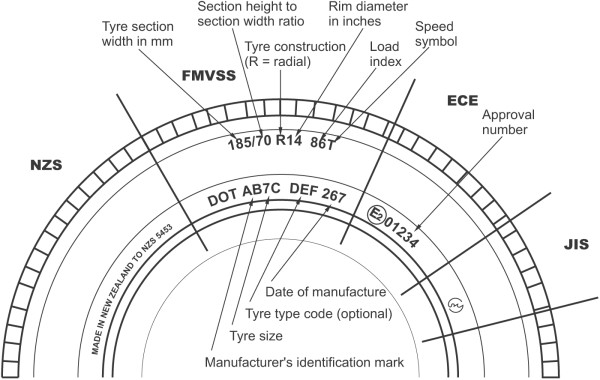
Figure 10-1-3. Common space-saver tyre labels
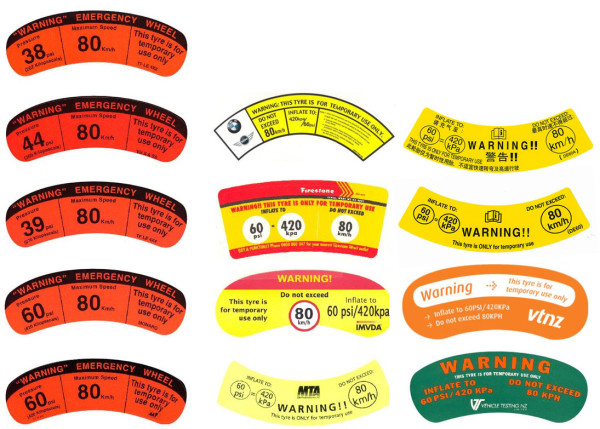
Note: these are labels that were previously approved by the NZTA. Labels no longer need NZTA approval, so other labels are acceptable provided they contain the required safety instructions printed clearly in English.
Summary of legislation
Applicable legislation
Mandatory equipment
1. Vehicles, tyres and wheels must comply with the requirements relating to mandatory equipment set out in the VIRM: In-service certification, section 10-1
Compliance with approved standards
2. The following new tyres (Note 2) must comply with one or more of the new tyre standards in Table 10-1-1, except if one or more of Notes 3 to 6 apply:
a) tyres manufactured on or after 1 October 2002 that are fitted to vehicles of class LC, LD, LE1, LE2, TA and TB (Note 6)
b) tyres manufactured on or after 1 January 1992 that are fitted to vehicles of class MA, MB, MC, MD1, MD2 and NA
c) tyres manufactured on or after 1 October 2004 that are fitted to vehicles of class MD3, MD4, ME, NB, NC, TC and TD.
3. The following retreaded tyres must comply with one or more of the retread tyre standards in Table 10-1-2, except if any of Notes 3 to 6 apply:
a) tyres retreaded on or after 1 October 2002 that are fitted to vehicles of class TA and TB
b) tyres retreaded on or after 1 January 1995 that are fitted to vehicles of class MA, MB, MC, MD1, MD2 and NA
c) tyres retreaded on or after 1 October 2004 that are fitted to vehicles of class MD3, MD4, ME, NB, NC, TC and TD.
4. Temporary-use spare tyres manufactured on or after 1 October 2002 must comply with one or more of the temporary-use spare tyre standards in Table 10-1-3
Condition and modification
5. Tyres and wheels must comply with the requirements relating to condition and modification set out in the VIRM: In-service certification, section 10-1
Page updated 7 January 2025 (see details)
10-2 Hubs and axles
Vehicles must comply with the requirements relating to condition, performance and modification set out in:
There are no additional requirements in respect of hubs and axles for the inspection and certification of vehicles for entry into service.
10-3 Mudguards
Vehicles must comply with the requirements relating to mandatory equipment and condition set out in:
- VIRM: In-service certification, section 10-3, general vehicles
- VIRM: In-service certification, section 10-3, heavy vehicles
There are no additional requirements in respect of mudguards for the inspection and certification of vehicles for entry into service.
11 Exhaust
11-1 Exhaust system and silencer
Reasons for rejection
Mandatory equipment
1. A vehicle does not comply with the requirements relating to mandatory equipment set out in:
- VIRM: In-service certification, section 11-1, general vehicles
- VIRM: In-service certification, section 11-1, heavy vehicles
- VIRM: In-service certification, section 11-1, light PSVs
- VIRM: In-service certification, section 11-1, heavy PSVs
Compliance with approved standards
2. A class LC, LD, LE, MA, MB, MC, MD1, MD2, MD3, MD4, ME, NA, NB or NC vehicle, other than one listed in Table 11-1-1, manufactured on or after 1 January 1985 and certified for entry on or after 1 June 2008:
a) did not comply, or cannot be demonstrated to have complied, with at least one of the approved standards listed in Table 11-1-2 at the time the vehicle was manufactured, or
b) exceeded the noise limits in Table 11-1-2 when it was tested in accordance with the standards in Table 11-1-2 at the time the vehicle was manufactured, or
c) does not have evidence that the vehicle has passed an LVVTA objective noise test, for instance:
i. the owner cannot produce a valid ‘Objective exhaust noise emission test certificate’ (Figure 11-1-1), or
ii. the exhaust system tailpipe is not fitted with a valid LVVTA noise test label (Figure 11-1-2) or an appropriate LVV data plate (Figure 11-1-3)
Condition and performance
3. A vehicle does not comply with the requirements relating to condition and performance set out in:
Table 11-1-1. Vehicles deemed to comply with approved noise standards and drive-by noise limits
Evidence of compliance with an approved noise standard and noise limit is not required for the following vehicles: |
|---|
|
Table 11-1-2. List of approved noise standards and drive-by noise limits
A vehicle manufactured on or after 1985 for which evidence of compliance with an approved standard and noise level is required must comply with the following: | ||
|---|---|---|
Approved noise standard | Vehicle class | Maximum noise level (dBA) |
ISO 362 BS 3425 SAE J1470 ADR 28/01 TRIAS 20 | LC, LD, LE (engine capacity of 125 cc or less) LC, LD, LE (engine capacity more than 125 cc) MA, MB, MC, MD1, MD2, NA MD3, MD4, ME, NB, NC (power output 150 kW or less) MD3, MD4, ME, NB, NC (power output more than 150 kW) | 82 86 81 86 88 |
Figure 11-1-1. Objective exhaust noise emission test certificate
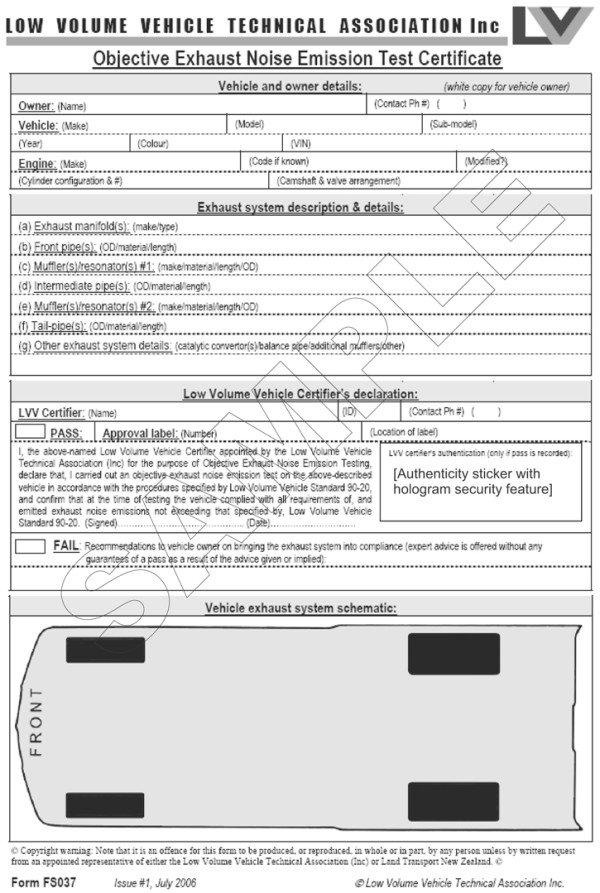
Figure 11-1-2. Objective noise test label
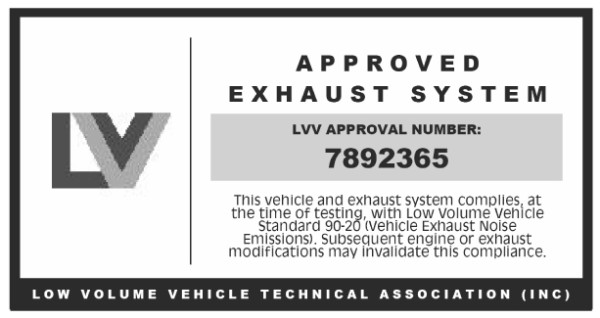
Figure 11-1-3. Green objective noise test electronic data plate and orange electronic data plate
|
|
From September 2025 a vehicle that passes an objective noise test (ONT) will be fitted with an electronic data plate (EDP), which will include either a green or orange label.
The green label indicates the EDP only contains ONT information, however the vehicle may also have an older style LVV engraved certification plate.
The orange label will be used when the vehicle has been LVV certified for modifications and may only cover modifications, but where an ONT is required and passed the EDP will cover both the ONT data and the LVV certified modifications.
Figure 11-1-4. Sample of objective noise test data
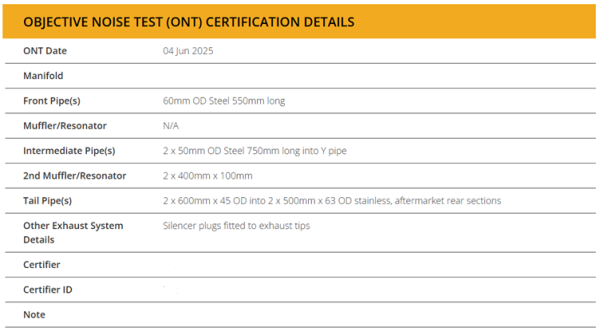
Summary of legislation
Applicable legislation
Mandatory equipment
1. A vehicle must comply with the requirements relating to mandatory equipment set out in:
- VIRM: In-service certification, section 11-1, general vehicles
- VIRM: In-service certification, section 11-1, heavy vehicles
- VIRM: In-service certification, section 11-1, light PSVs
- VIRM: In-service certification, section 11-1, heavy PSVs
Compliance with approved standards
2. A class LC, LD, LE, MA, MB, MC, MD1, MD2, MD3, MD4, ME, NA, NB or NC vehicle manufactured on or after 1 January 1985 and certified for entry on or after 1 June 2008 must comply with:
a) an approved standard and not exceed the relevant noise limit, as specified in Table 11-1-2, or
b) the LVVTA objective noise test.
Condition and performance
3. The exhaust system and silencer must comply with the requirements relating to condition and performance set out in the relevant section of the VIRM: In-service certification, section 11-1.
Modification
4. A vehicle must comply with the requirements relating to modifications set out in:
Page updated 1 October 2025 (see details)
11-2 Exhaust emissions
Reasons for rejection
Compliance with approved standards
1. A vehicle that is less than 20 years old and required to comply with an approved (or a more recent version, or a higher) exhaust emission standard did not comply or cannot be demonstrated to have complied with at least one of the standards listed in the following tables or in Technical bulletin 28 at the time the vehicle was manufactured or modified.
The following tables only list approved vehicle exhaust emissions standards. More recent versions of the standards and higher standards (as well as approved standards) are listed in Technical bulletin 28
- Table 11-2-1 Exhaust emissions requirements for class MA, MB, MC, MD1, MD2, NA vehicles (except used-import disability vehicles) – see Note 3
- Table 11-2-2 Exhaust emissions requirements for class MA, MB, MC, MD1, MD2, NA used-import disability vehicles – see Note 3
- Table 11-2-3 Exhaust emissions requirements for class MD3, MD4, ME, NB, NC vehicles
- Table 11-2-4 Exhaust emissions requirements for class LA, LB, LC, LD, LE vehicles
Performance and modification
2. A vehicle that is required to pass the prescribed metered test (see 4. under Compliance with approved standards) does not pass the prescribed metered emissions test (see section 11-3, Metered emissions test specifications).
3. The exhaust system does not comply with requirements relating to performance set out in the VIRM: In-service certification, section 11-2
4. A vehicle that is required to comply with an exhaust emission standard doesn't illuminate a malfunction lamp self test related to emissions and/or engine systems when the ignition is first cycled (on).
5. A vehicle that is required to comply with an exhaust emission standard displays a message or warning which may indicate a fault or noncompliance of the engine or the vehicle's emissions system (other than a warning system self test cycle).
Note 1
Technical bulletin 28 describes methods of identifying compliance with emissions standards, and explains how to record the information in LANDATA.
Note 2
1. New model vehicle means a new motor vehicle that has a date of manufacture occurring in the same calendar year as that in which the particular model of the vehicle was first manufactured.
2. Existing model vehicle means a new vehicle that is not a new model vehicle.
3. New means a vehicle that has not been previously registered or operated and is not a low volume vehicle. Operation expressly for the purpose of the specific vehicle's, manufacture, delivery to New Zealand and entry certification is exempt. Using the vehicle in activities like demonstration, training, testing, courtesy or transport services is operation.
4. Used means a vehicle that has been previously registered (anywhere) or operated and is not new. Refer to 9 Definitions and abbreviations
Note 3
Disability vehicle means a light vehicle that is used for the transportation of a person with a disability and is modified to do either or both of the following:
- enable a person in a wheelchair to safely enter and exit the vehicle and enable the person and the wheelchair to be safely restrained while the vehicle is moving:
- provide a person in a wheelchair or of limited mobility with assistance to enter and exit the vehicle through the use of a swivel or swing-out seat.
A different definition of disability vehicle is used to exempt vehicles from the Clean Vehicle Standard.
Table 11-2-1 Exhaust emissions requirements for Class MA, MB, MC, MD1, MD2, NA vehicles (except used-import disability vehicles)
- see Note 3
| Date of border inspection (used vehicles) or manufacture (new vehicles) | Fuel type | Used or new | Exhaust emissions requirements |
|---|---|---|---|
| Before 30 April 2024 | Petrol, CNG/LPG | Used |
Euro 4; or US 2004; or Japan 05; or ADR 79/02 |
| New |
Euro 5; or US 2007; or Japan 05; or ADR 79/04 | ||
| Diesel | Used |
Euro 4; or US 2004; or Japan 05; or ADR 30/01 and ADR 79/01 | |
| New |
Euro 5; or US 2007; or Japan 05; or ADR 79/04 | ||
| From 30 April 2024 to 30 June 2027 | Petrol, CNG/LPG | Used |
Euro 5; or US Tier 2; or Japan 2005 Low Harm; or Japan 2018; or ADR 79/04 |
| New |
Euro 5; or US Tier 2; or Japan 2005 Low Harm; or Japan 2018; or ADR 79/04 | ||
| Diesel | Used |
Euro 5; or US Tier 2; or Japan 09; or ADR 79/04 | |
| New |
Euro 5; or US Tier 2; or Japan 09; or ADR 79/04 | ||
| From 1 July 2027 to 30 June 2028 | Petrol, CNG/LPG | Used |
Euro 5; or US Tier 2; or Japan 2005 Low Harm; or Japan 2018; or ADR 79/04 |
| New |
For existing model vehicles (Note 2) Euro 5; or US Tier 2; or Japan 2005 Low Harm; or Japan 2018; or ADR 79/04 For new model vehicles (Note 2) Euro 6d; or US Tier 3; or Japan 2018 Low Harm; or UNR83/08 | ||
| Diesel | Used |
Euro 5; or US Tier 2; or Japan 09; or ADR 79/04 | |
| New |
For existing model vehicles (Note 2) Euro 5; or US Tier 2; or Japan 09; or ADR 79/04 For new model vehicles (Note 2) Euro 6d; or US Tier 3; or Japan 2018; or UNR83/08 | ||
| From 1 July 2028 | Petrol, CNG/LPG | Used |
Euro 6d; or US Tier 3; or Japan 2018 Low Harm; or UNR83/08 |
| New |
Euro 6d; or US Tier 3; or Japan 2018 Low Harm; or UNR83/08 | ||
| Diesel | Used |
Euro 6d; or US Tier 3; or Japan 2018; or UNR83/08 | |
| New |
Euro 6d; or US Tier 3; or Japan 2018; or UNR83/08 |
Table 11-2-2 Exhaust emissions requirements for used-import disability vehicles – Class MA, MB, MC, MD1, MD2, NA
- see Note 3
| Date of border inspection (used vehicles) or manufacture (new vehicles) | Fuel type | Exhaust emissions requirements |
|---|---|---|
| Before 30 April 2024 | Petrol, CNG/LPG |
Euro 4; or US 2004; or Japan 05; or ADR 79/02 |
| Diesel |
Euro 4; or US 2004; or Japan 05; or ADR 30/01 and ADR 79/01 | |
| 30 April 2024 to 31 December 2030 | Petrol, CNG/LPG |
Euro 5; or US Tier 2; or Japan 2005; or ADR 79/04 |
| Diesel |
Euro 5; or US Tier 2; or Japan 2005; or ADR 79/04 | |
| From 1 January 2031 | Petrol, CNG/LPG |
Euro 6d; or US Tier 3; or Japan 2018; or UNR83/08 |
| Diesel |
Euro 6d; or US Tier 3; or Japan 2018; or UNR83/08 |
Table 11-2-3 Exhaust emissions requirements for Class MD3, MD4, ME, NB, NC vehicles
| Date of border inspection (used vehicles) or manufacture (new vehicles) | Exhaust emissions standards | |
|---|---|---|
| Used | New | |
| Before 30 April 2024 |
Euro IV; or US 2004; or Japan 05; or ADR 30/01 and ADR 80/02 |
Euro V; or US 2007; or Japan 05; or Japan 09; or ADR 80/03 |
| 30 April 2024 to 31 October 2024 |
Euro V; or US Tier 2; or Japan 09; or ADR 80/03 |
Euro V; or US Tier 2; or Japan 09; or ADR 80/03 |
| 1 November 2024 to 31 October 2025 |
Euro V; or US Tier 2; or Japan 09; or ADR 80/03 |
For existing model vehicles (Note 2) Euro V; or US Tier 2; or Japan 09; or ADR80/03 For new model vehicles (Note 2) Euro VI step C; or US Tier 3; or US 2013; or Japan 2016; or ADR 80/04; or UNR49/06(Supp.4); or UNR83/07 |
| From 1 November 2025 |
Euro VI step C; or US Tier 3; or US 2013; or Japan 2016; or ADR 80/04; or UNR49/06(Supp.4); or UNR83/07 |
Euro VI step C; or US Tier 3; or US 2013; or Japan 2016; or ADR 80/04; or UNR49/06(Supp.4); or UNR83/07 |
Table 11-2-4 Exhaust emissions requirements for Class LA, LB, LC, LD, LE vehicles
| Date of border inspection (used vehicles) or manufacture (new vehicles) | Exhaust emissions standards | |
|---|---|---|
| Used | New | |
| From 30 April 2025 to 31 December 2026 |
Euro 4m, or US 2010m, or Japan 2012m |
Euro 4m; or US 2010m; or Japan 2012m |
| From 1 January 2027 |
Euro 5m; or US 2010m; or Japan 2016m |
Euro 5m; or US 2010m; or Japan 2016m |
Summary of legislation
Applicable legislation
Compliance with approved standards
1. The following are required to meet an approved vehicle exhaust emissions standard, or a more recent version of the standard or a higher standard:
- Vehicles that are:
- petrol, CNG, LPG or diesel vehicles, and
- class LA, LB, LC, LD, LE, MA, MB, MC, MD1, MD2, MD3, MD4, ME, NA, NB or NC, and
- less than 20 years old. Less than 20 years old means first registered outside of New Zealand or manufactured 20 years or less before its date of certification for entry into service.
2. The following are not required to meet an approved vehicle exhaust emissions standard, or a more recent version of the standard or a higher standard:
- Tractors – meaning a motor vehicle (other than a traction engine) constructed principally for towing an agricultural trailer or powering agricultural implements.
- Class MA or Class MC motorsport vehicles – as defined in the Land Transport Rule: Frontal Impact 2001.
- Immigrants' vehicles – meaning a motor vehicle that has been identified in writing, under Land Transport Rule: Frontal Impact 2001, or in accordance with Schedule 4 by the Director or by an organisation appointed by the Director under 5.3(2).
- Class MA special interest vehicles
- Mobile cranes – this doesn't include a truck mounted with crane apparatus.
- Scratchbuilt vehicles – as specified in paragraph (a) of the definition of ‘low volume vehicle’ that comply with the emissions requirements of the Low Volume Vehicle Code.
- Military vehicles – as referred to in regulation 5(e) of the Land Transport (Clean Vehicle Standard) Regulations 2022.
- Enduro, farm, special interest or trial motorcycles – as defined in Land Transport Rule: Light-vehicle Brakes 2002.
3. The Land Transport Rule: Vehicle Exhaust Emissions doesn't apply to ancillary engines that don't power the vehicle's wheels (for example, refrigeration units, motorhome electricity generators).
4. Approved vehicle emissions standard and higher standard are defined terms:
- Approved vehicle emissions standard means a vehicle emissions standard specified in Table 11.-2-1, or Table 11-2-2, or Table 11-2-3 or Table 11-2-4 (Part 3 Schedule 1 of the Land Transport Rule Vehicle Exhaust Emissions 2007).
- Higher standard means an approved vehicle emissions standard that would have applied to the vehicle if the vehicle was inspected at the border or manufactured (as the case may be) during a later period.
5. Land Transport Rule: Vehicle Exhaust Emissions 2007 defines Euro 4 as follows:
Euro 4
(a) means:
1. UN/ECE Regulation No. 83, uniform provisions concerning the approval of vehicles with regard to the emission of pollutants according to engine fuel requirements (E/ECE/324E/ECE/TRANS/505/Rev.1/Add.82/Rev.2) incorporating the 05 series of amendments, as per the limit values in row B of the table to clause 5.3.1.4; or
2. Council Directive 70/220/EEC as amended by Council Directive 98/69/EC as per the limit values in row B of the table to clause 5.3.1.4 of Annex I of 98/69/EC…
This definition does not necessarily require the vehicle to be formally certified as Euro 4. The two elements required to meet this definition are:
1. The vehicle must be certified to UN/ECE Regulation 83.05 or EC Directive 70/220/EEC as amended by 98/69/EC (or a later amendment), and
2. The declared emissions values on that certification must be within the specified limits set out in Row B of the quoted table (the Euro 4 emissions limits).
In practice, it is possible for a vehicle to be formally certified in Europe as a Euro 3 vehicle, but for it to comply with the Row B emissions limits required for Euro 4. Such vehicles are certified to UN/ECE Regulation 83.05 or 98/69/EC, or later amendment, (which contain both Euro 3 and Euro 4 requirements) In cases like this, despite being formally certified as Euro 3, the vehicle meets the Emissions Rule definition as a Euro 4 vehicle and can be accepted as such.
Performance
6. The following must pass a metered test (see section 11-3, Metered test specifications).
- Vehicles that are:
- petrol, CNG, LPG or diesel, and
- class MA, MB, MC, MD1, MD2, MD3, MD4, ME, NA, NB or NC, and
- less than 20 years old (first registered outside of New Zealand or manufactured 20 years or less before its date of certification for entry into service), and
- either
- used vehicles, or
- new vehicles that have been modified such that the modification might prevent the vehicle being able to pass the vehicle's test.
7. The following vehicles are exempt from the requirement to pass a metered emissions test:
- tractors, or
- class MA or class MC motor sport vehicles.
8. The exhaust system must comply with requirements relating to performance set out in the VIRM: In-service certification, section 11-2.
Page amended 10 April 2025 (see amendment details)
11-3 Metered emissions test specifications
Applicable legislation
Application
Group M or N vehicles less than 20 years old (Note 4) and certified for entry on or after 1 May 2008 must pass a prescribed metered exhaust emissions test, according to the following procedures and requirements.
Note 1
This requirement does not apply to tractors, class MA or MC motorsport vehicles, or a vehicle certified to the low-volume vehicle standard exhaust gas emissions 90–10(00).
Note 2
This requirement does not apply to vehicles being re-registered or new vehicles.
Note 3
The entry inspector must personally carry out the tail-pipe test. Other staff may prepare the vehicle for testing but the test must be carried out by the entry inspector.
Note 4
Less than 20 years old means “a motor vehicle first registered outside of New Zealand, or manufactured, 20 years or less before its date of certification for entry into service”.
Procedure for measuring exhaust emissions of petrol, LPG or CNG vehicles
1. The test equipment must be warmed up and calibrated before use, in accordance with the equipment manufacturer’s instructions.
2. Ensure the vehicle has reached normal operating temperature, as recommended by the vehicle manufacturer.
3. Insert the sampling probe (ie the exhaust gas sampling part of the measuring equipment) far enough into the exhaust pipe to prevent the admission of open air. This is to ensure that only exhaust gas is sampled.
4. For the duration of the test:
a) the vehicle’s engine must be idling, and
b) the acceleratior pedal must be released, and
c) the handbrake must be applied, and
d) the vehicle’s transmission must be
i. in neutral, or
ii. if the vehicle is an automatic, in park.
Pass requirements
A petrol, LPG or CNG vehicle must not exceed the applicable maximum carbon monoxide and hydrocarbon emissions limits set out in below.
|
Vehicle |
Carbon monoxide |
Hydrocarbons |
|---|---|---|
|
A motor vehicle powered by a four-stroke or rotary engine |
1% |
300 |
|
A motor vehicle powered by a two-stroke engine |
4.5% |
7800 |
Re-testing
If a vehicle fails the test, it may be necessary to ensure the vehicle has reached normal operating temperature, as recommended by the manufacturer.
Procedure for measuring exhaust emissions of diesel vehicles (using an opacimeter)
Pre-testing
1. The vehicle must be brought to the normal operating temperature as recommended by the manufacturer.
2. The equipment must be readied before use, in accordance with the equipment manufacturer’s instructions.
During testing
For the duration of the test:
a) the vehicle must be stationary, and
b) the handbrake must be applied, and
c) the vehicle’s transmission must be:
i. in neutral, or
ii. if the vehicle is an automatic, in park.
Operation of the vehicle while testing
During the test procedure, the vehicle operation cycle must follow these phases (refer to Figure 11-3-1):
1. Purge
a) Residual smoke must be purged from the vehicle’s exhaust system before the vehicle’s diesel smoke is sampled.
2. Inserting probe
a) The probe (the exhaust gas sampling part of the measuring equipment) must be inserted sufficiently into the exhaust pipe to prevent outside air from entering the probe and ensure that only exhaust gas is sampled.
3. Idling before testing
a) The engine must be run at idle for five or six seconds before the first test cycle.
4. Test cycle
a) The accelerator pedal must be fully and rapidly depressed, held in this state for two seconds, then released for three seconds (refer to Figure 11-3-2).
b) Despite the above, if the opacimeter has a function allowing the measurement of the engine revloutions per minute (RPM), the accelerator pedal should only be depressed until the maximum available RPM is indicated by the opacimeter (rather than for the fixed period of two seconds).
c) The exhaust emissions must be sampled throughout this (five-second) period.
5. Idling between test cycles
a) The engine must be run at idle for 4–10 seconds between each test cycle that is performed.
Measured values
1. One, two or three test cycles must be performed as necessary.
a) If the result of measurement 1 is:
i. less than or equal to an optical absorption coefficient (OAC) of 0.64m-1, the vehicle passes the test,
ii. more than an OAC of 0.64m-1, the test cycle must be repeated.
b) If the result of measurement 2 is:
i. less than or equal to an OAC of 0.64m-1, the vehicle passes the test,
ii. more than 0.64m-1, the test cycle must be repeated.
c) If the average of the three measurements is:
i. less than or equal to an OAC of 0.80m-1, the vehicle passes the test,
ii more than an OAC of 0.80m-1, the vehicle fails the test.
2. To avoid doubt, if the vehicle does not meet the prescribed standard after three test cycles, the vehicle fails the test.
Figure 11-3-1. Diesel exhaust emission test vehicle operation cycle using an opacimeter
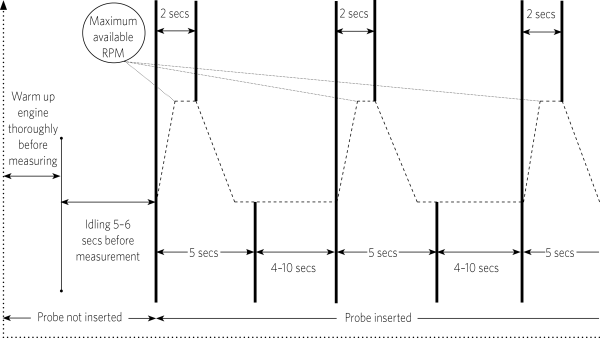
Procedure for measuring exhaust emissions of diesel vehicles (using filter paper test equipment)
Pre-testing
1. The test equipment must be warmed up and calibrated before use, in accordance with the equipment manufacturer’s instructions.
2. Insert the sampling probe (ie the exhaust gas sampling part of the measuring equipment) far enough into the exhaust pipe to prevent the admission of open air. This is to ensure that only exhaust gas is sampled.
Operation of the vehicle during testing
For the duration of the test:
a) the vehicle must be stationary, and
b) the handbrake must be applied, and
c) the vehicle’s transmission must be:
i. in neutral, or
ii. if the vehicle is an automatic, in park.
During the test procedure, the vehicle operation cycle must follow these phases (refer to Figure 11-3-2 over the page):
1. Racing purge
a) When the engine is idling, rapidly depress the accelerator to the maximum available RPM.
b) Immediately after the engine reaches its maximum available RPM, release the accelerator to return the engine to idling.
c) Repeat this two more times.
2. Idling phase
a) Run the engine at idle for five or six seconds.
3. Measuring phase
a) Fully depress the accelerator and hold for two seconds.
b) Release the accelerator for 13 seconds and sample the diesel smoke during this period.
c) Repeat this two more times.
Diesel sampling requirements
1. A sample of 0.33 litres must be absorbed through a filter paper by means of a pump-type exhaust smoke sampling device.
2. Class 5A filter paper (or equivalent) must be used.
3. The extent the filter paper is polluted by the smoke contained in the vehicle’s exhaust emissions must be measured by a prescribed exhaust smoke analyser measurement device.
4. The final result must be calculated as an average of the three measured values obtained during the test procedure.
Pass requirements
A diesel vehicle must not exceed 25% opacity.
Figure 11-3-2 Diesel exhaust emission test vehicle operation cycle
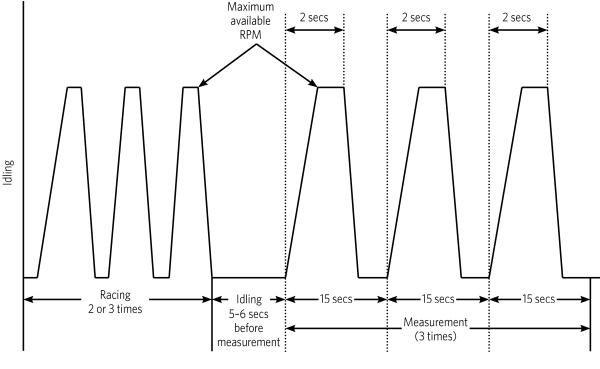
Page amended 1 January 2013 (see amendment details).
12 Towing
12-1 Towing connections
Vehicles must comply with the requirements relating to mandatory equipment and condition set out in:
- VIRM: In-service certification, section 12, general vehicles
- VIRM: In-service certification, section 12, heavy vehicles
- VIRM: In-service certification, section 12, light PSVs
- VIRM: In-service certification, section 12, heavy PSVs
There are no additional requirements in respect of towing connections for the inspection and certification of vehicles for entry into service.
13 Miscellaneous items
13-1 Engine and drive train
Vehicles must comply with the requirements relating to condition, performance and modification set out in:
- VIRM: In-service certification, section 13-1, general vehicles
- VIRM: In-service certification, section 13-1, heavy vehicles
- VIRM: In-service certification, section 13-1, light PSVs
- VIRM: In-service certification, section 13-1, heavy PSVs.
There are no additional requirements in respect of the engine and drive train for the inspection and certification of vehicles for entry into service.
13-2 Fuel system
Vehicles must comply with the requirements relating to condition, performance and modification set out in the VIRM: In-service certification, section 13-2
There are no additional requirements in respect of the fuel system for the inspection and certification of vehicles for entry into service.
13-2 Fuel system (light PSV)
Reasons for rejection
Mandatory requirements
1. A PSV is not fitted with a device to compensate the internal pressure without fuel overflow and without fuel spillage, even in the case of roll-over of the PSV (Note 1).
Mandatory equipment
2. A vehicle does not comply with the requirements relating to mandatory equipment set out in the VIRM: In-service certification, section 13-2
Condition and performance
3. A vehicle does not comply with a requirement relating to condition or performance set out in the VIRM: In-service certification, section 13-2
Note 1
A fuel cap, similar to a car one, with a valve in it, or a valve fitted to the top of the tank will meet this requirement. If there is doubt, the vehicle inspector must obtain evidence that the vehicle does comply.
Summary of legislation
Applicable legislation
Mandatory requirements
1. The design and location of fuel tanks must:
a) for a vehicle which entered service as a PSV in New Zealand on or after 1 July 2000, incorporate a device to compensate the internal pressure without fuel overflow and without fuel spillage, even in the case of roll-over of the PSV, or
b) for a vehicle which entered service as a PSV in New Zealand before 1 July 2000, ensure that any fuel overflow will not accumulate on any part of the vehicle.
Mandatory equipment
2. A vehicle must comply with the requirements relating to mandatory equipment set out in the VIRM: In-service certification, section 13-2
Condition and performance
3. A vehicle must comply with the requirements relating to condition and performance set out in the VIRM: In-service certification, section 13-2
13-2 Fuel system (heavy PSV)
Reasons for rejection
Mandatory requirements
1. A PSV is not fitted with a device to compensate the internal pressure without fuel overflow and without fuel spillage, even in the case of roll-over of the PSV (Note 1).
Mandatory equipment
2. A vehicle does not comply with the requirements relating to mandatory equipment set out in the VIRM: In-service certification, section 13-2
Condition and performance
3. A vehicle does not comply with a requirement relating to condition or performance set out in the VIRM: In-service certification, section 13-2
Note 1
A fuel cap, similar to a car one, with a valve in it, or a valve fitted to the top of the tank will meet this requirement. If there is doubt, the vehicle inspector must obtain evidence that the vehicle does comply.
Summary of legislation
Applicable legislation
Mandatory requirements
1. The design and location of fuel tanks must:
a) for a vehicle which entered service as a PSV in New Zealand on or after 1 July 2000, incorporate a device to compensate the internal pressure without fuel overflow and without fuel spillage, even in the case of roll-over of the PSV, or
b) for a vehicle which entered service as a PSV in New Zealand before 1 July 2000, ensure that any fuel overflow will not accumulate on any part of the vehicle.
Mandatory equipment
2. A vehicle must comply with the requirements relating to mandatory equipment set out in the VIRM: In-service certification, section 13-2
Condition and performance
3. A vehicle must comply with the requirements relating to condition and performance set out in the VIRM: In-service certification, section 13-2
13-3 Electrical wiring (light PSV)
Vehicles must comply with the requirements relating to condition and performance set out in the VIRM: In-service certification, section 13-4
There are no additional requirements in respect of LPSV electrical wiring for the inspection and certification of vehicles for entry into service.
13-3 Electrical wiring (heavy PSV)
Reasons for rejection
Mandatory requirements
1. Electrical equipment fitted in a PSV which operates at voltages of more than 32 volts AC or 115 volts DC (eg a trolley bus or plug-in hybrid electric vehicle).
a) There is no evidence that an inspection has been carried out by a person registered under section 75 (registered electrician) or section 77 (registered electrical inspector) of the Electricity Act 1992.
Condition and performance
2. A vehicle does not comply with a requirement relating to condition or performance set out in the VIRM: In-service certification, section 13-4.
Summary of legislation
Applicable legislation
Mandatory requirements
1. Electrical equipment fitted in a PSV which operates at voltages of more than 32 volts AC or 115 volts DC:
a) inspections must be carried out by a person registered under section 75 or section 77 of the Electricity Act 1992.
Condition
2. A vehicle must comply with the requirements relating to condition set out in the VIRM: In-service certification, section 13-4.
13-5 Electric and hybrid vehicle electrical system
Vehicles must comply with the requirements relating to mandatory condition and modification set out in:
- VIRM: In-service certification, section 13-5, general vehicles
- VIRM: In-service certification, section 13-5, heavy vehicles
- VIRM: In-service certification, section 13-5, light PSVs
- VIRM: In-service certification, section 13-5, heavy PSVs
There are no additional requirements in respect of alternative fuel systems for the inspection and certification of vehicles for entry into service.
Page added 1 December 2016 (see amendment details).
14 Alternative fuel system
14-1 Alternative fuel systems
Vehicles must comply with the requirements relating to mandatory equipment, condition and modification set out in the VIRM: In-service certification, section 13-3
There are no additional requirements in respect of alternative fuel systems for the inspection and certification of vehicles for entry into service.
15 Load restraints
15-1 Load restraints
Vehicles must comply with the requirements relating to mandatory equipment, condition and modification set out according to their vehicle type in:
- VIRM: In-service certification, section 14, Heavy vehicles
- VIRM: In-service certification, section 14, Light PSVs
- VIRM: In-service certification, section 14, Heavy PSVs
- VIRM: In-service certification, section 10, Heavy trailers
There are no additional requirements in respect of load restraints for the inspection and certification of vehicles for entry into service.
16 Certificate of loading
16-1 Certificate of loading (heavy vehicles)
Reasons for rejection
Mandatory requirements
1. Relevant HV specialist certification, where this is required, eg for towing connections, has not been obtained prior determining loading and weights, ie the vehicle has not been:
a) issued with a valid LT400 certificate, or
b) fitted with a valid certification plate .
2. When the loading and weights were determined by the vehicle inspector, the vehicle was not correctly identified by all of the following:
a) Registration number (Note 1)
b) Make, model and sub-model
c) Vehicle identification number or chassis number, as applicable.
3. The relevant loading and weights in Table 16-1-1 have not been determined, or have been determined incorrectly.
4. The relevant loading and weights specified in Table 16-1-1 have not been recorded, or have been recorded incorrectly, on the LATIS system’s ILOAD and ICORE screens (refer to LATIS agents’ manual).
5. The certificate of loading (CoL):
a) has not been printed (Note 2), or
b) is not valid, eg it displays incorrect information.
Note 1
This does not apply to unregistered fully completed vehicles where all entry, in-service and specialist certification requirements (such as towing connections) have been met and a CoL has been issued using the VIN.
Note 2
This does not apply when an incomplete heavy vehicle is registered and operating on an Annex C.
Table 16-1-1. General loading, weights and other information to be determined
All vehicles |
|
Additional for vehicles fitted with a towing connection |
|
Summary of legislation
Applicable legislation
Mandatory requirements
1. A vehicle must have a chassis rating.
2. A vehicle’s loading and weight limits may be verified and recorded only if a record of determination has been made confirming that the relevant HV specialist certification has been obtained for a specific aspect of the vehicle.
3. The following information that identifies the vehicle must be determined:
a) its registration number (if currently registered), and
b) its make, model and sub-model, and
c) its vehicle identification number or chassis number.
4. The loading and weights listed in Table 16-1-1 must be determined.
5. A vehicle inspector must make a record of the relevant loading and weight limits listed in Table 16-1-1 and provide this to the NZTA on the ILOAD and ICORE screens within the LATIS computer system (refer to LATIS agents’ manual).
6. When a vehicle inspector has provided a record under Summary of legislation 4, the inspecting organisation must issue a certificate of loading.
7. A certificate of loading (CoL) must contain:
a) information that identifies the vehicle, and
b) the date on which the CoL was issued, and
c) other information relevant to loading and weight specifications specified by the NZTA.
Page amended 28 October 2023 (see amendment details).
16-1 Certificate of loading (light PSV)
Reasons for rejection
Mandatory requirements
1. Relevant LVV specialist certification, or accepted overseas certification, where this is required, eg for retrofitted seats or seatbelts, has not been obtained prior determining loading and weights, ie the vehicle is not fitted with a valid low volume vehicle certification plate or does not have evidence of overseas specialist certification.
2. When the loading and weights were determined by the vehicle inspector, the vehicle was not correctly identified by all of the following:
a) Registration number (Note 1)
b) Make, model and sub-model
c) Vehicle identification number or chassis number, as applicable.
3. The relevant loading and weights in Table 16-1-1 and Table 16-1-2 have not been determined, or have been determined incorrectly.
4. The relevant loading and weights specified in Table 16-1-1 and Table 16-1-2 have not been recorded, or have been recorded incorrectly, on the LATIS system’s ILOAD, ICORE and IPASS screens (refer to LATIS agents’ manual).
5. The certificate of loading (CoL):
a) has not been printed, or
b) is not valid, eg it displays incorrect information.
Note 1
This does not apply to unregistered, fully completed vehicles where all entry, in-service and specialist certification requirement (such as seats or seat belt anchorages) have been met and a CoL has been issued using the VIN.
Note 2
The internal height may be 1.80m if the CoL allows only primary- and intermediate-school pupils to stand on the passenger service vehicle.
Note 3
Dedicated wheelchair position means a seating position for transporting a wheelchair and its occupant that is unavailable for other passengers when it is not occupied by a wheelchair.
Table 16-1-1. General loading and weights to be determined
All vehicles |
|
Additional for vehicles fitted with a towbar |
|
Additional for MD1 and MD2 vehicles |
|
Additional for vehicles fitted with a roof rack |
|
Table 16-1-2. Occupant loading to be determined
General requirements for determining occupant loading | |
|---|---|
All vehicles | The deemed mass of each occupant is:
For a PSV with 9 or fewer seats, the passenger capacity on the CoL may be calculated using the number of installed seating positions. The vehicle must be designed and constructed to ensure that at any normal loading condition of the vehicle (including the permitted load on the towbar, if fitted) no component over-loading will occur. Note: the towbar’s load isn’t included on the CoL. In every situation the operator must always ensure the vehicle’s GVM isn’t exceeded. When a PSV is towing a trailer, its operator may need to reduce the number of passengers carried in the PSV. |
MD1 and MD2 vehicles | 1. The maximum deemed occupant loading is calculated from the maximum number of passengers allowed in the CoL plus the driver and any crew and their deemed mass. 2. The GVM must not be exceeded when the vehicle is loaded with the maximum deemed occupant loading. A PSV may have its chassis rating reviewed on application to NZTA (InformationChassisRatings@nzta.govt.nz). The result may be a greater GVM which may allow additional seats to remain/be fitted and the passenger capacity increased. The CoL can then be updated accordingly. 3. the axle ratings (where specified on the CoL) must not be exceeded when the vehicle is loaded with the maximum deemed occupant loading. |
| PSVs with a dedicated wheelchair position (Note 4) | 1. The GVM must not be exceeded when the vehicle is loaded with the maximum deemed occupant loading and the wheelchairs for which it is designed. |
Seated passengers | |
Maximum number of seated passengers to be determined, as appropriate to the vehicle:
Calculation 1. The PSV must comply with all relevant seat, aisle and other measurements and requirements before loads are calculated. Any seats in excess of the permitted maximum number of passengers must be removed (a non-complying front middle seat may be made unusable if removal is not reasonably possible). | |
2. The maximum number of seated passengers must be calculated as follows: a. one person per seating position, and b. in the case of seats providing at least 900 mm shoulder room, either: i. according to the number of fitted seatbelts, or ii. if the seats are not fitted with seatbelts, three primary- or intermediate-school pupils to two seating positions. Note In a PSV carrying only seated passengers, the maximum number of passengers may also or instead, at the written request of the operator or manufacturer to the inspecting organisation, be displayed on the certificate of loading as a combination of:
| |
Standing passengers | |
Maximum number of standing passengers to be determined, as appropriate to the vehicle:
Calculation 1. Maximum number of the standing passengers = the area available for the standing passengers divided by the area required for each standing passenger. 2. The following areas are not available for standing passengers:
3. The area for standing passengers must have no dimension less than:
4. The minimum area required for each standing passenger is:
| |
Summary of legislation
Applicable legislation
- Land Transport Rule: Vehicle Standards Compliance 2002
- Land Transport Rule: Passenger Service Vehicles 1999.
Mandatory requirements
1. A vehicle’s loading and weight limits may be verified and recorded only if a record of determination has been made confirming that the relevant LVV specialist certification has been obtained for a specific aspect of the vehicle.
2. The following information that identifies the vehicle must be determined:
a) its registration number (if currently registered), and
b) its make, model and sub-model, and
c) its vehicle identification number or chassis number.
3. The loading and weights listed in Table 16-1-1 and Table 16-1-2 must be determined.
4. A vehicle inspector must make a record of the relevant loading and weight limits listed in Table 16-1-1 and Table 16-1-2 and provide this to NZTA on the ILOAD, ICORE and IPASS screens within the LATIS computer system (refer to LATIS agents’ manual).
5. When a vehicle inspector has provided a record under SoL 4, the inspecting organisation must issue a certificate of loading.
6. A certificate of loading (CoL) must contain:
a) information that identifies the vehicle, and
b) the date on which the CoL was issued, and
c) other information relevant to loading and weight specifications specified by NZTA.
Page amended 28 October 2023 (see amendment details).
16-1 Certificate of loading (heavy PSV)
Reasons for rejection
Mandatory requirements
1. Relevant HV specialist certification, where this is required, has not been obtained prior determining loading and weights, ie the vehicle has not been issued with a valid LT400 certificate.
2. When the loading and weights were determined by the vehicle inspector, the vehicle was not correctly identified by all of the following:
a) registration number (Note 1)
b) make, model and sub-model
c) vehicle identification number or chassis number, as applicable.
3. The relevant loading and weights in Table 16-1-1 and Table 16-1-2 have not been determined, or have been determined incorrectly.
4. The relevant loading and weights specified in Table 16-1-1 and Table 16-1-2 have not been recorded, or have been recorded incorrectly, on the LATIS system’s ILOAD, ICORE and IPASS screens (refer to LATIS agents’ manual).
5. The certificate of loading (CoL):
a) has not been printed (Note 6), or
b) is not valid, eg it displays incorrect information.
Note 1
This does not apply to unregistered, fully completed vehicles where all entry, in-service and specialist certification requirements (such as towing connections) have been met and a CoL has been issued using the VIN.
Note 2
Double-decked vehicle means a vehicle that has an upper and lower passenger compartment, and the floor of the upper passenger compartment is equal to or above the ceiling of the lower passenger compartment.
Note 3
PSVs previously issued with CoLs with reduced passenger capacity due to insufficient GVM:
- Any PSV with 10 or more seats must not exceed the GVM but may have their chassis rating reviewed on application to Waka Kotahi (Vehicles Unit). The result may be a greater GVM which may allow additional seats to remain/be fitted and the passenger capacity increased. The CoL can then be updated accordingly.
- Any seats in excess of the permitted passenger capacity must be removed.
Note 4
The internal height may be 1.80m if the CoL allows only primary- and intermediate-school pupils to stand on the passenger service vehicle.
Note 5
Dedicated wheelchair position means a seating position for transporting a wheelchair and its occupant that is unavailable for other passengers when it is not occupied by a wheelchair.
Note 6
This does not apply when an incomplete heavy vehicle is registered and operating on an Annex C.
Table 16-1-1 General loading and weights to be determined
All vehicles |
|
Additional for vehicles fitted with a towbar |
|
Additional for vehicles fitted with a roof rack |
|
Table 16-1-2 Occupant loading to be determined
General requirements for determining occupant loading | |
|---|---|
All vehicles | The deemed mass of each occupant is:
|
PSVs with 10 or more seats | 1. The maximum deemed occupant loading is calculated from the maximum number of passengers allowed in the CoL plus the driver and any crew and their deemed mass. 2. The GVM must not be exceeded when the vehicle is loaded with the maximum deemed occupant loading (Note 3). 3. The axle ratings (where specified on the CoL) must not be exceeded when the vehicle is loaded with the maximum deemed occupant loading. 4. The vehicle must be designed and constructed to ensure that at any normal loading condition of the vehicle (including the permitted load on the towbar, if fitted): a)at least 20% of the actual weight is carried on the front axle or axle-combination, and b)no component over-loading will occur. |
| PSVs with a dedicated wheelchair position (Note 5) | 1. The GVM must not be exceeded when the vehicle is loaded with the maximum deemed occupant loading and the wheelchairs for which it is designed. |
Seated passengers | |
Maximum number of seated passengers to be determined, as appropriate to the vehicle:
Calculation 1. The PSV must comply with all relevant seat, aisle and other measurements and requirements before loads are calculated. Any seats in excess of the permitted maximum number of passengers must be removed (a non-complying front middle seat may be made unusable if removal is not reasonably possible) (Note 3). 2. The maximum number of seated passengers must be calculated as follows: a) one person per seating position, and b) in the case of seats providing at least 900mm shoulder room, either: i. according to the number of fitted seatbelts, or ii. if the seats are not fitted with seatbelts, three primary- or intermediate-school pupils to two seating positions. Note: In a PSV carrying only seated passengers, the maximum number of passengers may also or instead, at the written request of the operator or manufacturer to the inspecting organisation, be displayed on the certificate of loading as a combination of:
| |
Standing passengers | |
Maximum number of standing passengers to be determined, as appropriate to the vehicle:
Calculation 1. Maximum number of the standing passengers = the area available for the standing passengers divided by the area required for each standing passenger. 2. The following areas are not available for standing passengers: a) an area which has an obvious boundary, extending at least 300mm behind the driver’s seat, with a sign stating that passengers must not stand in that area (Note 4) b) an area where the internal height is less than 1.83m, with a sign stating that passengers must not stand in that area (Note 4) c) an area where the gradient of the aisle is steeper than 1 in 12.5, with a sign stating that passengers must not stand in that area d) the area occupied by seats or dedicated as foot room for sitting passengers e) stairwells, ramps and the area swept by the doors f) the upper deck of a double-decked vehicle (Note 2) g) all areas on a single-decked open-bodied vehicle h) an area, in a vehicle that entered service as a PSV on or after 1 December 2012, extending at least 300mm inboard of the area swept by a rear door, with a sign or other device to warn passengers not to stand in the area. 3. The area for standing passengers must have no dimension less than: a) for adult passengers and secondary-school pupils, 380m; and b) for primary- and intermediate-school pupils, 300mm. 4. The minimum area required for each standing passenger is:
| |
Summary of legislation
- Land Transport Rule: Vehicle Standards Compliance 2002
- Land Transport Rule: Passenger Service Vehicles 1999
- Land Transport Rule: Vehicle Dimensions and Mass 2002
Mandatory requirements
1. A heavy PSV must be issued with a chassis rating.
2. A vehicle’s loading and weight limits may be verified and recorded only if a record of determination has been made confirming that the relevant HV specialist certification has been obtained for a specific aspect of the vehicle.
3. The following information that identifies the vehicle must be determined:
a) its registration number (if currently registered), and
b) its make, model and sub-model, and
c) its vehicle identification number or chassis number.
4. The loading and weights listed in Table 16-1-1 and Table 16-1-2 must be determined.
5. A vehicle inspector must make a record of the relevant loading and weight limits listed in Table 16-1-1 and Table 16-1-2 and provide this to Waka Kotahi on the ILOAD, ICORE and IPASS screens within the LATIS computer system (refer to LATIS agents’ manual).
6. When a vehicle inspector has provided a record under Summary of legislation 4, the inspecting organisation must issue a certificate of loading.
7. A certificate of loading (CoL) must contain:
a) information that identifies the vehicle, and
b) the date on which the CoL was issued, and
c) other information relevant to loading and weight specifications specified by Waka Kotahi.
Page amended 28 October 2023 (see amendment details).
4 Technical bulletins
-
1 Replacement parts
-
2 Water- or fire-damaged vehicles
-
3 Vehicles modified to change vehicle class
-
4 Identifying a Honda Gyro
-
5 Inspection requirements for temporary vehicle imports
-
6 Auxiliary bars
-
7 Frontal impact standard exemptions
-
8 Frontal impact compliance for Mitsubishi models
-
9 Frontal impact compliance for Toyota Cavaliers
-
10 Inspection for corrosion in Nissan Terrano & Mistral rear floorpan assemblies
-
11 Inspection of motorhomes
-
12 Inspection of daytime running lamps
-
13 Glazing on house-trucks
-
14 Seatbelt requirements for rotating seats
-
15 Toyota Hiace seat and seatbelt requirements
-
16 Replacement seatbelts
-
17 Seatbelt and seatbelt anchorage standards for heavy motor vehicles
-
18 Seatbelt markings
-
19 Seatbelt exemptions
-
20 OE rear upper seatbelt anchorages (with retrofitted seatbelts)
-
21 Rear seatbelts as aisle obstructions in passenger service vehicles
-
23 Used imported motorsport vehicles
-
24 Recording the number of seats for self-propelled motorhomes
-
25 Immigrants' vehicles
-
26 Special interest vehicles
-
27 Alternative proof of compliance – Singapore/Japan
-
28 Exhaust emissions standard compliance
-
29 Declaration for SRS, ABS, ESC, and ADAS inspections
-
30 Dual brake systems in overseas driving school vehicles
-
31 Brakes standards compliance
-
32 Static tilt stability and roll-over strength compliance
-
33 Category A left-hand drive vehicles
-
34 Bridgestone tyres manufactured in Thailand, Taiwan or Indonesia
-
35 Moped entry certification (class LA, LB)
-
36 Removing a border damage flag
-
37 Electronic stability control identification
-
38 Class MC vehicle definition
-
39 Identifying class MB, MD1 or MD2 based on seats on Japanese deregistration certificates
-
40 Passenger airbag inspection – used imported vehicles from Japan
-
41 Entry certification procedures for certain modified vehicles
-
42 Conversion vans (AKA day vans)
-
43 Takata airbag recall
-
44 Rust prevention or under-sealing on late model cars from the UK
-
45 Recording the number of seats in a vehicle with wheelchair positions
-
46 Parallel imports
-
47 Vehicles fitted with ITS Connect
-
48 Verification of compliance with Australian Design Rules (ADRs)
-
49 Acid wash process on used imports
1 Replacement parts
Replaces Infosheet 1.81 Replacement parts
Vehicle inspection requirements manual references
This bulletin gives guidance to vehicle inspectors in determining compliance of a vehicle.
Application
This document applies to any vehicle undergoing entry-level certification that has had parts, components or systems replaced during a repair or modification.
Safety concern
Vehicles entering New Zealand must have been manufactured to comply with required safety standards. Compliance with these standards ensures that a safety critical component will perform as intended. Vehicles and their systems, parts and components must remain within safe tolerance of their state when manufactured. This helps to ensure the safety of vehicles used on New Zealand roads.
Use of correct replacement parts is vital to achieving safe tolerance. A vehicle must continue to comply with safety standards and equipment requirements when it is repaired, or components are added or replaced.
Inspection
Vehicle inspectors must check whether or not the component being replaced has to meet an approved standard. Standards will vary according to the vehicle’s year of manufacture (and any modifications). The replacement part must meet the same standard as the original part, or a later version. Examples include lights, tyres, seatbelts and glazing.
If there is no specific standard for the individual component, but there is a standard for the system the component is a part of, the vehicle inspector must ensure that any replacement parts used enable the system to continue to meet the standard, and return the vehicle to safe tolerance of its state when manufactured. Examples include brake systems, frontal impact protection systems and seatbelt anchorage attachment points.
Braking systems: Brake pads and shoes are critical components in relation to returning the braking system to within safe tolerance of its state when manufactured.
Frontal impact protection systems: It is important that structural panel replacement is carried out using complying parts and in accordance with the manufacturer’s instructions (or, where these are not available, alternative repair industry standards such as I-Car). Replacement panels and welding must duplicate the original structure.
Seatbelt anchorages: Any repairs of the body or components affecting the supporting structure for seatbelt anchorages must restore these items to their original strength.
If there is no specific standard for the component or the system of which the component is a part, components must be fit for purpose. This generally applies to older vehicles, although there are components that are important to the safety of a vehicle but are not covered by a prescribed standard in new vehicles. Examples include steering and suspension components.
Recommendation
The NZ Transport Agency recommends that parts suppliers and repairers must be able to provide proof that replacement parts meet legal requirements. This could consist of de-registration papers of the donor vehicle for used body parts, standards markings, or proof that the vehicle used for parts was legally registered in New Zealand.
2 Water- or fire-damaged vehicles
Applicable legislation
- Land Transport Rule: Vehicle Standards Compliance 2002, section 11.1
- Land Transport Rule: Vehicle Repair 1998
Application
- This document applies to any vehicle undergoing entry-level (including re-entry) certification that may have suffered water or fire damage.
Note 1
Water- or fire-damaged vehicles imported from Japan may not have been de-registered in Japan. This means that vehicles imported from Japan presented with registration documents only are more ‘at risk’ vehicles.
Note 2
Do not rule out the possibility that privately imported vehicles have suffered water or fire damage.
Vehicles flagged at the border
If water or fire damage is detected on a vehicle during a border inspection, the vehicle will be flagged as damaged and the details forwarded to Waka Kotahi at frr@nzta.govt.nz
An NZTA Case Officer will then record a water or fire damage message in the vehicle notes on LANDATA. This message reads as follows:
‘Water-damaged vehicle. Must be certified by a specialist repair certifier.’
or
'Fire damaged vehicle. Must be certified by a specialist repair certifier. Not to be certified by an IO without approval from NZTA NO.'
Any vehicle that has a water or fire damage message attached must be referred to a specialist repair certifier before processing for registration, as the vehicle may not be able to be economically repaired.
Note 3
Specialist repair certifier in this case means a light vehicle repair certifier or heavy vehicle specialist certifier as applicable to the vehicle class.
Water or fire damage detected by IOs
If an IO carrying out entry-level certification detects water or fire damage on a vehicle that has not been flagged for damage at the border, the vehicle must be referred to a specialist repair certifier. The IO must notify NZTA at frr@nzta.govt.nz, so that the vehicle can be added to the list of water and fire damaged vehicles recorded on the website. They must also record the water or fire damage message (as above) in the vehicle notes on LANDATA.
Documentation to be provided with water or fire damaged vehicles
Light vehicles
a) The following documents must be presented with a water-damaged vehicle before it can be processed for registration:
- An original Light vehicle repair record of determination (LT308) covering the repair has been carried out in accordance with the VIRM: Light vehicle repair certification
b) The following documents must be presented with a fire-damaged vehicle before it can be processed for registration:
- An original Light vehicle repair record of determination (LT308) covering the repair has been carried out in accordance with the VIRM: Light vehicle repair certification
Heavy vehicles
Documentation to be provided with water or fire damaged vehicles: a) The following documents must be presented with a water-damaged vehicle before it can be processed for registration:
- An LT400.
b) The following documents must be presented with a fire-damaged vehicle before it can be processed for registration:
- An LT400.
Page updated 10 December 2020 (see details).
3 Vehicles modified to change vehicle class
Vehicle inspection requirements manual references
This bulletin gives guidance to vehicle inspectors in determining vehicle class as defined in the VIRM: Entry certification:
Application
This bulletin applies to vehicles undergoing entry certification in New Zealand that have been modified in such a way that the class of vehicle may have changed from when it was manufactured.
Inspection
Step one
The vehicle inspector must determine the original class of the vehicle, as it was manufactured.
Step two
The vehicle inspector must determine whether or not the vehicle complied with legal requirements for entering service in New Zealand, in its original condition (as manufactured).
If the vehicle did not comply with New Zealand legal requirements when it was manufactured, it cannot be certified for entry into New Zealand as another vehicle class.
- For example, an MA class vehicle that did not comply with a frontal impact standard could not be certified as an NA class vehicle.
Step three
If the vehicle complied with New Zealand legal requirements in its original condition, the vehicle inspector must determine whether or not the modified vehicle complies with legal requirements for vehicles operating in-service in New Zealand.
If a vehicle has modifications that exceed the low volume vehicle (LVV) or heavy vehicle thresholds, it must undergo LVV or HVS certification according to its new class, or be re-configured back to manufacturer’s specifications.
Step four
The vehicle should be recorded in LANDATA as its new class. A note must be added to the vehicle record, stating that vehicle modifications have resulted in a change of class (and identify the previous class).
Page amended 1 June 2019 (see amendment details).
4 Identifying a Honda Gyro
Application
This bulletin gives guidance to vehicle inspectors in identifying a Honda Gyro to determine applicable inspection requirements.
A Honda Gyro is a three-wheeled vehicle which requires design compliance and must be declared as a motorcycle by the NZTA in order to be registered for in-service operation in New Zealand.
Identification
The New Zealand representative of Blue Wing Honda has advised the NZTA that Honda agents identify the Honda Gyro by its frame number.
It can also be recognised by the distinctive articulating joint that allows the whole front passenger portion of the vehicle to pivot and tilt when cornering.
A Honda Gyro:
- has one wheel at the front and two wheels at the rear, and
- has a mass not exceeding one tonne, and
- has an engine output exceeding 2kW (or 50ml), and
- has a maximum speed capability exceeding 50km/h.
Therefore, a Honda Gyro can be classed as an LE1 vehicle under Table A of Land Transport Rule: Vehicle Standards Compliance 2002
For registration purposes, the Honda Gyro is a vehicle type 11 (motorcycle).
Inspection
If a vehicle presented for entry certification is identified as a Honda Gyro, it must be declared a motorcycle by the NZTA. Applications must be made to:
Vehicle Standards
NZ Transport Agency
Private Bag 6995
Wellington 6141
Attention: Senior Engineer, Vehicles Standards team
An LT4085 Vehicle compliance certificate must be completed for the vehicle. It must meet entry-level certification requirements for class LE1 vehicles and undergo periodic in-service inspections (warrant of fitness or certificate of fitness).
To operate and inspect the vehicle, the vehicle inspector must hold a motorcycle licence.
5 Inspection requirements for temporary vehicle imports
Application
This bulletin gives guidance to vehicle inspectors carrying out entry-level inspections on vehicles imported for temporary use on New Zealand roads.
Requirements for temporarily importing a vehicle
A temporary vehicle import is a vehicle brought into New Zealand by a resident of another country, usually for a maximum of 12 months, while remaining registered in its country of origin.
The vehicle must be exported from New Zealand within the allowed temporary entry period.
Before a vehicle is released to its owner, it must be inspected by the Quarantine Service of the Ministry of Agriculture and Forestry (MAF).
The vehicle must be licensed in New Zealand as an overseas visitor’s vehicle. In addition, the vehicle’s registration in its country of origin must remain current for the duration of its stay in New Zealand, and must remain in the name of the person who imported the vehicle into New Zealand. The overseas registration plates must remain on the vehicle; it does not need New Zealand plates.
When presenting a temporary import, the vehicle importer must:
- fill out an Application for registration of an overseas visitor’s vehicle (form MR2C)
- provide proof that the vehicle is currently registered in his/her name in its country of origin (eg by providing original vehicle registration documents)
- show a carnet de passage or temporary import entry
- provide identification that shows his/her name, date of birth and signature
- pay an Accident Compensation Corporation (ACC) levy (but none of the other registration and licensing fees).
A temporarily imported vehicle does not need to meet New Zealand’s requirements for entry certification. However, an entry certifier must carry out a basic safety inspection before issuing a warrant of fitness (WoF) or certificate of fitness (CoF) label for the vehicle.
Background
In 1958, New Zealand became a contracting state of the Geneva Convention. The Convention on road traffic was signed in September 1949. This convention developed several provisions to promote the safety of international traffic, outlined below.
Generally speaking, the vehicle does not need to comply with New Zealand approved standards, or requirements for specialist certification (eg low volume vehicle certification for modifications). It must at least comply with the provisions of the Geneva Convention. It should meet the basic safety requirements for condition and performance listed in the VIRM: In-service certification.
Applicable legislation
Geneva Convention Chapter IV – Provisions applicable to motor vehicles and trailers in international traffic.
Article 22: Every motor vehicle and trailer must be in good working order and safe mechanical condition so as not to endanger the driver or vehicle occupants or other road users, or cause damage to public or private property. Inspection - Brake requirements for temporarily imported group M and N vehicles.
Mandatory equipment
1. A vehicle must be fitted with a service brake capable of slowing the vehicle and bringing it to a controlled stop under any conditions of loading, on any gradient that the vehicle may be operated on, in an efficient, safe and rapid way.
2. A vehicle must be fitted with a parking brake capable of bringing the vehicle to a controlled stop if the service brake fails.
Condition and performance
3. The brakes fitted to a vehicle must be capable of acting on at least half of the wheels, and brake performance must be balanced on each side of the longitudinal axis of the vehicle.
4. At least half of the braking devices must act on braking surfaces directly attached to the wheels (or through parts not liable to fail).
5. Braking surfaces must be in good condition, and must always be connected with the wheels of the vehicle in such a way that it is not possible to disconnect them, other than momentarily by means of clutch, gearbox or free wheel.
6. The parking brake must be readily applicable and capable of remaining applied for an indefinite period even in the absence of the driver.
Braking requirements for temporarily imported group L vehicles
Mandatory equipment
1. A group L vehicle must be fitted with two braking devices operated by hand or foot, capable of slowing the vehicle and bringing it to a controlled stop in an efficient, safe and rapid way.
Brake requirements for temporarily imported trailers
Mandatory equipment
1. A combination of a motor vehicle and one or more trailers must be fitted with a braking device capable of slowing the vehicle and bringing it to a controlled stop under any conditions of loading, on any gradient that the vehicle may be operated on, in an efficient, safe and rapid way. A trailer must have a braking device that acts on at least half of the wheels, balanced on each side of the longitudinal axis of the vehicle, as follows:
a) The braking device for a class TA or TB trailer may operate as an overrun braking device (ie the trailer is stopped by moving upon the stopped towing vehicle).
b) The braking device for a class TC or TD trailer must be capable of being operated when the service brake of the towing vehicle is applied.
2. The braking device must be capable of preventing the rotation of the wheels when the trailer is uncoupled.
3. A trailer fitted with a braking device must be equipped with a breakaway brake (Note 1).
Note 1
Two-wheeled camping trailers or light luggage trailers do not require a breakaway brake if they are fitted with a secondary attachment, such as a safety chain.
Lighting requirements for temporarily imported group M and N vehicles
Mandatory equipment
1. A vehicle must be fitted with main-beam headlamps bright enough to illuminate the road ahead for 100m in normal darkness (Note 2).
2. A vehicle must be fitted with two white or yellow dipped-beam headlamps bright enough to illuminate the road ahead for 30m in normal darkness without causing significant dazzle to other road users (Note 2).
3. A vehicle must be fitted with two white forward-facing position lamps visible from 150m in normal darkness without causing significant dazzle to other road users. These lamps must be mounted as far towards each side of the vehicle as practicable, no further than 400mm from the extreme outer edges of the vehicle.
4. A vehicle must be fitted with at least one red rearward-facing position lamp, visible from 150m from the rear of the vehicle in normal darkness.
5. A vehicle must be fitted with a rear registration plate illumination lamp that illuminates the figures and letters of the plate so that they are visible from 20m from the rear of the vehicle in normal darkness.
6. A vehicle must be fitted with two red rear reflectors symmetrically mounted as far towards each side of the vehicle as practicable, no further than 400mm from the extreme outer edges of the vehicle. Rear reflectors must be visible from 100m in normal darkness when illuminated by means of two main-beam headlamps.
7. A vehicle must be fitted with a least one red or amber stop light mounted at the rear of the vehicle. A stop light must operate when the service brake is applied. If the stop light is red, the light intensity must be greater than that of the rearward-facing position lamps.
Permitted equipment
8. A vehicle may be fitted with direction indicators as follows:
a) a moveable arm protruding beyond each side of the vehicle and illuminated by a steady amber light when the arm is in the horizontal position, or
b) a constantly blinking or flashing amber light mounted on each side of the vehicle, or
c) a constantly blinking or flashing light at each side of the front and rear of the vehicle. These lights must be white or orange towards the front of the vehicle, and red or orange towards the rear of the vehicle.
Note 2
On vehicles from left-hand drive countries the headlamps dip to the right. To avoid blinding oncoming traffic, the headlamps must be adjusted so they do not dip to the right. Generally, asymmetric beam headlamps will also need to be modified to remove the right-hand flick-up, for example by applying some form of masking, such as plastic overlay, or fitting different bulbs.
Lighting requirements for temporarily imported motorcycles
Mandatory equipment
1. A motorcycle of class LC, LD, LE1 or LE2 must be fitted with at least one main-beam headlamp bright enough to illuminate the road ahead for 100m in normal darkness.
2. A motorcycle of class LC, LD, LE1 or LE2 must be fitted with a least one dipped-beam headlamp bright enough to illuminate the road ahead for 30m in normal darkness without causing significant dazzle to other road users.
3. A motorcycle of class LD must be fitted with two white forward-facing position lamps visible from 150m in normal darkness without causing significant dazzle to other road users. These lamps must be mounted as far towards each side of the vehicle as practicable, no further than 400mm from the extreme outer edges of the vehicle.
4. A motorcycle must be fitted with at least one red rearward-facing position lamp, visible from 150m from the rear of the vehicle in normal darkness.
5. A motorcycle must be fitted with a rear registration plate illumination lamp that illuminates the figures and letters of the plate so that they are visible from 20m to the rear of the vehicle in normal darkness.
6. Rear reflectors must be fitted to the following vehicles:
a) Class LD vehicles must be fitted with two red rear reflectors symmetrically mounted as far towards each side of the vehicle as practicable, no further than 400mm from the extreme outer edges of the vehicle.
b) Class LC, LE1 and LE2 vehicles must be fitted with one red rear reflector symmetrically mounted as far towards each side of the vehicle as practicable, no further than 400mm from the extreme outer edges of the vehicle.
- Rear reflectors must be visible from 100m in normal darkness when illuminated by means of two main-beam headlamps.
Permitted equipment
7. A motorcycle may be fitted with direction indicators as follows:
a) a moveable arm protruding beyond each side of the vehicle and illuminated by a steady amber light when the arm is in the horizontal position, or
b) a constantly blinking or flashing amber light mounted on each side of the vehicle, or
c) a constantly blinking or flashing light at each side of the front and rear of the vehicle. These lights must be white or orange towards the front of the vehicle, and red or orange towards the rear of the vehicle.
Lighting requirements for trailers
Mandatory equipment
1. A trailer at the end of a combination of vehicles must be fitted with at least one red rearward-facing position lamp, visible from 150m from the rear of the vehicle in normal darkness.
2. A trailer must be fitted with a rear registration plate illumination lamp that illuminates the figures and letters of the plate so that they are visible from 20m to the rear of the vehicle in normal darkness.
3. A trailer must be fitted with two red rear reflectors visible from 100m in normal darkness when illuminated by means of two main-beam headlamps.
4. A trailer at the end of a combination of vehicles must be fitted with a least one red or amber stop light mounted at the rear of the vehicle, unless the stop light of the towing vehicle is visible from the rear. A stop light must operate when the service brake is applied. If the stop light is red, the intensity of the light output must be greater than that of the rearward-facing position lamps.
Permitted equipment
5. A trailer may be fitted with direction indicators as follows:
a) a moveable arm protruding beyond each side of the vehicle and illuminated by a steady amber light when the arm is in the horizontal position, or
b) a constantly blinking or flashing amber light mounted on each side of the vehicle, or
c) a constantly blinking or flashing light at each side of the front and rear of the vehicle. These lights must be white or amber towards the front of the vehicle, and red or amber towards the rear of the vehicle.
Other technical requirements for temporarily imported group M and N vehicles
Mandatory equipment
1. A vehicle must be equipped with a strong steering system that allows the vehicle to be turned easily, quickly and with certainty.
2. A vehicle must be equipped with at least one driving mirror of adequate size and location to provide the driver with a clear view to the rear of the vehicle.
3. A vehicle must be fitted with at least one audible warning device (horn) that is not:
a) a bell, or
b) a gong, or
c) a siren, or
d) any other loud-toned device.
4. Windscreens, where fitted, must be made of a stable, transparent material that is not likely to produce sharp splinters if broken. Objects must not appear distorted when viewed through this material.
5. Where a vehicle is fitted with a windscreen, it must have at least one efficient windscreen wiper that operates without constant control of the driver.
6. A vehicle must be fitted with an exhaust silencer system that operates constantly and cannot be interrupted by the driver while on the road.
7. A vehicle must be fitted with pneumatic tyres.
General safety provisions
1. The construction of a vehicle must not obstruct the driver’s vision to the front, right or left of the vehicle.
2. As far as possible, the machinery or equipment of a vehicle must not:
a) be at risk of fire or explosion, or
b) cause the emission of noxious gases or offensive fumes, or
c) produce excessive or disturbing noise, or
d) increase the risk of a collision and/or damage caused in a collision.
Note 3
Temporarily imported vehicles do not have to meet requirements for modification, therefore, low volume vehicle (LVV) or heavy vehicle specialist certification is not required. However, if a vehicle inspector feels that a vehicle is unsafe to operate, he/she may seek advice from a low volume vehicle or heavy vehicle specialist certifier.
6 Auxiliary bars
Vehicle inspection requirements manual references
This bulletin gives guidance to vehicle inspectors in applying the following requirements in the VIRM: Entry certification:
Application
This bulletin applies to class MA, MB or MC vehicles fitted with auxiliary bars (eg bullbars) undergoing entry certification in New Zealand. Auxiliary bars fitted to any class of vehicle may affect compliance with requirements for external projections and/or frontal impact systems.
Safety concern
Fitting auxiliary bars to vehicles with frontal impact protection systems may have a negative effect on the performance of frontal impact protection features, such as airbags or crush-zones.
Inspection
If auxiliary bars are fitted to any vehicle, the risk of injury to others must be minimised. This means that the vehicle must comply with the requirements for condition, performance and modification set out in the VIRM: In-service certification, section 2-1
A vehicle inspector may refuse to certify a vehicle that is fitted with an auxiliary bar if he/she believes that it is likely to cause injury or affect the driver’s control of the vehicle.
Auxiliary bars fitted to Mitsubishi RVRs
NZ Transport Agency has been advised by Mitsubishi Motors New Zealand that the following Mitsubishi RVR models were factory-fitted with auxiliary bullbars:
|
|
|
|
|
|
If a vehicle inspector is presented with a vehicle from one of these model ranges fitted with an original equipment (OE) bullbar, the vehicle may be passed.
The following Mitsubishi RVR models were not factory-fitted with bullbars:
|
|
|
|
|
If a vehicle inspector is presented with a vehicle from one of these model ranges fitted with a bullbar, confirmation that the bullbar will not affect the vehicle’s frontal impact compliance is required. If it cannot be supplied, the vehicle cannot pass the inspection until the bullbar has been removed.
Page updated 12 October 2018 (see details)
7 Frontal impact standard exemptions
Vehicle inspection requirements manual references
This bulletin gives guidance to vehicle inspectors in applying the following requirements in the VIRM: Entry certification:
- Vehicle structure – 3-1 Structure, Reason for rejection 1
- Vehicle structure – 3-2 Determining frontal impact compliance.
Application
This bulletin applies to specific model ranges of class MA, MB or MC vehicles manufactured by Toyota Japan, Nissan Japan and Mazda/Ford Japan that are exempt from the requirement to meet a specified frontal impact vehicle standard under the New Zealand Gazette notice au3660.
Inspection
Vehicles manufactured by:
- Toyota Japan, in the Estima, Lucida or Emina families, and
- Nissan Japan, in the Serena or Largo families, and
- Mazda/Ford Japan, in the Bongo, Friendee or Freda families
are exempt from the requirement to meet an approved frontal impact standard (as specified in Table 3-2-1 of the VIRM: Entry certification) if the vehicle’s chassis number is included in the ranges identified below.
|
Vehicle make/model |
Industry model code |
Chassis number |
|
|---|---|---|---|
|
Range from |
Range to |
||
|
Toyota Japan
|
CXR10G |
CXR10-0001177 |
CXR10-0146676 |
|
Nissan Japan
|
KBC23 |
KBC23-007242 |
KBC23-517067 |
|
Nissan Japan
|
W30 |
W30-000106 |
W30-774375 |
|
Mazda/Ford Japan
|
SG5W |
SG5W-100012 |
SG5W-302529 |
|
IMPORTANT: Individual exemptions from frontal impact standards requirements do not need to be made for vehicles that fall within these ranges. |
8 Frontal impact compliance for Mitsubishi models
Vehicle inspection requirements manual references
This bulletin gives guidance to vehicle inspectors in applying the following requirements in the VIRM: Entry certification:
- Vehicle structure – 3-1 Structure, Reason for rejection 1
- Vehicle structure – 3-2 Determining frontal impact compliance
Application
This bulletin applies to the frontal impact compliance requirements of Mitsubishi model vehicles undergoing entry certification in New Zealand.
Inspection
It has been determined that the following Mitsubishi models are class MC vehicles, therefore, if a vehicle inspector is presented with a vehicle in the following model ranges, the vehicle is only required to comply with an approved frontal impact standard if it was manufactured on or after 1 October 2003.
|
Mistubishi RVR Sportsgear vehicles (Note 1) |
||
|---|---|---|
|
E-N23WG SRXF |
E-N23WG SRHM |
Y-N28WG SNXF |
|
E-N23WG SNXF |
E-N23WG SNHM |
Y-N28WG SRXT |
|
E-N23WG SRXM |
E-N23WG SRHF |
Y-N28WG SNXT |
|
E-N23WG SNXM |
Y-N23WG SNHF |
KD-N28WG SRXF |
|
E-N23WG SNUM |
Y-N28WG SRXF |
KD-N28WG SNXF |
|
Mitsubishi Delica Spacegear (four-wheel drive) vehicles |
||
|---|---|---|
|
E-PD4W HSEHE2 |
KD-PE8W HSEXF2 |
KD-PE8W NSNGF1 |
|
E-PD4W HSEHE |
KD-PE8W HSEHF2 |
KD-PE8W NSEGF |
|
E-PD4W NSEGE1 |
KD-PE8W HSNHF2 |
KD-PE8W NSEUF |
|
E-PD4W HSEGE |
KD-PE8W HSEHF |
KD-PE8W NSNUF |
|
E-PD4W NSEGE |
KD-PE8W HSNHF |
KD-PD8W NSNJF |
|
E-PD4W NSEUE |
KD-PE8W HSEGF |
KD-PF8W HSEPF2 |
|
E-PD6W HSEXE2 |
KD-PE8W HSNGF |
KD-PF8W HSEXF2 |
|
E-PD6W HSEHE2 |
KD-PE8W HSEUF |
KD-PF8W HSEHF |
|
E-PD6W NSEHE1 |
KD-PE8W HSNUF |
KD-PF8W HSNHF |
|
E-PF6W HSEXE2 |
KD-PE8W NSEHF1 |
KD-PF8W HSEGF |
|
E-PF6W HSEHE |
KD-PD8W NSEGF1 |
|
Note 1
Not all four-wheel drive Mitsubishi RVR models are class MC vehicles. If a Mitsubishi RVR model is presented that has a full model code not listed above, it is a class MA vehicle; therefore it must comply with an approved frontal impact standard.
9 Frontal impact compliance for Toyota Cavaliers
Vehicle inspection requirements manual references
This bulletin gives guidance to vehicle inspectors in applying the following requirements in the VIRM: Entry certification:
- Vehicle structure – 3-1 Structure, Reason for rejection 1
- Vehicle structure – 3-2 Determining frontal impact compliance
Application
This bulletin applies to the frontal impact compliance requirements for Toyota Cavalier vehicles undergoing entry certification in New Zealand.
Inspection
Any vehicle that is a Toyota Cavalier of model code TJG00 with a model year of 1996, 1997 or 1998 is exempt from the requirement to prove compliance with one of the approved frontal impact standards specified in section 2.3(4) of Land Transport Rule: Frontal Impact 2001
The model year of Toyota Cavaliers can be determined by decoding the tenth character of the vehicle identification number (VIN).
The frontal impact compliance status of Toyota Cavalier vehicles, as understood by the NZTA, is described below.
|
Model year |
10th character of VIN |
Frontal impact status |
|---|---|---|
|
1995 or earlier |
NA |
There is no evidence that these vehicles comply with an approved frontal impact standard. Toyota Cavaliers with a model year of 1995 or earlier will not be eligible for an exemption from frontal impact standard requirements. |
|
1996 |
T |
Toyota Cavaliers with a model year of 1996 can be assumed to comply with an approved frontal impact standard |
|
1997 |
V |
Toyota Cavaliers with a model year of 1997 or 1998 are exempt from the requirement to comply with an approved frontal impact standard |
|
1998 |
W |
|
|
1999 or later |
X, Y, 1, 2… |
Toyota Cavaliers with a model year of 1999 or later comply with an approved frontal impact standard. |
10 Inspection for corrosion in Nissan Terrano & Mistral rear floorpan assemblies
| References below are to the VIRM: In-service certification |
Reference
General vehicles:
Safety concern
There is concern about corrosion that can occur in Nissan Terrano or Nissan Mistral vehicles of the type whose rear floorpan assembly consists of a two-layer (double-skin) panel. If moisture gets trapped between the two layers of the floorpan, corrosion can occur around the seat or seatbelt anchorages, affecting their integrity. Corrosion can also occur where the under-floor reinforcing panel overlaps the top floor skin.
Clarification
The rear floorpan assembly consists of a two-layer (double-skin) panel. The lower layer is a reinforcing panel spot-welded to the upper layer floor section.
The Terrano has a rear seat with three seating positions. Situated in the rear floor, beneath the seat, are four seatbelt anchorages and two seat anchorages.
The Mistral has a stressed bench seat in the rear (the seatbelts are attached to the seat) with two seat anchorages in the floor and two seatbelt anchorages in the wheel well at the sides of the seat.
Inspection
The inspector must lift the rear seat to examine this area effectively. Any carpet and sound insulating material covering the panel that the seats are mounted on must be pulled back far enough to expose the rear seam of the panel (the area most commonly affected by corrosion). It is important to note that damage may be more extensive than can be detected during this inspection.
The vehicle must fail if any signs of corrosion are detected during the inspection, such as:
- bubbling of the paint or surface irregularities in the top floor skin or paint
- a patch repair that has rust around it
- separation of the reinforcement panel and the top skin
- discolouration or rust stains at the edges of the reinforcement panel
- rust holes, or
- the floorpan on a Nissan Terrano has been ‘patch’ repaired after 8 January 1997, or
- the floorpan on a Nissan Mistral has been ‘patch’ repaired after 10 November 2003.
A vehicle that has been ‘patch’ repaired before 8 January 1997 (Nissan Terrano) or 10 November 2003 (Nissan Mistral) may pass the inspection provided that:
- no signs of corrosion are apparent, and
- there is evidence that the repairs were carried out before the above dates, and
- the vehicle inspector considers, or there is evidence provided by a qualified panel beater, that the repair is effective and in sound condition.
Repair options
If any corrosion is detected and the vehicle failed, the floorpan must be replaced.
However, for the following models the Low Volume Vehicle Technical Association (LVVTA) has provided an alternative option to floorpan replacement.
Nissan Terrano Model D21
- installation of the LVVTA rear floor load-bar seatbelt anchorage reinforcement system together with a Low Volume Vehicle certification plate containing the following words in the Body/chassis field: LVVTA ‘Rear floor load-bar seatbelt anchorage reinforcement system’.
Nissan Mistral Model R20 5-door
- installation of the LVVTA rear floor load-bar seatbelt anchorage reinforcement system together with a Low Volume Vehicle certification plate containing the following words in the Body/chassis field: ‘LVVTA Rear floor load-bar seatbelt anchorage reinforcement system’.
For information about these seatbelt anchorage modifications, and for a list of the LVV certifiers who can certify them, see www.lvvta.org.nz
11 Inspection of motorhomes
Vehicle inspection requirements manual references
This bulletin gives guidance to vehicle inspectors in applying the following requirements in the VIRM: Entry certification:
Application
This bulletin applies to the structural inspection of motorhomes undergoing entry certification in New Zealand. It covers the specialist certification requirements for motorhomes undergoing entry certification.
For motorhomes with overseas compliance covering the motorhome conversion, refer to Technical bulletin 41:Entry certification procedures for certain modified vehicles. Exhaust emission standard compliance can be verified by one of the methods specified in Technical Bulletin 28
Inspection location
A light new or used motor home can be inspected at an approved heavy (used) entry site, provided that:
- It is inspected by an approved ULE Vehicle Inspector
- There is a VIN embosser on site
- There is an exhaust emission tester on site (Used Vehicle).
Structural inspection
Parallel-imported new (campervan/motorhome)
New parallel-imported (campervan/motorhome) as defined in the entry VIRM (see 2-2 Vehicle attributes definitions).
- Trim does not need to be removed as part of the structural inspection if a vehicle is a new parallel-imported (campervan/motorhome). However, a full general inspection must be carried out. The vehicle inspector may require an invasive structural inspection if any areas of concern are identified during the general inspection.
- Any vehicle identified as damaged during a border inspection will require a full invasive structural inspection.
Used light vehicles (campervan/motorhome) Category 1
A previously registered vehicle under 12 months old and having travelled less than 2000 kms.
- Interior trim does not need to be removed as part of the structural inspection if the vehicle:
- is a previously registered vehicle under 12 months old, and
- has travelled less than 2000 kms, and
- has not been identified as damaged during a border inspection.
However, an under body invasive inspection (front inner guard covers fitted to monocoque construction vehicles and front sub-frame splash guards) and full general inspection must be carried out. The vehicle inspector may require an invasive interior structural inspection if any areas of concern are identified during the general inspection.
-
If a motorhome is of a cab/chassis body type with the body mounted on the chassis, the vehicle inspector is only required to visually inspect the vehicle (without disassembly) to ensure general safety requirements are met. However, the vehicle inspector may require an invasive interior structural inspection if any areas of concern are identified during the general inspection.
- A Used light vehicles (campervan/motorhome) Category 1 vehicle identified as damaged during a border inspection will require a full invasive structural inspection.
Used (previously registered)
If a motorhome is of a van body type (monocoque construction), it will need the trim removed to enable a full structural inspection. If this is impracticable, the entry certifier/vehicle owner may apply to the Transport Agency for an exemption from trim removal requirements (see Reference material 18).
If a motorhome is of a cab/chassis body type with the body mounted on the chassis, the vehicle inspector is only required to visually inspect the vehicle (without disassembly) to ensure general safety requirements are met. However, if the motorhome body contains designated seating positions with certified seatbelt mountings (as is required for most motorhomes built after October 2003), it will need to have the trim removed to enable a full structural inspection. If this is impracticable, the entry certifier/vehicle owner may apply to the NZTA for an exemption from trim removal requirements (see Reference material 18).
Brakes
For new vehicles and scratch-built low volume vehicles, it is not necessary to disassemble any brake components.
For vehicles with rear drum brakes that are less than two years old and that have travelled less than 40,000km, only the front brakes must be disassembled initially. If the front brakes are up to standard, and there are no signs of problems with the rear brakes, disassembly of the rear brakes is not required.
Running gear
Due to the design and size of some campervans/motorhomes, the vehicle's steering and suspension can be inspected on:
- two-post vehicle hoist (with sufficient capacity)
- four-post vehicle hoist with built-in jacking mechanism (with sufficient capacity)
- inspection pit with built-in jacking mechanism (with sufficient capacity).
Specialist certification
Generally, any modifications or repairs to a motorhome that may affect the structural integrity of the vehicle will require specialist certification.
Where vehicles are converted to motorhomes, specialist certification is required unless the vehicle owner can provide documented evidence proving that the modification was a ‘manufacturer’s conversion’.
Examples of modifications or repairs to a motorhome that will normally require specialist certification are:
|
|
|
|
Page amended 10 December 2023 (see amendment details)
Page updated 14 August 2023 (see details)
12 Inspection of daytime running lamps
Vehicle inspection requirements manual references
This bulletin gives guidance to vehicle inspectors in applying the following requirements in the VIRM: Entry certification:
Application
This bulletin applies to the lighting equipment (daytime running lamps in particular) fitted to vehicles undergoing entry certification in New Zealand.
Identifying daytime running lamps
When trying to identify daytime running lamps, it may help to check out the beam pattern, the light intensity, the wiring and any markings on the lens.
Beam pattern
For comparison, a fog lamp has a spread beam with a sharp horizontal cutoff and must be fitted in a dipped position.
Light intensity
Under UN/ECE and Australian Design Rules (ADR), a daytime running lamp is generally of low intensity (up to 800 cd max, compared with a headlamp high beam around 80,000–100,000 cd max). There is no hotspot but a blur of light that passes as a beam. The lamps are not required to be dipped, but must turn off when the headlamps are switched on.
Under FMVSS, existing forward-facing lamps (except side lamps and fog lamps) may operate as daytime running lamps. This means that daytime running lamps automatically turn on when the vehicle is started, but turn off when the headlamps are activated. Daytime running lamps fitted as separate lamps must have a light intensity between 500 and 3000 cd.
Wiring
Fog lamps are usually wired so they can operate independently of the headlamps, while daytime running lamps are usually wired so they turn off when the headlamps are switched on.
Markings
Some daytime running lamps may be marked in accordance with a standard (eg an ‘RL’ mark on UN/ECE- and some ADR-compliant lamps, and ‘DRL’ on FMVSS-compliant lamps).
13 Glazing on house-trucks
Vehicle inspection requirements manual references
This bulletin gives guidance to vehicle inspectors in applying the following requirements in the VIRM: Entry certification:
Application
This document applies to house-trucks for the purpose of determining compliance with Land Transport Rule: Glazing, Windscreen Wipe and Wash, and Mirrors 1999 (the Glazing Rule).
Requirements
For this purpose, house-trucks should be considered goods vehicles of class NB or NC, depending on their gross vehicle mass (GVM).
Policy
Compliance with approved standards
House-trucks are usually modified vehicles. For example, they may consist of a cab and chassis that was manufactured in 1967, with a housing structure added to the rear in 1980. It is often difficult to determine when the modification took place. This makes it difficult to decide which date should be used to determine the applicable requirements – the year of manufacture of the original vehicle, or the year the modification was carried out.
The Glazing Rule defines year of manufacture as ‘the calendar year in which the construction of the vehicle was completed’.
The NZTA has determined that if any glazing is added or changed as part of the modification, this glazing must comply with requirements for vehicles manufactured at the time of the modification.
The vehicle owner must demonstrate when the modification was carried out.
Condition and performance
Leadlight windows fitted to a house truck are unlikely to comply with general safety requirements, which require glazing to be mechanically sound and strong.
In order to comply with general safety requirements, leadlight windows may be sandwiched between two panes of standard compliant glazing.
14 Seatbelt requirements for rotating seats
Vehicle inspection requirements manual references
This bulletin gives guidance to vehicle inspectors in applying the following requirements in the VIRM: Entry certification:
- Vehicle interior – 7-1 Seats and seat anchorages: Reasons for rejection 1
- Vehicle interior – 7-5 Seatbelts and seatbelt anchorages: Reasons for rejection 1
Applicable legislation
Application
This document applies to vehicles fitted with seats that can be rotated or placed to face other directions. Usually, this is to allow front occupants to face rear occupants while the vehicle is stationary.
Safety concern
Although it may be possible to have rotating seats (other than the driver’s seat) face rearward or sideways while traveling on a road, it is only permitted for such seats to be occupied if appropriate seatbelts are fitted.
Seatbelt requirements
Seatbelt requirements depend on the vehicle type, age, number of seats and the location of the seat in the vehicle.
Seats capable of being rotated or placed in other orientations are required to have seatbelts fitted appropriate to the orientation for normal use when the vehicle is travelling on the road (usually forward facing). If the seatbelt cannot be used due to the seat orientation, the seat must not be occupied while the vehicle is moving.
Advisory decals, easily visible to vehicle occupants, must be fitted inside the vehicle to indicate which seating orientations may (or may not) be used while the vehicle is moving.
- See Figure 1-1-1. Flowchart for determining seatbelt compliance for rotating seats
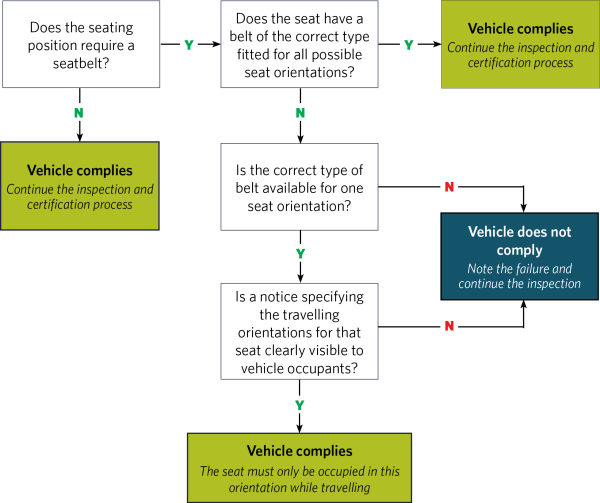
Figure 1-1-1. Flowchart for determining seatbelt compliance for rotating seats
15 Toyota Hiace seat and seatbelt requirements
Vehicle inspection requirements manual references
This bulletin gives guidance to vehicle inspectors in applying the following requirements in the VIRM: Entry certification:
- Vehicle interior – 7-1 Seats and seat anchorages: Reasons for rejection 1 and 2
- Vehicle interior – 7-5 Seatbelts and seatbelt anchorages: Reasons for rejection 1, 2 and 3
Application
This bulletin applies to Toyota Hiace minivan models assembled in New Zealand with type-approved seating for eight passengers installed in the rear seating compartment, to bring the total seating capacity to 11 (10 if the vehicle is approved for passenger service vehicle use).
Toyota Hiace models with factory-installed seating
Table 15-1-1 shows a list provided by Toyota New Zealand of Hiace minibus model codes with factory-installed seating. The ‘local code’ denotes factory-installed seat and seatbelt assemblies.
The seats and seatbelts fitted in vehicles listed in Table 15-1-1 have all been tested and approved to comply with international standards. The seat and seatbelt assemblies for both CKD and CBU models were installed before the vehicles were delivered to dealers.
Table 15-1-1. Toyota Hiace models with factory-installed seating
|
HIACE TMC model code |
Local code |
Assembly |
New Zealand grade |
Production date |
Engine code |
Transmission |
|---|---|---|---|---|---|---|
|
RZH113R-RRMRS |
RHMLB |
CKD |
2.4 ZL |
08/89–07/98 |
2RZ |
5M/T |
|
RZH113R-RRPRS |
RHMLB |
CKD |
2.4 ZL |
08/89–07/93 |
2RZ |
4H A/T |
|
RZH102R-SRMRS |
RHMSW |
CKD |
SR5 WAGON |
08/89–07/91 |
1RZ |
5M/T |
|
RZH103R-SRMRS |
RHMKW |
CKD |
SR5 WAGON |
08/91–04/95 |
2RZ |
5M/T |
|
RZH113R-RRMRS |
RHMLB |
CKD |
2.4 MINIBUS |
08/89–07/98 |
2RZ |
5M/T |
|
RZH113R-RRMRS |
RHPLB |
CKD |
2.4 MINIBUS |
08/89–07/98 |
2RZ |
4A/T |
|
RZH113R-RRPRS |
REPLB |
CKD |
2.4 MINIBUS |
08/89–07/93 |
2RZ |
4A/T |
|
LH113R-RRMRS |
LHMLB |
CKD |
2.8 DSL BUS |
08/94–0/798 |
3L |
5M/T |
|
LH113R-RRMRS |
LHLMV |
CBU |
2.8 ZL Diesel |
05/00–07/00 |
3L |
5M/T |
|
RZH113R-RRMRE |
RHLMV |
CBU |
2.4 ZL Petrol |
05/00– |
2RZ-E |
5M/T |
|
LH113R-RRMRS |
LHLMV |
CBU |
2.8 ZL Diesel |
05/00–07/00 |
3L |
5M/T |
|
LH172R-RRMRS |
LHMSV |
CBU |
3.0 ZL Diesel |
08/00– |
5L |
5M/T |
Standards
The Toyota Hiace minivan models listed in Table 15-1-1 are fitted with seats and seatbelts complying with the following standards:
- Seats comply with the requirements of Australian Design Rule (ADR) 3/02.
- Seatbelts, depending on the date of manufacture, comply with either:
i. New Zealand Standard (NZS) 5401; or
ii. Australian Standard/New Zealand Standard (AS/NZS) 2596.
- Seatbelt anchorages comply with ADR 5/02.
Certification requirements
The seat and seatbelt installations were not considered to be low volume vehicle (LVV) modifications due to the number of units involved and the fact that the system had been ‘type tested’.
These vehicles were all produced before the NZTA requirement for vans fitted with additional seating to be certified under the LVV code was introduced. Therefore, the vehicles are not fitted with LVV certification plates.
However, Toyota Hiace models fitted with seats and seatbelts on or after January 2002 have been LVV certified, and will have been fitted with LVV certification plates.
16 Replacement seatbelts
Vehicle inspection requirements manual references
This bulletin only applies to vehicles that are required to comply with a frontal impact standard. It gives guidance to vehicle inspectors in applying the following requirements:
Application
This document applies to all frontal impact compliant vehicles that are required to have replacement seatbelts fitted as part of entry-level certification in New Zealand.
Inspection
General safety requirements state that seatbelts fitted to a vehicle must comply with requirements relating to condition, performance or modification as set out in the VIRM: In-service certification, section 7-5
If a seatbelt does not meet these conditions, it must be replaced. The replacement part must contain at least all of the features present in the original seatbelt, unless confirmation that fitment of a seatbelt without a certain feature would not affect the safety performance of the vehicle is available from the vehicle manufacturer.
If a vehicle is presented for entry certification, it can have an original equipment (OE) (or equivalent) seatbelt fitted as a replacement. This means that the only time a webbing clamp seatbelt would need to be fitted is if the failed OE seatbelt was a webbing clamp seatbelt.
Replacement seatbelts do not necessarily have to come from the vehicle manufacturer. If a seatbelt manufacturer can confirm that a particular seatbelt is suitable as replacement for a particular vehicle model (and the seatbelt complies with an approved standard), this seatbelt would also be acceptable.
Page amended 28 April 2014 (see amendment details).
17 Seatbelt and seatbelt anchorage standards for heavy motor vehicles
Vehicle inspection requirements manual references
This bulletin gives guidance to vehicle inspectors in applying the following requirements in the VIRM: Entry certification:
Application
This bulletin applies to heavy motor vehicles undergoing entry certification in New Zealand.
Inspection
Land Transport Rule: Seatbelts and Seatbelt Anchorages requires class NB and NC vehicles manufactured on or after 1 October 2003 to be fitted with seatbelts and seatbelt anchorages as follows:
Seating position | Type of seatbelt required | Type of anchorage required |
|---|---|---|
Driver | A-ELR (Note 2) | 3 or 4 point anchorage |
Front outer | A-ELR (Note 2) | 3 or 4 point anchorage |
Front middle | Lap seatbelt | 2 point anchorage |
Rear outer | Not applicable | Not applicable |
Rear middle | Not applicable | Not applicable |
Seatbelts must meet one of the standards contained in Table 7-5-1 of the VIRM: Entry certification. Seatbelt anchorages must comply with one of the standards contained in Table 7-5-3 of the VIRM: Entry certification.
Note 1
For the purposes of 2.1(5)(d) of the Rule, manufactured means original manufacture by the source plant. It has nothing to do with any subsequent remanufacture/rebuild/modification/retrofit/vehicle class change. A vehicle originally manufactured before 1 October 2003 will never be required to comply with the requirements in Table 2.4 of the Rule.
Note 2
If a vehicle is fitted with an OE single-sensitive emergency locking retractor lap and diagonal seatbelt, it may remain fitted if it has a plate affixed to the vehicle (see Figure 17-1-1).
Figure 17-1-1. Example of a plate fitted to a vehicle that may retain a single-sensitive seatbelt

Standards compliance
The Motor Industry Association (MIA) has obtained the relevant information from its members so that entry certifiers will not need to request a statement of compliance for individual vehicles. Information regarding compliance with approved seatbelt and seatbelt anchorage standards for heavy motor vehicles distributed by the MIA and sold through its franchise dealer network has been supplied for the makes and models listed on the following page.
Make | Model | Seatbelt | Seatbelt Anchorage |
|---|---|---|---|
Caterpillar | CT610, CT630 | ADR 4 | ADR 5 |
DAF | ECE R16 | ECE R14 | |
Ford | EEC77/541 | ECE R14 | |
Foton | ADR 4 | ADR 5 | |
Freightliner | Argosy, Columbia, Century Class, Coronado | FMVSS 209 or ADR 4 | FMVSS 210 or ADR 5 |
Fuso | Canter/Fighter , Shogun Euro 6 Rosa/ HD Enduro, MP | ADR 4 Japan Technical Standards ECE R16 | ADR 5 Japan Technical Standards ECE R14 |
Hino | ECE R16 | ADR 5 | |
Hyundai | HD Series | ECE R16 | ECE R14 |
International | FMVSS 209 | FMVSS 210 | |
Isuzu | N series F series FX series C & E Series | ADR 4 ECE R16 ECE R16 Japan Technical Standards Or ECE R16 | ADR 5 ECE R14 ECE R14 Japan Technical Standards Or ECE R14 |
Iveco | Stralis,Powerstar & ACCO Daily & Eurocargo Trakker | ADR 4 ECE R16 ECE R16 | ADR 5 ECE R14 ECE R14 |
Kenworth | ADR 4 | ADR 5 | |
Mack | Information contained on compliance plate fitted to the vehicle | ||
MAN | ECE R16 | ECE R14 | |
Mercedes-Benz | ECE R16 | ECE R14 | |
Mitsubishi Fuso | Canter/Fighter Rosa/Shogun | ADR 4 Japan Technical Standards | ADR 5 Japan Technical Standards |
Nissan Diesel | ADR 4 | ADR 5 | |
Renault | Information contained on compliance plate fitted to the vehicle | ||
RAM | 2500 Laramie, 3500 Laramie | ADR 04/05 | ADR 05/05 |
Scania | EEC e4*77/541 | EEC e4*76/115 | |
Sterling | LT9500, LT7500 | FMVSS 209 | FMVSS 210 |
UD Trucks | ADR 4/04 | ADR 5/05 | |
Volkswagen | ECE R16 | ECE R14 | |
Volvo | Information contained on compliance plate fitted to the vehicle | ||
Western Star | FMVSS 209 | ADR 5 | |
- If an entry certifier is presented with a vehicle not covered above, and proof of compliance cannot be established by approved methods, they should contact the vehicle manufacturer directly.
- A heavy vehicle previously registered in the European Union or United Kingdom complies with the seatbelt anchorage standards for heavy vehicles if the vehicle is registered on or after 1 January 2009.
Page amended 28 April 2014 (see amendment details).
Page updated 2 November 2021 (see details)
18 Seatbelt markings
Vehicle inspection requirements manual references
This bulletin gives guidance to vehicle inspectors in applying the following requirements in the VIRM: Entry certification:
Application
This bulletin applies to standards markings on seatbelts fitted to vehicles undergoing entry certification in New Zealand.
Clarification
Seatbelts must be labelled with an appropriate standards marking. This helps to determine compliance with an approved standard. Seatbelts may be marked with a code that indicates the type of retractor operation, such as ELR. Table 18-1-1 lists possible seatbelt markings and describes the type of retractor operation indicated by each marking.
Table 18-1-1. Seatbelt retractor operations markings
|
Seatbelt marking |
Seatbelt retractor operation |
|---|---|
|
ELR |
Emergency locking retractor |
|
ALR |
Automatic locking retractor |
|
ELR/ALR |
A combination of emergency and automatic locking retractors, usually used in cars with child restraint seats, but can be used for other purposes. |
|
ELR-V |
Single-sensitive (for vehicle sensitivity only) emergency locking retractor |
|
ELR-VW |
Dual-sensitive (for both vehicle and web sensitivity) emergency locking retractor |
|
ELR-VW-4N or ELR-VN |
Dual-sensitive emergency locking retractor, but with less sensitivity in the webbing sensitivity function. This makes it ideal for use where an air seat or hydraulic cushion seat is fitted, as the retractor will not constantly lock-up as the operator moves up and down. |
Compliant seatbelts that are not required to have standard markings
- Seatbelts that comply with the Japanese Technical Standard for Seatbelt Assemblies are not required to have standards markings, provided the seatbelts are OE and the vehicle has Japanese type approval.
- Seatbelts in a fully Australian Design Rule (ADR)-compliant vehicle are not required to have standards markings.
Mislabelling
If the retractor operation of a seatbelt fitted to a vehicle does not match the operation indicated by the seatbelt marking (eg the seatbelt is marked ELR-V but appears to be web sensitive), the vehicle inspector must ignore the possibility of mislabelling, and inspect the performance of the seatbelts in accordance with the manufacturer’s marking.
19 Seatbelt exemptions
Vehicle inspection requirements manual references
This bulletin gives guidance to vehicle inspectors in applying the following requirements:
- VIRM: Entry certification, Vehicle interior – 7-5 Seatbelts and seatbelt anchorages: Reason for rejection 1 and 2
- VIRM: In-service certification, Tables 7-5-1 to 7-5-3
Application
This document applies to all vehicles undergoing entry-level certification in New Zealand that are required to have seatbelts fitted.
Seatbelt exemptions
Under Land Transport Rule: Seatbelts and Seatbelt Anchorages 2002 and the New Zealand Gazette notice au2141 (dated 29 March 2001, page 781), vehicles fitted with certain occupant safety protection systems may be exempt from the requirement to have approved seatbelts of a specified type fitted, as defined in Land Transport Rule: Seatbelts and Seatbelt Anchorages 2002.
This exemption may apply to a vehicle that:
- complies with an approved frontal impact standard, or
- is fitted with airbags that are the manufacturer’s OE specifications, or
- has seatbelt features such as pretensioners or load limiters specifically designed to operate in conjunction with other parts of an integrated occupant protection system.
The exemption only applies to seatbelts fitted as part of the vehicle manufacturer’s OE specifications.
A list of specific seatbelt exemptions is available in the VIRM: In-service certification in Table 7-5-5. The VIRM: In-service certification also lists vehicles that may be exempt from specified seatbelt requirements, provided the vehicle was first registered in New Zealand before 1 January 1991.
Documentation
The inspecting organisation must retain a paper record of the exemption. This may be a note on the vehicle checksheet, or a paper exemption declaration.
A note must be recorded against the vehicle record in LANDATA stating that a single-sensitive seatbelt exemption has been issued.
Evidence of exemption
An entry certifier is required to provide the vehicle owner with evidence that the identified vehicle has been inspected and meets the criteria for a single-sensitive seatbelt exemption. This evidence may be a paper exemption (declaration) or a single-sensitive seatbelt exemption plate.
Paper exemptions
The declaration must be printed on the reverse of a copy of the New Zealand Gazette exemption notice au986. It must also contain the following information:
a) vehicle make, model, year of manufacture and VIN or chassis number, and
b) part numbers or identification numbers of the seatbelts in each sitting position, and
c) a statement declaring that the vehicle qualifies for and meets the conditions of the exemption, and
d) the date of issue, and
e) the vehicle inspector’s name, signature and contact details.
Sample seatbelt exemption declarations are shown in Reference materials 39 and 40.
Single-sensitive seatbelt exemption plate
A vehicle identification number (VIN) plate embossed with the text ‘SSBELTSOK’ followed by the last five digits of the VIN (see Figure 19-1-1) may be affixed to the front face of the right-hand B-pillar.
Figure 19-1-1 . Example of a single-sensitive seatbelt exemption plate
Both a plate and a paper exemption may be supplied if requested by the vehicle owner.
Note 1
1997 and 1998 Toyota Cavalier vehicles exempt from frontal impact system requirements are also eligible for a seatbelt exemption, provided an SSBELTSOK plate is fitted on the right-hand B-pillar.
20 OE rear upper seatbelt anchorages (with retrofitted seatbelts)
Vehicle inspection requirements manual references
This bulletin gives guidance to vehicle inspectors in applying the following requirements in the VIRM: Entry certification:
Application
This bulletin applies to the standards compliance of rear upper original equipment (OE) seatbelt anchorages not fitted with seatbelts at the time of manufacture.
Safety concern
It is important that the strength of OE seatbelt anchorages meets the required anchorage strength of retrofitted seatbelts. To ensure that the OE seatbelt anchorages can securely anchor the type of seatbelts fitted, the vehicle inspector must determine that the OE seatbelt anchorage complies with an approved standard.
Inspection
When inspecting a vehicle fitted with an OE-installed rear upper seatbelt anchorage not fitted with a seatbelt at the time of manufacture, one of the following methods must be used to determine compliance with an approved standard:
a) a statement of compliance supplied by the vehicle manufacturer, which lists an approved seatbelt anchorage standard, or
b) if the vehicle is class MA, if it is listed in Table 4 of MoT St. 31391 (see Reference material 41), or
c) type-testing.
If evidence of compliance with an approved standard cannot be provided, the vehicle inspector must fail the vehicle.
In such cases, the vehicle owner may choose to:
- undergo low volume vehicle (LVV) certification of the seatbelt anchorages, or
- remove the seatbelts and seating.
21 Rear seatbelts as aisle obstructions in passenger service vehicles
23 Used imported motorsport vehicles
Situation
Under Land Transport Rule: Frontal Impact Amendment 2008 and Land Transport Rule: Exhaust Emissions 2007, a vehicle that is of class MA or MC is not required to comply with an approved frontal impact standard or exhaust emissions standard if it is recognised as a dedicated motorsport vehicle.
NZTA and MotorSport New Zealand (MSNZ) have agreed on a process to allow a limited number of genuine dedicated motorsport vehicles to be imported and certified for use on New Zealand roads. These vehicles may participate in MSNZ-sanctioned events that have road stages requiring the vehicle to have a current WoF and registration. Such vehicles may be driven on the road to get to and from MSNZ events, and for servicing and certification. They are not for ‘daily driver’ use.
Application
This document applies to any used or parallel-imported vehicle dedicated to motorsport use that is undergoing entry certification in New Zealand, which:
- is a class MA or MC vehicle that does not meet an approved frontal impact and/or exhaust emissions standard, or
- is a left-hand drive vehicle that does not meet the requirements for importing a Category A left-hand drive vehicle, or
- was used for motorsport purposes in the country of origin, but was never registered there for use on the road, or
- is a new, purpose-built vehicle that has not been registered in the country of origin
- is an FIA Homologated Rally Car imported and used in the NZRC or international rally events providing the following requirements are met:
The car maintains complete compliance with its homologation papers and technical regulations at all times
The car must be used primarily for New Zealand Rally Championship events or International permitted events
The car must be inspected each year prior to Authority Card renewal
If the car fails to meet the above requirements, certification through LVVTA will be required.
Waka Kotahi acknowledges that the types of vehicle specified above will not meet some of the current vehicle standards and entry requirements.
People importing vehicles that fall into the above categories must be referred in the first instance to:
Technical Manager – MotorSport NZ
Phone 04 815 8015
Fax 04 472 9011
PO Box 3793
Wellington 6140
Email technical@motorsport.org.nz
Inspection
Flow diagram Figure 23-1-1 explains the procedure for processing an imported motorsport vehicle for entry certification.
Process A
Some imported motorsport vehicles may have been used but not previously registered. These vehicles will not meet the definition of a used import, but must be entered in LANDATA as used (>U<). The vehicle attributes for such vehicles should be recorded in LANDATA as follows:
|
In the field … |
Type … |
|---|---|
|
Vehicle type |
07 |
|
1st Reg date |
The year the vehicle will be first registered in New Zealand |
|
Prev cntry |
XXX |
|
Orig cntry |
The code for the country where the vehicle was built |
Figure 23-1-2. Sample VIN screen
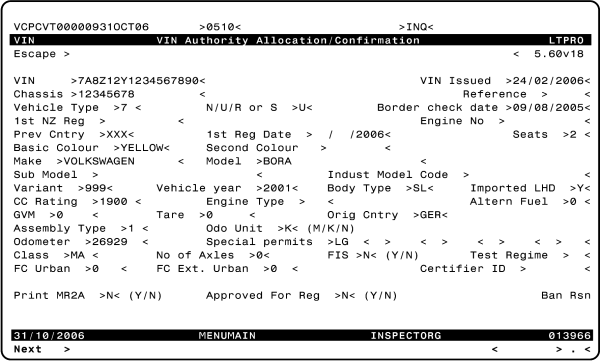
Notes must be entered against the vehicle record in LANDATA explaining the motorsport vehicle exemption category. For example, ‘MotorSport vehicle manufactured in 1999 used but never registered’.
Process B
Step 1 – Documentation
Dedicated motorsport vehicles must still meet all the relevant standards applicable to the vehicle (according to age, etc).
The VIRM: Entry certification manual details the standards a vehicle and its components are required to meet. See Inspection and certification Table 1-1-2 for methods to demonstrate compliance with required standards.
Where compliance with an approved standard can not be proven by these methods, the following methods are acceptable alternatives:
a) visual confirmation and recording of standards for items such as lighting, glazing, tyres and so on
b) low volume vehicle (LVV) certification for modified components, such as brakes, steering and suspension, not covered on the MotorSport NZ authority card
c) a MotorSport NZ authority card that includes at least frontal impact assessment
Left-hand drive vehicles
Left-hand drive motorsport vehicles must meet all the requirements described in Pre-registration and VIN 6, Left-hand drive vehicles. If an exemption has been issued, the code ‘C5 (Left hand drive motorsport)’ must be entered in the ‘Special permit’ field on the VIN screen.
MotorSport authority card
If a MotorSport NZ authority card is issued for a vehicle, the code LVAC (low volume authority card) must be entered in the IVCERT screen. The Certifier ID to be recorded for a motorsport authority card is >TMWM1<.
Record the modifications listed on the authority card in the comments field.
Step 2 – Compliance inspection
Motorsport vehicles must be inspected according to the requirements outlined in the VIRM: Entry certification.
If a vehicle has been modified, it must have LVV certification and/or a motorsport authority card (Figure 23-1-3).
If there is evidence of previous structural repairs or structural damage to a motorsport vehicle, it must be referred to a repair certifier for inspection and certification.
Step 3 – MR2A completion and vehicle registration
1. Any original exemption letters must be sighted, copied and returned to the vehicle owner.
2. Notes must be recorded against the vehicle record in LANDATA.
a) If the vehicle is recognised as a dedicated motorpsort vehicle that does not meet a frontal impact and/or exhaust emissions standard, the following note must be recorded in the LANDATA notes screen:
‘Vehicle must remain registered in the name of >vehicle owner< or motorsport vehicle recognition is void’.
The importer’s name must match the name shown on the exemption letter.
If the vehicle does not meet a frontal impact standard, the FIS (frontal impact standard) field must be set to >N<.
b) Update LANDATA with Special Permit Code MS.
c) If the vehicle has been issued a left-hand drive exemption letter, the following note must be recorded in the LANDATA notes screen:
‘Vehicle must remain registered in the name of the>vehicle owner< or left-hand drive exemption is void’.
3. The MR2A must be completed and printed in the name of the vehicle importer. This must be the same as the name shown on any exemption letter.
Note 1
If a vehicle is recognised as a motorsport vehicle exempt from frontal impact or exhaust emissions standard requirements, the MR2A must not leave the control of the entry certifier until after the vehicle is registered to ensure it is registered in the importer’s name.
Note 2
All exemptions will be issued to individuals. If a company or organisation has applied for a motorsport exemption, it will be issued to a nominated individual.
If an entry certifier wishes to deviate from these instructions, written approval from the Transport Agency must be obtained.
Assistance
Contact your technical manager if you have any questions.
Figure 23-1-3. Sample motorsport authority card (front and rear)
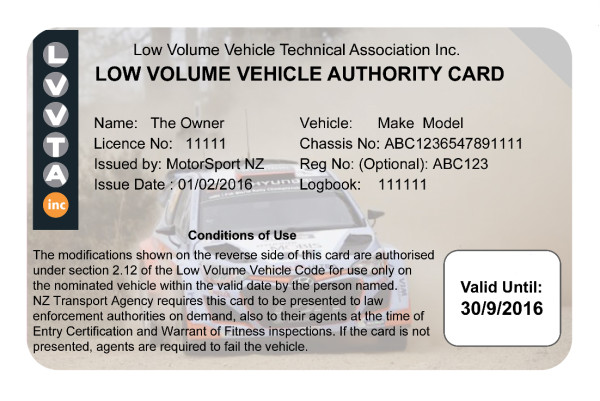
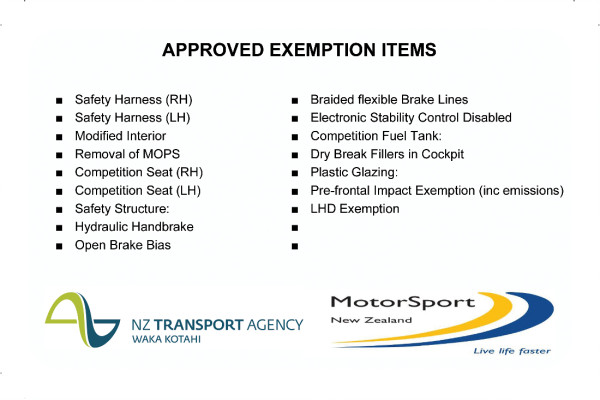
Figure 23-1-1. Procedure for processing an imported motorsport vehicle for entry certification
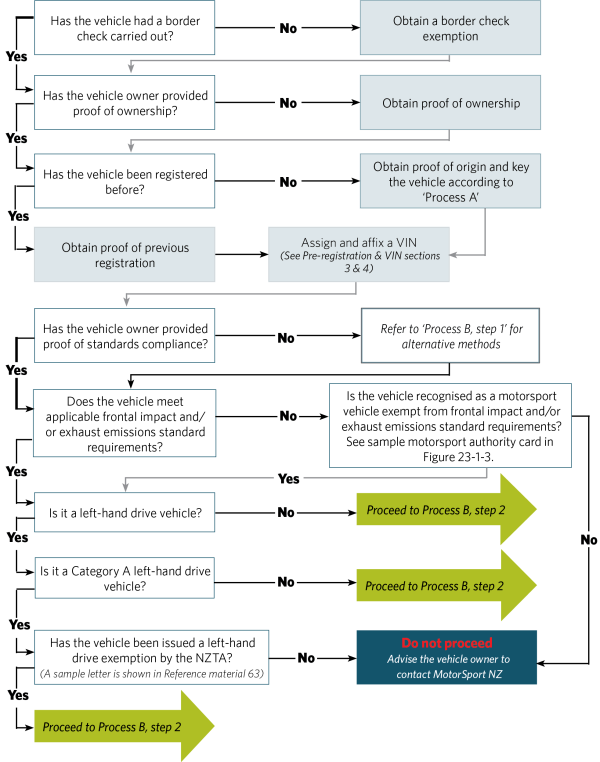
Page updated 17 May 2023 (see details)
24 Recording the number of seats for self-propelled motorhomes
Vehicle inspection requirements manual references
This bulletin gives guidance to vehicle inspectors in applying the following requirements in the VIRM: Entry certification:
Application
This bulletin applies to self-propelled motorhome vehicles undergoing entry certification in New Zealand.
Requirements
When recording the number of seats in a self-propelled motorhome, the vehicle inspector must take the following factors into account:
- the number of seats recorded on the importation documents (eg the de-registration or export certificate), and
- the number of seats fitted by the vehicle manufacturer, and
- the date of manufacture or conversion to a motorhome.
Vehicles manufactured or converted to a motorhome before 1 October 2003
The inspector should only count the fixed seats originally fitted by the vehicle manufacturer, not additional seats constructed by folding up or repositioning squabs, tables or beds.
The number of seats recorded in LANDATA should not exceed the number of seats recorded on the importation documents.
The vehicle must be fitted with seatbelts appropriate for the class of vehicle it was recorded as when first registered as a motorhome.
Examples
1. A motorhome manufactured in 2001 is imported. Two seats are indicated on the de-registration certificate. There are six seating positions in the vehicle but four of these seating positions fold down into beds. The vehicle should be recorded in LANDATA as a two-seater.
2. A vehicle is imported with eight seats indicated on the de-registration certificate. There are three factory seats in the front, with two seats in the rear that fold down into beds. The vehicle should be recorded in LANDATA as a three-seater.
Vehicles manufactured or converted to a motorhome after 1 October 2003
The number of seating positions recorded in LANDATA should match the number of sleeping berths.
The vehicle must be fitted with:
a) seatbelts in front seating positions as specified for class MB vehicles in the VIRM: In-service certification Table 7-5-3 (column three).
b) seatbelts in rear seating positions as specified for class MB vehicles in the VIRM: In-service certification Table 7-5-3 (column three) for at least as many rear seating positions as the number of sleeping berths minus the number of front seating positions.
c) a notice displayed in a prominent location, which recommends on safety grounds that passengers use the seats that are fitted with seatbelts when the vehicle is travelling, and stating that it is compulsory to wear fitted seatbelts.
Example
1. A motorhome manufactured in 2004 is imported. The vehicle has five sleeping berths. There are two front seating positions. There must be at least three rear seating positions fitted with lap or lap-and-diagonal seatbelts. The vehicle should be recorded in LANDATA as a five-seater.
2. A motorhome manufactured in 2004 is imported. The vehicle has two sleeping berths. There are two front seating positions and there is a two-seat sofa in the rear. There is no requirement to have any of the rear seating positions fitted with belts. The vehicle should be recorded in LANDATA as a two-seater.
Page amended 1 March and 11 March 2016 (see amendment details).
25 Immigrants' vehicles
Situation
The following do not apply to immigrants' vehicles:
| Requirement | Land Transport Rule |
|---|---|
| Frontal impact standards | Land Transport Rule: Frontal Impact 2001, clauses 2.1(5) and 2.1(6) |
| Exhaust emissions standards | Land Transport Rule: Vehicle Exhaust Emissions 2007, clause 2.2 |
| Electronic stability control | Land Transport Rule: Light Vehicle Brakes 2002, clause 3.1(4) |
| Advanced brake system (for class LC, LD and LE vehicles only) | Land Transport Rule: Light Vehicle Brakes 2002, clauses 2.7(7) |
Application
This document applies to any used vehicle that is undergoing entry certification in New Zealand, which:
- has been identified in writing by a Transport Agency entry certification agent as an immigrant’s vehicle appropriate for certification to enter service in New Zealand, and
- is imported to New Zealand by an immigrant entitled to take up permanent residence in New Zealand, or
- is imported by a New Zealand citizen or resident returning to New Zealand after at least 21 months overseas.
Obtaining recognition of an immigrant’s vehicle
To be eligible to register an immigrant’s vehicle, an applicant must:
1. apply to an organisation appointed by the Transport Agency (such as a Transport Agency entry certification agent), before the vehicle is certified for entry into service in New Zealand (an application form is available in Reference material 50), and
2. pay the appropriate fees (if any) specified in accordance with regulations made under the Act.
Recognition of an immigrant’s vehicle may be granted if:
- the applicant is a New Zealand citizen, or a New Zealand resident, or entitled to take up permanent residence in New Zealand under the Immigration Act 1987 (Note 1), and
- the applicant has lived outside New Zealand for at least 21 months continuously before arriving in or returning to New Zealand (Note 3), and
- the application is made:
a) within 18 months of the applicant’s arrival in or return to New Zealand, or
b) for a vehicle border checked between 1 April 2002 and 8 May 2008, and
c) the applicant has signed a declaration in accordance with the immigrant’s vehicle criteria.
Note 1
Document authorising residence in New Zealand means any of the following:
- a current New Zealand passport
- a current Australian passport
- a current New Zealand residence visa or permit, or a current New Zealand returning resident’s visa or permit
- a current permanent residence visa (including a resident return visa) issued by the Government of the Commonwealth of Australia.
Immigrant’s vehicle declaration criteria
An applicant for recognition of an immigrant’s vehicle must sign a declaration, declaring that:
a) the applicant has resided outside New Zealand for a period of not less than 21 months before the applicant’s arrival in or return to New Zealand and
b) the applicant has personally owned the vehicle, and has registered for personal use in a country outside New Zealand for a period of at least one year before their arrival in or return to New Zealand, and
c) the applicant has not had any other vehicle recognised as an immigrant’s vehicle, and
d) the applicant has not imported the vehicle on behalf of, or for, a third party, and
e) the applicant will not sell or lease the vehicle to a third party for at least one year after the date that the vehicle is first registered in New Zealand, and
f) the vehicle will not be operated in a transport service for at least one year after the date that the vehicle is first registered in New Zealand.
Conditions of use
A vehicle that is recognised as an immigrant’s vehicle must:
a) be registered in New Zealand in the applicant’s name for at least one year after the date on which the vehicle is first registered in New Zealand, although additional names may also appear on the registration documents, and
b) not operate as part of a transport service.
Note 2
Those persons ‘entitled to take up permanent residence in New Zealand under the Immigration Act 1987’ includes those in New Zealand under the ‘Talent Visa’ scheme.
Note 3
Customs document (Deed of Undertaking) can be accepted as proof of a person residing outside of New Zealand for a period of not less than 21 months, before their arrival in or return to New Zealand, and as proof that they hold a document authorising residence in New Zealand (see Reference material 66)
Inspection
The following flowchart explains the procedure for processing an immigrant’s vehicle for entry certification.
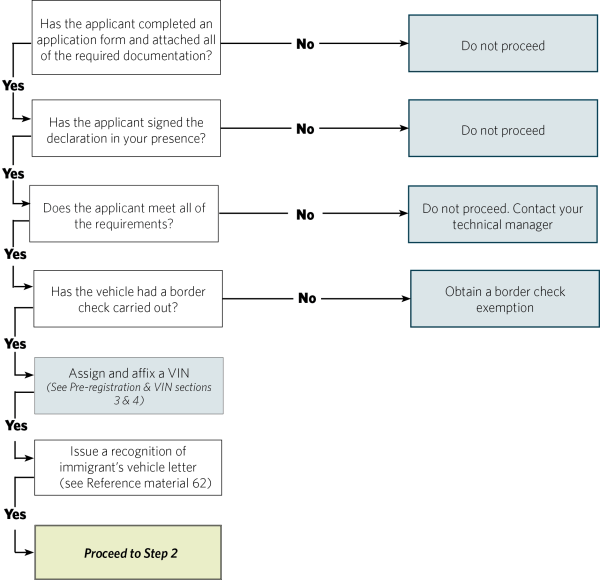
Step 1 – Documentation
Immigrants’ vehicles must still meet those standards applicable to the vehicle (according to age, etc).
The VIRM: Entry certification details the standards a vehicle and its components are required to meet. See Inspection & certification Table 1-1-1 for methods to demonstrate compliance with required standards.
Where compliance with an approved standard can not be proven by these methods, the following methods are acceptable alternatives:
- visual confirmation and recording of standards for items such as lighting, glazing, tyres and so on
- low volume vehicle (LVV) certification for modified components, such as brakes, steering and suspension
- a letter of exemption from the Transport Agency for specific items not covered above. Application forms for exemptions can be obtained from the the Transport Agency website.
Step 2 – Compliance inspection
Immigrants’ vehicles must be inspected according to the requirements outlined in the VIRM: Entry certification.
If a vehicle has been modified, it must have LVV certification.
If there is evidence of previous structural repairs or structural damage to a vehicle, it must be referred to a repair certifier for inspection and certification.
Ensure the vehicle meets all other required standards.
Step 3 – MR2A completion and vehicle registration
1. Any original letters must be sighted, copied and returned to the vehicle owner.
2. The following note must be recorded in the LANDATA notes screen:
‘Vehicle must remain registered in the name of >vehicle owner< for at least one year from the date
of registration in New Zealand’.
The applicant’s name must match the name shown on the letter of recognition as an immigrant’s vehicle.
If the vehicle does not meet an approved frontal impact standard, the FIS (frontal impact standard) field must be set to >N<.
3. Update LANDATA with special permit code IM.
4. The MR2A must be completed and printed in the name of the person registering the vehicle. This must be the same as the name shown on any exemption letter.
5. The entry certifier must retain a copy of the immigrant's approval letter on the vehicle file.
If an entry certifier wishes to deviate from these instructions, written approval from the Transport Agency must be obtained.
Page amended 10 April 2025 (see amendment details)
Page updated 4 July 2025 (see details)
26 Special interest vehicles
Situation
- Under Land Transport Rule: Frontal Impact Amendment 2008 and Land Transport Rule: Vehicle Exhaust Emissions 2007, a class MA vehicle is not required to comply with an approved frontal impact standard or exhaust emissions standard if it is granted a special interest vehicle permit.
- Under Land Transport Rule: Light Vehicle Brakes 2002, special interest vehicles are not required to meet electronic stability control requirements if it is granted a special interest vehicle permit.
- Under Land Transport Rule: Light Vehicle Brakes 2002, class LC, LD and LE vehicles are not required to meet advanced brake systems requirements if it is granted a special interest motorcycle permit.
Application
This document applies to any used or parallel-imported vehicle that is undergoing entry certification in New Zealand, which has been granted a special interest vehicle (SIV) or special interest motorcycle (SIMC) permit and is appropriate for certification to enter service in New Zealand.
Obtaining special interest vehicle and special interest motorcycle permits
To obtain an SIV or SIMC permit, an applicant must:
1. apply to NZTA before the vehicle is certified for entry into service in New Zealand; and
2. pay the appropriate fees (if any) specified in accordance with regulations made under the Act.
Note 1
All applications must have the applicant’s declarations witnessed by an entry certifier. The complete application with all the supporting evidence is then sent to NZTA by the entry certifier.
Special interest vehicle permits
A special interest vehicle permit may be issued if:
- NZTA considers that the vehicle will be owned as a collector’s item, and it:
a) is of historic value; or
b) meets three of the four qualifying criteria set out below
- the applicant:
a) is a New Zealand citizen or resident, and
b) has another vehicle for primary use that is a class MA, MB, MC or NA vehicle registered in the applicant’s name, leased by the applicant or is a company car, and
c) has not been issued with a special interest vehicle permit in the last two years, and does not have any other special interest vehicle registered in his/her name, and
d) has submitted a complete and correct application, including a signed declaration, and
e) has paid the appropriate fees (if any) specified in accordance with regulations made under the Act.
Qualifying criteria for special interest vehicle permits
To meet qualifying criteria for a special interest vehicle permit, the applicant must provide evidence that the vehicle meets at least three of the following requirements:
1. The vehicle (or its make, model and sub-model) is identified as being a collector’s item in one of the following magazines, or its respective website (Note 2):
a) Australian Classic Car
b) Car and Driver (US)
c) Automobile (US)
d) MOTOR (Australia)
e) Motor Trend (US)
f) New Zealand Autocar
g) New Zealand Classic Car
h) Road and Track (US)
i) Top Gear (UK)
j) Top Gear NZ
k) Unique Cars (Australia)
l) Wheels (Australia).
2. The vehicle’s make and model has been (or was) manufactured in annual volumes of 20,000 units or less
3. The vehicle is, and was manufactured as:
a) a two-door coupe, or
b) a convertible
4. The vehicle is, or was, manufactured as a high-performance vehicle.
Note 2
This is not intended to be an exhaustive list of magazines in which special interest vehicles feature, but a list of magazines in which any special vehicle is expected to feature.
Conditions for special interest vehicle permits
1. NZTA may not issue more than 200 special interest vehicle permits in any calendar year.
2. A special interest vehicle permit ceases to be valid if the vehicle is not inspected at the border or certified for entry within six months of the date of issue.
Note 3
A special interest vehicle permit that ceases to be valid in the calendar year it was issued will not be counted as part of the quota of 200 per annum.
Special interest motorcycle permits
A special interest motorcycle permit may be issued if the applicant:
a) is a New Zealand citizen or resident, and
b) has another vehicle for primary use that is a class LC, LD, LE, MA, MB, MC or NA vehicle registered in the applicant’s name, leased by the applicant or is a company car, and
c) has not been issued with a special interest motorcycle permit in the last two years, and
d) does not have any other special interest motorcycle registered in his/her name, and
e) has submitted a complete and correct application, including a signed declaration, and
f) has paid the appropriate fees (if any) specified in accordance with regulations made under the Act.
Qualifying criteria for special interest motorcycle permits
- NZTA considers that the motorcycle will be owned as a collector’s item, and:
- it is of historic value, or
- The vehicle’s make and model has been (or was) manufactured in annual volumes of 20,000 units or less and was not manufactured with either an antilock braking system or combined braking system
Conditions for special interest motorcycle permits
1. NZTA may not issue more than 100 special interest motorcycle permits in any calendar year.
2. A special interest motorcycle ceases to be valid if the vehicle is not inspected at the border or certified for entry within six months of the date of issue.
Note 4
A special interest motorcycle permit that ceases to be valid in the calendar year it was issued will not be counted as part of the quota of 100 per annum.
Inspection
The following flowchart explains the procedure for processing a special interest vehicle for entry certification.
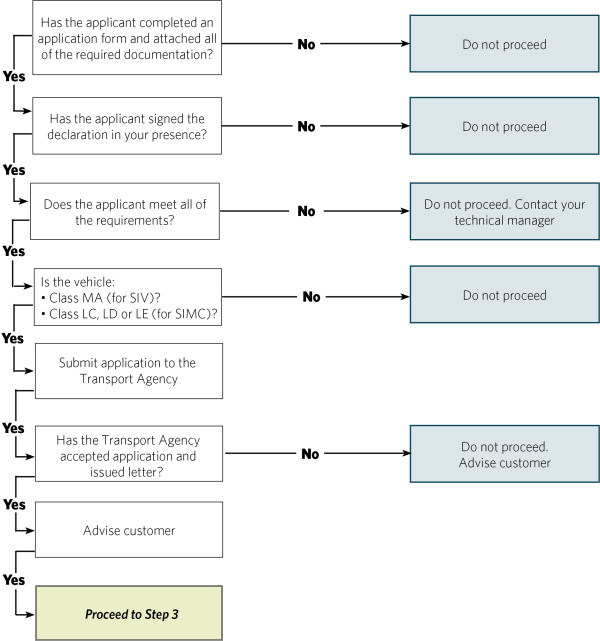
Step 1 – Documentation
SIVs and SIMCs must still meet those standards applicable to the vehicle (according to age, etc).
The VIRM: Entry certification details the standards a vehicle and its components are required to meet. See Inspection & certification Table 1-1-3 (Inspection & certification section 1-1) for methods to demonstrate compliance with required standards.
Where compliance with an approved standard cannot be proven by these methods, the following methods are acceptable alternatives:
- visual confirmation and recording of standards for items such as lighting, glazing, tyres and so on.
- low volume vehicle (LVV) certification for modified components, such as brakes, steering and suspension.
- a letter of exemption from NZTA for specific items not covered above. Application forms for exemptions can be obtained from the NZTA website.
Step 2 – Submit to NZTA for processing
The application and documentation for a special interest vehicle permit must be submitted to:
Exemptions and Registers Integrity
NZ Transport Agency
Private Bag 11777
Palmerston North 4442
A letter advising of the result (approve or decline) will be sent to the entry certifier for forwarding to the applicant.
Step 3 – Compliance inspection
SIVs and SIMCs must be inspected according to the requirements outlined in the VIRM: Entry certification.
If a vehicle has been modified, it must have LVV certification.
If there is evidence of previous structural repairs or structural damage to a vehicle, it must be referred to a repair certifier for inspection and certification.
Step 4 – MR2A completion and vehicle registration
1. Any original letters must be sighted, copied and returned to the vehicle owner.
2. If the vehicle has been issued a special interest vehicle permit and does not meet an approved frontal impact standard, and/or exhaust emissions standard, and/or is not fitted with electronic stability control (ESC) the following note must be recorded in the LANDATA notes screen:
‘Vehicle must remain registered in the name of >vehicle owner< for at least four years from the date of first registration in New Zealand’.
The owner’s name must match the name shown on the permit.
If the vehicle does not meet an approved frontal impact standard, the FIS (frontal impact standard) field must be set to >N<.
3. Record the SIV permit number in the NOTES screen (if not already recorded).
4. Update LANDATA with special permit code SP.
5. The MR2A must be completed and printed in the name of the person registering the vehicle. This must be the same as the name shown on any exemption letter.
If an entry certifier wishes to deviate from these instructions, written approval from NZTA must be obtained.
Page amended 30 July 2025 (see amendment details).
27 Alternative proof of compliance – Singapore/Japan
Vehicles previously registered in Singapore
Introduction
This procedure may be used as an alternative to obtaining a statement of compliance for some used vehicles from Singapore.
It is divided into two processes, one for used Japanese domestic vehicles with a type designation number (TDN) and the other for non-Japanese domestic vehicles. Both types of vehicle must have been previously registered in Singapore.
Approved certifier procedures
1. Send the Singapore Land Transport Authority (LTA) technical information of motor vehicle letter to your Technical Manager – and advise the vehicle owner that he/she will be notified of the outcome in due course.
2. Your Technical Manager will issue a letter advising either:
a) that a statement of compliance will be required, or
b) approval of the Singapore LTA letter as acceptable evidence of compliance at the time of manufacture (conditions may apply).
3. If the application is successful, attach the approval letter to the vehicle file.
Vehicles from Japan without a TDN
Introduction
This procedure provides an alternative to obtaining a statement of compliance for a vehicle from Japan that does not have a TDN on its export certificate. This is only applicable to vehicles manufactured outside Japan as vehicles manufactured in Japan for the Japanese market are not required by the NZTA to have a TDN on the export certificate.
These vehicles must have been previously registered in Japan.
Approved certifier procedures
1. Send the export certificate to your Technical Manager – and advise the vehicle owner that he/she will be notified of the outcome in due course.
2. Your Technical Manager will issue a letter advising either:
a) that a statement of compliance will be required, or
b) the vehicle may be accepted as compliant at the time of manufacture.
3. If the application is successful, attach the approval letter to the vehicle file.
28 Exhaust emissions standard compliance
Vehicle inspection requirements manual references and application
This bulletin gives guidance to vehicle inspectors in applying the following requirements in the VIRM: Entry certification:
Under Land Transport Rule: Vehicle Exhaust Emissions 2007, when a vehicle undergoes entry-level certification in New Zealand, proof that the vehicle was manufactured to meet an approved emissions standard or a more recent version or a higher standard is required.
This technical bulletin applies to all vehicles being certified for entry into New Zealand that are required to meet an approved exhaust emissions standard. It provides approved standards, more recent versions, and higher standards. Section 11-2 only provides approved standards (meaning those specified in schedule 1 of the Rule).
Acceptable proof of exhaust emissions rule compliance for vehicles from any country
For a vehicle imported from any country, an acceptable statement of compliance including an approved, or a more recent version or a higher emissions standard is acceptable evidence of compliance (see section 3-1-1 for other SoC requirements). The emissions standard provided in the statement of compliance must be recorded on the vehicle checksheet.
- A Statement of Compliance containing one of the the following statements is also acceptable as proof for Euro 4 only:
- “This vehicle has been certified to UN/ECE Regulation 83.05 and complies with the limit values specified in Row B of the table to clause 5.3.1.4”, or
- “This vehicle has been certified to 70/220/EC as amended by 98/69/EC [or later amendment if applicable] and complies with the limit values specified in Row B of the table to clause 5.3.1.4 of Annex 1”
- An emission certificate produced by TÜV SÜD or DEKRA which confirms the vehicle is compliant with an approved, more recent version or higher Euro emissions standard is also acceptable. Each individual vehicle is required to have an approved Exhaust Emissions Compliant Certificate. TÜV SÜD certificates can be issued by SOC NZ (until February 2017 Autohub issued the certificates) and DEKRA certificates can be issued by VTNZ. For a TÜV SÜD sample certificate see Reference Material 73c; for a DEKRA sample Certificate, see Reference Material 73b
SOC NZ Limited may be able to supply TÜV SÜD full statements of compliance and emission certificates via socnz.co.nz, or emailing: karen@socnz.co.nz or joe@socnz.co.nz
VTNZ certificates (DEKRA) can be ordered by contacting Paul Deans or David Thomson at technical@vtnz.co.nz
The certifier must keep the original certificate in their vehicle certification file.
An emailed copy of a TÜV SÜD or DEKRA certificate can be accepted providing they are emailed directly to a KSDP email address.
Rainon Contracting may be able to supply full statements of compliance for the following used GM products: Buick, Cadillac, Chevrolet, Holden, Oldsmobile, Pontiac, Vauxhall, Opel (before 2022) by emailing contracting@rainon.co.nz
Statements of compliance from Motor Industry Association manufacturers’ representatives
Statements of compliance from the Motor Industry Association of New Zealand (MIA) manufacturers’ representatives can use an abbreviated format to refer to emissions standards. In particular, this involves using the terms Euro 4, Euro 5 and Euro 6d and so on, instead of quoting the relevant UN/ECE regulation or EC directive in full, subject to the following conditions:
a) This terminology is only acceptable on statements of compliance issued by the MIA representatives of the vehicle manufacturer.
b) By using the abbreviated term, the person signing the statement of compliance is certifying that the vehicle has been formally homologated to the UN/ECE regulation or EC Directive for exhaust emissions that is appropriate to the vehicle.
c) The issuer of the statement of compliance must be able to provide, on request, the relevant certification documentation as set out in declaration 2 of the standard statement of compliance.
NZ new heavy vehicles imported by Motor Industry Association manufacturers’ representatives
Some manufacturers are directly notifying NZTA of the emission standards for the models of heavy vehicles that they're importing into New Zealand.
Therefore, if a new heavy vehicle is presented for certification and the emissions code (test regime) fields in LANDATA are already populated, additional documentation proving compliance with an approved emissions standard is not needed.
- The manufacturer and distributor must be listed on the New heavy motor vehicles – statements of compliance contact details list.
- The vehicles can be identified in LANDATA by the manufacturer/distributor's name displaying on the bottom right of the VIN screen. It won't be visible once the Certifier ID field is entered.
Acceptable proof of exhaust emissions rule compliance for vehicles from Japan
An original Japanese de-registration, export or completion inspection certificate with a 3 digit emissions code as listed in the appropriate table below, relevant to its import status, class, fuel type and date. The emissions code is the prefix (ie before the hypen) at the beginning of the Industry Model code, see the circled area on Figure 28-1-1
If the industry model code recorded on the de-registration, export or completion inspection certificate does not include an emissions prefix or the code is not listed in the appropriate table below, other evidence of compliance with an approved exhaust emissions standard, such as a statement of compliance or appropriate compliance plates, must be provided.
- Table 28-1-1 Used vehicles – Class MA, MB, MC, MD1, MD2, and NA (except used-import disability vehicles)
- Table 28-1-2 New vehicles – Class MA, MB, MC, MD1, MD2, and NA
- Table 28-1-3 Used vehicles – Class MD3, MD4, ME, NB, and NC
- Table 28-1-4 New vehicles – Class MD3, MD4, ME, NB, and NC
- Table 28-1-5 Used-import disability vehicles – Class MA, MB, MC, MD1, MD2, and NA
- Table 28-1-6 New and used vehicles – Class LA, LB, LC, LD, and LE
Recording the information
This emissions code information must be recorded on the vehicle checksheet and the industry model code and test regime must be recorded in LANDATA.
Enter the full industry model code from the de-registration, export or completion inspection certificate, including the emissions code characters, into the ‘industry model code’ field.
For vehicles requiring a Fuel Consumption Statement the emissions test regime is entered by the Fuelsaver system.
For vehicles not requiring a Fuel Consumption Statement (such as heavy vehicles and motorcycles, from 30 April 2025) enter the emissions test regime code into LANDATA in the VCAAS screen. The test regime code to be recorded in LANDATA is determined by adding a ‘J’ to the beginning of the emissions code prefix (eg the emissions code prefix DBA is recorded as test regime code JDBA).
If the test regime code is not recognised by LANDATA (error 60803 Emission Standard (Test Regime) is not valid) email vehicleemissions@nzta.govt.nz including a copy of the export, completion or de-registration certificate.
Acceptable proof of exhaust emissions rule compliance for used vehicles imported from Singapore
Standards compliance for vehicles imported from Singapore can be demonstrated using the following documents:
a) a Singapore de-registration certificate, and
b) an outcome notification letter from an entry certifier head office advising that the Singapore LTA technical letter is acceptable documentation, and
either
c) if the vehicle is a used Japanese domestic vehicle , a Singapore Land Transport Authority (LTA) technical letter listing an acceptable Japanese emissions code as shown in the Japanese tables, or
d) a Singapore Land Transport Authority (LTA) technical letter listing an approved, more recent or higher emissions standard.
Vehicles that can be accepted based on date of registration
Some vehicles may be accepted as complying with emissions standards, and might meet a higher standard, based on their registration date.
| Fuel type | Date first registered in Singapore | Can be accepted as complying with |
|---|---|---|
| Diesel | On or after 1 October 2006 | Euro 4 – may meet a higher standard |
| On or after 1 April 2014 | Euro 5 – may meet a higher standard | |
| On or after 1 January 2018 | Euro 6 – may meet a higher standard | |
| Petrol | On or after 1 April 2014 | Euro 4 – may meet a higher standard |
| On or after 1 September 2017 | Euro 6 – may meet a higher standard |
Vehicles registered before these dates require further evidence of emissions compliance.
Note: As of 1 January 2017, the Singapore emissions exemptions document, a Waka Kotahi list of exemption-eligible vehicles, ceased to be valid. The above advice replaces the previous exemptions procedure.
Acceptable proof of exhaust emissions rule compliance for vehicles imported from Australia
Classes LA, LB, LC, LD, LE
Australian Design Rules (ADR) compliance does not include a vehicle emissions standard for class LA, LB, LC, LD and LE vehicles. If an L class vehicle is required to meet a vehicle emissions standard, a Statement of Compliance or alternative evidence of compliance will be required.
Classes MA, MB, MC, MD1, MD2, MD3, MD4, ME, NA, NB, NC, TC and TD recorded on the Register of Approved Vehicles
See Technical bulletin 48 Verification of compliance with Australian Design Rules (ADRs)
Classes MA, MB, MC, MD1, MD2 and NA with an ADR plate/label
Which version of ADR 79 that a vehicle complies with can be determined using the date on the ADR compliance plate as follows:
|
Date on ADR plate |
Petrol |
Diesel |
|---|---|---|
|
01/2007 – 06/2010 |
Not proven to be compliant |
ADR 79/01 (Euro 4) |
|
07/2010 –10/2016 |
ADR 79/02 (Euro 4) |
ADR 79/01 (Euro 4) |
| 11/2016 – 01/07/2028 | ADR 79/04 (Euro 5) | ADR 79/04 (Euro 5) |
- If there is no emissions standard on the plate, the compliance plate approval number must be recorded on the vehicle check sheet.
- Some vehicles may comply in advance of these dates. In these cases, it may be possible to confirm compliance via the vehicle manufacturer's official representative for vehicle compliance. The certifier must keep such correspondence in the vehicle certification file.
- Diesel vehicles complying with ADR 79/01 or ADR 79/02 must also comply with ADR 30/01. If a diesel vehicle has an ADR compliance plate and can be established as complying with the appropriate ADR 79/01 or ADR 79/02, it also complies with ADR 30/01.
Classes MD3, MD4, ME, NB and NC with an ADR plate/label
Which version of ADR 80 that a vehicle complies with can be determined using the date on the ADR compliance plate as follows:
|
Date on ADR plate |
Petrol |
Diesel |
|---|---|---|
|
03/2008 – 12/2010 |
ADR 80/02 |
ADR 80/02 |
|
01/2011 – 11/2025 |
ADR 80/03 |
ADR 80/03 |
- If there is no emissions standard on the plate, the compliance plate approval number must be recorded on the vehicle check sheet.
- Some new model vehicles may comply in advance of these dates. In these cases, it may be possible to confirm compliance via the vehicle manufacturer's official representative for vehicle compliance. The certifier must keep such correspondence in the vehicle certification file.
- Diesel vehicles complying with ADR80/02 must also comply with ADR 30/01. If a diesel vehicle has an ADR compliance plate and can be established as complying with ADR 80/02, it also complies with ADR 30/01.
Which standards are the most recent?
More recent versions of an approved ADR79/xx or ADR80/xx standard will have a higher suffix. For example, ADR79/05 is a more recent version of ADR79/04.
Acceptable proof of exhaust emissions rule compliance for vehicles from the United Kingdom
Any light vehicle (except a motorcycle or moped) ex-UK that is presented for entry certification, that has a valid Certificate of permanent export, V5C, V308 or VX302 registration certificate (see Reference material 59, 67 and 68) showing that it was first registered as new in the UK:
- on or after 1 October 2007 may be accepted as complying with the Euro 4 emissions standard and might meet a higher standard
- on or after 1 January 2011 will be certified to the Euro 5 emission requirements and might meet a higher standard
- on or after 1 January 2015 will be certified to the Euro 6d TEMP or lower emission requirements and might meet a higher standard. Registration date cannot be used as evidence of compliance with Euro 6d or higher.
If an acceptable emission code (such as Euro 5) for the vehicle is listed on a valid Certificate of permanent export, V5C, V308 or VX302 registration document of a vehicle first registered as new in the UK, it may be accepted as proof of emissions compliance. If listed on the document use Table 28-1-7 to determine the Step or Level (for example, “EURO 6 AP” is Euro 6d).
If an acceptable emission code (such as Euro 5) for the vehicle is listed on https://carfueldata.vehicle-certification-agency.gov.uk/ for a vehicle first registered as new in the UK, it may be accepted as proof of emissions compliance.
Acceptable proof of exhaust emissions rule compliance for vehicles from Europe
a) A statement of compliance listing an approved emissions standard, or an appropriate EC directive or UN/ECE regulation as shown in Table 28-1-7, or
b) A UN/ECE compliance plate listing an approved emissions standard or one of the UN/ECE regulations shown in Table 28-1-8, or
c) An EC Certificate of Conformity (CoC) issued by the vehicle manufacturer for individual vehicles that have undergone European Commission Whole Vehicle Type Approval (EC WVTA). The CoC is linked to the EC Whole Vehicle Approval Plate – if a vehicle has a CoC, it will also have a Whole Vehicle Approval Plate. A sample CoC is shown in Reference material 49. The emissions standard information is recorded in item 46.1 or 48 of the CoC, or
d) An EC whole vehicle approval plate showing an appropriate regulation/directive. Refer to Reference material 29
e) An EC Certificate of Conformity showing an EC Whole Vehicle Approval number of 2001/116 or later, and with all emissions values (quoted in section 48) falling below the limit values set out in Table 28-1-9, may be accepted as complying with the Euro 4 emissions standard, or
f) An Irish Certificate of registration (see Reference material 83) showing it was first registered as new on or after 1 February 2008 may be accepted as complying with the Euro 4 emissions standard and might meet a higher standard.
Decoding EC Directive and UN/ECE Regulation emissions system approval numbers
Refer to Table 28-1-10
Acceptable proof of exhaust emissions compliance for used vehicles imported from the United States
|
If a vehicle has: |
Then either of the following is acceptable proof of exhaust emissions compliance: |
|---|---|
|
|
Check sheet recording
If the vehicle has an emissions standard identified on the EPA plate/label then the standard must be recorded on the vehicle checksheet; otherwise record 'EPA VECI' and the model year on the plate/label.
Table 1
Notes
- US 2007 cannot be confirmed by the model year on the EPA label.
- EPA vehicle classes do not match FMVSS or NZ vehicle classes.
|
Class |
Conditions |
Conditions |
Conditions |
Model year on EPA VECI label |
Standard |
|---|---|---|---|---|---|
|
LA and LC |
280cc or more |
2010 or later |
US 2010m |
||
|
279cc or less |
2006 or later |
US 2010m |
|||
|
LB, LD and LE |
280cc or more |
Curb mass 682kg or less |
2010 or later |
US 2010m |
|
|
279cc or less |
2006 or later |
US 2010m |
|||
|
MA, MB, MC MD1, MD2 and NA |
2017 or later |
US TIER3 |
|||
|
2004 or later |
US TIER2 |
||||
|
2004 or later |
US 2004 |
||||
|
MD3 |
12 or less seats |
GVM 3856kg or less |
2017 or later |
US TIER3 |
|
|
2004 or later |
US TIER2 |
||||
|
2004 or later |
US 2004 |
||||
|
12 or less seats |
GVM 3857kg or more |
2017 or later |
US TIER3 |
||
|
2004 or later |
US TIER2 |
||||
|
2004 or later |
US 2004 |
||||
|
13 or more seats |
GVM 3856kg or less |
2017 or later |
US TIER3 |
||
|
2004 or later |
US TIER2 |
||||
|
2004 or later |
US 2004 |
||||
|
13 or more seats |
GVM 3857kg or more |
2018 or later |
US TIER3 |
||
|
Diesel only |
2007 or later |
US TIER2 |
|||
|
2013 or later |
US 2013 |
||||
|
Diesel only |
2004 or later |
US 2004 |
|||
|
MD4 |
12 or less seats |
GVM 4536kg or less |
2017 or later |
US TIER3 |
|
|
2004 or later |
US TIER2 |
||||
|
2013 or later |
US 2013 |
||||
|
12 or less seats |
GVM 4537kg or more |
2018 or later |
US TIER3 |
||
|
Diesel only |
2007 or later |
US TIER2 |
|||
|
2013 or later |
US 2013 |
||||
|
13 or more seats |
GVM 4537kg or more |
2018 or later |
US TIER3 |
||
|
Diesel only |
2007 or later |
US TIER2 |
|||
|
2013 or later |
US 2013 |
||||
|
ME |
2018 or later |
US TIER3 |
|||
|
Diesel only |
2007 or later |
US TIER2 |
|||
|
2013 or later |
US 2013 |
||||
|
Diesel only |
2004 or later |
US 2004 |
|||
|
NB |
GVM 3856kg or less |
2017 or later |
US TIER3 |
||
|
2004 or later |
US TIER2 |
||||
|
2004 or later |
US 2004 |
||||
|
GVM 3857kg or more |
2018 or later |
US TIER3 |
|||
|
Diesel only |
2007 or later |
US TIER2 |
|||
|
2013 or later |
US2013 |
||||
|
Diesel only |
2004 or later |
US 2004 |
|||
|
NC |
2018 or later |
US TIER3 |
|||
|
Diesel only |
2007 or later |
US TIER2 |
|||
|
2013 or later |
US 2013 |
||||
|
Diesel only |
2004 or later |
US 2004 |
Emissions test regime codes to be keyed to LANDATA
See Pre-registration and VIN: 2-2 Vehicle attributes definitions, 26 Test regime
Table 28-1-1 Used vehicles – Class MA, MB, MC, MD1, MD2, NA (except used-import disability vehicles)
| Border inspection date | Fuel type | Japanese regulation | 3 digit emissions code beginning with |
|---|---|---|---|
| Before 30 April 2024 | Petrol, CNG/LPG | Japan 2005 | Any three digit emissions code |
| Diesel | Japan 2005 | Any three digit emissions code | |
| From 30 April 2024 to 1 July 2028 | Petrol, CNG/LPG | Japan 2005 Low Harm | D and first registered anywhere on or after 1 January 2012 |
| Higher Standard or more recent version to Japan 2005 Low Harm (ie Japan 09 and Japan 2007) | E, G, H, L, M, R or Q | ||
| Japan 2018 | 3, 4, 5, 6, or 7 | ||
| Diesel | Japan 09 | L, F, M, R, or Q | |
| Higher standard or more recent version to Japan 09 (ie Japan 2010 and 2018) | S, T, 3, 4, 5, 6, or 7 | ||
| From 1 July 2028 | Petrol, CNG/LPG | Japan 2018 Low Harm |
3 (CNG/LPG only) 4(CNG/LPG only) 5AA, 5BA, 5LA, 6AA, 6BA or, 6LA |
| Diesel | Japan 2018 | 3, 4, 5,6, or 7 |
Table 28-1-2 New vehicles – Class MA, MB, MC, MD1, MD2, NA
| Date of manufacture | Fuel type | Existing or new model vehicles | Japanese regulation | 3 digit emissions code beginning with | ||||||||||||||||||||||||||||||||||||||||||||||||||||||||||||||||||||||||||||||||||||||||||||||||||||||||||||||||||||||||||||||||||||||||||||||||||||||||||||||||||||||||||||||||||||||||||||||||||||||||||||||||||||||||||||||||||||||||||||||||||||||||||||||||||||||||||||||||||||||||||||||||||||||||||||||||||||||||||||||||||||||||||||||||||||||||||||||||||||||||||||||||||||||||||||||||||||||||||||||||||||||||||||||||||||||||||||||||||||||||||||||||||||||||||||||||||||||||||||||||||||||||||||||||||||||||||||||||||||||||||||||||||||||||||||||||||||||||||||||||||||||||||||||||||||||||||||||||||||||
|---|---|---|---|---|---|---|---|---|---|---|---|---|---|---|---|---|---|---|---|---|---|---|---|---|---|---|---|---|---|---|---|---|---|---|---|---|---|---|---|---|---|---|---|---|---|---|---|---|---|---|---|---|---|---|---|---|---|---|---|---|---|---|---|---|---|---|---|---|---|---|---|---|---|---|---|---|---|---|---|---|---|---|---|---|---|---|---|---|---|---|---|---|---|---|---|---|---|---|---|---|---|---|---|---|---|---|---|---|---|---|---|---|---|---|---|---|---|---|---|---|---|---|---|---|---|---|---|---|---|---|---|---|---|---|---|---|---|---|---|---|---|---|---|---|---|---|---|---|---|---|---|---|---|---|---|---|---|---|---|---|---|---|---|---|---|---|---|---|---|---|---|---|---|---|---|---|---|---|---|---|---|---|---|---|---|---|---|---|---|---|---|---|---|---|---|---|---|---|---|---|---|---|---|---|---|---|---|---|---|---|---|---|---|---|---|---|---|---|---|---|---|---|---|---|---|---|---|---|---|---|---|---|---|---|---|---|---|---|---|---|---|---|---|---|---|---|---|---|---|---|---|---|---|---|---|---|---|---|---|---|---|---|---|---|---|---|---|---|---|---|---|---|---|---|---|---|---|---|---|---|---|---|---|---|---|---|---|---|---|---|---|---|---|---|---|---|---|---|---|---|---|---|---|---|---|---|---|---|---|---|---|---|---|---|---|---|---|---|---|---|---|---|---|---|---|---|---|---|---|---|---|---|---|---|---|---|---|---|---|---|---|---|---|---|---|---|---|---|---|---|---|---|---|---|---|---|---|---|---|---|---|---|---|---|---|---|---|---|---|---|---|---|---|---|---|---|---|---|---|---|---|---|---|---|---|---|---|---|---|---|---|---|---|---|---|---|---|---|---|---|---|---|---|---|---|---|---|---|---|---|---|---|---|---|---|---|---|---|---|---|---|---|---|---|---|---|---|---|---|---|---|---|---|---|---|---|---|---|---|---|---|---|---|---|---|---|---|---|---|---|---|---|---|---|---|---|---|---|---|---|---|---|---|---|---|---|---|---|---|---|---|---|---|---|---|---|---|---|---|---|---|---|---|---|---|---|---|---|---|---|---|---|---|---|---|---|---|---|---|---|---|---|---|---|---|---|---|---|---|---|---|---|---|---|---|---|---|---|---|---|---|---|---|---|---|---|---|---|---|---|---|---|---|---|---|---|---|---|---|---|---|---|---|---|---|---|---|---|---|---|---|---|---|---|---|---|---|---|---|---|---|---|---|---|---|---|---|---|---|---|---|---|---|---|---|---|---|---|---|---|---|---|---|---|---|---|---|---|---|---|---|---|---|---|---|---|---|---|---|---|---|---|
| Before 30 April 2024 | Petrol, CNG/LPG | Existing or new | Japan 05 | Any three digit emissions code | ||||||||||||||||||||||||||||||||||||||||||||||||||||||||||||||||||||||||||||||||||||||||||||||||||||||||||||||||||||||||||||||||||||||||||||||||||||||||||||||||||||||||||||||||||||||||||||||||||||||||||||||||||||||||||||||||||||||||||||||||||||||||||||||||||||||||||||||||||||||||||||||||||||||||||||||||||||||||||||||||||||||||||||||||||||||||||||||||||||||||||||||||||||||||||||||||||||||||||||||||||||||||||||||||||||||||||||||||||||||||||||||||||||||||||||||||||||||||||||||||||||||||||||||||||||||||||||||||||||||||||||||||||||||||||||||||||||||||||||||||||||||||||||||||||||||||||||||||||||||
| Diesel | ||||||||||||||||||||||||||||||||||||||||||||||||||||||||||||||||||||||||||||||||||||||||||||||||||||||||||||||||||||||||||||||||||||||||||||||||||||||||||||||||||||||||||||||||||||||||||||||||||||||||||||||||||||||||||||||||||||||||||||||||||||||||||||||||||||||||||||||||||||||||||||||||||||||||||||||||||||||||||||||||||||||||||||||||||||||||||||||||||||||||||||||||||||||||||||||||||||||||||||||||||||||||||||||||||||||||||||||||||||||||||||||||||||||||||||||||||||||||||||||||||||||||||||||||||||||||||||||||||||||||||||||||||||||||||||||||||||||||||||||||||||||||||||||||||||||||||||||||||||||||||
| From 30 April 2024 to 30 June 2027 | Petrol, CNG/LPG | Existing or new | Japan 2005 Low Harm | D and first registered anywhere on or after 1 January 2012. | ||||||||||||||||||||||||||||||||||||||||||||||||||||||||||||||||||||||||||||||||||||||||||||||||||||||||||||||||||||||||||||||||||||||||||||||||||||||||||||||||||||||||||||||||||||||||||||||||||||||||||||||||||||||||||||||||||||||||||||||||||||||||||||||||||||||||||||||||||||||||||||||||||||||||||||||||||||||||||||||||||||||||||||||||||||||||||||||||||||||||||||||||||||||||||||||||||||||||||||||||||||||||||||||||||||||||||||||||||||||||||||||||||||||||||||||||||||||||||||||||||||||||||||||||||||||||||||||||||||||||||||||||||||||||||||||||||||||||||||||||||||||||||||||||||||||||||||||||||||||
| Higher Standard or more recent version to Japan 2005 Low Harm (ie Japan 09 and Japan 2007) | E, G, H, L, F, M, R or Q | |||||||||||||||||||||||||||||||||||||||||||||||||||||||||||||||||||||||||||||||||||||||||||||||||||||||||||||||||||||||||||||||||||||||||||||||||||||||||||||||||||||||||||||||||||||||||||||||||||||||||||||||||||||||||||||||||||||||||||||||||||||||||||||||||||||||||||||||||||||||||||||||||||||||||||||||||||||||||||||||||||||||||||||||||||||||||||||||||||||||||||||||||||||||||||||||||||||||||||||||||||||||||||||||||||||||||||||||||||||||||||||||||||||||||||||||||||||||||||||||||||||||||||||||||||||||||||||||||||||||||||||||||||||||||||||||||||||||||||||||||||||||||||||||||||||||||||||||||||||||||
| Japan 2018 | 3, 4, 5, 6, or 7 | |||||||||||||||||||||||||||||||||||||||||||||||||||||||||||||||||||||||||||||||||||||||||||||||||||||||||||||||||||||||||||||||||||||||||||||||||||||||||||||||||||||||||||||||||||||||||||||||||||||||||||||||||||||||||||||||||||||||||||||||||||||||||||||||||||||||||||||||||||||||||||||||||||||||||||||||||||||||||||||||||||||||||||||||||||||||||||||||||||||||||||||||||||||||||||||||||||||||||||||||||||||||||||||||||||||||||||||||||||||||||||||||||||||||||||||||||||||||||||||||||||||||||||||||||||||||||||||||||||||||||||||||||||||||||||||||||||||||||||||||||||||||||||||||||||||||||||||||||||||||||
| Diesel | Japan 09 | L, F, M, R, or Q | ||||||||||||||||||||||||||||||||||||||||||||||||||||||||||||||||||||||||||||||||||||||||||||||||||||||||||||||||||||||||||||||||||||||||||||||||||||||||||||||||||||||||||||||||||||||||||||||||||||||||||||||||||||||||||||||||||||||||||||||||||||||||||||||||||||||||||||||||||||||||||||||||||||||||||||||||||||||||||||||||||||||||||||||||||||||||||||||||||||||||||||||||||||||||||||||||||||||||||||||||||||||||||||||||||||||||||||||||||||||||||||||||||||||||||||||||||||||||||||||||||||||||||||||||||||||||||||||||||||||||||||||||||||||||||||||||||||||||||||||||||||||||||||||||||||||||||||||||||||||||
| Higher standard or more recent version to Japan 09 (ie Japan 2010 and Japan 2018) | S, T, 3, 4, 5, 6, or 7 | |||||||||||||||||||||||||||||||||||||||||||||||||||||||||||||||||||||||||||||||||||||||||||||||||||||||||||||||||||||||||||||||||||||||||||||||||||||||||||||||||||||||||||||||||||||||||||||||||||||||||||||||||||||||||||||||||||||||||||||||||||||||||||||||||||||||||||||||||||||||||||||||||||||||||||||||||||||||||||||||||||||||||||||||||||||||||||||||||||||||||||||||||||||||||||||||||||||||||||||||||||||||||||||||||||||||||||||||||||||||||||||||||||||||||||||||||||||||||||||||||||||||||||||||||||||||||||||||||||||||||||||||||||||||||||||||||||||||||||||||||||||||||||||||||||||||||||||||||||||||||
| From 1 July 2027 to 30 June 2028 | Petrol, CNG/LPG | Existing | Japan 2005 Low Harm | D and first registered anywhere on or after 1 January 2012. | ||||||||||||||||||||||||||||||||||||||||||||||||||||||||||||||||||||||||||||||||||||||||||||||||||||||||||||||||||||||||||||||||||||||||||||||||||||||||||||||||||||||||||||||||||||||||||||||||||||||||||||||||||||||||||||||||||||||||||||||||||||||||||||||||||||||||||||||||||||||||||||||||||||||||||||||||||||||||||||||||||||||||||||||||||||||||||||||||||||||||||||||||||||||||||||||||||||||||||||||||||||||||||||||||||||||||||||||||||||||||||||||||||||||||||||||||||||||||||||||||||||||||||||||||||||||||||||||||||||||||||||||||||||||||||||||||||||||||||||||||||||||||||||||||||||||||||||||||||||||
| Higher standard or later version to Japan 2005 Low Harm (ie Japan 2009 and Japan 2007) | E, G, H, L, M, R, or Q | |||||||||||||||||||||||||||||||||||||||||||||||||||||||||||||||||||||||||||||||||||||||||||||||||||||||||||||||||||||||||||||||||||||||||||||||||||||||||||||||||||||||||||||||||||||||||||||||||||||||||||||||||||||||||||||||||||||||||||||||||||||||||||||||||||||||||||||||||||||||||||||||||||||||||||||||||||||||||||||||||||||||||||||||||||||||||||||||||||||||||||||||||||||||||||||||||||||||||||||||||||||||||||||||||||||||||||||||||||||||||||||||||||||||||||||||||||||||||||||||||||||||||||||||||||||||||||||||||||||||||||||||||||||||||||||||||||||||||||||||||||||||||||||||||||||||||||||||||||||||||
| Japan 2018 | 3, 4, 5, 6, or 7 | |||||||||||||||||||||||||||||||||||||||||||||||||||||||||||||||||||||||||||||||||||||||||||||||||||||||||||||||||||||||||||||||||||||||||||||||||||||||||||||||||||||||||||||||||||||||||||||||||||||||||||||||||||||||||||||||||||||||||||||||||||||||||||||||||||||||||||||||||||||||||||||||||||||||||||||||||||||||||||||||||||||||||||||||||||||||||||||||||||||||||||||||||||||||||||||||||||||||||||||||||||||||||||||||||||||||||||||||||||||||||||||||||||||||||||||||||||||||||||||||||||||||||||||||||||||||||||||||||||||||||||||||||||||||||||||||||||||||||||||||||||||||||||||||||||||||||||||||||||||||||
| New | Japan 2018 Low Harm | 6AA, 6BA, 6LA, 5AA, 5BA or 5LA, or is an LPG vehicle or CNG vehicle that complies with Japan 2018) | ||||||||||||||||||||||||||||||||||||||||||||||||||||||||||||||||||||||||||||||||||||||||||||||||||||||||||||||||||||||||||||||||||||||||||||||||||||||||||||||||||||||||||||||||||||||||||||||||||||||||||||||||||||||||||||||||||||||||||||||||||||||||||||||||||||||||||||||||||||||||||||||||||||||||||||||||||||||||||||||||||||||||||||||||||||||||||||||||||||||||||||||||||||||||||||||||||||||||||||||||||||||||||||||||||||||||||||||||||||||||||||||||||||||||||||||||||||||||||||||||||||||||||||||||||||||||||||||||||||||||||||||||||||||||||||||||||||||||||||||||||||||||||||||||||||||||||||||||||||||||
| Diesel | Existing | Japan 09 | L, F, M, R, or Q | |||||||||||||||||||||||||||||||||||||||||||||||||||||||||||||||||||||||||||||||||||||||||||||||||||||||||||||||||||||||||||||||||||||||||||||||||||||||||||||||||||||||||||||||||||||||||||||||||||||||||||||||||||||||||||||||||||||||||||||||||||||||||||||||||||||||||||||||||||||||||||||||||||||||||||||||||||||||||||||||||||||||||||||||||||||||||||||||||||||||||||||||||||||||||||||||||||||||||||||||||||||||||||||||||||||||||||||||||||||||||||||||||||||||||||||||||||||||||||||||||||||||||||||||||||||||||||||||||||||||||||||||||||||||||||||||||||||||||||||||||||||||||||||||||||||||||||||||||||||||
| Higher standard or more recent version to Japan 09 (ie Japan 2010 and 2018) |
S, T, 3, 4
29 Declaration for SRS, ABS, ESC, and ADAS inspectionsVehicle inspection requirements manual referencesThis bulletin gives guidance to vehicle inspectors in applying the following requirements in the VIRM: Entry certification: ApplicationThis document applies to vehicles that require diagnostic checks on electronic control systems during entry certification, for faults identified in the entry or in-service requirements. Safety concernsThe growing trend towards electronic control of safety-related systems in vehicles means that the repair and reinstatement of electronic control systems is increasingly important. However, specialist equipment and knowledge is required to interrogate the electronic control systems of the various makes and models of vehicles in New Zealand’s fleet. It is important that a vehicle inspector has confidence in any given electronic control system diagnosis. When the declaration is required
Inspection requirementsDiagnostic checks on electronic control systems, such as SRS, ESC, ABS, or ADAS must be carried out by one of the following: a) The manufacturer of the vehicle or the component, or an approved representative proven to be competent in the use of suitable interrogation equipment. b) A person or company recognised as reputable and competent by the vehicle inspector, and trained in the interrogation of automotive electronic control systems. This person/company must be proven to have access to and be competent in the use of suitable interrogation equipment. c) An entry certifier or border entry certifier, trained in the interrogation of automotive electronic control systems. A Declaration form for ABS, SRS and/or ESC inspections or a Declaration form for ADAS inspections must be completed by the person/company carrying out a diagnostic check on an automotive electronic control system. Page amended 21 August 2024 (see amendment details) 30 Dual brake systems in overseas driving school vehiclesVehicle inspection requirements manual referencesThis bulletin gives guidance to vehicle inspectors in applying the following requirements in the VIRM: Entry certification:
ApplicationThis bulletin applies to vehicles that are fitted or equipped with dual brake systems for use in Japanese driving schools, which:
Requirements1. The left-side pedals and their complete operating system must be removed from the vehicle. 2. The vehicle must be low volume vehicle (LVV) certified. Note 1If the second brake pedal acts onto an umodified original-equipment driver's pedal, the additional equipment may be removed to return the vehicle to original specification without LVV certification being required. Assistance for vehicle ownersFor some popular vehicle types, approved conversion procedures have been established. The Low Volume Vehicle Technical Association (LVVTA) or Imported Motor Vehicle Industry Association (VIA) may provide further information for vehicle owners. Page updated 5 December 2014. 31 Brakes standards complianceVehicle inspection requirements manual referencesThis bulletin gives guidance to vehicle inspectors in applying the following requirements in the VIRM: Entry certification: ApplicationUnder Land Transport Rule: Heavy Vehicle Brakes 2006, when a heavy powered vehicle undergoes entry-level certification in New Zealand, proof that the vehicle was manufactured to meet an approved brakes standard may be required. This technical bulletin applies to all class MD3, MD4, ME, NB and NC vehicles being certified for entry into New Zealand that are required to meet approved brakes standards. Any one of the following methods may be used to prove a vehicle was manufactured to meet approved brake standards. Acceptable proof of brakes rule compliance for new or used vehicles manufactured for the Japanese market1. A vehicle manufactured in Japan for the Japanese market on or after 1 July2000, but not previously registered in Japan, an original completion inspection certificate 2. A vehicle manufactured in Japan for the Japanese market and previously registered in Japan on or after 1 July 2000, an original Japanese de-registration, export or detailed registration history certificate Note These vehicles will meet Japanese Technical Standards. Acceptable proof of brakes rule compliance for new or used vehicles manufactured for the Australian marketAn ADR compliance plate on a vehicle manufactured on or after 1 July 1979. Note: If the ADR plate lists individual rules, ADR 35 must be listed for proof of compliance. Acceptable proof of brakes rule compliance for new or used vehicles manufactured for the European market1. An EC whole vehicle approval plate 2. A UN/ECE compliance plate listing an approved brakes standard 3. A statement of compliance that lists UN/ECE13 as the approved brake standard.
Acceptable proof of brakes rule compliance for used vehicles manufactured for the United Kingdom (UK) marketA vehicle manufactured for the UK market and previously registered in the UK on or after 1 May 2002 is compliant. A UK registration certification will show the date of first registration. Example: See Reference material 59 A vehicle manufactured for the UK after 2021 and a vehicle registered in the UK after 2021 may be type approved to the new (post-Brexit) UK type approval system. Any whole of vehicle type approval number on a document or vehicle plate where *gxx* or Gxx* is used will prove compliance with ECE 13 brake standards. Acceptable proof of brakes compliance for new or used vehicles manufactured for the US market1. Original documents confirming the vehicle was manufactured for the US market and would be permitted for use on public roads in the US, and a Federal Motor Vehicle Safety Standard (FMVSS) plate or label affixed to the vehicle 2. An FMVSS plate or label affixed to a vehicle with air brakes manufactured on or after 1 January 1975, or a vehicle with hydraulic brakes manufactured on or after 1 September 1983, or a vehicle with electric brakes manufactured on or after 1 November 1997, and original documents confirming the vehicle was first registered in the US Acceptable proof of brakes rule compliance for new or used vehicles manufactured anywhere1. The vehicle make and model listed here as distributed by the Motor Industry Association of New Zealand (MIA) and sold through its franchise dealer network, or 2. A statement of compliance including an approved brakes standard. Example: See Reference material 19
ActionThe appropriate brakes standard code must be entered into the standards code field in the ILOAD screen on LANDATA (refer to ILOAD screen pages in section 3 of the LATIS agents’ manual). If the vehicle does not have evidence of compliance with an approved brakes standard, the entry inspector must fail the vehicle and refer the vehicle owner to the Transport Agency (phone 0800 699 000; mail PO Box 5084, Wellington 6145) for further advice. Page amended 10 March 2024 (see amendment details) 32 Static tilt stability and roll-over strength complianceVehicle inspection requirements manual referencesThis bulletin gives guidance to vehicle inspectors in applying the following requirements in the VIRM: Entry certification: ApplicationUnder Land Transport Rule: Passenger Service Vehicles 1999, when a heavy vehicle enters service as a PSV in New Zealand on or after 1 July 2000 it must demonstrate static tilt stability. Any of the following vehicles listed in Table 1 below can be accepted as meeting this requirement. Table 1: Vehicles meeting static tilt stability requirements.
Page amended 1 October 2023 (see amendment details) Page updated 18 December 2025 (see details) 33 Category A left-hand drive vehiclesSituationUnder Land Transport Rule: Steering Systems Amendment (2010), a class MA left-hand drive vehicle under 20 years old may be certified for entry into New Zealand if it is granted a Category A left-hand drive vehicle permit by Waka Kotahi. The person issued with the Category A left-hand drive vehicle permit does not have to be the importer of the vehicle. ApplicationThis document applies to any class MA left-hand drive vehicle less than 20 years old that is undergoing entry certification in New Zealand, which has been granted a Category A left-hand drive vehicle permit and is appropriate for certification to enter service in New Zealand. Obtaining Category A left-hand drive vehicle permitsTo obtain a Category A left-hand drive vehicle permit, an applicant must: 1. apply to NZTA before the vehicle is certified for entry into service in New Zealand; and 2. pay the appropriate fees specified in accordance with regulations made under the Act. Note 1All applications must have the applicant’s declarations witnessed by an entry certifier. The complete application with all the supporting evidence is then sent to NZTA by the entry certifier. A Category A left-hand drive vehicle permit may be issued if:
a) is of historic value; or b) is a model that was not manufactured in right-hand drive form, and
a) is a New Zealand citizen or resident, and b) has not been issued with a Category A left-hand drive vehicle permit in the last two years, and c) has submitted a complete and correct application, including a signed declaration, and d) has paid to Waka Kotahi the appropriate fees specified in accordance with regulations made under the Act. Qualifying criteria for Category A left-hand drive vehicle permitsTo meet qualifying criteria for a Category A left-hand drive vehicle permit, the applicant must provide evidence that the vehicle model was not manufactured in right-hand drive form and meets at least three of the following requirements:
a) a two-door coupe, or b) a convertible
Conditions for Category A left-hand drive vehicle permits1. NZTA may not issue more than 500 Category A left-hand drive vehicle permits in any calendar year. 2. A Category A left-hand drive vehicle permit ceases to be valid if the vehicle is not inspected at the border or certified for entry within six months of the date of issue. Note 2A Category A left-hand drive permit that ceases to be valid in the calendar year it was issued will not be counted as part of the quota of 500 per annum. InspectionThe following flowchart explains the procedure for processing a Category A left-hand drivevehicle for entry certification.
Step 1 – DocumentationCategory A left-hand drive vehicles must still meet those standards applicable to the vehicle (according to age, etc). The VIRM: Entry certification details the standards a vehicle and its components are required to meet. See Inspection & certification Table 1-1-1 for methods to demonstrate compliance with required standards. Where compliance with an approved standard cannot be proven by these methods, the following methods are acceptable alternatives:
Step 2 – Submit to NZTA for processingThe completed application form and all required documentation for a Category A left-hand drive vehicle permit must be submitted to NZTA. Reference material 51: Category A left-hand drive vehicle permit application A letter advising of the result (approved or declined) and the permit (if approved) will be sent to the entry certifier for forwarding to the applicant. Step 3 – Compliance inspectionCategory A left-hand drive vehicles must be inspected according to the requirements outlined in the VIRM: Entry certification. If a vehicle has been modified, it must have LVV certification. If there is evidence of previous structural repairs, structural damage or corrosion to a vehicle, it must be referred to a repair certifier for inspection and certification. Step 4 – MR2A completion and vehicle registration1. Entry certifiers must retain copies of all documentation in their original form. If the vehicle owner requests that original documents be returned to them, verified copies must be retained in the vehicle file. The recipient’s name and the reason for return must be recorded in the LANDATA notes. 2. Where code A is entered, a note stating the following must be added to the vehicle notes: 3. Update LANDATA with special permit code A. 4. The MR2A must be completed and printed in the name of the person registering the vehicle. This must be the same as the name shown on the permit. If an entry certifier wishes to deviate from these instructions, they must obtain written approval from Waka Kotahi. Page updated 16 October 2023 (see update details) 34 Bridgestone tyres manufactured in Thailand, Taiwan or IndonesiaDeleted as at 1 August 2012. 35 Moped entry certification (class LA, LB)SituationUnder the Land Transport Rule: Vehicle Standards Compliance Amendment 2011, a vehicle of class LA or LB is required to undergo entry certification when entering service. A moped first registered in New Zealand prior to 1 July 2011 is exempt from certification and VIN under the Rule. However, they must be confirmed for classification, previous registration and ownership as required by the Land Transport (Motor Vehicle Registration and Licencing) Regulations 2011 ApplicationThis bulletin contains instructions for vehicle inspectors on how to handle entry certification of new, used and re-registered mopeds (class LA, LB). Definition of a mopedA moped is defined as follows:
Note 1In order to determine the maximum speed of a moped, the following documentation may be accepted:
Note 2The flowcharts under the 'Procedure' tab guide the inspector through the moped certification process:
Note 3Vehicles complying with the European vehicle category L1e can be accepted as meeting all class LA moped requirements. Note 4There is no requirement to issue a LT4085N or LT4085U at the completion of the inspection process. Inspection requirementsThe physical inspection of a moped is not required to take place at a Transport Agency approved site. The off-site location must meet the requirements of the inspection premises and equipment in Section 8 of the Introduction, VIRM: Entry certification with the exeption of VIN embossing machines. It is the responsibility of the inspecting organisation and the vehicle inspector to ensure that these requirements are meet. The physical address of the off-site must be noted in on the vehicle file. Note 1For all documentation requirements see Required documentation and registration. Note 2Whilst no warrant of fitness (WoF) is required for a moped, it must still be inspected to ensure it is in a roadworthy condition. Note 3A tyre on a moped does not have any tread-depth requirements, but must have a clearly visible tread pattern across at least three-quarters of the width of the tread and around the entire circumference of the tyre. Note 1A strip-down of the brakes is not required. Note 2For all documentation requirements see Required documentation and registration. Note 3Whilst no warrant of fitness (WoF) is required for a moped, it must still be inspected to ensure it is in a roadworthy condition. Flowchart C. Re-registered moped that was first registered in New Zealand before 1 July 2011Inspection requirementsThe following flowchart explains the procedure for processing a re-registered moped that was first registered in New Zealand before 1 July 2011. These vehicles are exempt from standards certification and VINs under the Rule, but they must be confirmed as:
These requirements can be confirmed by a staff member who is appropriately trained and supported and is working at a site authorised for compliance certification of light vehicles for registration and re-registration and is not limited to just an entry certifier.
Note 1A strip-down of the brakes is not required. Note 2For all documentation requirements see Required documentation and registration. Note 3Whilst no warrant of fitness (WoF) is required for a moped, it must still be inspected to ensure it is in a roadworthy condition. Note 4A tyre on a moped does not have any tread-depth requirements, but must have a clearly visible tread pattern across at least three-quarters of the width of the tread and around the entire circumference of the tyre. Page amended 28 April 2014 (see amendment details). 36 Removing a border damage flagBackground‘Request to remove border damage flag’ (Reference material 17) forms are to be processed by the entry certifier. When a border inspection organisation identifies damage on a vehicle during the border check inspection, the vehicle will be flagged as damaged on LANDATA. Light vehiclesRefer to VIRM: Entry certification, Inspection and certification, 3-4 Vehicle structure – Threshold for requiring repair certification. If the entry certifier determines that the damage does not exceed the threshold for requiring repair certification, an application must be made to remove the damage flag. A repair certifier can determine whether or not a light vehicle may have a border damage flag removed once the vehicle has been repaired in accordance with the requirements of the VIRM: Light vehicle repair certification. This is recorded on the LT308 issued. If required, the entry certifier must complete an application to remove the damage flag. Heavy vehiclesOnce the appropriate heavy vehicle specialist certification has been carried out (including an LT400 to cover the repairs to the vehicle) the entry certifier must complete an application to remove the damage flag. FormA ‘Request to remove border damage flag’ form is available in Reference material 17. The entry certifier completes the form and gives it to the supervisor authorised to remove damage flags. ProceduresTo remove the damage flag (in LANDATA):
Page amended 1 November 2014 (see amendment details). 37 Electronic stability control identificationIdentification of Electronic Stability Control (ESC)The following evidence is acceptable proof that the vehicle is fitted with an ESC system:
The above list is not exhaustive, other manufacturer-specific symbols or acronyms may also be acceptable if the certifier is satisfied that the lamp refers to an ESC system. However, a tell-tale indicator with the letters 'TC' or 'Traction Control' is not an indication of ESC fitment and cannot be accepted as such. The Transport Agency is aware of a letter provided by a Land Rover dealer erroneously stating that vehicles with 'TC' tell-tales are fitted with a form of ESC. This letter cannot be accepted as evidence of ESC fitment. Identification of an ESC faultAn ESC fault is normally identified by the tell-tale indicator lamp not extinguishing at the conclusion of the self-check process initiated when the vehicle’s ignition is switched on. Note 1Similar to frontal impact and emissions requirements this provision will not apply to:
Page updated 25 February 2021 (see details) 38 Class MC vehicle definitionPurposeWith the introduction of mandatory electronic stability control (ESC) requirements for class MC vehicles border checked from 1 March 2016, clarification has been sought from the Transport Agency as to how the definition of class MC vehicles, as set out in Table A of the various Land Transport Rules, should be interpreted and applied. This technical bulletin sets out the Transport Agency’s interpretation of the definition to enable it to be applied consistently by Entry Certifiers and vehicle importers. DefinitionA class MC vehicle is defined by Land Transport Rules as: A passenger vehicle, designed with special features for off-road operation, that has not more than nine seating positions (including the driver's seating position), and that: (a) has four-wheel drive; and (b) has at least four of the following characteristics when the vehicle is unladen on a level surface and the front wheels are parallel to the vehicle's longitudinal centre-line and the tyres are inflated to the vehicle manufacturer's recommended pressure: i. an approach angle of not less than 28 degrees; ii. a breakover angle of not less than 14 degrees; iii. a departure angle of not less than 20 degrees; iv. a running clearance of not less than 200mm; v. a front axle clearance, rear axle clearance, or suspension clearance of not less than 175mm. InterpretationThe definition consists of two separate parts, both of which must be satisfied for a vehicle to be considered to be class MC. These are:
A vehicle can be considered to have been “designed with special features for off-road operation” if it has been originally equipped with two or more features including, but not limited to:
If a vehicle has a drivetrain and transmission system that enables all four wheels to be driven at once, regardless of how this is actuated or selected, it has four-wheel drive for the purposes of sub-part (a). With regards to sub-part (b), measurements are to be taken as per the following:
Aftermarket add-ons such as bullbars, towbars and body kits are to be excluded for the purposes of the above measurements. Running clearance is the height from the ground of the lowest point on the vehicle, excluding any unsprung component. When determining the lowest point, aftermarket components, lightweight plastic covers and mudflaps are to be excluded, but original equipment exhaust systems are to be included. Suspension clearance is the height from the ground of the lowest point of any suspension component. The class of a vehicle make, model and submodel is defined by measurements and technical assessment of the vehicle in its original, unmodified form. For example, if a vehicle model is class MC in its original form, all vehicles of that make, model and submodel are to be treated as class MC, even if individual examples have been modified in a way that would mean they do not meet class MC criteria. Determining vehicle classAcceptable means of determining class include (but are not limited to) the following:
Once the class of a vehicle make/model/submodel (or particular model code) has been conclusively determined using one of the above methods, the same classification may be applied to other examples of the same make/model/submodel without additional verification. LANDATA vehicle classifications for vehicles entry certified prior to 1 March 2016 may not be reliable and should not be used to determine the class of models certified after that date. Forward control vehiclesThe definition of class MB vehicle is as follows: A passenger vehicle (other than a class MC vehicle): (a) that has not more than nine seating positions (including the drivers seating position); and (b) in which the centre of the steering wheel is in the forward quarter of the vehicle's total length. When assessing a forward-control vehicle against the class MB and MC definitions, the assessment against class MC should be carried out first. If the vehicle meets the class MC criteria, then it is a class MC vehicle regardless of whether it also meets criteria (b) in the above class MB definition. Page updated 1 February 2017 (see details) 39 Identifying class MB, MD1 or MD2 based on seats on Japanese deregistration certificatesReferenceBackgroundSome vans are entering New Zealand with a number of seats stated on the Japanese deregistration certificate that would place them in vehicle class MD1 or MD2. There is a requirement that vehicles must be compliant in the class they sit in as imported. Therefore a van with a deregistration certificate that states 10-12 seats (and has a GVM not exceeding 3.5t) is an MD1 and one whose deregistration certificate states 13 or more seats (and has a GVM not exceeding 3.5t) is an MD2. Each must be entry certified as the class determined by the number of seats on the deregistration certificate. However, some of these seating positions, as defined by Japan, are either wheelchair positions or occasional seats (often referred to as dickie seats or jump seats). In New Zealand, the occasional seats are not suitable as seating positions nor do they have the appropriate seatbelts. Also, many importers would prefer to remove the occasional seats and discard them. The issue is the vehicle would then become a 9-seater (or 12-seater) and therefore change class to an MB (or MD1). In both these situations these vehicles would be deemed non-compliant MD1s (or MD2s) and would either have to be brought in line to meet MD1 (or MD2) requirements or have an exemption application considered at a cost. ApplicationThe standards requirements for MD2, MD1 and MB class are identical providing the gross vehicle mass (GVM) is over 2500kg. However, technology requirements differ in that MB class vehicles require ESC. The following resolution is for vans with a GVM over 2500kg entering the country with a deregistration certificate stating more than nine seats:
Examples
Page amended 10 December 2023 (see amendment details) 40 Passenger airbag inspection – used imported vehicles from JapanNovember 2016 | Version 2 BackgroundSince 2013, a number of vehicle manufacturers have initiated recalls to replace frontal airbags manufactured by Takata due to a risk of incorrect deployment that can result in the release of metal shrapnel from the airbag inflator unit. Due to the number of affected vehicles, the supply of replacement parts has been delayed in a number of cases, resulting in lengthy delay before recalls can be completed. The NZ Transport Agency has been made aware of a practice in Japan where front passenger airbags have been disconnected by the vehicle manufacturer’s agent as an interim measure pending the availability of parts needed to carry out the recall on the vehicle. The disconnection process involves fitting an electronic component to simulate the presence of the airbag so that the warning light operates as normal. A number of vehicles with disconnected airbags have already been imported into New Zealand in this condition, and the influx of vehicles in this condition is likely to continue in the foreseeable future. Land Transport Rule: Frontal Impact 2001 requires that frontal airbags and airbag warning lights must not be rendered inoperable. As such, vehicles that have had their airbags disconnected cannot be entry certified. Since version 1 of this bulletin, the Transport Agency has received additional information on the vehicles that may have had their passenger airbags disconnected, and how to determine whether a recall has been completed on an affected vehicle. This enables the range of vehicles requiring physical inspection to be limited to those identified in the attached Table 40-1-1. This is a change from the previous version of this bulletin: the list is now a list of included models that must be checked. Action requiredFor used vehicles from Japan identified in Table 40-1-1, entry certifiers are required to visually verify that the front passenger airbags are present and connected to the SRS system. This is to be achieved by accessing the airbag unit and checking that it is properly connected to the SRS wiring loom, ensuring that there is no evidence of tampering and that no devices designed to defeat or ‘fool’ the SRS self-diagnostic function are present. If the airbag is disconnected, it must be reconnected before the vehicle is entry certified. SRS system wiring and plugs are yellow in colour. Below are images of a passenger airbag that has been disconnected with a resistor put in place to defeat the self-diagnostic system (Figure 40-1-2), and another with the airbag properly connected (Figure 40-1-3). Once it has been determined that the front passenger airbag is properly connected to the SRS wiring loom, and that the SRS warning light is operating correctly, the following wording must be entered into the notes field in LANDATA: FR PSNGR Airbag Inspected Note: normal safe working practices must be followed for any work on airbag systems. The vehicle’s battery must be disconnected at least five minutes prior to commencing work on any system involving a pyrotechnic component. ExceptionsNo visual inspection is required if there is evidence that the Takata airbag recall has already been completed on the vehicle. This can be determined by the presence of a sticker located in the driver or passenger door frame area (usually near the striker). This sticker will resemble the one in the below image, and contain the official Japanese recall campaign number. If the number on the vehicle being inspected matches one in Table 40-1-1, the recall has been completed and no visual inspection of the passenger airbag is necessary. The recall campaign numbers listed in Table 40-1-1 do not correspond to particular models, so any of the numbers listed against a make will be acceptable. Figure 40-1-1. Airbag recall completed sticker
Figure 40-1-2. Airbag disconnected
Figure 40-1-3. Airbag properly connected
Table 40-1-1. Passenger airbag inspection – included modelsThe following makes and models require physical inspection of passenger airbags. This list is at a make/model/year level only, but entry certifiers have the option of using an alternative list including chassis number ranges available online at http://rightcar.govt.nz/possibly-disabled-airbags
Page added 4 October 2015, updated November 2016 (see details) 41 Entry certification procedures for certain modified vehiclesCertain modifications to vehicles that have been certified overseas to a process accepted by NZTA do not need specialist inspection and certification, unless the modification is unsafe or illegal in New Zealand. Some examples of this are a three-point seat belt installed for a sideways facing seat, a seating position with dangerous head strike risk, or a motorhome without the minimum number of seating positions for the number of sleeping berths. In these situations, referral to a specialist certifier is required. In the case of some motorhomes there may be options that do not require referral to a specialist certifier, the two cases are:
Important: Exhaust emissions compliance isn’t guaranteed and must be verified by one of the methods specified in Technical Bulletin 28 Applicable legislation: Land Transport Rule Vehicle Standards Compliance 2002 6.5(3). Overseas modification certification that can be accepted without referral to a specialist certifierThe following European, Australian and United States certifications can be accepted if no subsequent modifications have been made. Check for subsequent modifications and check the details on the Certificate of Conformity, ADR SSM label/plate, ADR SSM certification on ROVER or FMVSS label/plate against the vehicle. If there are any differences, eg the number of seats or subsequent modifications, then the overseas certification cannot be accepted – refer to a specialist certifier. For heavy vehicles, the final stage manufacturer is to be considered the de facto manufacturer. While some modifications are allowed, any items generally requiring heavy vehicle specialist certification (eg logging bolster attachments, towing connections, stockcrate anchorage points, load anchorage points, conversion of a vehicle to right-hand drive, conversion of a vehicle to dual steering, etc.) are not excepted from the requirement to be certified by a specialist certifier. Ratings such as GVM given by the final stage manufacturer under the accepted certification are to be used. European vehiclesAny vehicle, including a motorhome, that has been modified and type certified to the European Community Whole Vehicle Type Approval (ECWVTA) system. The vehicle must have an ECWVTA final stage (this may be second, third or fourth stage) Certificate of Conformity (CoC) and a corresponding label/plate on the vehicle. Note 1A motorhome may have final stage approval to 2001/116/EC provided it was approved to 2007/46/EC or 2018/858/EC at an earlier approval stage (ie there is a base or second stage approval label listing 2007/46/EC or 2018/858/EC in addition to the 2001/116/EC final stage label). Note 2If the vehicle doesn’t have a first (or second - only in the case of the final stage being the third stage) approval to 2007/46/EC or 2018/858/EC, it must be referred to a specialist certifier.
Australian vehiclesAny vehicle, including a motorhome, that has been modified and type certified to the Australian Motor Vehicle Certification Board Second Stage of Manufacture (also called ADR second stage of manufacture, ADR SSM). The vehicle must have a corresponding plate/label affixed, or ADR SSM recorded in the RAV and/or ROVER systems. Refer to Technical bulletin 48 for acceptance of ADR SSM in RAV and/or ROVER. The plate/label must be silver in colour. If the word ‘nonstandard’ or the phrase 'low volume’ appears on the plate/label the certification cannot be accepted, refer to a specialist certifier.
ADR approval label - alternative to second stage ADR plate/label
United States vehiclesNote: some United States vehicles covered by this bulletin (eg motorhomes and stretched limousines less than 20 years old) may require RHD conversion, and this will require low volume vehicle or heavy vehicle specialist certification. Purpose-built hearses are able to remain in LHD form. MotorhomesAny used imported motor home (previously registered in the USA) that has an FMVSS approval plate (fitted by the motor home manufacturer). If there is any doubt, refer to vehicleregulationstechnical@nzta.govt.nz to get confirmation of acceptance of the certification, providing photos of the VIN, all FMVSS plates/labels (first and second stage) and photos of the vehicle layout and features (beds, seats, tables, cooking and washing facilities). Any new motor home that has an FMVSS approval plate (fitted by the motor home manufacturer), provided there are original documents confirming the motor home was manufactured for the US market and would be permitted for use on public roads in the US. Note: Conversion vans (aka day vans) are not motorhomes as they are not a dwelling place. If there is any doubt, refer to vehicleregulationstechnical@nzta.govt.nz to get confirmation of the classification, providing photos of the VIN, all FMVSS plates/labels (first and second stage) and photos of the vehicle layout and features (beds, seats, tables, cooking and washing facilities). Hearses or limousinesA vehicle modified or partially manufactured by a coachbuilder recognised and authorised by the original equipment manufacturer (OEM) under either the Cadillac Master Coachbuilder or Ford Qualified Vehicle Modifier programmes. The vehicle must have a corresponding plate/label affixed. Refer to Appendix 2 for details of qualifying vehicles.
IVCERT vehicle certification screenThe modification certification must be entered into the IVCERT screen as below.
IVCERT screen sample
Abbreviations
Appendix 2: Information on American specialist-built vehiclesFMVSS acceptance for GM Cadillac and Ford Lincoln Conversion ChassisFord and GM partner with selected approved modifiers, providing them with specific part-built vehicles with incomplete FMVSS compliance, which are then converted to a hearse or stretched limousine. Specific models that can be accepted without referral to a specialist certifierGeneral MotorsGM Cadillac XTS vehicles are specifically engineered, designed, and built for heavy-duty applications and supplied to GM approved modification partners for conversion. For acceptance at entry into NZ the conversions must have been completed by an approved partner to remain in LHD format. GM Cadillac models covered by this program currently are:
Ford Motor CompanyFord and Lincoln conversion vehicles are specifically designed to meet rigorous industry requirements and are then supplied to a Ford Motor Company Qualified Vehicle Modifier (QVM). The QVM Program ensures a high-quality conversion process that meets FMVSS requirements. For acceptance at entry into NZ the conversions must have been completed by an approved Qualified Vehicle Modifier (QVM) to remain in LHD format. Ford Motor Company models covered by this program currently are:
The models listed above from these manufacturers that are modified or manufactured under their respective recognised programs can be accepted for entry without NZ specialist certification provided that: a) compliance with FMVSS is confirmed by a valid FMVSS plate or label which incorporates the vehicle chassis number and the approved modifier's name, that is permanently attached to the vehicle (refer image above); and b) the approved modifications made to the vehicle under the FMVSS are recorded in Landata, in the manner prescribed above; and c) the vehicle is issued with a Category C4 LHD permit; and d) the vehicle has not been further modified since the issue of FMVSS compliance. In the event that the vehicle has undergone conversion to RHD, this aspect of the vehicle will require specialist certification (Note 2). Note 1Such approval is an alternative to the low volume vehicle certification process, and any vehicle to which FMVSS applies must meet all other normal compliance requirements so as to enable the vehicle to be entry certified. Note 2Further modified, in relation to this technical bulletin, means modified beyond those modifications listed within the LVVTA LVV Modification Threshold Schedule. Page amended 10 April 2025 (see amendment details) 42 Conversion vans (AKA day vans)Due to significant safety concerns, the Transport Agency has determined that all conversion vans (also known as day vans) will require LVV certification before they can enter service in New Zealand. Any second stage certification is not recognised by the Transport Agency. Any class MB or MD van that was built for the American market and has been customized for comfort can be considered a conversion van. Conversion vans can have some of the features of a camper van or motorhome, but are typically more upscale and designed for everyday use. These vans may have a raised roof, custom paint job, custom wheels, leather seats, captain’s chairs, made-to-order stereo systems, custom-installed TVs DVD/Blu ray players, etc. These custom elements can reduce the safety of the vehicle while giving the illusion of original equipment safety. Strengthening material removed and not replaced
Additional fittings
Page added 1 December 2016 (see amendment details) 43 Takata airbag recall
The recently announced compulsory ‘Takata alpha airbag inflator recall order 2018’ becomes effective from 31 May 2018. From the effective date Takata alpha airbag inflators become a prohibited import as well as being prohibited for sale in trade. The purpose of this technical bulletin is to outline the entry inspection process to identify vehicles subject to the mandatory Takata Alpha type airbag recall and how to deal with them. ProcessFrom 31 May 2018 entry certifiers will be required to check if vehicles they are inspecting are damage flagged with notes recorded stating ‘Open Airbag Recall’. Vehicles that are flagged only for ‘Open Airbag Recall’ and have no other damage recorded do not require repair certification. If they do show ‘Open Airbag Recall’, then these vehicles are to be rejected for entry certification until such time as irrefutable evidence is provided from the manufacturer showing that the affected airbags have been replaced. If that evidence is provided, then the entry certifier can begin the rest of the entry certification compliance process as per usual procedures. Note. Some vehicles may turn up for entry certification before 31 May 2018 that have already been damage flagged for ‘Open Airbag Recall’ by a Border Inspection Organisation. These vehicles can have the damage flag removed providing the airbag was the only fault, however the customers must be advised that unless the recall is remedied the vehicle cannot be offered for sale in trade after 31 May 2018. For vehicles border checked prior to 21 May 2018 these notes will not have been added to affected vehicles. A check will have to be made to determine whether or not the vehicle is fitted with an effected airbag. This check can be done using the following websites:
If vehicles are listed on these websites, and no conclusive evidence from the manufacturer is available to show the recall has been conducted, then a damage flag and notes must be recorded stating ‘Open Airbag Recall’. For vehicles imported from countries other than those listed above, it is up to the importer to show that they are not subject to the recall by providing evidence from the governing authority of the country in question, or alternatively from the manufacturer's New Zealand representative. Vehicle makes to checkOther than for left-hand drive vehicles, you only need to check vehicles from the following manufacturers (as listed on the www.vehiclerecallsafety.nzta.govt.nz/takata/takataalpha):
Vehicles from other manufacturers will not have Takata Alpha type airbags fitted, or be Japanese vehicles of concern, so are not subject to the recall. For left-hand drive vehicles it is up to the importer to supply conclusive evidence that there is no recall for the vehicle and/or that the airbag has been replaced. Conclusive evidenceConclusive evidence means documentation stating the Takata Alpha airbag recall has been rectified for the vehicle in question - from any source approved by NZTA, including:
Recall completion certificateA Japanese Ministry of Land, Infrastructure, Transport and Tourism (MLIT) process document like the image below can be used to provide evidence of a Shaken test (Japanese WoF). A vehicle can only pass a Shaken test if it has had its Takata Aplha airbags replaced. If a completed recall certificate for the vehicle in question is presented with a dealers stamp on it, it can be accepted as evidence that the vehicle in question can pass a Shaken test and therefore has had its airbags replaced. It can be accepted as proof that a vehicle has been rectified at a dealership level but might not yet have come off their website.
Example of recall completion certificate (without dealer stamp). ReportingPlease note NZTA requires each KSDP to report weekly, the number and the details of vehicles presented that week with damage flag notes stating ‘Open Airbag Recall’ noting which had been rectified (and went through certification) and which were sent away. These reports can be sent to complianceresponse@nzta.govt.nz Process summaryFor vehicle arriving at entry certification on or after 31 May 2018 the following table applies.
For vehicle arriving at entry certification before 31 May 2018 that have already been damage flagged for ‘Open Airbag Recall’ by a Border Inspection Organisation. These vehicles can have the damage flag removed providing the airbag was the only fault. However, the customers must be advised that unless the recall is remedied the vehicle cannot be offered for sale in trade on or after 31 May 2018. Page amended 21 August 2024 (see amendment details) 44 Rust prevention or under-sealing on late model cars from the UKVehicle inspection requirements manual referenceBackgroundIn the UK, roads are salted during the winter to reduce freezing. This causes vehicles to prematurely rust. Because of this, some new vehicle dealers will apply an extra coat of under-sealing prior to sale of a vehicle to protect the vehicle from corrosion. ApplicationYou do not have to refer to a specialist repair certifier a vehicle that has under-seal applied so long as:
Page added 1 June 2018 (see amendment details) 45 Recording the number of seats in a vehicle with wheelchair positionsBackgroundSome vehicles have dedicated wheelchair positions and multi-use positions where an occupant can sit if a wheelchair isn’t present. This technical bulletin provides clarity over how to record the number of seats. Determining a vehicle’s classBecause wheelchair positions are included in the total seat count, they have an impact when determining a vehicle’s class. Note: vehicles of class MA, MB and MC do not have an upper GVM limit so a 9-seat van with a GVM of 4,000kg could be class MB. Dedicated wheelchair positionsA dedicated wheelchair position is a seating position for transporting a wheelchair and its occupant that is unavailable for other passengers when it is not occupied by a wheelchair. All dedicated wheelchair positions are included in the total seat count. Figure 45-1-1. 10 seat omnibus
Figure 45-1-2. 10 seat omnibus
Multi-use wheelchair positionsA seating position that can be used for either a wheelchair or seat, but not both simultaneously, is only to be counted as one seat. If a wheelchair position takes up more than one multi-use seating position, the number of seating positions is the highest possible count of seated passengers. Figure 45-1-3. 11 seat omnibus
Figure 45-1-4. 9 seat class MB vehicle
Page added 1 June 2019 (see amendment details) 46 Parallel importsGeneral requirements for parallel importsParallel imports are to be treated as a new vehicle for standards requirements but are subjected to the entry certification process of a used vehicle. This means the following requirements are to be the same as for any other new vehicle:
PDI requirementsA new light vehicle is required to have a pre-delivery inspection (PDI) before it can be certified for entry into service. This is carried out by an agent appointed by the manufacturer to ensure all safety systems are armed and operating correctly, and any outstanding warranty or safety recalls have been attended to. An entry certifier processing a parallel-imported new light vehicle must retain a copy of the PDI checksheet, or evidence from the manufacturers representative, to verify that the PDI has been carried out. The PDI check sheet, or other evidence, must identify the name of the company that inspected the vehicle, date it was inspected and be signed by the person who carried out the inspection. All new parallel imports must have evidence of at least one pre-deliver inspection (PDI). If no PDI is available, the applicant may apply for an exemption from the PDI requirements by applying for an exemption from the Vehicle standards compliance rule with the CA11 form. Any exemption given will require a strict and thorough inspection as defined in the conditions of the exemption. Trim removal exemptionsAs most new vehicles are unlikely to have a high risk of structural damage or corrosion an exemption to the trim removal stage of the entry inspection is likely to be given. The application form and instructions on how to apply can be found in Reference material 18 Specific requirements for damaged or written off new parallel importsDamaged or written off parallel imports are to be treated as used vehicles. However, the standards requirements for new vehicles will apply. This means the following requirements are to be the same as for a new vehicle:
PDI requirementsAny vehicle that has not been previously registered requires a pre-deliver inspection (PDI). (See proof of previous registration below) Only a single PDI is needed for any vehicle. The PDI may be carried out before or after the damage has occurred. If the PDI was carried out before the damage occurred the repair certification process is deemed to bring the car back to within safe tolerance of manufacture. If no PDI was carried out before repair certification a full PDI must be completed by a manufacturer’s approved representative before the vehicle may be entry certified. If no PDI is available, the applicant may apply for an exemption from the PDI requirements by applying for an exemption from the Vehicle standards compliance rule with the CA11 form. Any exemption given will require a strict and thorough inspection as defined in the conditions of the exemption. Proof of previous registration for PDI requirementsA PPSR with a state of registration recorded under the NEVDIS section is not sufficient to prove previous registration. The state of registration is often record before the vehicle has been issued with number plates and a PDI has been completed. A PPSR cannot be used to exempt a vehicle from PDI requirements. Any vehicle presented with a V308 form does not require a PDI. LANDATA/MVR entryDamaged parallel imports are to be loaded as a used vehicle The date of first registration is to be entered as the date of border inspection. The vehicle year is to be entered as the year of manufacture. VIRM referencesSee these sections of the VIRM for more on parallel imports: Introduction: 4 The pre-registration process Required documentation and registration: 1-1 Registering a vehicle for the first time in New Zealand Vehicle structure 3-3 Inspection specifications Reference material 18: Request for an exemption to remove trim on an imported used vehicle Page amended 1 October 2020 (see amendment details). 47 Vehicles fitted with ITS ConnectThe ITS Connect system fitted to some vehicles that originated in Japan operates by broadcasting a signal on the 760MHz frequency. This frequency is not compatible with the licensing framework in New Zealand, under the Radio Communications Act 1989 it is illegal to import or operate a device that operates on this frequency. The purpose of this technical bulletin is to define the entry certification process for vehicles that have been identified as being fitted with ITS Connect. ProcessFrom 1 April 2021 entry certifiers will be required to check if vehicles they are inspecting are damage flagged with notes recorded stating ‘ITS Connect Fitted’. Vehicles that are flagged only for ‘ITS Connect Fitted’ and/or ‘Open Airbag Recall’ and have no other damage recorded do not require repair certification. If ‘Open Airbag Recall’ is noted please see Technical bulletin 43: Takata airbag recall If a vehicle’s records show ‘ITS Connect Fitted’ then these vehicles are to be rejected for entry certification until such time as evidence is provided that the ITS Connect system has been disabled. Appropriate evidence of the system being disabled would be in the form of an invoice from a Toyota Japan dealer. This evidence should be provided by the border inspector and available on BIS. If that evidence is provided, then the entry certifier can begin the rest of the entry certification compliance process as per usual procedures. If evidence is not available on BIS the border inspection agent may be able to provide evidence. If evidence of the system being removed is not available, the vehicle owner will need to have the ITS Connect system disabled by Toyota New Zealand. An invoice from a Toyota franchise is suitable evidence the system has been disabled. Page added 1 April 2021 (see amendment details). 48 Verification of compliance with Australian Design Rules (ADRs)There have been changes to the Australian Road Vehicle Standards (RVS) legislation. Included in these changes is the introduction of the Road Vehicle Regulator (ROVER) administration system and the Register of Approved Vehicles (RAV), a publicly searchable database of vehicles that have met the requirements of the RVS legislation and been given Australian Design Rules (ADR) approval. The RAV replaces the need for the physical ADR compliance plates previously fitted to vehicles. After 30 June 2023, all road vehicles - cars, trucks, trailers, caravans etc must be entered on the RAV before they can be provided to the market for the first time in Australia. The RAV is searchable using the vehicle’s permanently marked Vehicle Identification Number (VIN) and ROVER is searchable using the Vehicle Type Approval number (VTA number). How to verify if a vehicle is compliant with with relevant ADRs1. Visit the Register of Approved Vehicles Public Search
2. Enter the VIN into the search field.
3. Click on the blue approval number text and the next screen will list all the ADRs and other vehicle attributes relating to the vehicle search.
4. If presented with documentation (other than an SoC) for a New vehicle showing compliance with Australian Design Rules using a VTA number, visit the List of road vehicle type approvals and enter the VTA number. The next screen will list all the ADRs and other vehicle attributes relating to the vehicle search.
Vehicles with Australian Second Stage of ManufactureIf the VIN confirms Second stage manufacture certification on RAV as below.
Page amended 10 April 2025 (see amendment details) 49 Acid wash process on used importsVehicle inspection requirements manuals reference:BackgroundAcid washing is a treatment being used to repair corrosion in vehicles, in particular the underbody structure and components. The process involves the use of a chemical mix containing an acid base liquid, phosphoric acid is commonly used, to remove corrosion and treat the metal area. The following photos show examples of visible signs of acid wash repair.
Visible signs of an acid wash repair include:
An area of metal that has not been acid washed correctly will continue to degrade within a short time and can be detrimental to the vehicle structure. ApplicationWhen visible signs of acid wash repair as described above are observed by an inspector at an entry compliance inspection the vehicle must be failed and referred to a Repair Certifier for assessment. The threshold for requiring repair certification instructs 'A vehicle must be referred to a specialist repair certifier if signs of repair, rust prevention, acid wash or under-sealing to any part of the vehicle structure are evident'. The repair certifier will assess the repair and decide if it requires remedial work and a Light vehicle repair record of certification (LT308) issued, or if the repair is acceptable a No repair certification required declaration – light vehicle (LT307) issued. Page added 1 October 2022 (see amendment details) 5 Reference materials
1 Annex B: Conditional permit for the operation of uncertified vehicles2 Annex A: List of addresses to be attached to Annex B conditional permit3 Annex B heavy vehicle safety check sheet
4 Annex B light vehicle safety check sheet
5 Sample vehicle compliance certificatesSample LT4085N vehicle compliance certificate
Sample LT4085U vehicle compliance certificate
6 Sample light vehicle repair record of certification (LT308)Sample light vehicle repair record of certification (LT308)
7 Sample heavy vehicle specialist certificate (LT400)Sample heavy vehicle specialist certificate (LT400)
8 Sample low volume vehicle certification platesSample low volume vehicle certification plates
9 Sample statement of compliance issued under the Low Volume Vehicle Code (F001)Sample statement of compliance issued under the Low Volume Vehicle Code (F001) 10 Sample LVV plate attachment delegation formSample LVV plate attachment delegation form 11 Sample Vintage Car Club identity cardSample Vintage Car Club identity card
12 Sample Vintage Car Club certificate of authenticationSample Vintage Car Club certificate of authentication
13 Translations of common Japanese vehicle makesTranslations of common Japanese vehicle makes 14 Translations of Japanese year of manufacture
Page updated 1 May 2019 (see details) 15 Request to locate missing border check record/s
Page amended 1 July 2013 (see amendment details). 16 Request for an exemption from border check requirements
Page amended 1 November 2014 (see amendment details). 17 Request to remove border damage flag
Page amended 1 July 2013 (see amendment details). 18 Request for an exemption to remove trim on an imported used and parallel imported new vehicle
Page updated 19 November 2021(see details). 19 Sample statement of compliance
20 Sample de-registration certificates (Japan)21 Sample temporary de-registration certificates (Japan)
22 Sample export certificates (Japan)
Page amended 20 July 2023 (see amendment details) Page updated 2 February 2023 (see details) 23 Sample completion inspection certificate (Japan)24 Sample detailed registration history certificate (Japan)
25 Sample notification of dismantlement for motorcycles and mopeds (Japan)Page amended 28 April 2014 (see amendment details). 26 Sample registration documents (Singapore)
Page amended 1 December 2016 (see amendment details). 27 Sample registration documents (Hong Kong)Sample registration documents (Hong Kong)
28 Sample United Nations Economic Commission - UN/ECE - compliance platesThe entry certifier must be certain that the plate/label is genuine. Some UN/ECE regulations may have additional characters to show more details. For example, Regulations 49 and 83 may have the emissions level.
Page updated 9 September 2025 (see details)
29 Sample European Community (EC) whole vehicle approval platesExcluding motorcycles
Note 1Any directive number in the whole vehicle approval number is acceptable to prove compliance with all standards requirements with the exception of frontal impact and emissions. Note 2If the number is Framework directive 2001/116 or one of its higher amendments, it will prove compliance with all required standards and also frontal impact and emissions to Euro 3. If the number is frame work directive 2007/46, or 2018/858/EC, or one of its higher amendments, it will prove compliance with all required standards and also frontal impact and emissions to Euro 4. The current higher amendment numbers are:
Note 3The following directive numbers are not acceptable to prove compliance with all standards. An exemption to land transport rules is required, which will require evidence such as a European certificate of conformity (CoC) and test reports to demonstrate that requirements have been substantially complied with and that further compliance is unnecessary.
Note 4The model specific number in the samples above may be 4 or 5 digits dependant on year of type approval. This is a sequential number unique to the country that issued that type approved for the vehicle (eg *0012* SAAB 9000, or *00086* Tesla Model S). Motorcycles and mopeds
Note 1Listed below are examples of the acceptable ‘base directive/regulation numbers’ shown in the EC whole vehicle approval number which are acceptable to prove compliance with all standards, except emissions:
Page amended 10 April 2025 (see amendment details) 30 Sample Federal Motor Vehicle Safety Standard - FMVSS - compliance plate/label
Sample FMVSS compliance plate/label
Sample FMVSS compliance plate/label (motorcycle)Page amended 1 July 2013 (see amendment details). 31 Sample certificate of origin (US)Sample certificate of origin (US) 32 Sample Australian Design Rules - ADR - compliance platesA compliance plate is a small metal plate (typically about 100mm x 50mm, smaller for motorcycles), which is attached to the vehicle. A compliance plate identifies the vehicle by make, model, date of manufacture and Vehicle Identification Number (VIN)/chassis number. Compliance Plates are permanently affixed to vehicles and usually are fitted in vehicle engine bays, on vehicle door pillars or near the passenger side footwell. On motorcycles they are usually attached to steering heads. Compliance plates are usually silver although other colours are sometimes used. However, certain colours are reserved for particular purposes.
Although information on a compliance plate may change from time to time, there is one feature which distinguishes it from other plates. That is a statement to the effect that the plate is affixed with the approval of the “Australian Motor Vehicle Certification Board” (AMVCB) or alternatively that the vehicle is “Manufactured to Comply with the Motor Vehicle Standards Act 1989”.
For general use
Page amended 1 May 2017 (see amendment details). 34 Vehicle odometer discrepancy – notification to the NZ Police35 Sample EPA platesStandards quoted on the US Environmental Protection Agency (EPA) plates/labels can be abbreviated. In the 2008 EPA example below “IT2B10LDT4” means
For location of plates/labels see the EPA information website.
Page amended 10 April 2025 (see amendment details). 36 Application for an exemption from vehicle rulesPage amended 1 November 2014 (see amendment details). 37 Chassis rating procedure: independently imported vehicles (including trailers)
38 Sample fuel consumption statementSample fuel consumption statement
Page amended 2 December 2019 (see amendment details). 39 Sample single-sensitive seatbelt declarationSample single-sensitive seatbelt declaration 40 Sample TSD agent’s single-sensitive seatbelt declaration
41 MoT St31391 seatbelt anchorage specifications
42 Brake declaration templates44 Sample frontal impact exemption letterRef no: FO2/XXXXXX File no: VU85/4 Date Address 1 Address 2 Address 3 Address 4 Dear NAME, Exemption of specific vehicles from compliance with approved frontal impact standard Pursuant to section 166 of the Land Transport Act 1998, and being satisfied as to those matters specified in section 166(2) of that Act, I, NAME, Vehicle Compliance Specialist, acting under delegated authority, exempt the vehicle identified in schedule 1 ("the vehicle"), owned by the person specified in schedule 2 ("the owner") from clause 2.1(5) of the Land Transport Rule Frontal Impact 2001 subject to the conditions in schedule 2. Schedule 1 Vehicle Details Make: XXXXXXXXX Model: XXXXXXXXX Year: XXXX Chassis/VIN no: XXXXXXXXXXXXXXXXX Owned by: OWNER NAME Schedule 2 Conditions (i) The vehicle must continue to be registered in the OWNER NAME. (ii) The vehicle must have a current LVV/MotorSport authority card issued by (iii) The vehicle must be operated according to any conditions set by MotorSport New (iv) The vehicle operator must continue to hold a valid MotorSport New Zealand (v) The vehicle operator must only be operated during the period of an authorised MotorSport (vi) A copy of this exemption must be carried in the vehicle at all times. (vii) This exemption ceases to be valid if any of the above conditions is breached. Dated at Wellington this DATE
Name Vehicle Compliance Specialist Assessments NZ Transport Agency 46 Application for a special interest vehicle permit
Page amended 1 November 2014 (see amendment details). 47 Sample Annex C conditional permitNote 1The inspection requirements for a heavy vehicle to operate on an Annex C conditional permit are the same as an In-service CoF inspection, relevant to the vehicle class, with the exception of:
All fitted lighting equipment must meet applicable requirements (however, rearward-facing equipment is not required to meet position requirements). Note 2For an uncertified vehicle with trade plates that isn’t to be entry certified, proof of standards compliance is not required for an Annex C to be issued. If a partially completed (eg cab chassis) heavy vehicle is to be registered, proof of standards compliance is required. Note 3An overdimension vehicle, including a high-productivity motor vehicle, must obtain the relevant permit before an Annex C conditional permit can be issued. Page amended 1 June 2019 (see amendment details). 48 MotorSport exemption applicationApplication for a motorsport exemption (VCUEF10) This form is used to apply for a left-hand drive exemption for vehicles that have been approved for by MotorSport NZ being compliant with the eligibility criteria and exemption conditions as agreed to by NZTA and MotorSport NZ.
49 Sample EU certificate of conformityIssued by the vehicle manufacturer for individual vehicles that have undergone European Union Whole Vehicle Type Approval (EU WVTA). The certificate of conformity (CoC) is linked to the EU Whole Vehicle Approval Plate – if a vehicle has a CoC, it will also have a Whole Vehicle Approval Plate. Sample EU Certificate of Conformity - car
Sample EU Certificate of Conformity - motorcycle
Page amended 10 April 2025 (see amendment details) 50 Application for identification of an immigrant's vehicle
Page amended 1 June 2018 (see amendment details). 51 Category A left-hand drive vehicle permit application
53 VIN approval request form
54 Vehicle report form
55 FS012 upper seatbelt anchorage request formFS012 upper seatbelt anchorage request form 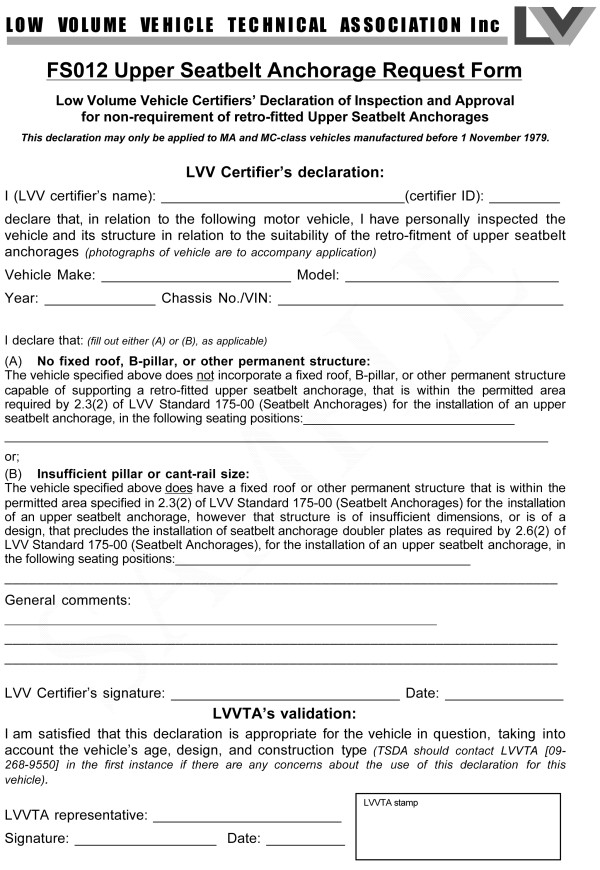
56 Alternative documents form
Page amended 1 November 2014 (see amendment details). 57 Lost de-registration or export certificate form
58 Sample Canadian Motor Vehicle Safety Standard - CMVSS - compliance plate/label
Page amended 1 November 2014 (see amendment details). 59 Sample UK registration certificates
Page updated 11 September 2025 (see details) 60 Authority to issue statements of compliance for Chrysler, Jeep, Dodge and Ram vehiclesAny statement of compliance for a Chrysler, Jeep, Dodge or Ram vehicle that is not issued by Daimler Chrysler New Zealand must be authorised by either of the following:
The people above will only issue statements of compliance to people who are immigrating to New Zealand and have owned their vehicle in the country of origin prior to immigrating to New Zealand. 61 HVSC Memo 59: HV power pack upgrades to meet emissions requirementsMemoFor Heavy Vehicle Specialist CertifiersTo: Heavy Vehicle Specialist Certifiers No. 59 From: Steve Bullôt Date: 4 May 2009 Subject: HV power pack upgrades to meet emissions requirements Following the introduction of the Land Transport Rule: Vehicle Exhaust Emissions 2007 (33001/2), it has been determined that a heavy vehicle may be repowered to meet the requirements of the Rule. Any repower will need to meet the following conditions:
Note: in the situation where an engine or powerpack is replaced by a unit by the same manufacturer, part number, specification and emission standard then it is considered a repair and not a modification and is not affected by the requirements of the Rule. 62 Sample letter – Recognition of specified vehicle as an immigrant’s vehicleYou can download a Word version of the sample letter. Sample letter – Recognition of specified vehicle as an immigrant’s vehicle 63 Sample letter and permit for Category A left-hand drive vehicleLHDVP10/ ### Date Organisation Address Application for a Category A Left-hand Drive Vehicle Permit as specified in sections of Land Transport Rule, Steering Systems Amendment 2010, Rule 32003/2. Please find enclosed the original Category A Left-hand Drive Vehicle Permit for the year make model, chassis number. Please note, that this Category A Left-hand Drive Vehicle Permit allows the vehicle to be accepted as being a class MA left-hand drive vehicle that meets all the conditions set out in the schedule for a Category A special interest light vehicles less than 20 years old. All other vehicle standards must be met for entry compliance, as would be required of any other vehicle of this age and vehicle class. The LHDV permit number at the top of this document and the attached LHDV permit have been entered in Landata Gnotes, by the NZTA Vehicles Unit. To ensure the integrity of these documents, please ensure the LHDV permit code as shown on the top of this document and the LHDV permit, is shown in the Landata Gnotes screen. If the LHDV permit code is not on the Landata Gnotes screen, do not proceed with compliance, and contact the undersigned. Yours Sincerely Name Vehicle Compliance Specialist Assessments NZ Transport Agency 64 British certificate of permanent export
65 Exhaust emissions test certificateExhaust emissions test certificate 66 NZ Customs ‘Deed of undertaking’Page amended 1 November 2014 (see amendment details). 67 Sample UK V308 registration documentRegistration details can be printed or hand-written. Recent sample
Older sample
Page updated 11 September 2025 (see details) 68 Sample UK VX302 registration document
69 Sample auction invoicesPage amended 2 December 2019 (see amendment details). 70 Sample hpi and Experian reports
Container Content
Container Page amended 1 April 2021 (see amendment details) 71 Examples of major structural damage and corrosionPage added 1 July 2013 (see amendment details).
71-1 Under-body damage: crushing of floor pan stiffening membersThe damage in these images must be flagged for damage.Where it's determined that the damage is non-structural, and there's no other damage requiring an LT308, the repair certifier will issue an LT307.
Page amended 21 February 2024 (see amendment details). 71-2 Under body damage: splitting of seam wells
Page amended 28 April 2014 (see amendment details). 71-3 Under body damage: tearing of the metal
Page amended 28 April 2014 (see amendment details). 71-4 Damage to rocker panels and cant rails
Cant rails
Page amended 1 October 2023 (see amendment details). 71-5 Rear quarter/dogleg
Page amended 28 April 2014 (see amendment details). 71-6 Dogleg flagLook for discrepancies in the door gap.
Page amended 28 April 2014 (see amendment details). 71-7 Distortion to longitudinal rails: front and rear crush zones
Page amended 28 April 2014 (see amendment details). 71-8 Collision damage to steering or suspension components
Page amended 28 April 2014 (see amendment details). 71-9 Damage to the vehicle’s outer body panels: seam or joint integrityDamage to the vehicle’s outer body panels which affect the integrity of any of the seams or joints installed by the vehicle manufacturer (and may have also caused secondary damage - further inspection may be required)
Page amended 28 April 2014 (see amendment details). 71-10 Corrosion which has resulted in perforation or flaking of the metal: Nissan Terrano and MistralWhen inspecting Nissan Terranos or Mistrals always check for corrosion of the floor under the rear seat (examples are shown in the first three photos below).
Page amended 28 April 2014 (see amendment details). 71-11 Water damaged vehicles
Page added 1 July 2013 (see amendment details). 71-12 Heat and fire damaged vehicles
Page added 1 July 2013 (see amendment details). 71-13 Examples of repairs
Page amended 28 April 2014 (see amendment details). 72 Examples of minor non-structural cosmetic damagePage added 1 July 2013 (see amendment details). 72-1 Front guards
Page added 1 July 2013 (see amendment details). 72-2 Sills/rocker panels (minor damage)
Page amended 28 April 2014 (see amendment details). 72-3 Minor/cosmetic damage: rear quarter panel and dogleg
Page added 1 July 2013 (see amendment details). 72-4 Minor/cosmetic damage: floor pan stiffening membersThe minor/cosmetic damage in these images doesn't need to be referred to a repair certifier.
Page added 21 February 2024 (see amendment details). 73a DEKRA Certificate of compliance - vehicles classesDEKRA certificates can be issued by VTNZ.See samples below.
Page amended 1 December 2015 (see amendment details). 73b DEKRA Certificate of compliance - emissions standardsDEKRA certificates can be issued by VTNZ.See samples below.
Page amended 1 December 2015 (see amendment details). 73c TUV Emissions certificatesTUV Emissions certificates
Page updated 10 February 2025 (see details)
73d TUV SUD Certificate of complianceTUV SUD Certificate of compliance
Page updated 10 February 2025 (see details)
74 Torque wrenchesTorque wrenches are not required to undergo annual calibration. They must always be in an undamaged condition and fit for purpose. Torque wrenches are required to be stored in a safe environment when not in use that will minimise the likelihood of damage. A damaged torque wrench must be taken out of use immediately and either sent for repair and calibration, or a new one purchased. A new torque wrench must have a calibration certificate. Check visually for condition before use and a thorough check to be carried out every 12 months as per the procedure below.
If damage is repaired then the Torque wrench will require re-calibration. Record the 12 monthly check in the PRS Equipment record. All repairs, calibrations or replacements are to be noted on the PRS Equipment record Page added 1 July 2013 (see amendment details). 75 PPSR certificatePPSR certificate New Div 40544New Div 40544
Page added 1 July 2013 (see amendment details). 76 Re-identify stolen and recovered vehiclesAn example of the method used by the MLIT to re-identify vehicles that have been stolen or recovered.
Page added 28 April 2014 (see amendment details). 78 Fuel Consumption Import Statement SystemFor information regarding fuel consumption information visit: Page amended 1 April 2022 (see amendment details). 79 Sample LT307 (No Repair Certification Required Declaration - Light Vehicle)Sample LT307 (No Repair Certification Required Declaration - Light Vehicle) 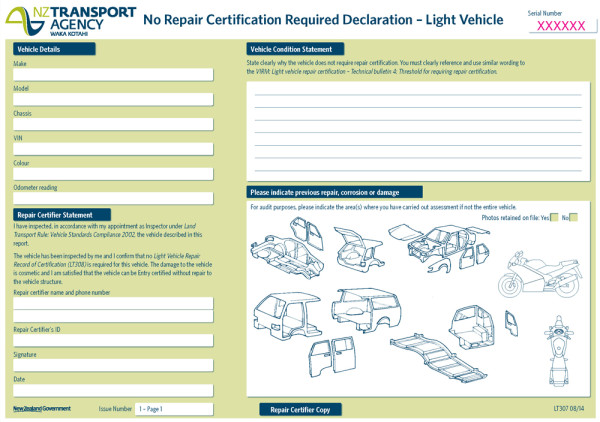
Page added 1 November 2014 (see amendment details). 80 Old EC directives for exhaust emissions standardsTranslation information for EC Directives
Page added 1 November 2014 (see amendment details). 81 Sample VTNZ-issued proof of emissions compliance letterSample VTNZ-issued proof of emissions compliance letter
Page added 1 December 2015 (see amendment details). 82 Sample Singapore LTA technical lettersSample Singapore Land Transport Authority technical letter (PDF) - issued prior to 6 March 2024 Sample Singapore Land Transport Authority technical letter (PDF) - issued from 6 March 2024 Sample Singapore Land Transport Authority technical letter (PDF) - issued from 19 May 2025 Page updated 8 September 2025 (see details) 83 Irish certificate of registrationIrish certificate of registration
Container Page added 1 October 2020 (see amendment details) 84 Sample provisional UK type approval plateProvisional UK type approval plate
Page added 2 November 2021 (see details) | |||||||||||||||||||||||||||||||||||||||||||||||||||||||||||||||||||||||||||||||||||||||||||||||||||||||||||||||||||||||||||||||||||||||||||||||||||||||||||||||||||||||||||||||||||||||||||||||||||||||||||||||||||||||||||||||||||||||||||||||||||||||||||||||||||||||||||||||||||||||||||||||||||||||||||||||||||||||||||||||||||||||||||||||||||||||||||||||||||||||||||||||||||||||||||||||||||||||||||||||||||||||||||||||||||||||||||||||||||||||||||||||||||||||||||||||||||||||||||||||||||||||||||||||||||||||||||||||||||||||||||||||||||||||||||||||||||||||||||||||||||||||||||||||||||||||||||||||||||||||||